Countries: united-arab-emirates

  • Burj Khalifa — la plus haute tour du monde au cœur de Dubaï

    Burj Khalifa — la plus haute tour du monde au cœur de Dubaï

    Burj Khalifa domine Dubaï de ses 828 mètres, plus haute tour du monde. Inaugurée en 2010, elle offre une vue unique sur le désert et le golfe Persique.

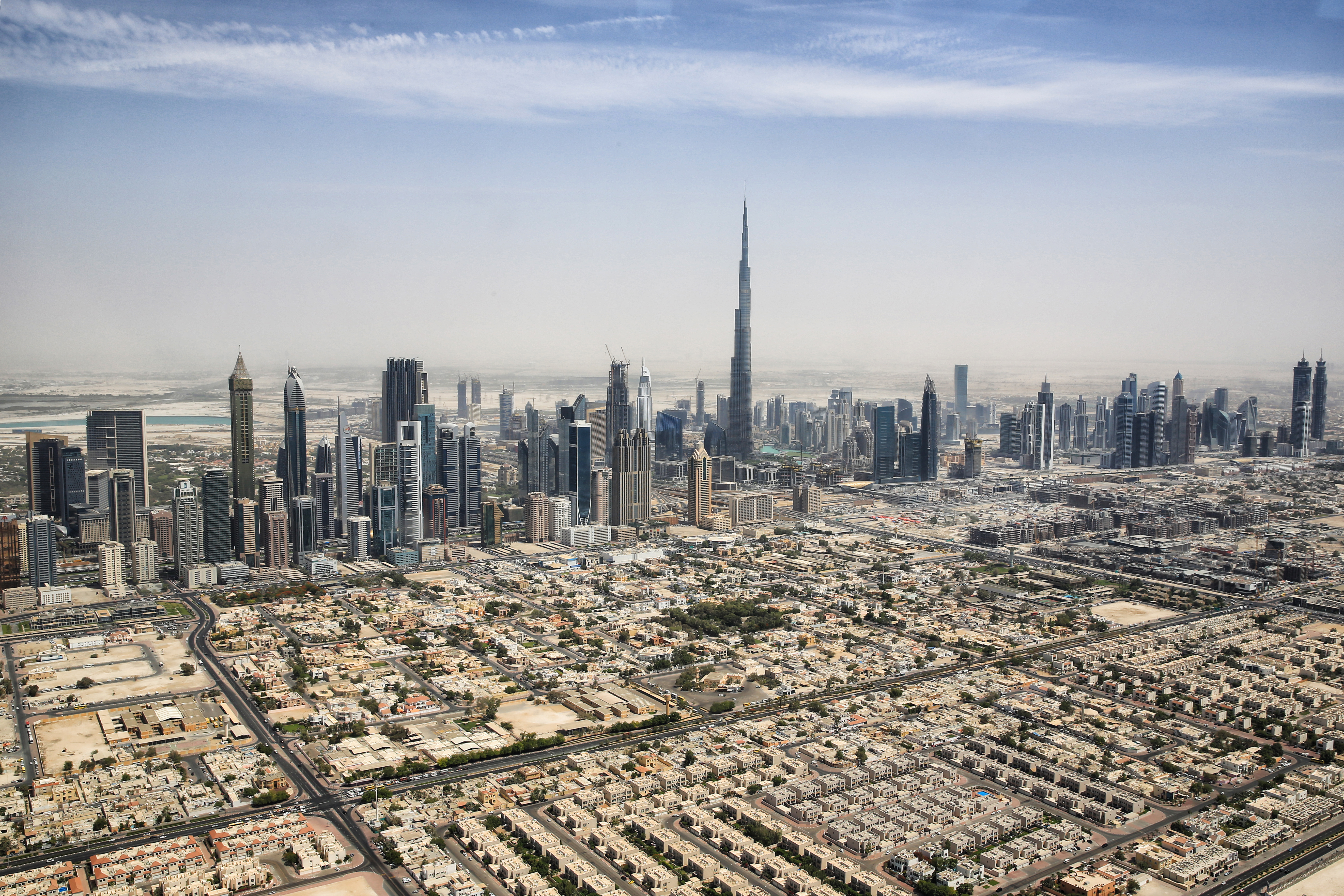
    Depuis son observatoire, le regard porte à la fois sur les gratte-ciel de la ville, sur le sable qui s’étend vers l’est et sur la mer qui scintille à l’ouest. Aucune autre tour ne propose un tel contraste en un seul panorama. La silhouette de Burj Khalifa est devenue l’emblème de Dubaï, reproduite sur les cartes postales, les écrans et les guides de voyage du monde entier. Pourtant, derrière le record, il y a une histoire de chantier, d’architecture et de vie quotidienne.

    La tour abrite un hôtel, des appartements, des bureaux et des restaurants. Elle fonctionne comme une petite ville verticale, ouverte jour et nuit.

    Les visiteurs francophones cherchent d’abord des réponses simples : quelle est la hauteur exacte de Burj Khalifa, combien d’étages compte-t-elle, quel billet choisir et comment rejoindre l’observatoire. Ce guide répond à ces questions avec des faits vérifiés, puis raconte la géographie du quartier, l’histoire du chantier et les meilleurs moments pour monter. Les prix des billets et les horaires changent selon la saison et le créneau choisi. Ils ne figurent donc pas ici : il faut les vérifier sur le site officiel avant de réserver.

    En bref

    Élément Détail
    Localisation Downtown Dubai, Dubaï, Émirats arabes unis
    Coordonnées 25,1972° N, 55,2742° E
    Hauteur architecturale 828 m
    Hauteur jusqu’à la pointe 829,8 m
    Nombre d’étages 163 étages au-dessus du sol
    Étage habité le plus haut 585,4 m
    Début du chantier Janvier 2004
    Achèvement de la structure 17 janvier 2009
    Inauguration 4 janvier 2010
    Architecte Adrian Smith, agence Skidmore, Owings & Merrill (SOM)
    Ingénieur structure Bill Baker
    Promoteur Emaar Properties
    Observatoires At The Top (étages 124 et 125, environ 452 à 456 m) ; At The Top SKY (étage 148, 555 m)
    Ancien nom Burj Dubai, jusqu’à l’inauguration
    UNESCO Non inscrit
    Code Wikidata Q12495

    Géographie de Burj Khalifa

    Burj Khalifa se dresse au centre de Downtown Dubai, un quartier neuf d’environ 2 km² aménagé autour de la tour, le long de Sheikh Zayed Road, l’axe principal de la ville. Le quartier a été pensé comme une ville dans la ville : la tour en est le centre, et les logements, les hôtels, les bureaux et les parcs s’organisent autour d’elle. Depuis n’importe quel point du quartier, on aperçoit Burj Khalifa. Depuis la tour, on comprend la logique de cet urbanisme, avec le lac en contrebas, les immeubles qui s’abaissent à mesure qu’on s’éloigne, puis le désert à l’est et le golfe Persique à l’ouest.

    Au pied de la tour s’étend le lac de Burj Khalifa, un plan d’eau artificiel de 12 hectares. C’est là que se trouve la fontaine de Dubaï, qui danse en musique chaque soir. À côté se dresse le Dubai Mall, l’immense centre commercial où se situe l’entrée de l’observatoire At The Top, au sous-sol. Le lien entre la tour, le lac, la fontaine et le centre commercial est direct : on passe de l’un à l’autre à pied, sans jamais perdre la tour de vue.

    Le parc Burj, plus discret, offre depuis la rive du lac l’un des plus beaux points de vue sur la tour depuis le sol.

    La position de Burj Khalifa n’a rien d’un hasard. Dubaï a voulu un repère visible de partout, un point de repère pour toute la ville. La tour joue ce rôle : elle oriente les habitants comme les visiteurs. Les chauffeurs de taxi la prennent comme point de référence, les photographes la cherchent dans chaque cadrage, et les voyageurs qui arrivent par la route depuis l’aéroport la voient apparaître bien avant d’entrer dans le quartier.

    Cette visibilité fait partie du projet, autant que la hauteur elle-même.

    Le climat marque fortement l’expérience du lieu. Dubaï est chaude toute l’année, avec des étés où la température extérieure dépasse 40 °C. À l’intérieur de la tour, l’air est climatisé et la visite ne dépend pas de la météo. En revanche, la vue depuis l’observatoire change beaucoup selon la saison.

    En hiver, l’air est plus limpide et l’horizon plus net. En été, la chaleur et la poussière voilent le paysage. C’est l’une des raisons pour lesquelles la période de novembre à mars est la plus appréciée des visiteurs.

    Le quartier de Downtown Dubai relie Burj Khalifa à d’autres visages de la ville. Au nord, la route mène vers le vieux Dubaï et sa crique. Au sud, elle file vers la marina et Palm Jumeirah, l’île artificielle en forme de palmier. Burj Khalifa n’est donc pas isolée : elle est le point de départ d’une découverte plus large de Dubaï.

    Beaucoup de voyageurs combinent la montée dans la tour avec une soirée autour du lac, puis une journée à la plage ou dans le désert le lendemain.

    La tour se dresse au cœur de Downtown Dubai, un quartier construit autour d’elle, entre le Dubai Mall et le lac du Dubai Fountain. L’axe de Sheikh Zayed Road passe à proximité, et la ligne rouge du métro dessert le quartier. Ce plan en étoile fait de la tour le point de repère de tout le sud de la ville.

    Dans le centre commercial, il faut suivre les panneaux indiquant At The Top : le lieu est immense et l’on s’y perd facilement. Il vaut mieux arriver au moins trente minutes avant l’heure inscrite sur le billet.

    La géographie de Burj Khalifa ne se lit pas seulement au sol : elle est aussi verticale. La tour compte 163 étages au-dessus du sol, et l’étage habité le plus haut se trouve à 585,4 mètres, au-delà duquel seuls subsistent des installations techniques et la flèche qui couronne l’édifice. Les observatoires se situent à environ 452 à 456 mètres pour At The Top, aux étages 124 et 125, et à 555 mètres pour At The Top SKY, à l’étage 148. Entre les deux, le restaurant At.mosphere occupe l’étage 122, à 442 mètres de hauteur, et The Lounge s’étend sur les étages 152 à 154.

    Depuis ces hauteurs, le panorama résume la géographie de Dubaï en un seul regard : les gratte-ciel du centre, les dunes qui s’étendent vers l’est et le golfe Persique qui brille à l’ouest. Au nord, la route mène vers le vieux Dubaï et sa crique, tandis qu’au sud, elle file vers la marina et Palm Jumeirah, l’île artificielle en forme de palmier. La tour, située à 25,1972 degrés de latitude nord et 55,2742 degrés de longitude est, sert ainsi de repère pour toute la ville, visible bien avant d’entrer dans le quartier. C’est cette position centrale, entre désert et golfe Persique, qui fait de l’observatoire un belvédère autant qu’un symbole.

    la fontaine de Dubaï, vue depuis le sommet de la Burj Khalifa

    la fontaine de Dubaï, vue depuis le sommet de la Burj Khalifa — CC BY 2

    le Dubai Mall, immense centre commercial au pied de la tour
    le Dubai Mall, immense centre commercial au pied de la tour — CC0

    le lac de Burj Khalifa et le parc Burj au pied de la tour
    le lac de Burj Khalifa et le parc Burj au pied de la tour — CC BY-SA 3

    Histoire de Burj Khalifa

    Six années pour sortir du sable

    Le chantier de Burj Khalifa a commencé en janvier 2004. La conception a été confiée à l’agence américaine Skidmore, Owings & Merrill, de Chicago, avec Adrian Smith comme architecte en chef et Bill Baker comme ingénieur structure. La forme de la tour s’inspire de la fleur Hymenocallis, une fleur du désert, ainsi que des motifs de l’art islamique. Le plan se resserre étage après étage, comme un bouton de fleur qui s’ouvre.

    Cette silhouette effilée n’est pas seulement décorative : elle aide la tour à résister au vent à très grande hauteur.

    La structure a été achevée le 17 janvier 2009, et la façade a été terminée en octobre de la même année. L’inauguration a eu lieu le 4 janvier 2010, avec un spectacle de lumière, des feux d’artifice et une annonce surprise. Jusqu’à ce soir-là, la tour s’appelait Burj Dubai. Son nom définitif, Burj Khalifa, la tour de Khalifa, a été révélé pendant la cérémonie, en hommage au cheikh Khalifa ben Zayed Al Nahyan, alors président des Émirats arabes unis.

    Ce changement de nom de dernière minute en dit long sur le projet : la tour n’est pas seulement un bâtiment, c’est une déclaration.

    Six années séparent le premier coup de pioche de l’ouverture au public. C’est un rythme remarquable pour un édifice deux fois plus haut que le plus haut immeuble précédent. Le chantier a mobilisé des milliers d’ouvriers et des grues qui montaient avec la tour. Chaque étage ajouté repoussait un peu plus la limite de ce que l’on croyait possible en matière de construction.

    À l’ouverture, Burj Khalifa ne battait pas un record, mais toute une série de records à la fois.

    Les records de Burj Khalifa

    À son inauguration, Burj Khalifa est devenue la plus haute construction du monde, avec 828 mètres de hauteur architecturale. Elle comptait aussi le plus grand nombre d’étages, 163 au-dessus du sol, et le plus long déplacement d’ascenseur. Son observatoire extérieur était alors le plus haut du monde. L’observatoire de l’étage 124 a ouvert au public dès le 5 janvier 2010, le lendemain de l’inauguration.

    En octobre 2014, l’étage 148 a ouvert sous le nom d’At The Top SKY, à 555 mètres, et la tour a repris le titre de plus haut observatoire extérieur du monde.

    À l’intérieur, Burj Khalifa fonctionne comme une ville miniature. On y trouve l’hôtel Armani Dubai, des appartements privés, des bureaux et des restaurants. Le restaurant At.mosphere, à l’étage 122, se situe à 442 mètres de hauteur. Il a longtemps été le restaurant le plus haut du monde.

    Plus haut encore, The Lounge occupe les étages 152 à 154, dans la zone des étages habités les plus élevés de la planète. L’étage habité le plus haut se trouve à 585,4 mètres : au-dessus, il n’y a plus que des équipements techniques et la flèche de la tour.

    Selon les trois critères du Conseil des immeubles de grande hauteur et de l’habitat urbain, le CTBUH, Burj Khalifa reste en 2026 la plus haute tour du monde. Ces trois critères sont la hauteur architecturale, la hauteur jusqu’à la pointe et l’étage habité le plus haut. Aucun autre bâtiment ne l’a dépassée sur l’un de ces plans. Plusieurs projets annoncés dans le monde visent à la dépasser, mais aucun n’était achevé en 2026.

    Le record dure donc depuis plus de seize ans.

    Le nom de l’architecte, Adrian Smith, est resté attaché à la tour. Il avait déjà travaillé sur de grands immeubles à Chicago avant de dessiner Burj Khalifa. L’ingénieur Bill Baker a conçu la structure en forme d’étoile à trois branches, qui ancre la tour dans le sol et répartit les forces du vent. Le promoteur Emaar Properties, l’un des grands développeurs de Dubaï, a porté le projet et le quartier de Downtown Dubai qui l’entoure.

    Sans cette combinaison d’architecture, d’ingénierie et de promotion immobilière, la tour n’aurait pas vu le jour.

    Chronologie

    Année Événement
    Janvier 2004 Début du chantier, sous le nom de Burj Dubai
    17 janvier 2009 Achèvement de la structure
    1er octobre 2009 Façade terminée
    4 janvier 2010 Inauguration et nouveau nom, Burj Khalifa
    5 janvier 2010 Ouverture au public de l’observatoire At The Top, étage 124
    Octobre 2014 Ouverture d’At The Top SKY, étage 148, à 555 m

    Les derniers mois du chantier ont été décisifs : la structure a été achevée le 17 janvier 2009, puis la façade a été terminée le 1er octobre de la même année. Trois mois plus tard, le 4 janvier 2010, la tour était inaugurée, et l’observatoire de l’étage 124 ouvrait au public dès le lendemain. Quatre ans plus tard, en octobre 2014, un second belvédère, At The Top SKY, a ouvert à l’étage 148, à 555 mètres d’altitude, et la tour a récupéré le titre de plus haut observatoire extérieur de la planète.

    le paysage urbain de Dubaï vu depuis la plateforme d'observation de la Burj Khalifa

    le paysage urbain de Dubaï vu depuis la plateforme d’observation de la Burj Khalifa — CC BY-SA 4

    la tour en construction, avant son inauguration en 2010
    la tour en construction, avant son inauguration en 2010 — Public domain

    les feux d'artifice au-dessus de la tour
    les feux d’artifice au-dessus de la tour — CC BY-SA 4

    Tourisme à Burj Khalifa

    Quand y aller

    La plus belle saison pour monter dans Burj Khalifa va de novembre à mars. Les températures extérieures sont alors agréables et le ciel plus limpide. L’été, de juin à septembre, la chaleur dépasse souvent 40 °C dehors, mais l’intérieur de la tour reste frais. L’expérience de l’observatoire ne change donc guère, sauf la netteté du panorama, qui se voile de chaleur et de poussière.

    Le coucher du soleil est le moment le plus recherché : le soleil descend vers le désert, la ville s’illumine et le lac reflète les dernières lueurs du jour. Les billets du coucher du soleil partent les premiers, et il faut réserver plusieurs jours à l’avance pour obtenir ce créneau.

    La nuit offre une autre vision de Burj Khalifa. La tour s’illumine et devient un écran géant au-dessus de la ville. Depuis l’observatoire, Dubaï scintille jusqu’à l’horizon, avec les autoroutes lumineuses et les tours voisines. Les recherches des internautes francophones sur Burj Khalifa la nuit montrent que ce moment attire autant que le jour.

    Le matin, au contraire, la lumière est douce et la foule moins dense. Chaque moment de la journée donne une image différente de la même tour.

    Combien de temps prévoir

    Il faut compter entre une heure et demie et deux heures et demie pour la seule visite de Burj Khalifa. Ce temps comprend la file d’attente, l’exposition du sous-sol du Dubai Mall, la montée en ascenseur, le temps passé à l’observatoire et un café à l’étage 124 ou 125. Pour At The Top SKY, à l’étage 148, il faut ajouter environ une heure. L’espace y est plus calme, le public moins nombreux et des boissons sont servies pendant la visite.

    Il serait dommage de venir pour la tour seule. Le quartier de Downtown Dubai mérite une demi-journée. La fontaine de Dubaï, le Dubai Mall et la promenade autour du lac forment un ensemble, surtout à la tombée du jour, quand la tour s’illumine et que les spectacles de lumière commencent sur sa façade. Un après-midi qui se prolonge en soirée est le rythme le plus agréable.

    On monte dans la tour, puis on dîne face au lac pendant que la fontaine joue.

    Se déplacer et manger sur place

    L’entrée de l’observatoire se trouve au sous-sol du Dubai Mall. La station de métro Burj Khalifa/Dubai Mall, sur la ligne rouge, est reliée au centre commercial par un pont piétonnier climatisé. Depuis l’aéroport international de Dubaï, le métro dessert cette station sans correspondance. Une fois dans le centre commercial, il faut suivre les panneaux At The Top.

    Le lieu est immense, et il vaut mieux arriver au moins trente minutes avant l’heure du billet.

    Pour manger, les choix ne manquent pas, à tous les prix. Dans la tour, le restaurant At.mosphere, à l’étage 122, est le restaurant de la tour, à 442 mètres de hauteur. Il faut réserver une table à l’avance pour y dîner. The Lounge, aux étages 152 à 154, sert le thé de l’après-midi et des boissons en soirée, encore plus haut.

    Au pied de la tour, les restaurants autour du lac offrent une vue directe sur la fontaine et sur Burj Khalifa. Dîner là pendant un spectacle de la fontaine est l’une des expériences les plus classiques de Dubaï. Dans le Dubai Mall, les restaurants et les aires de restauration couvrent tous les styles, de la restauration rapide aux tables raffinées.

    Les billets : ce qu’il faut savoir

    Les internautes francophones cherchent très souvent le prix des billets pour Burj Khalifa et les moyens d’obtenir un billet coupe-file. Les tarifs varient selon l’observatoire choisi, l’heure de la visite et la saison. Les billets du coucher du soleil sont les plus demandés et les premiers épuisés. Les billets coupe-file permettent de réduire l’attente, mais ils ne changent pas la visite elle-même.

    Comme les prix et les horaires changent, ce guide ne donne aucun tarif. Il faut consulter le site officiel de Burj Khalifa avant d’acheter, et réserver en ligne pour garantir le créneau souhaité.

    Le choix entre les deux observatoires dépend de l’envie du visiteur. L’étage 124 et l’étage 125, sous le nom d’At The Top, offrent l’expérience classique, adaptée à une première visite et aux familles. L’étage 148, At The Top SKY, est plus haut, plus calme, avec des boissons servies et un tarif plus élevé. Il convient à ceux qui veulent l’espace le plus privé et la vue la plus haute possible.

    Dans les deux cas, la montée en ascenseur est rapide et fait partie du spectacle, avec des écrans qui racontent la construction de la tour.

    la terrasse d'observation At The Top, aux étages 124 et 125
    la terrasse d’observation At The Top, aux étages 124 et 125 — CC BY-SA 2

    Dubaï au coucher du soleil, vue depuis l'observatoire
    Dubaï au coucher du soleil, vue depuis l’observatoire — CC BY-SA 2

    Lieux incontournables de Burj Khalifa

    • At The Top, étages 124 et 125 — l’observatoire classique, à environ 452 à 456 mètres, avec une terrasse extérieure, des longues-vues et un café. L’étage 124 a ouvert le 5 janvier 2010, au lendemain de l’inauguration.
    • At The Top SKY, étage 148 — l’observatoire haut de gamme, à 555 mètres, le plus haut observatoire extérieur du monde à son ouverture en octobre 2014. L’espace est plus calme et des boissons y sont servies.
    • At.mosphere, étage 122 — le restaurant de la tour, à 442 mètres de hauteur, longtemps le restaurant le plus haut du monde. Il faut réserver pour y dîner.
    • The Lounge, étages 152 à 154 — l’un des plus hauts salons de la planète, dans la zone des étages habités les plus élevés de la tour.
    • La fontaine de Dubaï — la fontaine musicale du lac de Burj Khalifa, au pied de la tour, qui joue en musique chaque soir.
    • Le Dubai Mall — le centre commercial au pied de la tour, où se trouve l’entrée d’At The Top, au sous-sol.
    • Le lac de Burj Khalifa — le plan d’eau artificiel de 12 hectares qui entoure le pied de la tour et sert de décor à la fontaine et aux spectacles de lumière.
    • Le parc Burj — le petit parc au bord du lac, d’où l’on admire la tour depuis le sol, avec une vue d’ensemble sur sa silhouette.
    • Downtown Dubai — le quartier de 2 km² construit autour de la tour, avec ses hôtels, ses résidences et ses promenades, qui donne son sens à la visite.

    Downtown Dubai la nuit, avec la fontaine musicale
    Downtown Dubai la nuit, avec la fontaine musicale — CC0

    Questions fréquentes sur Burj Khalifa

    Quelle est la hauteur de Burj Khalifa ?
    Burj Khalifa mesure 828 mètres de hauteur architecturale, le chiffre officiel utilisé par le CTBUH pour classer les tours du monde. La hauteur jusqu’à la pointe est de 829,8 mètres. C’est la plus haute tour du monde en 2026, selon les trois critères du CTBUH.

    Combien d’étages compte Burj Khalifa ?
    Burj Khalifa compte 163 étages au-dessus du sol, plus des niveaux en sous-sol. L’étage habité le plus haut se trouve à 585,4 mètres. Au-dessus, les niveaux sont occupés par des équipements techniques et par la flèche de la tour.

    Quand Burj Khalifa a-t-elle ouvert ?
    Burj Khalifa a été inaugurée le 4 janvier 2010, après environ six années de chantier commencées en janvier 2004. L’observatoire de l’étage 124 a ouvert au public le lendemain, le 5 janvier 2010.

    Faut-il choisir l’étage 124 ou l’étage 148 ?
    Pour une première visite, les étages 124 et 125 suffisent : c’est l’expérience classique d’At The Top, à environ 452 à 456 mètres. L’étage 148, At The Top SKY, monte à 555 mètres, avec moins de monde et des boissons servies, mais un tarif plus élevé. Choisissez-le si vous cherchez le calme et la vue la plus haute possible.

    Comment entre-t-on dans l’observatoire de Burj Khalifa ?
    On entre par le sous-sol du Dubai Mall, en suivant les panneaux indiquant At The Top. La station de métro la plus proche est Burj Khalifa/Dubai Mall, sur la ligne rouge, reliée au centre commercial par un pont piétonnier climatisé. Il faut arriver au moins trente minutes avant l’heure du billet.

    Qui a conçu Burj Khalifa ?
    L’architecte Adrian Smith, de l’agence Skidmore, Owings & Merrill de Chicago, a dessiné Burj Khalifa, avec Bill Baker comme ingénieur structure. Le promoteur est Emaar Properties. Le dessin s’inspire de la fleur Hymenocallis et des motifs de l’art islamique.

    Vérifié

    Faits vérifiés le 20/11/2026, à partir des sources citées ci-dessous et des données du registre TheTerraAtlas.

    • Hauteur architecturale 828 m, hauteur jusqu’à la pointe 829,8 m, 163 étages, étage habité le plus haut 585,4 m : CTBUH, via les sources citées.
    • Début du chantier en janvier 2004, achèvement de la structure le 17 janvier 2009, façade terminée le 1er octobre 2009, inauguration le 4 janvier 2010, ouverture de l’étage 124 le 5 janvier 2010 : sources citées.
    • Architecte Adrian Smith, agence Skidmore, Owings & Merrill, ingénieur structure Bill Baker, promoteur Emaar Properties, inspiration de la fleur Hymenocallis : sources citées.
    • At The Top SKY, étage 148, à 555 m, ouvert en octobre 2014, alors le plus haut observatoire extérieur du monde : sources citées.
    • At.mosphere à l’étage 122, à 442 m ; The Lounge aux étages 152 à 154 ; ancien nom Burj Dubai, renommé en hommage au cheikh Khalifa ben Zayed Al Nahyan : sources citées.
    • Downtown Dubai d’environ 2 km², lac de Burj Khalifa de 12 hectares : sources citées.
    • Coordonnées 25,1972° N, 55,2742° E et code Wikidata Q12495 : registre TheTerraAtlas, confirmés par l’API Wikidata le 20/11/2026 (Q12495, libellé français Burj Khalifa, type gratte-ciel).

    Sources

    • Site officiel de Burj Khalifa : https://www.burjkhalifa.ae/
    • Histoire de la tour, inspiration de la fleur Hymenocallis, cérémonie de changement de nom, The Lounge aux étages 152 à 154
    • Hauteur 828 m, pointe 829,8 m, 163 étages, inauguration le 4 janvier 2010, observatoires 124 et 125 (452 à 456 m) et 148 (555 m) : https://allnewlisting.com/en/burj-khalifa-how-many-floors-how-tall/ ; https://dubaitweeks.com/places/burj-khalifa-height/
    • Début du chantier en janvier 2004, structure achevée le 17 janvier 2009, façade terminée le 1er octobre 2009, architecte Adrian Smith, SOM, ingénieur Bill Baker, promoteur Emaar, At.mosphere à l’étage 122 (442 m), étage habité le plus haut 585,4 m : http://msaw-mu.org/userfiles/file/69232438569.pdf ; https://www.myhomejankaari.com/blog/burj-khalifa-history-architecture-visitor-guide
    • At The Top SKY, étage 148, ouvert en octobre 2014, à 555 m : https://travel.afrikanyouth.com/burj-khalifa/
    • Downtown Dubai de 2 km², lac de Burj Khalifa de 12 hectares : http://msaw-mu.org/userfiles/file/69232438569.pdf
    • Coordonnées, code Wikidata Q12495, code GeoNames 6949499 : registre TheTerraAtlas (entities-p1.json), vérifiés via l’API Wikidata le 20/11/2026.

    Non vérifié

    • Prix des billets d’At The Top et d’At The Top SKY, horaires d’ouverture selon le jour : ils changent selon la saison et le créneau, avec des tarifs plus élevés au coucher du soleil. Il faut les vérifier sur le site officiel burjkhalifa.ae avant de réserver ; ce guide ne donne ni prix ni horaire précis.
    • Coût de la construction, souvent estimé à environ 1,5 milliard de dollars : les sources donnent des chiffres différents, sans confirmation dans une publication officielle d’Emaar.
    • Nombre d’ascenseurs et vitesse des ascenseurs : les chiffres circulent, mais ils n’ont pas été confirmés par une source officielle. Ce guide ne les indique pas.

    Illustrations

    • Hero: la tour Burj Khalifa, plus haute tour du monde, au coucher du soleil à Dubaï. Free image: https://upload.wikimedia.org/wikipedia/commons/7/75/Burj_Khalifa_Dubai%2C_UAE_at_Sunset_001_by_Eric_Chamchoum.jpg — CC BY 4.
    • In body, la fontaine de Dubaï: la fontaine de Dubaï, vue depuis le sommet de la Burj Khalifa. Free image: https://upload.wikimedia.org/wikipedia/commons/f/f0/Dubai_Fountain_from_Burj_Khalifa_%2815795939749%29.jpg — CC BY 2.
    • In body, la vue depuis le sommet: le paysage urbain de Dubaï vu depuis la plateforme d’observation de la Burj Khalifa. Free image: https://upload.wikimedia.org/wikipedia/commons/6/60/Dubai_landscape_from_the_Burj_Khalifa_4.jpg — CC BY-SA 4.
    • In body, le Dubai Mall: le Dubai Mall, immense centre commercial au pied de la tour. Free image: https://upload.wikimedia.org/wikipedia/commons/6/6b/Dubai_Mall_12.jpg — CC0.
    • In body, le lac de Burj Khalifa: le lac de Burj Khalifa et le parc Burj au pied de la tour. Free image: https://upload.wikimedia.org/wikipedia/commons/6/65/Burj_Khalifa_lake%2C_Burj_Park_-Dubai–United_Arab_Emirates-_panoramio.jpg — CC BY-SA 3.
    • In body, la construction de la tour: la tour en construction, avant son inauguration en 2010. Free image: https://upload.wikimedia.org/wikipedia/commons/4/40/Construction_of_the_Burj_Khalifa.jpg — Public domain.
    • In body, les feux d’artifice: les feux d’artifice au-dessus de la tour. Free image: https://upload.wikimedia.org/wikipedia/commons/5/5d/Fireworks_2024.jpg — CC BY-SA 4.
    • In body, At The Top: la terrasse d’observation At The Top, aux étages 124 et 125. Free image: https://upload.wikimedia.org/wikipedia/commons/5/56/Dubai-At_The_Top_Burj_Khalifa–140515-2193-jikatu%2815100351735%29.jpg — CC BY-SA 2.
    • In body, le coucher de soleil depuis l’observatoire: Dubaï au coucher du soleil, vue depuis l’observatoire. Free image: https://upload.wikimedia.org/wikipedia/commons/2/2f/Dubai_Sunset_from_Burj_Khalifa.jpg — CC BY-SA 2.
    • In body, Downtown Dubai la nuit: Downtown Dubai la nuit, avec la fontaine musicale. Free image: https://upload.wikimedia.org/wikipedia/commons/e/e0/Downtown%2C_Dubai_%2836714617205%29.jpg — CC0.
  • Palm Jumeirah — l’île en forme de palmier au large de Dubaï

    Palm Jumeirah — l’île en forme de palmier au large de Dubaï

    La Palm Jumeirah est une île artificielle en forme de palmier, au large de Dubaï. Son tronc, ses 17 palmes et son croissant forment un palmier géant vu du ciel.

    Depuis le sol, la Palm Jumeirah ressemble à un quartier balnéaire haut de gamme comme les autres : des immeubles résidentiels, des villas en bord de mer, des hôtels cinq étoiles et un monorail qui court le long de l’île. Mais dès que le regard prend de la hauteur, depuis l’observatoire The View at The Palm, depuis un avion en approche sur Dubaï ou sur une image satellite, le dessin apparaît : un palmier immense posé sur la mer, avec un tronc, 17 palmes et un croissant qui l’entoure. Tout est gagné sur la mer, mètre par mètre, par dragage et par remblai.

    La Palm Jumeirah est la première des trois îles Palmiers de Dubaï, et la seule des trois à avoir été achevée et habitée. Elle incarne une période précise de l’histoire de la ville : le moment où Dubaï a décidé de ne plus seulement construire vers le ciel, mais aussi vers la mer. Cet article raconte comment la Palm Jumeirah a été construite, ce qu’on y trouve aujourd’hui et comment la visiter.

    En bref

    Rubrique Repère
    Nom Palm Jumeirah (île artificielle en forme de palmier)
    Situation Au large de Dubaï, Émirats arabes unis, dans le golfe Persique
    Coordonnées 25,1172° N, 55,1344° E
    Superficie 5,6 km² (560 hectares)
    Forme Un tronc, 17 palmes et un croissant brise-lames d’environ 11 km
    Avancée en mer Environ 5 km
    Littoral créé Environ 78 km
    Début du remblaiement Juin 2001
    Premiers habitants 2006
    Promoteur Nakheel Properties
    Wikidata Q277294

    Une superficie de 5,6 km² peut sembler modeste. Le chiffre important est ailleurs : grâce à sa forme de palmier, la Palm Jumeirah a ajouté environ 78 km de littoral à Dubaï, une ville qui ne comptait auparavant qu’environ 72 km de côtes naturelles. Chaque palme est une rangée de villas avec sa plage privée, chaque tronçon du croissant porte un grand hôtel. L’île est, au fond, une machine à fabriquer du littoral.

    Géographie de la Palm Jumeirah

    Tronc, palmes et croissant

    La Palm Jumeirah s’avance d’environ 5 km dans le golfe Persique, au large de Dubaï. Sa structure se lit en trois parties nettes. Le tronc est l’axe principal qui relie l’île à la terre ferme par un pont. On y trouve des immeubles d’habitation, le centre commercial Nakheel Mall, la Palm Tower et la station du monorail.

    Du tronc partent, de chaque côté, 17 palmes, chacune bordée de villas de luxe avec leur plage privée. Tout autour, le croissant forme un brise-lames d’environ 11 km, qui porte les plus grands hôtels de l’île, dont l’Atlantis, The Palm, à son sommet.

    Le brise-lames n’est pas seulement une frontière. Il fait partie du système de protection de l’île : il abrite les palmes de la houle et crée une zone d’eau calme à l’intérieur. Entre le croissant et les palmes passe un chenal que les bateaux empruntent encore, et un tunnel sous-marin relie le croissant au tronc. Les automobilistes qui se rendent de la terre ferme à l’Atlantis traversent ce tunnel sans toujours s’en rendre compte.

    Une île posée sur le golfe Persique

    La mer autour de la Palm Jumeirah est chaude, claire et calme grâce au brise-lames, ce qui permet la baignade presque toute l’année. Le climat est celui de Dubaï : chaud toute l’année, avec des étés où la température extérieure dépasse souvent 40 °C, et des hivers doux et agréables. En été, l’eau de mer peut devenir si chaude qu’elle ne rafraîchit presque plus.

    La Palm Jumeirah ne se comprend pas sans Dubaï Marina, le quartier voisin, accessible à pied depuis l’entrée de l’île. Les deux ensembles forment un même front de mer moderne : tours résidentielles, promenades, restaurants et marinas. Mais la Palm Jumeirah garde son caractère propre : une densité plus faible, des villas en bord de plage, et une vie de quartier qui s’organise autour du tronc et de ses commerces.

    Comment se repérer sur l’île

    Pour visiter la Palm Jumeirah, il faut comprendre sa géographie avant d’arriver. Le tronc concentre les déplacements : c’est là que passent le monorail, les bus et la circulation automobile. Les palmes sont résidentielles et calmes, avec peu de commerces. Le croissant porte les grands hôtels et leurs restaurants, mais il est éloigné du tronc.

    Marcher sur le tronc est possible, mais rejoindre le croissant à pied est long : il vaut mieux prendre un véhicule.

    La meilleure façon de saisir la forme de la Palm Jumeirah reste la vue d’en haut. L’observatoire The View at The Palm, au 52e étage de la Palm Tower, à 240 m de haut, est le seul point d’où l’on voit le palmier entier sans monter dans un avion. Le monorail, lui, donne une perception différente : assis dans la rame, on voit les palmes s’aligner des deux côtés comme des rangées d’arbres.

    Malgré ses chiffres — 5,6 km², environ 1 730 villas, des dizaines d’hôtels et des milliers d’appartements — la Palm Jumeirah garde une densité plus faible que les tours de Dubaï Marina, le quartier voisin accessible à pied depuis l’entrée de l’île. Chaque palme n’est qu’une rangée de villas avec sa plage privée, chaque tronçon du croissant porte un grand hôtel, et le tronc concentre les immeubles, le Nakheel Mall et la Palm Tower. Cette répartition dessine trois rythmes : le calme résidentiel des palmes, l’activité commerçante du tronc et l’animation hôtelière du croissant. Le monorail, qui court sur 5,4 km le long du tronc, relie ces trois rythmes en une dizaine de minutes.

    Les espaces publics de l’île sont rares mais décisifs pour son caractère : Al Ittihad Park, sur le tronc, est l’un des rares espaces verts ouverts entre les immeubles, une pause ombragée au milieu des tours et des commerces. Palm West Beach, la bande de plage publique le long du tronc, attire les promeneurs au coucher du soleil, avec vue sur les tours de Dubaï Marina et des restaurants en bord de mer. Ces deux lieux donnent à l’île un visage public, ouvert à tous, qui complète les plages privées des villas et les restaurants des grands hôtels.

    La plage de Palm Jumeirah s'étend sous le monorail de Dubaï

    La plage de Palm Jumeirah s’étend sous le monorail de Dubaï — CC BY 2

    Histoire de la Palm Jumeirah

    Une idée dessinée vue du ciel

    L’idée de la Palm Jumeirah est née au début des années 2000, alors que Dubaï, sous la conduite du cheikh Mohammed ben Rachid Al Maktoum, cherchait à diversifier son économie au-delà du pétrole et à devenir une destination mondiale. Le problème de la ville était concret : Dubaï disposait de peu de littoral naturel, alors que le littoral est précisément ce que recherchent les touristes et les investisseurs immobiliers. La solution fut tout aussi concrète : gagner de la terre sur la mer pour créer du littoral, et le faire en forme de palmier, l’arbre emblème de la culture et de l’histoire du Golfe.

    Le remblaiement commença en juin 2001, sous la maîtrise d’ouvrage de Nakheel, avec les dragueurs néerlandais et belges Van Oord et Jan De Nul. Le sable fut aspiré au fond du golfe Persique et projeté selon le tracé défini par GPS. Les roches du brise-lames, environ 7 millions de tonnes, furent acheminées depuis des carrières. Au total, environ 94 millions de mètres cubes de sable servirent à former l’île.

    Le dragage et la construction du brise-lames s’achevèrent vers 2003, et les premiers habitants emménagèrent dans les villas des palmes à partir de 2006.

    Du chantier à la destination

    En 2008, l’Atlantis, The Palm ouvrit sur le croissant : le premier grand hôtel de l’île, avec le parc aquatique Aquaventure et l’aquarium Lost Chambers. La même année, le Palm Monorail commença ses essais, puis fut inauguré officiellement le 30 avril 2009. Il parcourt 5,4 km le long du tronc, de l’entrée de l’île à l’Atlantis. C’était le premier monorail de la région, et il reste aujourd’hui le moyen le plus commode de voir l’île d’ensemble : depuis la rame, les palmes se succèdent des deux côtés.

    Les années suivantes, l’île se remplit : nouveaux hôtels, nouveaux restaurants, nouveaux beach clubs. En 2019, le Nakheel Mall ouvrit sur le tronc et devint le centre commercial principal de la Palm Jumeirah. Le 7 avril 2021, The View at The Palm ouvrit au 52e étage de la Palm Tower, à 240 m de haut. Pour la première fois, les visiteurs disposaient d’un observatoire qui regardait le palmier entier d’en haut, au lieu de l’imaginer seulement sur des images satellite.

    La tour accueille aussi l’hôtel St Regis.

    Les trois îles Palmiers, un seul destin accompli

    La Palm Jumeirah est la première des trois îles Palmiers de Dubaï, et la seule à être allée du plan jusqu’à la vie habitée. Les deux autres ont connu un autre sort : Palm Jebel Ali fut interrompu pendant des années avant d’être relancé, et Palm Deira fut reconfigurée en archipel Deira Islands. Seule Jumeirah a franchi toutes les étapes.

    Aujourd’hui, la Palm Jumeirah est à la fois un quartier résidentiel, une station balnéaire et une attraction. On y compte environ 1 730 villas sur les palmes, des dizaines d’hôtels sur le tronc et le croissant, et des milliers d’appartements. Les résidents permanents, les vacanciers et les visiteurs d’un jour s’y croisent en permanence, ce qui donne à l’île une animation constante, du petit matin jusqu’à tard le soir.

    Repères chronologiques

    Année Événement
    Juin 2001 Début du remblaiement, sous la maîtrise d’ouvrage de Nakheel
    Vers 2003 Achèvement du dragage et du brise-lames
    2006 Premiers habitants dans les villas des palmes
    2008 Ouverture de l’Atlantis, The Palm sur le croissant
    30 avril 2009 Inauguration du Palm Monorail
    28 novembre 2019 Ouverture du Nakheel Mall sur le tronc
    7 avril 2021 Ouverture de The View at The Palm, au 52e étage de la Palm Tower, à 240 m

    2008 fut l’année charnière de l’île : l’Atlantis, The Palm ouvrit sur le croissant avec son parc aquatique Aquaventure et son aquarium Lost Chambers, tandis que le Palm Monorail commençait ses essais avant son inauguration officielle le 30 avril 2009. Pour la première fois, la Palm Jumeirah offrait à la fois un grand hôtel et un moyen de la parcourir d’un bout à l’autre, sur 5,4 km le long du tronc. Le chantier devenait une destination, et les années suivantes ajoutèrent hôtels, restaurants et beach clubs, puis le Nakheel Mall en 2019 et l’observatoire The View en 2021.

    Tourisme à la Palm Jumeirah

    Quand visiter la Palm Jumeirah

    De novembre à mars, la saison est la plus agréable pour visiter la Palm Jumeirah : températures douces, ciel dégagé, conditions idéales pour marcher le long des plages, s’installer en terrasse dans les beach clubs et monter à l’observatoire au coucher du soleil. L’été, de juin à septembre, la chaleur est écrasante dehors, mais la plupart des expériences de l’île, piscines, parc aquatique, restaurants et centre commercial, se déroulent à l’intérieur ou dans l’eau. Le coucher du soleil est le plus beau moment de la journée sur l’île : le soleil descend sur le golfe, et le croissant et les palmes s’illuminent. Les billets de The View at The Palm pour cette tranche horaire partent le plus vite, et il faut les réserver plusieurs jours à l’avance.

    Combien de temps prévoir

    Une demi-journée à une journée suffit pour une première visite de la Palm Jumeirah. Un programme équilibré : le matin, le monorail le long du tronc jusqu’à l’Atlantis, puis le parc aquatique Aquaventure ou l’aquarium ; à midi, un repas à The Pointe, sur le croissant ; l’après-midi, une baignade à Palm West Beach ou un moment de détente dans un beach club ; en fin de journée, la montée à The View at The Palm pour le coucher du soleil et la vue sur le palmier entier.

    Dormir sur l’île change la perception : le petit matin, quand les plages sont encore désertes, et le soir, quand les restaurants du bord de mer s’illuminent. Pour la plupart des visiteurs, la Palm Jumeirah reste toutefois une étape dans un programme plus large à Dubaï : une demi-journée ici, une demi-journée à Dubaï Marina, toute proche.

    Se déplacer : le monorail et les transports

    Le moyen le plus commode pour explorer la Palm Jumeirah est le Palm Monorail. La ligne court sur 5,4 km le long du tronc, de la station Palm Jumeirah, à l’entrée de l’île, jusqu’à la station Atlantis, sur le croissant, avec des stations intermédiaires au Nakheel Mall et dans la zone centrale. Le trajet complet dure environ dix minutes, et la rame offre la meilleure vue sur les palmes sans monter à l’observatoire.

    Pour rejoindre l’île, on prend la ligne rouge du métro de Dubaï jusqu’à Dubaï Marina, puis le tramway de Dubaï jusqu’à la station Palm Jumeirah, qui correspond avec le monorail. Sur l’île, les bus et les taxis complètent le monorail. Les automobilistes rejoignent l’Atlantis depuis la terre ferme par le pont puis par le tunnel sous-marin.

    Se restaurer et se détendre

    La restauration de la Palm Jumeirah penche nettement vers le haut de gamme, sans s’y limiter. The Pointe, sur le croissant, concentre de nombreux restaurants avec vue sur le golfe et un spectacle de fontaines musicales le soir. Le Nakheel Mall propose une offre de restauration pour tous les budgets. Les grands hôtels, à commencer par l’Atlantis, abritent des dizaines de restaurants, des tables de chefs renommés aux adresses familiales.

    Pour un après-midi dans l’esprit de la Palm Jumeirah, les beach clubs sont l’expérience de référence : on paie un droit d’entrée pour profiter des transats, de la piscine et de la plage privée, et l’on déjeune au bord de l’eau. Les beach clubs les plus connus se trouvent sur le croissant et dans les grands hôtels. Le FIVE Palm Jumeirah, le Waldorf Astoria et le Kempinski comptent parmi les adresses les plus citées, et beaucoup de ces établissements ouvrent leurs beach clubs aux visiteurs extérieurs.

    Combiner la Palm Jumeirah avec le reste de Dubaï

    La Palm Jumeirah se visite rarement seule : elle s’inscrit dans un programme plus large à Dubaï. Le Dubai Mall et la fontaine de Dubaï, au pied du Burj Khalifa, forment l’étape urbaine classique après la plage. Les circuits organisés à Dubaï combinent souvent ces adresses avec une demi-journée sur la Palm Jumeirah, monorail et observatoire compris. L’enchaînement le plus simple reste la matinée sur l’île, puis l’après-midi au centre-ville, quand la chaleur rend les intérieurs climatisés plus agréables que le bord de mer.

    L'hôtel Atlantis se dresse sur l'île de Palm Jumeirah

    L’hôtel Atlantis se dresse sur l’île de Palm Jumeirah — Public domain

    Lieux incontournables de la Palm Jumeirah

    L’Atlantis, The Palm est le plus grand hôtel du croissant. Il a ouvert en 2008 et abrite le parc aquatique Aquaventure et l’aquarium Lost Chambers. Son architecture, deux tours reliées par un pont en arche, est devenue l’un des symboles de la Palm Jumeirah.

    The View at The Palm est l’observatoire du 52e étage de la Palm Tower, à 240 m de haut. Il a ouvert le 7 avril 2021 et c’est le seul endroit d’où l’on voit le palmier entier depuis le sol, sans monter dans un avion. L’entrée se fait par le Nakheel Mall.

    Le Palm Monorail est la ligne de monorail de 5,4 km qui court le long du tronc, inaugurée le 30 avril 2009. C’est à la fois un moyen de transport et une visite guidée en mouvement, avec les palmes visibles des deux côtés de la rame.

    The Pointe est le quartier de restauration et de loisirs du croissant, face à l’Atlantis. On y dîne avec vue sur le golfe, et le spectacle de fontaines musicales y est proposé le soir. C’est l’adresse la plus animée de la Palm Jumeirah après la tombée de la nuit.

    Le Nakheel Mall est le centre commercial principal du tronc, ouvert le 28 novembre 2019. C’est aussi l’entrée de The View at The Palm, et le point de départ commode d’une visite de l’île.

    Palm West Beach est la bande de plage publique le long du tronc, un lieu apprécié pour le coucher du soleil et pour la vue sur les tours de Dubaï Marina. On y trouve des restaurants et des promenades en bord de mer.

    Les beach clubs comptent parmi les expériences les plus recherchées de la Palm Jumeirah. Le FIVE Palm Jumeirah, le Waldorf Astoria Dubai Palm Jumeirah et le Kempinski Hotel and Residences proposent des piscines, des plages privées et des restaurants ouverts aux visiteurs extérieurs.

    Al Ittihad Park est un parc public sur le tronc, l’un des rares espaces verts ouverts entre les immeubles de l’île. Il offre une pause ombragée au milieu des tours et des commerces.

    La Palm Tower et l’hôtel St. Regis forment l’ensemble de 52 étages au centre du tronc. La tour abrite l’observatoire The View at The Palm et l’hôtel St. Regis, qui complètent le pôle central de l’île.

    Questions fréquentes sur la Palm Jumeirah

    Qu’est-ce que la Palm Jumeirah ?
    La Palm Jumeirah est une île artificielle en forme de palmier au large de Dubaï, construite par remblaiement à partir de juin 2001 par la société Nakheel. Elle se compose d’un tronc, de 17 palmes et d’un croissant qui sert de brise-lames, sur une superficie de 5,6 km².

    Combien de palmes compte la Palm Jumeirah ?
    17 palmes, selon la conception de Nakheel et la plupart des sources techniques. Certains articles de voyage en comptent 16, probablement parce qu’une courte palme près du tronc est oubliée dans le comptage. Cet article retient 17, le chiffre des sources techniques.

    Comment voir la forme de palmier depuis le ciel ?
    Il faut monter à l’observatoire The View at The Palm, au 52e étage de la Palm Tower, à 240 m de haut, ouvert depuis le 7 avril 2021. Le trajet en Palm Monorail le long du tronc donne aussi une bonne perception de la structure des palmes.

    Quand l’Atlantis, The Palm a-t-il ouvert ?
    En 2008. C’est le premier grand hôtel de l’île, situé sur le croissant, avec le parc aquatique Aquaventure et l’aquarium Lost Chambers.

    Comment se déplacer sur la Palm Jumeirah ?
    Le Palm Monorail parcourt 5,4 km le long du tronc, de l’entrée de l’île à l’Atlantis, en environ dix minutes. Pour rejoindre l’île, on prend la ligne rouge du métro jusqu’à Dubaï Marina, puis le tramway jusqu’à la station Palm Jumeirah.

    Combien de temps faut-il pour visiter la Palm Jumeirah ?
    Une demi-journée à une journée suffit pour une première visite : le monorail, l’Atlantis, The Pointe, la plage de Palm West Beach et l’observatoire The View au coucher du soleil. Dormir sur place convient à ceux qui veulent profiter des beach clubs et du rythme plus lent de l’île.

    Vérifié

    • Superficie 5,6 km² (560 hectares), 17 palmes, brise-lames de 11 km, environ 78 km de littoral créé, environ 94 millions de mètres cubes de sable, environ 7 millions de tonnes de roche, remblaiement commencé en juin 2001, premiers habitants en 2006, Atlantis ouvert en 2008. Vérifié le 20/11/2026.
    • Tronc, 17 palmes, croissant, remblaiement commencé en juin 2001, promoteur Nakheel, entreprises Van Oord et Jan De Nul. Vérifié le 20/11/2026.
    • The View at The Palm ouvert le 7 avril 2021, 52e étage de la Palm Tower, 240 m, entrée par le Nakheel Mall. Vérifié le 20/11/2026.
    • Palm Monorail de 5,4 km, inauguré le 30 avril 2009, de la station Gateway à l’Atlantis. Vérifié le 20/11/2026.
    • Nakheel Mall ouvert le 28 novembre 2019 ; Palm Tower achevée en 2021 avec l’hôtel St. Regis. Vérifié le 20/11/2026.
    • Identifiant Wikidata Q277294 (Palm Jumeirah, île artificielle, coordonnées 25,1172 / 55,1344) : vérifié directement via l’API Wikidata le 20/11/2026, conforme au registre.

    Sources

    • UNESCO, liste du patrimoine mondial : https://whc.unesco.org/en/list/
    • Nakheel, ouverture du Nakheel Mall sur la Palm Jumeirah : https://www.nakheel.com/en/media-centre/press-releases/news-detail/2019/11/18/nakheel-mall-opens-on-dubai-s-palm-jumeirah
    • Dubai Media Office, ouverture de The View at The Palm le 7 avril 2021 : https://www.mediaoffice.ae/en/news/2021/april/05-04/the-view-at-the-palm-to-open-on-7-april-2021
    • Palm Jumeirah, histoire, chiffres et monorail : https://en.wikipedia.org/wiki/Palm_Jumeirah
    • Base Wikidata, entité Q277294 (Palm Jumeirah) : https://www.wikidata.org/wiki/Q277294

    Non vérifié

    • Nombre de palmes : certains articles de voyage en comptent 16, les sources techniques et Wikipedia en comptent 17. L’article retient 17 et signale la divergence dans la FAQ.
    • Tarifs de The View at The Palm, du Palm Monorail et d’Aquaventure, et horaires précis : ils varient selon la saison et le type de billet. Il faut les vérifier sur les sites officiels theviewatthepalm.ae, palmmonorail.com et atlantis.com avant de partir. L’article ne donne ni tarif ni horaire précis.
    • Nombre de villas (environ 1 730 selon certaines sources) et nombre d’hôtels sur l’île : les sources donnent des chiffres différents. L’article mentionne le nombre de villas sans l’affirmer de façon absolue.
    • Coût total de la construction de l’île (souvent évalué à environ 12,3 milliards de dollars américains) : non recoupé avec une communication officielle de Nakheel.
    • Année d’ouverture exacte de certains hôtels et beach clubs du croissant : non vérifiée point par point. L’article ne donne pas d’année précise pour ces établissements.

    Illustrations

    • Hero: Palm Jumeirah. Free image: https://upload.wikimedia.org/wikipedia/commons/b/b2/Jumeirah_Palm-Dubai4067.JPG — CC BY-SA 3.0.

    • In body, l’Atlantis: L’hôtel Atlantis se dresse sur l’île de Palm Jumeirah. Free image: https://upload.wikimedia.org/wikipedia/commons/8/86/Atlantis%2C_The_Palm_from_Le_Royal_M%C3%A9ridien_Beach_Resort_and_Spa_in_Dubai_2.jpg — Public domain.

    • In body, la promenade: La plage de Palm Jumeirah s’étend sous le monorail de Dubaï. Free image: https://upload.wikimedia.org/wikipedia/commons/e/e7/Beach_%40_On_the_Palm_Jumeirah_Monorail_%40_Dubai.jpg — CC BY 2.
  • Burj Khalifa — el edificio más alto del mundo sobre el cielo de Dubái

    Burj Khalifa — el edificio más alto del mundo sobre el cielo de Dubái

    El Burj Khalifa domina Dubái como el edificio más alto del planeta. Su mirador regala vistas que abarcan el desierto y el golfo.

    Desde casi cualquier punto de Dubái, la mirada termina encontrando la misma aguja: una torre que se estrecha escalón a escalón hasta perderse entre las nubes bajas del atardecer. El Burj Khalifa no es solo un récord de altura; es la forma en que una ciudad construida sobre arena se presentó al mundo.

    Con 828 metros de altura arquitectónica y 163 plantas sobre el nivel del suelo, duplica aproximadamente la altura del edificio más alto que existía antes de su inauguración. Quien sube a sus miradores descubre que la torre no se entiende desde el suelo: hay que ver desde arriba cómo el desierto, el mar y la ciudad se ordenan alrededor de su base.

    El Burj Khalifa se inauguró el 4 de enero de 2010, después de unos seis años de obras, y en esa misma ceremonia se anunció su nombre definitivo. Hasta ese día el proyecto se había conocido como Burj Dubai, y el cambio de nombre en el último momento — un homenaje al jeque Khalifa bin Zayed Al Nahyan, presidente de los Emiratos Árabes Unidos en aquel momento — convirtió la inauguración en noticia mundial.

    La torre se levanta en el centro de Downtown Dubai, el distrito nuevo que se planificó a su alrededor, junto al Dubai Mall y al lago artificial donde baila la Fuente de Dubái. Para el viajero, el Burj Khalifa es casi siempre la primera visita de la ciudad y, a menudo, la imagen que se lleva de ella.

    Ficha rápida del Burj Khalifa

    Dato Información
    Tipo de destino Rascacielos y mirador, edificio más alto del mundo
    Ubicación Downtown Dubai, Dubái, Emiratos Árabes Unidos
    Coordenadas 25,1972° N, 55,2742° E
    Altura arquitectónica 828 m (2.717 pies)
    Altura hasta la punta 829,8 m
    Plantas 163 sobre el suelo, más sótanos
    Planta habitada más alta 585,4 m
    Inicio de las obras Enero de 2004
    Coronación de la estructura 17 de enero de 2009
    Inauguración 4 de enero de 2010
    Arquitecto Adrian Smith, del estudio Skidmore, Owings & Merrill (SOM)
    Ingeniero estructural Bill Baker
    Promotor Emaar Properties
    Miradores At The Top (plantas 124–125, unos 452–456 m); At The Top SKY (planta 148, 555 m)
    Código Wikidata Q12495

    Geografía del Burj Khalifa

    El Burj Khalifa se alza en el corazón de Downtown Dubai, un distrito urbano nuevo de unos dos kilómetros cuadrados trazado alrededor de la torre y junto a la avenida Sheikh Zayed, la arteria principal de la ciudad. A sus pies se extiende el lago del Burj Khalifa, un lago artificial de doce hectáreas donde se instaló la Fuente de Dubái, y junto al lago se levanta el Dubai Mall, el centro comercial en cuyo sótano se encuentra la entrada al mirador At The Top.

    La torre no está aislada: forma el centro de un conjunto de viviendas, hoteles, oficinas y parques que se organizan en anillos decrecientes a su alrededor. Esa disposición no es casual, porque Downtown Dubai se concibió como una ciudad dentro de la ciudad, con la torre como punto de referencia absoluto.

    Desde la calle, el Burj Khalifa se ve desde todas partes, y esa omnipresencia forma parte de su geografía. En los barrios cercanos, la torre marca el norte, el sur y la hora: los vecinos la usan para orientarse y para saber si el día va despejando.

    El Burj Khalifa y los edificios de Downtown al atardecer
    El Burj Khalifa y los edificios de Downtown al atardecer — CC BY-SA 4

    Desde la planta 148, la vista invierte la relación: la ciudad entera se convierte en una maqueta bajo los pies, con el lago y la fuente como un espejo, los rascacielos vecinos reducidos a bloques bajos y, al fondo, el desierto hacia el este y el golfo Pérsico hacia el oeste. En los días claros, desde lo alto se percibe incluso la curvatura del horizonte, un efecto que el propio Burj Khalifa anuncia como parte de la experiencia y que ningún otro mirador de la ciudad puede ofrecer.

    La posición de la torre junto al golfo tiene también una dimensión climática. Dubái es una ciudad de calor extremo, con veranos en los que la temperatura exterior supera los 40 °C, pero el interior del Burj Khalifa permanece refrigerado y la visita al mirador apenas depende del tiempo.

    Lo que sí cambia con la estación es la visibilidad: en los meses de invierno, de noviembre a marzo, el aire es más limpio y el cielo más despejado, mientras que en verano el calor y el polvo pueden velar el paisaje lejano. Por eso la mejor época para subir no se decide por la temperatura — dentro de la torre siempre hace fresco —, sino por la nitidez del aire y por la luz del atardecer, cuando la ciudad enciende sus luces y la fuente comienza su espectáculo bajo la torre.

    El lago artificial que rodea la base cumple varias funciones a la vez. Es el escenario de la Fuente de Dubái, el telón de fondo de las fotografías que millones de visitantes se llevan de la ciudad y el límite natural que separa la torre del bulevar que la rodea. Alrededor del lago se trazó un paseo con restaurantes que miran hacia la torre y hacia la fuente, de modo que la visita al Burj Khalifa se prolonga de forma natural en una cena o un paseo al caer la tarde.

    El lago del Burj Khalifa de noche, con una barca
    El lago del Burj Khalifa de noche, con una barca — CC0

    Junto al lago, el parque Burj ofrece uno de los mejores ángulos para fotografiar la torre completa desde el suelo, con el agua en primer plano y la aguja recortada contra el cielo. Quien solo disponga de una tarde en Dubái encontrará en este triángulo — torre, lago y centro comercial — el núcleo de la visita.

    La torre cambia de carácter según la hora del día, y eso también forma parte de su geografía. Por la mañana, la luz dura del desierto recorta su silueta contra un cielo pálido y el mirador muestra la ciudad con nitidez, calle a calle.

    Al atardecer, la torre se convierte en una pantalla: el sol baja hacia el desierto, las fachadas se tiñen de naranja y, cuando cae la noche, la iluminación de la fachada y la fuente del lago toman el relevo. Esa transformación diaria explica por qué tantos visitantes suben dos veces, una de día y otra al anochecer, y por qué el atardecer es el momento más buscado del mirador.

    Vista del rascacielos Burj Khalifa en Dubái

    Vista del rascacielos Burj Khalifa en Dubái — CC BY 2

    Downtown Dubai, el distrito que rodea la torre, cubre unos dos kilómetros cuadrados y se construyó con un coste estimado de 20000 millones de dólares. El promotor Emaar lo concibió como un conjunto de uso mixto, con viviendas, hoteles, oficinas y parques alrededor del lago. Antes del año 2000, esta zona se llamaba Umm Al Tarif y era poco más que desierto junto a la avenida Sheikh Zayed.

    Downtown Dubai tenía unos 13201 habitantes en 2017, una población pequeña para un distrito tan famoso, porque gran parte de sus torres son viviendas de temporada y hoteles. Junto a la torre se levanta el Dubai Mall, el segundo centro comercial más grande del mundo, y frente a él la Fuente de Dubái, la fuente coreografiada más grande del mundo. Torre, centro comercial y fuente forman un solo conjunto: quien visita uno de los tres está, en realidad, visitando el mismo distrito.

    Historia del Burj Khalifa

    Seis años de obra en el desierto

    Las obras del Burj Khalifa comenzaron en enero de 2004, con el nombre provisional de Burj Dubai, y con un equipo dirigido desde Chicago por el estudio Skidmore, Owings & Merrill. El arquitecto jefe fue Adrian Smith y el ingeniero estructural principal, Bill Baker, dos nombres que ya habían firmado algunos de los rascacielos más altos del mundo.

    El diseño se inspiró en la flor del desierto Hymenocallis y en los motivos geométricos del arte islámico: la planta de la torre se estrecha en retrocesos sucesivos, como un capullo que se abre hacia arriba, y esa forma escalonada ayuda a la estructura a resistir el viento a gran altura. La silueta resultante es inconfundible: una aguja que parece crecer desde el suelo en lugar de haber sido construida planta a planta.

    La estructura se coronó el 17 de enero de 2009, la fachada quedó terminada en octubre de ese mismo año y la inauguración se celebró el 4 de enero de 2010, con un espectáculo de luz, música y fuegos artificiales retransmitido en todo el mundo. En total, desde la excavación de los cimientos hasta la apertura pasaron unos seis años, un plazo extraordinariamente corto para una obra que duplicaba la altura del edificio más alto anterior. Al día siguiente de la inauguración, el 5 de enero de 2010, abrió al público el mirador de la planta 124, y la torre empezó a recibir visitantes sin interrupción desde entonces.

    Los récords que se llevó la torre

    Cuando se inauguró, el Burj Khalifa batió varios récords a la vez: el edificio más alto del mundo, con 828 m de altura arquitectónica; la construcción con más plantas, 163; el recorrido de ascensor más largo; y el mirador exterior más alto del mundo. La altura hasta la punta, 829,8 m, y la planta habitada más alta, a 585,4 m, completan una ficha que el Consejo de Edificios Altos y Hábitat Urbano (CTBUH) sigue utilizando como referencia.

    Hasta 2026, el Burj Khalifa mantiene el título de edificio más alto del mundo según los tres criterios del CTBUH: altura arquitectónica, altura hasta la punta y planta habitada más alta. Ningún otro edificio en construcción ha arrebatado todavía esa corona, y la torre se ha convertido en la vara con la que se mide cualquier proyecto nuevo.

    En octubre de 2014, la torre añadió un capítulo a su historia con la apertura de At The Top SKY, el mirador de la planta 148, a 555 m de altura. Ese mirador recuperó para el edificio el título de mirador exterior más alto del mundo, con un ambiente más tranquilo que el de las plantas 124 y 125, aforo limitado y bebidas servidas durante la visita.

    La diferencia entre ambos miradores es hoy una de las decisiones prácticas que todo visitante debe tomar: el clásico de las plantas 124 y 125, más animado y familiar, o el SKY de la planta 148, más alto, más silencioso y con un precio superior. Ambos comparten la misma lección: a esa altura, Dubái deja de ser una ciudad de rascacielos y se convierte en un mapa.

    Una ciudad vertical por dentro

    Por dentro, el Burj Khalifa funciona como una ciudad en miniatura apilada en vertical. En sus plantas bajas se encuentra el hotel Armani Dubai, el primer hotel diseñado por Giorgio Armani, con entrada propia y acceso directo al Dubai Mall. Por encima se reparten apartamentos residenciales, oficinas y, en la planta 122, el restaurante de la planta 122, a 442 m de altura, que fue durante años el restaurante más alto del mundo.

    Más arriba todavía, entre las plantas 152 y 154, se encuentra The Lounge, uno de los salones más altos del planeta, donde se sirve el té de la tarde y copas al atardecer a una altura en la que casi ningún otro local del mundo puede operar. Cada uno de estos espacios tiene su propio acceso y sus propias reglas, y juntos explican por qué la torre no es solo un mirador: es un edificio habitado de arriba abajo.

    La vida dentro de la torre plantea problemas de ingeniería que no existen en ningún otro edificio. El agua, la electricidad y el aire acondicionado deben subir cientos de metros contra la gravedad, y los ascensores recorren distancias que en cualquier otro rascacielos serían impensables.

    El propio diseño escalonado de la torre responde en parte a esas exigencias: al estrecharse hacia arriba, la estructura reduce la superficie expuesta al viento y reparte las cargas de forma más eficaz. El resultado es un edificio que parece desafiar la física y que, sin embargo, se sostiene sobre principios clásicos de la ingeniería, llevados a una escala que nadie había intentado antes.

    Cronología del Burj Khalifa

    Año Acontecimiento
    Enero de 2004 Comienzo de las obras, con el nombre provisional de Burj Dubai
    17 de enero de 2009 Coronación de la estructura
    1 de octubre de 2009 Terminación de la fachada exterior
    4 de enero de 2010 Inauguración oficial y cambio de nombre a Burj Khalifa
    5 de enero de 2010 Apertura al público del mirador At The Top, planta 124
    Octubre de 2014 Apertura de At The Top SKY, planta 148, a 555 m

    Turismo en el Burj Khalifa

    Cuándo subir y cuánto tiempo dedicarle

    La mejor época para subir al Burj Khalifa va de noviembre a marzo, cuando el aire es más limpio y el cielo está más despejado. El atardecer es el momento más buscado: el sol cae sobre el desierto, la ciudad enciende sus luces y la fuente del lago empieza a bailar bajo la torre.

    Por eso las entradas del atardecer son las primeras en agotarse, y conviene reservarlas con varios días de antelación. En verano, el mirador se visita igual de bien por dentro, porque la torre está refrigerada, aunque el paisaje lejano puede verse velado por el calor y el polvo.

    La visita al Burj Khalifa necesita entre una hora y media y dos horas y media. El recorrido empieza en el sótano del Dubai Mall, donde una exposición introduce la historia de la torre, sigue con el ascensor hasta el mirador y termina con tiempo libre para contemplar la ciudad y tomar un café en la planta 124 o 125.

    Si se elige At The Top SKY, hay que añadir aproximadamente una hora para disfrutar de su ambiente más pausado y de las bebidas incluidas. Lo sensato es no visitar la torre sola: medio día da para el mirador, la Fuente de Dubái, un paseo por el lago al anochecer y una cena con vistas a la torre iluminada.

    Cómo llegar a la entrada del mirador

    La entrada al mirador se encuentra en el sótano del Dubai Mall, y la estación de metro más cercana es Burj Khalifa/Dubai Mall, en la línea roja, unida al centro comercial por un puente peatonal con aire acondicionado. Desde el aeropuerto internacional de Dubái, el metro llega directo a esa estación sin transbordo.

    Dentro del centro comercial hay que seguir los carteles de «At The Top», porque el Dubai Mall es enorme y resulta fácil desorientarse. Conviene llegar al menos media hora antes de la hora indicada en la entrada, para pasar el control y la exposición previa sin prisas.

    Para quien llegue en coche, el Dubai Mall dispone de aparcamiento, y el distrito de Downtown Dubai está bien comunicado por taxi y por aplicaciones de transporte. Una alternativa tranquila es acercarse a pie desde los hoteles del entorno al caer la tarde, cuando el paseo del lago está animado y la torre empieza a iluminarse. Sea cual sea el medio elegido, el punto de referencia es siempre el mismo: la torre se ve desde lejos y marca el camino, y el lago indica que la entrada está cerca.

    Comer dentro y alrededor de la torre

    La oferta gastronómica del Burj Khalifa cubre todos los presupuestos, desde un café en el mirador hasta una cena a más de cuatrocientos metros de altura. El restaurante de la planta 122, a 442 m, es el comedor más alto de la torre y exige reserva previa, sobre todo para la cena. The Lounge, entre las plantas 152 y 154, sirve el té de la tarde y copas al atardecer en un salón suspendido sobre la ciudad.

    Abajo, junto al lago, los restaurantes del paseo miran de frente a la fuente y a la torre, y cenar allí mientras la fuente baila es una de las escenas clásicas de Dubái. Dentro del Dubai Mall, la oferta va desde la comida rápida hasta restaurantes de cocina internacional.

    Quien viaje con poco tiempo puede combinar la subida con una excursión de un día a Abu Dabi, donde se encuentra la Gran Mezquita Sheikh Zayed, otro de los monumentos imprescindibles de los Emiratos. El contraste entre ambas visitas resume el país: en Dubái, la torre más alta del mundo; en Abu Dabi, una mezquita blanca de mármol que parece flotar sobre sus estanques. Las dos ciudades están unidas por autopista y por excursiones organizadas que salen cada mañana desde Dubái.

    Vista de la fuente de Dubái junto al Burj Khalifa

    Vista de la fuente de Dubái junto al Burj Khalifa — CC0

    Lugares destacados del Burj Khalifa

    • At The Top, plantas 124 y 125 — el mirador clásico, a unos 452–456 m, con terraza exterior, telescopios y cafetería; la planta 124 abrió al público el 5 de enero de 2010.

    El mirador At The Top, en el Burj Khalifa
    El mirador At The Top, en el Burj Khalifa — CC BY-SA 2

    • At The Top SKY, planta 148 — el mirador premium a 555 m, el más alto del mundo cuando abrió en octubre de 2014, con aforo reducido y bebidas servidas.
    • At.mosphere, planta 122 — restaurante a 442 m de altura, que fue el restaurante más alto del mundo.
    • The Lounge, plantas 152–154 — el salón más alto de la torre, en la zona de las plantas habitadas más altas.
    • Fuente de Dubái — la fuente danzante sobre el lago del Burj Khalifa, al pie de la torre, con espectáculos de agua y música por la noche.

    La Fuente de Dubái, bailando sobre el lago del Burj Khalifa
    La Fuente de Dubái, bailando sobre el lago del Burj Khalifa — CC BY-SA 2

    • Dubai Mall — el centro comercial junto a la torre, en cuyo sótano está la entrada a At The Top.

    El Dubai Mall de noche, junto a la torre
    El Dubai Mall de noche, junto a la torre — CC BY 3

    • Lago del Burj Khalifa — lago artificial de doce hectáreas que rodea la base de la torre y sirve de escenario a la fuente y a los espectáculos de luz.

    El lago del Burj Khalifa, al pie de la torre
    El lago del Burj Khalifa, al pie de la torre — CC BY 2

    • Parque Burj — pequeño parque junto al lago, con uno de los mejores ángulos para fotografiar la torre entera desde el suelo.

    El parque Burj, junto al lago de la torre
    El parque Burj, junto al lago de la torre — CC BY 2

    Preguntas frecuentes sobre el Burj Khalifa

    ¿Cuánto mide el Burj Khalifa?
    El Burj Khalifa mide 828 metros de altura arquitectónica, la cifra oficial que el CTBUH usa para clasificar los edificios, y 829,8 metros hasta la punta. Sigue siendo el edificio más alto del mundo, y también el que tiene la planta habitada más alta, a 585,4 m.

    ¿Cuántas plantas tiene el Burj Khalifa?
    El Burj Khalifa tiene 163 plantas sobre el suelo, más los sótanos. Por encima de la planta habitada más alta, a 585,4 m, las plantas superiores albergan equipos técnicos y la aguja de la torre.

    ¿En qué año se inauguró el Burj Khalifa?
    El Burj Khalifa se inauguró el 4 de enero de 2010, tras unos seis años de obras iniciadas en enero de 2004. El mirador de la planta 124 abrió al público al día siguiente, el 5 de enero de 2010.

    ¿Merece más la pena el mirador de la planta 124 o el de la 148?

    El mirador de las plantas 124 y 125, a unos 452–456 m, es la experiencia clásica y la más adecuada para una primera visita o en familia. El de la planta 148, a 555 m, es más alto, más tranquilo e incluye bebidas, pero cuesta más. Si el presupuesto lo permite y se busca calma, el SKY es la mejor opción.

    ¿Por dónde se entra al mirador del Burj Khalifa?
    Por el sótano del Dubai Mall, siguiendo los carteles de «At The Top». La estación de metro más cercana es Burj Khalifa/Dubai Mall, en la línea roja, conectada con el centro comercial por un puente peatonal climatizado.

    ¿Quién diseñó el Burj Khalifa?
    El arquitecto Adrian Smith, del estudio Skidmore, Owings & Merrill (SOM) de Chicago, con Bill Baker como ingeniero estructural principal y Emaar Properties como promotora. El diseño se inspira en la flor del desierto Hymenocallis y en los motivos geométricos islámicos.

    Verificado

    Las fuentes listadas abajo respaldan las alturas, las fechas y las superficies que aparecen en el texto; la ficha verificada del 17/11/2026 se usó como contraste adicional. Todo lo que no pudo comprobarse quedó fuera del cuerpo del artículo y figura solo en «Sin verificar».

    Fuentes y fecha de verificación (20/11/2026)

    • Altura arquitectónica 828 m, altura hasta la punta 829,8 m, 163 plantas, inauguración el 4/1/2010, miradores 124–125 (452–456 m) y 148 (555 m): Consejo de Edificios Altos y Hábitat Urbano, CTBUH
    • Inicio de obras en enero de 2004, coronación el 17/1/2009, fachada terminada el 1/10/2009, apertura el 4/1/2010, arquitecto Adrian Smith, SOM, ingeniero Bill Baker, promotora Emaar, At.mosphere en la planta 122 a 442 m, planta habitada más alta a 585,4 m: ficha verificada del Burj Khalifa, 17/11/2026
    • At The Top SKY, planta 148, abierto en octubre de 2014 a 555 m, mirador exterior más alto del mundo: Web oficial del Burj Khalifa
    • Diseño inspirado en la flor Hymenocallis, cambio de nombre en la inauguración, The Lounge en las plantas 152–154: historia oficial del Burj Khalifa, theburjdubai.ae
    • Downtown Dubai, unos 2 km²; lago del Burj Khalifa, 12 hectáreas: ficha verificada del Burj Khalifa, 17/11/2026
    • Coordenadas 25,1972° N, 55,2742° E; código Wikidata Q12495: registro de TheTerraAtlas, verificado mediante la API de Wikidata el 17/11/2026

    Sin verificar

    • Precios de las entradas a At The Top y At The Top SKY, y horarios de apertura por día: cambian según la temporada y la franja horaria, y las entradas del atardecer cuestan más; deben consultarse en la web oficial burjkhalifa.ae antes de reservar; el artículo no ofrece precios ni horarios concretos.
    • Coste de construcción, citado a menudo en torno a 1.500 millones de dólares: las fuentes ofrecen cifras distintas y no se ha podido contrastar con una publicación oficial de Emaar.
    • Número de ascensores y velocidad de los mismos: no se ha podido contrastar, por lo que el artículo no ofrece ninguna cifra al respecto.

    Illustrations

    • Hero: Vista de Burj Khalifa. Free image: https://upload.wikimedia.org/wikipedia/commons/a/a6/Burj_Khalifa_%2816260269606%29.jpg — CC BY-SA 2.
    • In body, Rascacielos Burj Khalifa: Vista del rascacielos Burj Khalifa en Dubái. Free image: https://upload.wikimedia.org/wikipedia/commons/c/cc/Dubai_Skyline_mit_Burj_Khalifa_%2818241030269%29.jpg — CC BY 2.
    • In body, Fuente de Dubái junto al Burj Khalifa: Vista de la fuente de Dubái junto al Burj Khalifa. Free image: https://upload.wikimedia.org/wikipedia/commons/b/b8/The_Dubai_Fountain_%26_Burj_Khalifa_Pixabay.jpg — CC0.
    • In body, la Fuente de Dubái: La Fuente de Dubái, bailando sobre el lago del Burj Khalifa. Free image: https://upload.wikimedia.org/wikipedia/commons/c/c4/Burj_Khalifa_Dancing_Water_Fountain_show_%288277112645%29.jpg — CC BY-SA 2.
    • In body, el Dubai Mall: El Dubai Mall de noche, junto a la torre. Free image: https://upload.wikimedia.org/wikipedia/commons/8/85/13_Dubai_Mall_night_view_exterior.jpg — CC BY 3.
    • In body, el lago del Burj Khalifa: El lago del Burj Khalifa, al pie de la torre. Free image: https://upload.wikimedia.org/wikipedia/commons/c/cc/Burj_Khalifa_Lake_%288668453736%29.jpg — CC BY 2.
    • In body, el parque Burj: El parque Burj, junto al lago de la torre. Free image: https://upload.wikimedia.org/wikipedia/commons/a/a6/Burj_Khalifa_Park_-2_%285374367940%29.jpg — CC BY 2.
    • In body, el mirador At The Top: El mirador At The Top, en el Burj Khalifa. Free image: https://upload.wikimedia.org/wikipedia/commons/1/14/At_The_Top_Burj_Khalifa_-_140515-2253-jikatu.jpg — CC BY-SA 2.
    • In body, Downtown Dubai al atardecer: El Burj Khalifa y los edificios de Downtown al atardecer. Free image: https://upload.wikimedia.org/wikipedia/commons/d/dc/Burj_Khalifa_and_surrounding_buildings_during_sunset.jpg — CC BY-SA 4.
    • In body, el lago del Burj Khalifa de noche: El lago del Burj Khalifa de noche, con una barca. Free image: https://upload.wikimedia.org/wikipedia/commons/e/e4/Boat_on_the_Burj_Khalifa_Lake_at_night.jpg — CC0.
  • Palm Jumeirah — la isla con forma de palmera en la bahía de Dubái

    Palm Jumeirah — la isla con forma de palmera en la bahía de Dubái

    Palm Jumeirah es la isla artificial con forma de palmera en la bahía de Dubái. Sus ramas y su media luna solo se entienden desde arriba.

    Palm Jumeirah es la primera isla artificial de las tres Islas Palmera de Dubái, y también la única de las tres que se ha terminado y está habitada. Es el símbolo de una etapa de Dubái, la etapa en la que la ciudad decidió no solo construir hacia el cielo, sino también construir hacia el mar.

    Ficha rápida de Palm Jumeirah

    Dato Información
    Nombre Palm Jumeirah
    Situación Frente a la costa de Dubái, Emiratos Árabes Unidos, en el golfo Pérsico
    Coordenadas 25,1172° N, 55,1344° E
    Superficie 5,6 km² (560 ha)
    Forma Tronco, 17 ramas y media luna de unos 11 km como rompeolas
    Extensión hacia el mar Unos 5 km
    Costa añadida Unos 78 km
    Inicio de la recuperación de tierras Junio de 2001
    Primeros residentes 2006
    Promotor Nakheel Properties
    Código Wikidata Q277294

    La superficie de 5,6 kilómetros cuadrados parece modesta, pero su significado está en otra parte: gracias a la forma de palmera, esta isla añadió unos 78 kilómetros de costa a Dubái, una ciudad que antes tenía solo unos 72 kilómetros de costa natural. Cada rama es una hilera de villas con su propia playa, y cada tramo de la media luna es un gran hotel. Toda la isla, en esencia, es una máquina de crear costa.

    La estructura de la isla tiene tres partes claras. El tronco es el eje principal que une la isla con tierra firme por un puente; sobre el tronco están los apartamentos, el centro comercial Nakheel Mall, la Palm Tower y la estación del monorraíl.

    Desde el tronco salen a ambos lados las 17 ramas, cada una una hilera de villas de lujo con playa propia. Alrededor de todo está la media luna, un rompeolas de unos 11 kilómetros, sobre el que están los hoteles más grandes de la isla, encabezados por Atlantis, The Palm, en la punta de la media luna.

    Geografía de Palm Jumeirah

    El tronco, las ramas y la media luna

    Palm Jumeirah se adentra unos 5 kilómetros en el golfo Pérsico. El rompeolas no es solo el límite de la isla, sino parte de su sistema de protección: protege las ramas del oleaje y crea una zona de aguas tranquilas en el interior. Entre la media luna y las ramas hay un estrecho por el que siguen pasando los barcos, y un túnel submarino une la media luna con el tronco; quien va en coche desde tierra firme hasta Atlantis pasa por ese túnel, a veces sin darse cuenta.

    Palm Jumeirah vista desde el aire
    Palm Jumeirah vista desde el aire — CC BY-SA 2

    El clima de la isla es el clima de Dubái: calor todo el año, con temperaturas exteriores que en verano suelen superar los 40 grados, y un invierno fresco y agradable. El mar que rodea la isla es cálido, claro y tranquilo gracias al rompeolas, apto para nadar casi todo el año, aunque en verano el agua puede estar tan caliente que casi no refresca.

    La mejor época para visitar Palm Jumeirah es de noviembre a marzo: temperatura exterior agradable, cielo despejado, ideal para caminar por la playa, sentarse al aire libre en los clubes de playa y subir al mirador al atardecer. En verano, de junio a septiembre, el calor exterior es intenso, pero la mayor parte de la experiencia en la isla, piscinas, parque acuático, restaurantes y centro comercial, está bajo techo o en el agua, así que se puede visitar si se soporta el calor al moverse entre los lugares.

    Ver la palmera desde arriba

    La puesta de sol es el momento más bonito de la isla: el sol se pone sobre el golfo y la media luna y las ramas se iluminan. Las entradas a The View at The Palm para la hora de la puesta de sol suelen agotarse antes que las demás, así que conviene reservar con varios días de antelación. El mirador, en la planta 52 de la Palm Tower, a 240 metros de altura, abierto el 7 de abril de 2021, es el primer lugar desde el que el visitante ve toda la forma de la palmera desde arriba, sin tener que imaginarla por las fotos de satélite.

    El monorraíl de la isla, de 5,4 kilómetros, recorre el tronco desde la estación de la entrada hasta Atlantis, y es otra forma de entender la estructura de Palm Jumeirah: sentado en el tren, se ven las ramas alineadas a ambos lados como hileras de árboles de verdad. El trayecto completo dura unos 10 minutos, con paradas intermedias en Nakheel Mall y en la zona central.

    El monorraíl de Palm Jumeirah sobre el tronco
    El monorraíl de Palm Jumeirah sobre el tronco — CC BY 2

    Las ramas de la palmera vistas desde el monorraíl
    Las ramas de la palmera vistas desde el monorraíl — CC BY 2

    Vista de la isla de Palm Jumeirah

    Vista de la isla de Palm Jumeirah — CC BY-SA 3

    La construcción de Palm Jumeirah empezó en junio de 2001, con la colocación de piedras y arena para formar la base de la isla, y los promotores entregaron las primeras viviendas en 2006. La isla se construyó por recuperación de tierras, con dragados de la empresa neerlandesa Van Oord, la misma que creó las islas de The World. El tronco es una zona mixta comercial y residencial, las ramas son viviendas y villas, y la media luna exterior acoge los hoteles de lujo.

    La vista desde el Nakheel Mall, en el tronco
    La vista desde el Nakheel Mall, en el tronco — CC BY-SA 4

    El rompeolas exterior se diseñó como una barrera continua, pero al impedir el movimiento natural de las mareas, el agua del interior se estancó. Por eso se modificó el rompeolas para crear aberturas a ambos lados, que dejan entrar las mareas y oxigenan el agua interior. Palm Jumeirah forma parte de un proyecto mayor, las islas Palm, que cuando se complete añadirá cientos de kilómetros de costa nueva a Dubái.

    Historia de Palm Jumeirah

    Una idea dibujada desde arriba

    La idea de Palm Jumeirah nació a principios de los años 2000, cuando Dubái, bajo el liderazgo del jeque Mohammed bin Rashid Al Maktoum, buscaba diversificar su economía más allá del petróleo y convertirse en un destino global. El problema de Dubái era muy concreto: la ciudad tenía poca costa natural, y la costa era justo lo que más querían los turistas y los inversores inmobiliarios. La solución fue igual de concreta: ganar tierra al mar para crear costa nueva, y hacerlo con la forma de una palmera, el árbol unido a la cultura y a la historia de la región del Golfo.

    Los trabajos de recuperación de tierras comenzaron en junio de 2001, a cargo de la promotora Nakheel, con las dragadoras holandesas y belgas Van Oord y Jan De Nul. La arena se succionaba del fondo del golfo Pérsico y se vertía en la forma prevista, localizada por GPS; la roca para el rompeolas, unos 7 millones de toneladas, se trajo de las canteras.

    La palmera artificial en construcción, en 2008
    La palmera artificial en construcción, en 2008 — CC BY-SA 3

    En total, se usaron unos 94 millones de metros cúbicos de arena para crear la isla. El dragado y la construcción del rompeolas se terminaron hacia 2003, y los primeros residentes empezaron a mudarse a las villas de las ramas en 2006.

    De obra en construcción a destino

    En 2008 abrió Atlantis, The Palm, en la media luna, el primer gran hotel de la isla, con el parque acuático Aquaventure y el acuario Lost Chambers. Ese mismo año, el monorraíl de Palm Jumeirah empezó sus pruebas y se inauguró oficialmente el 30 de abril de 2009, recorriendo el tronco de 5,4 kilómetros desde la puerta de la isla hasta Atlantis. Fue el primer monorraíl de la región y sigue siendo la forma más cómoda de ver toda la isla: sentado en el tren, se ven las ramas alineadas a ambos lados.

    En los años siguientes, la isla se fue llenando: más hoteles, más restaurantes y más clubes de playa. En 2019 abrió Nakheel Mall en el tronco, el centro comercial principal de la isla.

    En 2021 abrió The View at The Palm, el 7 de abril de 2021, en la planta 52 de la Palm Tower, a 240 metros de altura. Junto con la torre se completó su hotel, que forma el conjunto de la Palm Tower.

    La vista desde The View at The Palm
    La vista desde The View at The Palm — CC BY-SA 2

    Palm Jumeirah es hoy a la vez un barrio residencial, una zona de resorts y un lugar de visita: unas 1.730 villas en las ramas, decenas de hoteles en el tronco y en la media luna, y miles de apartamentos. Las otras dos Islas Palmera tuvieron destinos distintos: Palm Jebel Ali quedó parada durante años antes de reactivarse, y Palm Deira se replanificó como las Islas Deira. Solo Jumeirah recorrió el camino completo, del dibujo a la vida.

    Cronología de Palm Jumeirah

    Año Acontecimiento
    2001 Inicio de la recuperación de tierras (junio), con Nakheel como promotor
    2003 Se terminan el dragado y el rompeolas
    2006 Los primeros residentes se mudan a las villas de las ramas
    2008 Abre Atlantis, The Palm
    30/04/2009 Se inaugura el monorraíl de Palm Jumeirah
    2019 Abre Nakheel Mall en el tronco
    07/04/2021 Abre The View at The Palm, en la planta 52 de la Palm Tower, a 240 m

    La historia de Palm Jumeirah es corta, dos décadas, pero condensa la ambición de Dubái en ese periodo: crear costa donde no la había, con una forma que se ve desde el espacio. Las otras dos islas palmera recuerdan que no todos los proyectos llegaron a término; Jumeirah es la que sí lo hizo, y por eso se ha convertido en la imagen de Dubái junto con el Burj Khalifa.

    Turismo en Palm Jumeirah

    Cuánto tiempo y cómo moverse

    Solo la isla de Palm Jumeirah necesita entre medio día y un día entero. Un plan razonable: por la mañana, el monorraíl por el tronco hasta Atlantis y el parque acuático Aquaventure o el acuario; al mediodía, comer en la zona de The Pointe, en la media luna; por la tarde, nadar en la playa de Palm West Beach o descansar en un club de playa; y al final del día, subir a The View at The Palm para ver la puesta de sol y toda la forma de la palmera desde arriba.

    Si se pasa la noche en la isla, se ve otra Palm Jumeirah: la madrugada, cuando la playa todavía está vacía, y la noche, cuando los restaurantes junto al mar se iluminan. Pero para la mayoría de los viajeros, Palm Jumeirah es una parada dentro de un plan mayor por Dubái: medio día aquí y medio día en Dubai Marina, justo al lado, adonde se puede caminar desde la puerta de la isla.

    La forma más cómoda de explorar la isla es el monorraíl: la línea recorre el tronco, de 5,4 kilómetros, desde la estación de Palm Jumeirah, en la puerta de la isla, hasta la estación de Atlantis, en la media luna, con paradas intermedias en Nakheel Mall y en la zona central. Para llegar a la isla, se toma el metro de la línea roja de Dubái hasta Dubai Marina y luego el tranvía hasta la estación de Palm Jumeirah, que conecta con la estación del monorraíl. En la isla, además del monorraíl, hay autobuses y taxis; caminar entre los lugares del tronco es posible, pero caminar hasta la media luna es lejos, así que conviene ir en coche.

    Dónde comer en Palm Jumeirah

    La gastronomía de Palm Jumeirah se inclina hacia el lujo, pero no solo hay lujo. La zona de The Pointe, en la media luna, concentra muchos restaurantes con vistas al golfo y un espectáculo de agua y música; Nakheel Mall tiene una zona gastronómica de todos los precios. Los grandes hoteles, como Atlantis, tienen decenas de restaurantes dentro, desde restaurantes de chefs famosos hasta restaurantes familiares.

    Si se quiere una tarde con el carácter propio de Palm Jumeirah, conviene ir a un club de playa: pagar la entrada para usar las tumbonas, la piscina y la playa privada, y almorzar junto al agua. Los clubes de playa más conocidos están en la zona de la media luna y en los grandes hoteles, y muchos abren a visitantes que no se alojan en el hotel. La tarde en un club de playa, con el mar tranquilo del golfo y la silueta de Dubai Marina al fondo, es la imagen más relajada de la isla.

    Vista del hotel de Palm Jumeirah

    Vista del hotel de Palm Jumeirah — CC BY 2

    Lugares destacados de Palm Jumeirah

    • Atlantis, The Palm — el hotel más grande de la media luna, abierto en 2008, con el parque acuático Aquaventure y el acuario Lost Chambers; su arquitectura de dos torres unidas por un puente en arco se ha convertido en el símbolo de la isla.
    • The View at The Palm — el mirador de la planta 52 de la Palm Tower, a 240 m de altura, abierto el 07/04/2021; el único lugar para ver toda la forma de la palmera desde arriba sin subir a un avión.
    • Monorraíl de Palm Jumeirah — la línea de un solo raíl de 5,4 km que recorre el tronco, inaugurada el 30/04/2009; a la vez medio de transporte y visita panorámica.
    • The Pointe — la zona gastronómica y de ocio de la media luna, frente a Atlantis, con vistas al golfo y espectáculo de agua y música por la noche.
    • Nakheel Mall — el centro comercial principal del tronco, abierto en 2019, y la entrada a The View at The Palm.
    • Palm West Beach — la franja de playa pública del tronco, lugar para ver la puesta de sol y el skyline de Dubai Marina.
    • Clubes de playa — los grandes hoteles de la media luna tienen clubes de playa con piscina y playa privada, abiertos también a visitantes externos.
    • Parque Al Ittihad — el parque verde del tronco, uno de los pocos espacios públicos entre los edificios de la isla.
    • Palm Tower — el conjunto de la torre de 52 plantas en el centro del tronco, donde está el mirador The View at The Palm.

    En un viaje de dos o tres días por el emirato, la isla se visita junto a Dubái, Dubai Mall y el Burj Khalifa. Después del lujo construido de la palmera, Wadi Rum, en Jordania, ofrece el contraste opuesto: roca roja y desierto abierto.

    La terraza de The Pointe, frente a Atlantis
    La terraza de The Pointe, frente a Atlantis — CC0

    Preguntas frecuentes sobre Palm Jumeirah

    ¿Qué es Palm Jumeirah?

    Palm Jumeirah es un archipiélago artificial con forma de palmera frente a Dubái, construido por la promotora Nakheel ganando tierra al mar desde 2001. La isla tiene un tronco, 17 ramas y una media luna como rompeolas, con una superficie de 5,6 kilómetros cuadrados.

    ¿Cuántas ramas tiene Palm Jumeirah?

    17 ramas, según el diseño de Nakheel y la mayoría de las fuentes técnicas. Algunos artículos de viajes indican 16 ramas, una cifra que puede contar una rama corta de la base de menos; este artículo usa 17 según las fuentes técnicas y Wikipedia.

    ¿Cómo se ve la forma de palmera desde arriba?

    Subiendo al mirador The View at The Palm, en la planta 52 de la Palm Tower, a 240 metros de altura, abierto el 7 de abril de 2021. Además, el monorraíl por el tronco permite sentir la estructura de las ramas a ambos lados.

    ¿En qué año abrió Atlantis, The Palm?

    En 2008. Es el primer gran hotel de la isla, en la media luna, con el parque acuático Aquaventure y el acuario Lost Chambers.

    ¿Cómo se mueve uno por Palm Jumeirah?

    En el monorraíl, que recorre el tronco, de 5,4 kilómetros, desde la puerta de la isla hasta Atlantis, en unos 10 minutos. Para llegar a la isla, se toma el metro de la línea roja hasta Dubai Marina y luego el tranvía hasta la estación de Palm Jumeirah.

    ¿Cuánto tiempo hace falta en Palm Jumeirah?

    Entre medio día y un día basta para una primera visita: monorraíl, Atlantis, The Pointe, la playa de Palm West Beach y el mirador The View a la puesta de sol. Pasar la noche conviene si se quiere disfrutar de los clubes de playa y del ritmo tranquilo de la isla.

    Verificado

    Palm Jumeirah se documentó con el artículo vietnamita verificado el 17 de noviembre de 2026: superficie de 5,6 kilómetros cuadrados, 17 ramas, rompeolas de 11 kilómetros, unos 78 kilómetros de costa añadida, unos 94 millones de metros cúbicos de arena, unos 7 millones de toneladas de roca, inicio de las obras en junio de 2001, primeros residentes en 2006, Atlantis abierto en 2008, monorraíl inaugurado el 30 de abril de 2009 y The View at The Palm abierto el 7 de abril de 2021, a 240 metros de altura. Verificado el 20 de noviembre de 2026.

    Fuentes y fecha de verificación (20/11/2026)

    • Superficie de 5,6 km² (560 ha), 17 ramas, rompeolas de 11 km, 78 km de costa añadida, 94 millones de m³ de arena, 7 millones de toneladas de roca, inicio en 2001, primeros residentes en 2006, Atlantis abierto en 2008: World Construction Network, Palm Jumeirah.
    • Tronco, 17 ramas y media luna, recuperación de tierras iniciada en junio de 2001, promotor Nakheel, contratistas Van Oord y Jan De Nul: Birmiss, Palm Jumeirah.
    • Palm Jumeirah es Q277294 en Wikidata, en 25,1172° N, 55,1344° E, superficie de 5,6 km²: consulta a la API de Wikidata del 17/11/2026.
    • The View at The Palm, abierto el 07/04/2021, planta 52 de la Palm Tower, 240 m de altura, entrada por Nakheel Mall: Dubai Media Office.
    • Monorraíl de Palm Jumeirah, de 5,4 km, inaugurado el 30/04/2009, de Gateway a Atlantis: Dubai FAQs, Palm Island Jumeirah.
    • Nakheel Mall, abierto el 28/11/2019, Palm Tower terminada en 2021: Nakheel, comunicado oficial.
    • Palabras clave en español (palm jumeirah, palma jumeirah, hoteles en palm jumeirah, la palm jumeirah dubai, palm jumeirah de dubái): archivo de agrupación ES gom-nhom-2145-dia-danh-uu-tien-Dubai-TayA-DiaTrungHai-ES.

    Sin verificar

    • El número de ramas: algunos artículos de viajes indican 16 ramas, mientras que las fuentes técnicas y Wikipedia indican 17; el artículo usa 17 y deja constancia de la diferencia en las preguntas frecuentes.
    • Los precios de entrada de The View at The Palm, del monorraíl y de Aquaventure, y sus horarios exactos: cambian según la temporada y el tipo de entrada; conviene comprobarlos en las webs oficiales antes de ir; el artículo no da precios ni horas concretas.
    • El número de villas, unas 1.730 según algunas fuentes, y el número de hoteles de la isla: las fuentes dan cifras distintas; el artículo solo menciona la cifra de villas en la parte de historia, sin afirmarla de forma absoluta.
    • El coste de construcción de toda la isla, a menudo citado en unos 12.300 millones de dólares: no se ha contrastado con la publicación oficial de Nakheel.
    • El año exacto de apertura de algunos hoteles y clubes de playa de la media luna: no se ha consultado cada lugar; el artículo no da años concretos.

    Illustrations

    • Hero: Vista de Palm Jumeirah. Free image: https://upload.wikimedia.org/wikipedia/commons/b/b2/Jumeirah_Palm-Dubai4067.JPG — CC BY-SA 3.
    • In body, isla: Vista de la isla de Palm Jumeirah. Free image: https://upload.wikimedia.org/wikipedia/commons/8/80/View_of_the_Palm_Jumeirah-dubai-2011_%282%29.jpg — CC BY-SA 3.
    • In body, hotel: Vista del hotel de Palm Jumeirah. Free image: https://upload.wikimedia.org/wikipedia/commons/5/56/Atlantis_Hotel_%40_On_the_Palm_Jumeirah_Monorail_%40_Dubai_-_15689952998.jpg — CC BY 2.
    • In body, la isla desde el aire: Palm Jumeirah vista desde el aire. Free image: https://upload.wikimedia.org/wikipedia/commons/8/8e/Palm_Jumeirah%2CDubai_%2815048707596%29.jpg — CC BY-SA 2.
    • In body, el monorraíl: El monorraíl de Palm Jumeirah sobre el tronco. Free image: https://upload.wikimedia.org/wikipedia/commons/6/68/On_the_Palm_Jumeirah_Monorail_%40_Dubai.jpg — CC BY 2.
    • In body, el Nakheel Mall: La vista desde el Nakheel Mall, en el tronco. Free image: https://upload.wikimedia.org/wikipedia/commons/b/ba/City_view_from_Nakheel_Mall_Observatory.jpg — CC BY-SA 4.
    • In body, The View at The Palm: La vista desde The View at The Palm. Free image: https://upload.wikimedia.org/wikipedia/commons/5/57/The_View_at_the_Palm%2C_Dubai_-_53383512772.jpg — CC BY-SA 2.
    • In body, The Pointe: La terraza de The Pointe, frente a Atlantis. Free image: https://upload.wikimedia.org/wikipedia/commons/b/b0/The_Pointe_-_Dubai.jpg — CC0.
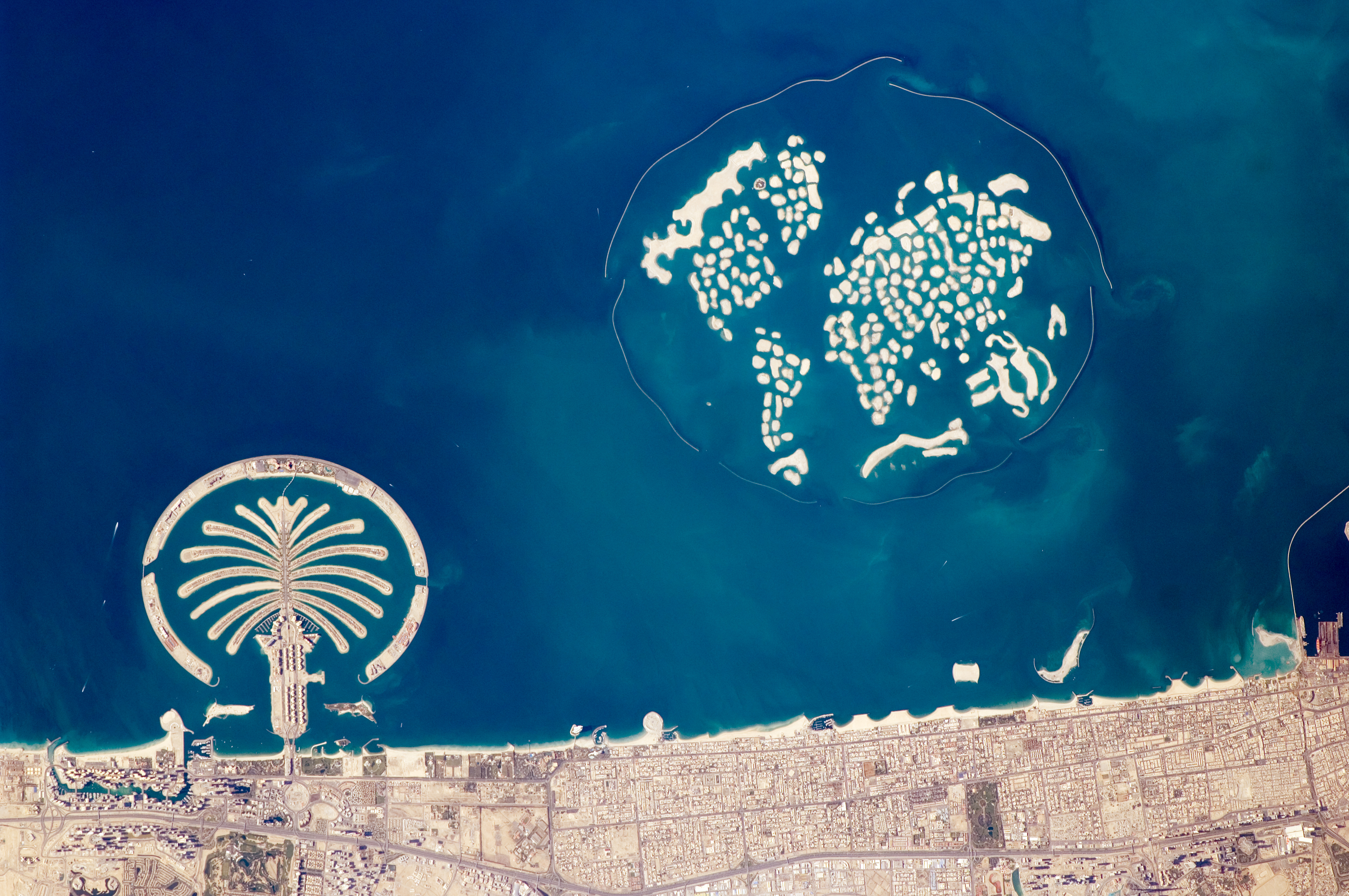
    • In body, la isla en construcción: La palmera artificial en construcción, en 2008. Free image: https://upload.wikimedia.org/wikipedia/commons/0/09/Palm_Jumeirah_on_8_May_2008_Pict_1.jpg — CC BY-SA 3.
    • In body, el monorraíl: Las ramas de la palmera vistas desde el monorraíl. Free image: https://upload.wikimedia.org/wikipedia/commons/7/73/Palm_Jumeirah_From_The_Monorail_%288973482934%29.jpg — CC BY 2.
  • Dubai Mall — el centro comercial más grande del mundo a los pies del Burj Khalifa

    Dubai Mall — el centro comercial más grande del mundo a los pies del Burj Khalifa

    Dubai Mall es el centro comercial más grande del mundo, a los pies del Burj Khalifa. Su acuario y su fuente lo convierten en un destino en sí mismo.

    Dubai Mall abrió el 4 de noviembre de 2008 como parte de Downtown Dubai, el proyecto urbano de 20.000 millones de dólares organizado en torno al Burj Khalifa, el edificio más alto del mundo. Con una superficie total de 1.124.000 metros cuadrados y más de 1.200 tiendas, es el centro comercial más grande del mundo por superficie total. Pero esa cifra cuenta solo la mitad de la historia: la otra mitad es lo que la gente hace dentro, patinar sobre hielo, ver tiburones, contemplar una fuente de 150 metros de altura y subir al mirador del edificio más alto del planeta desde el sótano del centro.

    Ficha rápida de Dubai Mall

    Dato Información
    Nombre Dubai Mall
    Situación Downtown Dubai, Dubái, Emiratos Árabes Unidos
    Coordenadas 25,1975° N, 55,2792° E
    Inauguración 04/11/2008
    Promotor Emaar Properties
    Superficie total 1.124.000 m² (unos 12,1 millones de pies cuadrados)
    Superficie interior Unos 550.000 m² (5,9 millones de pies cuadrados)
    Superficie comercial alquilable 350.000 m² (3,77 millones de pies cuadrados)
    Número de tiendas Más de 1.200
    Código Wikidata Q1133309

    Conviene distinguir las tres cifras de superficie, porque las fuentes las confunden a menudo: la superficie total del terreno y del edificio es de 1.124.000 metros cuadrados, la cifra que le da el título de más grande del mundo; la superficie interior es de unos 550.000 metros cuadrados; y la superficie comercial alquilable real es de 350.000 metros cuadrados, que solo la situaría en torno al puesto 20 del mundo según ese criterio. Dicho de otro modo, Dubai Mall es el más grande del mundo no por tener más tiendas, sino porque dentro alberga todo un mundo de ocio: acuario, pista de hielo, cines, zona infantil y la entrada al mirador del Burj Khalifa.

    El aparcamiento del centro tiene 14.000 plazas, y hay más de 200 restaurantes y cafeterías. El tamaño es tal que entrar por la puerta equivocada puede obligar a caminar un kilómetro bajo techo para llegar a la tienda buscada. Por eso el primer consejo para quien viene por primera vez es sencillo: estudiar el plano antes de entrar y guardar la ubicación del coche.

    Geografía de Dubai Mall

    Downtown Dubai, el lago y la fuente

    Dubai Mall está en el centro de Downtown Dubai, el barrio nuevo de unos 2 kilómetros cuadrados planificado en torno al Burj Khalifa, junto a la carretera Sheikh Zayed, el eje principal de la ciudad. Justo delante del centro está el lago del Burj Khalifa, un lago artificial de 12 hectáreas donde se encuentra la Fuente de Dubái. Al lado está Souk Al Bahar, el mercado de estilo árabe tradicional, rodeado de torres residenciales y hoteles junto al lago.

    El mercado de Souk Al Bahar, junto al centro
    El mercado de Souk Al Bahar, junto al centro — CC BY-SA 4

    Llegar a Dubai Mall es muy fácil, incluso para quien visita Dubái por primera vez. La estación de metro más cercana es Burj Khalifa/Dubai Mall, en la línea roja, conectada con el centro comercial por un puente peatonal con aire acondicionado de casi un kilómetro, por el que se camina con el calor de Dubái sin sudar una gota.

    Desde el aeropuerto internacional de Dubái, el metro llega directo a esa estación sin transbordo. Si se va en taxi, conviene decirle al conductor por qué puerta entrar, según la zona que se quiera visitar, porque el centro es tan grande que entrar por la puerta equivocada puede añadir un kilómetro de caminata interior.

    Dentro, el centro se divide en zonas temáticas, lo que la gente llama centros dentro del centro, con sus pasillos, sus plazas y sus zonas de comida propias. La entrada al mirador At The Top del Burj Khalifa está en la planta baja inferior, siguiendo los carteles de At The Top. El consejo más importante para la primera visita: llegar al menos 30 minutos antes de la hora de la entrada, porque es fácil perderse dentro, y fotografiar los carteles o guardar la ubicación del coche, porque el aparcamiento tiene 14.000 plazas.

    Un barrio entero bajo techo

    Downtown Dubai no es solo un centro comercial: es un barrio completo construido alrededor del edificio más alto del mundo. Dubái quiso que el Burj Khalifa no estuviera solo, sino rodeado de viviendas, hoteles, oficinas, un parque, un lago y un centro comercial lo bastante grande para ser un destino de toda la ciudad. Dubai Mall es la pieza comercial de ese plan, y su escala solo se entiende dentro de él.

    El lago artificial de 12 hectáreas es el escenario de la Fuente de Dubái y de los paseos nocturnos junto al agua. Las torres que rodean el lago, con sus restaurantes en la planta baja, convierten la orilla en una de las zonas más animadas de Dubái por la noche. Quien visite Dubai Mall por la tarde y se quede hasta la noche verá cómo el barrio cambia: de día es un centro comercial, de noche es un paseo junto al lago con el Burj Khalifa iluminado.

    Un barco en el lago del Burj Khalifa de noche
    Un barco en el lago del Burj Khalifa de noche — CC0

    La Fuente de Dubái, fuera del centro y junto al Burj Khalifa, es uno de los sistemas de fuentes coreografiadas más grandes del mundo, con espectáculos de agua sincronizados con música y luces. La fuente tiene 25 proyectores de color y 6600 luces, y sus cinco círculos de chorros lanzan el agua al aire al ritmo de la música, en un espectáculo que se repite varias veces cada noche.

    El espectáculo de la Fuente de Dubái de noche
    El espectáculo de la Fuente de Dubái de noche — CC BY-SA 2

    La Fuente de Dubái, con el Burj Khalifa detrás
    La Fuente de Dubái, con el Burj Khalifa detrás — CC BY-SA 2

    En diciembre de 2012 se completó el Metro Link, un puente peatonal elevado y con aire acondicionado de 820 metros que une la estación de metro de Burj Khalifa y Dubai Mall con el centro. El puente convirtió el metro en la forma más cómoda de llegar sin taxi, y desde el aeropuerto internacional de Dubái el metro llega directo a esa estación sin transbordo. Caminar por el puente lleva unos diez minutos, con vistas al barrio nuevo y a la torre.

    El Acuario de Dubái y el Zoo Submarino, dentro del centro, muestran más de 300 especies de animales marinos, entre ellos tiburones y rayas. Sus tres zonas representan la selva tropical, la costa rocosa y el océano vivo, y el acuario ha recibido premios de excelencia por su trabajo de divulgación. Es una de las razones por las que muchas familias visitan el centro sin intención de comprar, y por las que el centro se vende como destino y no solo como lugar de compras.

    Un tiburón del Acuario de Dubái
    Un tiburón del Acuario de Dubái — CC BY-SA 4

    El tanque principal del Acuario de Dubái
    El tanque principal del Acuario de Dubái — CC BY-SA 4

    El cine del centro tiene 22 salas, entre ellas el primer cine de Dubái con certificación THX, y sus cuatro salas de lujo ofrecen una experiencia distinta a la de un cine normal. Junto con la pista de hielo, el acuario y la zona infantil, el cine convierte el centro en un lugar donde una familia puede pasar el día entero sin comprar nada.

    La pista de hielo de Dubai Mall
    La pista de hielo de Dubai Mall — Public domain

    Historia de Dubai Mall

    Una pieza del sueño de Downtown Dubai

    Dubai Mall no nació solo. Es una pieza de Downtown Dubai, el barrio que Emaar Properties planificó desde principios de los años 2000 en torno a la torre Burj Khalifa, entonces llamada Burj Dubai. La idea era clara: construir el edificio más alto del mundo y levantar a su alrededor un barrio completo, con viviendas, hoteles, oficinas, un parque, un lago y un centro comercial lo bastante grande para ser un destino de toda la ciudad.

    El centro se inauguró el 4 de noviembre de 2008, con unas 1.000 tiendas abiertas el primer día. En los años siguientes se fueron abriendo zonas nuevas: la zona de Fashion Avenue, dedicada a la moda de lujo, se amplió; se añadieron zonas de ocio y de gastronomía; y el centro llegó poco a poco a las más de 1.200 tiendas actuales. Junto con el Burj Khalifa, inaugurado en 2010, y la Fuente de Dubái, Dubai Mall completó el trío de símbolos de Downtown Dubai, la torre, el centro comercial y la fuente, que visitan decenas de millones de viajeros cada año.

    De centro de compras a destino turístico

    Lo interesante es que Dubai Mall no solo creció en superficie, sino que cambió de papel: de centro de compras se convirtió en un destino turístico independiente. El Acuario de Dubái y el Zoo Submarino, abiertos con el centro en 2008, vendieron más de 61.000 entradas en sus primeros cinco días, una cifra que muestra que la gente no viene solo a comprar. La Fuente de Dubái en el exterior, la pista de hielo interior, la zona de KidZania para niños y los cines Reel Cinemas convierten el centro en un lugar donde una familia puede pasar el día entero sin comprar nada, y ese es precisamente su modelo de negocio: cuanto más tiempo se queda la gente, más razones tiene para volver.

    En 2023, el centro cambió oficialmente su nombre de The Dubai Mall a Dubai Mall, un cambio pequeño de marca que muestra que Emaar quería un nombre más corto y fácil de recordar, acorde con su posición de símbolo. Se llame como se llame, la gente de Dubái lo llama simplemente the Mall, y todo el mundo entiende de qué lugar se trata.

    Cronología de Dubai Mall

    Año Acontecimiento
    Principios de los años 2000 Emaar Properties planifica Downtown Dubai en torno a la torre Burj Dubai
    04/11/2008 Dubai Mall abre, con unas 1.000 tiendas abiertas el primer día
    2008 El Acuario de Dubái y el Zoo Submarino abren con el centro; más de 61.000 entradas vendidas en 5 días
    04/01/2010 El Burj Khalifa se inaugura junto al centro; At The Top abre al día siguiente
    2023 El centro cambia oficialmente su nombre de The Dubai Mall a Dubai Mall

    La historia de Dubai Mall es corta, menos de dos décadas, pero es la historia de cómo Dubái se reinventó como destino turístico global. El centro no tiene siglos de historia como los templos de Chiang Rai o las murallas de Xi An; su historia es la de un proyecto urbano ambicioso que se hizo realidad en pocos años y que hoy recibe a decenas de millones de visitantes.

    En octubre de 2004, la promotora Emaar Properties adjudicó la construcción del centro a un consorcio de tres constructoras, y el proyecto ganó dos premios en los Retail Future Project Awards de Cannes en 2004, al mejor proyecto comercial grande y al mejor uso de la iluminación. Esos premios llegaron antes incluso de que el centro abriera sus puertas, y muestran que el proyecto se pensó como un escaparate de Dubái, no solo como un edificio comercial.

    En junio de 2013, Dubai Mall empezó la primera fase de su ampliación, que añadió unos 93 mil metros cuadrados de superficie comercial para acoger a más visitantes. El proyecto se completó en 2018, con la ampliación de la zona de moda de lujo, y el centro llegó poco a poco a las más de mil doscientas tiendas actuales. En junio de 2024, Emaar Properties anunció una nueva ampliación de mil quinientos millones de dirhams, que añadirá 240 tiendas y locales de restauración nuevos.

    El parque temático interior del centro cambió varias veces de nombre y de concepto: primero fue un parque de videojuegos, que cerró en junio de 2017, y en febrero de 2018 reabrió como un parque dedicado a la realidad virtual. En 2022, el parque cambió de nuevo de nombre, y hoy es una de las atracciones de ocio del centro para los visitantes más jóvenes.

    Turismo en Dubai Mall

    Cuándo ir y cuánto tiempo quedarse

    Dubái es caluroso todo el año, pero la mejor época para visitar Dubai Mall y Downtown es de noviembre a marzo, cuando la temperatura exterior es agradable, el cielo está despejado y la fuente al aire libre es una experiencia real. En verano, de junio a septiembre, la temperatura exterior puede superar los 40 grados, pero dentro del centro siempre hace fresco, así que la experiencia de compras y de visita casi no cambia; solo la zona exterior junto al lago es más calurosa.

    El mejor momento del día es la tarde: llegar al centro hacia las 16 o 17 horas, pasear por las tiendas y el acuario, y salir a la orilla del lago al atardecer para ver la fuente y el Burj Khalifa iluminado. La noche es también el momento de mayor animación junto al lago, con los restaurantes llenos y el espectáculo de luces en la fachada de la torre.

    Una tarde hasta la noche, unas 4 o 5 horas, es el ritmo adecuado para una primera visita: dos horas para las compras y el paseo, una hora para el Acuario de Dubái y la noche para la fuente y la cena junto al lago. Si se quiere subir al mirador At The Top del Burj Khalifa, hay que añadir entre 1,5 y 2,5 horas, y reservar con varios días de antelación si se quiere la hora de la puesta de sol. Si se viaja con niños, hay que añadir tiempo para KidZania y la pista de hielo, dos lugares que pueden ocupar toda una mañana de una familia.

    No hay que intentar ver todo Dubai Mall en una sola visita: con más de 1.200 tiendas, es imposible, y tampoco es el objetivo. Conviene elegir antes dos o tres zonas, por ejemplo Fashion Avenue para la moda de lujo, la zona del acuario y la pista de hielo para la familia, y la zona gastronómica para la cena, y dejar el resto para la próxima vez.

    Cómo moverse dentro de Dubai Mall

    La forma más cómoda es el metro de la línea roja, bajando en la estación de Burj Khalifa/Dubai Mall y cruzando el puente peatonal con aire acondicionado hasta el centro. Desde el aeropuerto internacional de Dubái, la línea roja llega directa a esa estación sin transbordo. Los taxis y los coches con conductor cubren toda la ciudad, pero en las horas punta de la noche las carreteras de Downtown Dubai se atascan, y el metro es más rápido y más seguro.

    Dentro del centro, conviene usar el plano del teléfono o los paneles electrónicos: el centro tiene muchas plantas y muchas zonas, y encontrar una tienda concreta puede llevar bastante tiempo sin consultar antes. La entrada a At The Top está en la planta baja inferior, cerca del acuario, siguiendo los carteles, y no hay que dudar en preguntar al personal, acostumbrado a orientar a los visitantes perdidos.

    Dónde comer en Dubai Mall

    Dubai Mall tiene más de 200 restaurantes y cafeterías, de todos los precios y estilos: desde la zona gastronómica con comida rápida internacional hasta los restaurantes junto al lago con vistas directas a la fuente y al Burj Khalifa. Cenar en un restaurante junto al lago mientras la fuente actúa es una de las experiencias clásicas de Dubái, pero hay que reservar mesa, porque las mesas con buenas vistas suelen estar llenas por la noche.

    La zona de Souk Al Bahar, al lado, con sus restaurantes de estilo árabe tradicional, es una buena opción si se quiere cambiar de ambiente y salir del espacio moderno del centro. Y si solo se necesita una comida rápida entre compras, la zona gastronómica de las plantas superiores tiene cocina asiática, europea y de Oriente Medio a precios mucho más bajos que los restaurantes junto al lago.

    Vista del Dubai Mall

    Vista del Dubai Mall — CC BY-SA 4

    Lugares destacados de Dubai Mall

    • Acuario de Dubái y Zoo Submarino — el acuario interior con 10 millones de litros de agua y más de 33.000 animales marinos, visto a través del panel de acrílico más grande del mundo (32,88 m de ancho, 8,3 m de alto y 750 mm de grosor). El túnel de 48 m cruza el acuario, con tiburones y rayas nadando sobre la cabeza. Mirar desde fuera es gratis; la mayor parte de los visitantes se detiene a hacer fotos sin comprar la entrada al Zoo Submarino.
    • Fuente de Dubái — el sistema de fuentes musicales sobre el lago del Burj Khalifa, justo delante del centro, con chorros de hasta 150 m de altura, 6.600 luces y 25 proyectores de color, que actúa con música por la noche. Verla desde la orilla del lago es completamente gratis.
    • At The Top, el Burj Khalifa — la entrada al mirador está en la planta baja inferior de Dubai Mall. Las plantas 124 y 125, a unos 452–456 m, son el mirador estándar; la planta 148, a 555 m, es At The Top SKY, el mirador al aire libre de nivel superior.
    • Pista de hielo de Dubái — la pista de patinaje interior de tamaño olímpico, en pleno centro comercial, en una ciudad del desierto, una imagen de contraste que todo viajero recuerda.
    • KidZania — la ciudad en miniatura para niños, donde los pequeños se convierten en pilotos, médicos o cocineros por un día, una parada habitual de las familias.
    • Cascada interior (Human Waterfall) — la cascada decorativa con figuras de buceadores de fibra de vidrio cayendo desde lo alto, uno de los rincones más fotografiados del centro.
    • Fashion Avenue — la zona de moda de lujo, con las grandes marcas, una arquitectura elegante y un ambiente mucho más tranquilo que el resto del centro.
    • Reel Cinemas — el conjunto de cines del centro, con salas de nivel superior y butacas de clase preferente.
    • Souk Al Bahar — el mercado junto al centro, de estilo tradicional árabe, con restaurantes junto al lago y vistas directas a la fuente.
    • Lago del Burj Khalifa — el lago artificial de 12 hectáreas al pie de la torre, escenario de la fuente, de los espectáculos de luces y de los paseos nocturnos junto al agua.

    Un viaje de dos o tres días por el emirato puede unir el centro comercial con el mirador del Burj Khalifa, la isla de Palm Jumeirah y las calles de Dubái. Y quien quiera cambiar el aire acondicionado por el desierto abierto puede seguir hacia Wadi Rum en Jordania.

    La cascada interior de Dubai Mall
    La cascada interior de Dubai Mall — CC BY 3

    Vista del Dubai Mall

    Vista del Dubai Mall — Public domain

    Preguntas frecuentes sobre Dubai Mall

    ¿Dubai Mall es el centro comercial más grande del mundo?

    Sí, por superficie total: 1.124.000 metros cuadrados, con más de 1.200 tiendas. Pero por superficie comercial alquilable, 350.000 metros cuadrados, solo se sitúa en torno al puesto 20 del mundo; gran parte de su superficie se dedica al ocio: acuario, pista de hielo, cines y zonas públicas.

    ¿En qué año abrió Dubai Mall?

    El 4 de noviembre de 2008, con unas 1.000 tiendas abiertas el primer día. El promotor es Emaar Properties, también promotor del Burj Khalifa.

    ¿Qué tiene de especial el Acuario de Dubái?

    El acuario tiene 10 millones de litros de agua y más de 33.000 animales marinos, visto a través del panel de acrílico más grande del mundo, de 32,88 por 8,3 metros. El túnel de 48 metros cruza el acuario. Mirarlo desde fuera es gratis; la entrada al Zoo Submarino se compra aparte.

    ¿Cuándo actúa la Fuente de Dubái?

    La fuente actúa con música por la noche, con chorros de hasta 150 metros, 6.600 luces y 25 proyectores de color. Verla desde la orilla del lago es gratis. El horario concreto de cada día puede cambiar, así que conviene comprobar el horario oficial antes de ir.

    ¿Por dónde se entra al mirador del Burj Khalifa?

    Por la planta baja inferior de Dubai Mall, siguiendo los carteles de At The Top. La estación de metro más cercana es Burj Khalifa/Dubai Mall, en la línea roja, conectada con el centro por el puente peatonal con aire acondicionado. Conviene llegar al menos 30 minutos antes de la hora de la entrada.

    ¿Cuánto tiempo hay que dedicar a Dubai Mall?

    Para una primera visita bastan una tarde y una noche: tiendas y acuario por la tarde, fuente y cena junto al lago al anochecer. El mirador At The Top añade entre 1,5 y 2,5 horas, y con niños conviene reservar tiempo extra para KidZania y la pista de hielo.

    Verificado

    Los datos de Dubai Mall se tomaron del artículo vietnamita verificado el 17 de noviembre de 2026: inauguración el 4 de noviembre de 2008, más de 1.200 tiendas, superficie total de 1.124.000 metros cuadrados, superficie interior de unos 550.000 metros cuadrados, superficie comercial alquilable de 350.000 metros cuadrados, acuario de 10 millones de litros con más de 33.000 animales, fuente con chorros de hasta 150 metros y aparcamiento de 14.000 plazas. Verificado el 20 de noviembre de 2026.

    Fuentes y fecha de verificación (20/11/2026)

    • Dubai Mall, inauguración el 04/11/2008, más de 1.200 tiendas, superficie total de 1.124.000 m², superficie interior de unos 550.000 m², superficie comercial alquilable de 350.000 m², el más grande del mundo por superficie total: Wikipedia, Dubai Mall.
    • Acuario de Dubái: 10 millones de litros de agua, más de 33.000 animales marinos, panel de acrílico de 32,88 m por 8,3 m por 750 mm, túnel de 48 m, 61.000 entradas vendidas en los primeros 5 días: Wikipedia, Dubai Mall.
    • Fuente de Dubái: chorros de hasta 150 m, 6.600 luces, 25 proyectores de color: Book Dubai Tours.
    • Burj Khalifa, 828 m, inaugurado el 04/01/2010, At The Top en las plantas 124–125 (452–456 m), At The Top SKY en la planta 148 (555 m), lago del Burj Khalifa de 12 hectáreas, Downtown Dubai de 2 km²: artículo verificado de Burj Khalifa, TheTerraAtlas, 17/11/2026.
    • Aparcamiento de 14.000 plazas y más de 200 restaurantes: Dubai Discoveries.
    • Dubai Mall es Q1133309 en Wikidata, en 25,1975° N, 55,2792° E: consulta a la API de Wikidata del 17/11/2026.
    • Palabras clave en español (dubai mall, mall de dubai, dubai mall restaurantes, cine dubai mall, dubai mall horarios, dubai mall metros cuadrados): archivo de agrupación ES gom-nhom-2145-dia-danh-uu-tien-Dubai-TayA-DiaTrungHai-ES.

    Sin verificar

    • Los horarios exactos de apertura de Dubai Mall según el día de la semana y el mes de Ramadán: la página oficial de horarios no mostraba las horas en formato legible en la comprobación del 17/11/2026; el artículo no da horas concretas.
    • Los precios de entrada del Acuario de Dubái y del Zoo Submarino y de At The Top: cambian según la categoría de entrada y la hora; una fuente de síntesis indica una categoría Silver del acuario de 199 AED a finales de 2026, sin contrastar con la lista oficial de precios; el artículo no da precios concretos.
    • El calendario detallado de actuaciones de la Fuente de Dubái por días: las fuentes dan horarios distintos según la temporada; el artículo solo indica que actúa por la noche.
    • El número exacto de tiendas actual, más de 1.200, y el número de pantallas de Reel Cinemas: las fuentes dan cifras distintas, 22 o 26 pantallas; el artículo no da el número de pantallas.
    • El año del cambio oficial de nombre de The Dubai Mall a Dubai Mall, 2023: solo una fuente de síntesis lo menciona, sin contrastar con el comunicado oficial de Emaar.

    Illustrations

    • Hero: Al entrar por primera vez en Dubai Mall, la sorpresa no viene de una sola cosa, sino de todas a la vez: un acuario gigante de tres pisos de alto con tiburones nadando tras el cristal, una pista de hielo en medio del d… Free image: https://upload.wikimedia.org/wikipedia/commons/7/7e/Dubai_Mall%2C_2013_%28Ank_Kumar%29_04.jpg — CC BY-SA 4.
    • In body, el Dubai Mall: Vista del Dubai Mall. Free image: https://upload.wikimedia.org/wikipedia/commons/7/7f/Dubai_Mall%2C_2013_%28Ank_Kumar%29_05.jpg — CC BY-SA 4.
    • In body, el Dubai Mall: Vista del Dubai Mall. Free image: https://upload.wikimedia.org/wikipedia/commons/4/42/Dubai_Mall_gallery%2C_6_December_2008.jpg — Public domain.
    • In body, la Fuente de Dubái: El espectáculo de la Fuente de Dubái de noche. Free image: https://upload.wikimedia.org/wikipedia/commons/4/47/Burj_Khalifa_Dancing_Water_Fountain_show_%288276867697%29.jpg — CC BY-SA 2.
    • In body, el lago del Burj Khalifa: Un barco en el lago del Burj Khalifa de noche. Free image: https://upload.wikimedia.org/wikipedia/commons/e/e4/Boat_on_the_Burj_Khalifa_Lake_at_night.jpg — CC0.
    • In body, el Acuario de Dubái: Un tiburón del Acuario de Dubái. Free image: https://upload.wikimedia.org/wikipedia/commons/3/39/Dubai_Mall_aquarium_shark.jpg — CC BY-SA 4.
    • In body, la pista de hielo: La pista de hielo de Dubai Mall. Free image: https://upload.wikimedia.org/wikipedia/commons/9/96/081106_Dubai_Mall_-_ice_rink.jpg — Public domain.
    • In body, la cascada interior: La cascada interior de Dubai Mall. Free image: https://upload.wikimedia.org/wikipedia/commons/4/40/Dubai_-Dubai_Mall_Waterfall–%D8%AF%D8%A8%D9%8A%D9%85%D9%88%D9%84_%D8%A7%D9%84%D8%B4%D9%84%D8%A7%D9%84_-_panoramio.jpg — CC BY 3.
    • In body, Souk Al Bahar: El mercado de Souk Al Bahar, junto al centro. Free image: https://upload.wikimedia.org/wikipedia/commons/e/e2/Souk_Al-Bahar%2C_Dubai.jpg — CC BY-SA 4.
    • In body, la Fuente de Dubái: La Fuente de Dubái, con el Burj Khalifa detrás. Free image: https://upload.wikimedia.org/wikipedia/commons/d/d2/Burj_Khalifa_Dancing_Water_Fountain_show_%288276912485%29.jpg — CC BY-SA 2.
    • In body, el Acuario de Dubái: El tanque principal del Acuario de Dubái. Free image: https://upload.wikimedia.org/wikipedia/commons/8/85/Dubai_Mall_Aquarium_Christina_Pravi.jpg — CC BY-SA 4.
  • Dubai Mall

    Dubai Mall

    Dubai Mall is the largest shopping centre in the world by total area, standing at the foot of the Burj Khalifa in the city of Dubai. Dubai Mall holds an aquarium, an ice rink and a waterfall inside, beside more than 1,200 shops and over 200 restaurants.

    The first impression on entering Dubai Mall does not come from one thing, but from everything at once: a giant aquarium as tall as three floors, with sharks drifting behind the glass; an ice rink in the middle of a desert city; an indoor waterfall with diving figures falling from above; and, overhead, the roof of a centre covering more than 1.1 million square metres. This is not only a place to shop. It is Dubai’s way of telling the world that it can build a whole city indoors and make it work. This guide follows what English-speaking searchers actually ask about Dubai Mall: its shops, its aquarium, its fountain, its hours, and how to reach the Burj Khalifa from inside.

    Quick Facts

    Item Detail
    Location Downtown Dubai, Dubai, United Arab Emirates
    Coordinates 25.1975° N, 55.2792° E
    Opened 4 November 2008
    Developer Emaar Properties
    Total area 1,124,000 m² (about 12.1 million sq ft)
    Indoor floor area About 550,000 m² (5.9 million sq ft)
    Gross leasable retail area 350,000 m² (3.77 million sq ft)
    Number of shops More than 1,200
    Wikidata Q1133309

    Three area figures need to be kept apart, because sources often mix them up: the total area of the site and the building is 1,124,000 m², the figure behind the title of largest in the world; the indoor floor area is about 550,000 m²; and the gross leasable retail area is 350,000 m², which ranks only about 20th in the world by that measure. In other words, Dubai Mall is the largest in the world not because it has the most shop units, but because inside it holds a whole world of entertainment: an aquarium, an ice rink, cinemas, a children’s city, and the entrance to the viewing deck of the tallest building on Earth.

    Geography of Dubai Mall

    Dubai Mall stands in the centre of Downtown Dubai, a new urban district of about 2 km² planned around the Burj Khalifa, along Sheikh Zayed Road, the main road of the city. Right in front of the centre lies Burj Khalifa Lake, an artificial lake of 12 hectares, home to the Dubai Fountain. Beside it stands Souk Al Bahar, a market in traditional Arab style, and around the lake rise residential towers and hotels.

    Getting to Dubai Mall is easy, even for a first-time visitor to Dubai. The nearest metro station is Burj Khalifa/Dubai Mall on the Red Line, joined to the shopping centre by an air-conditioned footbridge nearly 1 km long, so you can walk in the Dubai heat without breaking a sweat. From Dubai International Airport, the metro runs straight to this station without a change. If you take a taxi, tell the driver which entrance you need, because the centre is so large that entering by the wrong door can mean a walk of another kilometre indoors.

    Inside, the centre is divided into themed zones — people call them “centres within the centre” — with their own walkways, squares and food areas. The entrance to At The Top, the viewing deck of the Burj Khalifa, lies on the Lower Ground floor, following the signs for “At The Top”. The most useful advice for a first visit is to arrive at least 30 minutes before the time on your ticket, because it is easy to get lost inside, and to photograph a sign or save your parking spot, since the car park holds 14,000 spaces.

    The lakeside outside is as much a part of the centre as the shops inside. A promenade runs around Burj Khalifa Lake, and in the evening it fills with families, photographers and diners at the waterfront restaurants, all waiting for the fountain to begin. Souk Al Bahar, beside the centre, offers a slower rhythm: low arcades, small shops and restaurants in a traditional Arab style, with the same lake view but without the crowds of the main halls. Visitors who feel overwhelmed indoors often find that a walk around the lake, with the tower above and the water below, restores the sense of scale that the interior takes away.

    Downtown Dubai and Burj Khalifa Lake

    A first visit usually starts with a shock of scale: an 828-metre spire, a 12-hectare sheet of water at its foot, and a shopping centre facing both. This is Downtown Dubai, a planned neighbourhood of about 2 km² strung along Sheikh Zayed Road, where homes, hotels, offices and a park were laid out around the tallest structure on Earth. The mall sits at the centre of that plan, not at its edge, and the whole quarter is meant to be read as one place.

    The water in front of the mall is man-made. Burj Khalifa Lake covers 12 hectares and carries the Dubai Fountain, while a waterside walk rings it, filling at dusk with families, photographers and diners waiting for the show. Across the water, flats and hotels rise in a ring, so tower, lake and mall form a single picture from almost any point on the promenade.

    Inside: themed zones, floors and entrances

    Step inside and the building stops behaving like one shop and starts behaving like a small town. Its walkways are grouped into themed districts, each with its own squares and places to eat, so regulars talk about going to one part of the mall rather than to the mall as a whole. The sheer size explains the habit: the site covers 1,124,000 m² in all, with some 550,000 m² under roof, yet only 350,000 m² of that is shop floors — the rest is halls, attractions and open space, which is why the centre tops the world ranking for total area while sitting near twentieth for retail space alone.

    Arriving is half the skill. The Red Line drops you at Burj Khalifa/Dubai Mall station, and a covered walk of almost a kilometre brings you in out of the heat; the same line runs direct from Dubai International Airport. By cab or car, pick your door before you set off — a wrong choice can add a kilometre of corridors — and note where you parked, because the garage holds 14,000 cars.

    The tower’s viewing decks are reached from inside the mall, down on the Lower Ground level, where colour-coded signs point the way. Booked visitors should allow a generous margin: the corridors are long, the building is easy to wander in, and arriving a good half hour before the slot on your ticket is the safer plan. From there the lifts rise to floors 124 and 125, roughly 452–456 m up, while the open-air deck on floor 148 sits at 555 m.

    The lakeside, Souk Al Bahar and the world inside

    When the halls start to feel endless, the exit to the water resets the visit. The fountain throws jets as high as 150 m to music after dark, lit by 6,600 lights and 25 colour projectors, and watching costs nothing. The promenade gives the tower back its scale: water below, glass above, and the whole district in one view.

    Next door, Souk Al Bahar trades the mall’s scale for low arcades and small storefronts in an older Arab manner. Its tables look over the same water and the same tower, but the pace is unhurried and the crowds thinner — a place to eat and browse after the main halls. It is the quiet counterpoint to the centre beside it, not a second mall.

    Back indoors, the entertainment is the point as much as the shopping. A 10-million-litre tank holds over 33,000 creatures behind a pane 32.88 m wide, 8.3 m tall and 750 mm thick, with a 48-metre tunnel passing through it. Around it sit an Olympic-size ice rink, a miniature city for children, a waterfall of diving figures, a luxury fashion wing and a cinema complex — enough for a full day without a single purchase.

    A view of Dubai Mall

    A view of Dubai Mall — Public domain

    History of Dubai Mall

    One piece of the Downtown Dubai dream

    Dubai Mall was not born alone. It is one piece of Downtown Dubai, the district that Emaar Properties planned from the early 2000s around the Burj Khalifa, then still called Burj Dubai. The idea was clear: build the tallest building in the world, then build a complete city around it — homes, hotels, offices, a park, a lake, and a shopping centre large enough to become a destination for the whole city.

    The centre opened on 4 November 2008, with about 1,000 shops open on the first day. In the years that followed, new areas opened one by one: the Fashion Avenue area for high-end fashion was extended, entertainment and dining areas were added, and the centre gradually reached the figure of more than 1,200 shops it holds today. Together with the Burj Khalifa, inaugurated in 2010, and the Dubai Fountain, Dubai Mall completed the trio of symbols of Downtown Dubai — tower, shopping centre and fountain — that tens of millions of visitors seek out every year.

    From a shopping centre to a destination

    What is interesting is that Dubai Mall did not only grow in area, but also changed its role: from a shopping centre, it became a tourist destination in its own right. Dubai Aquarium & Underwater Zoo, which opened with the centre in 2008, sold more than 61,000 tickets in its first five days, a figure that shows people came here not only to shop. The Dubai Fountain outside, the indoor ice rink, the KidZania children’s city and the Reel Cinemas turned the centre into a place where a family can spend a whole day without buying anything — and that is exactly the business model: the longer you stay, the more reasons you have to come back.

    In 2023 the centre officially changed its name from “The Dubai Mall” to “Dubai Mall”, a small change of branding that shows Emaar wanted a shorter, more memorable name, fitting its status as a symbol. By either name, the people of Dubai still call it simply “the Mall”, and everyone understands which place that means.

    Building the district first, the mall second

    Emaar’s plan in the early 2000s put the neighbourhood before the shop. The developer — already behind the tower, then known as Burj Dubai — drew a whole quarter first: flats, hotels, offices, a park and a lake, with a vast retail centre as its anchor rather than a standalone box. That order matters: the mall was sized and placed to serve a district, not merely to stand beside a tall building.

    The centre welcomed its first shoppers on 4 November 2008, when roughly 1,000 stores were trading. Fourteen months later the tower beside it was inaugurated, on 4 January 2010, its observation decks opening the following day. Tower, fountain and mall have been visited as a single trio ever since, drawing tens of millions of people a year to the same few blocks.

    Opening day and the years of growth

    Growth after opening came in stages, not all at once. The luxury wing, Fashion Avenue, was enlarged, dining and leisure areas were added, and the store count climbed past 1,200. New wings followed too — a Chinatown quarter, a hypermarket and the Zabeel extension — each answering a different kind of visitor the original plan had not fully covered.

    Entertainment grew alongside the shops. The aquarium, open from day one, drew more than 61,000 ticket buyers in its first five days, proof that crowds arrived for the spectacle as well as the shelves. The ice rink, the children’s city and the cinemas added the same pull, and the food offer passed 200 outlets, from a food court to tables facing the fountain and the tower.

    From a shopping centre to a destination, and a shorter name

    Somewhere along that growth the building’s job changed. Shoppers still came, but so did sightseers who bought nothing: they came for the tank, the rink, the fountain outside and the view from the tower. The centre had become a stop on a tourist itinerary, and its world-leading total area reflects that — most of the floor is given to spectacle and public space, not to selling.

    The name caught up in 2023, fifteen years after opening, when “The Dubai Mall” officially shortened to “Dubai Mall”. Dropping the single word “The” made the name shorter and easier to remember, matching a landmark that needed no introduction. Locals had already shortened it further, to simply “the Mall” — and everyone in the city knows which building that means.

    Timeline

    Year Event
    Early 2000s Emaar Properties plans Downtown Dubai around Burj Dubai
    4 November 2008 Dubai Mall opens, with about 1,000 shops open on the first day
    2008 Dubai Aquarium & Underwater Zoo opens with the centre; more than 61,000 tickets sold in the first five days
    4 January 2010 Burj Khalifa is inaugurated beside the centre; At The Top opens the next day
    2023 The centre officially changes its name from “The Dubai Mall” to “Dubai Mall”

    Dubai Mall, 2013 (Ank Kumar)

    Dubai Mall, 2013 (Ank Kumar) — CC BY-SA 4

    Travel in Dubai Mall

    When to go

    Dubai is hot all year, but the best season to visit Dubai Mall and the Downtown area runs from November to March, when the outdoor temperature is comfortable, the sky is clear, and the fountain outside is a real pleasure. In summer, from June to September, the outdoor temperature can pass 40°C, but inside the centre it is always cool, so the shopping and visiting experience barely changes, and only the outdoor area around the lake feels harsher.

    The best time of day is the late afternoon and evening: arrive at the centre around 16:00–17:00, walk through the shops and the aquarium, then go out to the lakeside as dusk falls to watch the fountain show and see the Burj Khalifa light up. Evening is also when the lakeside is at its liveliest, with the waterfront restaurants full and a light show playing across the face of the tower.

    How long to stay

    An afternoon into the evening — about 4–5 hours — is a sensible pace for a first visit: two hours for shopping and walking around, one hour for the Dubai Aquarium, and the evening for the fountain and a meal by the lake. If you want to go up to At The Top on the Burj Khalifa, add about 1.5–2.5 hours, and book several days ahead if you want the sunset hour. If you travel with children, add time for KidZania and the ice rink, two places that can easily take a whole family morning.

    Do not try to see all of Dubai Mall in one visit: with more than 1,200 shops, that is impossible, and it is not the point. Choose two or three areas in advance — Fashion Avenue for high-end fashion, the aquarium and ice rink area for families, the food area for dinner — and leave the rest for another time.

    Getting there

    The easiest way is the Red Line metro, getting off at Burj Khalifa/Dubai Mall station and walking over the air-conditioned bridge into the centre. From Dubai International Airport, the Red Line runs straight to this station without a change. Taxis and ride-hailing cars cover the whole city, but in the evening rush hour the roads around Downtown Dubai often jam, and the metro is faster and more reliable.

    Inside the centre, use the map on your phone or the electronic signboards: the centre has many floors and many areas, and finding one shop can take a long time without checking first. The entrance to At The Top lies on the Lower Ground floor, near the aquarium area, following clear coloured signs, and staff are used to directing lost visitors, so do not be shy about asking.

    Eating

    Dubai Mall holds more than 200 places to eat, at every price and in every style: from the food court with international fast food, to lakeside restaurants looking straight across at the fountain and the Burj Khalifa. Dinner at a lakeside restaurant while the fountain performs is one of the classic Dubai experiences, but book a table in advance, because the tables with the best views are usually full in the evening.

    Souk Al Bahar beside the centre, with restaurants in traditional Arab style, is a good choice if you want a change of air from the modern space of the centre. If you only need a quick meal between shops, the food areas on the upper floors offer Asian, European and Middle Eastern dishes at prices far lower than the lakeside restaurants. The search terms for the centre show how much food matters here, with names such as Hurricane Grill, Tribe, Table Otto, Al Hallab, Amaya, Parker’s, Social House, Somewhere, Carluccio’s, Cipriani, Ladurée, Angelina and Karam Beirut all appearing among the English keywords.

    Shops and what people look for

    The English keywords for Dubai Mall are dominated by shops and brands: “dubai mall shops”, “dubai mall stores”, “dubai mall shops list”, “dubai mall stores list”, “dubai mall clothing stores”, “dubai mall jewellery shops”, “dubai mall perfume shops”, “dubai mall shoe stores”, “dubai mall electronic shop”, “dubai mall watch shops”, “dubai mall gold shop” and “gold souk dubai mall”. Brand names in the list include Nike, Adidas, H&M, Uniqlo, Primark, Galeries Lafayette, Apple, Victoria’s Secret, Gymshark, Alo Yoga, Skims, Goyard, Carrefour, Ecity and Centrepoint, alongside Chinatown, the hypermarket and the Zabeel extension.

    This article does not list every shop, because shop lists change and only the centre’s own directory can be trusted for them, but the pattern in the keywords is clear: visitors come to Dubai Mall to compare fashion, perfume, watches, jewellery and electronics in one place, and to move from the luxury of Fashion Avenue to the everyday shops of the upper floors in a single afternoon.

    Highlights of Dubai Mall

    • Dubai Aquarium & Underwater Zoo — an indoor aquarium with 10 million litres of water and more than 33,000 sea creatures, seen through the largest acrylic panel in the world, 32.88 m wide, 8.3 m high and 750 mm thick. A tunnel 48 m long runs through the tank, with sharks and rays swimming overhead. Looking at the tank from outside is free, and most visitors stop to photograph it without buying a ticket for the Underwater Zoo.
    • Dubai Fountain — a musical fountain system on Burj Khalifa Lake right in front of the centre, with water jets up to 150 m high, 6,600 lights and 25 colour projectors, performing to music in the evening. Watching from the lakeside is completely free.
    • At The Top, Burj Khalifa — the entrance to the viewing deck lies on the Lower Ground floor of Dubai Mall. Levels 124–125, about 452–456 m high, are the standard viewing deck, and level 148, at 555 m, is At The Top SKY, the higher open-air deck. The Burj Khalifa has its own article in the Atlas, so it is only mentioned briefly here.
    • Dubai Ice Rink — an Olympic-standard indoor ice rink in the middle of the shopping centre, in the heart of a desert city, a contrast every visitor remembers.
    • KidZania — a miniature city for children, where young visitors act as pilots, doctors and chefs for a day, and a familiar stop for families.
    • The Human Waterfall — a decorative indoor waterfall with fibreglass figures of divers plunging down from above, one of the most photographed corners of the centre.
    • Fashion Avenue — the high-end fashion area, with major brands, elegant architecture and a far quieter atmosphere than the rest of the centre.
    • Reel Cinemas — a large cinema complex inside the centre, with premium screens and business-class seating.
    • Souk Al Bahar — the market beside the centre, in the style of a traditional Arab souk, with lakeside restaurants and a direct view of the fountain.
    • Burj Khalifa Lake — an artificial lake of 12 hectares around the foot of the tower, the setting for the fountain, the light shows and evening walks around the water.

    Frequently Asked Questions

    Is Dubai Mall the largest shopping centre in the world?

    Yes, by total area: 1,124,000 m², with more than 1,200 shops. By gross leasable retail area, 350,000 m², it ranks only about 20th in the world, because most of the centre’s area goes to entertainment: the aquarium, the ice rink, cinemas and public areas.

    When did Dubai Mall open?

    On 4 November 2008, with about 1,000 shops open on the first day. The developer is Emaar Properties, which also developed the Burj Khalifa.

    What is special about the Dubai Aquarium?

    The tank holds 10 million litres of water with more than 33,000 sea creatures, seen through the largest acrylic panel in the world, 32.88 m wide and 8.3 m high. A tunnel 48 m long runs through the tank. Looking at the aquarium from outside is free, and a ticket for the Underwater Zoo is bought separately.

    When does the Dubai Fountain perform?

    The fountain performs to music in the evening, with water jets up to 150 m high, 6,600 lights and 25 colour projectors. Watching from the lakeside is completely free. The exact daily schedule can change, so check the official schedule before going.

    How do you reach the Burj Khalifa viewing deck?

    Through the Lower Ground floor of Dubai Mall, following the signs for “At The Top”. The nearest metro station is Burj Khalifa/Dubai Mall on the Red Line, joined to the centre by an air-conditioned footbridge. Arrive at least 30 minutes before the time on your ticket.

    How long should you spend in Dubai Mall?

    Plan on an afternoon into the evening, around four to five hours, for a first visit: shopping, the aquarium, the fountain and a lakeside meal. The tower decks add roughly 1.5–2.5 hours, and children will want extra time for KidZania or the ice rink.

    Verified

    Checked 20/11/2026. Every figure in this article comes from a source listed below.

    Sources

    • Dubai Mall opened 4/11/2008, more than 1,200 shops, total area 1,124,000 m², indoor floor area about 550,000 m², gross leasable retail area 350,000 m², largest in the world by total area: Wikipedia “Dubai Mall” — https://en.wikipedia.org/wiki/Dubai_Mall
    • Dubai Aquarium: 10 million litres of water, more than 33,000 sea creatures, acrylic panel 32.88 m × 8.3 m × 750 mm, tunnel 48 m, 61,000 tickets sold in the first five days: https://en.wikipedia.org/wiki/Dubai_Mall
    • Dubai Fountain: water jets up to 150 m high, 6,600 lights, 25 colour projectors: https://en.wikipedia.org/wiki/Dubai_Mall
    • Burj Khalifa 828 m, inaugurated 4/1/2010, At The Top levels 124–125 (452–456 m), At The Top SKY level 148 (555 m), Burj Khalifa Lake 12 hectares, Downtown Dubai 2 km²: TheTerraAtlas Burj Khalifa article, checked 17/11/2026
    • Car park 14,000 spaces, more than 200 places to eat: https://www.arpconsulting.com.au/copy-of-healthcare-1 ; https://dubaidiscoveries.com/dubai-mall/
    • Coordinates 25.1975° N, 55.2792° E, Wikidata Q1133309: Wikidata API, checked 20/11/2026
    • Palm Jumeirah in Dubai: TheTerraAtlas registry, checked 20/11/2026
    • Keywords “dubai mall”, “dubai mall aquarium and underwater zoo”, “dubai mall shops”, “dubai mall hours”, “dubai mall opening hours”, “fashion avenue dubai mall”, “dubai mall cinema”, “dubai mall attractions”, “dubai mall fountain”, “dubai mall things to do”: batch3-en-keywords.json, TA-L4-dubai-mall, checked 20/11/2026

    Not Yet Verified

    • The exact opening hours of Dubai Mall by day of the week and during Ramadan — the official hours page thedubaimall.com did not show hours in a readable form when checked on 17/11/2026; this article gives no hours.
    • Ticket prices for Dubai Aquarium & Underwater Zoo and for At The Top — they change by ticket class and time; this article gives no prices.
    • The detailed daily schedule of the Dubai Fountain — sources give different schedules by season; this article only says it performs in the evening.
    • The exact number of shops today (“more than 1,200”) and the number of screens at Reel Cinemas — sources give different figures; this article gives no screen count.
    • The year of the official name change from “The Dubai Mall” to “Dubai Mall” (2023) — only one summary source mentions it, not yet matched against an official Emaar announcement.

    Illustrations

    • Hero: Dubai Mall is the largest shopping centre in the world by total area, standing at the foot of the Burj Khalifa in the city of Dubai. Free image: https://upload.wikimedia.org/wikipedia/commons/7/7e/Dubai_Mall%2C_2013_%28Ank_Kumar%29_04.jpg — CC BY-SA 4.0.
    • In body, Dubai Mall: Dubai Mall, 2013 (Ank Kumar). Free image: https://upload.wikimedia.org/wikipedia/commons/7/7f/Dubai_Mall%2C_2013_%28Ank_Kumar%29_05.jpg — CC BY-SA 4.
    • In body, Dubai Mall: A view of Dubai Mall. Free image: https://upload.wikimedia.org/wikipedia/commons/4/42/Dubai_Mall_gallery%2C_6_December_2008.jpg — Public domain.
  • Dubai

    Dubai

    Dubai, the desert city that rose from a pearl-diving village, now stacks the tallest tower on earth above malls and beaches. The city rewards travellers who look twice, from the old creek and gold souks to the Palm, the desert at sunset and the skyline at dusk.

    Dubai stands as one of the seven emirates of the United Arab Emirates, a federation founded on 2 December 1971, and the city ranks as the second largest emirate by area after Abu Dhabi. The city counted about 183,000 people in 1975, passed 4 million in 2025 and reached about 4.5 million by the end of that year, with about 92 percent of residents born outside the country. The city holds the Burj Khalifa at 828 metres, the tallest building in the world, and the tower stands at the centre of a city that builds at a scale few places attempt.

    Dubai began as a fishing and pearl-diving village in the early eighteenth century, and by 1822 it had grown into a town of about 700 to 800 people. The city changed course in 1833, when about 800 members of the Al Bu Falasah branch of the Bani Yas tribe left Abu Dhabi under Maktoum bin Butti and settled here, founding the Al Maktoum dynasty that still rules the emirate. The city declared itself a free port in 1901, found oil in 1966 and used the income to build ports, an airport and free zones rather than living on oil alone.

    Quick Facts

    Item Detail
    Location Southeastern Arabian Peninsula, on the Persian Gulf coast
    Coordinates 25.2697° N, 55.3094° E
    Wikidata Q612
    Status One of seven emirates of the United Arab Emirates; most populous city in the federation
    Emirate area 4,114 square kilometres
    City area About 1,500 square kilometres
    Population About 4.5 million by end of 2025; about 92 percent foreign-born
    Ruler Sheikh Mohammed bin Rashid Al Maktoum
    Tallest building Burj Khalifa, 828 metres, opened 4 January 2010
    Best months November to March, daytime 24 to 30 degrees Celsius

    Geography of Dubai

    A desert strip on the Gulf

    The emirate occupies a coastal strip of desert about 60 kilometres long and 10 to 15 kilometres deep, pressed against the Persian Gulf. The city has no river, and the water that shaped the city is Dubai Creek, a saltwater inlet about 14 kilometres long that divides the city into Deira in the northeast and Bur the city in the southwest. The city grew first along that creek, where dhows unloaded goods from India, Persia and East Africa, and the old districts still keep the low coral-stone houses and wind towers of that trading town.

    The city stretches westward from the creek toward long beaches along the Gulf, where the Palm Jumeirah reaches into the sea as a man-made palm. The city extends eastward and southward into the desert, where the red dunes of the Dubai Desert Conservation Reserve rise beyond the suburbs. The city therefore offers three landscapes in a single day, a creek, a beach and a desert, and visitors who plan a route across all three see the city whole.

    The city endures a hot desert climate, with summers from June to September that often pass 40 degrees Celsius and can reach 45 degrees. The city turns gentle in winter, from November to March, when daytime temperatures sit between 24 and 30 degrees Celsius and evenings turn cool enough for outdoor dining. The city receives very little rain, with an average of only about 100 millimetres a year, although a single storm can flood streets, as the record rain of 16 April 2024 showed with about 250 millimetres in one day.

    Districts that tell the story

    The city divides into districts that each mark a different era, and walking them in order tells the history of the city. The city keeps its old town at Al Fahidi in Bur the city, where coral-stone houses and wind towers now hold museums, galleries and cafes. The city crosses the creek by abra, the wooden boat that costs 1 dirham, to reach Deira and its gold souk and spice souk, where hundreds of shops sell gold, saffron, cinnamon and frankincense.

    The city built its modern centre at Downtown, around the Burj Khalifa, the Dubai Mall and the Dubai Fountain, and the district draws the largest crowds in the city. The city extends south along Sheikh Zayed Road to Dubai Marina and Jumeirah Beach Residence, where towers, a yacht harbour and a beach promenade make the liveliest evening walk in the city. The city keeps its newest district at Expo City, the site of Expo 2020, which ran in 2021 and 2022 and has become a new urban quarter.

    The city connects those districts with a metro of two lines, the Red Line and the Green Line, which link the airport, Downtown, the Marina and the old town. The city taxis and app-based cars run everywhere at metered fares, and a tram serves the Marina and Jumeirah areas. Visitors who ride the metro from the airport reach the centre in minutes, since Dubai International Airport sits about 15 minutes by road from Downtown and ranks among the busiest airports in the world.

    The emirate on the map

    Dubai stands on the south-eastern coast of the Arabian Peninsula, on the Persian Gulf, at 25.2697° N, 55.3094° E. It is one of the seven emirates of the United Arab Emirates, a federation founded on 2 December 1971, and it ranks as the second largest emirate by area after Abu Dhabi. The emirate covers 4,114 square kilometres, while the city itself covers about 1,500 square kilometres.

    The city counted about 183,000 people in 1975, passed 4 million in 2025 and reached about 4.5 million by the end of that year. About 92 percent of residents were born outside the country, and Dubai is the most populous city in the federation. That growth explains why the city keeps spreading from its old creek into the desert and along the coast.

    A desert climate with one famous storm

    The Gulf shapes the seasons here as much as the sun does, with warm, muggy air lingering along the coast even when the sky stays clear. From June to September the heat peaks, often climbing beyond 40 degrees Celsius and at times touching 45. Cooler air returns between November and March, when days stay between 24 and 30 degrees and terraces fill again after sunset, though December and January also bring the largest crowds and dearest rooms.

    The city receives very little rain, with an average of only about 100 millimetres a year. A single storm can still flood streets, as the record rain of 16 April 2024 showed, with about 250 millimetres in one day. That storm is the sharpest reminder that a desert city can flood, and it stands in the record beside the long dry summers.

    A photo of Dubai Skyline, United Arab Emirates

    A photo of Dubai Skyline, United Arab Emirates — CC BY-SA 4

    History of Dubai

    From pearl village to free port

    The city formed as a fishing and pearl-diving village in the early eighteenth century, and the first written mention of the place dates to 1095. The city counted about 700 to 800 people by 1822, when it had become a small trading town on the creek. The city changed hands in 1833, when the Al Bu Falasah settlers arrived from Abu Dhabi and founded the Al Maktoum dynasty, which has ruled the city ever since.

    The city declared itself a free port in 1901, and merchants from across the Gulf and India moved their trade to the creek. The city dredged and widened the creek in 1961, so that larger ships could dock and the port could grow. The city found oil in 1966, although its reserves were far smaller than those of Abu Dhabi, and the rulers chose to spend the income on the port, the airport and trade rather than on oil alone.

    The city opened Jebel Ali Port in 1979, and the port grew into the largest container port in the Middle East. The city built the Jebel Ali Free Zone beside it, which drew thousands of international companies to set up offices and warehouses. The city turned its airport into a global hub at the same time, and the city began to attract the airlines, hotels and conferences that made it a meeting point between Europe, Asia and Africa.

    The federation and the global city

    The city joined six other emirates to form the United Arab Emirates on 2 December 1971, and the federation gave the city a national framework for its ambitions. The city began its most dramatic transformation in the 1990s, when the rulers pushed trade, tourism and finance as the engines of growth. The city opened the Burj Al Arab in 1999, a sail-shaped hotel 321 metres tall on its own island, and the building became the symbol of luxury the city around the world.

    The city began building the Palm Jumeirah in 2001, a palm-shaped archipelago that can be seen from space and now holds hotels, villas and beach clubs. The city opened the Dubai Mall in 2008, the largest shopping mall in the world by area, with more than 1,200 shops, an aquarium, an indoor ice rink and the Dubai Fountain outside. The city completed the Burj Khalifa on 4 January 2010 at 828 metres with 163 floors, and the tower has held the title of tallest building in the world ever since.

    The city hosted Expo 2020, delayed to 2021 by the pandemic, as the first world exposition in the Middle East, and the event drew tens of millions of visits. The city turned the Expo site into Expo City, a new district of offices, homes and cultural venues. The city keeps building at the same pace, with the Museum of the Future, which opened in 2022, as the clearest sign of the direction, a torus-shaped building covered in Arabic calligraphy and devoted to technology and the future.

    Timeline

    Year Event
    1095 Dubai first mentioned in written records
    Early 18th century Fishing and pearl-diving village forms
    1822 Dubai a town of about 700 to 800 people
    1833 Al Maktoum dynasty settles in Dubai
    1901 Dubai declares itself a free port
    1961 Dubai Creek dredged and widened
    1966 Oil discovered in Dubai
    2 December 1971 United Arab Emirates founded; Dubai one of seven emirates
    1979 Jebel Ali Port opens
    1999 Burj Al Arab opens
    2001 Palm Jumeirah construction begins
    2008 Dubai Mall opens
    4 January 2010 Burj Khalifa opens, 828 metres
    2021–2022 Expo 2020 held in Dubai
    2022 Museum of the Future opens
    16 April 2024 Record rain, about 250 millimetres in one day
    2025 Population passes 4 million, then about 4.5 million by year end

    The municipality of Dubai is the largest city of the Persian Gulf emirate of the same name, and has built a global reputation for large-scale developments and architectural works

    The municipality of Dubai is the largest city of the Persian Gulf emirate of the same name, and has built a global reputation for large-scale developments and architectural works — Public domain

    Travel in Dubai

    When to go and how long to stay

    The city suits a stay of four to five days, because the city splits naturally into a day for each of its faces. The city gives one day to the old town, with Al Fahidi, the gold souk, the spice souk and an abra ride across the creek. The city gives a second day to Downtown, with the Burj Khalifa, the Dubai Mall and the Dubai Fountain, and a third day to the beaches and the Palm Jumeirah. The city reserves a fourth day for a desert safari, with camel rides, dune bashing, sunset over the red dunes and a Bedouin-style dinner under the stars, and a fifth day for museums and shopping.

    Dubai shows its best weather from November to March, when daytime temperatures sit between 24 and 30 degrees Celsius and every outdoor activity works. The city peaks in December and January, when hotels cost the most and crowds grow thickest, so travellers who want the same weather with fewer people should choose November or March. The city in summer, from June to September, turns very hot, although hotels cost far less and the indoor attractions, malls, museums and indoor parks, run normally under strong air conditioning.

    The city holds its biggest shopping event in January, the Dubai Shopping Festival, with deep discounts in the malls, fireworks and street performances across the city. The city during Ramadan turns quiet by day, when many restaurants close, and lively at night, when families gather for iftar, the meal that breaks the fast. Visitors who travel during Ramadan should respect the fast in public and plan meals around the evening hours.

    Shopping, food and getting around

    Dubai earns its reputation as a shopping city in its malls, and the English search for the city shows that more clearly than any other theme. The city holds the Dubai Mall as the largest mall in Dubai and the largest mall in the world by area, with more than 1,200 shops, and the Mall of the Emirates, Deira City Centre, Ibn Battuta Mall, Dubai Hills Mall, Dubai Festival City Mall, Dragon Mart and the Outlet Mall each serve a different corner of the city, so the best mall in Dubai depends on what a shopper wants. The city also keeps the gold souk in Deira, where hundreds of shops sell gold by weight, and the spice souk beside it, where saffron, cinnamon and frankincense fill the air.

    Dubai feeds more than 200 nationalities, and its food spans cheap street stalls and restaurants run by world-famous chefs. Visitors should try shawarma, machboos rice with meat and spices, luqaimat sweet dumplings and Arabic coffee with dates, and the old town holds the best-value Arab and Indian restaurants in the city. The city serves alcohol only in licensed restaurants and bars inside hotels, and drinking in public remains forbidden, so visitors should plan evenings accordingly.

    Dubai moves visitors on the metro, which runs clean, fast and cheap across two lines, and on taxis that use meters everywhere. The city keeps the abra ride across the creek at 1 dirham, one of the cheapest and most memorable experiences in the city, and the boats run from early morning until late at night. Visitors who want a day outside the city can drive to Abu Dhabi in about 90 minutes to see the Sheikh Zayed Grand Mosque, a journey that fits easily into a five-day stay.

    Highlights of Dubai

    • Burj Khalifa — the tallest building in the world at 828 metres with 163 floors, opened 4 January 2010, with the At The Top observation deck on floors 124 and 125.
    • Dubai Mall — the largest shopping mall in the world by area, with more than 1,200 shops, the aquarium in Dubai, an indoor ice rink and the Dubai Fountain outside.
    • Palm Jumeirah — the palm-shaped artificial archipelago begun in 2001, home to Atlantis and many beach resorts, with Dubai Palm Beach along its crescent and the best views from above.
    • Dubai Fountain — the Dubai dancing fountain on Burj Lake beside the Dubai Mall, with evening shows set to music and light.
    • Al Fahidi Historical Neighbourhood — the old town of coral-stone houses and wind towers, now a quiet quarter of museums, galleries and cafes.
    • Gold Souk and Spice Souk — the markets of Deira, with hundreds of gold shops and stalls selling saffron, cinnamon and frankincense, reached by abra across the creek.
    • Dubai Creek — the inlet that made the city, crossed by wooden abra boats for 1 dirham, the cheapest and most atmospheric ride in Dubai.
    • Museum of the Future — the torus-shaped building covered in Arabic calligraphy, opened in 2022, with exhibitions on technology and the future.
    • Dubai Desert Conservation Reserve — the red dunes east and south of the city, where safaris offer camel rides, sandboarding, sunset views and Bedouin-style dinners.
    • Burj Al Arab — the sail-shaped hotel 321 metres tall on its own island, opened in 1999, with the public beach at Umm Suqeim nearby for a free view.
    • Dubai Marina and JBR — the modern waterfront of towers, a yacht harbour and a beach promenade, the liveliest evening walk in Dubai.

    Frequently Asked Questions

    Is Dubai the capital of the United Arab Emirates?

    Dubai is not the capital of the United Arab Emirates, because the capital is Abu Dhabi, the largest emirate by area. The city ranks as the second largest emirate by area and the most populous city in the federation. The city serves as the commercial and tourism centre of the country, while Abu Dhabi holds the federal government and the presidency.

    How tall is the Burj Khalifa in Dubai?

    Dubai holds the Burj Khalifa at 828 metres, with 163 floors, and the tower has been the tallest building in the world since it opened on 4 January 2010. Visitors reach the At The Top observation deck on floors 124 and 125 for a panorama of the city, the Gulf and the desert. The city also shows the tower from the Dubai Fountain and the Dubai Mall, where its full height reads best at dusk.

    What is the best mall in Dubai?

    Dubai offers the Dubai Mall as the largest mall in the world by area, with more than 1,200 shops, an aquarium and an indoor ice rink. The city also draws shoppers to the Mall of the Emirates, Deira City Centre, Ibn Battuta Mall, Dubai Hills Mall and Dubai Festival City Mall, each with a different mix of brands. Bargain hunters head to Dragon Mart for low prices and to the Outlet Mall for discounted brands, while the gold souk in Deira suits jewellery buyers.

    What is the best time to visit Dubai?

    Come between November and March for mild days in the mid-twenties to about 30 degrees. Shoulder months at either end of that window offer similar conditions with thinner crowds and lower prices.

    How many days do you need in Dubai?

    Dubai needs four to five days for a first visit, because the city divides into distinct days for the old town, Downtown, the beaches and the Palm, the desert safari and a spare day for museums and shopping. Visitors with only two days should focus on the old town and Downtown, which together carry the story of the city. The city rewards a longer stay with a day trip to Abu Dhabi, about 90 minutes away, to see the Sheikh Zayed Grand Mosque.

    Is Dubai safe for tourists?

    Dubai ranks among the safest large cities in the world for visitors, with low street crime and a strong police presence in tourist areas. Travellers should still take normal precautions, keep valuables secure in crowded malls and souks and check current travel advice from their own government before departure. The city asks visitors to respect local customs, including modest dress in the old town and mosques and no drinking in public.

    Verified

    Checked 20/11/2026. One of seven emirates of the United Arab Emirates, federation founded 2 December 1971; second largest emirate by area after Abu Dhabi; emirate area 4,114 square kilometres; population about 183,000 in 1975, passed 4 million in 2025, about 4.5 million by end of 2025, about 92 percent foreign-born; Al Bu Falasah settled 1833 under Maktoum bin Butti; free port 1901; creek dredged 1961; oil found 1966; Jebel Ali Port opened 1979; Burj Al Arab opened 1999, 321 metres; Palm Jumeirah construction began 2001; Dubai Mall opened 2008; Burj Khalifa opened 4 January 2010, 828 metres, 163 floors; Expo 2020 held 2021–2022; Museum of the Future opened 2022; record rain 16 April 2024, about 250 millimetres in one day; Dubai Creek about 14 kilometres long; abra fare 1 dirham; coordinates 25.2697° N, 55.3094° E; Wikidata Q612.

    Sources

    • Dubai: population, area, coordinates, founding, Al Bu Falasah settlement 1833, free port 1901, creek widening 1961, Burj Khalifa 2010 — Wikipedia, checked 20/11/2026 — en.wikipedia.org city
    • Dubai: population over 4 million in 2025, 4.58 million by end of 2025, emirate area 4,114 square kilometres, UAE founded 2 December 1971, Burj Khalifa 828 metres and 163 floors — the city statistics and travel guides, checked 20/11/2026 — dubaieverything.com
    • Dubai Mall: largest mall in the world by area, opened 2008, more than 1,200 shops — Emaar and travel guides, checked 20/11/2026 — www.emaar.com
    • Burj Khalifa: 828 metres, 163 floors, opened 4 January 2010 — Emaar, checked 20/11/2026 — www.burjkhalifa.ae

    Not Yet Verified

    • Current ticket prices for the Burj Khalifa observation deck, the Museum of the Future and the Dubai Aquarium, which change by time and season; this article gives no prices and readers should check the official sites before a visit.
    • The exact count of shops in the Dubai Mall and the exact area of the mall, since figures vary between sources; this article uses the figure of more than 1,200 shops.
    • The claim that Jebel Ali Port is the largest container port in the Middle East, which is widely repeated but not re-checked against current port statistics for this article.
    • The population figure of about 4.5 million by the end of 2025, which comes from Dubai statistics summaries and may be revised in later releases.

    Illustrations

    • Hero: Dubai. Free image: https://upload.wikimedia.org/wikipedia/commons/d/d3/The_well-lit_city_of_Dubai%2C_United_Arab_Emirates_%28iss072e447465%29.jpg — Public domain.
    • In body, desert: A photo of Dubai Skyline, United Arab Emirates. Free image: https://upload.wikimedia.org/wikipedia/commons/1/10/Dubai_Skyline_2016.jpg — CC BY-SA 4.
    • In body, desert: The municipality of Dubai is the largest city of the Persian Gulf emirate of the same name, and has built a global reputation for large-scale developments and architectural works. Free image: https://upload.wikimedia.org/wikipedia/commons/1/15/Artificial_Archipelagos%2C_Dubai%2C_United_Arab_Emirates_ISS022-E-024940_lrg.jpg — Public domain.
  • Palm Jumeirah

    Palm Jumeirah

    Palm Jumeirah is a palm-shaped island off Dubai, built from the sea with sand dredged from the floor of the Persian Gulf. Palm Jumeirah carries villas, hotels and a monorail on a trunk, seventeen fronds and a crescent breakwater out in the Gulf.

    Seen from the ground, it could pass for any wealthy waterfront district in Dubai: apartment towers, beach villas, five-star hotels and a single rail line running down the middle. Only from above does the intention become clear — a giant palm tree growing out of the water, its trunk, fronds and crescent all made of reclaimed land. Palm Jumeirah is the first of Dubai’s three Palm islands, and it is also the only one of the three that has been completed and lived in. It stands as the emblem of a period when Dubai decided not only to build upward into the sky but also outward into the sea.

    This guide follows what English-speaking searchers actually ask about Palm Jumeirah: what it is, how to see the palm shape, where to stay, and how to get around.

    Quick Facts

    Item Detail
    Location Off the coast of Dubai, United Arab Emirates, in the Persian Gulf
    Coordinates 25.1172° N, 55.1344° E
    Area 5.6 km² (560 ha)
    Shape Trunk, 17 fronds, and a crescent breakwater about 11 km long
    Reach into the sea About 5 km
    Extra coastline created About 78 km
    Land reclamation started June 2001
    First residents moved in 2006
    Developer Nakheel Properties
    Wikidata Q277294

    An area of 5.6 km² sounds modest, but the meaning of the number lies elsewhere: thanks to the palm shape, this island added about 78 km of coastline to Dubai, a city that previously had only about 72 km of natural coastline. Each frond is a row of villas with its own beach, and each stretch of the crescent holds a large hotel. The whole island is, in effect, a machine for making coastline.

    Geography of Palm Jumeirah

    Palm Jumeirah lies off the coast of Dubai, reaching about 5 km out into the Persian Gulf. The island has three clear parts. The trunk is the main axis joining the island to the mainland by a bridge, and on the trunk stand apartment buildings, Nakheel Mall, Palm Tower and the monorail station. From the trunk spread 17 fronds on both sides, each one a row of luxury villas with a private beach.

    Around the whole island runs the crescent, a breakwater about 11 km long, carrying the largest hotels, headed by Atlantis, The Palm at the top of the crescent.

    The breakwater is not only the edge of the island but also part of its protection: it shelters the fronds from sea waves and creates a calm stretch of water inside. Between the crescent and the fronds runs a channel that boats still use, and a tunnel under the sea joins the crescent to the trunk, so drivers going from the mainland to Atlantis pass through it, often without noticing. The climate on the island is the climate of Dubai: hot all year, with summer temperatures outdoors often above 40°C, and a cooler, more comfortable winter.

    The sea around the island is warm, clear and calm thanks to the breakwater, which makes it suitable for swimming for most of the year, although in summer the water can become so warm that it barely cools you down. The best light comes at sunset, when the sun sets over the Gulf and the crescent and fronds light up. That hour is also the busiest at the viewing deck, so visitors who want it should book well ahead.

    Daily life on the island runs at a slower pace than in the towers of Dubai Marina next door. Residents walk their dogs along the trunk in the early morning, joggers use the crescent road before the heat builds, and the cafes of Al Ittihad Park fill with families in the late afternoon. Palm West Beach, a public stretch along the trunk, draws sunset watchers who sit on the sand and look back toward the Marina skyline. That mix of ordinary routine and extraordinary geography is what makes the island feel lived in rather than staged: the palm shape is a spectacle from the air, but at street level it is a neighbourhood of schools, supermarkets, clinics and beach clubs.

    Where to stay on Palm Jumeirah

    The choice of where to stay shapes the visit more here than in most parts of Dubai, because the island is long and walking from one end to the other is not practical. A room on the crescent puts the beach, the restaurants of The Pointe and the view over the Gulf within a short walk, while a room on the trunk puts Nakheel Mall, the monorail and the viewing deck close by. The fronds, by contrast, hold private villas rather than hotels, so they suit travellers renting a house rather than booking a room.

    Hotels that English-speaking searchers ask about most often include the Waldorf Astoria Dubai Palm Jumeirah, the Hilton Dubai Palm Jumeirah, the Fairmont, the Sofitel, the Rixos, the Marriott, the One & Only, the St Regis, the Anantara, the Taj Exotica, the W, the Aloft, the Kempinski, the Dukes and the FIVE. Each sits on a different part of the island, and the search terms show people comparing them by beach, by pool and by distance to Atlantis. A traveller who wants the water park will choose near Atlantis, while a traveller who wants a quiet beach club will look to the crescent hotels further along the breakwater.

    The trunk, the fronds and the crescent

    The trunk is the spine of the island, and it is also the only part that touches the mainland, joined to it by a bridge. Apartment buildings, Nakheel Mall, Palm Tower and the monorail station all stand on this central strip, so the trunk works as the island’s high street as well as its entrance. From it, the seventeen fronds spread out on both sides like the leaves of a palm, and each frond is a row of villas with its own private beach.

    The crescent closes the shape at the far side, curving around the fronds like a protective arm. It carries the largest hotels, headed by Atlantis, The Palm at its top, and it shelters the water inside from the waves of the Gulf. Between the crescent and the fronds runs a channel that boats still use, and a tunnel under the sea joins the crescent to the trunk. The whole arrangement turns a modest area of 5.6 km² into about 78 km of new coastline, more than doubling the roughly 72 km of natural coastline Dubai had before.

    Water, weather and daily life

    The breakwater keeps the sea around the island warm, clear and calm, so swimming is possible for most of the year. In summer the air outdoors often rises above 40°C, and the water itself can grow so warm that it barely cools a swimmer down, while winter brings cooler and more comfortable weather. Sunset is the hour when the island shows itself best, with the sun going down over the Gulf and the crescent and the fronds lighting up.

    Mornings on the island belong to commuters and school runs, with cars queuing at the bridge while apartment blocks on the central spine wake up. By midday the rhythm shifts to hotel staff, delivery vans and shoppers heading for the mall, while villa owners on the side branches stay behind garden walls. Evenings bring a different crowd altogether, as restaurant tables fill and residents stroll the waterfront promenades after the heat fades.

    History of Palm Jumeirah

    An idea drawn from above

    The idea of Palm Jumeirah was born in the early 2000s, when Dubai, under Sheikh Mohammed bin Rashid Al Maktoum, was trying to diversify its economy away from oil and turn itself into a global destination. The problem was concrete: the city had little natural coastline, and coastline was exactly what tourists and property investors wanted most. The solution was equally concrete: reclaim land from the sea to create new coastline, and do it in the shape of a palm tree, a plant tied to the culture and history of the Gulf region.

    Reclamation began in June 2001, carried out by the property developer Nakheel, with Dutch and Belgian dredging contractors Van Oord and Jan De Nul. Sand was sucked from the floor of the Persian Gulf and sprayed into place exactly as mapped by GPS, while rock for the breakwater — about 7 million tonnes — was brought from quarries. In total, about 94 million cubic metres of sand were used to form the island. Dredging and the breakwater were finished around 2003, and the first residents began moving into the villas on the fronds in 2006.

    From building site to destination

    In 2008 Atlantis, The Palm opened on the crescent — the first large hotel on the island, with the Aquaventure water park and the Lost Chambers Aquarium. In the same year the Palm Monorail began trial runs, then officially opened on 30 April 2009, running along the trunk for 5.4 km from the island gateway to Atlantis. It was the first monorail in the region, and it remains the easiest way to see the whole island: sitting on the train, you see the fronds lined up on both sides like rows of real trees.

    In the years that followed, the island filled up: more hotels, more restaurants, more beach clubs. In 2019 Nakheel Mall opened on the trunk, becoming the main shopping centre of the island. In 2021 The View at The Palm opened on 7 April 2021 on the 52nd floor of Palm Tower, at a height of 240 m — the first time visitors had a viewing deck looking straight down over the whole palm shape from above, instead of only imagining it from satellite photographs. Together with the tower came the St Regis hotel, completing the Palm Tower complex.

    Palm Jumeirah today is a residential area, a resort and a place to visit all at once: about 1,730 villas on the fronds, dozens of hotels on the trunk and the crescent, and thousands of apartments. The other two Palm islands had different fates: Palm Jebel Ali stalled for many years before being restarted, while Palm Deira was replanned as the Deira Islands archipelago. Only Jumeirah went all the way from drawing board to daily life.

    Why a palm, and why from the sea

    The palm already carried deep meaning in Gulf life, so a shape drawn from it would be recognised at once by anyone looking down from an aeroplane. That instant recognition mattered to a project meant to put Dubai on the world map, giving the new land an identity no abstract geometry could offer. The branching outline then solved a second problem at the same time, because every branch added waterfront for homes and hotels on a shore that possessed very little of it.

    Work began offshore, where Dutch and Belgian dredgers lifted sand from the seabed and pumped it through floating pipelines to the outline marked out by satellite positioning. Layer by layer the trunk and its seventeen branches rose above the water, while barges delivered stone quarried elsewhere to form the long outer barrier; in total about 94 million cubic metres of sand went into the island and roughly 7 million tonnes of stone into that barrier. Once the barrier stood complete, around 2003, the sheltered interior could be shaped into plots and roads, and homes on the branches were ready for their first occupants five years after work had started.

    How the island filled in

    Riding the single rail from the gateway gives a passenger the island in miniature: branch after branch of villas sliding past on either side, until the track ends beside the twin-towered hotel at the far tip. That hotel, Atlantis, had opened in 2008, a year before the rail line began carrying passengers on 30 April 2009, bringing a water park and an aquarium to a crescent that previously held only construction sites. Later additions filled the gaps between those two landmarks, with a shopping centre arriving in 2019 and a 240-metre viewing tower in 2021, so the ride now passes a resort that grew piece by piece rather than appearing finished.

    The years that followed added the pieces that turned a housing project into a place to visit. Nakheel Mall opened on the trunk in 2019 as the main shopping centre of the island, and in 2021 The View at The Palm opened on 7 April 2021 on the 52nd floor of Palm Tower, at a height of 240 m, with the St Regis hotel completing the Palm Tower complex. It was the first viewing deck to look straight down over the whole palm shape from above, instead of leaving visitors to imagine it from satellite photographs. Of Dubai’s three Palm islands, only Jumeirah went all the way from drawing board to daily life: Palm Jebel Ali stalled for many years before being restarted, while Palm Deira was replanned as the Deira Islands archipelago.

    Timeline

    Year Event
    2001 Land reclamation starts in June, Nakheel as developer
    2003 Dredging and the breakwater are completed
    2006 The first residents move into villas on the fronds
    2008 Atlantis, The Palm opens
    30 April 2009 The Palm Monorail opens
    2019 Nakheel Mall opens on the trunk
    7 April 2021 The View at The Palm opens on the 52nd floor of Palm Tower, 240 m high

    Travel in Palm Jumeirah

    When to go

    November to March is the best season to visit Palm Jumeirah: the outdoor temperature is comfortable, the sky is clear, and it suits walking along the beach, sitting outdoors at beach clubs, and going up to the viewing deck at sunset. Summer, from June to September, is fiercely hot outdoors, but most of the island experience — pools, the water park, restaurants and the shopping centre — takes place indoors or in the water, so it is still possible if you can bear the heat while moving between places.

    Sunset is the finest hour on the island, with the sun going down over the Gulf and the lights coming on along the crescent and the fronds. Tickets for The View at The Palm at sunset often sell out first, so book several days ahead if you want that hour. Early morning is the quiet alternative, when the beaches are still empty and the light is soft.

    How long to stay

    Palm Jumeirah alone needs about half a day to a full day. A sensible plan runs like this: in the morning, take the monorail along the trunk to Atlantis and visit Aquaventure or the aquarium; at midday, eat at The Pointe on the crescent; in the afternoon, swim at Palm West Beach or relax at a beach club; and at the end of the day, go up to The View at The Palm for sunset and the view of the whole palm shape from above.

    If you stay overnight on the island, you will see a different Palm Jumeirah: the early morning when the beach is still empty, and the evening when the waterfront restaurants light up. For most visitors, though, Palm Jumeirah is one stop in a larger Dubai plan — half a day here, and half a day in Dubai Marina next door, which you can reach on foot from the island gateway.

    Getting around

    The easiest way to explore the island is the Palm Monorail, which runs along the trunk for 5.4 km, from Palm Jumeirah station at the island gateway to Atlantis station on the crescent, with intermediate stations at Nakheel Mall and the central area. The full ride takes about 10 minutes, and sitting on the train is the easiest way to take in the fronds on both sides without going up to a viewing deck.

    To reach the island, take the Dubai Metro Red Line to Dubai Marina, then change to the Dubai Tram to Palm Jumeirah station, which connects with the monorail station. On the island, besides the monorail there are buses and taxis; walking between places on the trunk is fine, but walking out to the crescent is far, so take a car. A private car goes from the mainland to Atlantis by bridge and the undersea tunnel.

    Eating and beach clubs

    Eating on Palm Jumeirah leans toward the high end, but it is not only that. The Pointe on the crescent gathers many restaurants with views over the Gulf and a fountain show in the evening, while Nakheel Mall has a food court at many price levels. The large hotels such as Atlantis hold dozens of restaurants inside, from celebrity-chef dining rooms to family eateries.

    For a true Palm Jumeirah afternoon, go to a beach club: pay an entry fee to use sun loungers, a pool and a private beach, and eat lunch right at the water’s edge. The well-known beach clubs gather around the crescent and the large hotels, and most of them welcome outside guests for the day.

    Living here, and looking at homes

    Many of the English searches for Palm Jumeirah are not about a day trip at all, but about houses, apartments and prices. The fronds hold villas with private beaches, the trunk holds apartments, and the crescent holds hotel residences, and the search terms show people comparing those choices: houses for sale, apartments for sale, mansions, and the cost of a house on the island. This article does not give prices, because property prices change constantly and only a current listing can answer them, but the geography explains the market: a villa on a frond buys a private beach, while an apartment on the trunk buys a view and a walk to the mall and the monorail.

    Highlights of Palm Jumeirah

    • Atlantis, The Palm — the largest hotel on the crescent, opened in 2008, with the Aquaventure water park and the Lost Chambers Aquarium; its two towers joined by an arched bridge have become the symbol of the island.
    • The View at The Palm — the viewing deck on the 52nd floor of Palm Tower, 240 m high, opened on 7 April 2021; the only place to see the whole palm shape from above without getting on a plane.
    • Palm Monorail — a single-rail train 5.4 km long running along the trunk, opened on 30 April 2009; both a means of transport and a sightseeing ride.
    • The Pointe — a dining and entertainment area on the crescent, opposite Atlantis, with views over the Gulf and a fountain show in the evening.
    • Nakheel Mall — the main shopping centre on the trunk, opened in 2019, and also the entrance to The View at The Palm.
    • Palm West Beach — a public beach along the trunk, a place to watch the sunset and the Dubai Marina skyline.
    • Beach clubs — FIVE Palm Jumeirah, Waldorf Astoria Dubai Palm Jumeirah, Kempinski Hotel & Residences and many other hotels run beach clubs with pools and private beaches.
    • Al Ittihad Park — a green park on the trunk, one of the few public open spaces among the buildings of the island.
    • Palm Tower and the St Regis hotel — a 52-storey tower complex in the centre of the trunk, home to The View at The Palm.

    Frequently Asked Questions

    What is Palm Jumeirah?

    Palm Jumeirah is a man-made palm-shaped island off Dubai, built by the developer Nakheel through land reclamation from 2001. The island has a trunk, 17 fronds and a crescent breakwater, with an area of 5.6 km².

    How many fronds does Palm Jumeirah have?

    There are 17 fronds, according to Nakheel and most technical sources. Some travel articles write 16 fronds, which may come from missing one short frond near the base of the tree; this article uses 17, following the technical sources and Wikipedia.

    How can you see the palm shape from above?

    Go up to The View at The Palm on the 52nd floor of Palm Tower, 240 m high, which opened on 7 April 2021. Riding the Palm Monorail along the trunk also gives a clear sense of how the fronds are arranged on both sides.

    When did Atlantis, The Palm open?

    In 2008. It was the first large hotel on the island, standing on the crescent, with the Aquaventure water park and the Lost Chambers Aquarium.

    How do you get around on Palm Jumeirah?

    The Palm Monorail runs along the trunk for 5.4 km, from the island gateway to Atlantis, in about 10 minutes. To reach the island, take the Red Line metro to Dubai Marina, then the Dubai Tram to Palm Jumeirah station.

    How long should you spend on Palm Jumeirah?

    Half a day to a full day is enough for a first visit: the monorail, Atlantis, The Pointe, Palm West Beach and The View at sunset. Staying overnight suits travellers who want to enjoy a beach club and the slower pace of the island.

    Verified

    Checked 20/11/2026. Every figure in this article comes from a source listed below.

    Sources

    • Area 5.6 km² (560 ha), 17 fronds, breakwater 11 km, 78 km of extra coastline, 94 million m³ of sand, 7 million tonnes of rock, reclamation started 2001, first residents 2006, Atlantis opened 2008: https://www.worldconstructionnetwork.com/projects/palm-jumeirah/ ; https://info.cecr.in/palm-jumeirah-united-arab-emirates/
    • Trunk, 17 fronds, crescent, reclamation started June 2001, developer Nakheel, contractors Van Oord and Jan De Nul: https://en.birmiss.com/palm-jumeirah-united-arab-emirates-description-of-the-artificial-palm-island-in-dubai/
    • Coordinates 25.1172° N, 55.1344° E, Wikidata Q277294, area 5.6 km²: Wikidata API, checked 20/11/2026
    • The View at The Palm opened 7/4/2021, 52nd floor of Palm Tower, 240 m high, entrance through Nakheel Mall: Dubai Media Office — https://www.mediaoffice.ae/en/news/2021/april/05-04/the-view-at-the-palm-to-open-on-7-april-2021
    • Palm Monorail 5.4 km long, opened 30/4/2009, from Gateway to Atlantis: https://dubaifaqs.com/palm-island-jumeirah.php
    • Nakheel Mall opened 28/11/2019, Palm Tower completed 2021 with the St Regis hotel: Nakheel — https://www.nakheel.com/en/media-centre/press-releases/news-detail/2019/11/18/nakheel-mall-opens-on-dubai-s-palm-jumeirah
    • Dubai Mall and Burj Khalifa in Dubai: TheTerraAtlas registry, checked 20/11/2026
    • Keywords “palm jumeirah”, “palm jumeirah dubai”, “the view palm jumeirah”, “palm jumeirah beach”, “things to do in palm jumeirah”, “palm jumeirah attractions”, “nakheel mall palm jumeirah”, “atlantis palm jumeirah”: batch3-en-keywords.json, TA-L4-palm-jumeirah, checked 20/11/2026

    Not Yet Verified

    • Ticket prices for The View at The Palm, the Palm Monorail and Aquaventure, and exact opening hours — they change by season and ticket type; check the official pages theviewatthepalm.ae, palmmonorail.com and atlantis.com before going; this article gives no prices or hours.
    • The number of villas (about 1,730 according to some sources) and the number of hotels on the island — sources give different figures, so this article does not state them as certain.
    • The total construction cost of the island (often given as about 12.3 billion US dollars) — not matched against an official Nakheel statement.
    • The exact opening year of some hotels and beach clubs on the crescent — not checked one by one, so this article gives no year for them.
    • Current property prices for houses and apartments on Palm Jumeirah — they change constantly; check current listings.

    Illustrations

    • Hero: View of Palm Jumeirah. Free image: https://upload.wikimedia.org/wikipedia/commons/f/fa/2006-10-13_Palm_Jumeirah%2C_Dubai.jpg — CC BY-SA 3.0.
  • Sheikh Zayed Grand Mosque — the White Marble Mosque of Abu Dhabi

    Sheikh Zayed Grand Mosque — the White Marble Mosque of Abu Dhabi

    The Sheikh Zayed Grand Mosque is the largest mosque in the United Arab Emirates and one of the most beautiful mosques in the world. The Sheikh Zayed Grand Mosque stands at the gateway to Abu Dhabi, a white marble building of 82 domes that welcomes millions of visitors a year, not only Muslims who come to pray but travellers of every faith who come to see the largest hand-knotted carpet in the world and the great crystal chandeliers of the main prayer hall.

    The mosque is also the resting place of Sheikh Zayed bin Sultan Al Nahyan, the first president and founder of the UAE, who conceived the project. Construction began in 1996, and the mosque was inaugurated in December 2007, three years after Sheikh Zayed’s death in 2004. Since then it has become the architectural symbol of Abu Dhabi, appearing on postcards, commemorative coins and almost every itinerary in the Emirates.

    Quick Facts

    Item Detail
    Location Sheikh Rashid Bin Saeed Street, Abu Dhabi, UAE
    Coordinates 24.412° N, 54.474° E
    Arabic name جامع الشيخ زايد الكبير
    Construction began 1996
    Inaugurated December 2007
    Conceived by Sheikh Zayed bin Sultan Al Nahyan
    Chief architect Yousef Abdelky
    Domes 82
    Columns 1,096 outdoor columns; 96 columns in the main prayer hall
    Minarets 4
    Capacity More than 40,000 people
    Main hall carpet 5,627 m², about 2.27 billion knots — the largest hand-knotted carpet in the world
    Opening hours for visitors Saturday–Thursday 9:00–20:30; Friday 9:00–11:30 and 14:30–20:30
    Wikidata ID Q695604

    Geography of the Sheikh Zayed Grand Mosque

    The Sheikh Zayed Grand Mosque stands in the south-east of Abu Dhabi island, at the start of Sheikh Rashid Bin Saeed Street, the main road that connects Zayed International Airport with the city centre. From here the white domes rise against the desert sky, and at night a lighting system that changes colour with the cycle of the moon makes the whole building glow. The position was not chosen by chance: the mosque stands on a raised mound, looking out in three directions, toward the city, toward the desert and toward the sea.

    The grounds cover more than 22,000 square metres, surrounded by a marble courtyard inlaid with floral patterns in semi-precious stone, one of the largest marble courtyards in the world. Below ground lies Souq Al Jami’, the visitor centre, where travellers pass through security, shop and eat before rising to the surface to visit. The mosque complex is run by the Sheikh Zayed Grand Mosque Centre, which also operates a library, exhibition halls, guided cultural tours and a night visiting programme.

    The Sheikh Zayed Grand Mosque sits apart from the towers of central Abu Dhabi, and that distance is part of its effect. There is no dense city around it, only open ground, the highway and the desert beyond, so the white building reads as a single object against the sky rather than as one structure among many. Visitors arriving from the airport meet it before they meet the city itself, which is why the mosque has become the first image of Abu Dhabi for so many travellers, and the last one they carry away.

    From Dubai the mosque lies about 130 kilometres to the south-west, about an hour and a half by car along the E11 highway, so many visitors combine it with a day trip from Dubai or stop on the way from Dubai to Abu Dhabi. From central Abu Dhabi, a taxi or a public bus reaches it easily, and the taxi is the most popular choice, since the nearest metro station still leaves a walk. Travellers planning a wider trip through the Emirates often pair the mosque with Dubai, whose Burj Khalifa, Dubai Mall, Dubai Fountain and Palm Jumeirah lie along the same highway to the north-east.

    The Courtyard and the Light of the Sheikh Zayed Grand Mosque

    The courtyard of the Sheikh Zayed Grand Mosque is a work of art in its own right. Its marble floor carries floral inlays in semi-precious stone made with the Pietra Dura technique, and the patterns draw on the date palm, a tree that has fed and sheltered the people of the region for centuries. The 1,096 columns around the courtyard and the corridors are carved and inlaid with lapis lazuli, amethyst and mother-of-pearl, each one carrying the same palm motif.

    The lighting is a separate work altogether. Twenty-two lighting towers change colour with the phases of the moon, pale white at the new moon and bright at the full moon, so that travellers on the road can tell the day of the Islamic month from the colour of the building. At sunset the mosque passes through two appearances in a single visit, first in the low golden light of the afternoon and then in the white glow of its own illumination.

    History of the Sheikh Zayed Grand Mosque

    A Wish of the Founder of the UAE

    The idea for the mosque belonged to Sheikh Zayed bin Sultan Al Nahyan, the founder and first president of the UAE. He wanted a great mosque that would serve prayer and stand as a symbol of tolerance and dialogue between cultures, a place where Muslims and non-Muslims alike could come to visit and to learn. Construction began in 1996, with the Syrian architect Yousef Abdelky leading the design team, together with craftsmen and contractors from many countries.

    Sheikh Zayed died in 2004, three years before the mosque was completed, and he was buried within its grounds. The mosque was inaugurated in December 2007, during the month of Ramadan, and opened to the public immediately afterwards. Since then it has become the architectural symbol of Abu Dhabi, and its white domes have become the image of the capital itself.

    Architecture: Many Islamic Traditions in One Building

    The Sheikh Zayed Grand Mosque is a deliberate synthesis of Islamic architectural traditions. Its domes follow the Mughal style of India, its horseshoe arches recall the Moorish architecture of Andalusia, and its minarets blend Mamluk, Ottoman and Fatimid styles. The whole exterior is clad in white marble brought from many countries, touched with gold, semi-precious stone and mother-of-pearl inlay in the Pietra Dura technique.

    Three numbers define the fame of the building. There are 82 domes, and the main dome over the prayer hall measures 32.8 metres across and 85 metres high. There are 1,096 columns around the courtyard and corridors, all carved and inlaid with semi-precious stone. And there are seven crystal chandeliers made by the Faustig company in Munich, Germany, the largest of which stands 15 metres high, measures 10 metres across and weighs about 12 tons, decorated with Swarovski crystal and Murano glass from Italy, and gilded with 24-carat gold.

    Beneath those chandeliers lies the largest hand-knotted carpet in the world: 5,627 square metres, weighing 35 tons, with about 2.27 billion knots, woven by about 1,200 Iranian craftsmen over two years and recognised by Guinness World Records in 2007. The carpet, the domes and the chandeliers together make the main prayer hall one of the most photographed interiors in the Islamic world.

    The Sheikh Zayed Grand Mosque Today

    Today the Sheikh Zayed Grand Mosque is far more than a place of prayer. The Sheikh Zayed Grand Mosque Centre runs the site as a cultural institution, with a library, exhibition halls, guided cultural tours and a night visiting programme, and it welcomes visitors of every religion. School groups, researchers and tourists pass through the same courtyards as worshippers, and the centre’s educational work is part of the founder’s original wish: a mosque that teaches as well as shelters prayer.

    The building has also become the defining image of the capital. Its domes appear on postcards and commemorative coins, and almost every itinerary in the Emirates begins or ends here. For many travellers the mosque is the first building they see on the road from the airport, and it sets the tone for the rest of a visit to Abu Dhabi: white marble, open space and a calm that survives even the busiest days.

    Timeline

    Year Event
    1996 Construction begins, following the idea of Sheikh Zayed bin Sultan Al Nahyan
    May 2002 The main buildings are substantially complete
    2004 Sheikh Zayed dies and is buried within the mosque grounds
    December 2007 The mosque is inaugurated during Ramadan and opens to the public
    2007 The main hall carpet is recognised by Guinness World Records as the largest hand-knotted carpet in the world
    September 2026 Advance online booking for visitors begins, with an entry fee for visitors

    Visiting the Sheikh Zayed Grand Mosque: Travel Guide

    The mosque is open all year, but Abu Dhabi is fiercely hot in summer, so the most comfortable months are November to March, when daytime temperatures are milder. Within a single day, the most beautiful moment comes about an hour before sunset: visitors can see the mosque in the afternoon light and then stay to watch the lamps come on as darkness falls, two different faces in one visit.

    Note the Friday schedule. The mosque closes to visitors at midday on Friday for prayer, opening only from 9:00 to 11:30 and then again from 14:30 to 20:30. During the month of Ramadan the opening hours follow a separate schedule, and visitors should check the official site before going.

    Booking and Opening Hours

    According to the official FAQ of the Sheikh Zayed Grand Mosque Centre (szgmc.gov.ae), opening hours for visitors are Saturday to Thursday 9:00–20:30 and Friday 9:00–11:30 and 14:30–20:30, with a Sura Night Tour running from 21:00 to 9:00 the next morning. Visitors must book an entry ticket in advance online on the official site and receive a QR code; without the code, visitors are not admitted to the grounds. Since September 2026 the mosque has charged an entry fee for visitors, and the amount is published on the official site, so check szgmc.gov.ae on the day of booking rather than trusting third-party sellers. Official tickets are issued only on the centre’s own site, and third-party “priority ticket” offers should not be trusted.

    The Dress Code: the Most Important Detail

    The dress code is checked at the entrance, and many visitors are turned away for failing it. According to the centre’s Mosque Manners page, clothing must be loose, reaching the ankles, with sleeves to the wrist. Women must cover their hair with a headscarf for the whole visit.

    Transparent, tight-fitting or revealing clothing, and clothing with slogans or pictures, is not allowed, and men may not wear sleeveless tops or transparent shirts and should wear long trousers covering the legs. Shoes are removed before stepping onto the carpeted areas of the prayer hall.

    The centre no longer lends abayas free of charge as it once did, so visitors who do not meet the standard must buy suitable clothing at Souq Al Jami’ inside the grounds. The safest approach is to prepare modest clothing and a headscarf before arriving.

    How Long to Stay

    Two to three hours is enough for a full visit: a walk around the marble courtyard, the main prayer hall with its carpet and chandeliers, a free guided cultural tour, and a stop at the library and exhibition halls. The guided cultural tours usually start at set times during the day, and the schedule should be checked on the official site before the visit. Visitors who love photography should allow extra time: photography is allowed, but only at designated points.

    Photography inside the Sheikh Zayed Grand Mosque follows the same respectful logic as the dress code. Cameras are welcome in the courtyard and at marked viewpoints, but visitors should not photograph people at prayer, and tripods and large equipment are not part of a normal visit. The best photographs come in the hour before sunset, when the marble takes on a warm colour and the domes stand out against a deepening sky, and again after dark, when the moon-cycle lighting gives the whole building its night appearance.

    A visit to the mosque fits naturally into a day in Abu Dhabi. The mosque stands on the road from the airport into the city, so many travellers stop here first, then continue to the Corniche waterfront and the cultural district on Saadiyat Island. The order matters: the mosque rewards an unhurried morning or a late afternoon, while the middle of the day is best spent indoors, away from the heat. Two or three hours at the mosque, followed by the waterfront in the evening, makes a full and balanced day in the capital.

    Highlights of the Sheikh Zayed Grand Mosque

    • The main prayer hall — the heart of the mosque, holding the largest hand-knotted carpet in the world (5,627 m², about 2.27 billion knots) and the largest crystal chandelier, 15 metres high and 10 metres across.
    • 82 white marble domes — the main dome over the prayer hall measures 32.8 metres across and 85 metres high, and all the domes are clad in white marble with gold and glass inlay.
    • The marble courtyard — an outdoor courtyard with floral patterns inlaid in semi-precious stone using the Pietra Dura technique, one of the largest marble courtyards in the world.
    • 1,096 corridor columns — the columns around the courtyard and corridors, carved and inlaid with semi-precious stone such as lapis lazuli, amethyst and mother-of-pearl, with patterns inspired by the date palm.
    • Seven Faustig crystal chandeliers — made in Munich, Germany, gilded with 24-carat gold and decorated with Swarovski crystal and Murano glass; three hang in the main hall.
    • The moon-cycle lighting system — 22 lighting towers that change colour with the phases of the moon, giving the mosque a different appearance every night.
    • The library and exhibition halls — part of the Mosque Centre, showing the history of the building and Islamic art, with free guided cultural tours.
    • Souq Al Jami’ — the underground visitor centre, where security checks, shopping and dining take place before the visit above ground.

    FAQ

    Where is the Sheikh Zayed Grand Mosque?

    The mosque is in Abu Dhabi, the capital of the UAE, on Sheikh Rashid Bin Saeed Street, about 130 kilometres south-west of Dubai. It is the largest mosque in the UAE and should not be confused with mosques of the same name in other emirates.

    When is the Sheikh Zayed Grand Mosque open?

    According to the official site szgmc.gov.ae, visiting hours are Saturday to Thursday 9:00–20:30 and Friday 9:00–11:30 and 14:30–20:30. Opening hours during Ramadan are different, so check the official site before going.

    Does it cost anything to enter the Sheikh Zayed Grand Mosque?

    Since September 2026 visitors must book a ticket online in advance and pay an entry fee, published on the official site szgmc.gov.ae. Worshippers, people over 60, children under three and people with disabilities remain exempt. Check the current fee on szgmc.gov.ae before the day of the visit.

    What is the dress code for the Sheikh Zayed Grand Mosque?

    Clothing must be loose, reaching the ankles, with sleeves to the wrist, and women must cover their hair with a headscarf throughout the visit. Transparent, tight-fitting or revealing clothing and sleeveless tops are not allowed. The dress code is checked at the entrance, and the centre no longer lends abayas free of charge.

    When was the Sheikh Zayed Grand Mosque built?

    Construction began in 1996 and the mosque was inaugurated in December 2007. It was conceived by Sheikh Zayed bin Sultan Al Nahyan, the first president of the UAE, who died in 2004 and is buried within the mosque grounds.

    What is the Sheikh Zayed Grand Mosque most famous for?

    The largest hand-knotted carpet in the world in the main hall (5,627 m², about 2.27 billion knots, recognised by Guinness World Records in 2007), the 82 white marble domes, the 1,096 columns inlaid with semi-precious stone and the seven great crystal chandeliers, together with the lighting system that changes colour with the cycle of the moon.

    Verified

    Dimensions, dates and counts in this guide were verified on 20 November 2026 against the sources below. The coordinates and the Wikidata ID come from the TheTerraAtlas registry, and the rest of the figures come from the listed sources. No number was invented, and no ticket price or opening hour is stated unless an official source could confirm it. The entry fee is not given as a number here because the official FAQ page consulted did not display the amount directly; visitors should check szgmc.gov.ae before travelling.

    Sources and Verification Date (20 November 2026)

    Not Yet Verified

    • The entry fee amount (reported as 10 dirhams for international visitors and 5 dirhams for Emirates ID holders): travel sources all cite the official site, but the official FAQ page consulted did not display the amount directly in the quoted section, so this article gives no figure and asks readers to check szgmc.gov.ae immediately before travelling.
    • The starting times of the free guided cultural tours (11:00, 13:00 and 17:00 according to some sources) were not checked directly against the official site; check the tour schedule on szgmc.gov.ae before going.
    • Capacity: sources differ (41,000 and 50,000 people), so this article uses the cautious figure of more than 40,000 people; the capacity of the main hall (more than 7,000 people according to some sources) is not given because it could not be checked.
    • Carpet area: the SZGMC source gives 5,627 m² and about 2.27 billion knots, while some other sources give 5,400 m² and 2.5 billion knots; this article uses the SZGMC figures and notes the difference here.
    • The height of the minarets (107 m according to some sources) could not be checked against an official source, so no figure is given in this article.

    Illustrations

    • Hero: The Sheikh Zayed Grand Mosque is the largest mosque in the United Arab Emirates and one of the most beautiful mosques in the world. Free image: https://upload.wikimedia.org/wikipedia/commons/e/ee/Secretary_Kerry_Removes_His_Shoes_Before_Entering_the_Sheikh_Zayed_Grand_Mosque_%2823245006345%29.jpg — Public domain.
  • Burj Khalifa — The Tallest Building in the World and the Tower That Remade Dubai

    Burj Khalifa — The Tallest Building in the World and the Tower That Remade Dubai

    The Burj Khalifa rises 828 metres above Downtown Dubai, and no other building on Earth reaches as high. Its needle-like spire, its stepped silhouette and its observation decks have turned a desert city into a place people picture the moment they hear the name Dubai. This guide explains where the tower stands, how it was built, what the records really mean, and how to plan a visit to its observation decks without wasting an evening in the wrong queue.

    Quick Facts About the Burj Khalifa

    Fact Detail
    Location Downtown Dubai, Dubai, United Arab Emirates
    Coordinates 25.1972° N, 55.2742° E
    Architectural height 828 m (2,717 ft)
    Height to the tip 829.8 m
    Floors above ground 163
    Highest occupied floor 585.4 m
    Construction started January 2004
    Topped out 17 January 2009
    Opened 4 January 2010
    Architect Adrian Smith, Skidmore, Owings and Merrill (SOM)
    Structural engineer Bill Baker
    Developer Emaar Properties
    Observation decks At The Top, levels 124 and 125, about 452 to 456 m; At The Top SKY, level 148, 555 m
    Wikidata Q12495

    Before the opening ceremony, the tower was known as the Burj Dubai. The name Burj Khalifa, meaning Khalifa Tower, was announced during the ceremony itself to honour Sheikh Khalifa bin Zayed Al Nahyan, then President of the United Arab Emirates. That last-minute renaming says a great deal about the building.

    It was never presented as a purely commercial project. It was presented as a statement about what Dubai intended to become.

    Geography: Where the Burj Khalifa Stands in Dubai

    The Burj Khalifa stands at the centre of Downtown Dubai, a planned district of about 2 square kilometres built around the tower along Sheikh Zayed Road, the main artery of the city. At its foot lies Burj Khalifa Lake, an artificial lake of 12 hectares that carries the Dubai Fountain. Beside the lake stands Dubai Mall, and the entrance to the At The Top observation decks sits in the lower level of that mall. The tower, the lake, the mall and the surrounding hotels and apartments were planned together, so the whole district reads as one composition with the tower at its middle.

    That placement was deliberate. Downtown Dubai was designed as a city within a city, with the tower as its anchor and everything else arranged to face it. Apartments, offices, hotels and a small park all turn toward the spire, and from almost any street in the district the tower is visible above the rooftops.

    From the observation decks, the logic of the plan becomes clear in reverse. The lake spreads below, lower buildings step away in every direction, the desert opens to the east, and the waters of the Gulf lie to the west.

    The view is not only a panorama. It is a map of how Dubai chose to grow.

    The tower also sits on flat desert ground a short distance inland from the coast, which matters more than it first appears. A supertall building needs deep foundations, and the Burj Khalifa rests on a thick concrete raft supported by bored piles driven into the ground below. The desert setting gave the engineers room to build a district around the tower rather than squeezing it between older streets. It also gave the architects a clean horizon, so the stepped profile of the tower can be read from kilometres away without competing towers crowding the view.

    Visitors often underestimate how large the district feels on foot. Dubai Mall alone is vast enough to get lost in, and the walk from the Burj Khalifa and Dubai Mall metro station to the observation deck entrance runs along an air-conditioned bridge and then through the mall. Travellers crossing the Emirates often pair a Dubai stay with Abu Dhabi and the Sheikh Zayed Grand Mosque, another landmark built on a scale that rewards a slow visit. Allow extra time for that walk, and follow the At The Top signs rather than guessing at a shortcut.

    Burj Khalifa Dubai, UAE at Sunset 001 by Eric Chamchoum

    Burj Khalifa Dubai, UAE at Sunset 001 by Eric Chamchoum — CC BY 4

    History of the Burj Khalifa

    Six Years Rising from the Desert

    Construction of the Burj Khalifa began in January 2004, when the project was still called the Burj Dubai. The Chicago firm Skidmore, Owings and Merrill designed the tower, with Adrian Smith as chief architect and Bill Baker as chief structural engineer. Emaar Properties developed the project as the centrepiece of Downtown Dubai, a district intended to give the city a new downtown built from scratch.

    The design took its shape from the Hymenocallis, a desert flower, and from Islamic geometric patterns. The floor plan narrows in a series of setbacks as it climbs, like a bud opening, and those setbacks also help the tower resist the strong winds found at great height.

    Building a tower twice as tall as the previous tallest building required new thinking at almost every step. Concrete had to be pumped to heights no one had attempted before, and the work continued through the fierce heat of Gulf summers. The tower topped out on 17 January 2009, when the spire was completed. The exterior was finished in October 2009, and the building opened on 4 January 2010 with a display of light, fireworks and music, together with the announcement of its new name.

    From the first excavation to the opening took about six years, a remarkable pace for a structure of this scale.

    The engineering behind the height is easy to miss from the ground, because the tower looks slender and almost effortless. In reality, the core of the building is a reinforced concrete spine, and the wings of the floor plan act like the buttresses of a wall, bracing that spine against wind. The shape is sometimes called a triple-lobed footprint, because three wings radiate from the central core. Each wing steps back at a different height, so the tower narrows as it rises and the wind has less surface to push against near the top.

    That combination of a strong core and a tapering plan is the reason the tower can stand so tall without swaying uncomfortably for the people inside.

    The Records Attached to the Burj Khalifa

    When the Burj Khalifa opened, it broke several records at once. It became the tallest building in the world at 828 metres, the building with the most floors at 163, the building with the longest lift travel, and the home of the highest outdoor observation deck in the world. The At The Top deck on level 124 opened to the public on 5 January 2010, the day after the opening ceremony. In October 2014, At The Top SKY opened on level 148 at 555 metres and reclaimed the title of highest outdoor observation deck for the tower.

    The building is also a small vertical city. Inside the Burj Khalifa are the Armani Hotel Dubai, private residences, offices, the restaurant At.mosphere on level 122, and The Lounge on levels 152 to 154. The tower took the tallest-building title from Taipei 101, which had held it since 2004, and the gap between the two towers showed how far supertall design had moved in six years.

    At.mosphere sits at 442 metres and was once the highest restaurant in the world. The Lounge occupies some of the highest occupied space in the tower, close to the highest occupied floor at 585.4 metres.

    Above that level, the remaining floors are largely technical space and the spire itself. The tower holds its title under all three measures used by the Council on Tall Buildings and Urban Habitat, known as CTBUH: architectural height, height to the tip, and highest occupied floor.

    It helps to understand what the height figure actually measures, because visitors often ask why different sources give slightly different numbers. The architectural height of 828 metres is the official figure CTBUH uses for ranking, measured to the top of the spire as part of the design. The height to the tip, 829.8 metres, includes the very highest point of the antenna and spire assembly. Neither figure counts the height above sea level, and neither is a rounding error.

    They simply measure different points on the same tower, and the 828-metre figure is the one used for the world ranking.

    A view of Burj Khalifa

    A view of Burj Khalifa — CC0

    Visiting the Burj Khalifa: Travel Guide

    When to Go

    Dubai is hot for much of the year, and the most comfortable season for visiting the Burj Khalifa runs from November to March, when the air outside is milder and the sky is clearer. Summer, from June to September, can push outdoor temperatures above 40 degrees Celsius, although the interior of the tower is always cool, so the observation deck experience itself changes little. What changes in summer is the view, which can turn hazy with heat and dust. Sunset is the most sought-after time of day, because the sun sets toward the desert, the city lights come on, and the lake below reflects the last light.

    Sunset tickets sell out first, so book several days ahead if that hour matters to you.

    Morning visits suit travellers who dislike crowds and want the clearest air of the day. Late evening visits suit travellers who want the city lights and the fountain show without the sunset premium. There is no single best hour for everyone, and the right choice depends on whether you value daylight, the sunset, or the night skyline more. If you can only visit once, choose the light you most want to photograph and book around it, rather than arriving at a random hour and hoping for the best.

    How Long to Allow

    The Burj Khalifa alone needs about 1.5 to 2.5 hours. That time covers the queue through the exhibition area in the lower level of Dubai Mall, the lift ride to the observation deck, time on the deck itself, and a pause for coffee on levels 124 and 125. Choosing At The Top SKY on level 148 adds about an hour, because the space is quieter, drinks are served, and most visitors linger longer. Do not treat the tower as a quick stop between other plans, because the queue and the walk through the mall consume more time than the lift ride.

    A better plan is to give Downtown Dubai half a day. Visit the tower in the late afternoon, then watch the Dubai Fountain from the lakeside as evening falls, walk around the lake when the tower lights up, and finish with dinner at a restaurant facing the water. Travellers who love dense skylines often continue from Dubai to Hong Kong, Bangkok and Taipei, where towers, markets and harbour views offer a very different kind of vertical city. That rhythm uses the district the way it was designed to be used, with the tower as the centrepiece and the lake and the mall as its setting.

    Getting There

    The entrance to the observation decks is in the lower level of Dubai Mall, and the nearest metro station is Burj Khalifa and Dubai Mall on the Red Line. The station connects to the mall by an air-conditioned footbridge, and from Dubai International Airport the metro reaches the station without a change of line. Inside Dubai Mall, follow the signs for At The Top, and arrive at least 30 minutes before the time printed on your ticket. The mall is large enough that a wrong turn can cost you that half hour.

    Taxis and ride-hailing cars can drop you at the mall entrances, and buses serve the district as well, although the metro is the simplest choice for most visitors. If you arrive by car, the mall car parks are extensive, so note the entrance and level where you parked before heading inside. The tower is visible from the road, but the observation deck entrance is inside the mall, and the two should not be confused.

    Eating Near the Tower

    Food around the Burj Khalifa covers every budget. Inside the tower, At.mosphere on level 122 serves meals at 442 metres, and dinner there should be booked in advance. The Lounge on levels 152 to 154 serves afternoon tea and evening drinks at an even greater height.

    Around Burj Khalifa Lake, several restaurants face the fountain and the tower, and dinner at one of those tables while the fountain performs is one of the classic Dubai experiences. Dubai Mall holds food courts and restaurants of every style, from quick meals to fine dining.

    A traveller who wants to eat cheaply and a traveller who wants a formal dinner can both be satisfied within a short walk of the tower.

    Highlights of the Burj Khalifa

    At The Top, levels 124 and 125 — The standard observation deck, at about 452 to 456 metres, with an outdoor terrace, telescopes and a cafe. Level 124 opened to the public on 5 January 2010, the day after the tower itself opened.

    At The Top SKY, level 148 — The premium observation deck at 555 metres, which was the highest outdoor observation deck in the world when it opened in October 2014. It is quieter than the lower decks, with drinks served and a guided feel to the visit.

    At.mosphere, level 122 — A restaurant at 442 metres, once the highest restaurant in the world, serving meals high above the city with the lake and the skyline spread below.

    The Lounge, levels 152 to 154 — A lounge in the highest occupied part of the tower, serving afternoon tea and evening drinks close to the highest occupied floor.

    Dubai Fountain — A musical fountain on Burj Khalifa Lake directly below the tower, performing to music in the evening and best watched from the lakeside promenade.

    Dubai Mall — The vast mall beside the tower, which holds the entrance to At The Top and offers shopping, dining and an aquarium within a short walk of the tower.

    Burj Khalifa Lake — The artificial lake of 12 hectares around the foot of the tower, which frames the fountain and reflects the tower after dark.

    Burj Park — A small park by the lake, offering one of the best ground-level views of the full tower, especially in the early evening when the lights come on.

    FAQ About the Burj Khalifa

    How tall is the Burj Khalifa?
    The Burj Khalifa is 828 metres tall by architectural height, the official figure used by the Council on Tall Buildings and Urban Habitat for its rankings. The height to the very tip is 829.8 metres. It remains the tallest building in the world, and no completed building has come close to that figure since the tower opened in 2010.

    How many floors does the Burj Khalifa have?
    The Burj Khalifa has 163 floors above ground, plus basement levels. The highest occupied floor stands at 585.4 metres. The floors above that level are mainly technical space and the spire, so the number of floors and the height of the highest occupied floor tell different stories about the same building.

    When did the Burj Khalifa open?
    The Burj Khalifa opened on 4 January 2010, after about six years of construction that began in January 2004. The observation deck on level 124 opened to the public the next day, on 5 January 2010, and the premium deck on level 148 followed in October 2014.

    Should I visit level 124 or level 148?
    Levels 124 and 125, known as At The Top, suit a first visit and families, because the standard deck is spacious, lively and lower in cost. Level 148, known as At The Top SKY, is higher at 555 metres, quieter, and includes drinks, so it suits travellers who want privacy and the highest possible viewpoint. If the budget allows only one deck, most first-time visitors will be happy with levels 124 and 125.

    How do I enter the Burj Khalifa observation decks?
    Enter through the lower level of Dubai Mall and follow the signs for At The Top. The nearest metro station is Burj Khalifa and Dubai Mall on the Red Line, connected to the mall by an air-conditioned footbridge. Arrive at least 30 minutes before the time on your ticket, because the walk through the mall takes longer than most visitors expect.

    Who designed the Burj Khalifa?
    The Burj Khalifa was designed by architect Adrian Smith of Skidmore, Owings and Merrill in Chicago, with Bill Baker as chief structural engineer and Emaar Properties as developer. The design draws on the Hymenocallis desert flower and on Islamic geometric patterns, and the stepped plan helps the tower stand against strong winds at great height.

    Verified

    All height, floor, date and observation deck figures in this article were checked on 20 November 2026 against the sources listed below. The architectural height of 828 metres, the tip height of 829.8 metres, the 163 floors, the opening date of 4 January 2010, the level 124 opening of 5 January 2010, and the level 148 opening of October 2014 at 555 metres are all confirmed in those sources. The coordinates 25.1972° N, 55.2742° E and the Wikidata identifier Q12495 come from the TheTerraAtlas registry entry for this entity.

    Sources

    • Council on Tall Buildings and Urban Habitat (CTBUH), Burj Khalifa building data — https://www.ctbuh.org
    • Burj Khalifa official website, At The Top tickets and visiting information — https://www.burjkhalifa.ae
    • Visit Dubai, official tourism site for Dubai — https://www.visitdubai.com
    • Emaar Properties, Downtown Dubai and Burj Khalifa project information — https://www.emaar.com
    • The Burj Dubai history pages, design inspiration and renaming — https://www.theburjdubai.ae/en/history
    • Vietnamese reference article, facts only, checked 17 November 2026 — ~/workspace/theterraatlas-articles/burj-khalifa.vi.md

    Not Yet Verified

    • Ticket prices for At The Top and At The Top SKY, and opening hours by day, change by season and by time slot, so check the official website at https://www.burjkhalifa.ae before visiting. This article gives no ticket price or opening hour.
    • The construction cost, often quoted as about 1.5 billion United States dollars, varies between sources and has not been matched against a formal Emaar publication, so it is not stated in this article.
    • The number of lifts in the tower and their speeds have not been matched against an official source, so they are not stated in this article.

    Illustrations

    • Hero: A view of Burj Khalifa. Free image: https://upload.wikimedia.org/wikipedia/commons/a/a6/Burj_Khalifa_%2816260269606%29.jpg — CC BY-SA 2.0.
    • In body, Burj Khalifa: Burj Khalifa Dubai, UAE at Sunset 001 by Eric Chamchoum. Free image: https://upload.wikimedia.org/wikipedia/commons/7/75/Burj_Khalifa_Dubai%2C_UAE_at_Sunset_001_by_Eric_Chamchoum.jpg — CC BY 4.
    • In body, Burj Khalifa: A view of Burj Khalifa. Free image: https://upload.wikimedia.org/wikipedia/commons/1/16/Burj_Khalifa_Image.jpg — CC0.