Meieki: The Station Quarter of Nagoya, With Towers on the Roof
Meieki is the station quarter of Nagoya, built around Nagoya Station. Two towers rise from the roof of the station, 245 and 247 metres high.
Meieki means only Nagoya Station, in the literal sense, yet for the people of Nagoya the name means much more. Meieki is the whole quarter, the busiest commercial district of the city, where the station, the department stores, the offices, the hotels and the restaurants stack on top of each other within a few blocks of Nagoya Station. Stand at the east exit in the evening and the twin JR Central Towers and the Midland Square, the tallest building in the city, rise above you, while below you a maze of underground shopping runs under the streets. This guide covers the towers of Meieki, the station that opened in 1886, and how to use the quarter as the base of a stay in Nagoya.
Quick Facts About Meieki
| Item | Detail |
|---|---|
| Name | Meieki, in Japanese 名駅, short for Nagoya Station |
| Location | Around Nagoya Station, Nakamura Ward, partly in Nishi Ward, Nagoya, Aichi Prefecture, Japan |
| Coordinates | 35.1698° N, 136.8887° E |
| Nagoya Station opened | 1 May 1886 |
| Tallest building | Midland Square, 247 metres, 47 floors, completed 2006, opened March 2007 |
| JR Central Towers | Office tower 245 metres and 51 floors, hotel tower 226 metres and 53 floors; opened December 1999 |
| Station floor area | About 410,000 square metres, including the JR Central Towers, once the largest station in the world by floor area |
| Time zone | Japan Standard Time, nine hours ahead of UTC |
| Money | Japanese yen |
| Wikidata | Q11415829, coordinates 35.1698/136.8887 |
Geography of Meieki
Meieki lies in the west of central Nagoya, around Nagoya Station, the great railway station of the Chubu region, where the Tokaido Shinkansen, the JR lines, Meitetsu, Kintetsu, the city subway and the Aonami line meet. The official address of the station is Meieki 1-chome, Nakamura Ward, and the name Meieki itself has become the name of the quarter in the address system of the city. The quarter is the station, and the station is the quarter.
The quarter divides into two clear faces, following the two sides of the station. The east side, toward Sakura-dori, is the formal front: the JR Central Towers, Midland Square, the Takashimaya department store and the glass office towers. The west side, toward Taiko-dori, is livelier and more ordinary, with hotels, eateries and long-distance bus stops. Below the ground, a network of underground shopping streets joins the station to the buildings around it, so a traveller can walk from the subway to the department store without rising to the surface, a detail worth much on rainy days and in the hot summers of Nagoya.
Part of Meieki, to the north, belongs to the Nishi Ward, and the split between two wards shows the nature of the place. Meieki is not a neat administrative quarter, but an urban area that grew around the station, spreading with the needs of travellers and shoppers. The quarter has no single border, and its streets belong to the station, not to the wards.
The vertical scale of Meieki is what sets it apart from other station quarters in Japan, and the scale is the point of the place. Nagoya Station once held the world record for the station with the largest floor area, about 410,000 square metres including the two towers that rise from its roof. A visitor who comes to Nagoya and never looks up in Meieki has not seen the city, because the towers are the city, and the station is their base.
The lines that meet at Meieki make the quarter the transport heart of the region, and the meeting is the reason the towers rose here. The Tokaido Shinkansen joins Tokyo and Osaka through the station, and the JR lines run across the Chubu region, and Meitetsu runs to Chubu Centrair International Airport and to Gifu, and Kintetsu runs to Ise and Osaka, and the subway runs into the centre of the city. From Centrair Airport, the rapid Meitetsu train takes about 30 minutes to reach Meieki, and the quarter is the first sight of Nagoya for most arrivals.
The climate of Nagoya shapes Meieki in the way it shapes the whole city, and the underground streets are the answer. Summer in Nagoya is famous for its heat and humidity, and the underground shopping network and the air-conditioned malls suit the middle of the day, while autumn and spring are the most comfortable times to walk the quarter. From the Sky Promenade of Midland Square, the sunset is the finest hour, when the city changes from light to dark under your feet.
Meieki is a base for the whole of Nagoya, because its neighbours are the sights of the city. Sakae lies a few subway stops away, with its shopping and entertainment, and Nagoya Castle and the shrine of Atsuta lie twenty to thirty minutes away by subway or JR. A traveller who stays in Meieki can reach the castle in the morning and the shrine in the afternoon, and the station is the point to return to.
The towers of Meieki are the skyline of Nagoya, and the quarter holds the tallest buildings in the city within a few hundred metres of the station. Midland Square, the JR Central Towers, JP Tower Nagoya, JR Gate Tower and Lucent Tower all stand around the station, and the cluster is the densest group of tall buildings in Nagoya. Meieki is the vertical city, and its towers are its face.
History of Meieki
The history of Meieki begins with Nagoya Station, which opened on 1 May 1886 as a small station on the railway joining Tokyo to Osaka, when the line did not yet carry the name Tokaido. For more than a century after that day, the station was rebuilt many times, each time larger than the last, following the growth of the city. Nagoya changed from a city of crafts into the industrial centre of the Chubu region, the home of Toyota and of the ceramics and textile industries, and the station grew with it.
The third station, built after the war, stood until the end of the 20th century, and then the city decided to do something never done before. Instead of building a station and then building office towers beside it, the city built two skyscrapers directly on the roof of the working station. The towers rose over the platforms, and the trains kept running below, and the station became a building with a station inside it.
On 4 December 1999 the JR Central Towers opened, and by March 2000 the whole complex was open. The two towers, the office tower at 245 metres with 51 floors and the hotel tower at 226 metres with 53 floors, rose directly over the platforms, with the Takashimaya department store and the shopping area on the lower floors. With a total floor area of about 410,000 square metres, the complex was recorded at the time as the largest station in the world by floor area, and the record marked Meieki as a place without equal.
The arrival of the JR Central Towers changed the face of Meieki completely, and the change came fast. Before 1999, almost no tall building of note stood around Nagoya Station, and after it, a wave of tower building swept the quarter: Midland Square, JP Tower Nagoya in 2015, JR Gate Tower in 2017, Lucent Tower in 2007, all within a few hundred metres of the station. Meieki became the densest cluster of skyscrapers in Nagoya, and the towers are the history of the quarter written in glass.
Midland Square completed the skyline of Meieki, and it took the title of the tallest building in the city. The tower was completed in October 2006 and opened in March 2007, at 247 metres with 47 floors, only two metres taller than the office tower of JR Central Towers, yet enough to become the tallest building in Nagoya and in Aichi Prefecture, a title it still holds today. The official name of the building is the Toyota-Mainichi Building, marking its two great owners, Toyota and the Mainichi newspaper, and the Sky Promenade on its roof is an outdoor observation deck said to be the highest in Japan.
The Aonami line began carrying passengers in 2006, and its opening joined the port to Meieki, and the line is part of the modern history of the quarter. The line runs from Nagoya Station to the port area, where the aquarium and Legoland Nagoya stand, and the ride joins the towers of Meieki to the water of the bay. The Aonami line is the newest railway of the quarter, and its trains are the link between the station and the sea.
Today Meieki is the centre of Nagoya, and its history is the history of the station in three acts: the small station of 1886, the towers of 1999, and the tallest building of 2007. The station opened as a stop on the line to Osaka, and it grew into a city on a roof, and the trains still run beneath the towers. Meieki is the quarter that the station built, and the towers are its roof.
Travel to Meieki
The evening is the best time for Meieki, when the towers light up and the streets around the station fill with people leaving work and going to dinner. Autumn and spring are the most comfortable times to walk the quarter, and summer in Nagoya is hot and humid, when the underground streets and the air-conditioned malls are the sensible choice. From the Sky Promenade of Midland Square, the sunset is the finest hour, and the city changes from light to dark under your feet.
An hour or two in Meieki is enough for a traveller who only changes trains in Nagoya, with time for a meal and a look at the twin towers. Half a day shows the quarter properly: the morning shops at Takashimaya and JR Gate Tower, the afternoon climbs the Sky Promenade, and the evening eats on the west side of the station and walks the underground streets. Many visitors stay a night in Meieki, since the hotels on the station suit the next morning’s Shinkansen to Kyoto, Tokyo or Takayama, and the next day goes to Nagoya Castle and the Atsuta shrine.
The station of Meieki is one of the greatest transport junctions in Japan, and the junction needs time. The Tokaido Shinkansen joins Tokyo and Osaka, the JR lines cross the Chubu region, Meitetsu runs to Centrair Airport and Gifu, Kintetsu runs to Ise and Osaka, and the subway lines Higashiyama and Sakuradori run into the centre, with Sakae only a few stops away. The one warning is that Nagoya Station is very large, with three stations side by side: the JR station, the Meitetsu station and the Kintetsu station are three separate stations, so a change of trains needs spare time and the signs, not the assumption that every line shares one building.
Eating in Meieki is the best chance in Nagoya to try Nagoya meshi, the food of the city, and the dishes are the reason to eat here. Hitsumabushi, the grilled eel rice, and miso katsu, the pork cutlet in miso sauce, and tebasaki, the fried chicken wings, and kishimen, the flat noodles, are all sold in the quarter. The Nagoya restaurants gather most thickly on the west side of the station and in the food floors of the JR Central Towers, JR Gate Tower and Midland Square, and the underground streets under the station hold dozens of fast eateries and cafes for office workers.
Shopping in Meieki centres on the Takashimaya department store inside the JR Central Towers, from the food hall in the basement to the fashion and homeware floors above. JR Gate Tower, joined beside it, adds fashion shops and restaurants, and Midland Square leans toward high-end shopping and offices. Souvenirs are sold in the shops inside the station and in the underground streets, from red bean cakes to ceramics, without leaving the quarter.
The practical side of Meieki is the side of the hotel, because the quarter is the place to sleep in Nagoya. The hotels on the station suit the early Shinkansen, and the evening in Meieki, with dinner of Nagoya food and the view from the Sky Promenade, is worth the night. A visitor who stays in Meieki wakes up in the station, and the trains to the whole country wait below the hotel.

the JR Central Towers, JR Gate Tower and JP Tower in Nagoya — CC BY-SA 4
Notable Places in Meieki
The JR Central Towers
The JR Central Towers are the twin towers on the roof of Nagoya Station, the office tower at 245 metres with 51 floors and the hotel tower at 226 metres with 53 floors, opened in December 1999. The lower floors hold the Takashimaya department store and the shopping area, and the towers are the symbol of Meieki. The towers are the roof of the station, and their glass is its face.

the JR Central Towers and JR Gate Tower at night in Nagoya — CC BY-SA 4
Midland Square
Midland Square is the tallest building in Nagoya, at 247 metres with 47 floors, opened in March 2007, and its Sky Promenade on the roof is an outdoor observation deck said to be the highest in Japan. From the deck, the whole city lies below, with the twin towers of JR Central Towers opposite, and on clear days Nagoya Castle and the port are visible. Midland Square is the height of Meieki, and its deck is its view.
JR Gate Tower
JR Gate Tower opened in 2017, joined to the JR Central Towers, and it adds shops, restaurants and offices to the station complex. The tower is the newest part of the station, and its floors extend the shopping of the quarter. The tower is the gate of Meieki, and its shops are its welcome.

the JR Gate Tower in Meieki, Nagoya — CC BY-SA 4
The Takashimaya Department Store
The Takashimaya department store stands inside the JR Central Towers, from the food hall in the basement to the fashion floors above, and it is the shopping centre of Meieki. The store is the largest department store of the quarter, and its food hall is the taste of Nagoya. Takashimaya is the shop of Meieki, and its basement is its kitchen.

the entrance of JR Nagoya Takashimaya in Meieki — CC BY-SA 4
The Underground Shopping Streets
The underground shopping streets around Meieki form a network of shops and eateries under the ground, joining the station to the buildings around it, and the network can be walked in every weather. The streets are the shelter of the quarter, and their shops are its daily life. The underground streets are the hidden Meieki, and their lights are its day.
The Mode Gakuen Spiral Towers
The Mode Gakuen Spiral Towers stand near Meieki, a twisting tower that is one of the strangest buildings in Nagoya. The spiral shape marks the tower from a street away, and its twist is the most photographed angle of the quarter. The towers are the spiral of Meieki, and their shape is its surprise.

the Mode Gakuen Spiral Towers in Nagoya — CC BY-SA 4
Nagoya Castle and Atsuta Shrine
Nagoya Castle and the Atsuta shrine are the two most famous historical sights of the city, and both are reached from Meieki by subway or JR in about twenty to thirty minutes. The castle is the history of the city, and the shrine is its faith, and the two are the day after Meieki. The castle and the shrine are the past of Nagoya, and Meieki is its present.

Midland Square in Meieki, Nagoya — CC BY-SA 2

Nagoya Castle — CC0
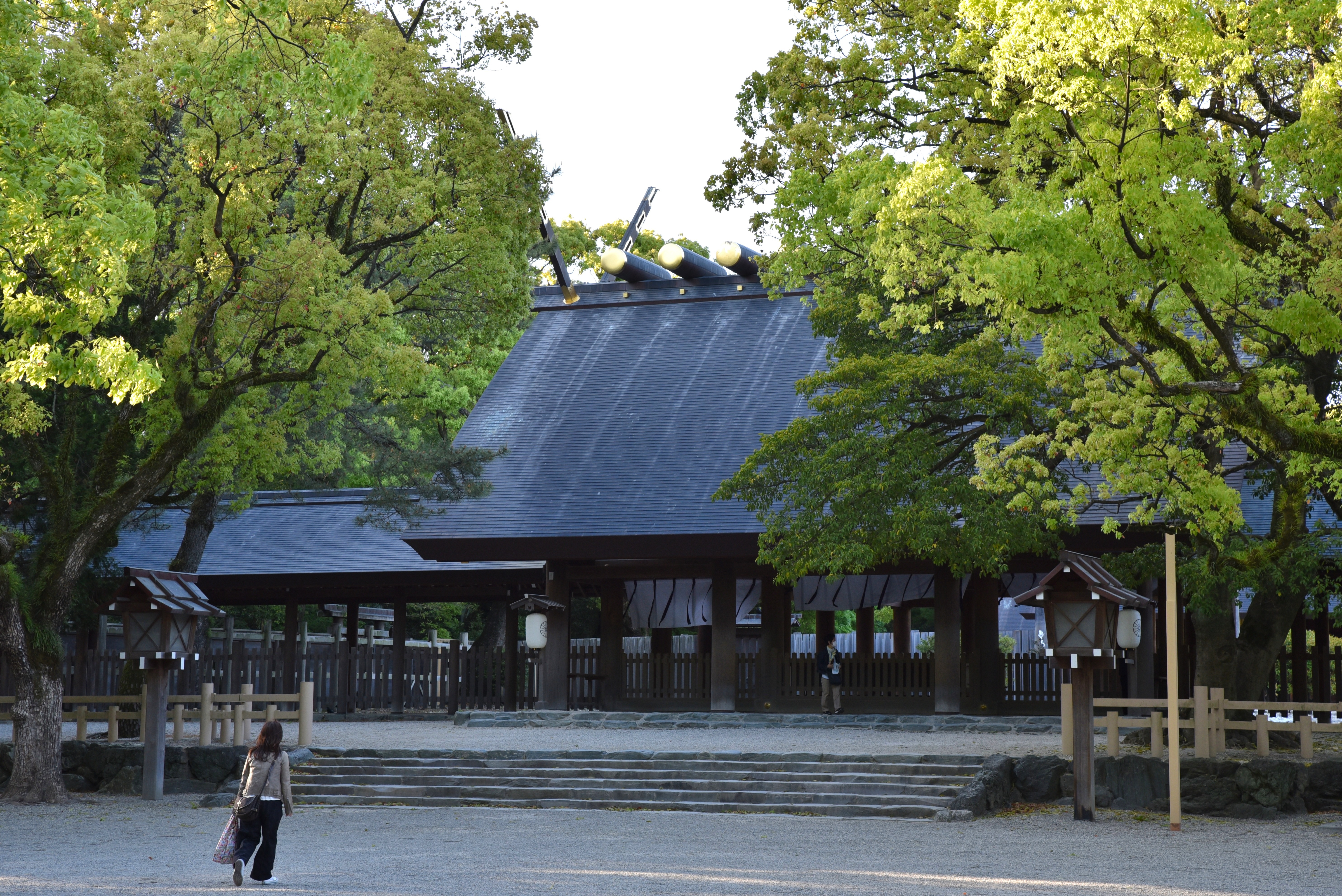
the Atsuta Shrine in Nagoya — CC BY-SA 4
Frequently Asked Questions About Meieki
What does Meieki mean?
Meieki is the short form of Nagoya-eki, Nagoya Station. The name means both the station and the whole commercial quarter that grew around it in the Nakamura Ward, partly in the Nishi Ward.
When did Nagoya Station open?
Nagoya Station opened on 1 May 1886. The present station, with the two JR Central Towers on its roof, opened in December 1999 and fully in March 2000.
Which is the tallest building in Nagoya?
Midland Square in Meieki, at 247 metres with 47 floors, opened in March 2007. It is only two metres taller than the office tower of the JR Central Towers, at 245 metres.
Where do I shop in Meieki?
The Takashimaya department store inside the JR Central Towers, the shops and restaurants of JR Gate Tower and Midland Square, and the network of underground shopping streets under the station. All are joined and lie within a few minutes on foot around the station.
How do I get from Meieki to Sakae?
Take the Higashiyama subway line from Nagoya Station, and Sakae is only a few stops away, the shopping and entertainment district in the centre of the city.
Should I stay a night in Meieki?
Yes, if you travel by Shinkansen or fly through Centrair Airport. The hotels on the station suit the next morning, and the evening in Meieki, with dinner of Nagoya food and the view from the Midland Square observation deck, is worth the stay.
Verified
- Meieki is the quarter around Nagoya Station, in the Nakamura Ward, partly in the Nishi Ward, and its coordinates are 35.1698/136.8887. Checked 21 November 2026.
- Nagoya Station opened on 1 May 1886. Checked 21 November 2026.
- The JR Central Towers opened on 4 December 1999, with an office tower of 245 metres and 51 floors and a hotel tower of 226 metres and 53 floors, and the whole complex opened in March 2000. Checked 21 November 2026.
- The station complex of Meieki covers about 410,000 square metres of floor area, and it was recorded at the time as the largest station in the world by floor area. Checked 21 November 2026.
- Midland Square was completed in October 2006 and opened in March 2007, at 247 metres with 47 floors, the tallest building in Nagoya and in Aichi Prefecture. Checked 21 November 2026.
- JR Gate Tower opened in 2017, and JP Tower Nagoya opened in 2015. Checked 21 November 2026.
- The Aonami line began carrying passengers in 2006, and the rapid Meitetsu train from Centrair Airport takes about 30 minutes to Nagoya Station. Checked 21 November 2026.
- Coordinates 35.1698/136.8887 and Wikidata Q11415829 for Meieki were verified through the Wikidata API on 21 November 2026. Checked 21 November 2026.
Sources
- Wikipedia, Nagoya Station — https://en.wikipedia.org/wiki/Meieki — for the station, its opening and the JR Central Towers.
- Japan Guide, Nagoya Station — https://www.japan-guide.com/e/e3305.html — for the towers, Midland Square and the shopping.
- Wikipedia, List of tallest buildings in Nagoya — https://en.wikipedia.org/wiki/List_of_tallest_buildings_in_Nagoya — for the heights of the towers.
- Wikipedia, Midland Square — https://en.wikipedia.org/wiki/Midland_Square — for Midland Square, its height and its official name.
- Aichi Now, Nagoya Station — https://aichinow.pref.aichi.jp/j-heartland/en/nagoya/k_5.html — for the station, the towers and the Sky Promenade.
- Japan National Tourism Organization, Nagoya — https://www.japan.travel/en/ — for travel information on Nagoya and Meieki.
Unverified
- The exact heights of JR Gate Tower, opened in 2017, and JP Tower Nagoya, opened in 2015, could not be checked to a consistent figure, so the article gives no heights for the two towers.
- The hours and ticket prices of the Sky Promenade observation deck on Midland Square were not checked on the official site of the building, so the article gives no prices or hours for it.
- The travel time from Nagoya Station to Nagoya Castle and the Atsuta shrine, about twenty to thirty minutes, is an estimate by subway or JR, not measured against the current timetable.
- The title of the largest station in the world by floor area is a record from the time the JR Central Towers were completed in 1999, and other stations may have passed it since, so the article records it as a record of that time.
- The dishes of Nagoya meshi in this article are the widely recognised specialities of the city, not tied to any single restaurant, and the prices and addresses of restaurants should be checked separately.
Illustrations
- Hero: the JR Central Towers in Meieki, Nagoya. Free image: https://upload.wikimedia.org/wikipedia/commons/7/77/Aichi-Nagoya-JR-Central-Towers..jpg — CC BY-SA 4.
- In body, the towers: the JR Central Towers, JR Gate Tower and JP Tower in Nagoya. Free image: https://upload.wikimedia.org/wikipedia/commons/d/d4/JR_Central_Towers_and_JR_Gate_Tower_and_JP_Tower_Nagoya.jpg — CC BY-SA 4.
- In body, Midland Square: Midland Square in Meieki, Nagoya. Free image: https://upload.wikimedia.org/wikipedia/commons/2/28/Midland_Square%2C_Nagoya_%2828981451912%29.jpg — CC BY-SA 2.
- In body, the JR Gate Tower: the JR Gate Tower in Meieki, Nagoya. Free image: https://upload.wikimedia.org/wikipedia/commons/f/f1/JR_Gate_Tower_201701.jpg — CC BY-SA 4.
- In body, the Takashimaya Department Store: the entrance of JR Nagoya Takashimaya in Meieki. Free image: https://upload.wikimedia.org/wikipedia/commons/f/f6/Christmas_decoration_at_the_entrance_of_JR_Nagoya_Takashimaya_in_2013_-_1.jpg — CC BY-SA 4.
- In body, the Mode Gakuen Spiral Towers: the Mode Gakuen Spiral Towers in Nagoya. Free image: https://upload.wikimedia.org/wikipedia/commons/b/b0/Mode_Gakuen_Spiral_Towers_1.jpg — CC BY-SA 4.
- In body, Nagoya Castle: Nagoya Castle. Free image: https://upload.wikimedia.org/wikipedia/commons/d/d3/Nagoya_Castle_%2856938%29.jpg — CC0.
- In body, the Atsuta Shrine: the Atsuta Shrine in Nagoya. Free image: https://upload.wikimedia.org/wikipedia/commons/c/c6/Atsuta_Shrine.jpg — CC BY-SA 4.
- In body, the JR Central Towers: the JR Central Towers and JR Gate Tower at night in Nagoya. Free image: https://upload.wikimedia.org/wikipedia/commons/e/ee/JR_Gate_Tower_and_JR_Central_Towers_at_night.jpg — CC BY-SA 4.