Countries: japan

  • Gyoen: The National Garden Around the Kyoto Imperial Palace

    Gyoen: The National Garden Around the Kyoto Imperial Palace

    Gyoen is the national garden around the Kyoto Imperial Palace. Its cherry trees, gates and old palace grounds fill a quiet morning.

    In the centre of Kyoto, behind an earthen wall with a tiled roof, there is a park of about 65 hectares that holds the Imperial Palace of Kyoto and two other palaces of the Imperial family. This is Gyoen, in full Kyoto Gyoen, the Kyoto Imperial Palace Park, and it was once the home of the court nobles, with hundreds of mansions standing close together around the palace. After the capital moved to Tokyo, the area fell into ruin, and then it was remade as a public park, and from 1949 it became a national garden, open to everyone. What makes Gyoen different from the other parks of Kyoto is that it is at once a green space for walking, running and flower viewing, and a living monument of more than a thousand years of the Heian capital.

    In a single walk, a visitor can pass the stately Kenreimon gate, look at the famous weeping cherry tree at the old Konoe residence, and stop beside the Demizu stream to see the plum blossom of early spring. On 15 May and 22 October each year, Gyoen is also the starting point of the two greatest festivals of Kyoto, the Aoi Matsuri and the Jidai Matsuri. This guide covers the garden, its palaces, its gates and its seasons.

    Quick Facts About Gyoen

    Item Detail
    Name Gyoen, in Japanese 京都御苑, full name Kyoto Gyoen National Garden
    Location Kamigyo Ward, central Kyoto, Japan, surrounding the Kyoto Imperial Palace
    Coordinates 35.0233° N, 135.7633° E
    Area About 65 hectares managed by the Ministry of the Environment, and about 92 hectares inside the wall
    Size 1,300 metres north to south, and 700 metres east to west
    Opened Designated a national garden and opened to the public in 1949
    Role today National garden, public green space and protected area of Imperial monuments
    UNESCO Not a World Heritage site, and the list of 17 sites of Ancient Kyoto does not include it
    Wikidata Q843854, coordinates 35.0233/135.7633

    Geography of Gyoen

    Gyoen lies in Kamigyo Ward, in the centre of the city of Kyoto, on a rectangular piece of land running north to south. Four large streets bound the garden on four sides: Imadegawa Street in the north, Karasuma Street in the west, Marutamachi Street in the south and Teramachi Street in the east. Inside the earthen wall with its tiled roof stand the Kyoto Imperial Palace at the centre, together with the Sento Imperial Palace and the Omiya Imperial Palace, and those three buildings are managed by the Imperial Household Agency, while the park around them belongs to the Ministry of the Environment of Japan.

    The ground of Gyoen is almost flat, with wide gravel paths running across it, mixed with lawns, woods and ponds. The Demizu stream flows through the eastern part of the garden, and it is the place to see the plum blossom, the peach blossom and the cherry blossom in spring, and the red leaves in autumn. The climate of Kyoto has four clear seasons: spring is mild with flowers in bloom, summer is hot and humid, autumn is dry with red maple leaves, and winter is cold but rarely has deep snow. Because most of a visit is walking outdoors, comfortable shoes are needed, and an umbrella or a raincoat is wise in the rainy months of June and July.

    Gyoen lies very near the administrative and commercial centre of Kyoto, yet when a visitor steps through a gate, the noise of the city almost disappears behind the trees. The nearest subway stations are Marutamachi Station and Imadegawa Station on the Karasuma line, both only a few minutes on foot from a gate of the garden. From Kyoto Station, the subway or a city bus reaches the garden in about fifteen to twenty minutes.

    The garden has nine gates, so a visitor can choose the gate nearest the next destination and save walking time. Inside the garden there is no public transport: the whole visit is on foot, on flat gravel paths, and the main routes suit pushchairs and wheelchairs. The park is free to enter, and it is open all year, though the opening hours of the gates and of the palace area change with the season and with the rules of the Imperial Household Agency, so check the official site of Kyoto Gyoen before going.

    From Gyoen, the rest of central Kyoto is close. Kawaramachi lies to the southwest, Gion to the southeast, Nanzen-ji to the east, and Kyoto Tower before the station to the south. Many visitors join Gyoen with a morning in the centre of Kyoto, and then walk down to Gion in the afternoon, or up to the Nanzen-ji area, and the garden is the green centre of that walk.

    The scale of Gyoen is hard to feel from the street, because the wall hides it. From the outside, the garden looks like a long wall along Karasuma Street, and only through a gate does the size open up: thirteen hundred metres from north to south, seven hundred from east to west, and a whole landscape of lawns, woods, streams and ponds inside. The wall is the reason the garden feels separate from the city, and the gates are the reason it feels open to everyone.

    The wall itself is part of the history. It is an earthen wall with a tiled roof, built to enclose the quarter of the nobles, and it still runs around the whole garden, broken only by the nine gates. The gates differ in size and in use: the Kenreimon in the south is the great gate of the palace, the Hamagurimon in the west carries the bullet marks of 1864, and the smaller gates serve the people who live nearby, opening onto the streets of the city. A visitor who walks the wall from the outside sees a single long line of earth and tile, and a visitor who walks inside sees a park that the wall has kept quiet for more than a century.

    The trees of the garden are its other geography. More than a thousand cherry trees stand across the lawns, about two hundred plum trees bloom near the Hamagurimon gate, and the ginkgo and maple trees turn yellow and red in autumn, so the garden changes colour four times a year. The trees are not planted in rows like a park of the modern kind: they stand in groups, in woods and along the stream, and the paths wind between them, so a walk through the garden feels like a walk through a wood that happens to have a palace in the middle of it.

    the Seika-tei pavilion of the Sento Imperial Palace

    the Seika-tei pavilion of the Sento Imperial Palace — CC BY-SA 3

    History of Gyoen

    In 794, Emperor Kanmu moved the capital to Heian-kyo, the Kyoto of today, and the area of Gyoen gradually became the home of the court noble families and the members of the Imperial family. The Imperial Palace was not fixed in one place at first, and only in 1331 did a temporary palace on this land become the official Imperial Palace, and stay there until the capital moved away. Through the Edo period, from 1603 to 1868, about 140 mansions of nobles and Imperial family members stood around the palace, forming a closed quarter with walls, private gates and small gardens.

    The Kyoto Imperial Palace of today is not the original building from the Heian period. After many fires, the palace was rebuilt many times, and the building that stands today was rebuilt in 1855, just before the end of the Edo period. Inside the palace stand famous buildings such as the Shishinden hall, where the enthronement ceremonies of the emperors took place until the Meiji period, with a cherry tree on the left and a tachibana orange tree on the right, by tradition. The Sento Imperial Palace, the home of retired emperors, was built from 1630 under Emperor Go-Mizunoo, and it is famous for its strolling garden around a pond.

    In 1868 and 1869, after the Meiji Restoration, Emperor Meiji moved the capital to Tokyo, and Kyoto lost its role as the political centre of the country. Noble families followed the court to Tokyo, the mansions around the palace were left empty and fell into ruin, and faced with that, Emperor Meiji ordered the palace to be preserved in 1877, while the government of Kyoto began to pull down the empty mansions to prevent fire, and to remake the land as a park. That was the beginning of the project to preserve Kyoto Gyoen.

    In 1883, the management of the area passed from the government of Kyoto to the Imperial Household Agency. After the Second World War, in 1949, Kyoto Gyoen was officially designated a national garden and opened to the public, placed under the Ministry of Health and Welfare, and from 1971 under the Ministry of the Environment, when that ministry was founded. Since then, Gyoen has been at once a park for the people of Kyoto, and a place to preserve the remains of the old noble quarter, including the foundations and the gardens of some old mansions, such as the Konoe residence and the Kanin-no-miya residence.

    One of the most famous historic traces of Gyoen is the Hamagurimon gate, officially the Shinzaikegomon, on the western side of the garden. In 1864, the Kinmon Incident took place here, an armed conflict between the army of the Tokugawa shogunate and the warriors of the Choshu domain, who supported the emperor. The battle left bullet marks that can still be seen on the wooden gate today, making Hamagurimon a silent witness of the troubled last years of the Edo period. Besides Hamagurimon, Gyoen has nine gates of all sizes, and the Kenreimon gate in the south is the main gate to the Imperial Palace, opened only on special occasions.

    The garden also carries the memory of the festivals that start from it. The Aoi Matsuri on 15 May each year sets out from the Imperial Palace inside the garden, with a procession of hundreds of people in the dress of the Heian period, and the Jidai Matsuri on 22 October also starts from the palace, recalling the history of Kyoto through processions in the dress of each age. On those days, Gyoen is very crowded, and a visitor needs to arrive early to find a place to watch the procession.

    Timeline of Gyoen

    • 794: Emperor Kanmu moves the capital to Heian-kyo, and the area of Gyoen gradually becomes the home of the nobles.
    • 1331: The temporary palace on this land becomes the official Imperial Palace of Kyoto.
    • 1630: The Sento Imperial Palace is built for the retired Emperor Go-Mizunoo.
    • 1855: The Kyoto Imperial Palace of today is rebuilt after a fire.
    • 1864: The Kinmon Incident takes place at the Hamagurimon gate.
    • 1869: Emperor Meiji moves the capital to Tokyo, and the noble quarter around the palace falls into ruin.
    • 1877: Emperor Meiji orders the palace to be preserved, and the project to restore Kyoto Gyoen begins.
    • 1883: The management of Gyoen passes to the Imperial Household Agency.
    • 1949: Kyoto Gyoen is designated a national garden and opened to the public.
    • 1971: Gyoen passes to the management of the Ministry of the Environment of Japan.

    the pond of the Sento Imperial Palace

    the pond of the Sento Imperial Palace — CC BY-SA 3

    The Shishinden Hall of the Kyoto Imperial Palace

    The Shishinden Hall of the Kyoto Imperial Palace — CC0

    Travel to Gyoen

    Gyoen is beautiful all year, but each season has its own face. Spring is the most famous time: from the end of February to March, about 200 plum trees bloom near the Hamagurimon gate, and from the end of March to April, more than 1,000 cherry trees of many kinds, Somei Yoshino, mountain cherry and weeping cherry, bloom across the garden. The weeping cherry tree at the old Konoe residence, north of the Imperial Palace, is the most famous cherry tree of Gyoen, and the flower viewing place most loved by the people of Kyoto.

    Autumn, from the middle of November to the start of December, brings the red maple and the yellow ginkgo leaves, most beautiful around the pond and along the Demizu stream. Summer is shady and good for escaping the heat, and winter is quiet, good for anyone who wants a silent walk.

    The two great festival days are also two special times to visit Gyoen. The Aoi Matsuri on 15 May each year sets out from the Imperial Palace inside the garden, with a procession of hundreds of people in Heian dress. The Jidai Matsuri on 22 October also starts from the palace, recalling the history of Kyoto through processions in the dress of each age. On those days, Gyoen is very crowded, so arrive early to find a place to watch the procession.

    A slow walk around Gyoen takes about two to three hours, including the time to walk the main paths, stop to see the flowers of the season, and visit the garden of the old Konoe residence. To visit inside the Kyoto Imperial Palace or the Sento Imperial Palace, add more time and book in advance through the Imperial Household Agency, because those two areas have their own visiting hours and need advance booking. Many visitors join Gyoen with a morning in the centre of Kyoto, and then walk down to Gion in the afternoon, or up to the Nanzen-ji area.

    The most convenient subway stations are Marutamachi Station at the southern gate of the garden and Imadegawa Station at the northern gate, both on the Karasuma line. City buses of Kyoto also stop around the garden, especially on Karasuma Street and Marutamachi Street. Gyoen has nine gates, so a visitor can choose the gate nearest the next destination and save walking time. Inside the garden there is no public transport, and the whole visit is on foot, on flat gravel paths, which suit pushchairs and wheelchairs on most of the main routes.

    Entry to Gyoen is free. The garden is open all year, but the opening hours of the gates and of the palace area change with the season and with the rules of the Imperial Household Agency. Check the opening hours on the official site of Kyoto Gyoen before going, because some sources say the garden is open all day, while others give seasonal hours.

    Inside Gyoen there is no large restaurant, but there is a cafe and a souvenir shop near the Imperial Palace, serving drinks and light cakes, including gosho senbei, a rice cracker speciality joined to the palace. Around the garden, especially along Marutamachi Street and Karasuma Street, there are many restaurants, cafes and convenience stores, from cheap ramen shops to traditional Kyoto restaurants. Many people of Kyoto buy food to take away and eat lunch on the lawn in the garden, especially in the cherry blossom season.

    For a short stay, Japan needs no visa from travellers holding many passports of Europe, North America and Asia, but the rule is set by the passport, so verify the current requirement for your own nationality before travel. Inside the garden, the paths are shared by walkers, runners and cyclists on some routes, so keep to the side, and remember that the palace area has its own rules and its own hours, separate from the park.

    Notable Places in Gyoen

    The Kyoto Imperial Palace

    The Kyoto Imperial Palace stands at the centre of Gyoen, rebuilt in 1855, and the Shishinden hall is where the enthronement ceremonies of the emperors took place until the Meiji period, with a cherry tree and a tachibana orange tree on either side by tradition. A visit inside needs advance booking through the Imperial Household Agency.

    The Sento Imperial Palace

    The Sento Imperial Palace is the palace of the retired emperors after abdication, built from 1630, and it is famous for its strolling garden around a pond and its old pine trees. A visit follows a guided tour, and it needs advance booking.

    The Old Konoe Residence

    The old Konoe residence is the ruin of the mansion of the noble Konoe family, north of the Imperial Palace, and it is famous for its old weeping cherry tree, the most viewed cherry tree in Gyoen, and for the Konoe pond beside it.

    The Hamagurimon Gate

    The Hamagurimon gate stands on the western side of the garden, and it is where the Kinmon Incident of 1864 took place. The bullet marks on the wooden gate can still be seen today.

    The Kenreimon Gate

    The Kenreimon gate is the main southern gate to the Imperial Palace, and it opens only on special occasions, such as an enthronement or an Imperial ceremony.

    The Demizu Stream and the Plum Garden

    The Demizu stream flows through the eastern part of the garden, and the plum garden beside it holds about 200 trees that bloom from the end of February, announcing the arrival of spring in Kyoto.

    The Old Kanin-no-miya Residence

    The old Kanin-no-miya residence is the ruin of an Imperial family mansion in the northeast of the garden, and it is now a quiet garden with many old trees.

    The Kyoto State Guest House

    The Kyoto State Guest House stands in the southeast of the garden, and it is where Japan receives the heads of state who visit the country. Its architecture joins Japanese tradition with modern comfort, and it opens to the public on some days of the year.

    The Kyoto Imperial Palace at the centre of Gyoen

    The Kyoto Imperial Palace at the centre of Gyoen — CC BY 4

    The Kenreimon Gate, the great southern gate of the palace

    The Kenreimon Gate, the great southern gate of the palace — CC BY-SA 4

    The Hamagurimon Gate on the western side of the garden

    The Hamagurimon Gate on the western side of the garden — CC BY-SA 4

    The Demizu Stream in the eastern part of the garden

    The Demizu Stream in the eastern part of the garden — CC BY-SA 3

    The main gate of the Kyoto State Guest House

    The main gate of the Kyoto State Guest House — Public domain

    Cherry blossom in Kyoto Gyoen

    Cherry blossom in Kyoto Gyoen — CC0

    Frequently Asked Questions About Gyoen

    Is Gyoen the Kyoto Imperial Palace?

    Not quite: Gyoen is the whole national garden of about 65 hectares around the palace, which stands at its centre.

    Is Gyoen a UNESCO World Heritage site?

    No, the list of 17 sites of Ancient Kyoto does not include Gyoen, though it is a national historic site.

    How is Gyoen different from Shinjuku Gyoen in Tokyo?

    They are two different gardens: Kyoto Gyoen surrounds the Kyoto palace, while Shinjuku Gyoen was a garden of the Imperial family in Tokyo.

    When is the best time to visit Gyoen?

    Spring, from late March to early April, for the cherry blossom, and autumn, for the red leaves.

    Is there an entry fee for Gyoen?

    No, entry to the garden is free; only a visit inside the palace needs advance booking.

    How much time should I spend at Gyoen?

    About two to three hours for a slow walk, plus one to two hours for a palace tour.

    Verified

    • Gyoen lies in Kamigyo Ward, central Kyoto, and it surrounds the Kyoto Imperial Palace, the Sento Imperial Palace and the Omiya Imperial Palace. Checked 21 November 2026.
    • The garden covers about 65 hectares managed by the Ministry of the Environment, and about 92 hectares inside the wall, 1,300 metres north to south and 700 metres east to west. Checked 21 November 2026.
    • The palace site became the official Imperial Palace in 1331, and the present palace was rebuilt in 1855. Checked 21 November 2026.
    • About 140 noble mansions stood around the palace in the Edo period, and the Sento Imperial Palace was built from 1630. Checked 21 November 2026.
    • The Kinmon Incident took place at the Hamagurimon gate in 1864, and the capital moved to Tokyo in 1869. Checked 21 November 2026.
    • Kyoto Gyoen was designated a national garden and opened to the public in 1949, and it passed to the Ministry of the Environment in 1971. Checked 21 November 2026.
    • More than 1,000 cherry trees and about 200 plum trees bloom in the garden, and the Aoi Matsuri sets out on 15 May and the Jidai Matsuri on 22 October. Checked 21 November 2026.
    • Coordinates 35.0233/135.7633 and Wikidata Q843854 for Kyoto Gyoen National Garden were verified through the Wikidata API on 21 November 2026. Checked 21 November 2026.

    Sources

    • Kyoto Gyoen National Garden — https://www.japanesewiki.com/geographical/Kyoto%20Gyoen%20National%20Garden.html — for the area, the size, the mansions and the opening in 1949.
    • Audiala, Kyoto Gyoen National Garden — https://audiala.com/en/japan/kyoto/kyoto-gyoen-national-garden — for the history, the preservation and the move to the Environment Ministry.
    • Kyoto Museums Association — https://kyoto-museums.city.kyoto.lg.jp/en/museum/596/ — for the palace rebuilt in 1855 and the festivals.
    • Kyoto To Do, Kyoto Gyoen — https://www.kyoto-to-do.com/kyoto-gyoen/ — for the cherry trees, the plum trees and the Konoe weeping cherry.
    • UNESCO, Historic Monuments of Ancient Kyoto — https://whc.unesco.org/en/list/688/ — for the 17 sites listed in 1994, which do not include Gyoen.

    Unverified

    • The opening hours of the gates of Gyoen differ between sources, some saying the garden is open all day and others giving seasonal hours, so check the official site before going.
    • The number of trees in the garden differs between sources, about 50,000 in some and about 100,000 in others, so no total is given here.
    • The number of noble mansions in the Edo period is given as about 140 or nearly 200 by different sources, and this guide uses about 140.
    • The bullet marks on the Hamagurimon gate from the Kinmon Incident of 1864 are reported by many travel sources, but they were not checked against the records of the Imperial Household Agency.
    • The days on which the Kyoto State Guest House opens to the public need checking on the official timetable before a visit.

    Illustrations

    • Hero: the garden of the Kyoto Imperial Palace in Kyoto Gyoen. Free image: https://upload.wikimedia.org/wikipedia/commons/3/3f/Kyoto_Imperial_palace_garden.jpg — CC BY-SA 4.
    • In body, the Sento Imperial Palace: the Seika-tei pavilion of the Sento Imperial Palace. Free image: https://upload.wikimedia.org/wikipedia/commons/8/81/Sento_Imperial_Palace_-_Seika-tei.JPG — CC BY-SA 3.
    • In body, the Sento Imperial Palace: the pond of the Sento Imperial Palace. Free image: https://upload.wikimedia.org/wikipedia/commons/8/8e/Sento_Imperial_Palace_-_pond.JPG — CC BY-SA 3.
    • In body, the Kyoto Imperial Palace: The Kyoto Imperial Palace at the centre of Gyoen. Free image: https://upload.wikimedia.org/wikipedia/commons/3/35/Kyoto_Imperial_Palace_%28%E4%BA%AC%E9%83%BD%E5%BE%A1%E6%89%80%2C_Ky%C5%8Dto_Gosho%29_2.jpg — CC BY 4.
    • In body, the Kenreimon Gate: The Kenreimon Gate, the great southern gate of the palace. Free image: https://upload.wikimedia.org/wikipedia/commons/c/cc/Kyoto_Kaiserpalast_Kenreimon-Tor_1.jpg — CC BY-SA 4.
    • In body, the Hamagurimon Gate: The Hamagurimon Gate on the western side of the garden. Free image: https://upload.wikimedia.org/wikipedia/commons/e/ef/%E4%BA%AC%E9%83%BD%E5%BE%A1%E8%8B%91_-_%E8%9B%A4%E5%BE%A1%E9%96%80.jpg — CC BY-SA 4.
    • In body, the Demizu Stream: The Demizu Stream in the eastern part of the garden. Free image: https://upload.wikimedia.org/wikipedia/commons/2/2a/KyotoGyoenDemizunoOgawa.jpg — CC BY-SA 3.
    • In body, the Kyoto State Guest House: The main gate of the Kyoto State Guest House. Free image: https://upload.wikimedia.org/wikipedia/commons/0/03/Kyoto_State_Guest_House_Main_Gate.JPG — Public domain.
    • In body, the Old Konoe Residence: Cherry blossom in Kyoto Gyoen. Free image: https://upload.wikimedia.org/wikipedia/commons/0/0a/%E4%BA%AC%E9%83%BD%E5%BE%A1%E8%8B%91%E3%81%AE%E6%A1%9C.jpg — CC0.
    • In body, the Shishinden Hall: The Shishinden Hall of the Kyoto Imperial Palace. Free image: https://upload.wikimedia.org/wikipedia/commons/0/0f/Kyoto-gosho_Shishinden_zenkei-5.jpg — CC0.
  • Herb Garden: The Nunobiki Herb Gardens Above Kobe

    Herb Garden: The Nunobiki Herb Gardens Above Kobe

    Herb Garden is the largest herb garden in Japan, on the mountain above Kobe. Its twelve themed gardens look down on Osaka Bay.

    On the slope of Mount Nunobiki, just above the city of Kobe, there is a garden of about 75,000 herb plants and flowers of some 200 kinds, growing in terraces down the mountainside, and from the top the view opens over the port of Kobe and Osaka Bay. That is the Nunobiki Herb Gardens, the largest herb garden in Japan, and the way to reach it is part of the experience: the Shin-Kobe Ropeway carries a visitor from just behind Shin-Kobe Station, the Shinkansen station of the city, up the mountain in about ten minutes, gliding past the Nunobiki Falls and the forest, and dropping the visitor among the beds of lavender, roses and rosemary. The garden opened in 1991, together with the ropeway, turning a hillside once known only for its waterfall and its poetry into a day destination of Kobe. This guide covers the twelve gardens, the ropeway, the waterfall below, and the seasons of the mountain.

    Quick Facts About Herb Garden

    Item Detail
    Name Herb Garden, in Japanese 布引ハーブ園, Nunobiki Herb Gardens
    Location Mount Nunobiki slope, Chuo Ward, Kobe, Hyogo Prefecture, Japan
    Coordinates 34.7153° N, 135.1922° E
    Opened In 1991, together with the Shin-Kobe Ropeway
    Scale The largest herb garden in Japan, about 75,000 plants of some 200 kinds
    Highlights 12 themed gardens, Shin-Kobe Ropeway, Nunobiki Falls, German-style castle greenhouse, view over Osaka Bay
    Altitude About 400 metres above sea level
    Wikidata Q7069905, coordinates 34.71527778/135.19222222

    Geography of Herb Garden

    Herb Garden lies on the slope of Mount Nunobiki, at the western edge of the Rokko range, just above the centre of Kobe. The altitude of the garden is about 400 metres above sea level, high enough for the air to be cooler than in the streets below, and high enough for the view to open over the whole of Osaka Bay. The garden is laid out in twelve small themed gardens, joined by gently sloping paths between the terraces: a lavender garden, a rose garden, a rosemary garden, and gardens of seasonal flowers. Between the gardens stand a greenhouse, a restaurant and cafes, including a German-style castle greenhouse, the most recognisable piece of architecture in the garden.

    Just below the garden lies the Nunobiki Falls, one of the waterfalls famous in Japanese poetry since the Heian period. The stream flows down from the Rokko mountains into the city, and the walking path from the garden down to the falls is one of the finest short walks in Kobe. The garden and the falls belong together: the water that falls past the city is the water that feeds the mountain, and the garden that stands above it is the green roof of the city below.

    The climate of Kobe is mild, but on the mountain it is cooler by a few degrees than in the streets below. Spring, in April and May, brings the flowers into bloom; summer is green but hot and humid; autumn brings the red leaves; and winter is cold, with light snow possible on the mountain. The garden is at its best in late spring and early autumn, when the flowers are many and the air is not yet too hot.

    Each of the twelve themed gardens holds a sign giving the name of the plant and its use: lavender for essential oil and scented bags, rosemary for cooking and folk medicine, mint for tea, and chrysanthemum for herbal tea. The garden is therefore at once a place to look at flowers and a living museum of plants, and children on school tours are often given a worksheet to find and write down the names of the herbs.

    From Herb Garden, the city of Kobe lies below, and the view from the top is the reason many visitors come. The port, the bay and, on a clear day, the island of Awaji in the distance, spread out under the mountain, and the ropeway ride down at sunset is one of the finest views in the Kansai region. The garden is a place to look at plants, and it is also a place to look at a city from above.

    The mountain around the garden is the western end of the Rokko range, and the garden stands on its southern slope, facing the sea. The slope is steep enough for terraces, and gentle enough for paths, so the garden can be walked downhill from the top station of the ropeway, through the twelve gardens, and down to the falls. The walk is the shape of the visit: up by ropeway, down on foot, and out through the old foreign houses of Kitano below.

    The seasons on the mountain are sharper than in the city below. The lavender blooms in late spring, the sunflowers in summer, the chrysanthemum in autumn, and the light festival in winter, so the garden has a different main flower in every season, and the view from the top changes with the leaves: green in summer, red and yellow in autumn, and bare in winter, when the bay looks wider and the city looks closer. The wind on the mountain is stronger than in the streets, and it carries the scent of the herbs across the terraces, so the garden is smelled as much as it is seen.

    The twelve gardens are not all the same size, and they are not all planted in the same way. The lavender garden is the largest, and it covers a whole terrace in purple in May and June, while the rose garden is smaller and more formal, with beds in rows and a greenhouse beside it. The rosemary and mint gardens are the most useful, since their plants are used in the kitchen of the restaurant, and the seasonal flower gardens change with the year, so a visitor who comes in spring and a visitor who comes in autumn see two different gardens on the same mountain. The German-style castle greenhouse stands between the gardens, and it is the landmark by which a visitor finds the way: from the top station, walk toward the greenhouse, and the twelve gardens spread out below it in terraces.

    An archway with plants at the Nunobiki Herb Garden in Kobe

    An archway with plants at the Nunobiki Herb Garden in Kobe — CC BY-SA 4

    History of Herb Garden

    Mount Nunobiki and the Nunobiki Falls have been famous for more than a thousand years. In the poetry of the Heian period, the white waterfall falling through the green forest was a familiar image, and the walking path up the mountain had long been a route for the people of Kobe. The falls were a place of poetry before they were a place of tourism, and the mountain was a place of walking before it was a place of gardens.

    At the end of the twentieth century, the city of Kobe decided to turn this hillside into a place of play joined with education in plants: a large herb garden, where a visitor could look at flowers, learn about the herbs, and see the whole city from above. The Shin-Kobe Ropeway was built to carry visitors from the Shinkansen station up the mountain, and the garden and the ropeway opened together in 1991.

    The Great Hanshin-Awaji Earthquake of January 1995 destroyed much of Kobe, and the Nunobiki mountain area was also affected. The garden and the ropeway were restored together with the city, and they became part of the rebirth of Kobe: a green and quiet destination, looking down on the city that was rebuilding itself. The garden that had been built for pleasure became a symbol of recovery, and the view from the top, over a city rising again, gave the place a new meaning.

    From that time until today, the garden has been renewed again and again: new seasonal gardens were added, new restaurants and cafes were added, and new seasonal events were added, such as the lavender festival and the Christmas light festival. In 2026, the restaurant area on the mountain was renewed under the name The Veranda Kobe, and it reopened on 25 April 2026.

    The garden is still young by the standards of the gardens of Japan, yet it has already lived through the earthquake, the pandemic and the renewal of its restaurants. The ropeway has been maintained and renewed, the gardens have been replanted with the seasons, and the view has stayed the same: the port of Kobe below, the bay beyond, and the island of Awaji on a clear day. The history of the garden is short, but it is the history of the city itself, told in plants and in a view.

    The earthquake of 1995 is the deepest mark on that short history. The garden had been open for only four years when the city below it was destroyed, and the restoration of the garden was part of the restoration of Kobe: the ropeway was repaired, the terraces were rebuilt, and the garden reopened as a green place above a city that was rebuilding itself. Visitors who came in the years after the earthquake found a garden that was both new and old at once, new in its buildings and old in its view, and the garden has kept that double character ever since.

    The renewal of the restaurant area in 2026 is the latest chapter. The Veranda Kobe reopened on 25 April 2026 after the renewal, and the restaurants and cafes on the mountain now serve dishes made with the herbs of the garden, so the plants are not only looked at, they are also tasted. The garden has grown from a place of flowers into a place of food as well, and the two together, the view and the meal, are the reason many visitors now spend half a day on the mountain rather than an hour.

    The ropeway has its own short history inside the garden. It opened with the garden in 1991, and it has been maintained ever since, closing for a few days at the end of August and for about three weeks in January and February each year. The winter maintenance of 23 January to 12 February 2027 has already been announced, and the ropeway also stops in strong wind or in a thunderstorm. The ten-minute ride in the glass cabin is the oldest part of the visit, and it is the part that has changed least: the same length, the same view, and the same slow glide past the falls and the forest.

    Timeline of Herb Garden

    • Heian period, 794 to 1185: The Nunobiki Falls already appear in the poetry of Japan.
    • 1991: The Nunobiki Herb Gardens and the Shin-Kobe Ropeway open together.
    • 1995: The Hanshin-Awaji Earthquake destroys much of Kobe, and the garden is restored with the city.
    • 2020 to 2022: The garden keeps working through the pandemic, with restrictions.
    • 25 April 2026: The Veranda Kobe restaurant area reopens after renewal.
    • 23 January to 12 February 2027: The winter maintenance of the ropeway has been announced.

    The view from the Shin-Kobe Ropeway above Kobe

    The view from the Shin-Kobe Ropeway above Kobe — CC BY-SA 3

    Travel to Herb Garden

    The garden is open every day, usually from 9:30 in the morning to 5 in the afternoon, and on weekends, holidays and in summer the hours stretch to about 9 in the evening, for the night view. The last ropeway up the mountain is usually 16:45 on weekdays, and later on weekends and holidays in spring and autumn, but the hours change with the season, so check the official site before going.

    The finest flower seasons are late spring, in May and June, for the lavender, and autumn, in October and November, for the red leaves and the autumn flowers. On summer weekend evenings, the garden opens late for the night view of Kobe, and the port city lit up below the mountain is one of the finest night views in the Kansai region. Note that the ropeway closes for maintenance for a few days at the end of August and for about three weeks in January and February each year.

    The next winter maintenance has been announced for 23 January to 12 February 2027. The ropeway also stops in strong wind or in a thunderstorm.

    The round-trip ropeway ticket already includes the garden entry, and there is no separate garden ticket for a ropeway rider. According to the new price list applied from April 2026, an adult pays 2,500 yen for a return ticket, 1,900 yen for a one-way ticket, and an elementary or junior high school pupil pays 1,250 yen for a return ticket, 950 yen for a one-way ticket, while a preschool child is free. The evening ticket, from 17:00, return only, on the days the garden opens in the evening, is 2,000 yen for an adult.

    Check the official price list on kobeherb.com before going, because the ticket price has changed several times in recent years, and it can change with the season or with an event. A visitor who walks up the mountain from below, without the ropeway, buys a separate garden ticket at the gate.

    The ropeway station at the foot of the mountain stands just behind Shin-Kobe Station, about five minutes on foot from the station. Shin-Kobe is a Shinkansen station on the Sanyo line and a subway station on the Seishin-Yamate line, and from Osaka the Shinkansen reaches it in about fifteen minutes, and from Kyoto in about thirty minutes. The ropeway ride is 1,460 metres long, it takes about ten minutes, and the glass cabin looks out over the city. From the station on the mountain, the walk down through the gardens is the main route of the visit, and it is also possible to walk down the mountain on the path past the Nunobiki Falls, taking about thirty to forty minutes down to the Shin-Kobe area.

    Allow at least two to three hours: ten minutes on the ropeway each way, one to two hours walking slowly through the gardens, and time to sit at a cafe on the mountain and look at the view. If the walk down past the Nunobiki Falls is added, allow one more hour. A good plan for a first visit is a morning ride on the ropeway, a walk through the seasonal gardens, lunch at the restaurant on the mountain, an afternoon walk down past the falls, and then a visit to the Kitano area, with its old Western houses, just below the mountain.

    On the mountain there is a restaurant and cafes with a view over Osaka Bay, including The Veranda Kobe, which reopened in April 2026. The dishes use the herbs of the garden as a speciality: herbal tea, desserts with flower scents, and light seasonal dishes. Below the mountain, the area around Shin-Kobe Station and the Kitano area holds many restaurants and cafes.

    The speciality of Kobe, Kobe beef, is served at many restaurants in the centre of the city, one subway stop away. A good plan is to eat lunch on the mountain, where the view is part of the meal, and to save the Kobe beef for dinner in the city, where the restaurants are many and the choice is wide.

    A short stay in Japan is open without a visa to travellers from a long list of countries, and the list is set by the passport, so confirm the current requirement for your own nationality before travel. On the mountain, the weather can change quickly, and the wind is stronger than in the city below, so bring a light jacket even on a warm day, and check the ropeway status before going up.

    Notable Places in Herb Garden

    The Twelve Themed Gardens

    The twelve themed gardens each grow a group of herbs and flowers: lavender, roses, rosemary, mint and chrysanthemum, and the signs give the name of each kind and its use, so a visit is at once a walk and a lesson.

    The Shin-Kobe Ropeway

    The Shin-Kobe Ropeway is 1,460 metres long, with a glass cabin, and the ride takes about ten minutes from the city up the mountain. The ride itself is already a place to look at the view.

    The Nunobiki Falls

    The Nunobiki Falls are famous in poetry since the Heian period, and they lie just below the garden. The walking path from the garden down to the falls is the finest short walk in the area.

    The German-Style Castle Greenhouse

    The German-style castle greenhouse is the glass building that stands out in the garden, growing tropical herbs and flowers, and it is the most photographed place in the garden.

    The Mountain Viewpoint

    The viewpoint on the mountain gives a full view of the port of Kobe, Osaka Bay, and, on a clear day, the island of Awaji in the distance. It is the place to stand at sunset.

    The Seasonal Flower Gardens

    Each season has its own main flower: lavender in late spring, sunflowers in summer, chrysanthemum in autumn, and the light festival in winter. The garden changes with the year, and no two visits are the same.

    The Kitano Ijinkan Area

    The Kitano Ijinkan area is the quarter of old Western houses just below the mountain, within walking distance of the ropeway station. Many houses from the Meiji period open to visitors.

    The Herb Workshops

    The garden holds workshops and seasonal events where visitors can learn about the herbs, from making scented bags to tasting herbal tea. The workshops are the educational side of the garden, and they suit families and school groups best.

    Frequently Asked Questions About Herb Garden

    Where is the Nunobiki Herb Garden?

    On the slope of Mount Nunobiki, just above Shin-Kobe Station in Kobe, Hyogo Prefecture.

    How much is a ticket for the Herb Garden?

    The return ropeway ticket, which includes the garden, is 2,500 yen for an adult from April 2026.

    When did the Herb Garden open?

    In 1991, together with the Shin-Kobe Ropeway; before that the area was known for the falls.

    How many kinds of plants are in the garden?

    About 75,000 plants of some 200 kinds of herbs and flowers, the largest herb garden in Japan.

    Can I walk down from the garden?

    Yes, the path down past the Nunobiki Falls takes about 30 to 40 minutes to Shin-Kobe.

    Does the ropeway close for maintenance?

    Yes, a few days in late August and about three weeks in January and February each year.

    Verified

    • Herb Garden lies on the slope of Mount Nunobiki, Chuo Ward, Kobe, and it is the largest herb garden in Japan. Checked 21 November 2026.
    • The garden holds about 75,000 plants of some 200 kinds of herbs and flowers, in 12 themed gardens. Checked 21 November 2026.
    • The garden and the Shin-Kobe Ropeway opened together in 1991, and the ropeway is 1,460 metres long and takes about 10 minutes. Checked 21 November 2026.
    • The garden stands at about 400 metres above sea level, and the Nunobiki Falls lie just below it. Checked 21 November 2026.
    • The Hanshin-Awaji Earthquake of January 1995 damaged Kobe, and the garden was restored with the city. Checked 21 November 2026.
    • The Veranda Kobe restaurant area reopened on 25 April 2026, and the next winter maintenance of the ropeway is 23 January to 12 February 2027. Checked 21 November 2026.
    • The ticket from April 2026 is 2,500 yen for an adult return, 1,250 yen for a school pupil, and free for a preschool child. Checked 21 November 2026.
    • Coordinates 34.71527778/135.19222222 and Wikidata Q7069905 for Nunobiki Herb Garden were verified through the Wikidata API on 21 November 2026. Checked 21 November 2026.

    Sources

    • Hyogo Japan, official Hyogo tourism site, Nunobiki Herb Gardens — https://hyogojapan.com/discover/nunobiki-herb-gardens-ropeway/ — for the opening in 1991, the plants, the ropeway and the ticket prices.
    • Explore Japan Daily, Nunobiki Herb Gardens — https://www.explorejapandaily.com/destinations/kobe/kobe-nunobiki-herb-gardens-ropeway — for the hours and the last ropeway.
    • Wikipedia, Nunobiki Herb Garden — https://en.wikipedia.org/wiki/Nunobiki_Herb_Garden — for the garden, the ropeway and the falls.
    • Kobe Herb Gardens, official site — https://www.kobeherb.com/ — for the garden, the ropeway and the restaurant.
    • Japan Guide, Kobe — https://www.japan-guide.com/e/e2154.html — for the ropeway, the falls and the Kitano area.

    Unverified

    • The ticket prices in this guide come from the official Hyogo tourism site, and they were not checked directly on the official site of the garden.
    • The evening hours and the last ropeway change with the season, so check the timetable for the day of the visit on the official site.
    • The year the Veranda Kobe restaurant first opened, before its renewal, is not given here.
    • The exact number of kinds of plants in the garden, some 200 kinds, is a rounded figure from several sources.
    • The details of the plant signs and their uses in each themed garden follow the general layout of the garden, and they should be checked on site.

    Illustrations

    • Hero: The Nunobiki Herb Garden above Kobe. Free image: https://upload.wikimedia.org/wikipedia/commons/6/65/Nunobiki_Herb_Garden%2C_Kobe_-_Dec_28%2C_2022.jpg — CC BY 2.
    • In body, garden: An archway with plants at the Nunobiki Herb Garden in Kobe. Free image: https://upload.wikimedia.org/wikipedia/commons/f/f7/Archway_with_plants_at_the_Nunobiki_Herb_Garden_in_Kobe%2C_Japan.jpg — CC BY-SA 4.
    • In body, view: The view from the Shin-Kobe Ropeway above Kobe. Free image: https://upload.wikimedia.org/wikipedia/commons/c/c8/Shin-K%C5%8Dbe_Ropeway%2C_city_view.jpg — CC BY-SA 3.
  • History Museum Osaka: Fourteen Centuries of the City, Told from the Tenth Floor

    History Museum Osaka: Fourteen Centuries of the City, Told from the Tenth Floor

    History Museum Osaka tells fourteen centuries of the city. Its Naniwa Palace hall and Edo street models start at the tenth floor.

    The history museum of Osaka stands beside Osaka Castle Park, in Chuo Ward, and it tells nearly 1,400 years of the history of the city, from the Naniwa Palace of the seventh century, through the age when Osaka was the kitchen of the whole country, to the industrial city of the early twentieth century. The museum opened on 3 November 2001, in a modern building shared with the NHK Osaka Broadcasting Center, and the way to visit it is unusual: a visitor takes the lift straight to the tenth floor and then walks down, floor by floor, going backwards in time from ancient Osaka to modern Osaka. The tenth floor rebuilds part of the great hall of the Naniwa Palace, with vermilion pillars rising to the ceiling; the ninth floor holds street models of the Edo period at a scale of one to twenty, detailed down to every roof; the eighth floor is an archaeology area where a visitor can touch the finds with their own hands; and the seventh floor is Osaka of the Taisho period and the early Showa period, when the city rose to become one of the great industrial centres of Japan.

    From the windows of the tenth floor, a visitor looks straight across to Osaka Castle and its moat, one of the finest and quietest views of the castle in the city. This guide covers the four floors, the palace beneath the building, and the practical notes for a visit.

    Quick Facts About History Museum Osaka

    Item Detail
    Name History Museum Osaka, in Japanese 大阪歴史博物館, Osaka Museum of History
    Location 4-1-32 Otemae, Chuo Ward, Osaka, Japan, southwest of Osaka Castle Park
    Coordinates 34.682722° N, 135.520806° E
    Building A 13-storey building shared with the NHK Osaka Broadcasting Center
    Floors Permanent exhibitions on floors 7 to 10, special exhibitions on floor 6
    Opened 3 November 2001, successor to the old Osaka City Museum
    Hours 9:30 to 17:00, last entry 16:30; closed on Tuesdays and from 28 December to 4 January
    Nearest station Tanimachi 4-chome Station, Tanimachi and Chuo lines, about five minutes on foot
    Wikidata Q11261312, coordinates 34.682722/135.520806

    Geography of History Museum Osaka

    History Museum Osaka stands in the Otemae area of Chuo Ward, just southwest of Osaka Castle Park and facing the Naniwa Palace Site Park. The position is not by chance: directly under the museum building lie the remains of the Naniwa Palace, the first capital of Japan in ancient times, and the basement of the museum still keeps parts of those remains, including the storehouse foundations, the walls and the water system. Standing at the museum, a visitor stands on the very place where the history of Osaka began.

    From the museum, Osaka Castle is only a few minutes on foot through the park, and the area around it is one of the densest clusters of monuments in the city: Osaka Castle, the Naniwa Palace Site Park, and the NHK Osaka building standing right beside the museum, in the same architectural complex. The nearest subway station is Tanimachi 4-chome, on the Tanimachi and Chuo lines, about five minutes on foot from the museum. The climate of Osaka is mild, with hot humid summers and lightly cold winters, and because the whole visit takes place indoors, the museum is an ideal destination for rainy days, for the harsh sun of summer, and for the cold days of winter.

    The building itself is a landmark of the area. It is a thirteen-storey building shared with the NHK Osaka Broadcasting Center, designed by the firm Cesar Pelli and Associates together with Nihon Sekkei, and the two buildings were built at the same time as a single complex, joined by an atrium. The museum occupies the upper floors, and the broadcasting centre occupies the lower ones, so the building is at once a museum, a studio and a tower in the skyline of Otemae.

    The Otemae area is the administrative heart of Osaka, with the prefectural and city offices nearby, and the castle park beside it, so the museum stands between government and history. The streets around it are wide and modern, very different from the narrow streets of Namba or Shinsaibashi, and the change of scale is part of the visit: from the shopping city of the south to the official city of the east, where the castle, the palace and the museum stand together. The wide pavements and the open squares of Otemae make the walk to the museum easy, even in the rain, and the park beside it gives the area its green edge.

    From the windows of the tenth floor, the geography of Osaka opens up. The castle and its moat lie to the northeast, the park spreads below, and the towers of the modern city rise beyond. The view is one of the quietest in the city, because few visitors think to look out of a museum window, yet it is one of the best, and it joins the story inside the museum to the city outside it in a single look.

    The cluster around History Museum Osaka is the densest group of historic places in the city, and it rewards a slow walk. The castle park holds the keep, the walls and the moats of the castle of Toyotomi Hideyoshi, the Naniwa Palace Site Park holds the foundations of the palace of the seventh century, and the museum holds the story that joins the two. A visitor who walks from the palace site to the castle, and then to the museum, walks the whole history of Osaka in a single morning, from the first capital to the castle town, and the museum is the place where the walk is explained.

    The building of History Museum Osaka is itself a part of the geography of Otemae. The thirteen-storey tower stands beside the NHK broadcasting centre, and the atrium that joins them is open to the sky, so the museum and the studio share a single entrance and a single view of the park. The tower is visible from the castle park, and it serves as a landmark for anyone walking from the station to the museum, rising above the low roofs of the administrative quarter. History Museum Osaka is easy to find from the park, and the walk from the castle keep to the museum door takes only a few minutes through the trees.

    International Institute for Childrens Literature Osaka

    International Institute for Childrens Literature Osaka — Public domain

    Osaka Castle, a few minutes on foot from the museum through the park

    Osaka Castle, a few minutes on foot from the museum through the park — CC BY-SA 4, by DXR

    The Naniwa Palace Site Park, holding the foundations of the palace of the seventh century

    The Naniwa Palace Site Park, holding the foundations of the palace of the seventh century — CC0, by Sakai Yayoi

    History of History Museum Osaka

    The history of Osaka begins in the seventh century, when Emperor Kotoku moved the capital to Naniwa and built the Naniwa Nagara-Toyosaki Palace in 645. This was one of the first capitals of Japan, standing on the very ground where the museum stands today. The Naniwa Palace was later rebuilt and used through many reigns, becoming the political and diplomatic centre of the country in the Nara period. When the capital moved elsewhere, the palace was gradually forgotten, but its foundations stayed under the ground of Osaka for more than 1,300 years, until modern archaeological digs found them again.

    That is why the story of the museum begins on the tenth floor with the Naniwa Palace: part of the Daigokuden great hall of the Nara-period palace is rebuilt at full size, with vermilion pillars 70 centimetres in diameter, figures in court dress, and a video rebuilding the life of the court. It is the most striking sight in the museum, and the reason many visitors call it one of the best city history museums in Japan.

    After the age of Naniwa, Osaka grew into a centre of trade and religion. In the sixteenth century, the Hongan-ji temple in Osaka became a great centre of power, and after Toyotomi Hideyoshi built Osaka Castle at the end of the sixteenth century, the city around the castle became one of the busiest cities in Japan. In the Edo period, from 1603 to 1868, Osaka was called tenka no daidokoro, the kitchen of the whole country, because it was the place where food, above all rice, was gathered and distributed to the whole nation. The rich merchants of Osaka made a brilliant townsman culture, with bunraku puppet theatre, rakugo comic storytelling and street food, and those marks are still strong in the Osaka of today.

    In the Meiji period, and above all in the Taisho period and the early Showa period, Osaka rose to become Great Osaka, one of the largest industrial cities in Japan, with textile factories, shipbuilding and trade growing strongly. The seventh floor of the museum tells that age through photographs, documentary films and street models of the time, showing a modern, noisy and energetic Osaka, very different from the quiet old capital of Kyoto nearby.

    The museum of today had a predecessor. The old Osaka City Museum stood in a building of 1931 inside Osaka Castle Park, just before the keep of the castle, and it closed at the start of 2001. On 3 November 2001, the new History Museum Osaka opened at its present place, in a building designed by Cesar Pelli and Associates and Nihon Sekkei, shared with the new NHK Osaka Broadcasting Center. The two buildings were built together as a single complex, joined by an atrium.

    The new museum was designed with a clear philosophy of display: to tell the history of Osaka through images, models and full-size rebuilds, rather than only showing objects in glass cases. The collection of the museum passed 100,000 objects in 2005, and it kept growing in the years after, while the permanent exhibition floors tell the story of the city through four floors, from the tenth down to the seventh, with two visiting routes: the Highlight Course of about one hour, and the Complete Course for anyone who wants to see every object in detail.

    The choice to build the museum beside the palace remains is the heart of that philosophy. A museum of the history of Osaka could have been built anywhere in the city, but it was built on the ground where the history began, above the foundations of the first capital, and the basement tour of the remains is the proof of the choice. The visitor descends from the tenth floor to the basement, from the rebuilt hall to the real foundations, and the story ends where it began, under the ground of the city.

    Timeline of History Museum Osaka

    • 645: Emperor Kotoku moves the capital to Naniwa and builds the Naniwa Nagara-Toyosaki Palace.
    • Eighth century: The Naniwa Palace of the Nara period works as the political centre of Japan.
    • End of the sixteenth century: Toyotomi Hideyoshi builds Osaka Castle, and the city around the castle grows strongly.
    • 1603 to 1868: In the Edo period, Osaka becomes the kitchen of the whole country, tenka no daidokoro.
    • 1931: The old Osaka City Museum opens in Osaka Castle Park.
    • Early twentieth century: In the Taisho and early Showa periods, Osaka becomes Great Osaka, a great industrial centre.
    • 2001: The old Osaka City Museum closes, and the new History Museum Osaka opens on 3 November 2001.
    • 2005: The collection of the museum passes 100,000 objects.

    Osaka Museum of History and NHK Osaka Broadcasting Center Building

    Osaka Museum of History and NHK Osaka Broadcasting Center Building — CC BY-SA 4

    Osaka Castle, built by Toyotomi Hideyoshi at the end of the sixteenth century

    Osaka Castle, built by Toyotomi Hideyoshi at the end of the sixteenth century — CC BY-SA 3

    A display in the museum showing the 1970 to 1971 excavation of the great hall of the Naniwa Palace

    A display in the museum showing the 1970 to 1971 excavation of the great hall of the Naniwa Palace — CC BY 2, by shankar s. from Poona (pune), India, India

    Travel to History Museum Osaka

    The museum is open all year, except on Tuesdays each week, and if Tuesday is a holiday, it closes on the Wednesday after, and at the turn of the year, from 28 December to 4 January. The opening hours are 9:30 to 17:00, with last entry at 16:30, and on Friday evenings with a special exhibition, the museum opens until 20:00. Because the whole visit takes place indoors, the museum is an ideal choice for rainy days, for the harsh sun of summer, and for the cold days of winter, and it is also a sensible stop after a walk around Osaka Castle Park in the open air.

    Most visitors spend about one to one and a half hours on the four floors of the permanent exhibition. The Highlight Course suggested by the museum itself takes about one hour, and it concentrates on the full-size rebuilds, the street models and the important photographs and films. Anyone who loves history and archaeology can spend two to three hours, above all on the eighth floor, the interactive archaeology area, and in the basement, where a guided tour visits the remains of the Naniwa Palace. A good plan is a morning at Osaka Castle and the park, and an afternoon at the museum, to understand the history behind what was just seen.

    The nearest subway station is Tanimachi 4-chome, served by the Tanimachi and Chuo lines, about five minutes on foot from the museum. From the station, walk east to the museum building, which stands beside the NHK Osaka Broadcasting Center. City buses also stop near the Otemae area.

    The museum has lifts serving all floors, and it suits wheelchairs and pushchairs. Note that this museum is a completely separate place from the museum inside the keep of Osaka Castle: the two places tell two different stories, and the ticket of one cannot be used for the other.

    The ticket for the permanent exhibition, according to the official Osaka tourism site, is 600 yen for an adult, 400 yen for a high school or university student, free for a junior high school pupil and below, and free for a person from 65 years old who is a resident of Osaka. A group ticket for 20 people or more is reduced to 540 yen for an adult and 360 yen for a high school or university student. The special exhibition on the sixth floor charges separately.

    This ticket price has not been checked directly on the official site of the museum, so check it again before going. Inside the museum there is a souvenir shop and a cafe, and the area around Otemae and Osaka Castle Park holds many restaurants serving the specialities of Osaka, such as takoyaki, okonomiyaki and kushikatsu.

    Inside the museum there is a cafe serving drinks and light food, enough for a rest in the middle of a visit. But the real food experience lies outside: the area around Osaka Castle and Tanimachi 4-chome Station holds many cheap restaurants serving takoyaki, okonomiyaki and kushikatsu, the three street foods that made the name of the food of Osaka, true to the tradition of the kitchen of the whole country that the museum has just told. In the evening, the Dotonbori area, a few subway stops away, is the liveliest food destination in the city, and the walk from the quiet museum to the bright canal is the best way to end a day of history.

    Many passports from Europe, North America and Asia allow a short stay in Japan without a visa, while others need one, so check the current rule for your own nationality before the trip. Inside the museum, photography rules differ by floor and by exhibition, so check the signs at each floor, and remember that the visit is designed from the top down: start at the tenth floor, or the story will lose its order.

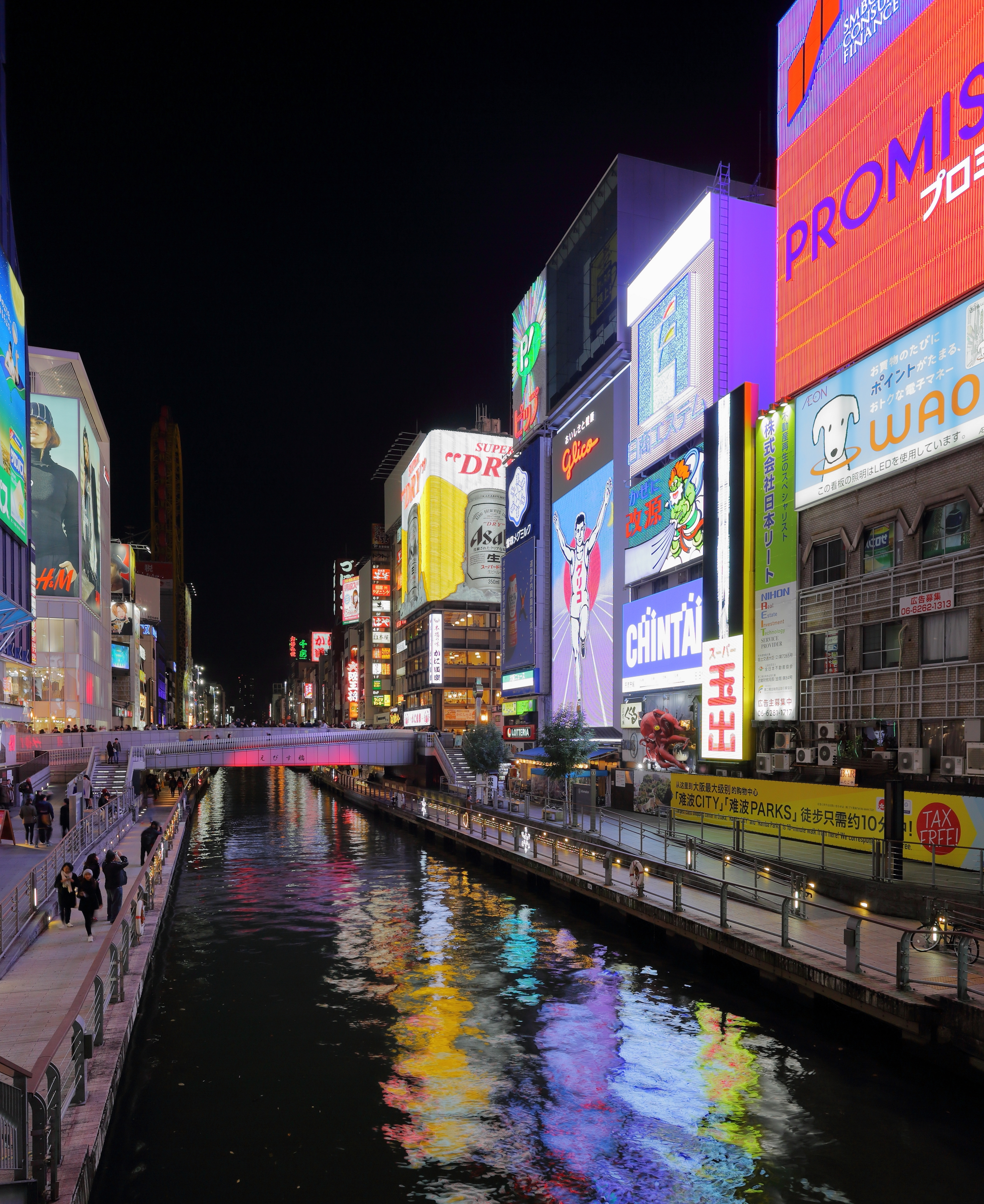
    Dotonbori at night, the liveliest food destination in the city

    Dotonbori at night, the liveliest food destination in the city — CC BY-SA 4, by Martin Falbisoner

    A food street in Dotonbori, where takoyaki, okonomiyaki and kushikatsu are sold

    A food street in Dotonbori, where takoyaki, okonomiyaki and kushikatsu are sold — CC BY 2, by chopstuey

    Notable Places in History Museum Osaka

    The Tenth Floor, Ancient Osaka and the Naniwa Palace

    The tenth floor rebuilds part of the Daigokuden great hall of the Naniwa Palace of the Nara period at full size, with vermilion pillars 70 centimetres in diameter. From the windows of this floor, the view looks straight across to Osaka Castle and its moat, one of the finest and quietest views of the castle in the city.

    The Ninth Floor, Medieval and Early Modern Osaka

    The ninth floor tells the story of the city from the Muromachi period through the Edo period, when Osaka became the kitchen of the whole country, through street models at a scale of one to twenty, detailed down to every roof and every stall.

    The Eighth Floor, the Naniwa Archaeology Centre

    The eighth floor is an interactive area, where a visitor can touch real archaeological tools with their own hands and see a full-size model of a dig, learning how archaeologists found the Naniwa Palace under the ground of Osaka.

    The Seventh Floor, Modern Osaka

    The seventh floor shows the Taisho period and the early Showa period, when Osaka became Great Osaka, a great industrial centre with textile factories, shipbuilding and trade, through photographs, documentary films and street models of the time.

    The Sixth Floor, the Special Exhibition Room

    The sixth floor holds the special exhibitions, which change through the year and cover the history and culture of Osaka in depth, and which charge a separate fee beyond the ticket for the permanent exhibition.

    The Basement, the Naniwa Palace Remains

    The basement keeps the storehouse foundations, the walls and the water system of the Naniwa Palace, preserved directly under the building, and a guided tour visits the remains. It is the oldest part of the story, lying under the newest building.

    The Building Shared with NHK Osaka

    The building shared with the NHK Osaka Broadcasting Center was designed by Cesar Pelli and Associates and Nihon Sekkei, and it is joined to the broadcasting centre by an atrium. The building itself is an example of the modern architecture of Osaka at the start of the twenty-first century.

    Osaka Castle and its moat, which the tenth-floor windows look across to

    Osaka Castle and its moat, which the tenth-floor windows look across to — Public domain

    Frequently Asked Questions About History Museum Osaka

    Is History Museum Osaka the museum inside Osaka Castle?

    No, they are two completely separate places, with different stories and different tickets.

    Which period of history does the museum cover?

    Nearly 1,400 years of Osaka, from the Naniwa Palace of the seventh century to the industrial city of the early twentieth.

    Which floor should I start the visit from?

    From the tenth floor, by lift, and then walk down floor by floor, following time backwards.

    How much is a ticket for History Museum Osaka?

    Adults pay 600 yen, students pay 400 yen, and junior high pupils and below enter free.

    Which days is the museum closed?

    Tuesdays each week, and from 28 December to 4 January at the turn of the year.

    How much time should I spend at the museum?

    About one to one and a half hours for the four floors, and two to three hours for a full visit.

    Verified

    • History Museum Osaka stands at 4-1-32 Otemae, Chuo Ward, Osaka, southwest of Osaka Castle Park and facing the Naniwa Palace Site Park. Checked 21 November 2026.
    • The museum opened on 3 November 2001, as the successor to the old Osaka City Museum, which closed at the start of 2001. Checked 21 November 2026.
    • The building is a 13-storey building shared with the NHK Osaka Broadcasting Center, designed by Cesar Pelli and Associates and Nihon Sekkei. Checked 21 November 2026.
    • The permanent exhibition stands on floors 7 to 10, the special exhibition on floor 6, and the Naniwa Palace remains lie in the basement. Checked 21 November 2026.
    • The tenth floor rebuilds part of the Daigokuden great hall of the Naniwa Palace at full size, with vermilion pillars 70 centimetres in diameter. Checked 21 November 2026.
    • The ninth floor holds street models of the Edo period at a scale of one to twenty, and the eighth floor is an interactive archaeology area. Checked 21 November 2026.
    • The collection of the museum passed 100,000 objects in 2005, and the Highlight Course takes about one hour. Checked 21 November 2026.
    • Coordinates 34.682722/135.520806 and Wikidata Q11261312 for the Osaka Museum of History were verified through the Wikidata API on 21 November 2026. Checked 21 November 2026.

    Sources

    • Trip To Japan, Osaka Museum of History — https://www.triptojapan.com/places/osaka-museum-of-history/EHP_I7yGRvaN8aWCi5pO8w — for the opening in 2001, the building and the collection.
    • Osaka Museum of History, official site — https://www.osakamushis.jp/ — for the museum, its floors and its history.
    • OSAKA-INFO, Osaka Museum of History — https://osaka-info.jp/experience/en/osaka/spot/258 — for the tenth floor, the ninth floor, the eighth floor and the seventh floor.
    • OSAKA-INFO, Osaka Museum of History — https://osaka-info.jp/special/coolosaka/en/cool-spot/1759/ — for the ticket prices, the hours and the closing days.
    • Roavina, Osaka Museum of History — https://roavina.com/en/japan/osaka/osaka-museum-of-history — for the Highlight Course and the visit route.

    Unverified

    • The ticket prices and the opening hours were checked on the official Osaka tourism site, but they were not checked directly on the official site of the museum.
    • The present number of objects in the collection is not given here, since the figure of more than 100,000 objects is from 2005.
    • The layout of the second floor and the other floors outside the exhibition area is described differently by different sources.
    • The exact month in which the old Osaka City Museum closed, at the start of 2001, is not given by the sources.

    Illustrations

    • Hero: NHK Osaka Hall and Osaka Museum of History from Osaka Castle Park. Free image: https://upload.wikimedia.org/wikipedia/commons/7/79/NHK_Osaka_Hall_and_Osaka_Museum_of_History_from_Osaka_Castle_Park.JPG — CC BY-SA 3.
    • In body, The Building Shared with NHK Osaka: Osaka Museum of History and NHK Osaka Broadcasting Center Building. Free image: https://upload.wikimedia.org/wikipedia/commons/d/d1/Osaka_Museum_of_History_and_NHK_Osaka_Broadcasting_Center_Building.jpg — CC BY-SA 4.
    • In body, panorama: International Institute for Childrens Literature Osaka. Free image: https://upload.wikimedia.org/wikipedia/commons/8/8e/International_Institute_for_Childrens_Literature_Osaka.jpg — Public domain.
    • In body, Osaka Castle: Osaka Castle, a few minutes on foot from the museum through the park. Free image: https://upload.wikimedia.org/wikipedia/commons/a/ab/Osaka_Castle%2C_Keep_tower%2C_South_view_20190415_1.jpg — CC BY-SA 4, by DXR.
    • In body, Naniwa Palace Site Park: The Naniwa Palace Site Park, holding the foundations of the palace of the seventh century. Free image: https://upload.wikimedia.org/wikipedia/commons/6/66/Naniwa_Palace_Site.jpg — CC0, by Sakai Yayoi.
    • In body, Osaka Castle under Hideyoshi: Osaka Castle, built by Toyotomi Hideyoshi at the end of the sixteenth century. Free image: https://upload.wikimedia.org/wikipedia/commons/a/af/At_Osaka_Castle.JPG — CC BY-SA 3.
    • In body, The Naniwa Palace excavation: A display in the museum showing the 1970 to 1971 excavation of the great hall of the Naniwa Palace. Free image: https://upload.wikimedia.org/wikipedia/commons/a/a5/Another_picture_of_the_ancient_excavation_opposite_the_Osaka_museum_%2849399455511%29.jpg — CC BY 2, by shankar s. from Poona (pune), India, India.
    • In body, Dotonbori at night: Dotonbori at night, the liveliest food destination in the city. Free image: https://upload.wikimedia.org/wikipedia/commons/4/47/Dotonbori%2C_Osaka%2C_at_night%2C_November_2016.jpg — CC BY-SA 4, by Martin Falbisoner.
    • In body, Dotonbori food street: A food street in Dotonbori, where takoyaki, okonomiyaki and kushikatsu are sold. Free image: https://upload.wikimedia.org/wikipedia/commons/d/d2/Food_street_in_Dotonbori%2C_Osaka%3B_January_2016.jpg — CC BY 2, by chopstuey.
    • In body, The Tenth Floor view: Osaka Castle and its moat, which the tenth-floor windows look across to. Free image: https://upload.wikimedia.org/wikipedia/commons/a/ac/Osaka_Castle_Nishinomaru_Garden_April_2005.JPG — Public domain.
  • 博多:千年の商港ととんこつラーメン、山笠の町

    博多:千年の商港ととんこつラーメン、山笠の町

    博多は、福岡県福岡市の東部にある区であり、博多湾に面した古い商港の町である。8世紀から9世紀には、すでに中国や朝鮮との交易の玄関口として栄えていた。千年を超える歴史を持つ港町である。

    博多と福岡の名は、旅人をよく混乱させる。福岡は市の名であり、博多は市の東部にある古い町の名である。かつては別々の町であった二つの町が、1889年にひとつの市となった。そのとき市の名として福岡が選ばれ、博多の名は区や駅、港に残された。

    今日の博多は、福岡の交通と商業の中心である。博多駅は新幹線の駅であり、駅の周りにはホテルや買い物の場所、飲食店が集まる。とんこつラーメンの発祥の地でもあり、博多ラーメンは世界じゅうで知られている。

    博多の祭りである博多祇園山笠は、毎年7月1日から15日に行われる。7月15日の早朝の追い山は、祭りの頂点である。2016年には、ユネスコの無形文化遺産に登録された。

    この記事では、博多の地理と歴史、祭りと食べ物、歩き方をまとめる。寺社の入場料は変わることがあるため、具体的な金額は載せない。

    クイックプロフィール

    項目 内容
    名称 博多(博多区、Hakata-ku)
    場所 日本、九州、福岡県福岡市の東部、博多湾の周り
    種類 福岡市の区と古い商港の町
    始まり 商港としての博多は8世紀から9世紀に発展。1889年に福岡と合併して福岡市となった
    面積と人口 博多区はおよそ32平方キロメートル、人口およそ24万人
    主な見どころ 博多駅(新幹線)、博多ラーメン、櫛田神社、東長寺(木造大仏)、博多祇園山笠、キャナルシティ博多
    祭り 博多祇園山笠は毎年7月1日から15日。追い山は7月15日の早朝
    ユネスコ 博多祇園山笠は無形文化遺産「山・鉾・屋台行事」の一部(2016年)
    空港 福岡空港は博多駅から地下鉄でおよそ5分
    フェリー 博多港から釜山までおよそ3時間
    ウィキデータ Q1330839
    座標 33.591388888889、130.41472222222

    地理

    博多湾に面した港町

    博多は、福岡市の東部にあり、博多湾の周りに広がる。博多湾は、九州の北側にある大きな湾で、対馬海峡と朝鮮半島を望む。湾の存在が、博多を交易の港として育てた。

    博多区は、福岡市の7つの区のひとつで、面積はおよそ32平方キロメートル、人口はおよそ24万人である。区には、博多駅や駅の周りの商業地、櫛田神社、東長寺、キャナルシティ博多、北側の博多港が含まれる。

    那珂川が博多区を流れ、川の東側が博多、西側が天神(中央区)である。川は、かつての二つの町の境界であった。今日では、川を渡れば数分で天神の買い物街に着く。

    博多駅から櫛田神社までは歩いておよそ10分、キャナルシティ博多までは歩いておよそ10分、天神までは歩いておよそ15分、地下鉄でおよそ5分である。博多の見どころは、駅から歩いて行ける範囲に集まっている。

    福岡市の位置と気候

    福岡は、九州で最も大きな都市であり、日本で5番目に大きな都市である。人口はおよそ160万人で、東京、横浜、大阪、名古屋に次ぐ。福岡は九州の北側にあり、博多湾に面し、韓国や中国との交易の玄関口である。

    博多港から釜山(韓国)までは、フェリーでおよそ3時間である。日本と韓国をひとつの旅で組み合わせることもできる。港の存在が、博多の国際的な性格を形づくっている。

    福岡の気候は亜熱帯の湿った気候である。春(3月から5月)は涼しく、桜が咲く。夏(6月から8月)は暑く湿り気が多く、6月から7月は雨の季節である。

    秋(10月から11月)は涼しく、紅葉が見られる。冬(12月から2月)はやや寒く、雪は少ない。

    博多を訪れる最もよい時期は、春と7月である。春は桜が美しく、7月は博多祇園山笠の季節である。夏は暑く、冬は客が少なく、宿の値段が最も安い時期である。

    駅と空港、港の結節点

    博多駅は、福岡の主な駅である。山陽新幹線と九州新幹線が通り、地下鉄で空港までおよそ5分である。福岡空港は、日本で最も中心部に近い空港のひとつである。

    東京から博多駅までは、新幹線でおよそ5時間である。大阪からは、新幹線でおよそ2時間半である。博多駅は、九州の鉄道の要であり、福岡の旅の起点である。

    駅の周りには、ホテルや買い物の場所、飲食店が集まる。初めて福岡を訪れる人には、博多駅の周りに泊まるのが最も便利である。駅から歩いて、櫛田神社や東長寺、キャナルシティ博多へ行くことができる。

    港と空港、駅が近いことが、博多の強みである。海と空、鉄道の三つの道が、博多で交わる。

    博多湾と玄界灘

    九州の北に開けた博多湾は、対馬海峡をへだてて朝鮮半島を望む大きな湾である。湾の向こうには、玄界灘が広がり、古くから中国や朝鮮への海の道が通っていた。湾の存在が、博多を交易の港として育てた。

    湾の岸には、元寇防塁の跡が残っている。最初のモンゴルの襲来のあとに築かれた石の防壁である。防壁の跡は、博多湾の岸に沿って、今日も見ることができる。湾の景色と、防壁の跡が、博多の歴史を物語っている。

    博多港からは、釜山行きのフェリーが出る。フェリーでおよそ3時間の距離である。港と空港、駅が近いことが、博多の強みである。海と空、鉄道の三つの道が、博多で交わる。

    福岡市の7つの区と人口

    福岡市の住民はおよそ160万人で、東京や横浜、大阪、名古屋に次いで多い。九州のなかでは、福岡が最も大きな都市である。7つの区のうち、博多区はおよそ32平方キロメートル、およそ24万人が暮らす区である。

    福岡市の7つの区は、それぞれ違う顔を持つ。博多区は、商港と交通の区であり、中央区は、天神の買い物街のある区である。区の違いが、福岡市の多様さをつくっている。

    大濠公園は、博多から近い桜の名所である。春には、公園の桜が美しく、多くの人々が訪れる。博多の春は、桜と山笠の祭りのあいだの、穏やかな季節である。

    博多と天神の二つの顔

    那珂川の西に天神の買い物街、東に博多の町がある。川を渡るだけで、二つの町のあいだを行き来できる。博多は商港の町、天神は買い物の町として、それぞれの顔を持つ。

    博多と天神の二つの顔を歩くことで、福岡の姿が見えてくる。博多の町並みと、天神の買い物街は、同じ市のなかで違う表情を見せる。川の両岸に広がる二つの町が、福岡の多様さをつくっている。

    博多湾の島々と金印

    博多湾には、志賀島や能古島がある。志賀島は、1784年に金印が発見された島で、日本の古代史のなかで知られる。金印には「漢委奴国王」の文字が刻まれていた。

    能古島は、博多湾に浮かぶ小さな島で、自然が豊かである。博多湾の島々は、博多の港の歴史とともに歩んできた。湾の島々をめぐることで、博多の海の歴史が見えてくる。

    福岡の眺望を写した写真。

    福岡の眺望を写した写真。 — CC BY-SA 4

    歴史

    商港としての博多とモンゴルの襲来

    博多は、日本で最も古い商港のひとつである。8世紀から9世紀には、すでに唐の中国や朝鮮との交易の玄関口であった。中国や朝鮮の商人が博多を訪れ、絹や陶磁器、品物を取引した。商人の町は、倉庫や店、寺社とともに発展した。

    1274年と1281年、モンゴル軍(元のフビライの軍)が、二度にわたって博多湾から日本を攻めた。日本の歴史で「元寇」と呼ばれる二度の襲来である。両方の襲来で、モンゴル軍は博多湾の岸に上陸したが、敗れた。

    最初の襲来では、日本の軍の激しい抵抗が、モンゴル軍を退けた。二度目の襲来では、大きな嵐がモンゴル軍の艦隊の大部分を沈めた。この嵐は「神風」と呼ばれた。最初の襲来のあとに築かれた石の防壁(元寇防塁)の跡は、今日も博多湾の岸に残っている。

    商港としての博多の歴史は、交易と防衛の両方の歴史である。湾の向こうの国々とのつながりが、博多の町を育てた。

    二つの町がひとつの市になる

    何世紀ものあいだ、博多と福岡は、隣り合う別々の町であった。博多は商人の町で、港や市場、裕福な商人の家々があった。福岡は武士の町で、黒田氏の福岡城と武士の区域があった。那珂川が、二つの町の自然の境界であった。

    1889年、日本の行政の近代化にあわせて、二つの町はひとつの市となった。新しい市の名をめぐって、議論があった。博多の人々は博多の名を残したいと願い、福岡の人々は福岡の名を残したいと願った。最終的に、福岡の名が市の名として選ばれた。

    博多の名は、市の東部の区や、主な駅、港、多くの地名に残された。今日でも、福岡の人々は、自分たちを博多の人と呼ぶことを誇りにしている。市の名と町の名の二重性は、博多の歴史の名残である。

    二つの町の合併は、博多の性格を変えた。商人の町と武士の町が、ひとつの都市のなかで共存するようになった。博多の町並みには、その二つの顔が今も残っている。

    博多ラーメンと明太子

    博多は、博多ラーメンの発祥の地である。博多ラーメンは、日本で最も有名なラーメンのひとつである。とんこつのスープは、豚の骨をじっくりと煮込んだもので、白く濁り、濃厚な味わいがある。

    麺はまっすぐで細い。東京の醤油ラーメンや札幌の味噌ラーメンとは違う。

    博多ラーメンは、1940年代から1950年代に生まれた。もともとは、博多の魚市場の労働者のための手早い食事であった。やがて、市の名物となり、博多駅や天神の周りに有名な店が集まった。

    明太子も、博多の有名な名物である。辛子明太子は、博多の韓国系の人々が持ち込み、1950年代から発展させたものである。今日では、博多ラーメンと明太子が、福岡を訪れるすべての人が試すべき二つの味となっている。

    博多の食の歴史は、港町の歴史でもある。魚市場や交易、移住の人々の味が、博多の食を形づくった。

    博多祇園山笠の歴史

    博多祇園山笠は、770年を超える歴史を持つ祭りである。疫病を追い払う祈りの儀式から始まったとされる。祭りは、毎年7月1日から15日まで行われ、頂点は7月15日の早朝の追い山である。

    追い山では、博多の男たちが、重さおよそ1トンの山車を担いで、博多の通りを駆け抜ける。走る時間はおよそ30分である。山車の重さと速さ、男たちの掛け声が、祭りの迫力をつくる。

    2016年、博多祇園山笠は、ユネスコの無形文化遺産「山・鉾・屋台行事」の一部として登録された。日本の33の山車の祭りとともに登録された。登録は、祭りの歴史と文化の価値が認められたものである。

    祭りの歴史は、博多の町の歴史でもある。疫病への祈りから始まった祭りが、今日では福岡で最も大きな祭りとなった。

    黒田氏と福岡城

    17世紀、黒田氏が福岡城を築いた。城の周りには、武士の区域が広がり、福岡は武士の町となった。博多は、城の東側にある商人の町として、港や市場、裕福な商人の家々とともに発展した。

    那珂川は、二つの町の自然の境界であった。川の東側が博多、西側が福岡である。川を渡る橋が、二つの町を結んでいた。博多の商人と、福岡の武士の暮らしは、川を隔てて、互いに影響し合った。

    1889年の合併のとき、新しい市の名をめぐって議論があった。博多の側は博多の名を、福岡の側は福岡の名を、それぞれ残したいと主張した。最終的に、福岡の名が市の名として選ばれた。博多の名は、区や駅、港に残された。

    港の交易品と商人

    8世紀から9世紀、博多の港には、中国や朝鮮の商人が訪れた。商人たちは、絹や陶磁器、品物を取引した。港の周りには、倉庫や店、寺社が建ち、商人の町が発展した。

    博多の商人は、港の交易を通じて、富を築いた。商人の家々は、博多の町並みの中心となった。港の交易は、博多の町の性格を形づくった。

    博多ラーメンは、1940年代から1950年代に、博多の魚市場で生まれた。もともとは、魚市場の労働者のための手早い食事であった。やがて、ラーメンの屋台が店となり、博多駅や天神の周りに有名な店が集まった。魚市場の味が、博多の名物へと育っていった。

    山笠の770年

    博多祇園山笠は、1241年に聖一国師が疫病を退散させるために山笠を担いで町をめぐったことに始まる。770年以上の歴史を持つ祭りである。7月1日から15日まで行われ、15日の早朝の追い山で締めくくられる。

    7つの流れが、それぞれの山笠を担ぐ。祭りの期間中、博多の町は山笠一色になる。2016年には、ユネスコの無形文化遺産「山・鉾・屋台行事」の一部として登録された。日本の33の山車の祭りとともに登録された。

    博多の観光

    櫛田神社と東長寺、山笠

    櫛田神社は、博多で最も重要な神社で、1,200年を超える歴史がある。博多祇園山笠の中心であり、博多駅から歩いておよそ10分の場所にある。境内には、鳥居や庭園、伝統的な建築がある。境内には、飾り山笠が一年を通じて展示されており、祭りの時期以外でも山車を眺めることができる。

    東長寺は、福岡で最も古い仏教の寺で、空海(弘法大師)が806年に創建したとされる。寺は、木造の大仏で知られる。大仏の高さはおよそ10.8メートルで、日本で最も大きな木造の仏像のひとつである。

    赤い五重塔もある。寺は、博多駅から歩いておよそ10分の場所にあり、櫛田神社の近くである。

    博多祇園山笠は、毎年7月1日から15日まで行われる。7月15日の早朝の追い山が、祭りの頂点である。7月に博多を訪れる場合は、少なくとも1か月前までに宿を予約するのがよい。博多駅の周りのホテルは、祭りの時期に満室になることが多い。

    博多ラーメンとキャナルシティ

    博多ラーメンは、博多で欠かせない味である。とんこつの白いスープと、まっすぐで細い麺、焼き豚が特徴である。博多駅や天神の周りには、有名なラーメン店が多くある。店のなかには、深夜まで開いているものもあり、券売機で注文する店も多い。

    ラーメンのほか、明太子も試すのがよい。明太子は、博多の二番目の名物で、ご飯とともに食べたり、菓子の具にしたりする。博多の味は、ラーメンと明太子の二つで語られることが多い。

    キャナルシティ博多は、博多で最も大きな買い物と娯楽の複合施設である。200を超える店や飲食店、映画館があり、施設の中央を人工の運河が流れる。毎日、水の音楽の催しが行われる。キャナルシティは、博多駅から歩いておよそ10分の場所にあり、夜の買い物と食事で最も人気がある。

    博多の歩き方

    博多を歩く最もよい方法は、徒歩である。博多駅の周り、櫛田神社、キャナルシティ博多は、およそ1キロメートルの範囲に集まっている。福岡の地下鉄には、空港線と七隈線の二つの路線があり、博多駅と天神、空港、市のほかの区域を結ぶ。

    博多駅の周りは、初めて福岡を訪れる人にとって、最も便利な滞在場所である。新幹線の駅に近く、地下鉄で空港まで5分、歩いて櫛田神社や東長寺、キャナルシティ博多へ行くことができる。ホテルも、安いものから高級なものまで集まっている。

    春の博多は、桜が美しい。大濠公園の桜は、博多から近い。

    京都や大阪からの旅人も、新幹線で博多を訪れることが多い。7月の博多は、山笠の祭りでにぎわう。季節によって、博多の顔は変わる。

    福岡の駅を写した写真。

    福岡の駅を写した写真。 — CC BY-SA 4

    見どころ

    • 博多駅 — 福岡の主な駅で、山陽新幹線と九州新幹線が通り、地下鉄で空港まで5分である。駅の周りには、買い物と食事の場所が集まり、博多の旅の起点である。
    • 櫛田神社 — 博多で最も重要な神社で、1,200年を超える歴史があり、博多祇園山笠の中心である。境内には、飾り山笠が一年を通じて展示されている。
    • 東長寺 — 福岡で最も古い寺(806年に創建)で、木造の大仏がおよそ10.8メートル、赤い五重塔がある。博多駅から歩いておよそ10分の場所にある。
    • 博多祇園山笠 — 毎年7月1日から15日まで行われる福岡で最も大きな祭りで、7月15日の早朝の追い山が頂点である。2016年にユネスコの無形文化遺産に登録された。
    • キャナルシティ博多 — 博多で最も大きな買い物と娯楽の複合施設で、200を超える店や飲食店、映画館がある。人工の運河が施設の中央を流れ、毎日、水の音楽の催しが行われる。
    • 博多港 — 博多の北側にある港で、釜山行きのフェリーが出る。港の存在が、博多の国際的な性格を形づくっている。
    • 中洲と天神 — 那珂川の西側にある天神は、福岡の主な買い物街である。川を渡れば数分で着く。二つの町のあいだを歩けば、福岡の多様な姿が見えてくる。

    よくある質問

    博多と福岡は別の都市か

    別の都市ではない。博多は、福岡市の区であり、古い町である。二つの町は、かつて別々の町であり、1889年に合併してひとつの市となった。市の名として福岡が選ばれた。

    博多という名は、東部の区や駅、港など、多くの場所に今も残っている。福岡に住む人々は、いまも博多の名を大切にし、博多の人と呼ばれることを誇りに思っている。

    福岡を初めて訪れるとき、どこに泊まるのがよいか

    博多駅の周りが最も便利である。駅の近くにあり、空港へは地下鉄で5分、神社や寺、買い物の場所へは歩いて行くことができる。ホテルも、安いものから高級なものまで集まっている。

    博多ラーメンの何が特別か

    白く濁ったスープは、豚の骨を何時間も煮込んだもので、濃い味わいが特徴である。麺はまっすぐで細い。東京の醤油ラーメンや札幌の味噌ラーメンとは違う。とんこつラーメンは、1940年代から1950年代に、魚市場の労働者の手早い食事として生まれた。

    博多祇園山笠はいつ行われるか

    山笠の祭りは7月の前半に行われ、15日の早朝の追い山で締めくくられる。祭りは、2016年にユネスコの無形文化遺産に登録された。7月に訪れる場合は、少なくとも1か月前までに宿を予約するのがよい。

    博多駅から福岡空港までどのくらいかかるか

    地下鉄でおよそ5分である。空港から市の中心部までの近さは、福岡の大きな利点である。

    博多のウィキデータの番号は何か

    Q1330839である。博多区として登録されており、福岡市の7つの区のひとつである。座標は33.591388888889、130.41472222222である。

    検証済み

    • 商港としての博多が8世紀から9世紀に発展し、モンゴル軍が1274年と1281年に博多湾から襲来し、二度目の襲来で嵐が艦隊を沈めたこと、1889年の合併は、福岡の歴史の資料で確かめた。確認日は2026年11月21日である。
    • 博多ラーメンと明太子が1940年代から1950年代に生まれたこと、博多祇園山笠が7月1日から15日まで行われ、2016年にユネスコの無形文化遺産に登録されたことは、福岡の案内で確かめた。確認日は2026年11月21日である。
    • 博多駅が新幹線の駅であり、福岡空港まで地下鉄でおよそ5分、櫛田神社が1,200年を超える歴史を持ち、東長寺が806年に創建され、大仏の高さがおよそ10.8メートルであることは、福岡の案内で確かめた。確認日は2026年11月21日である。
    • 博多港から釜山までフェリーでおよそ3時間であることは、福岡の交通の案内で確かめた。確認日は2026年11月21日である。

    情報源

    未検証

    • 博多区の人口およそ24万人と面積およそ32平方キロメートルは、資料による推計であり、統計の時期や行政の範囲によって違うことがある。
    • 東長寺の創建年806年と大仏の高さおよそ10.8メートルは、資料によって違う。創建の正確な年や大仏の高さについては、資料のあいだで違いがある。
    • 1889年の合併のときの名をめぐる議論は、歴史の資料によるものである。議員の投票の詳細は、公式の資料で確かめたものではない。
    • 博多の見どころのあいだの距離と移動時間は、案内書による推計であり、交通手段や交通状況によって変わることがある。

    Illustrations

    • Hero: 博多:千年の商港ととんこつラーメン、山笠の町の景観。 Free image: https://upload.wikimedia.org/wikipedia/commons/1/17/Fukuoka_Center_Bldg_and_Fukuoka_Asahi_Bldg_Hakata-ekimae_2-ch%C5%8Dme_Hakata-ku_Fukuoka_20250624_172636.jpg — CC BY-SA 4.0.
    • In body, 福岡の駅: 福岡の駅を写した写真。 Free image: https://upload.wikimedia.org/wikipedia/commons/d/d8/Fukuoka_City_Subway_Hakata_Station_the_concourse_Hakata-eki-ch%C5%AB%C5%8Dgai_Hakata-ku_Fukuoka_20240806_170810.jpg — CC BY-SA 4.
    • In body, 福岡の眺望: 福岡の眺望を写した写真。 Free image: https://upload.wikimedia.org/wikipedia/commons/e/e4/Fukuoka_Hakata_Yatai_the_parking_lot_Reisenmachi_Hakata-ku_Fukuoka_20240122.jpg — CC BY-SA 4.
  • 京都 鉄道 博物館 — 梅小路の扇形車庫と54両の鉄道史

    京都 鉄道 博物館 — 梅小路の扇形車庫と54両の鉄道史

    京都 鉄道 博物館は、2016年4月29日に京都市下京区の梅小路公園に開館した、日本最大級の鉄道博物館である。京都 鉄道 博物館には、蒸気機関車から新幹線まで54両の車両が展示され、1914年に建てられた扇形車庫がそのまま保存されている。京都 鉄道 博物館の前身は、1972年10月に開館した梅小路蒸気機関車館で、日本で最初の蒸気機関車の専門施設だった。鉄道の歴史を、車両と建物と体験の三つで学べる場所である。

    京都 鉄道 博物館の魅力は、車両の多さと、扇形車庫の迫力にある。扇形車庫のなかには、蒸気機関車が扇形に並び、転車台が回る様子も見られる。屋外には、実際に走るSLスチーム号があり、子どもから大人まで楽しめる。京都の観光のなかで、鉄道の歴史に触れるなら、この博物館が最もよい場所である。

    クイックプロフィール

    項目 内容
    名称 京都鉄道博物館(Kyoto Railway Museum)
    位置 京都市下京区、梅小路公園
    座標 北緯34.9872度、東経135.7425度
    開館 2016年4月29日
    運営 JR西日本
    展示車両 54両
    前身 梅小路蒸気機関車館(1972年10月開館)
    開館時間 10時から17時まで(入館は16時30分まで)
    休館日 水曜日
    最寄り駅 JR嵯峨野線梅小路京都西駅から徒歩約3分
    Wikidata Q24014029

    京都 鉄道 博物館は、京都の中心部から西へ少し行った梅小路公園のなかにある。京都駅からは、JR嵯峨野線で一駅の梅小路京都西駅が最も近い。梅小路公園は、京都の市民の憩いの場で、博物館のほかにも水族館がある。京都 鉄道 博物館の建物は、梅小路蒸気機関車館の敷地を広げてつくられた。

    京都 鉄道 博物館の地理

    梅小路公園のなかの博物館

    京都 鉄道 博物館は、梅小路公園の西側に位置する。公園の敷地は広く、博物館の建物と扇形車庫、屋外の展示線路が並ぶ。公園の東側には、京都水族館があり、博物館と水族館を同じ日に回る人も多い。公園の芝生広場では、子どもが遊び、家族連れがくつろいでいる。

    博物館の最寄り駅は、JR嵯峨野線の梅小路京都西駅である。駅は2019年3月16日に開業し、博物館まで徒歩約3分になった。駅の開業前は、京都駅から徒歩で20分ほどかかった。

    駅の開業により、博物館への行き方は大きく改善された。京都駅からは、バスでも行ける。

    扇形車庫と転車台の配置

    京都 鉄道 博物館の敷地の中心は、1914年に建てられた扇形車庫である。扇形車庫は、蒸気機関車を扇形に並べるための建物で、20両の機関車を収容できる。車庫の前には転車台があり、機関車の向きを変えるために使われた。転車台は現在も動かすことができ、見学の時間に合わせて回る様子が見られる。

    扇形車庫の建物は、国の重要文化財に指定されている。車庫の内部は、蒸気機関車の並ぶ姿が壮観である。車庫の屋根は、蒸気の煙を逃がすための構造になっている。扇形車庫の保存は、鉄道の歴史を建物ごと残す試みとして、全国的にも珍しい。

    京都駅からの行き方

    京都 鉄道 博物館への行き方は、梅小路京都西駅を使うのが最も簡単である。京都駅からJR嵯峨野線で一駅、所要時間は2分ほどである。駅の改札を出て、西へ徒歩約3分で博物館の入口に着く。駅から博物館までの道は、梅小路公園のなかを通る。

    京都駅から徒歩で行く場合は、20分ほどかかる。京都駅の中央口から西へ進み、梅小路公園の東側の入口から入る。バスを使う場合は、京都駅から市バスに乗って梅小路公園前で降りる。バスの本数は多く、京都の観光のついでに立ち寄る人も多い。

    京都 鉄道 博物館の博物館の眺め。

    京都 鉄道 博物館の博物館の眺め。 — CC0

    京都 鉄道 博物館の歴史

    1914年の扇形車庫と蒸気機関車の時代

    京都 鉄道 博物館の歴史は、1914年に建てられた梅小路の扇形車庫から始まる。扇形車庫は、蒸気機関車の整備と保管のために建てられた。梅小路は、京都と大阪を結ぶ東海道本線の拠点で、多くの蒸気機関車が集まっていた。扇形車庫の転車台は、機関車の向きを変えるための重要な設備だった。

    蒸気機関車の時代、梅小路の車庫は、京都の鉄道の心臓部だった。機関車の整備士たちは、車庫で機関車の点検と修理を行った。車庫の建物は、レンガと鉄骨でつくられ、蒸気の煙に耐える構造になっていた。扇形車庫の保存は、この時代の鉄道の姿を今に伝える。

    梅小路蒸気機関車館の開館

    1972年10月、梅小路蒸気機関車館が開館した。日本で最初の蒸気機関車の専門施設で、扇形車庫をそのまま展示施設として使った。開館当時の展示は、蒸気機関車が中心だった。蒸気機関車の動態保存も行われ、実際に走る蒸気機関車が人気を集めた。

    梅小路蒸気機関車館は、鉄道ファンの聖地として知られるようになった。扇形車庫のなかに並ぶ蒸気機関車の姿は、全国から見学客を集めた。館内では、蒸気機関車の運転体験や、転車台の見学が行われた。蒸気機関車館の開館は、梅小路が鉄道の保存の拠点になる転換点だった。

    交通科学館の閉館と新しい博物館へ

    2014年4月6日、大阪の交通科学博物館が閉館した。交通科学博物館の展示物は、京都の梅小路へ移されることになった。交通科学博物館の収蔵品には、新幹線や特急列車の車両が含まれていた。梅小路の施設は、蒸気機関車だけでなく、日本の鉄道の全体を展示する博物館へと生まれ変わることになった。

    新しい博物館の建設は、梅小路蒸気機関車館の敷地を広げて行われた。扇形車庫は保存され、新しい本館が建てられた。本館には、0系新幹線や500系新幹線、特急列車の車両が展示された。展示車両は54両にのぼり、日本最大級の鉄道博物館になった。

    2016年の開館と駅の開業

    2016年4月29日、京都鉄道博物館が開館した。開館の当日は、多くの鉄道ファンと家族連れが訪れた。博物館の展示は、蒸気機関車から新幹線まで、日本の鉄道の歴史をたどる構成になった。館内には、運転シミュレータや、鉄道の仕組みを学べる体験コーナーもある。

    2019年3月16日、JR嵯峨野線の梅小路京都西駅が開業した。駅の開業により、博物館への行き方が大きく改善された。駅からは徒歩約3分で博物館に着く。

    駅の開業は、博物館の来館者を増やすきっかけになった。京都 鉄道 博物館は、京都の観光のなかでも、鉄道の歴史を学べる重要な場所になっている。

    年表

    年 出来事
    1914年 梅小路の扇形車庫が建てられる
    1972年10月 梅小路蒸気機関車館が開館し、日本最初の蒸気機関車の専門施設となる
    2014年4月6日 大阪の交通科学博物館が閉館し、展示物が京都へ移される
    2016年4月29日 京都鉄道博物館が開館する
    2019年3月16日 梅小路京都西駅が開業し、博物館まで徒歩約3分になる

    京都 鉄道 博物館の博物館の眺め。

    京都 鉄道 博物館の博物館の眺め。 — CC BY-SA 4

    京都 鉄道 博物館の観光

    展示車両の見方

    京都 鉄道 博物館の展示車両は54両にのぼる。本館には、0系新幹線と500系新幹線、特急列車の車両が展示されている。0系新幹線は、1964年に開業した東海道新幹線の最初の車両である。

    500系新幹線は、300キロで走った高速列車として知られる。車両の内部に入れるものもあり、座席に座って当時の旅の気分を味わえる。

    扇形車庫には、蒸気機関車が20両ほど並ぶ。蒸気機関車のなかには、C62形やD51形といった有名な機関車がある。車庫の転車台は、見学の時間に合わせて回る。転車台の回る様子は、鉄道ファンでなくても楽しめる。

    SLスチーム号と運転シミュレータ

    京都 鉄道 博物館の屋外には、SLスチーム号が走る線路がある。SLスチーム号は、蒸気機関車が引く列車で、博物館の敷地内を走る。乗車時間は10分ほどで、子どもに人気がある。SLスチーム号の乗車には、別途料金が必要な場合がある。

    館内には、運転シミュレータがある。シミュレータでは、新幹線や在来線の運転を体験できる。シミュレータの操作は、本物の運転台を再現したもので、ブレーキと速度の調整を学べる。運転シミュレータは、整理券が必要な場合があるため、入館したら早めに確認するのがよい。

    チケットと休館日の注意点

    京都 鉄道 博物館の入館料は、公式サイトで大人の料金が1,500円と案内されている。料金は変更される可能性があるため、訪れる前に公式サイトで確認するのが確実である。館内に入れるのは午前10時から午後5時までで、最終入館は午後4時30分である。休館日は水曜日で、水曜日が祝日の場合は開館することがある。

    入館券は当日の窓口で買えるほか、ネットで事前に買える場合もある。SLスチーム号の乗車券は、館内で別に購入する。混雑する日は、入館に時間がかかることがある。博物館の見学には、2時間から3時間ほどかかるのが目安である。

    京都 鉄道 博物館の見どころ

    扇形車庫の蒸気機関車

    京都 鉄道 博物館の最大の見どころは、扇形車庫である。1914年に建てられた車庫のなかには、蒸気機関車が扇形に並ぶ。車庫の建物は国の重要文化財で、レンガと鉄骨の構造がそのまま残っている。車庫の内部は、蒸気機関車の黒い車体と、レンガの壁のコントラストが美しい。

    扇形車庫の転車台は、現在も動かすことができる。転車台の回る様子は、鉄道の仕組みを目で見て学べる貴重な機会である。転車台の見学は、時間帯が決まっているため、入館時に確認するのがよい。扇形車庫の見学は、博物館のなかでも最も時間をかけるべき場所である。

    0系新幹線と500系新幹線

    本館に展示されている0系新幹線は、1964年の東海道新幹線の開業時の車両である。0系の丸い先頭は、日本の新幹線の原点といわれる。車両の内部に入ると、当時の座席と車内の様子がわかる。0系新幹線の展示は、日本の高速鉄道の始まりを伝える。

    500系新幹線は、300キロで走った高速列車として知られる。500系の先頭は、細長く尖った形をしており、空気抵抗を減らすための設計である。500系の展示では、車両の先頭と運転台が見られる。0系と500系を並べて見ると、日本の新幹線の進化がわかる。

    屋上の展望デッキと梅小路公園

    京都 鉄道 博物館の本館の屋上には、展望デッキがある。展望デッキからは、京都駅を行き交う列車と、梅小路公園の緑が見渡せる。デッキの上では、新幹線と在来線の列車が行き交う様子を眺められる。鉄道の写真を撮る人には、屋上のデッキが人気がある。

    展望デッキからは、京都タワーも見える。デッキのベンチに座って列車を眺める時間は、博物館の見学の合間の休憩になる。梅小路公園の芝生広場では、博物館の見学のあとにくつろげる。公園の桜の季節には、博物館の周辺も花見客でにぎわう。

    鉄道の仕組みを学ぶ体験コーナー

    館内には、鉄道の仕組みを学べる体験コーナーがある。信号の仕組みや、線路の分岐、列車の運行管理について、模型と映像で学べる。体験コーナーは、子ども向けの展示が多いが、大人でも楽しめる。鉄道の仕組みを知ると、列車の旅の見方が変わる。

    体験コーナーのなかには、切符の仕組みや、駅の放送の体験もある。館内の案内は日本語と英語で表示され、外国からの観光客も楽しめる。体験コーナーは、博物館の見学の締めくくりに向いている。

    京都水族館との組み合わせと梅小路公園の一日

    京都 鉄道 博物館の見学と組み合わせたいのが、梅小路公園のなかにある京都水族館である。京都水族館は、博物館の東側にあり、歩いて数分で行き来できる。水族館では、京都の川にすむ魚と、海の生き物が展示されている。

    水族館のイルカのショーは、子どもに人気がある。博物館と水族館を同じ日に回ると、梅小路公園の一日が充実する。

    梅小路公園の芝生広場は、博物館と水族館のあいだに広がる。広場では、子どもが遊び、家族連れがくつろいでいる。広場のベンチに座って、博物館の建物と公園の緑を眺める時間は、見学の合間の休憩になる。

    公園の桜の季節には、博物館の周辺も花見客でにぎわう。梅小路公園の一日は、鉄道と水の生き物の両方が楽しめる。

    博物館と水族館のチケットは、それぞれ別に購入する。博物館の見学に2時間から3時間、水族館の見学に2時間ほどかかる。午前中に博物館、午後に水族館という順番がおすすめである。

    京都の観光のなかで、梅小路公園は、家族連れに最も向いた場所の一つである。京都駅から近い点も、梅小路公園の利点である。

    鉄道の体験と子ども向けの学び

    京都 鉄道 博物館の館内には、子ども向けの体験コーナーが多い。運転シミュレータでは、新幹線と在来線の運転を体験できる。シミュレータの操作は、本物の運転台を再現したもので、ブレーキと速度の調整を学べる。シミュレータは、整理券が必要な場合があるため、入館したら早めに確認するのがよい。

    館内の体験コーナーでは、信号の仕組みと、線路の分岐、列車の運行管理について、模型と映像で学べる。体験コーナーは、子ども向けの展示が多いが、大人でも楽しめる。切符の仕組みや、駅の放送の体験もある。鉄道の仕組みを知ると、列車の旅の見方が変わる。

    博物館の見学は、学校の校外学習でも使われる。館内の案内は日本語と英語で表示され、外国からの観光客も楽しめる。鉄道の歴史を学ぶうえで、車両と建物と体験の三つがそろった博物館は、日本のなかでも珍しい。伏見稲荷大社の見学と組み合わせると、京都の一日が充実する。

    京都の鉄道の歴史と嵯峨野トロッコ列車

    京都 鉄道 博物館の見学のあとに足を伸ばしたいのが、嵯峨野トロッコ列車である。嵯峨野トロッコ列車は、嵯峨嵐山と亀岡のあいだを走る観光列車で、保津川の渓谷の景色が楽しめる。トロッコ列車の車両は、開放的な構造で、川と山の景色が目の前に広がる。トロッコ列車の乗車時間は25分ほどである。

    嵯峨野トロッコ列車への行き方は、博物館の最寄り駅である梅小路京都西駅から、JR嵯峨野線で嵯峨嵐山駅へ向かう。嵯峨嵐山駅からトロッコ嵯峨駅までは、徒歩数分である。トロッコ列車のチケットは、事前に予約するのがよい。トロッコ列車の紅葉の季節は、最も人気がある。

    嵯峨野トロッコ列車と京都 鉄道 博物館を組み合わせると、京都の鉄道の歴史と、保津川の自然の両方が楽しめる。トロッコ列車の終点の亀岡からは、保津川下りの船で嵐山に戻ることもできる。京都の鉄道の旅は、博物館とトロッコ列車の二つが定番である。

    扇形車庫の保存と鉄道遺産の価値

    京都 鉄道 博物館の扇形車庫は、1914年に建てられた建物で、国の重要文化財に指定されている。扇形車庫の保存は、鉄道の建物をそのまま残す試みとして、全国的にも珍しい。車庫の建物は、レンガと鉄骨でつくられ、蒸気の煙に耐える構造になっている。車庫の屋根は、蒸気の煙を逃がすための構造である。

    扇形車庫の転車台は、現在も動かすことができる。転車台の回る様子は、鉄道の仕組みを目で見て学べる貴重な機会である。転車台の見学は、時間帯が決まっているため、入館時に確認するのがよい。扇形車庫の見学は、博物館のなかでも最も時間をかけるべき場所である。

    扇形車庫の保存は、京都の鉄道の歴史を建物ごと伝えるものである。車庫のなかに並ぶ蒸気機関車は、20両ほどある。蒸気機関車のなかには、C62形とD51形といった有名な機関車がある。扇形車庫の景色は、鉄道ファンでなくても楽しめる。

    京都駅の周辺と博物館へのアクセス

    京都 鉄道 博物館への行き方は、京都駅を起点にするとわかりやすい。京都駅は、京都の中心駅で、新幹線と在来線、地下鉄が集まるターミナルである。京都駅の建物は、ガラスと鉄骨の大きな駅ビルで、駅ビルの展望台からは、京都の街が見渡せる。京都駅の周辺には、ホテルと商業施設が並ぶ。

    京都駅から博物館までは、JR嵯峨野線で一駅の梅小路京都西駅が最も近い。京都駅の中央口から嵯峨野線のホームへ向かい、電車で2分ほどである。梅小路京都西駅の改札を出て、西へ徒歩約3分で博物館の入口に着く。京都駅からバスを使う場合は、市バスに乗って梅小路公園前で降りる。

    京都駅の周辺では、駅ビルのレストラン街と、京都タワーが楽しめる。京都タワーは、京都駅の北側に立つ展望塔で、京都の街を一望できる。京都駅の観光は、博物館の見学と合わせて楽しめる。京都駅から博物館へのアクセスは、京都の観光のなかでも、最も簡単なものの一つである。

    京都駅の駅ビルには、伊勢丹の百貨店と、ホテルが入っている。駅ビルのレストラン街では、京都の郷土料理が楽しめる。京都駅の地下街では、土産物が買える。京都駅の周辺の散歩は、博物館の見学の締めくくりに向いている。

    京都の四条と祇園への散歩

    京都 鉄道 博物館の見学のあとに足を伸ばしたいのが、四条と祇園である。四条は、京都の繁華街で、百貨店と飲食店が並ぶ。祇園は、四条の東側にある花街で、町家と提灯の景色が特徴である。四条から祇園へ歩くと、京都の買い物と伝統の両方が楽しめる。

    祇園の花見小路は、石畳の通りで、町家が並ぶ。花見小路の夜は、提灯の明かりがともる。祇園の散歩は、博物館の見学のあとに、夕方の時間帯がおすすめである。四条と祇園の散歩には、2時間ほどかかる。

    よくある質問

    京都 鉄道 博物館の最寄り駅はどこですか

    JR嵯峨野線の梅小路京都西駅が最も近く、徒歩約3分である。駅は2019年3月16日に開業した。京都駅からはJR嵯峨野線で一駅、所要時間は2分ほどである。京都駅から徒歩で行く場合は、20分ほどかかる。

    京都 鉄道 博物館の開館時間と休館日を教えてください

    開館時間は10時から17時までで、入館は16時30分までである。休館日は水曜日である。水曜日が祝日の場合は開館することがあるため、訪れる前に公式サイトで確認するのが確実である。

    京都 鉄道 博物館の入館料はいくらですか

    公式サイトでは、大人の入館料が1,500円と案内されている。料金は変更される可能性があるため、訪れる前に公式サイトで確認するのが確実である。SLスチーム号の乗車には、別途料金が必要な場合がある。

    京都 鉄道 博物館の展示車両は何両ありますか

    展示車両は54両である。蒸気機関車から新幹線まで、日本の鉄道の歴史をたどる車両が展示されている。扇形車庫には蒸気機関車が20両ほど並び、本館には0系新幹線と500系新幹線が展示されている。

    京都 鉄道 博物館の所要時間はどのくらいですか

    見学には2時間から3時間ほどかかるのが目安である。扇形車庫と本館、屋外のSLスチーム号まで回ると、3時間ほどかかる。運転シミュレータを体験する場合は、さらに時間が必要である。午前中に入館すると、ゆっくりと回れる。

    京都 鉄道 博物館と梅小路蒸気機関車館の関係は何ですか

    梅小路蒸気機関車館は、1972年10月に開館した日本最初の蒸気機関車の専門施設で、京都 鉄道 博物館の前身である。2014年4月6日に大阪の交通科学博物館が閉館し、その展示物が京都へ移された。2016年4月29日に、梅小路蒸気機関車館の敷地を広げて京都鉄道博物館が開館した。扇形車庫はそのまま保存されている。

    検証済み

    開館日と車両数、駅の開業日などの数字は、博物館の公式サイトと公開資料を2026年11月20日に確認したものである。開館は2016年4月29日で、運営はJR西日本、展示車両は54両である。前身の梅小路蒸気機関車館は1972年10月に開館し、扇形車庫は1914年に建てられた。

    交通科学博物館の閉館は2014年4月6日で、梅小路京都西駅の開業は2019年3月16日、博物館まで徒歩約3分である。開館時間は10時から17時までで、入館は16時30分までである。休館日は水曜日である。大人の入館料は公式サイトで1,500円と案内されている。座標は北緯34.9872度、東経135.7425度である。

    情報源

    未検証

    京都鉄道博物館の年間来館者数について、この記事では公式の発表を確認できていない。運転シミュレータの整理券の配布方法は、時期によって変わる可能性がある。SLスチーム号の運行日と料金は、公式の案内を確認する必要がある。扇形車庫の転車台の見学時間は、展示の都合で変わることがある。

    Illustrations

    • Hero: 京都 鉄道 博物館の眺め。 Free image: https://upload.wikimedia.org/wikipedia/commons/c/c5/Kyoto_Railway_Museum_-_2016-10-31.jpg — CC BY-SA 2.0.
    • In body, 博物館: 京都 鉄道 博物館の博物館の眺め。 Free image: https://upload.wikimedia.org/wikipedia/commons/5/58/KYOTO_RAILWAY_MUSEUM_Entrance.JPG — CC BY-SA 4.
    • In body, 博物館: 京都 鉄道 博物館の博物館の眺め。 Free image: https://upload.wikimedia.org/wikipedia/commons/a/a9/JR_West_223-2000_W18_Kyoto_Railway_Museum.JPG — CC0.
  • Art Museum: The Nagoya City Art Museum in Shirakawa Park

    Art Museum: The Nagoya City Art Museum in Shirakawa Park

    Art Museum in Nagoya opened on 22 April 1988. It stands in Shirakawa Park, in the Sakae district, and it was designed by Kisho Kurokawa.

    The Nagoya City Art Museum stands at the northwest corner of Shirakawa Park, in the middle of the busy Sakae district of Nagoya. From outside, the building shows through the trees, with its curved roof and its stacked geometric blocks, a work of the architect Kisho Kurokawa, who designed the museum to sink below the trees of the park rather than rise above them. The Art Museum opened on 22 April 1988, and it shows modern and contemporary art from Japan and the West.

    Unlike the great noisy museums, this one moves at a slow pace: the permanent galleries lie below ground, the light is soft, and a visitor can look at paintings, rest in the cafe and walk out into the park. Together with the Nagoya City Science Museum beside it, the Art Museum makes a complete cultural afternoon in the centre of the city.

    Quick Facts About the Art Museum

    Item Detail
    Name Nagoya City Art Museum, in Japanese 名古屋市美術館
    Location Shirakawa Park, Sakae, Naka Ward, Nagoya, Aichi Prefecture, Japan
    Address 2-17-25 Sakae, Naka-ku, Nagoya 460-0008
    Coordinates 35.1638° N, 136.9010° E
    Opened 22 April 1988
    Architect Kisho Kurokawa
    Floor area More than 7,230 square metres
    Permanent exhibition ticket Adults 450 yen; high school and university students 300 yen; Nagoya residents aged 65 and over 150 yen; junior high school and below free
    Hours 9:30 to 17:00; Fridays, except public holidays, to 20:00; last entry 30 minutes before closing
    Closed Mondays, exhibition change periods, year end
    Nearest station Fushimi Station or Sakae Station, Nagoya subway, 5 to 10 minutes on foot
    Time zone Japan Standard Time, nine hours ahead of UTC
    Money Japanese yen
    Wikidata Q469573, coordinates 35.163842/136.901022

    Geography of the Art Museum

    The Art Museum stands in Shirakawa Park, a city park opened in 1967 on the ground of the old housing of the American army after the war, an area once called Castle Heights. The park lies in the Sakae district of the Naka Ward, the shopping and entertainment centre of Nagoya, but inside the park it is strangely quiet: lawns, rows of trees, stone paths, and two great museums standing at the two ends. The Art Museum takes the south side of the park, and the Nagoya City Science Museum, with its characteristic planetarium dome, stands at the north side. Between the two museums lies a lawn and a footpath, so visitors usually combine the two in one visit.

    The architecture of the building is tied to its place: the permanent galleries and the stores are placed underground, so the building does not rise above the trees of the park. From outside, a visitor sees geometric blocks, glass and concrete, and outdoor sculptures scattered around the building, so the museum itself is a sculpture in the park. The curved roof and the stacked blocks mix Western geometry with the images of the Edo period, and the glass facade reflects the green of the park. The building is low, and the trees are high, and that is the point of the design: the museum belongs to the park, and the park belongs to the city.

    From the Art Museum, a walk of 5 to 10 minutes reaches Fushimi Station or Sakae Station of the Nagoya subway, and the Osu district lies only a short distance away. The walk from the station to the museum crosses lawns and trees, and it is pleasant in every season. The Sakae district around the park is the busiest shopping district in Nagoya, with department stores, restaurants and offices, but the park is an island of quiet inside it. The museum is the reason the park is a cultural place rather than only a green place, and the park is the reason the museum is a quiet place rather than only a building.

    Shirakawa Park is free and open 24 hours, and it is the green lung of Sakae, with lawns and trees that change with the seasons. In spring the cherry blossom opens over the paths, and in autumn the leaves turn red, and the park is at its best when the museum is at its quietest, on a weekday morning. The park holds no fences and no gates, so anyone can walk through it at any hour, and the museum stands in the middle of that open ground, with its sculptures outside and its galleries below. The museum and the park are one place, and a visit to one is a visit to both.

    The sculptures outside the Art Museum are the first art a visitor meets, and they change the way the building is seen. The colourful sculptures stand on the lawns and the paths around the building, so the grounds are an open-air gallery before the doors are even opened. The glass facade of the museum reflects the trees, and the reflection changes with the hour: green in the morning, gold in the afternoon, and dark in the evening when the lights inside come on. The building is low and the trees are high, and from the lawn the museum looks like a part of the park that happens to hold paintings inside.

    The district of Sakae is the centre of Nagoya, and the museum stands at its green heart. The streets around the park hold the shops, the restaurants and the offices of the city, and the subway lines meet at Sakae and Fushimi stations. The Osu shopping district, with its temple and its old shops, lies a short walk to the south, and the castle of Nagoya lies to the north. The museum is the cultural centre of the commercial centre, and its position in the park, between the shops and the temple, is the position of art in the city: close to everything, and apart from everything.

    Nagoya City Art Museum01-r

    Nagoya City Art Museum01-r — CC BY-SA 3

    the planetarium dome of the Nagoya City Science Museum

    the planetarium dome of the Nagoya City Science Museum — CC BY-SA 3

    Shirakawa Park in autumn

    Shirakawa Park in autumn — CC BY-SA 4

    History of the Art Museum

    The idea of a city art museum for Nagoya appeared in the Basic Plan of the city in 1977. In 1982 the city set up a museum research committee, and from 1983 it began to collect works for the collection. The building was designed by the office of the architect Kisho Kurokawa, one of the leading figures of the Metabolism movement in Japanese architecture, and it was built from 1985 to 1987, opening on 22 April 1988.

    Kurokawa designed the building to join Western geometry with the traditional images of the Edo period: square blocks and round blocks stacked together, a curved roof, and a glass facade reflecting the trees of the park. The total floor area of the Art Museum is more than 7,230 square metres, with three permanent galleries below ground and special exhibition rooms on the ground and second floors.

    The collection of the Art Museum centres on modern and contemporary art, from Japan and the West, with a focus on the modern schools of the twentieth century. The permanent galleries change their display about three times a year, so each return visit has something new to see. Beside the permanent display, the Art Museum holds special exhibitions in turn, usually great names of Western painting or themes of Japanese art. The collection was gathered from 1983, five years before the building opened, so the museum opened with a collection already chosen, and it has grown by purchase and by gift since then.

    One special exhibition running when this article was checked was the Van Gogh and Impressionists show, with works from the Wallraf-Richartz Museum in Cologne, Germany, from 19 September 2026 to 29 November 2026. That is the reason the name of Van Gogh is tied to the museum in the searches of many Japanese visitors at this time. The next exhibition, on the painter Antonio Fontanesi, is planned from 6 February 2027 to 4 April 2027, and a further exhibition, OSAMU GOODS, is planned from 10 December 2026 to 22 January 2027. The special exhibitions are the public face of the museum, and they bring visitors who would never come for the permanent collection alone.

    The park around the Art Museum is older than the building. Shirakawa Park opened in 1967 on the ground of the old American army housing, and it was a park for twenty years before the museum arrived. The science museum stands at the north end of the park, and the art museum at the south end, and the two together make the park a place of learning as well as a place of rest.

    The museum was built into a park that already existed, and its design respects that order: the building sinks into the ground, the trees stay above it, and the park keeps its shape. The museum is the younger building in an older park, and it behaves like a guest.

    The Art Museum has now stood for more than thirty-five years, and its rhythm is settled: the permanent galleries below ground, the special exhibitions above, the sculptures outside, and the park around it all. The building has not changed its shape, but the exhibitions change, the displays change three times a year, and the park changes with the seasons. The museum is a quiet place in a busy district, and its quiet is the reason people return: to look at paintings slowly, to rest in the cafe, and to walk out into the park when the looking is done.

    The collection keeps the focus it was given in 1983: the modern schools of the twentieth century, from Japan and the West, shown in a small number of rooms rather than a great hall. The three galleries below ground hold the core of that collection, and the display changes about three times a year, so the same rooms show different works in spring, in summer and in autumn. The museum does not try to show everything: it shows a chosen group of works, changed often, in a building designed for slow looking. That choice is the character of the place, and it is why a two-hour visit feels complete rather than rushed.

    Nagoya City Art Museum VLux5 hdsr 10

    Nagoya City Art Museum VLux5 hdsr 10 — CC BY 4

    Travel to the Art Museum

    The Art Museum is open all year, except Mondays and the exhibition change periods, so the time to go depends on the exhibition rather than the season. Anyone who loves Impressionist painting should go before 29 November 2026 to see the Van Gogh exhibition, and anyone who loves a quiet space should go on a weekday morning, when the museum has just opened and the park is still empty. Friday is the day the museum stays open to 20:00, except on public holidays, and it suits anyone who wants to visit the museum after work or after an afternoon of shopping in Sakae. The park is at its best in spring, with cherry blossom, and in autumn, with red leaves, when the trees of the park change colour.

    About two hours is enough for one visit: an hour for the permanent exhibition below ground, and an hour for the special exhibition, if there is one, and the outdoor sculpture area. Anyone visiting the Science Museum beside it should give the two museums half a day, and there is a joint ticket for the permanent exhibition of the art museum and the galleries of the science museum, at 750 yen for adults. The joint ticket does not cover special exhibitions or the planetarium.

    The museum is small, and two hours is enough to see it well, but the park and the district around it fill the rest of the day. A traveller with a second day can take the train to Kyoto for its temples, or stay in Nagoya for the castle and the Osu district.

    From Fushimi Station, on the Higashiyama and Tsurumai lines, or from Sakae Station, on the Higashiyama and Meijo lines, of the Nagoya subway, the walk to the Art Museum is about 5 to 10 minutes through the park. Osu Kannon Station is not far away either. Because the museum stands in the park, the walk from the station to the museum crosses lawns and trees, and it is pleasant in every season. The museum has no car park of its own, and the subway is the easiest way to arrive.

    The permanent exhibition ticket costs 450 yen for adults, 300 yen for high school and university students, 150 yen for Nagoya residents aged 65 and over, and free for junior high school pupils and younger. Special exhibitions are priced separately for each show. Travellers on the bus or subway with a day ticket of the Nagoya Transport Bureau receive a 50 yen reduction on the permanent ticket when they show the ticket.

    The hours are 9:30 to 17:00 daily, and to 20:00 on Fridays except public holidays, with last entry 30 minutes before closing. The museum is closed on Mondays, or the following weekday when Monday is a public holiday, during exhibition changes, most recently from 30 November to 9 December 2026, and over the year end from 29 December to 2 January.

    The museum has a cafe and a museum shop, good for a rest in the middle of looking at paintings. Outside the park, the Sakae district holds every choice of eating, from cheap noodle and rice shops to high restaurants in the shopping centres. Anyone who wants to eat in the Nagoya style finds the local specialities a few minutes on foot: kishimen noodles, tebasaki chicken wings and hitsumabushi eel rice. The district around the park is the place to eat after the museum, and the park is the place to rest before it.

    Fushimi Station, the nearest subway stop to the museum

    Fushimi Station, the nearest subway stop to the museum — CC BY 3

    the Sakae district of Nagoya

    the Sakae district of Nagoya — CC BY-SA 3

    Notable Places in the Art Museum

    The Building by Kisho Kurokawa

    The building of the Art Museum, opened in 1988, joins Western geometry with the traditional images of the Edo period, with its galleries placed underground so the building does not rise above the trees of the park. The building is itself the first work of art in the museum.

    The Permanent Galleries

    The three permanent galleries lie below ground, showing modern and contemporary art from Japan and the West, with the display changed about three times a year. The galleries are quiet, the light is soft, and the art is the reason to return.

    The Van Gogh Special Exhibition

    The special exhibition of Van Gogh and the Impressionists, with works from the Wallraf-Richartz Museum in Cologne, ran from 19 September to 29 November 2026. The show is the reason the name of Van Gogh is tied to the museum in the searches of the time.

    The Outdoor Sculpture Area

    The outdoor sculpture area holds colourful sculptures around the building, turning the grounds of the museum into an open-air gallery. The sculptures are the first art a visitor meets, before entering the building at all.

    Shirakawa Park

    Shirakawa Park, opened in 1967, is free and open 24 hours, and it is the green lung of Sakae, with lawns and trees. The park is the setting of the museum, and the walk through it is part of the visit.

    The Nagoya City Science Museum

    The Nagoya City Science Museum stands across the lawn, famous for its planetarium and its interactive science galleries, and a joint ticket covers the permanent exhibitions of both museums. The two museums together make half a day in the park.

    Sakae and the Osu District

    Sakae is the busiest shopping district in Nagoya, and the Osu district, with its temple and its old shops, lies within walking distance of the museum. Both are the city around the park, and both are worth an afternoon after the museum.

    Osu Kannon temple in the Osu district

    Osu Kannon temple in the Osu district — CC BY 4

    Nagoya Castle, north of the museum

    Nagoya Castle, north of the museum — CC0

    Frequently Asked Questions About the Art Museum

    How much is admission to the Art Museum?

    Adults 450 yen, high school and university students 300 yen, Nagoya residents aged 65 and over 150 yen, junior high school and below free for the permanent exhibition.

    When is the Art Museum open, and when is it closed?

    Open 9:30 to 17:00 daily, to 20:00 on Fridays except public holidays, and closed on Mondays, during exhibition changes and over the year end.

    Where is the Art Museum in Shirakawa Park?

    On the south side of the park, at 2-17-25 Sakae, Naka Ward, with the Science Museum on the north side and a lawn between the two.

    How long does the Van Gogh exhibition run?

    From 19 September to 29 November 2026, with works from the Wallraf-Richartz Museum in Cologne, and the museum is closed for exhibition change from 30 November to 9 December 2026.

    Who designed the Art Museum?

    The architect Kisho Kurokawa, a leading figure of the Metabolism movement in Japanese architecture, and the building was built from 1985 to 1987 and opened on 22 April 1988.

    Is there a joint ticket with the Science Museum?

    Yes, a joint ticket for the permanent exhibitions of the Art Museum and the Science Museum costs 750 yen for adults, and it does not cover special exhibitions or the planetarium.

    Verified

    • The Art Museum stands in Shirakawa Park, Sakae, Naka Ward, Nagoya, at 2-17-25 Sakae. Checked 21 November 2026.
    • The museum opened on 22 April 1988, designed by the architect Kisho Kurokawa, and built from 1985 to 1987. Checked 21 November 2026.
    • The idea of the museum appeared in the Basic Plan of the city in 1977, a research committee was set up in 1982, and collecting began in 1983. Checked 21 November 2026.
    • The total floor area of the museum is more than 7,230 square metres, with three permanent galleries below ground. Checked 21 November 2026.
    • The Van Gogh exhibition ran from 19 September to 29 November 2026, with works from the Wallraf-Richartz Museum in Cologne. Checked 21 November 2026.
    • The permanent exhibition ticket costs 450 yen for adults, 300 yen for high school and university students, and 150 yen for Nagoya residents aged 65 and over. Checked 21 November 2026.
    • The museum is open 9:30 to 17:00, and to 20:00 on Fridays except public holidays, with last entry 30 minutes before closing. Checked 21 November 2026.
    • Coordinates 35.163842/136.901022 and Wikidata Q469573 for the Art Museum were verified through the Wikidata API on 21 November 2026. Checked 21 November 2026.

    Sources

    • Nagoya City Art Museum, official site, opening hours — https://art-museum.city.nagoya.jp/guide/calendar/ — for the hours, the Monday closure, the exhibition changes and the year-end closure.
    • Nagoya City Art Museum, official site, admission — https://art-museum.city.nagoya.jp/guide/fee/ — for the ticket prices, the joint ticket of 750 yen and the 50 yen reduction.
    • Nagoya City Art Museum, official site — https://art-museum.city.nagoya.jp/ — for the Van Gogh exhibition, the Fontanesi exhibition and the address.
    • Wikipedia, Nagoya City Art Museum — https://en.wikipedia.org/wiki/Nagoya_City_Art_Museum — for the opening of 22 April 1988, the architect Kisho Kurokawa and Shirakawa Park.
    • Aichi Now, Nagoya City Art Museum — https://aichinow.pref.aichi.jp/en/spots/detail/101 — for the floor area of more than 7,230 square metres and the ticket prices.

    Unverified

    • The claim that Kurokawa was one of the leading figures of the Metabolism movement is a general description, and no architectural history was checked.
    • The exhibition dates for Antonio Fontanesi, from 6 February to 4 April 2027, are planned dates, and they may change.
    • The exhibition OSAMU GOODS, from 10 December 2026 to 22 January 2027, is the exhibition given in the Vietnamese article, and the current programme should be checked on the official site.
    • The claim that the park was built on the old American army housing called Castle Heights is the account given in the Vietnamese article.
    • The joint ticket of 750 yen does not cover special exhibitions or the planetarium, and the current joint ticket terms should be checked on the official site.

    Illustrations

    • Hero: Nagoya City Art Museum ac. Free image: https://upload.wikimedia.org/wikipedia/commons/f/fc/Nagoya_City_Art_Museum_ac.jpg — CC BY-SA 4.
    • In body, Nagoya City Art Museum: Nagoya City Art Museum01-r. Free image: https://upload.wikimedia.org/wikipedia/commons/d/d7/Nagoya_City_Art_Museum01-r.jpg — CC BY-SA 3.
    • In body, Nagoya City Art Museum: Nagoya City Art Museum VLux5 hdsr 10. Free image: https://upload.wikimedia.org/wikipedia/commons/9/9a/Nagoya_City_Art_Museum_VLux5_hdsr_10.jpg — CC BY 4.
    • In body, Nagoya City Science Museum: the planetarium dome of the Nagoya City Science Museum. Free image: https://upload.wikimedia.org/wikipedia/commons/3/34/Dome_of_Nagoya_city_science_museum.jpg — CC BY-SA 3.
    • In body, Shirakawa Park: Shirakawa Park in autumn. Free image: https://upload.wikimedia.org/wikipedia/commons/6/6a/Shirakawa_Park_in_autumn.jpg — CC BY-SA 4.
    • In body, Fushimi Station: Fushimi Station, the nearest subway stop to the museum. Free image: https://upload.wikimedia.org/wikipedia/commons/e/e1/Nagoya-subway-Fushimi-station-entrance-01-20100315.jpg — CC BY 3.
    • In body, Sakae: the Sakae district of Nagoya. Free image: https://upload.wikimedia.org/wikipedia/commons/0/04/Nagoya_Sakae_north_dk4712.jpg — CC BY-SA 3.
    • In body, Osu Kannon: Osu Kannon temple in the Osu district. Free image: https://upload.wikimedia.org/wikipedia/commons/4/4e/%C5%8Csu_Kannon_%28Naka-ku%2C_Nagoya%29_VLux5_hdsr_102.jpg — CC BY 4.
    • In body, Nagoya Castle: Nagoya Castle, north of the museum. Free image: https://upload.wikimedia.org/wikipedia/commons/2/2e/Nagoya_Castle_%2823700%29.jpg — CC0.
  • Kyoto Tower: The White Tower Before Kyoto Station

    Kyoto Tower: The White Tower Before Kyoto Station

    Kyoto Tower is the white tower before Kyoto Station, 131 metres high. It opened on 28 December 1964, as the new symbol of modern Kyoto.

    Step out of Kyoto Station by the Karasuma exit, and the first thing you see is not an old temple or a traditional street, but a tall white tower, slender like a giant candle or a lighthouse in the middle of the city. That is Kyoto Tower, officially Nidec Kyoto Tower since April 2024. In an old capital famous for thousand-year-old temples and quiet wooden streets, the modern tower caused fierce argument when it first appeared, and then slowly became the irreplaceable symbol of modern Kyoto, the first meeting point for millions of visitors each time they arrive in the city. This guide covers the tower, the view from its deck, and the argument it caused.

    Quick Facts About Kyoto Tower

    Item Detail
    Name Kyoto Tower, in Japanese 京都タワー, officially Nidec Kyoto Tower since 1 April 2024
    Location Before Kyoto Station, Karasuma exit, Shimogyo Ward, Kyoto, Japan
    Address 721-1 Higashi-Shiokoji-cho, Shimogyo-ku, Kyoto 600-8216
    Coordinates 34.9875° N, 135.7592° E
    Height 131 metres, with the observation deck at 100 metres
    Architect Mamoru Yamada
    Structure Professor Makoto Tanahashi of Kyoto University, built by Obayashi Corporation
    Weight About 800 tonnes
    Deck capacity 500 people
    Building started 1963
    Opened 28 December 1964
    Observation deck hours 10:00 to 21:00, last entry 20:30
    Observation deck ticket Adults 1,000 yen from 1 October 2026, before that 900 yen
    Time zone Japan Standard Time, nine hours ahead of UTC
    Money Japanese yen
    Wikidata Q1201304, coordinates 34.9875/135.75916666667

    Geography of Kyoto Tower

    Kyoto Tower stands directly before Kyoto Station, the largest station in the city and one of the busiest stations in Japan. From the Karasuma exit, the main north exit of the station, the walk to the foot of the tower takes about two minutes across the road. The position is not by chance: the tower was built to be the first landmark a visitor sees on arriving in Kyoto, and the point of direction for anyone lost in the streets around the station. The white tower is visible from across the city, and it is the sign that the station is near.

    The tower rises from the roof of a nine-storey building about 31 metres high, which holds the Kyoto Tower Hotel, restaurants, souvenir shops and the KYOTO TOWER SANDO food area. The steel tower itself rises a further 100 metres, for a total of 131 metres, and it is the tallest structure in Kyoto, a city famous for its strict rules on the height of buildings. Around the tower lies the busy Shimogyo district, with Karasuma Street running straight north from the station to the old centre, and the Higashi Honganji temple, one of the largest temples in Kyoto, only a few minutes on foot. The tower and the station face each other across the square, and the two together are the gateway of the city.

    From the observation deck at 100 metres, the view opens 360 degrees: to the east the Higashiyama mountains, with Kiyomizu-dera temple hidden in the trees, to the north Mount Kitayama, to the west Arashiyama, and to the south the plain running toward Osaka. On a clear day, all five mountains around Kyoto can be seen, and at sunset the lights of the city come on below the tower, a scene the people of Kyoto still call the finest at dusk. The deck holds free telescopes, and the information boards name the temples and the streets below, so a visitor can learn the city from above before walking it below.

    The figure of 131 metres is not by chance, by the familiar story of the people of Kyoto. The height is said to match the population of the city at the time of building, about 1.31 million people. Whether the match was planned or only a fine story told many times, the number has become part of the legend of Kyoto Tower: as high as the tower stands, so many people lived in the city. The tower is the measure of the city, and the city is the reason for the tower.

    Kyoto itself is a basin, ringed by mountains on three sides, and the tower stands at its southern edge, where the plain opens toward Osaka. The grid of the old city, laid out in 794, is visible from the deck: the streets run straight, the tiled roofs spread like waves, and the temples sit among the trees. The tower is the one place in Kyoto where the whole grid can be seen at once, and the view explains the city better than any map. The station below is the modern heart, the temples around are the old heart, and the tower is the place where the two are seen together.

    The square before the station is the busiest open space in Kyoto. Buses leave from the terminal before the station for every part of the city, taxis queue at the Karasuma exit, and the hotels, shops and restaurants of the Shimogyo district crowd around the tower. The station building itself, opened in 1997, is a vast work of glass and steel, with a great staircase and an observation deck on its roof, and it faces the tower across the square like a younger rival. The tower and the station are the two modern buildings of the city, and the square between them is where every visitor to Kyoto arrives, whether by Shinkansen, by bus or on foot.

    The height of the tower is the exception that proves the rule of Kyoto. The city is famous for its strict limits on the height of buildings, and the centre is kept low so the mountains and the temples dominate the skyline. The tower rises above that limit only because it counts as a structure on a roof, not as a building, and it is the one white mark on a skyline of grey roofs.

    From the mountains around the city, the tower is the sign of the station, and from the deck, the mountains are the frame of the city. Karasuma Street runs north from the tower to Kawaramachi, the shopping heart of the city, and the whole of central Kyoto lies along that single road.

    Bottom view of Kyoto Tower at night, Kyoto , Japan

    Bottom view of Kyoto Tower at night, Kyoto , Japan — CC BY-SA 4

    History of Kyoto Tower

    At the start of the 1960s, Kyoto stood at a turning point. In 1964 Japan hosted the Tokyo Olympics, the Tokaido Shinkansen opened, and the country was entering its age of rapid growth. Kyoto, the thousand-year-old capital, the city of temples and tea ceremony, wanted a new symbol, a building that said the old city could also look to the future. The plan for an observation tower directly before Kyoto Station was born in that mood, and the city gave it the best site it had: the square before the station.

    The design was given to the modern architect Mamoru Yamada, later famous for the Nippon Budokan hall in Tokyo. Yamada designed the tower in the image of a traditional Japanese candle, a wa-rosoku: the white body, slender and tall, with the top like a flame, and at the same time like a lighthouse shining for a city with no sea. Below the tower he placed a nine-storey building exactly 31 metres high, the height limit for buildings in the area at the time.

    The secret lay in the rule: the steel tower counted as a structure on the roof, not as a building, so it could rise above the 31-metre limit without breaking the rule. The tower is a legal trick as well as a design, and the trick is the reason it stands.

    The candle image is the whole of the tower in one idea. A Japanese candle is tall, white and slender, with a flame at the top, and the tower repeats that shape at the scale of a city: the white steel body, the observation deck as the shoulder of the candle, and the tip as the flame. At night the tower is lit, and the lighting turns the candle into a lantern, white most nights, and coloured on festivals and seasons.

    The lighthouse image is the other half of the idea: Kyoto has no sea, but the tower shines for travellers as a lighthouse shines for ships, marking the station and the city from far away. The two images together, a candle and a lighthouse, are the reason the tower looks the way it does, and the reason it is white rather than any other colour.

    The building work met many difficulties. Placing a steel tower of about 800 tonnes on the roof of a nine-storey building, in a city that often feels earthquakes and storms, needed very exact structural calculation. Professor Makoto Tanahashi of Kyoto University, an expert in structures, was invited to advise, and the Obayashi Corporation took on the building.

    The work began in 1963, the base building was finished and opened on 31 August 1964, the tower was finished on 25 December 1964, and the observation deck opened to the public three days later, on 28 December 1964. The tower was built in a year and ten months, from the first digging to the first visitors.

    Within a year of opening, Kyoto Tower had welcomed more than a million visitors, a figure that shows how eager the Japanese of the time were for the new symbol. But not everyone loved it. Many people in Kyoto thought the white modern tower was an offence to the landscape of the old capital, a thorn among the tiled roofs and the temples.

    The argument lasted for decades, and some people still hold that view today. But for most visitors, and for more and more people of Kyoto, the tower has become a part of the city that cannot be removed, like the Eiffel Tower, which was also criticised when it was built in Paris and then became the symbol of France.

    In the sixty years that followed, Kyoto Tower hardly changed its shape, but what happened inside it and around it changed again and again. The base building was rebuilt many times: the hotel, the restaurants, the shopping area and the KYOTO TOWER SANDO food area appeared one after another, turning the foot of the tower into a busy centre of commerce and food. On the observation deck, the Sky Lounge KUU, the bar on high, became a famous place to watch the sunset, and the free telescopes help visitors find each temple and each street below them.

    In April 2024 the electronics company Nidec, a company based in Kyoto, bought the naming rights to the tower, and its official name became Nidec Kyoto Tower. The new name caused a small wave of argument, but the tower stayed the same: white, tall, and standing before Kyoto Station as it has for sixty years. On 28 December 2024, Kyoto Tower marked sixty years since it opened, a memorable point for a building once called out of place in Kyoto and now the symbol of the city itself.

    Travel to Kyoto Tower

    Kyoto Tower is open all year, and each time of day gives a different experience. Morning is the time of the farthest view, good for finding the landmarks and for photographs of the whole city. Late afternoon, about an hour before sunset, is the finest time: the golden light falls on the tiled roofs, and then the city lights come on below the tower. In the evening the tower is lit in many colours by season and by event: white is the usual colour, but on special occasions the tower can turn sky blue, purple or many colours.

    Spring, with cherry blossom, and autumn, with red leaves, are the two seasons when the view from the deck becomes most striking, with pink and red among the grey roofs. Summer in Kyoto is very hot and humid, but the deck is air-conditioned and it is an ideal refuge in the middle of a walk. Winter is clear, the view is far, and if snow falls, Kyoto from above turns white like an ink painting. On 16 August each year, the hours are shortened, from 10:00 to 18:30 with last entry at 18:00, because of the Gozan no Okuribi festival, the burning of fires on five mountains around Kyoto.

    About an hour is enough for Kyoto Tower: buy a ticket at the counter on the first floor, take the lift to the eleventh floor and change to the special lift up to the observation deck on the fourth and fifth floors of the tower. On the deck, at least 30 minutes are needed for a full 360-degree walk, the free telescopes and the photographs. If the Sky Lounge KUU is visited for a cocktail at sunset, add 30 to 45 minutes.

    The rest of the base building is also worth a walk: the KYOTO TOWER SANDO food hall in basement B1, the market on the first floor selling Kyoto specialities and souvenirs, and Towerland on the tenth floor, a bar and barbecue area on the roof terrace. Many visitors combine Kyoto Tower with the Higashi Honganji temple nearby, or take the train to Fushimi Inari, or spend an evening at teamLab Biovortex Kyoto, or simply stop at the tower as soon as they step off the train, a good way to start a trip to Kyoto: see the whole city first, and then walk into its streets.

    Getting to Kyoto Tower could not be easier: it stands before Kyoto Station, about two minutes on foot from the Karasuma exit, the central north exit of the station. Kyoto Station is the largest transport hub in the city, with the Shinkansen, JR trains, the Kintetsu line, the Karasuma subway and dozens of bus routes. From Kansai International Airport, the Haruka express train reaches Kyoto Station in about 80 minutes.

    From the tower, the Higashi Honganji temple is a few minutes on foot, the buses leave from the bus terminal before the station for every part of the city, and the Karasuma subway runs north to the centre. Day trips from the station reach Nara in under an hour by train. A small tip: if the subway is used, get off at Kyoto Station and follow the signs to the Karasuma exit, and the white tower appears before the eyes as soon as the station is left.

    The base building of Kyoto Tower holds enough food for a visit. The KYOTO TOWER SANDO food hall in basement B1 is a food hall with many counters selling Kyoto food and Japanese food, open from 11:00 to 23:00, good for lunch or dinner after coming down from the deck. On the observation deck, the Sky Lounge KUU serves drinks and light food with a full view, the ideal place for a cocktail at sunset.

    The tenth floor of the building holds Towerland, a bar and barbecue area on the roof terrace. Outside the tower, the area around Kyoto Station is one of the busiest food districts in the city: the basement of the station holds a whole ramen street, the upper floors hold many restaurants, and the streets north of the station hold countless small restaurants selling everything from udon noodles to Kyoto-style grilled meat.

    Kyoto Station; Kyoto Tower in background

    Kyoto Station; Kyoto Tower in background — CC BY-SA 4

    Notable Places in Kyoto Tower

    The Observation Deck at 100 Metres

    The observation deck at 100 metres is a 360-degree deck on the fourth and fifth floors of the tower, holding 500 people, with free telescopes and information boards naming the landmarks seen from above. The deck is the reason to come, and the view is the whole city at once.

    Sky Lounge KUU

    Sky Lounge KUU is the bar on the observation deck, on the third floor of the deck area, a place to watch the sunset and the night view of Kyoto with a drink in hand. It is the highest bar in the city, and the most famous place in the tower at dusk.

    KYOTO TOWER SANDO

    KYOTO TOWER SANDO is the complex at the foot of the tower: basement B1 is a food hall, the first floor is a market selling Kyoto specialities and souvenirs, and the second floor holds craft workshops. It is the commercial heart of the tower, and a destination of its own.

    Towerland

    Towerland is the bar and barbecue area on the roof terrace of the tenth floor of the base building, with a view of the city from a lower angle than the deck. It is the evening place of the tower, for a drink under the open sky.

    The Kyoto Tower Hotel

    The Kyoto Tower Hotel stands inside the base building, directly before the station, convenient for visitors who want to stay in the station area. The hotel is the oldest part of the base building, and its rooms look out over the city or the station.

    Kyoto Station

    Kyoto Station is the modern building of glass and steel directly opposite the tower, a work of architecture worth visiting in itself, with its great staircase and its observation deck on the roof. The station and the tower face each other, and the two together are the gateway of the city.

    Higashi Honganji Temple

    Higashi Honganji is the great temple of the Jodo Shinshu sect, a few minutes on foot from the tower, with a huge wooden main hall and a quiet precinct in contrast to the bustle around the station. It is the temple nearest the tower, and the natural second stop.

    Nishi Honganji Temple

    Nishi Honganji lies a short distance to the west, a UNESCO World Heritage site, with fine wooden buildings from the sixteenth and seventeenth centuries. It is the older of the two Honganji temples, and the more famous.

    Karasuma Street

    Karasuma Street is the main road running north from Kyoto Station through the centre of the city, with shops, restaurants and modern buildings beside old temples. It is the road from the station to the old city, and the tower stands at its southern end.

    Frequently Asked Questions About Kyoto Tower

    How tall is Kyoto Tower?

    The tower is 131 metres high from the ground, with a nine-storey base building of about 31 metres and a steel tower of a further 100 metres, and the observation deck lies at 100 metres.

    When did Kyoto Tower open?

    The observation deck opened on 28 December 1964, the base building opened earlier on 31 August 1964, and the tower was finished on 25 December 1964.

    How much is a ticket for Kyoto Tower?

    From 1 October 2026, adults pay 1,000 yen, after 900 yen before that, with high school pupils at 800 yen, primary and junior high school pupils at 700 yen, and children from 3 years at 300 yen.

    What are the hours of Kyoto Tower?

    The observation deck is open from 10:00 to 21:00 daily, with last entry at 20:30, and on 16 August each year the hours shorten to 10:00 to 18:30.

    Is Nidec Kyoto Tower the same as Kyoto Tower?

    Yes, it is the same tower, and since 1 April 2024 its official name is Nidec Kyoto Tower, after the electronics company Nidec bought the naming rights.

    When is the best time of day to visit Kyoto Tower?

    About an hour before sunset is best, to see the city in the afternoon light, then the sunset, and then the night lights from the observation deck.

    Verified

    • Kyoto Tower stands before Kyoto Station, at 721-1 Higashi-Shiokoji-cho, Shimogyo Ward, Kyoto. Checked 21 November 2026.
    • The tower is 131 metres high, with the observation deck at 100 metres, and it is the tallest structure in Kyoto. Checked 21 November 2026.
    • The tower was designed by the architect Mamoru Yamada, with structural advice from Professor Makoto Tanahashi of Kyoto University, and built by the Obayashi Corporation. Checked 21 November 2026.
    • Building began in 1963, the base building opened on 31 August 1964, the tower was finished on 25 December 1964, and the observation deck opened on 28 December 1964. Checked 21 November 2026.
    • More than a million visitors came in the first year after the opening. Checked 21 November 2026.
    • The official name became Nidec Kyoto Tower on 1 April 2024, and the tower marked sixty years on 28 December 2024. Checked 21 November 2026.
    • The observation deck is open from 10:00 to 21:00, with last entry at 20:30, and the adult ticket is 1,000 yen from 1 October 2026. Checked 21 November 2026.
    • Coordinates 34.9875/135.75916666667 and Wikidata Q1201304 for Kyoto Tower were verified through the Wikidata API on 21 November 2026. Checked 21 November 2026.

    Sources

    • Wikipedia, Kyoto Tower — https://en.wikipedia.org/wiki/Kyoto_Tower — for the opening of 28 December 1964, the height of 131 metres, the deck at 100 metres and the architect Mamoru Yamada.
    • Kyoto Station, Kyoto Tower — https://www.kyotostation.com/kyoto-tower/ — for the tower finished 25 December 1964, the million visitors in the first year and the name change of April 2024.
    • Built Japan, Kyoto Tower — https://www.builtjapan.com/en/buildings/kyoto-tower/ — for the base building of nine floors and 31 metres, the tower of 800 tonnes and the naming rights.
    • Nidec Kyoto Tower, official site — https://www.keihanhotels-resorts.co.jp/kyoto-tower/ — for the deck hours of 10:00 to 21:00, last entry 20:30, and the SANDO food hall hours.
    • Kyoto City Guide, Kyoto Tower — https://kyotocityguide.com/kyoto-tower/ — for the ticket prices from 1 October 2026 and the shortened hours of 16 August.

    Unverified

    • The story that the height of 131 metres matches the population of Kyoto at the time, about 1.31 million people, is the familiar story told in the Vietnamese article, and no planning record was checked.
    • The claim that the tower is the tallest structure in Kyoto is the account given in the Vietnamese article, and no survey of building heights was checked.
    • The ticket prices from 1 October 2026 should be checked on the official site before travelling, because prices can change.
    • The colours of the tower lighting by season and by event change through the year, and the current lighting should be checked before a visit.
    • The capacity of the observation deck, 500 people, is the figure given in the Vietnamese article, and no official capacity notice was checked.

    Illustrations

    • Hero: View of Kyoto Tower. Free image: https://upload.wikimedia.org/wikipedia/commons/1/14/Observation_deck_at_Kyoto_Tower_with_staff_cleaning_the_windows%2C_Japan.jpg — CC BY-SA 4.0.
    • In body, Kyoto Tower: Kyoto Station; Kyoto Tower in background. Free image: https://upload.wikimedia.org/wikipedia/commons/7/70/202505_Kyoto_Station%3B_Kyoto_Tower_in_background.jpg — CC BY-SA 4.
    • In body, Kyoto Tower: Bottom view of Kyoto Tower at night, Kyoto , Japan. Free image: https://upload.wikimedia.org/wikipedia/commons/9/94/Bottom_view_of_Kyoto_Tower_at_night%2C_Japan.jpg — CC BY-SA 4.
  • Museum of Fine Arts: The Osaka City Museum of Fine Arts in Tennoji Park

    Museum of Fine Arts: The Osaka City Museum of Fine Arts in Tennoji Park

    Museum of Fine Arts in Osaka opened on 1 May 1936. It stands in Tennoji Park, south of the city centre, and it reopened in 2025.

    The Osaka City Museum of Fine Arts is one of the oldest museums in Japan, and one of the quietest places in Osaka. It stands in Tennoji Park, a few minutes on foot from Tennoji Station through tree-lined paths, and it keeps the shape of a pre-war building: stone walls, a tiled roof in the imperial crown style, and a marble entrance hall that anyone can now enter without a ticket. People come here not for a vast collection, but for a collection chosen with care over nearly a century: Chinese painting and calligraphy, Japanese Buddhist sculpture, ceramics, lacquer and metalwork, most of it given by the merchants of Osaka. Two hours covers the museum, and those two hours are a calm pause in a city famous for noise.

    Quick Facts About the Museum of Fine Arts

    Item Detail
    Name Osaka City Museum of Fine Arts, in Japanese 大阪市立美術館
    Location Tennoji Park, Tennoji Ward, Osaka, Japan
    Address 1-82 Chausuyama-cho, Tennoji-ku, Osaka 543-0063
    Coordinates 34.6501° N, 135.5105° E
    Opened 1 May 1936
    Collection More than 8,000 works, including 3 National Treasures and 58 Important Cultural Properties
    Hours 9:30 to 17:00, last entry 16:30; closed Mondays and over the year end
    Permanent exhibition ticket Adults 500 yen; high school and university students 200 yen; junior high school and below free
    Nearest station Tennoji Station, and Osaka-Abenobashi Station, about 400 metres on foot through the park
    Reopening after renovation 1 March 2025, after about two and a half years closed
    Time zone Japan Standard Time, nine hours ahead of UTC
    Money Japanese yen
    Wikidata Q9004920, coordinates 34.650111/135.510528

    Geography of the Museum of Fine Arts

    The Museum of Fine Arts stands in Tennoji Park, in the Tennoji Ward, south of central Osaka. The park is one of the great green lungs of the city: inside it lie Tennoji Zoo, the Japanese garden of Keitakuen, and tree-lined paths that local people use for morning runs. The museum stands on the slope of Chausuyama Hill, at the northwest corner of the park, about 400 metres on foot from Tennoji Station through the park gate. The walk in is part of the visit: from the station, through the gate, along the paths between the trees, until the stone building with its tiled roof appears on the slope, a scene far removed from the shopping streets only a few stations away.

    The site was not chosen by chance. The land was the main residence of the Sumitomo family, one of the great business families of Japan, and the family gave the land together with the Keitakuen garden to the city of Osaka to build a museum of fine arts. The gift fixed the character of the place: a museum born from the generosity of the people of Osaka, standing in a garden that was once a private residence.

    The building sits on the slope so that its entrance hall looks out over the park, and the trees around it hide the city beyond. The museum is a quiet room inside a noisy city, and the park is its outer wall.

    Around the Museum of Fine Arts, within walking distance, lies a whole cluster of places to visit. Tennoji Zoo stands beside it, the Shitennoji temple, one of the oldest temples in Japan, lies not far away, the Shinsekai district with the Tsutenkaku tower stands to the west, and the Abeno Harukas tower, the tallest building in Japan, rises directly above Tennoji Station. A morning at the Museum of Fine Arts, a midday walk through the park and the Keitakuen garden, and an afternoon in Shinsekai eating kushikatsu make a full day in southern Osaka, with the museum as its calm beginning.

    The Chausuyama slope shapes the museum in a practical way too. The building rises above the park paths, so visitors climb gently toward it, and the entrance hall opens onto the garden below. The Keitakuen garden beside the museum holds a pond and a tea house, and it is at its best in November, when the maple leaves turn red.

    In March and April the cherry blossom lines the paths into the park, and the museum is at its prettiest when the blossom frames the stone facade. The seasons of the park are the seasons of the museum, and a visit in spring or autumn is a visit to both at once.

    The district around the museum is the old south of Osaka, a place of temples, markets and working streets rather than office towers. Tennoji Station is the gateway: JR lines, the Osaka subway and the Kintetsu line meet there, and the Abeno Harukas tower above the station holds shops, offices and an observatory. From the station, the walk to the Museum of Fine Arts takes only a few minutes, yet the change of air is complete: from the crowds and the neon of the station to the trees and the quiet of the park.

    That short walk is the museum’s first exhibit, and it prepares the visitor for the stillness inside. East of the station lies Koreatown, the Korean district of Osaka, another short walk from the museum and a different world of food and shops.

    Tennoji Park itself deserves time of its own. The park holds the zoo, the Keitakuen garden, wide lawns and the paths that join the museum to the station, and it is used every day by the people of the district: runners in the morning, families at midday, and older residents walking in the evening. The museum stands at the northwest corner, so the park opens before it like a forecourt, and the trees hide the streets beyond.

    In spring the cherry blossom turns the paths pink, and in autumn the maples of the Keitakuen garden turn the pond red. The park is free, open all day, and it is the reason the museum feels like a place apart, even though the station is only 400 metres away.

    the Keitakuen Garden and the Osaka City Museum of Fine Arts

    the Keitakuen Garden and the Osaka City Museum of Fine Arts — CC0

    the Keitakuen Garden in Tennoji Park

    the Keitakuen Garden in Tennoji Park — CC0

    the entrance of Tennoji Zoo

    the entrance of Tennoji Zoo — CC0

    History of the Museum of Fine Arts

    The story of the Museum of Fine Arts begins with a gift. The Sumitomo family gave its Chausuyama residence and the Keitakuen garden to the city, on the condition that the land should become a museum of fine arts. Building began in December 1927, but the Great Depression of 1929 struck and the work stalled for years.

    Only on 1 May 1936 did the Museum of Fine Arts open, becoming the third public art museum in Japan, after those of Tokyo and Kyoto. On the opening day the museum held a detail that sounds strange today: its permanent collection was zero. It owned no work at all, and relied entirely on objects entrusted to it by temples and private collectors.

    That empty beginning shaped the character of the Museum of Fine Arts. It grew by the gifts of the people of Osaka: the merchants of the Kansai region gave their collections one after another, from the Chinese calligraphy and painting of the Abe family to ceramics, metalwork and the small, fine jewellery of the Kazal collection. Today the Museum of Fine Arts holds more than 8,000 works, including 3 National Treasures and 58 Important Cultural Properties, with its strength in Chinese painting, calligraphy and sculpture, and in Japanese Buddhist art. The collection is the record of a city that paid for its own museum, piece by piece, over nearly a century.

    The gifts came from families who had collected for generations, and each gift brought a different strength. The Abe family gave Chinese calligraphy and painting of a quality that specialists rank among the finest outside China, and the museum still shows those scrolls as the heart of its collection. Other donors gave ceramics from the kilns of China and Japan, lacquer ware, metalwork and Buddhist sculpture, so the museum grew into a survey of East Asian art rather than a single school. The 3 National Treasures and the 58 Important Cultural Properties are the public mark of that quality, but the real mark is the coherence of the whole: a collection built by gift, not by purchase, and chosen by the taste of the merchants of Osaka.

    The building is itself an exhibit. It was built in the teikan style, the imperial crown style, with a Western building crowned by a Japanese tiled roof, and it is one of the characteristic works of the early Showa period. Today it is registered as a Tangible Cultural Property of the nation.

    Inside, the entrance hall with its double staircase and marble is the place where generations of the people of Osaka have taken photographs since the 1930s. The hall survived the war, the decades and the renovation, and it still opens the visit today.

    In October 2022 the Museum of Fine Arts closed for a major renovation: earthquake reinforcement and a complete renewal of the exhibition spaces. The work lasted about two and a half years, and on 1 March 2025 the Museum of Fine Arts reopened with a new face. The entrance hall on the first floor became a free public area, where anyone can enter, sit and use the cafe without buying a ticket.

    The galleries were renewed, and the museum held a series of special exhibitions to mark the reopening, including a Van Gogh exhibition and an exhibition of Japanese National Treasures. The year 2026 marks the ninetieth anniversary of the opening, celebrated with special exhibitions through the year.

    The reopening changed the museum without changing its character. The free hall invites people who would never buy a ticket to step inside, look at the marble staircase and sit for a while, and some of them stay to see the collection. The special exhibitions draw crowds on weekends, while the permanent collection keeps its quiet on weekday mornings. The Museum of Fine Arts that reopened in 2025 is the same building that opened in 1936, with the same collection at its heart, but with its doors open wider than ever before.

    the Osaka City Museum of Fine Arts building

    the Osaka City Museum of Fine Arts building — CC BY-SA 4

    the Osaka City Museum of Fine Arts

    the Osaka City Museum of Fine Arts — CC BY 3

    Travel to the Museum of Fine Arts

    The Museum of Fine Arts is open all year except Mondays and the year-end holidays, so any season suits a visit. Spring and autumn are the finest times for the park: cherry blossom lines the paths in March and April, and the red leaves fill the park and the Keitakuen garden in November. A weekday morning is the quietest time in the museum, when a visitor can stand alone before a Chinese calligraphy scroll several hundred years old, with no crowd pressing behind. Weekends and the days of a famous special exhibition are busier, so an early start is wise.

    About two hours is enough for the permanent collection and one special exhibition. For a short visit, the entrance hall and the shop and cafe on the first floor need no ticket, and half an hour is enough to admire the architecture. Combined with a walk through Tennoji Park, the Keitakuen garden and the zoo beside it, the whole area deserves half a day: a morning at the museum, lunch around Tennoji Station, and an afternoon at Shitennoji temple or in Shinsekai.

    From Tennoji Station, served by JR and the Osaka subway, or from Osaka-Abenobashi Station on the Kintetsu line, the walk to the Museum of Fine Arts is about 400 metres through Tennoji Park, along tree-lined paths with clear signs. From Namba Station the Midosuji subway line reaches Tennoji in a few minutes, and from Osaka Station, in Umeda, the JR Osaka Loop Line reaches Tennoji just as easily. The museum stands inside the park, so it has no car park of its own for visitors, and the train is the most convenient way to arrive.

    The museum has a cafe in the entrance hall, good for a rest in the middle of the visit. The best eating lies around Tennoji Station and in Shinsekai nearby: kushikatsu, the fried skewers that are the speciality of Shinsekai, and around the station, ramen, rice dishes and the fast food of Osaka. In cherry blossom season, a boxed lunch bought at the station and eaten under the trees of Tennoji Park is a very Osaka experience. Check the ticket prices and the exhibition calendar on the official site of the museum before travelling, because the price of a special exhibition changes with each show.

    Tickets for the permanent exhibition cost 500 yen for adults and 200 yen for high school and university students, with junior high school pupils and younger admitted free, and special exhibitions are priced separately. The museum is closed on Mondays, or on the following weekday when Monday is a public holiday, and over the year end, from about 28 December to 4 January. Last entry is at 16:30, half an hour before closing, so an afternoon visit should start by 15:00 to leave time for the collection. A traveller with a full day in the Kansai region can also take the train to Nara and the National Museum Nara, whose Buddhist art collection is the natural companion to the one in Osaka.

    Notable Places in the Museum of Fine Arts

    The Marble Entrance Hall

    The marble entrance hall is the architectural heart of the 1936 building, with its double staircase and high space. After the 2025 renovation the hall became a free public area, open to anyone who wishes to enter, sit and look at the architecture.

    The Chinese Painting and Calligraphy Collection

    The greatest strength of the Museum of Fine Arts is its Chinese painting and calligraphy, judged by specialists to be of world class. Most of it came from the donated collections of the Abe family and other collectors of the Kansai region.

    Japanese Buddhist Sculpture

    Buddhist sculpture, Buddhist painting and ritual objects form an important part of the permanent display of the Museum of Fine Arts. The works show the art of Japanese Buddhism beside the Chinese works that shaped it.

    Ceramics, Lacquer and Metalwork of East Asia

    The collection holds ceramics from Jingdezhen to Japanese kilns, lacquer and metalwork, and the small jewellery of the Kazal collection. These are the quieter rooms of the museum, and some of the finest.

    The Keitakuen Garden

    The Keitakuen garden stands beside the museum, once the garden of the Sumitomo residence, with a pond and a tea house. It is at its best in the season of red leaves, when the maples around the pond turn.

    Tennoji Park and Tennoji Zoo

    Tennoji Park is the green lung of the area, beside the museum, with paths for walking after the visit. Tennoji Zoo stands inside the park, and a walk through both is the natural end of a morning at the museum.

    Shitennoji Temple

    Shitennoji, one of the oldest temples in Japan, stands a short walk north of the Museum of Fine Arts. Its pagoda and halls are a different age of Osaka, and a fitting second stop after the museum.

    Shinsekai and the Tsutenkaku Tower

    Shinsekai is the night eating district of Osaka, with kushikatsu restaurants and bright neon signs, and the Tsutenkaku tower at its centre. It lies west of the museum, and an evening there is the loud answer to a quiet morning in the galleries.

    The Special Exhibition Galleries

    The galleries of the Museum of Fine Arts hold special exhibitions that change through the year, from a Van Gogh show to an exhibition of Japanese National Treasures for the reopening. The permanent collection stays on the walls, but the special exhibitions are the reason to return, and the ninetieth anniversary year of 2026 filled them with one show after another.

    the Flight Aviary at Tennoji Zoo

    the Flight Aviary at Tennoji Zoo — CC BY-SA 4

    the Koshindo hall of Shitennoji Temple

    the Koshindo hall of Shitennoji Temple — CC BY 4

    Shinsekai and the Tsutenkaku Tower

    Shinsekai and the Tsutenkaku Tower — CC0

    Frequently Asked Questions About the Museum of Fine Arts

    Where is the Museum of Fine Arts in Osaka?

    In Tennoji Park, Tennoji Ward, at 1-82 Chausuyama-cho, about 400 metres on foot from Tennoji Station.

    When did the Museum of Fine Arts open?

    On 1 May 1936, as the third public art museum in Japan, after Tokyo and Kyoto.

    How much is admission to the Museum of Fine Arts?

    Adults 500 yen, high school and university students 200 yen, junior high school and below free for the permanent exhibition.

    What is the collection of the Museum of Fine Arts?

    More than 8,000 works of Japanese and East Asian art, including 3 National Treasures and 58 Important Cultural Properties.

    Did the Museum of Fine Arts ever close for renovation?

    Yes, from October 2022 to 1 March 2025, for earthquake reinforcement and renewal of the galleries.

    What can I combine with the Museum of Fine Arts in one visit?

    The Keitakuen garden and Tennoji Park beside it, Tennoji Zoo, Shitennoji temple, and Shinsekai with the Tsutenkaku tower.

    Verified

    • The Museum of Fine Arts stands in Tennoji Park, Tennoji Ward, Osaka, at 1-82 Chausuyama-cho. Checked 21 November 2026.
    • The museum opened on 1 May 1936, as the third public art museum in Japan, after Tokyo and Kyoto. Checked 21 November 2026.
    • The collection holds more than 8,000 works, including 3 National Treasures and 58 Important Cultural Properties. Checked 21 November 2026.
    • The land was the residence of the Sumitomo family, given to the city with the Keitakuen garden to build the museum. Checked 21 November 2026.
    • The museum closed in October 2022 for renovation and reopened on 1 March 2025, with the entrance hall as a free public area. Checked 21 November 2026.
    • The permanent exhibition ticket costs 500 yen for adults and 200 yen for high school and university students, with junior high school and below free. Checked 21 November 2026.
    • The museum is open 9:30 to 17:00, with last entry at 16:30, and is closed on Mondays. Checked 21 November 2026.
    • Coordinates 34.650111/135.510528 and Wikidata Q9004920 for the Museum of Fine Arts were verified through the Wikidata API on 21 November 2026. Checked 21 November 2026.

    Sources

    • JTrip Portal, Osaka City Museum of Fine Arts — https://jtrip-portal.com/en/spots/gKZsj7hap4QTCCZY7gZ9 — for the opening of 1 May 1936, the reopening of 1 March 2025 and the ticket prices.
    • Osaka Info, Osaka City Museum of Fine Arts — https://osaka-info.jp/special/dc/event/detail390/ — for the history, the hours and the collection.
    • Trip to Japan, Osaka City Museum of Fine Arts — https://www.triptojapan.com/places/osaka-city-museum-of-fine-arts/MKK_BtYXROaaPI9KRMrb7A — for the 8,000 works, the National Treasures and the teikan style.
    • Osaka City Museum of Fine Arts, official site — https://www.osaka-art-museum.jp/ — for the ninetieth anniversary exhibitions and the free entrance hall.
    • Osaka Station, Osaka City Museum of Fine Arts — https://www.osakastation.com/osaka-city-museum-of-fine-arts/ — for the building work of December 1927 and the opening of 1936.

    Unverified

    • The count of the collection varies between sources, from more than 8,000 to about 8,900 works, and the figure of more than 8,000 is the one used in this article.
    • The ticket price of 500 yen applies after the reopening of 2025, when the earlier price was 300 yen, and prices should be checked on the official site before a visit.
    • The claim that the collection began at zero on the opening day is the account given in the Vietnamese article, and no opening-day inventory was checked.
    • The story that the Sumitomo family gave the land on the condition that it become a museum is the account given in the Vietnamese article.
    • The special exhibitions of 2026 change through the year, and the current exhibition should be checked on the official site before travelling.

    Illustrations

    • Hero: the Osaka City Museum of Fine Arts. Free image: https://upload.wikimedia.org/wikipedia/commons/3/35/Osaka_City_Museum_of_Fine_Arts_2014.jpg — CC BY 2.
    • In body, the Keitakuen Garden: the Keitakuen Garden and the Osaka City Museum of Fine Arts. Free image: https://upload.wikimedia.org/wikipedia/commons/f/f6/Keitakuen_Garden_and_Osaka_City_Museum_of_Fine_Arts.jpg — CC0.
    • In body, the museum: the Osaka City Museum of Fine Arts building. Free image: https://upload.wikimedia.org/wikipedia/commons/2/29/Osaka_City_Museum_of_Fine_Arts_20160716.jpg — CC BY-SA 4.
    • In body, the Keitakuen Garden: the Keitakuen Garden in Tennoji Park. Free image: https://upload.wikimedia.org/wikipedia/commons/3/3f/Keitakuen%2C_Osaka_-_DSC05770.JPG — CC0.
    • In body, Tennoji Zoo: the entrance of Tennoji Zoo. Free image: https://upload.wikimedia.org/wikipedia/commons/5/5e/Tennoji_zoo_entrance.jpg — CC0.
    • In body, the museum: the Osaka City Museum of Fine Arts. Free image: https://upload.wikimedia.org/wikipedia/commons/8/8b/%E5%A4%A7%E9%98%AA%E5%B8%82%E7%AB%8B%E7%BE%8E%E8%A1%93%E9%A4%A8_Osaka_Municipal_Museum_of_Fine_Art_-_panoramio.jpg — CC BY 3.
    • In body, Tennoji Zoo: the Flight Aviary at Tennoji Zoo. Free image: https://upload.wikimedia.org/wikipedia/commons/5/56/Flight_Aviary%2C_Tennoji_Zoo_2024.jpg — CC BY-SA 4.
    • In body, Shitennoji Temple: the Koshindo hall of Shitennoji Temple. Free image: https://upload.wikimedia.org/wikipedia/commons/b/b2/Shitennoji_Koshindo_%28Osaka_Tennoji-ku%29_Temple_hdsr_S5.jpg — CC BY 4.
    • In body, Shinsekai and the Tsutenkaku Tower: Shinsekai and the Tsutenkaku Tower. Free image: https://upload.wikimedia.org/wikipedia/commons/2/2b/Shinsekai_and_Tsutenkaku_Tower.jpg — CC0.
  • Hitsujigaoka: The Observation Hill of Sapporo With Sheep and the Statue of Doctor Clark

    Hitsujigaoka: The Observation Hill of Sapporo With Sheep and the Statue of Doctor Clark

    Hitsujigaoka is the observation hill of Sapporo, with sheep, a statue and a wide view. It opened to visitors in 1959, on a working research farm.

    Hitsujigaoka Observation Hill is one of the most familiar images of Sapporo: a gentle hill covered in green grass, a few sheep grazing slowly behind a fence, and on the top of the hill the bronze statue of Doctor William Smith Clark, his right arm raised toward the horizon. Behind him lies the whole city of Sapporo and the Ishikari plain stretching to the horizon. The name Hitsujigaoka means sheep hill, and it tells the history of the place truly: this was never a park, but the land of a national agricultural research station, where cattle were kept and then sheep from the early twentieth century. Visitors came in such numbers that they disturbed the research, so a corner of the hill was set aside for them, and that corner became a symbol of Hokkaido, the northern island of Japan.

    Quick Facts About Hitsujigaoka

    Item Detail
    Name Sapporo Hitsujigaoka Observation Hill, in Japanese さっぽろ羊ヶ丘展望台
    Meaning Sheep hill
    Location Toyohira Ward, southeast Sapporo, Hokkaido, Japan
    Address 1 Hitsujigaoka, Toyohira-ku, Sapporo 062-0045
    Coordinates 43.0041° N, 141.4063° E
    Opened to visitors 1959
    Admission Adults 1,000 yen; primary and junior high school pupils 500 yen; pre-school children free
    Hours October to May 9:00 to 17:00; June to September 9:00 to 18:00
    Closure From 1 April 2027 for rebuilding, reopening expected around summer 2028
    Statue Doctor William Smith Clark, raised 1976
    Visitors since 1959 More than 32.3 million
    Time zone Japan Standard Time, nine hours ahead of UTC
    Money Japanese yen
    Wikidata Q11608631, coordinates 43.00408333/141.40631667

    Geography of Hitsujigaoka

    Hitsujigaoka lies in the southeast of Sapporo, on a hill in the Toyohira Ward. From the top, the view opens in two directions: on one side the city of Sapporo with its buildings showing through the trees, on the other the wide Ishikari plain, and on a clear day Mount Shokanbetsu far away. It is this view of wide grass and wide sky that visitors remember about Hitsujigaoka, a small Hokkaido inside a city of two million people. The hill is low and gentle, and the walk up it is easy, but the view from the top is the view of a plain, and the plain makes the hill feel high.

    The ground under the feet of visitors is not park land. It is part of the Hokkaido Agricultural Research Centre, the national research institute at the same address. The lawn in front of the Clark statue is a fenced pasture, where real sheep graze, not a decorative lawn.

    The sheep therefore may not always stand in the prettiest place for a photograph: they eat at their own hours, and in winter the pasture is covered in snow. The sheep come out to the pasture from late April to early November, and in winter the hillside becomes a snow park. The hill is a working farm that admits visitors, and the farm comes first.

    The road up the hill passes the ticket gate, then a gentle slope leads to the Clark statue square. Around it stand small buildings: a rest house, the Sapporo Snow Festival Museum, a restaurant and a souvenir shop, all low and kept below the horizon, so they do not hide the view of the plain. The buildings are few and small on purpose, because the view is the exhibit, and anything tall would spoil it. The statue stands at the highest point, with the city behind it and the plain before it, and the square around it is the place where every visitor stops first.

    The hill lies about 34 minutes by car from Sapporo Station, and about 48 minutes from New Chitose Airport. By public transport, the Toho subway line runs from JR Sapporo Station to Fukuzumi Station in about 20 minutes, and a bus runs a further 10 minutes to the gate of the hill. The bus stops in front of the gate, the ticket is bought at the counter beside the bus stop, and the bus takes cash and IC cards such as SAPICA, Kitaca and Suica.

    Parking inside the grounds is free. The hill is far enough from the centre to feel like the country, and near enough to reach in an hour from the station.

    The plain that opens from the hill is the Ishikari plain, the great flat land of central Hokkaido, where the farms run to the horizon and the mountains stand at its edge. The city of Sapporo fills the near side of the view, with its grid of streets and its low buildings, and the plain fills the far side, with fields, rivers and distant peaks. The contrast is the point of the hill: the city and the plain side by side, and the statue of Clark standing between them, pointing toward the horizon. On a clear day the view reaches Mount Shokanbetsu, and in winter the plain turns white and the city turns grey, and the hill stands between the two colours.

    The hill changes its face with the seasons, and the pasture is the calendar. In spring the grass turns green and the sheep return to the pasture after winter, and the hill is at its freshest. In summer the lavender blooms and the grass is thick, and the cutting activity draws visitors into the fields.

    In autumn the grass turns gold and the air turns clear, and the view across the plain is at its farthest. In winter the snow covers the pasture, the sheep stay inside, and the hillside becomes a snow park. The hill is never the same place twice, and each season gives the statue a different backdrop: green grass, purple lavender, gold fields or white snow.

    Hitsujigaoka , Sapporo

    Hitsujigaoka , Sapporo — CC BY-SA 3

    History of Hitsujigaoka

    The story begins in 1906, when the government set up a national cattle breeding station on this hill. In 1919 the station began to keep sheep, and the name Hitsujigaoka, sheep hill, was born from that year. Before the war the place was the Tsukisappu sheep farm of the Ministry of Agriculture and Commerce; after the war it became the Hokkaido Agricultural Experiment Station. The hill was a place of research, not of tourism, and the sheep were kept for breeding and study, not for show.

    Visitors began to come in growing numbers, until they disturbed the research work. The answer came in 1959: a corner of the research station was set aside as an observation hill for visitors. Since it opened in 1959, the hill has welcomed more than 32.3 million visitors.

    From April 1985 the observation hill has worked all year without a single day off. The corner that was set aside for visitors became the whole identity of the place, and the research station behind it is now the part that visitors never see.

    William Smith Clark was an American professor invited by the Japanese government in 1876 to help found the Sapporo Agricultural College, the forerunner of Hokkaido University today. He stayed in Hokkaido only a short time, but when he left in 1877 he left a sentence that became the motto of the whole region: Boys, be ambitious. The bronze statue on the hill was raised in 1976, for the hundredth anniversary of Clark’s arrival in Hokkaido.

    Before that, a bust of Clark stood in the grounds of Hokkaido University, but so many visitors came to photograph it that a full-length statue was made and placed at Hitsujigaoka instead. The statue was modelled by the sculptor Ban Tando, and it repeats the pose of the old bust: the right arm raised, pointing toward the horizon, as if showing young men the road ahead. The words Boys, be ambitious are carved into the granite base under the statue.

    Clark stayed less than a year, yet his short stay shaped the college and the island. The Sapporo Agricultural College, founded with his help in 1876, grew into Hokkaido University, the great university of the north, and its first students carried his words with them into the farming, the forestry and the government of Hokkaido. The motto Boys, be ambitious is now the motto of Hokkaido itself, written on school walls, on souvenirs and on the base of the statue.

    The hill keeps the memory of a man who stayed a few months and left a sentence that lasted a century and a half. The statue does not show Clark as a scholar, but as a teacher pointing forward, and that is how Hokkaido remembers him.

    The hill is now closed for rebuilding. The whole area closes from 1 April 2027 to be rebuilt, because the facilities have grown old, and it is expected to reopen around the summer of 2028. The Clark statue will not be visitable during that time.

    Anyone planning a trip to Sapporo after March 2027 should leave Hitsujigaoka out of the plan until the official reopening is announced. The closure is the largest change in the history of the hill since it opened in 1959, and the rebuilding is meant to carry it through the next decades.

    The research station behind the hill is still the reason the place exists. The Hokkaido Agricultural Research Centre works on the same ground, and the sheep in the pasture are its animals, not a display. The hill shows the public face of that work: the pasture, the statue and the view.

    The station and the hill have lived side by side since 1959, and the rebuilding of 2027 is the first time the hill has closed since it began to work all year in 1985. The hill will return, and the sheep will return with it, and the statue will stand where it stood.

    The Snow Festival Museum in the grounds shows the other winter of Sapporo. The Sapporo Snow Festival began in 1950, and the museum holds more than fifty years of its history on two floors: photographs, models and the story of the festival that grew from a few snow statues into the most famous winter event in Hokkaido. The museum is the indoor part of the hill, and it explains why the snow park outside matters: the snow of Sapporo is not only weather, but the material of the city’s greatest festival. Visitors from Kyoto and Tokyo come north for the festival each February, and the museum is the place to understand it before seeing it.

    Hitsujigaoka-sheep

    Hitsujigaoka-sheep — CC BY-SA 3

    Travel to Hitsujigaoka

    From late April to early November is the finest time: the sheep come out to the pasture, the lavender blooms in summer, the sky is clear and the view is far. In summer the hill holds a lavender-cutting activity for visitors. In winter the scene changes entirely: from January to March the hillside becomes the Hitsujigaoka Snow Park, with snow tubing, snowshoe walking and other winter activities, most of them included in the admission price.

    The hours follow the season: October to May the hill opens from 9:00 to 17:00, with last entry at 16:45, and June to September from 9:00 to 18:00, with last entry at 17:45. There is no fixed weekly day off.

    The most important thing to remember is the closure. The whole area closes from 1 April 2027 for rebuilding, and it is expected to reopen around the summer of 2028. Before April 2027 the hill is open as usual, with no fixed day off.

    Admission is 1,000 yen for adults, 500 yen for primary and junior high school pupils, and free for pre-school children, and residents of Sapporo pay a reduced price of 500 yen for adults. The price and the hours follow the official site of the observation hill, and they should be checked before travelling.

    One to two hours is enough for a first visit: a photograph with the Clark statue, the view of the city, a walk around the pasture and a stop at the Snow Festival Museum. Anyone travelling with small children, or wanting lunch here, should give the hill half a day: the restaurant serves jingisukan, the grilled mutton that is the speciality of Hokkaido, the souvenir shop sells local products, and in winter the snow park is enough to keep children playing all afternoon. The hill is small, and its pleasures are few, but they are the pleasures of Hokkaido in miniature.

    From JR Sapporo Station, the Toho subway line runs to Fukuzumi Station in about 20 minutes, then a bus runs a further 10 minutes to the gate of the observation hill. By car, the drive from Sapporo Station takes about 34 minutes, and from New Chitose Airport about 48 minutes. Flights reach New Chitose from Tokyo in about 90 minutes, so the hill fits easily into a first day in Hokkaido.

    The bus stops in front of the gate, and it takes cash and IC cards such as SAPICA, Kitaca and Suica. Parking inside the grounds is free. The hill is easy to reach, and the journey is short enough to fit into a morning or an afternoon in Sapporo.

    The food that belongs to Hitsujigaoka is jingisukan, mutton grilled on an iron pan shaped like a helmet, the most famous speciality of Hokkaido. The restaurant in the grounds serves it with other Hokkaido dishes and seasonal sweets, and the souvenir shop sells local products and souvenirs of the Clark statue. Because the hill stands far from the centre, lunch at the hill is the convenient choice, rather than returning to the city. The restaurant, the museum and the pasture are all within a short walk of one another, and the hill is best enjoyed slowly, with time for the view.

    Notable Places in Hitsujigaoka

    The Bronze Statue of Doctor Clark

    The bronze statue of Doctor Clark was raised in 1976, modelled by the sculptor Ban Tando, with the right arm raised toward the horizon. It is the most photographed place in Sapporo: visitors often copy the pose of the statue, called the Clark pose, and the words Boys, be ambitious are carved on the granite base.

    The Sheep Pasture

    The sheep pasture is the fenced lawn in front of the Clark statue, where the sheep of the research station graze. The sheep come out from late April to early November, and in winter the pasture is covered in snow.

    The View of Sapporo and the Ishikari Plain

    From the top of the hill, the city of Sapporo lies on one side and the wide Ishikari plain on the other, and on a clear day Mount Shokanbetsu is visible in the distance. The view is the reason the hill exists, and the reason visitors remember it.

    The Sapporo Snow Festival Museum

    The Sapporo Snow Festival Museum stands in the grounds, a permanent museum on two floors showing more than fifty years of the history of the most famous snow festival in Hokkaido. It is the indoor part of the hill, and a good stop in winter.

    Hitsujigaoka Snow Park

    From January to March, the hillside becomes a snow park, with snow tubing, snowshoe walking and other winter activities. Most of the activities are included in the admission price, and the park is the winter face of the hill.

    The Clark Departure Bell

    The Clark departure bell is a small bell in the grounds, tied to the story of Clark leaving Hokkaido, a quiet stopping place that few visitors know. It is the smallest monument on the hill, and the most personal.

    The Jingisukan Restaurant

    The restaurant serves jingisukan, the grilled mutton that is the speciality of Hokkaido, on the hill that is tied to the history of sheep farming. Eating it here, above the pasture, is the most fitting meal in Sapporo.

    The Rest House and Souvenir Shop

    The rest house and the souvenir shop stand near the statue square, low buildings that keep below the horizon. The shop sells local products and souvenirs of the Clark statue, and the rest house is the place to sit out of the wind and look at the plain through the windows.

    Frequently Asked Questions About Hitsujigaoka

    Who is the Clark statue on Hitsujigaoka?

    Doctor William Smith Clark, an American professor invited to Hokkaido in 1876 to help found the Sapporo Agricultural College, now Hokkaido University.

    How much is admission to Hitsujigaoka?

    Adults 1,000 yen, primary and junior high school pupils 500 yen, pre-school children free, and residents of Sapporo pay 500 yen for adults.

    How do I reach Hitsujigaoka by public transport?

    From JR Sapporo Station, take the Toho subway line to Fukuzumi Station in about 20 minutes, then a bus for about 10 minutes to the gate.

    Are the sheep on the hill all year?

    No, the sheep come out to the pasture from late April to early November, and in winter the pasture is covered in snow.

    Is the observation hill closed?

    Yes, the whole area closes from 1 April 2027 for rebuilding, and it is expected to reopen around the summer of 2028.

    How long should I spend at Hitsujigaoka?

    About one to two hours for a first visit, and half a day for lunch, the museum and the snow park in winter.

    Verified

    • Hitsujigaoka stands in the Toyohira Ward, southeast Sapporo, at 1 Hitsujigaoka, Toyohira-ku, Sapporo. Checked 21 November 2026.
    • The hill opened to visitors in 1959, in a corner of the research station, and has welcomed more than 32.3 million visitors since then. Checked 21 November 2026.
    • The cattle breeding station was set up in 1906, and the station began to keep sheep in 1919, when the name Hitsujigaoka was born. Checked 21 November 2026.
    • William Smith Clark came to Hokkaido in 1876 to help found the Sapporo Agricultural College, and left in 1877 with the words Boys, be ambitious. Checked 21 November 2026.
    • The bronze statue of Clark was raised in 1976, modelled by the sculptor Ban Tando, for the hundredth anniversary of his arrival. Checked 21 November 2026.
    • The whole area closes from 1 April 2027 for rebuilding, and it is expected to reopen around the summer of 2028. Checked 21 November 2026.
    • Admission is 1,000 yen for adults and 500 yen for primary and junior high school pupils, with pre-school children free. Checked 21 November 2026.
    • Coordinates 43.00408333/141.40631667 and Wikidata Q11608631 for Hitsujigaoka were verified through the Wikidata API on 21 November 2026. Checked 21 November 2026.

    Sources

    • Hitsujigaoka Observation Hill, official site — https://www.hitsujigaoka.jp/ — for the admission prices, the hours, the address and the transport.
    • Traicy, Hitsujigaoka closure — https://en.traicy.com/posts/2026072238142/ — for the closure from 1 April 2027, the reopening around summer 2028 and the 32.3 million visitors.
    • Sapporo Travel, Hitsujigaoka Observation Hill — https://www.sapporo.travel/en/spot/facility/sapporo_hitsujigaoka_observation_hill/ — for the cattle station of 1906, the sheep of 1919, the hill of 1959 and the view to Mount Shokanbetsu.
    • Fieldnotes Japan, Hitsujigaoka Observation Hill — https://fieldnotes-japan.com/en/spot/hitsujigaoka-observation-hill-sapporo/ — for the Clark statue of 1976, the sculptor Ban Tando and the granite base.
    • Explore Japan Daily, Hitsujigaoka Observation Hill — https://www.explorejapandaily.com/destinations/sapporo/hitsujigaoka-observation-hill — for Clark in 1876, the Snow Festival Museum and the snow park.

    Unverified

    • The claim that more than 32.3 million visitors have come since 1959 is the figure given in the Vietnamese article, and it could not be checked against a published count.
    • The story that the bust of Clark at Hokkaido University drew too many photographers, so a full statue was made for Hitsujigaoka, is the account given in the Vietnamese article.
    • The exact reopening date around the summer of 2028 is an expected date, and it may change with the rebuilding work.
    • The reduced price of 500 yen for residents of Sapporo is the price given in the Vietnamese article, and it should be checked on the official site before a visit.
    • The lavender-cutting activity in summer is the activity given in the Vietnamese article, and the dates change each year.

    Illustrations

    • Hero: View of Hitsujigaoka. Free image: https://upload.wikimedia.org/wikipedia/commons/5/5d/Hitsujigaoka_%2C_Sapporo_-panoramio%281%29.jpg — CC BY-SA 3.
    • In body, view: Hitsujigaoka , Sapporo. Free image: https://upload.wikimedia.org/wikipedia/commons/5/50/Hitsujigaoka_%2C_Sapporo_-_panoramio.jpg — CC BY-SA 3.
    • In body, view: Hitsujigaoka-sheep. Free image: https://upload.wikimedia.org/wikipedia/commons/5/5f/Hitsujigaoka-sheep.jpg — CC BY-SA 3.
  • Fruit Flower Park: Picking Fruit and Seeing Flowers in the Hills North of Kobe

    Fruit Flower Park: Picking Fruit and Seeing Flowers in the Hills North of Kobe

    Fruit Flower Park is the fruit-picking park in the green hills north of Kobe. It opened on 20 April 1993 as a Kobe city park.

    Kobe Fruit Flower Park stands in Ozo, a quiet farming area in the Kita Ward, north of the Rokko Mountains. It is nothing like the port and the crowded streets that people usually picture when they think of Kobe: a large theme park among the fields, with orchards where visitors pick their own fruit, flower beds that change colour with the seasons, a small play area for children, and a hotel and a hot spring inside the grounds. Since 30 March 2017 the park has carried the official name Michi-no-Eki Kobe Fruit Flower Park Ozo, a roadside station of Japan.

    That means no entry ticket: the park is free to enter, parking is free, and visitors pay only for what they play, eat or pick. It is both a family day out and a rest stop for drivers crossing the mountains north of Kobe.

    Quick Facts About Fruit Flower Park

    Item Detail
    Name Kobe Fruit Flower Park, in Japanese 神戸フルーツフラワーパーク
    Official name Michi-no-Eki Kobe Fruit Flower Park Ozo, 道の駅神戸フルーツ・フラワーパーク大沢
    Location Ozo-cho, Kita Ward, Kobe, Hyogo Prefecture, Japan
    Address 2150 Kami-Ozo, Ozo-cho, Kita-ku, Kobe 651-1522
    Coordinates 34.8489° N, 135.1911° E
    Opened 20 April 1993, as Kobe Fruit and Flower Park
    Roadside station From 30 March 2017
    Entry Free, and parking free; pay per activity
    Fruit-picking season About late July to late October
    Nearest station Okaba Station, Shintetsu Line, or JR Sanda Station, then a bus
    Time zone Japan Standard Time, nine hours ahead of UTC
    Money Japanese yen
    Wikidata Q11589937, coordinates 34.848889/135.191111

    Geography of Fruit Flower Park

    Fruit Flower Park lies in Ozo, a farming town in the Kita Ward, the largest and greenest ward of Kobe, on the far side of the Rokko Mountains from the city centre. From here the view is no longer tower blocks but fields, low hills and farmhouse roofs. The park stands beside the Ozo interchange of the Rokko Kita toll road, and only about five minutes by car from the Kobe-Sanda interchange of the Chugoku Expressway, a convenient stop on the road between Kobe and Sanda. The position is the point of the park: it is a rest stop on a mountain road, and a day out in the country, at the same time.

    The grounds of Fruit Flower Park spread across several zones joined by footpaths: the orchards, the greenhouses and flower beds, the FARM CIRCUS farm market, the play area, the barbecue ground, the hotel and the hot spring. The air here is different from central Kobe: birds in the morning, the smell of cut grass in the afternoon, and in autumn the whole hillside turning colour together with the apple and pear orchards ripening. The park is not a garden in the city, but a piece of farmland arranged for visitors, and the seasons are written across it in fruit and flowers.

    The Kita Ward is the rural north of Kobe, a place of farms, forests and small towns that most visitors to the port city never see. Ozo-cho, the town that gives the park its official name, has grown peaches, grapes, pears and apples for generations, and the park is both a tourist attraction and a shop window for the produce of the whole district. The farmers of Ozo bring their produce directly to the FARM CIRCUS market, so the market is a farm shop as well as a tourist shop. A visitor who buys fruit here buys it from the fields around the park, often on the day it was picked.

    The Rokko Mountains stand between the park and the port city, and they set the climate of the grounds. The air north of the mountains is cooler than the air by the bay, the mist gathers in the valleys in the morning, and the rain falls more freely on the northern slopes. The orchards suit that climate: the peaches, grapes, pears and apples of Ozo need the cold of winter and the sun of summer, and the hills give them both.

    The flower beds suit it too, with spring blossom, summer colour and autumn leaves following one another across the grounds. The park is a garden that belongs to the mountains, not to the port, and its seasons are the seasons of the northern hills.

    The grounds change their face four times a year, and each face is written in the plants. In spring the flower beds and the greenhouse open the year, with the first colour after winter and the air still cool. In summer the orchards take over, with peaches, grapes and pears ripening in turn and the picking crowds filling the slopes.

    In autumn the apple orchard closes the picking year, the hills turn colour, and the barbecue ground fills with families. In winter the flowers and the fruit give way to light, and the Illuminage festival turns the whole hillside into a second landscape after dark. The park is never the same place twice, and a visitor who comes in one season has a reason to return in another.

    The park is reached most easily by car, and the free parking is part of its design as a roadside station. By public transport, the bus from JR Sanda Station takes about 15 minutes, and from Okaba Station on the Shintetsu Line about 20 minutes. From JR Sannomiya Station in central Kobe, the Shinki bus number 38 runs direct to the park in about 35 minutes, but only on weekends and public holidays.

    Bus times can change with the season, so the timetable should be checked before travelling. The journey itself is part of the visit: the road climbs over the Rokko Mountains, and the city falls away behind the hills.

    The hills around the park hold the orchards in a shallow bowl, so the park feels sheltered from the wind and open to the sun. The flower beds and the greenhouses sit near the entrance, the orchards climb the slopes behind them, and the hotel and the hot spring stand at the edge of the grounds, where the evening light falls last. In winter the whole park is lit by the Kobe Illuminage festival, and the lights turn the hillside into a second landscape after dark. The park is a place that changes its face four times a year, and each face is a different reason to come.

    Balboa park flower and fruit

    Balboa park flower and fruit — CC BY-SA 3

    Dusk over Kobe and the bay, seen from Mount Rokko

    Dusk over Kobe and the bay, seen from Mount Rokko — CC BY-SA 4

    History of Fruit Flower Park

    Fruit Flower Park opened on 20 April 1993 with the name Kobe Fruit and Flower Park, run by the Kobe Wine company on behalf of the city of Kobe. The first idea was simple: a place where the people of the city could come closer to farming, picking their own fruit, watching the flowers open, and buying the fresh produce of Ozo at the field. The park was a city park with a farming purpose, and it drew families from across Kobe on weekends, above all in the fruit-picking season.

    In April 2014 the management passed to the Kobe Minori no Kosha Foundation, the agricultural organisation of the city of Kobe. On 30 March 2017 came the largest change: the park reopened as a michi-no-eki, a roadside station, together with the new FARM CIRCUS zone of a farm market, restaurants and a cafe. From that day the park was not only a weekend destination but a rest stop with food, play, shopping and a hot spring bath inside the same grounds. The name Ozo in the official title is the name of the land itself, Ozo-cho, where farmers have grown peaches, grapes, pears and apples for generations.

    In its first twenty years, from 1993 to 2014, the park was a city park run by the Kobe Wine company, and its visitors were mostly families from Kobe itself, coming at weekends to pick fruit and walk the gardens. The play area, the monkey theatre and the barbecue ground were already there, and the park was known as a family place rather than a tourist sight. The change of management in 2014, and the rebuilding of 2017, turned a local park into a station on the road, and the road brought visitors from far beyond the city. The orchards stayed the same, but the audience changed, and the park grew a market, a hotel and a festival to serve them.

    The roadside station is an idea from Japan: a rest stop on a public road, with free parking, local produce, food and information, open to every driver. Japan counts more than a thousand such stations, and the Kobe Fruit Flower Park is one of the largest, because it joins the station idea to a theme park. The change of 2017 made the park free to enter, and that changed who came: drivers stopping for a break, families on a day out, and visitors to the hotel and the hot spring, all using the same grounds for different reasons. The park that began as a city orchard became a station on the road, and the road brought it more visitors than the city alone ever had.

    The park keeps growing its calendar. The Kobe Illuminage light festival fills the winter, with millions of LED lights across the grounds, and the 2026 to 2027 season ran from 23 October 2026 to 14 February 2027, with the lights on from 17:30 to 21:30. The fruit-picking season of 2026 ended on 24 October 2026, when the apple orchard closed.

    The monkey theatre, the Kobe Monkeys, is a traditional performance that has become one of the familiar acts of the park. The park that opened in 1993 as a place to pick fruit has become a place that fills the year, with a season for every month and a festival for the winter.

    The hotel and the hot spring gave the park its last layer. The Kobe Hotel Fruit Flower stands inside the grounds, with the Osawa hot spring beside it, so a visitor can pick fruit in the morning, bathe in the evening, and walk the gardens at dawn while the park is still quiet. The hotel turned a day trip into a stay, and the hot spring turned a farm park into a resort in miniature.

    For the farmers of Ozo, the hotel means guests who buy produce in the morning and eat it in the restaurant at night. For the city of Kobe, the park is now a place that serves the road, the seasons and the night, all inside one set of grounds.

    Flower of dragon fruit at Zenxin Organic Park (240516-0809)

    Flower of dragon fruit at Zenxin Organic Park (240516-0809) — CC BY-SA 4

    Travel to Fruit Flower Park

    The fruit-picking season, from about late July to late October, is the liveliest time at Fruit Flower Park. Peaches come in summer, grapes and pears from about August to September, and apples from about late September to late October. The picking season of 2026 ended on 24 October 2026, when the apple orchard closed.

    Anyone who comes in season should arrive early in the day: picking takes no advance booking, registration is at the counter on the day, and the orchard can close early when the fruit runs out or the weather turns bad. The flower beds and the greenhouse open from 9 in the morning to 5 in the afternoon, and the picking hours run from 10:00 to 16:00, with last entry at 15:00.

    Winter gives the park a different role: the Kobe Illuminage light festival lights the whole grounds with millions of LED lights, and the 2026 to 2027 season ran from 23 October 2026 to 14 February 2027, with the lights on from 17:30 to 21:30. Spring and early summer are the season of flowers: the beds in the park and the greenhouse bloom, the air is cool, and the park suits a slow walk rather than a picking trip. The park is open all year, and each season is a different visit, so the question is not when to come, but what to come for.

    Half a day is enough for an ordinary visit: picking fruit if the season is right, walking the flower gardens and the greenhouse, stopping at the FARM CIRCUS market to buy produce, and lunch at a restaurant in the grounds. Families with small children should give the park a whole day, because the Kobe Otogi no Kuni play area, the barbecue ground and the wide lawns are enough to keep children playing all afternoon. Anyone who wants a slower visit can stay overnight at the hotel in the grounds, bathe in the hot spring in the evening, and walk the gardens in the morning while the park is still quiet.

    The car is the easiest way to reach Fruit Flower Park: the park stands beside the Ozo interchange on the Rokko Kita road, about five minutes from the Kobe-Sanda interchange on the Chugoku Expressway, and parking is free. By bus, JR Sanda Station is about 15 minutes away, Okaba Station about 20 minutes, and the Shinki bus number 38 from JR Sannomiya takes about 35 minutes, but runs only on weekends and public holidays. Check the bus timetable before travelling, because the hours change with the season. The park is a roadside station, so it is built for drivers first, and the bus is the second choice.

    Eating in Fruit Flower Park turns on local produce. The FARM CIRCUS zone holds a farm market selling the fresh vegetables and fruit of Ozo, restaurants and a cafe using local ingredients, a burger shop and a ramen shop. The outdoor barbecue ground is the choice of many families in summer: meat can be bought on the spot or brought along, and grilled under cover. The grounds also hold a tasting centre of the Kobe Distillery, for visitors who like Japanese whisky.

    Shopping centres on the FARM CIRCUS market: seasonal vegetables and fruit, food made from local fruit, and souvenirs. Because the park is a roadside station, the market is where the farmers of Ozo bring their produce directly to sell, so the food is fresh and often cheaper than in the city. Visitors with a second day in Kobe can also see Oji Zoo, the City Museum Kobe, Suma Aquarium and Nesta Resort in the hills.

    Fruit Flower Park

    Fruit Flower Park — CC BY 3

    Grape picking in Japan

    Grape picking in Japan — CC BY 2

    Notable Places in Fruit Flower Park

    The Fruit-Picking Orchards

    The orchards are the defining activity of Fruit Flower Park: peaches in summer, Pione grapes and Kosui pears from August, and Fuji apples from the middle of October. Picking is registered on the day, with no advance booking, and the fruit is eaten in the orchard.

    The Flower Gardens and Greenhouse

    The flower beds change with the seasons, open from 9 in the morning to 5 in the afternoon, and the greenhouse shows visitors how the plants are grown in practice. The gardens are the quiet side of the park, and the best place for a slow walk.

    Salvia in the flower beds of Fruit Flower Park

    Salvia in the flower beds of Fruit Flower Park — CC BY-SA 2

    Kobe Otogi no Kuni Play Area

    Kobe Otogi no Kuni is the small play area for children, with free entry and payment per ride: go-karts, a mini golf course and an outdoor playground. Families with children spend most of the day here.

    A traditional monkey performance in Japan

    A traditional monkey performance in Japan — CC BY 4

    FARM CIRCUS Market

    The FARM CIRCUS market and food zone opened with the rebuilding of 2017, and it is the new centre of the park. The market sells the produce of Ozo, the restaurants use local ingredients, and the whole zone is the place where the park meets the farms around it.

    Kobe Hotel Fruit Flower and the Hot Spring

    The Kobe Hotel Fruit Flower stands inside the grounds, with the Osawa hot spring beside it. Staying overnight is the easiest way to enjoy the park in the evening and the early morning, with a hot spring bath at night and the gardens empty at dawn.

    The Kobe Illuminage Light Festival

    The Kobe Illuminage festival fills the park with millions of LED lights in winter. The 2026 to 2027 season ran from 23 October 2026 to 14 February 2027, with the lights on from 17:30 to 21:30.

    The Kobe Monkeys Theatre

    The Kobe Monkeys theatre is the traditional monkey performance, one of the familiar acts of the park. The show is a piece of old Japanese entertainment, kept alive inside a modern park.

    The Barbecue Ground and Lawns

    The barbecue ground under cover and the wide lawns suit families and groups of friends in the warm months. The lawns are the open space of the park, for picnics, play and rest between the orchards.

    Frequently Asked Questions About Fruit Flower Park

    Does it cost anything to enter Fruit Flower Park?

    No, entry and parking are free, and visitors pay only for each activity they use, from picking to games, barbecue, the hot spring and food.

    When is the fruit-picking season at Fruit Flower Park?

    From about late July to late October, by fruit: peaches in summer, grapes and pears from August to September, and apples from late September to late October.

    Do I need to book ahead for fruit picking?

    No, picking is registered at the counter on the day, first come first served, and the orchard can close early when the fruit runs out or the weather turns bad.

    How do I reach the park by public transport?

    By bus from JR Sanda Station in about 15 minutes, or from Okaba Station in about 20 minutes, and check the timetable before travelling.

    When is the Illuminage light festival?

    The 2026 to 2027 season began on 23 October 2026 and ran to 14 February 2027, with lights on from 17:30 to 21:30.

    Can I stay overnight inside the park?

    Yes, the Kobe Hotel Fruit Flower stands inside the grounds, with the Osawa hot spring, and staying overnight is the best way to pick early or see the lights.

    Verified

    • Fruit Flower Park stands at 2150 Kami-Ozo, Ozo-cho, Kita Ward, Kobe, and its official name is Michi-no-Eki Kobe Fruit Flower Park Ozo. Checked 21 November 2026.
    • The park opened on 20 April 1993 as Kobe Fruit and Flower Park, run by the Kobe Wine company for the city of Kobe. Checked 21 November 2026.
    • Management passed to the Kobe Minori no Kosha Foundation in April 2014, and the park reopened as a roadside station on 30 March 2017, with the FARM CIRCUS zone. Checked 21 November 2026.
    • Entry and parking are free, and visitors pay per activity. Checked 21 November 2026.
    • The fruit-picking season runs from about late July to late October, and the 2026 season ended on 24 October 2026. Checked 21 November 2026.
    • The Kobe Illuminage season of 2026 to 2027 ran from 23 October 2026 to 14 February 2027, with lights on from 17:30 to 21:30. Checked 21 November 2026.
    • The bus from JR Sanda Station takes about 15 minutes, and from Okaba Station about 20 minutes. Checked 21 November 2026.
    • Coordinates 34.848889/135.191111 and Wikidata Q11589937 for Fruit Flower Park were verified through the Wikidata API on 21 November 2026. Checked 21 November 2026.

    Sources

    • My10, Roadside Station Kobe Fruit Flower Park Ozo — https://en.my10.jp/spot/roadside-station-kobe-fruit-flower-park-ozo.php — for the opening of 20 April 1993, the change of 2017 and the bus times.
    • Trip to Japan, Kobe Municipal Fruit Flower Park — https://www.triptojapan.com/places/kobe-municipal-fruit-flower-park/ASk5nrMtQxicabAHfR4kOw — for the free entry, the picking season and the end of the 2026 season.
    • Japan Fruits, Michi-no-Eki Kobe Fruit Flower Park Ozo — https://japanfruits.jp/en/farm/michi-no-eki-koube-fruits-flower-park-oosawa/ — for the picking hours, the flower beds and the address.
    • Michi-no-Eki Journal — https://www.michinoeki-journal.com/en/stations/0825 — for the Illuminage season of 2026 to 2027 and the light hours.
    • Kobe Fruit Flower Park, official site — https://fruit-flowerpark.jp/ — for the official name, the FARM CIRCUS zone, the hotel, the hot spring and the free parking.

    Unverified

    • The picking prices of 2,000 yen for adults and 1,500 yen for children for peaches and grapes are reference prices from the Vietnamese article, and they should be checked on the official site before a visit.
    • The claim that the park is one of the largest roadside stations in Japan is a general description, and no ranking of roadside stations was checked.
    • The exact number of stalls in the FARM CIRCUS market changes with the season, and no fixed count was confirmed.
    • The hours of the flower beds and the greenhouse, 9:00 to 17:00, are the hours given in the Vietnamese article, and they should be checked before a visit.
    • The story that the park was founded to bring the people of the city closer to farming is the account given in the Vietnamese article.

    Illustrations

    • Hero: Abraham Brueghel – Flower and Fruit Still Life in a Park Landscape. Free image: https://upload.wikimedia.org/wikipedia/commons/1/1c/Abraham_Brueghel_-_Flower_and_Fruit_Still_Life_in_a_Park_Landscape.jpg — Public domain.
    • In body, The Fruit-Picking Orchards: Flower of dragon fruit at Zenxin Organic Park (240516-0809). Free image: https://upload.wikimedia.org/wikipedia/commons/7/74/Flower_of_dragon_fruit_at_Zenxin_Organic_Park_%28240516-0809%29.jpg — CC BY-SA 4.
    • In body, The Flower Gardens and Greenhouse: Balboa park flower and fruit. Free image: https://upload.wikimedia.org/wikipedia/commons/5/55/Balboa_park_flower_and_fruit.jpg — CC BY-SA 3.
    • In body, Kobe Otogi no Kuni Play Area: Fruit Flower Park. Free image: https://upload.wikimedia.org/wikipedia/commons/1/17/Fruit_Flower_Park.jpg — CC BY 3.
    • In body, Mount Rokko: Dusk over Kobe and the bay, seen from Mount Rokko. Free image: https://upload.wikimedia.org/wikipedia/commons/4/45/View_from_Miharashi_Tower_in_Rokko_Garden_Terrace_at_dusk_20141008-1.JPG — CC BY-SA 4.
    • In body, Grape picking: Grape picking in Japan. Free image: https://upload.wikimedia.org/wikipedia/commons/2/2a/Grape_picking_at_Okazaki_%286985499802%29.jpg — CC BY 2.
    • In body, Salvia in the flower beds: Salvia in the flower beds of Fruit Flower Park. Free image: https://upload.wikimedia.org/wikipedia/commons/3/35/Salvia_splendens_%2821837923545%29.jpg — CC BY-SA 2.
    • In body, A traditional monkey performance: A traditional monkey performance in Japan. Free image: https://upload.wikimedia.org/wikipedia/commons/f/fc/Monkey_Performance_at_Sensoji-1.jpg — CC BY 4.