Countries: seychelles

  • La Digue

    La Digue

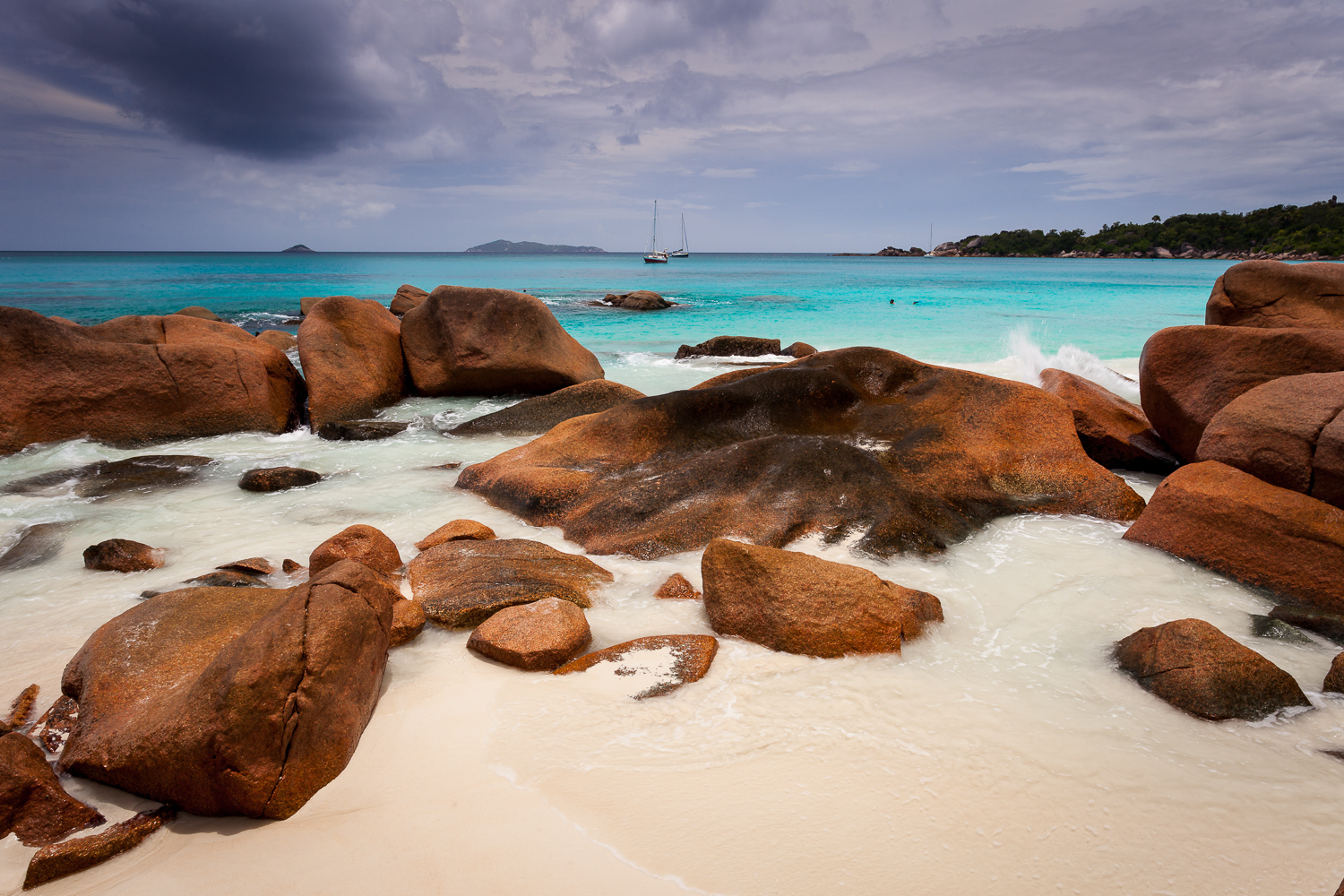
    La Digue is the slowest island in the Seychelles, where bicycles outnumber cars. Its granite boulders frame beaches photographers cross the world to see.

    La Digue is a granite island of about ten square kilometres in the Seychelles archipelago, east of Praslin and about fifty kilometres northeast of Mahé. About two thousand eight hundred people live here, most of them in the village of La Passe on the west coast. The island has almost no cars, so visitors move by bicycle, on foot, or by ox cart, and the pace of the place is set by the tide and the light rather than by timetables. This article describes the geography of La Digue, its history from plantation island to slow-travel destination, how to reach it and move around it, and the beaches and places that make it famous.

    Quick Facts

    • Island: La Digue, a granitic island in the Seychelles archipelago.
    • Position: East of Praslin and west of Félicité, about fifty kilometres northeast of Mahé.
    • Size: About ten square kilometres, about five kilometres long and three kilometres wide.
    • People: About two thousand eight hundred residents, counted in 2014, most of them in La Passe.
    • Highest ground: Belle Vue, three hundred and thirty three metres above the sea.
    • Best-known beach: Anse Source d’Argent, reached through L’Union Estate.
    • Getting around: Bicycle, walking, and the traditional ox cart; very few cars.
    • Getting there: Ferry from Praslin and from Mahé to the jetty at La Passe.
    • Best season: The dry months from May to October, when the western sea is calm and the sun is steady.
    • Nearest World Heritage property: Vallée de Mai on Praslin, about twelve kilometres away.

    Geography of La Digue

    La Digue sits in the granitic Seychelles, a group of islands built of ancient granite rather than coral, and it is the fourth largest granitic island in the archipelago after Mahé, Praslin, and Silhouette. The island is about five kilometres long and three kilometres wide, with a narrow coastal plain on the west where the villages stand and a granite mass in the middle that rises to Belle Vue at three hundred and thirty three metres. Most of the beaches lie around the edge of the island, from Anse Réunion in the west to Grand Anse in the southeast, and almost all of them can be reached by bicycle or on foot. The contrast between the settled west coast and the wild east coast is the first thing a visitor notices, and it shapes everything else about the island.

    The west coast holds the villages, the services, and most of the places to stay. La Passe is the largest village, with about two thousand five hundred people, and it holds the ferry jetty, the market, the shops, and the restaurants. Anse Réunion lies just south of La Passe, with a long white beach and shallow water that suits families with small children.

    The west coast is sheltered from the southeast wind, so the sea is usually calm and safe for swimming all year, and this is also where most of the guesthouses and small hotels stand. Anse Severe, north of La Passe, is a quieter beach with a reef close to shore that suits snorkelling.

    The east and southeast coasts are wilder, with Grand Anse as the largest beach on the island. Grand Anse has strong waves and a pull away from the shore, so swimmers need care, but it offers wide open space and very few people.

    Near Grand Anse are Petite Anse and Anse Cocos, two smaller coves that are calmer, and Anse Cocos has a natural pool among the rocks where visitors can bathe in fresh water after swimming in the sea. The track to the east is a trail over the hill, so visitors usually cycle or walk there for the day rather than staying overnight. The difference between the convenient west and the wild east is one of the defining features of La Digue geography.

    The climate of La Digue is tropical and oceanic, with steady temperatures around twenty seven to thirty degrees all year and high humidity. The dry season from May to October brings the southeast wind, calm seas on the west coast, and plenty of sun, and it is the busiest season for visitors. The wet season from November to April brings short afternoon showers and rougher seas in the east, but the island is quieter and the rooms are easier to find. Travellers choosing when to come should weigh weather against crowds, since the dry season is the finest but also the fullest, while the wet season is emptier but can bring rain and cancelled ferries.

    The ecology of La Digue carries the mark of the granitic Seychelles, with palm forest, takamaka trees, and many birds found nowhere else. The Veuve Reserve in the middle of the island protects the Seychelles black paradise flycatcher, a bird that lives only on La Digue, with a population of only about one hundred birds. Coastal forest and freshwater marshes shelter more birds, crabs, and fish, while the reefs around the island draw tropical fish and sea turtles. A walk in the forest or a swim over the reef shows the variety of life that a small island in the middle of the Indian Ocean can hold.

    Coast of La Digue with granite rocks and jungle near ferry harbor

    Coast of La Digue with granite rocks and jungle near ferry harbor — CC BY-SA 4

    History of La Digue

    La Digue takes its name from a ship in the fleet of the French explorer Marc-Joseph Marion du Fresne, who reached the Seychelles in 1768. Settlement began late in the eighteenth century, when French colonists brought people to grow coconuts and vanilla. Through the nineteenth century and into the early twentieth, the economy of the island rested on plantations, with L’Union Estate as the largest producer of coconut oil and vanilla. The plantation house, the coconut oil mill, and the ox-driven mill that survive today are the remains of that period, and they still stand inside the estate grounds.

    The nineteenth century also made La Digue a refuge for people exiled from other colonies, among them people from Mauritius and Réunion. The island community therefore has mixed roots, with French, African, and Asian influences woven into its language, its food, and its buildings. Seychelles Creole, the main language of the island, reflects this mixture, with French words and African grammar. The Catholic church and the religious festivals also play a large part in the life of the community, and they still mark the year on the island.

    The Seychelles became independent from Britain in 1976, and tourism began to replace farming as the main economy of La Digue during the nineteen seventies and nineteen eighties. Unlike Mahé and Praslin, where large hotels were built, La Digue grew in the direction of small stays, with family guesthouses and self-catering flats. Local people opened rooms in their own houses and cooked for their guests, which created a model of stays tied to the community. This model kept the quiet space and the traditional buildings of the island, and it also kept the income from tourism with the people who live here.

    A striking feature of the history of the island is the restriction on cars. La Digue has very few cars, and most visitors and residents move by bicycle or on foot. This tradition began with the small size of the island and its narrow roads, but it has now become the trademark of the island as a destination.

    The ox cart, once the way to carry plantation goods, now carries visitors from the ferry jetty to their stays. A visitor to La Digue therefore does not only see a beautiful island, but experiences a slow way of life that few places still keep.

    The Veuve Nature Reserve, founded in 1982 on twenty one hectares in the middle of the island, is an important part of the conservation history of La Digue. The reserve protects the Seychelles black paradise flycatcher, the endemic bird that lives only here, with a population of only about one hundred birds. The existence of the reserve limits building in the middle of the island, which helps keep the stays gathered on the west coast. Today La Digue is one of the best protected islands of the Seychelles, with planning that limits building and a local community that takes an active part in conservation.

    The coconut and vanilla trade that built La Digue faded after the Second World War, when copra prices fell and synthetic vanilla undercut the island crop. L’Union Estate, once the largest producer on the island, shrank its plantations and opened its grounds to visitors, keeping the old coconut oil mill, the plantation house, and the tortoise pen as working heritage. The estate still grows vanilla in a small garden, and its mill still presses coconut oil on demonstration days, so visitors can see the trade that once fed the whole island. This shift from plantation to heritage tourism shaped the La Digue of today, where the old estate is a park rather than a factory, and where the island sells its history alongside its beaches.

    Travel to La Digue

    Visitors reach La Digue by ferry from Praslin or Mahé, landing at La Passe on the west of the island. The ferry from Praslin takes about fifteen minutes, while the ferry from Mahé takes about ninety minutes, and many visitors combine Praslin and La Digue in the same trip. Ferry tickets should be booked ahead in the high season, because the boats can fill up. Some visitors come to La Digue for the day from Praslin, but most are advised to stay at least one night, because the island is at its finest in the early morning and the late afternoon, after the day visitors have left.

    Moving around La Digue is mainly by bicycle, the emblem of the island. Most guesthouses rent bicycles on the spot, and a visitor can cycle around the island in a day, stopping at the beaches and the places of interest. The main road joining La Passe with Anse Réunion and L’Union Estate is paved and easy to ride, while the track to Grand Anse is a trail over the hill that needs more strength.

    Walking is also a common way to explore the island, especially for visitors who want to go slowly and look around. The traditional ox cart carries visitors from the ferry jetty to their stays, which gives the island its unhurried character.

    Places to stay on La Digue are mainly family guesthouses, self-catering flats, beach chalets, and small boutique hotels, gathered in La Passe and Anse Réunion. The detailed guide to La Digue hotels covers each type of stay, the areas to stay in, and how to book. Visitors should book ahead for the high season from May to October, because the number of rooms on the island is limited. The ideal stay on the island is two to four days, enough to visit the main beaches, L’Union Estate, and the Veuve Reserve without rushing.

    Comparing La Digue with Praslin is a question many visitors ask, because the two islands lie close together and are often visited in the same trip. Praslin is larger, with more hotels and more services, with the famous Vallée de Mai reserve and Anse Lazio beach. La Digue is smaller, quieter, and more like a fishing village, with bicycles and ox carts instead of cars.

    Many visitors combine both islands, staying two or three days on Praslin to visit Vallée de Mai and Anse Lazio, then two or three days on La Digue to relax and take photographs. The classic Seychelles route of Mahé, Praslin, and La Digue in seven to ten days remains the most searched way to see the archipelago.

    Activities on La Digue include swimming, snorkelling, cycling, hiking, and visiting historic places. Snorkelling is best at Anse Source d’Argent and Anse Severe, where the reef lies close to shore and tropical fish are plentiful. The hike up Belle Vue gives a view over the whole island and the sea, especially fine in the afternoon.

    A visit to L’Union Estate shows the coconut oil mill, the old plantation house, and the giant tortoise pen. Evenings on the island are quiet, with family restaurants serving grilled fish and Creole dishes, and local music at the weekend.

    Notable Places in La Digue

    Anse Source d’Argent

    Anse Source d’Argent is the best-known beach on La Digue, and it is often called one of the most beautiful beaches in the world. The beach has giant granite boulders worn into strange shapes, shallow clear water, and fine white sand, and it can only be reached through L’Union Estate. Early morning is the finest time here, when the beach is still empty and the light is soft for photographs, and visitors should bring water shoes because the seabed has rocks and broken coral.

    Grand Anse, Petite Anse, and Anse Cocos

    Grand Anse is the largest beach on La Digue, on the southeast coast, with strong waves and wide open space. The beach has fewer people than Anse Source d’Argent, and it suits visitors who like long walks and landscape photography. Petite Anse, close to Grand Anse, is a smaller and calmer cove with white sand and clear water, while Anse Cocos has a natural pool among the rocks where visitors can bathe in fresh water after swimming in the sea.

    L’Union Estate and the Veuve Reserve

    L’Union Estate is the old coconut and vanilla plantation, now a park open to visitors, and it is the only way to reach Anse Source d’Argent. Inside the grounds are the old coconut oil mill with its ox-driven press, the plantation house of the estate family, a vanilla garden, and a pen for giant Seychelles tortoises. The Veuve Reserve in the middle of the island shelters the black paradise flycatcher, and visitors can walk there with a guide, while many guesthouses advertise their closeness to the reserve.

    La Passe, Anse Réunion, and Anse Severe

    La Passe is the largest village on La Digue, with the ferry jetty, the market, the shops, and the restaurants, together with many guesthouses and visitor services. Anse Réunion, just south of La Passe, is the longest beach on the west of the island, with fine white sand and shallow water that suits families with small children. Anse Severe, north of La Passe, is a quiet beach with a reef close to shore that is good for snorkelling, and the three areas together form the centre of the island, where visitors begin and end each day.

    Granite rock in La Digue Island at sunset, Seychelles

    Granite rock in La Digue Island at sunset, Seychelles — CC BY-SA 4

    Frequently Asked Questions

    Should I stay on La Digue or Praslin?

    Both islands in one trip: Praslin for hotels and Vallée de Mai, La Digue for slow days.

    How do I get from Mahé to La Digue?

    Travellers go from Mahé to La Digue by ferry, usually through Praslin or direct, depending on the timetable. The ferry from Mahé takes about ninety minutes, while the ferry from Praslin to La Digue takes only about fifteen minutes. Many visitors fly from Mahé to Praslin and then take the ferry, because Praslin has domestic flights from Mahé.

    Can I visit La Digue in a day from Praslin?

    Yes, a day trip from Praslin is possible, because the ferry between the two islands takes only about fifteen minutes. A day tour usually covers the return ferry, a hired bicycle, and visits to Anse Source d’Argent and L’Union Estate. Staying at least one night is better, because the island is finest in the early morning and late afternoon, after the day visitors have left.

    What is there to do on La Digue?

    La Digue offers swimming at Anse Source d’Argent and Grand Anse, snorkelling at Anse Severe, cycling around the island, hiking up Belle Vue, and visiting L’Union Estate and the Veuve Reserve. Visitors can also take a boat to the small islands nearby, go fishing, and watch the sunset from Anse Réunion. Evenings are quiet, with family restaurants serving grilled fish and Creole dishes.

    How do I combine Mahé, Praslin, and La Digue?

    Seven to ten days: two or three days per island, linked by ferry.

    When is the best season to visit La Digue?

    The dry season from May to October is the finest time to visit La Digue, when the western sea is calm and the sun is steady. The wet season from November to April brings short showers and rougher seas, but the island is quieter and room prices are usually softer. Visitors who like swimming and photography should come in the dry season, while visitors who like quiet and good prices can come in the wet season.

    Verified

    • La Digue is a granitic island in the Seychelles, about 10.08 square kilometres, about 5 kilometres long and 3 kilometres wide, and the fourth largest granitic island after Mahé, Praslin, and Silhouette.
    • The island is named after a ship in the fleet of Marc-Joseph Marion du Fresne, who reached the Seychelles in 1768, and settlement began late in the eighteenth century with French planters growing coconut and vanilla.
    • The Seychelles became independent from Britain in 1976, and tourism replaced farming as the main economy of La Digue during the 1970s and 1980s.
    • The Veuve Nature Reserve was founded in 1982 on 21 hectares in the middle of the island, and it protects the Seychelles black paradise flycatcher, a bird found only on La Digue, with a population of about 100 birds.
    • La Digue itself is not inscribed on the World Heritage List. The nearest World Heritage property is Vallée de Mai Nature Reserve on Praslin, ref 261, inscribed in 1983 under criteria (vii)(viii)(ix)(x), an area of 19.5 hectares of palm forest holding the largest population of coco-de-mer in the world, about 12 kilometres from La Digue in a straight line.
    • The other World Heritage property of the Seychelles is Aldabra Atoll, ref 185, inscribed in 1982 under criteria (vii)(ix)(x), a raised coral atoll holding the largest giant tortoise population in the world, more than 100,000 animals, about 1,182 kilometres from La Digue in a straight line.
    • The Wikidata item for La Digue is Q581154, instance of island, with coordinates -4.3667 latitude and 55.8333 longitude, matching the registry. A different item, Q139858678, is La Digue in Québec, Canada, and must not be confused with the Seychelles island.
    • Population about 2,800 people in 2014, with about 2,500 in La Passe, and Belle Vue at 333 metres, checked 23 November 2026.

    Sources

    • Wikidata, La Digue Q581154 — checked 23 November 2026.
    • Wikipedia, La Digue — checked 23 November 2026.
    • UNESCO, Vallée de Mai Nature Reserve, ref 261 — whc.unesco.org/en/list/261/ — checked 23 November 2026.
    • UNESCO, Aldabra Atoll, ref 185 — whc.unesco.org/en/list/185/ — checked 23 November 2026.

    Unverified

    • Ferry times between Praslin and La Digue, about 15 minutes, and between Mahé and La Digue, about 90 minutes, are the times commonly given in travel guides and have not been checked against the official ferry timetable, which changes with the season.
    • The entry fee for L’Union Estate is not stated here, because the fee can change, and visitors should check at the gate before entering.
    • The population of La Passe, about 2,500 people, is the figure given in the Vietnamese article, and it has not been checked against a newer census.
    • The total of the English keyword group for La Digue is synthetic, because no English keywords were extracted for this entity, and the registry volume comes from the German and French groups.

    Illustrations

    • Hero: View of La Digue. Free image: https://upload.wikimedia.org/wikipedia/commons/b/b6/Luftbild_Insel_La_Digue_Seychellen.DNG_%2839617026111%29.jpg — CC BY 2.
    • In body, La Digue: Granite rock in La Digue Island at sunset, Seychelles. Free image: https://upload.wikimedia.org/wikipedia/commons/e/e2/198_Granite_rock_in_La_Digue_Island_at_sunset_Photo_by_Giles_Laurent.jpg — CC BY-SA 4.
    • In body, La Digue: Coast of La Digue with granite rocks and jungle near ferry harbor. Free image: https://upload.wikimedia.org/wikipedia/commons/e/e7/Coast_of_La_Digue_near_ferry_harbor_in_2025.jpg — CC BY-SA 4.
  • La Digue Hotels — Where to Stay on Seychelles’ Slowest Island

    La Digue Hotels — Where to Stay on Seychelles’ Slowest Island

    La Digue hotels are small and close to the sea, on an island with no resorts. The island is crossed by bicycle, and the best stays sit on the west coast. This guide helps travellers choose among La Digue hotels by area, by type of room and by season, without naming individual properties or giving room rates. On this island, choosing a stay means choosing a spot on the narrow west coast, between the ferry jetty at La Passe and the beach at Anse Réunion.

    La Digue is the fourth-largest granitic island of Seychelles, a leaf-shaped island about five kilometres long and three wide, with a granite ridge down its spine. Its people and its rooms cling to a thin strip of land on the west coast, while the east is steep hills, forest trails and empty beaches. Travellers who pair the island with Praslin or Mahé usually spend two to four days here inside a seven- to ten-day Seychelles trip.

    Four kinds of stay share the island: the family guesthouse, the self-catering apartment, the beach bungalow and the small boutique hotel. The island holds no large resort and no tall building, and the community keeps new building tightly controlled. Travellers who want luxury on a grand scale should look at the bigger islands, while travellers who want a simple room near the sea and a host who knows the paths will find La Digue hotels hard to beat.

    Use this guide as a map, not as a list. Start with the area that fits the trip, then pick the kind of room that fits the travellers, then check the five details before booking. The island rewards travellers who plan the stay first and the beach days second.

    Quick Facts

    • Island: La Digue, the fourth-largest granitic island of Seychelles, just over ten square kilometres.
    • People: About 2,800 residents (2014), most of them in La Passe and Anse Réunion.
    • Stay hubs: La Passe around the ferry jetty, Anse Réunion just to the south, and the quiet south around L’Union Estate.
    • Stay types: La Digue hotels come as family guesthouses, self-catering apartments, beach bungalows and small boutique hotels; no large resorts.
    • Getting there: Ferry from Praslin in about 15 minutes, from Mahé in about 90 minutes, to the jetty at La Passe.
    • Getting around: Bicycle, walking and the traditional ox cart; very few cars.
    • Beaches near stays: Anse Réunion, Anse Source d’Argent, Grand Anse, Anse Cocos.
    • High season: The dry season, May to October, when the west coast sea is calm and the sun shines.
    • Note: Book early for high season, because the island holds few rooms.

    Geography of La Digue Hotels

    Seen from above, La Digue is shaped almost like a leaf, about five kilometres long and three wide, with a granite ridge running down its middle. People and rooms cling to a narrow strip of land on the west coast, where the ferry jetty at La Passe and the village of Anse Réunion sit. The strip is under a kilometre wide in many places, so almost every room on the west coast lies a short walk from the sea. La Digue hotels therefore cluster on the west coast, while the east holds almost no rooms at all, because the ground is steep and the paths are only trails.

    La Passe is where every traveller arrives, because the ferries from Praslin and Mahé both land at its jetty. The village holds about 2,500 people, with the market, shops, restaurants and most of the rooms on the island. La Digue hotels in La Passe sit inside the village, often a few hundred metres from the beach, and the hosts are usually local families who welcome guests themselves. Travellers who want the greatest convenience choose La Passe, because everything lies within walking distance.

    A few minutes by bicycle south of La Passe lies Anse Réunion, the most loved beachside stay area on the island. The beach here is long and shallow, with gentle waves, and it suits families with small children. La Digue hotels around Anse Réunion are mostly beach bungalows and apartments close to the sea, quieter than La Passe but still near the centre. In the afternoon, guests can watch the sunset from outside their room, then cycle back to La Passe for dinner.

    Further south lies the area around L’Union Estate, with far fewer rooms than the north. L’Union Estate was once a coconut and vanilla plantation, and it now opens to visitors, and it is also the only way through to Anse Source d’Argent. Rooms here are usually small bungalows under the palms, private and close to nature. La Digue hotels near L’Union Estate suit couples who want quiet and photographers who want the famous beach empty in the early morning.

    The east of the island, around Grand Anse and Anse Cocos, holds almost no rooms, and that is part of its charm. Grand Anse is the largest beach on the island, with strong waves and wide open space, but the path there crosses a hill on foot. Guests who want to visit the east usually sleep on the west coast and cycle over for the day, carrying water and snacks. La Digue hotels do not reach the east coast, so the stay map stays simple: the west is where to sleep, and the east is where to spend the day.

    The weather also shapes the choice of a room. In the dry season, from May to October, the southeast wind calms the west coast sea, the sun shines often, and the island fills fast. In the wet season, from November to April, short afternoon showers fall and the sea runs rougher, and La Digue hotels are easier to book, though some small guesthouses close for a rest. Travellers who come in the dry season should book months ahead, and travellers who come in the wet season should still confirm that their chosen stay is open.

    The ridge and the interior explain why the rooms stay on the coast. Belle Vue, the highest point of the island, rises 333 m above the west coast, and the granite ridge runs the length of the island between the two coasts. The middle of the island holds forest and the Veuve Reserve, protected for its rare bird, and building stays near the sea because the interior is green and guarded. La Digue hotels therefore face the sea on one side and the ridge on the other, with the forest as a quiet backdrop.

    Title Blankenberge

    Title Blankenberge — Public domain

    History of La Digue Hotels

    The story of stays on La Digue begins with coconut and vanilla plantations in the late eighteenth century, when French settlers brought workers to the island. The island takes its name from a ship in the fleet of the explorer Marc-Joseph Marion du Fresne, who visited Seychelles in 1768. Through the nineteenth and early twentieth centuries the island lived from its plantations, and L’Union Estate was the centre of coconut oil and vanilla production. The old coconut mill with its ox-driven press, the plantation house and the vanilla garden still stand, and the first La Digue hotels grew from that farm past, not from a resort plan.

    The turning point came in the second half of the twentieth century, when Seychelles opened to international guests and tourism slowly replaced farming on the island. Instead of building large hotels like Mahé or Praslin, the people of La Digue opened rooms in their own homes: a few extra rooms, breakfast for guests, and bicycles to rent. The model kept the island small and let the tourism money stay with local families. La Digue hotels of the family kind are still the most common stay on the island, and many hosts have welcomed guests for decades, knowing return visitors by their second or third trip.

    The near absence of cars also shaped how stays work. The roads are narrow and the population is small, so the bicycle became the main transport, while the ox cart that once carried plantation goods now carries luggage from the jetty to the room. Most stays rent bicycles on the spot, and many keep children’s bicycles ready for families. Good La Digue hotels on the island offer not only a fine room but also a good bicycle and a host who knows the paths and which beach is calm today.

    The Veuve Reserve, opened in 1982 on 21 hectares in the middle of the island, also shaped the map of rooms in an indirect way. The reserve shelters the Seychelles black paradise flycatcher, an endemic bird found only on this island, with only about 100 birds left. Protecting the middle of the island pushed new building to the west coast, so the island kept a green belt in its centre while rooms stayed near the sea. La Digue hotels near the reserve let guests rise early to hear the birds, then walk into the reserve with a local guide.

    La Digue hotels today are more varied than before, but still inside the small scale. Beside family guesthouses, the island holds self-catering apartments for families and long stays, and a few boutique hotels with a restaurant and a private pool. No tall building and no large resort has risen, and the island community still controls new building tightly. The very limit is what draws travellers here: guests come not for grand hotels, but for a simple room near the sea and near the local people.

    The ox cart deserves a paragraph of its own, because it is the oldest luggage service on the island. The carts once carried coconuts and vanilla from the plantations to the jetty, and they now carry suitcases from the ferry to the room, pulled slowly along the narrow roads. The ride is short and unhurried, and it sets the pace of the island from the first minute. La Digue hotels that send an ox cart to the jetty give their guests the island itself as a welcome, before the room is even seen.

    Title Blankenberghe

    Title Blankenberghe — Public domain

    Travel to La Digue Hotels

    The ferry is the only way to reach the island, and its timetable sets the check-in hour. The ferry from Praslin takes about 15 minutes, while the ferry from Mahé takes about 90 minutes, and travellers often visit Praslin first and cross to La Digue in the same trip. La Digue hotels ask guests to share the ferry time when booking, so someone can meet them at the jetty or leave bicycles ready. Many stays welcome guests at the jetty with the traditional ox cart, a pleasant first taste of the island from the very first minute.

    La Digue hotels come in four kinds, and each serves a different need. The family guesthouse suits travellers who want to talk with the host, eat a local breakfast and hear the plan for each morning. The self-catering apartment suits families and long stays, with a kitchen, a separate living room and space for children to play. The beach bungalow suits couples who want privacy, the sound of the sea at night and an early start on the beach, while the boutique hotel suits travellers who want fuller service, such as a restaurant on the grounds and a reception that books tours.

    La Digue hotels differ in what they include, so travellers should check five details before confirming: air conditioning, wifi, bicycle rental, breakfast and a pickup at the jetty. Many stays include breakfast and bicycles in the room rate, but some charge for each service separately, so asking clearly avoids surprises at payment. Wifi on the island is enough for looking things up and staying in touch, but it can slow in the evening when many guests use it at once. Travellers who need to work online should ask about the speed first and think about buying a local SIM card.

    La Digue hotels fill fastest in the high season from May to October, so booking months ahead is needed, while the low season is easier to book, though travellers should still confirm that the chosen stay is open. Two to four days is the ideal length of stay on the island. Two days cover Anse Source d’Argent, Grand Anse and L’Union Estate, while four days allow a slow pace, the Veuve Reserve and the small beaches few people know. Many travellers fit the island into a Seychelles trip of seven to ten days, giving two or three days to each of Mahé, Praslin and La Digue.

    Food on the island is tied to the stay, because many guesthouses serve breakfast and dinner for their guests. Local dishes centre on grilled fish, Creole rice and tropical fruit, with the catch of the day. Guests in self-catering apartments can buy food at the shops in La Passe, which hold the widest choice on the island, and evenings are quiet, with little nightlife, so guests usually eat early and rest for an early start on the beach. Travellers planning the wider archipelago often compare Seychelles hotels on the bigger islands before settling on La Digue, and Seychelles tours that visit all three islands save separate bookings.

    Notable Places in La Digue Hotels

    La Passe and the Ferry Jetty

    La Passe is more than a jetty: it is the living centre of the island, with the market, shops and restaurants gathered around the landing. Guests who stay here can walk to buy food, eat out and rent a bicycle without going far. La Digue hotels in La Passe suit first-time visitors and travellers who want everything within walking distance.

    Anse Réunion and the West Coast Beach

    Anse Réunion, just south of the village, is the longest beach on the west coast, with fine sand and shallow water. La Digue hotels around Anse Réunion hold the most beachside rooms on the island, from small bungalows to boutique hotels. Families rank it first, because the water is calm, the centre is near, and the sunset fills the sky each evening.

    Anse Source d’Argent and L’Union Estate

    Anse Source d’Argent is the most famous beach on the island, reached only through L’Union Estate. Great granite boulders, shallow clear water and fine white sand make it the most photographed beach in Seychelles. La Digue hotels near this beach are few and quiet, suiting guests who rise early to reach the sand before the crowds, while visitors from further away should arrive in the morning, wearing water shoes for the stones and broken coral underfoot.

    Grand Anse and Anse Cocos in the East

    Grand Anse and Anse Cocos in the southeast show a wilder side of the island: open, broad and little visited. Grand Anse has strong waves, which do not suit small children or weak swimmers, but it suits walking and landscape photography. Anse Cocos is a smaller, more sheltered cove, with a natural pool among the rocks where guests can soak after swimming, and La Digue hotels do not reach these beaches, so guests cycle over from the west coast for the day.

    The Veuve Reserve in the Middle of the Island

    The Veuve Reserve in the middle of the island is the stop for bird lovers, protecting the Seychelles black paradise flycatcher, found only on La Digue. The reserve covers 21 hectares of woodland, with walking trails, signs about the plants, and a small information centre at the entrance. La Digue hotels near the reserve let guests rise early to hear the birds sing, and staff inside know the territories and help visitors find them.

    Frequently Asked Questions

    Which area should I choose among La Digue hotels?

    La Passe for convenience, Anse Réunion for the beach and families, the south near L’Union Estate for quiet and mornings at Anse Source d’Argent.

    What types of La Digue hotels are there?

    Family guesthouses, self-catering apartments, beach bungalows and small boutique hotels. The island has no large resorts and no tall buildings.

    Should I book La Digue hotels in advance?

    Yes, above all from May to October, when the few rooms fill early. Families should book even earlier, since family rooms are scarce.

    Are La Digue hotels near the beach?

    Many are, above all around Anse Réunion and the south. In La Passe, a walk or a short cycle ride reaches the beach.

    Are there self-catering apartments on La Digue?

    Yes, self-catering apartments are common, suiting families and long stays. Check that the kitchen is fully equipped and where the nearest food shop stands.

    Are La Digue hotels good for families?

    Yes, many guesthouses and apartments suit children, with family rooms and shared space. Anse Réunion is best, with shallow water and gentle waves.

    Verified

    • La Digue covers 10.08 square kilometres, with about 2,800 residents in 2014, most of them in La Passe, and Belle Vue, the highest point, at 333 m — Wikipedia, La Digue, checked 23/11/2026.
    • The island is the fourth-largest granitic island of Seychelles, after Mahé, Praslin and Silhouette, and takes its name from a ship in the fleet of Marc-Joseph Marion du Fresne, who visited Seychelles in 1768 — Wikipedia, La Digue, checked 23/11/2026.
    • The Veuve Special Reserve opened in 1982, covers 21 hectares, and shelters the Seychelles black paradise flycatcher, an endemic bird found only on La Digue, with only about 100 birds left — Seychelles Parks and Gardens Authority, checked 23/11/2026.
    • The nearest UNESCO property is the Vallée de Mai Nature Reserve on Praslin, ref 261, inscribed 1983 under criteria (vii)(viii)(ix)(x), covering 19.5 ha, 11.4 km by straight line from La Digue — whc.unesco.org/en/list/261/, checked 23/11/2026.
    • The ferry from Praslin takes about 15 minutes, and the ferry from Mahé takes about 90 minutes, both landing at La Passe.
    • The dry season from May to October brings the southeast wind, which calms the west coast sea; the wet season runs from November to April.

    Sources

    • Wikipedia, La Digue — https://en.wikipedia.org/wiki/La_Digue — checked 23/11/2026.
    • UNESCO, Vallée de Mai Nature Reserve, ref 261 — https://whc.unesco.org/en/list/261/ — checked 23/11/2026.
    • Seychelles Parks and Gardens Authority, Veuve Special Reserve — https://www.spga.gov.sc/news/2022-03/veuve-special-reserve-receives-special-donation-mcb-seychelles — checked 23/11/2026.
    • Sesel Sa, La Digue island guide — https://seselsa.com/la-digue-seychelles/ — checked 19/11/2026.

    Unverified

    • Room rates and the entry fee for L’Union Estate: both change over time, and this guide gives no figures, so check with the stay or at the gate before visiting.
    • Ferry times of about 15 minutes from Praslin and 90 minutes from Mahé are general figures; timetables change with the season, so check with the ferry company before travel.
    • No search-volume figure appears in this article.

    Illustrations

    • Hero: Title Blankenberge. Free image: https://upload.wikimedia.org/wikipedia/commons/b/b9/Blankenberge.Grote_hotels_op_zeedijk–Grands_h%C3%B4tels_sur_la_digue–Grand_hotels_on_the_front-_Grosse_Hotels_auf_dem_Damm%2C_GP004617.jpg — Public domain.
    • In body, La Digue Hotels: Title Blankenberge. Free image: https://upload.wikimedia.org/wikipedia/commons/9/98/Blankenberge.Grote_hotels_op_zeedijk–Grands_h%C3%B4tels_sur_la_digue–Grand_hotels_on_the_front–Grosse_Hotels_auf_dem_Damm%2C_GP004617%282%29.jpg — Public domain.
    • In body, La Digue Hotels: Title Blankenberghe. Free image: https://upload.wikimedia.org/wikipedia/commons/f/f9/Blankenberghe.H%C3%B4tel_Stein-_La_digue%2C_GP005015.jpg — Public domain.
  • Praslin — Praslin, the Island of the Coco de Mer in the Seychelles

    Praslin — Praslin, the Island of the Coco de Mer in the Seychelles

    Praslin is the second largest island of the Seychelles, a granite island of palm forest and white sand. Its Vallée de Mai shelters the coco de mer.

    The island lies about 45 km north-east of Mahé, the main island of the Seychelles, and it is reached by a ferry of about one hour or a domestic flight of about fifteen minutes. Praslin holds the Vallée de Mai Nature Reserve, a pocket of primeval palm forest inscribed by UNESCO in 1983, and beaches that rank among the finest in the Indian Ocean. This guide covers the geography of the island between its granite hills and its reefs, the history from French settlement to independence, and the practical side of visiting the second island of the Seychelles.

    Quick Facts

    • Name: Praslin, once called Île de Palmes, the Island of Palms, by French explorers.
    • Island type: Granite island, level L3, in the Seychelles, off the east coast of Africa.
    • Position: Western Indian Ocean, about 45 km north-east of Mahé, north-east of Madagascar.
    • Coordinates: 4 degrees 19 minutes south, 55 degrees 44 minutes east; Wikidata Q581819, an island.
    • Area: About thirty-eight and a half square kilometres, about twelve kilometres long and under five kilometres wide.
    • People: About seven thousand five hundred to eight thousand six hundred residents, in Baie Sainte Anne, Anse Volbert and Grand Anse.
    • Districts: Two districts, Baie Sainte Anne in the north-east and Grand Anse in the south-west.
    • Heritage on the island: Vallée de Mai Nature Reserve, UNESCO ref 261, inscribed 1983, criteria (vii)(viii)(ix)(x).
    • Nearest separate World Heritage property: Aldabra Atoll, ref 185, more than one thousand one hundred kilometres to the south-west, straight-line distance.
    • Highest point: Mont Azore, 367 metres, with a view over the whole island and its neighbours.
    • Best months: April to May and October to November, for calm seas and warm air.
    • Getting there: Ferry about one hour from Mahé, or a domestic flight of about fifteen minutes to Amitié.

    Geography of Praslin

    Praslin is the second largest island of the Seychelles, about twelve kilometres long and under five kilometres wide, with an area of about thirty-eight and a half square kilometres. The island is granite, part of the ancient Inner Islands that rose from the ocean as fragments of Gondwana, and its spine is a chain of forested hills. The highest point is Mont Azore, 367 metres high, from which the whole island, its bays and its neighbouring islands can be seen on a clear day. Two main roads run along the length of the island, with a cross road climbing through the hills in the south, and the coast is a mix of white sand beaches, small bays and granite boulders.

    The climate of the island is tropical and oceanic, with warm air all year and temperatures usually between 24 and 32 degrees. Two wind seasons shape the year: the south-east trade wind blows from May to October, stirring the sea on the south-east coast, while the north-west monsoon blows from November to April, stirring the sea on the north-west coast. Rain falls mostly between November and March, with about two thousand millimetres in a year, and the drier months run from May to October. The calm seasons, in April to May and October to November, bring flat seas and light winds, and they are the best months for diving, sailing and swimming.

    Palm forest covers much of the interior of the island, and the Vallée de Mai, in the centre of the island, is its finest remnant. The reserve covers nineteen and a half hectares of near-primeval palm forest, where six endemic palm species grow together, led by the coco de mer with the largest seed in the plant kingdom. The forest also shelters the black parrot, a bird found only on the island and wholly dependent on the palm forest of the Vallée de Mai and the woods around it. Praslin National Park, about three hundred hectares of forest around the reserve, protects the wider ecosystem, and its trails climb through palms, pandanus and broadleaf trees.

    The sea around the island is warm and clear, with coral reefs, white sand and a rich life of reef fish, turtles and reef sharks. The best known beaches are Anse Lazio in the north-west, Anse Georgette in the north-west near the Constance Lemuria resort, and Anse Volbert, also called Côte d’Or, in the north-east, the longest and liveliest beach of the island. Curieuse Island lies about one kilometre to the north, a small island of red beaches, mangroves and giant Aldabra tortoises, reached by boat in about fifteen minutes. La Digue lies about five kilometres to the east, famous for Anse Source d’Argent and its granite boulders, and it is reached by ferry in about fifteen minutes.

    Getting around the island is simple, with public buses on the main roads, taxis and car, motorbike and bicycle hire. Praslin Airport stands at Amitié, in the west of the island, with daily domestic flights from Mahé of about fifteen minutes, the fastest way to arrive. Ferries from Mahé run several times a day and take about one hour, landing at Baie Sainte Anne, the main town of the island. From Baie Sainte Anne, ferries also cross to La Digue in about fifteen minutes, and day boats leave for Curieuse and the smaller islands nearby.

    The two districts of the island divide the island between the settled north-east and the wilder south-west. Baie Sainte Anne, on the north-east coast, holds the ferry jetty, the main shops and the island’s administrative offices, and it is the first place most visitors see. Grand Anse, on the south-west coast, is a long sweep of beach with fishing boats, guesthouses and a slower pace, and it faces the open ocean. Between them lie the villages of Anse Volbert, with its hotels and restaurants, and the farming valleys of the interior, where vanilla, cinnamon and fruit grow in small plots.

    History of Praslin

    Praslin was first charted by French explorers in the eighteenth century, when they reached the Seychelles and named the island Île de Palmes, the Island of Palms, for its forests. In 1768 the French renamed it Praslin, after César Gabriel de Choiseul, Duke of the island, a minister of King Louis the Fifteenth. French settlers arrived late in the eighteenth century and built spice, cotton and coconut plantations, bringing enslaved workers from Africa and Madagascar to work them. Under French rule Praslin was an agricultural island of large estates and a growing population, smaller and quieter than Mahé, the main island.

    Britain seized the Seychelles, including Praslin, in 1811, and the Treaty of Paris in 1814 gave the archipelago formally to Britain. Under British rule the plantations of the island turned to coconut, cinnamon and vanilla, and the island became a centre for coconut oil and spice production in the Seychelles. The population grew into a Creole community, descended from enslaved Africans, Indians and Europeans, settled mainly at Baie Sainte Anne, Anse Volbert and Grand Anse. Life on the island stayed agricultural for more than a century, with the estates, the fishing villages and the small churches shaping its rhythm.

    The Vallée de Mai was set aside as a nature reserve in 1979, to protect the primeval palm forest of the island and its coco de mer, black parrot and other endemic species. In 1983 UNESCO inscribed the reserve on the World Heritage List, ref 261, under criteria (vii)(viii)(ix)(x), recognising it as one of the rare surviving palm forests of its kind in the world. The reserve is managed by the Seychelles Islands Foundation, a public trust, and it is one of two World Heritage properties of the Seychelles, together with Aldabra Atoll. The inscription gave Praslin an international profile it had never held before, and it put the coco de mer at the centre of the island’s identity.

    The coco de mer, the double coconut of the Seychelles, is the most famous plant of the island, with the largest seed in the plant kingdom, weighing up to eighteen kilograms. The palm grows naturally only on the island and Curieuse, and its fruit takes six to seven years to ripen, one of the slowest cycles of any palm. Its seeds were once traded as rare curiosities at high prices, and today each nut is numbered and controlled by the government of the Seychelles. Visitors to the Vallée de Mai can see the palms in the forest, with great nuts hanging from the crowns and fallen seeds on the paths, and guides explain the ecology and the history of this singular tree.

    Tourism on the island grew from the nineteen seventies, when the Seychelles opened to international visitors and the island became known for its beaches, resorts and wild nature. Hotels and guesthouses rose along the coast, above all at Anse Volbert and Anse Lazio, but they stayed small in scale and close to the landscape. In 1976 the Seychelles won independence from Britain, and Praslin became part of the Republic of the Seychelles, with tourism gradually replacing farming as the main economy of the island. Today Praslin is the second tourist island of the Seychelles after Mahé, joined to the other islands by flights, ferries and day boats, and it keeps a quiet air, with palm forest, beaches and endemic birds, for travellers who want rest and wild nature.

    The fishing villages of the island kept their own history alongside the resorts, with Creole houses, small chapels and boats drawn up on the sand. Fishermen of Baie Sainte Anne and Grand Anse still work the reefs and the open water, and their catch feeds the restaurants of Anse Volbert and the island markets. The island’s Creole culture, its food, music and language, grew from the mix of African, Indian and European settlers, and it shows in the curries, the grilled fish and the festivals of the villages. the island’s story is therefore twofold, a story of plantations and independence, and a story of fishermen and forest, and both are still visible in the island today.

    Travel to Praslin

    Most visitors stay on the island for three to five days, enough time for the Vallée de Mai, the beaches of Anse Lazio and Anse Georgette, and a boat trip to Curieuse and La Digue. Three days covers the highlights, while five days leaves room for diving, walking and slow mornings on the sand. Places to stay range from resorts at Anse Lazio and Anse Georgette to guesthouses and rented flats at Anse Volbert and Baie Sainte Anne, and booking ahead matters in the calm seasons. Travel on the island costs more than on many African destinations, because the Seychelles is one of the most expensive countries in Africa, but guesthouses and local restaurants keep the budget in reach.

    The Vallée de Mai deserves at least half a day, and the morning is the best time, when the forest is cool and the birds are active. Trails wind through the palm forest with a guide, who points out the coco de mer, the black parrot and the other endemic palms, and the walk is easy enough for most visitors. Entry is charged, and the reserve opens early, so an early start avoids the heat and the midday groups. Fond Ferdinand, in the east of the island, is a quieter place to see coco de mer, with fewer visitors, a hilltop view over the sea, and guided walks in the morning and the afternoon.

    The beaches are the main reason most travellers come to the island, and Anse Lazio is usually named first, with white sand, clear water and great granite boulders at both ends. Anse Georgette, near the Constance Lemuria resort, is quieter, reached by a walk of about twenty minutes through the resort grounds, and visitors should arrange access a day ahead. Anse Volbert, or Côte d’Or, is the long and lively beach of the north-east, with hotels, restaurants and hire for snorkelling and water sports. Snorkelling is good at all three beaches, with coral and reef fish close to shore, but swimmers should watch for strong currents at some beaches and ask locally before entering the water.

    Day boats from Baie Sainte Anne and Anse Volbert carry visitors to Curieuse, La Digue and the smaller islands, and a full day on the water is one of the best uses of time on the island. Curieuse offers red beaches, mangroves and giant Aldabra tortoises that roam freely, and the boat ride takes about fifteen minutes. La Digue offers Anse Source d’Argent, bicycles for hire and a slow island pace, and the ferry from the island takes about fifteen minutes. Diving, fishing and dolphin watching trips also leave from the main beaches, and they should be booked a day ahead in the busy months.

    Practical notes help a trip to the island run smoothly, above all for money and transport. Cash is useful, because small shops and village restaurants may not take cards, and the island has few cash machines outside the main settlements. Buses run on the main roads and are cheap, but they stop early in the evening, so a hire car or a taxi is better for late dinners and early starts. Sun protection, reef-safe sunscreen and drinking water matter on every walk, because the sun is strong and the trails have little shade, and visitors should carry water on the climb to Mont Azore.

    Notable Places in Praslin

    Vallée de Mai Nature Reserve

    The Vallée de Mai sits in the centre of the island, a pocket of primeval palm forest inscribed by UNESCO in 1983, and it is the place to start any visit to the island. Guided trails lead through the forest past coco de mer palms, five other endemic palms and the black parrot, and the guides explain how the forest has survived almost unchanged since prehistoric times. Come in the early morning, when the light falls through the fronds and the birds are loudest, and allow at least half a day for the walk.

    Anse Lazio

    Anse Lazio, in the north-west of the island, is often called one of the finest beaches in the world, with white sand, clear water and granite boulders framing both ends. The water is shallow and calm, good for swimming and snorkelling, and a small restaurant serves seafood and drinks at the edge of the sand. Arrive early in the morning, when the beach is empty and the light is best for photographs, because it fills up by midday in the busy season.

    Anse Georgette

    Anse Georgette, also in the north-west, is a quieter beach of white sand about six hundred metres long, reached by a walk of about twenty minutes through the grounds of the Constance Lemuria resort. Access needs arranging a day ahead, and the effort keeps the beach far less crowded than Anse Lazio. The water is clear and calm, with coral and reef fish close to shore, and the beach suits travellers who want privacy and wild scenery over services.

    Fond Ferdinand Reserve

    Fond Ferdinand, in the east of the island, is the quieter alternative to the Vallée de Mai, with coco de mer palms, guided walks and a hilltop view over the sea and the neighbouring islands. The reserve draws fewer visitors, so the trails feel wilder and the guides have more time to talk, and entry costs less than at the Vallée de Mai. Guided walks run in the morning and the afternoon, and the viewpoint at the top is the best place on the island to watch the sunset over the sea.

    Curieuse Island

    Curieuse lies about one kilometre north of the island, a small island of red beaches, mangroves and giant Aldabra tortoises that wander freely among the trees. The island was a leper colony in the nineteenth century, and today it is a nature reserve where visitors can feed the tortoises, walk through the mangroves and swim on the red beach. Boats from the island take about fifteen minutes, and half a day is enough to see the island, though the tortoises alone are worth a slow morning.

    Mont Azore Viewpoint

    Mont Azore, 367 metres high, is the highest point of the island, and the climb to its summit is the best walk on the island for views. The trail rises through palm forest from the centre of the island, and the summit looks over the whole of the island, its bays and the islands of Curieuse, La Digue and Mahé. The climb takes a couple of hours there and back, and it is best done early in the morning, with water and good shoes, before the sun grows strong.

    Frequently Asked Questions

    Which beach is the best on Praslin?

    Anse Lazio wins for sheer beauty, Anse Georgette for quiet, and Anse Volbert for restaurants and water sports.

    How do I get from Mahé to Praslin?

    Ferries cross in about an hour, and domestic flights take about fifteen minutes.

    What makes Vallée de Mai special?

    It guards the largest coco de mer population on earth, plus five other endemic palms and the black parrot.

    What else is there besides beaches?

    Forest trails, the Fond Ferdinand reserve, giant tortoises on Curieuse, and Creole food in the villages.

    How many days should I stay?

    Three days covers the highlights, while five days leaves room for diving, hiking and slow beach mornings.

    How do I reach La Digue from Praslin?

    Ferries run several times a day and take about fifteen minutes to La Passe.

    Verified

    • Vallée de Mai covers 19.5 ha of palm forest in the centre of Praslin and was inscribed in 1983 under criteria (vii)(viii)(ix)(x) — UNESCO ref 261, whc.unesco.org/en/list/261/, checked 23 November 2026.
    • The reserve holds the largest population of coco de mer in the world, with six endemic palm species growing together, and the black parrot lives only on Praslin — UNESCO ref 261, whc.unesco.org/en/list/261/, checked 23 November 2026.
    • Praslin is the second largest island of the Seychelles, 38.52 square kilometres, 12 km long and 4.6 km wide, 44 km north-east of Mahé, with Mont Azore at 367 m — Praslin, en.wikipedia.org/wiki/Praslin, checked 23 November 2026.
    • The island was renamed Praslin in 1768 after the Duke of Praslin, and the Seychelles became independent from Britain in 1976 — Praslin, en.wikipedia.org/wiki/Praslin, checked 23 November 2026.
    • Vallée de Mai was established as a reserve in 1979 and is managed by the Seychelles Islands Foundation, a public trust — UNESCO ref 261, whc.unesco.org/en/list/261/, checked 23 November 2026.
    • Praslin is Q581819 on Wikidata, instance of island, at 4.3206 degrees south, 55.7322 degrees east — Wikidata API, wbgetentities Q581819, checked 23 November 2026.
    • Aldabra Atoll, ref 185, is the nearest separate World Heritage property to Praslin, about 1,174 km to the south-west by straight-line distance from the island centre — haversine calculation from registry coordinates, 23 November 2026.

    Sources

    • Vallée de Mai Nature Reserve — UNESCO, whc.unesco.org/en/list/261/ — inscription 1983, ref 261, criteria (vii)(viii)(ix)(x), area 19.5 ha; checked 23 November 2026.
    • Praslin — Wikipedia, en.wikipedia.org/wiki/Praslin — area, population, history, Vallée de Mai established 1979; checked 23 November 2026.
    • Wikidata Q581819 — Praslin, www.wikidata.org/wiki/Q581819 — island type, coordinates; checked 23 November 2026.

    Unverified

    • Current entry fees for Vallée de Mai and Fond Ferdinand, because fees change from year to year and were not checked directly on the Seychelles Islands Foundation site.
    • The detailed ferry timetable between Mahé and Praslin and between Praslin and La Digue, because sailings change with the season and were not checked on the ferry operator site.
    • Domestic flight fares between Mahé and Praslin, because fares change with season and airline, and travellers should check directly with the airline before booking.
    • The exact annual number of visitors to Praslin, because Seychelles tourism statistics were not fully compared for this article.
    • How crowded Anse Lazio is in each month, because visitor numbers change with the season and no official monthly figures were found.

    Illustrations

    • Hero: A view of Praslin. Free image: https://upload.wikimedia.org/wikipedia/commons/8/8d/P1010087_Praslin.JPG — CC BY-SA 4.0.
  • Seychelles Hotels

    Seychelles Hotels

    Seychelles hotels sit on granite islands where the beach is never far away. Small guesthouses and private island resorts share the same warm sea.

    Seychelles is an archipelago of one hundred and fifteen islands in the Indian Ocean, northeast of Madagascar, and its hotels range from small family guesthouses to private island resorts that take only a handful of guests. The country is the smallest in Africa by population, with fewer than one hundred and twenty thousand people, and most of them live on Mahe, the largest island, where the largest number of Seychelles hotels also stand. Seychelles hotels are spread across the three main islands of Mahe, Praslin and La Digue, with a few on the private islands, and each island has a different character, from the busy beaches of Beau Vallon to the slow bicycle pace of La Digue. This guide explains where to stay, what each island offers, and how to plan a hotel stay that fits the season.

    Quick Facts

    • Country: Seychelles, an archipelago of 115 islands in the Indian Ocean, about 1,500 kilometres east of mainland Africa.
    • Main islands: Mahe, Praslin and La Digue hold almost all of the accommodation.
    • Stay types: Small guesthouses, self-catering apartments, beach resorts, hillside villas with private pools, and private island resorts.
    • Most popular beach: Beau Vallon on Mahe, the longest and most visited beach in the country.
    • Island hopping: A fifteen-minute flight or a one-hour ferry links Mahe and Praslin; La Digue is a fifteen-minute ferry from Praslin.
    • World Heritage sites: Two properties, the Vallee de Mai on Praslin and Aldabra Atoll, both listed for their natural value.
    • Best season: March to May and September to November, when the seas are calmest and the weather is warm.
    • Languages: English, French and Seychellois Creole are the official languages, and hotel staff speak English.
    • Booking: Licensed accommodation is required by law, and the high season books up months ahead.
    • Getting there: Seychelles International Airport sits on Mahe, about ten kilometres south of Victoria, the capital.

    Geography of Seychelles Hotels

    Mahe is the largest island and the centre of Seychelles hotels, because it holds the airport, the capital and most of the population. The island is about twenty-seven kilometres long and eight kilometres wide, with a mountain ridge running down the centre and beaches around the coast, and the interior is mostly forest and mountain. The most popular beach is Beau Vallon on the northwest coast, a long stretch of sand with hotels, restaurants and water sports, and the calmest water on the island in the southeast trade wind season.

    The south of Mahe is quieter, with the wild beach of Anse Intendance and the small bays of the southwest coast, and the hotels here suit travellers who want space and a view of the open ocean. Victoria, the capital, sits on the northeast coast, and the city is small enough to cross on foot in about an hour, which makes it easy to combine a beach stay with a day in town. The airport sits about ten kilometres south of Victoria, on the east coast of the island.

    Praslin is the second largest island, about forty-four kilometres northeast of Mahe, and its hotels are quieter and more spread out than those on Mahe, and the island is less built up than Mahe, with fewer roads and fewer people. The island holds the Vallee de Mai, a World Heritage property and a nature reserve of ancient palm forest, and the beaches of Anse Lazio and Anse Georgette are among the most beautiful in the country. Seychelles hotels on Praslin range from small guesthouses near the beaches to hillside resorts with views across the sea to the neighbouring islands, and the island is the base for day trips to La Digue and to the smaller islands. The flight from Mahe takes about fifteen minutes, and the ferry takes about an hour, so Praslin is easy to reach and easy to leave, and many visitors split their stay between the two islands.

    La Digue is the third island, a small island reached by a fifteen-minute ferry from Praslin, and its hotels are the most relaxed in the country. There are almost no cars on La Digue, and guests move by bicycle or on foot, which gives the island a slow pace that suits a longer stay. Seychelles hotels on La Digue are mostly small guesthouses and self-catering apartments, with a few larger resorts, and the island suits travellers who want to walk, cycle and swim without the crowds of Mahe, and the island has no airport, so the ferry from Praslin is the only way in.

    The private islands are a different kind of stay, because they are reached by helicopter or private boat and they take only a small number of guests. Felicite lies near La Digue, and its resort is built around the granite boulders and the forest of the island, while the outer islands, including Aldabra, are not open to mass tourism and are visited only by small expedition cruises.

    Seychelles hotels on the private islands are the most expensive in the country, and they suit travellers who want privacy, nature and a full-service stay in one place.

    The geography of the islands shapes the hotels, because the granitic inner islands have steep hills and small beaches, while the coralline outer islands are flat and low. The hillside villas of Mahe and Praslin are built on the slopes above the beaches, with views across the sea and private pools, and they suit travellers who want a view and a quiet terrace. The beach hotels sit directly on the sand, with rooms that open onto the beach and restaurants that face the sunset. Seychelles hotels on the hillsides are cooler and quieter, while the beach hotels are warmer and livelier, and the choice between them is the main decision of a stay.

    History of Seychelles Hotels

    The Seychelles were uninhabited until the eighteenth century, when French settlers arrived from Mauritius and built plantations on Mahe and Praslin. The islands were named for the French officials who administered them, and Mahe was named for Bertrand Francois Mahe de La Bourdonnais, the governor of Mauritius. The British took the islands in 1814, and the capital was named Victoria for Queen Victoria.

    The plantations grew coconuts, cinnamon and vanilla, and the islands were a quiet colonial outpost for more than a century, with few visitors and no hotels in the modern sense. The first guests came by ship, and they stayed in the houses of the plantation owners.

    Tourism began in earnest when Seychelles International Airport opened on Mahe in 1971, and the first hotels were built on the beaches of Beau Vallon and the north coast. The airport made the islands accessible to European visitors for the first time, and the number of arrivals grew quickly through the 1970s, when the hotels on Beau Vallon filled with guests from Europe. The government made tourism the main industry of the country, and the hotels were built to a high standard, with the aim of attracting visitors who would stay for a week or more. Aldabra was listed as a World Heritage property in 1982, and the Vallee de Mai followed in 1983, and the two properties gave the islands a conservation reputation that the hotels still use today.

    The coco de mer, the largest seed in the plant kingdom, grows naturally only on Praslin and Curieuse, and it has become the symbol of the islands. The seed weighs more than fifteen kilograms, and its shape has fascinated visitors since the eighteenth century. The British general Charles Gordon visited the Vallee de Mai in 1881 and believed that the palm forest was the Garden of Eden, a story that the guides still tell.

    The coco de mer is protected by law, and the hotels sell the seeds as souvenirs only with a permit, which makes them a reminder of how carefully the islands guard their nature. The Vallee de Mai itself is a nature reserve where the palms grow in their natural forest, and the reserve is the main reason many visitors choose Praslin, because the forest has changed little since Gordon walked through it.

    Seychelles became independent in 1976, and the hotel industry grew through the 1980s and 1990s, with new resorts on Mahe, Praslin and La Digue and the first private island resorts. The government introduced a licensing system for accommodation, and all hotels, guesthouses and self-catering apartments must be licensed and classified. The system was meant to keep the quality high and the numbers low, because the islands are small and the environment is fragile, and it is still in force today, which is why the islands have no large resort complexes. The hotels of Seychelles are now the main source of income for the country, and the industry employs a large share of the working population.

    Seychelles hotels have stayed small by design, because the islands are small and the environment is fragile, and the government has kept the number of rooms low rather than chasing mass tourism. The Seychelles Sustainable Tourism Label certifies hotels that meet standards for water, energy and waste, and many of the larger resorts hold the label. The private island resorts have led the way in conservation, because they manage their own islands as nature reserves, with tortoise breeding, bird protection and reef restoration as part of the guest experience. Seychelles hotels have grown in this direction through the 2000s and 2010s, with new resorts built to eco standards and older hotels renovated to meet them, and the industry now markets the islands as a place where a hotel stay and a nature reserve are the same thing.

    Travel to Seychelles Hotels

    Choosing an island is the first decision of a stay in Seychelles, because each island has a different character and the hotels follow it. Mahe suits travellers who want the most choice, because it holds the largest number of Seychelles hotels, from small guesthouses to large beach resorts, and it is the only island with a real town. Praslin suits travellers who want a quieter stay with the best beaches and the Vallee de Mai, and it is the best base for day trips to La Digue. La Digue suits travellers who want the slowest pace, with bicycles, small guesthouses and the most famous beach in the country.

    A typical stay splits a week between Mahe and Praslin, with two or three nights on La Digue.

    Getting between the islands is part of the trip, because the ferry and the flight are both short and scenic, and Seychelles tours use the same ferries and flights. The flight from Mahe to Praslin takes about fifteen minutes, and the ferry takes about an hour, with views of the islands and the sea. The ferry from Praslin to La Digue takes about fifteen minutes, and the boats run several times a day.

    The private islands are reached by helicopter or private boat, and the transfer is arranged by the resort. Travellers who split their stay should book the transfers in advance, because the ferries and flights fill up in the high season.

    The best season for a stay in Seychelles runs from March to May and from September to November, when the seas are calmest and the weather is warm and dry. The southeast trade winds blow from May to October, bringing cooler and drier weather and rougher seas on the southeast coast, while the northwest winds blow from November to April, bringing warmer and wetter weather and calmer seas on the northwest coast. The temperature stays between twenty-four and thirty-two degrees all year, so the choice of season is about the wind and the sea rather than the heat. The high season runs from December to January and from July to August, when the hotels book up months ahead.

    Booking a stay in Seychelles needs planning, because the islands are small and the number of rooms is limited. The high season books up months ahead, and Seychelles hotels on the private islands book up even earlier, so travellers should reserve as soon as the dates are fixed. The licensed guesthouses are a good choice for a longer stay, because they are cheaper than the resorts and they give a closer sense of the islands.

    The self-catering apartments suit families and travellers who want to cook, and they are common on Mahe and Praslin. Travellers should check that any accommodation is licensed, because unlicensed stays are illegal and the government enforces the rule.

    Practical planning for a stay in Seychelles is straightforward, because the country is safe, the water is clean and the hotels handle most of the details. The currency is the Seychellois rupee, and cards are accepted in the hotels and larger restaurants, though cash is useful in small shops. English is spoken everywhere, and the hotels arrange transfers, day trips and activities.

    The islands are free of malaria, and no vaccinations are required, though travellers should check current health advice. The main costs are the flights and the Seychelles hotels, because the islands are remote and the food is mostly imported, so a stay in Seychelles is a premium trip.

    Notable Places in Seychelles Hotels

    Beau Vallon. The longest and most popular beach on Mahe holds the largest number of Seychelles hotels on the island, from small guesthouses to large beach resorts. The beach is calm in the southeast trade wind season, and it is the best place on Mahe for swimming, water sports and evening dining.

    Vallee de Mai. The nature reserve on Praslin is a World Heritage property and a forest of ancient coco de mer palms, and it is the main reason many visitors choose Praslin. The reserve is a short drive from the hotels on the island, and the guided walk through the forest takes about two hours.

    Anse Source d’Argent. The beach on La Digue is one of the most photographed beaches in the world, with granite boulders rising from the sand and shallow water that is safe for swimming. The beach is reached by bicycle from the hotels on the island, and the best light is in the late afternoon.

    Anse Lazio. The beach on the north coast of Praslin is often called the most beautiful beach in the country, with white sand, clear water and granite boulders at both ends. The beach is a short drive from the hotels on Praslin, and it is the best place on the island for swimming and snorkelling.

    Victoria. The capital of Seychelles sits on the northeast coast of Mahe, and it is small enough to cross on foot in about an hour. The city holds the market, the museum and the cathedral, and it is the best place to see the daily life of the islands away from the beaches.

    Fregate Island. The private island lies about fifty-five kilometres east of Mahe, and its resort covers the whole island, with beaches, a nature reserve and a spa. The island is reached by helicopter or private boat, and it suits travellers who want privacy and a full-service stay in one place.

    Frequently Asked Questions

    Where should I stay in Seychelles?

    Seychelles hotels on Mahe offer the most choice, Praslin has the best beaches and the Vallee de Mai, and La Digue has the slowest pace. A typical stay splits a week between Mahe and Praslin, with two or three nights on La Digue.

    What types of Seychelles hotels are there?

    Seychelles hotels range from small guesthouses and self-catering apartments to beach resorts, hillside villas with private pools, and private island resorts. The licensed guesthouses are the best choice for a longer stay, and the private islands are the most expensive.

    When is the best time to stay in Seychelles?

    March to May and September to November are the best months, with the calmest seas and warm dry weather. The southeast trade winds blow from May to October, and the northwest winds blow from November to April.

    How do I travel between the islands?

    A fifteen-minute flight or a one-hour ferry links Mahe and Praslin, and a fifteen-minute ferry links Praslin and La Digue. The private islands are reached by helicopter or private boat, arranged by the resort.

    Do Seychelles hotels have overwater villas?

    Seychelles hotels do not have overwater villas in the style of the Maldives, because the islands are granitic and the lagoons are different. The equivalent is a hillside villa with a private pool or a beach villa that opens directly onto the sand.

    Is Seychelles safe for families?

    Seychelles is safe for families, with clean water, no malaria and hotels that welcome children. The beaches of Beau Vallon and Anse Source d’Argent are the best for children, because the water is shallow and calm.

    Verified

    • Seychelles is an archipelago of 115 islands in the Indian Ocean, about 1,500 kilometres east of mainland Africa and northeast of Madagascar, and the smallest country in Africa by population, with fewer than 120,000 people.
    • Mahe holds about 86 percent of the population of Seychelles, and Victoria, the capital, sits on the northeast coast of Mahe.
    • The Vallee de Mai, ref 261, inscribed 1983, criteria (vii)(viii)(ix)(x), is a nature reserve on Praslin and a forest of ancient coco de mer palms.
    • Aldabra Atoll, ref 185, inscribed 1982, criteria (vii)(ix)(x), is one of the largest atolls in the world and holds the largest population of Aldabra giant tortoises in the world, more than 100,000 animals.
    • The coco de mer is the largest seed in the plant kingdom, weighs more than 15 kilograms, and grows naturally only on Praslin and Curieuse.
    • General Charles Gordon visited the Vallee de Mai in 1881 and believed that the palm forest was the Garden of Eden.
    • The flight from Mahe to Praslin takes about 15 minutes, and the ferry takes about one hour; the ferry from Praslin to La Digue takes about 15 minutes.
    • Fregate Island lies about 55 kilometres east of Mahe.
    • Seychelles holds two World Heritage properties; this hotel guide itself is not a World Heritage property.

    Sources

    • UNESCO, Vallee de Mai Nature Reserve: https://whc.unesco.org/en/list/261/, checked 23/11/2026.
    • UNESCO, Aldabra Atoll: https://whc.unesco.org/en/list/185/, checked 23/11/2026.
    • Wikipedia, Seychelles: https://en.wikipedia.org/wiki/Seychelles, checked 23/11/2026.
    • Wikipedia, Mahe, Seychelles: https://en.wikipedia.org/wiki/Mah%C3%A9,_Seychelles, checked 23/11/2026.
    • Seychelles Travel, official tourism site: https://www.seychelles.travel, checked 23/11/2026.

    Unverified

    • The number of islands in Seychelles is given as 115, following the standard figure; some sources count 116 islands, depending on whether small islets are included.
    • The population of Seychelles is given as fewer than 120,000, following the most recent estimates; the exact figure changes with each census.
    • The distance from Mahe to Praslin is given as about forty-four kilometres northeast, following the standard figure; the flight time is about fifteen minutes.
    • The price of a stay in Seychelles is not stated, because no current official price was verified at the time of writing.
  • Mahé — Mahé, the Main Island of the Seychelles

    Mahé — Mahé, the Main Island of the Seychelles

    Mahé is the largest and most populated island of the Seychelles, where most of the country lives. Granite peaks rise over white beaches.

    The island holds the capital Victoria, the international airport and most of the hotels, shops and government offices of the country. Mahé is about 27 km long and 8 km wide, with a spine of granite mountains, the highest of which is Morne Seychellois, 905 metres high. The beaches of the island, from Beau Vallon in the north to Anse Intendance in the south, are among the finest in the Indian Ocean. This guide covers the geography of Mahé between the mountains and the sea, the history from French settlement to independence, and the practical side of visiting the main island of the Seychelles.

    Quick Facts

    • Name: Mahé, the main island of the Seychelles, in the Indian Ocean.
    • Type: Island, level L3, in the Seychelles, off the east coast of Africa.
    • Location: Western Indian Ocean, north-east of Madagascar, about 1,750 km east of Mombasa, in Kenya.
    • Coordinates: 4.68° south, 55.48° east; Wikidata Q219642, an island.
    • Size: About 27 km long and 8 km wide, with an area of 157 square kilometres.
    • Population: About 77,000 in the 2010 census, about 86 percent of the people of the Seychelles.
    • Capital: Victoria, on the north-east coast, the smallest capital city in Africa.
    • Highest point: Morne Seychellois, 905 metres, in Morne Seychellois National Park.
    • World Heritage: Neither property of the Seychelles is on Mahé; the nearest is Vallée de Mai, ref 261, on Praslin.
    • Highlights: Beau Vallon, Anse Intendance, Victoria market, Morne Seychellois National Park, Anse Takamaka.
    • Best months: April to May and October to November, for calm seas and warm air.

    Geography of Mahé

    Mahé is the largest island of the Seychelles, about 27 km long and 8 km wide, with an area of 157 square kilometres, in the western Indian Ocean. The island is part of the granitic Inner Islands, the only granite islands in the world that rise from the ocean, and its spine is a chain of granite mountains. The highest point is Morne Seychellois, 905 metres high, in the north of the island, and the mountains are covered in tropical forest, much of it protected as Morne Seychellois National Park.

    The coastline of Mahé is ringed with white sand beaches, rocky bays and coral reefs, from Beau Vallon in the north to Anse Intendance and Anse Takamaka in the south. Beau Vallon, on the north-west coast, is the longest beach of the island, with calm water, many hotels and a lively local life. Anse Intendance, on the south-west coast, is a wide white beach with strong waves, famous for surfing, and it is one of the finest beaches of the Seychelles. Between the beaches lie rocky headlands, with granite boulders shaped by the sea, which are a symbol of the Seychelles.

    Mahé lies close to the equator, in the western Indian Ocean, about 1,750 km east of Mombasa, in Kenya, and 925 km north-east of Madagascar. The island is part of the Seychelles archipelago, which holds 115 islands, most of them small coral islands, with the granitic Inner Islands at the centre. The other Inner Islands lie close to Mahé: Praslin is about 44 km north-east, La Digue about 50 km north-east, and both are reached by ferry or small aircraft. The position of Mahé, in the middle of the archipelago, makes it the natural hub for transport to the other islands.

    The climate of Mahé is tropical, with warm air and high humidity all year, and two main seasons shaped by the monsoon winds. The south-east trade wind blows from May to September, bringing drier and cooler air, with more wind and waves on the south-east coast. The north-west monsoon blows from December to March, bringing more rain and warmer air, with calm seas on the north-west coast. The best time to visit Mahé is the calm season, in April to May and October to November, when the sea is flat and the weather is warm.

    Morne Seychellois National Park, covering about 20 percent of the island, protects the mountain spine and its tropical forest, with many endemic plants and birds. The park holds the highest peaks of Mahé, with many walking trails, from easy paths to steep climbs. The forest of the park is home to the Seychelles kestrel, the Seychelles blue pigeon and many other endemic species, and it is one of the most important protected areas of the country. Visitors can walk in the park with a guide or alone, but they should bring water and good shoes, because the paths are steep and the sun is strong.

    Off the north-east coast of Mahé lies Sainte Anne Marine National Park, created in 1973 as the first marine national park in the Indian Ocean, protecting the coral reefs and seagrass beds around six small islands. The first permanent settlement of the Seychelles was founded on Sainte Anne Island in August 1770, when French colonists landed there, before Mahé became the political centre of the colony. Today the park is a popular day trip from Victoria, with glass-bottom boats and snorkelling over the reefs, and its islands hold small resorts and private homes. The park lies just off Victoria, about 5 km from the capital, and it is reached by a short boat ride.

    The granite of Mahé is among the oldest rock on earth, a fragment of the ancient supercontinent Gondwana, and it is what makes the island’s peaks so steep and its boulders so smooth. Rain and sea have rounded the granite into the shapes that line the beaches, from the small stones at Anse Takamaka to the great boulders at Anse Lazio on Praslin. The same granite underlies Praslin and La Digue, and it is why the beaches of the Seychelles, with their boulders and white sand, look unlike any other beaches in the Indian Ocean.

    Baie Lazare Public Beach, Mahe, Seychelles (2025)

    Baie Lazare Public Beach, Mahe, Seychelles (2025) — CC BY-SA 4

    History of Mahé

    The history of Mahé begins long before people lived here, when the granite islands of the Seychelles formed as part of the ancient supercontinent Gondwana. The islands were uninhabited until the 18th century, when French settlers came from Mauritius and established the first settlements on Mahé. The French named the island after Bertrand-François Mahé de La Bourdonnais, the governor of Isle de France, now Mauritius, and they built the first town, which became Victoria. The French brought slaves from Africa and Madagascar to work on the plantations, and the economy of the island was built on coconut, cinnamon, vanilla and cotton.

    In 1814, after the Napoleonic Wars, the Seychelles passed from France to Britain, under the Treaty of Paris, and Mahé became part of the British colony of Mauritius, and later a separate crown colony in 1903. Under British rule the economy of Mahé continued to depend on plantations, with copra, cinnamon and vanilla as the main exports. The British also brought workers from India, who became an important part of the population of the island. The capital, Victoria, grew slowly, with a small port, a market and government offices, and it stayed a quiet colonial town for many decades.

    In the 1960s and 1970s tourism began to grow on Mahé, when the international airport opened in 1971 and direct flights from Europe to Mahé began. The Seychelles became independent from Britain on 29 June 1976, with Mahé as the main island of the new country, and Victoria as its capital. After independence the government invested in tourism, with hotels and resorts along the beaches of Mahé, and the island became one of the finest beach destinations of the Indian Ocean.

    Mahé has no World Heritage property of its own, but the Seychelles holds two World Heritage properties on other islands. Aldabra Atoll, inscribed in 1982, ref 185, is the largest raised coral atoll in the world, home to over 100,000 giant tortoises, and it lies about 1,130 km south-west of Mahé. Vallée de Mai, inscribed in 1983, ref 261, is a palm forest on Praslin, home to the largest population of the coco de mer, the largest seed in the plant kingdom, and it lies about 48 km north-east of Mahé. Both properties are part of the natural heritage of the Seychelles, and they show the importance of the archipelago for the world.

    Today Mahé is the centre of the Seychelles, with about 86 percent of the people of the country living on the island. Victoria, the capital, holds the main port, the market, the museum and most of the government offices, and it is the smallest capital city in Africa. The island keeps a slow pace, with fishing, tourism and small farms, and it is a place where visitors can enjoy the beach, the mountains and the local culture of the Seychelles.

    James Mancham became the first president of the independent Seychelles, with France-Albert René as prime minister in a coalition government, and Britain returned Aldabra, Farquhar and Desroches to the new country just days before independence. On 5 June 1977, while Mancham was in London, armed supporters of René seized power, and René became president, making his party the only legal party in 1979 and ruling a one-party socialist state for the next 16 years. In November 1981 about fifty mercenaries led by Mike Hoare, posing as a rugby club travelling from South Africa, were discovered at Mahé airport, and after a gun battle most escaped by hijacking an Air India airliner. Multiparty democracy returned with elections in 1993, and the opposition first won power in October 2020, when Wavel Ramkalawan became president.

    France had claimed the islands long before settlement, when Captain Corneille Nicholas Morphey placed a Stone of Possession on Mahé in 1756, naming the archipelago after Jean Moreau de Séchelles, the French minister of finance. The name Seychelles thus comes from a French minister, while the name Mahé comes from a French governor, and both names survive from the 18th century.

    Baie Lazare Public Beach, Mahe, Seychelles (2025)

    Baie Lazare Public Beach, Mahe, Seychelles (2025) — CC BY-SA 4

    Travel to Mahé

    Beau Vallon, on the north-west coast of Mahé, is the most popular beach of the island, and the best choice for visitors who want to swim, sunbathe and enjoy the local life. The beach is long and wide, with calm water in the morning and many hotels, restaurants and shops nearby. On Wednesday evenings Beau Vallon holds a street market, with local food, music and crafts, and it is a good place to meet local people. Visitors can also hire a boat from Beau Vallon for diving, snorkelling and island hopping to the nearby islands.

    Anse Intendance, on the south-west coast of Mahé, is one of the finest beaches of the Seychelles, with white sand and strong waves. The beach suits surfing more than swimming, because the waves are strong and the current can be dangerous, above all in the south-east trade wind season. Visitors should check the conditions before swimming, and they should not swim alone. The beach is quieter than Beau Vallon, with fewer hotels and more natural beauty, and it is a good place for a walk and photographs.

    Victoria, the capital of the Seychelles, is a small and charming city, with a market, a museum and many colonial buildings. The Sir Selwyn Selwyn-Clarke Market, in the centre of Victoria, is where local people sell fish, fruit, vegetables and spices, and it is the best place to understand daily life on Mahé. The market is busiest in the morning, when fishermen bring fresh fish and farmers bring fruit and vegetables. Visitors should come early, before the heat, and they should ask before taking photographs of people.

    Morne Seychellois National Park offers the best walking on Mahé, with trails through tropical forest to the highest peaks of the island. The most popular trail leads to Morne Seychellois, 905 metres high, the highest point of the island, with a view over the whole island and the sea. The trail takes about 3 to 4 hours, depending on fitness, and it needs good shoes, water and a hat, because the path is steep and there is no shade. Other trails in the park lead to waterfalls, viewpoints and old ruins, and they are easier than the main climb.

    Island hopping from Mahé is one of the best experiences in the Seychelles, because Praslin and La Digue, the other Inner Islands, are close and easy to reach. Praslin, about 44 km north-east of Mahé, holds Vallée de Mai, a World Heritage property, and Anse Lazio, one of the finest beaches in the world. La Digue, about 50 km north-east of Mahé, holds Anse Source d’Argent, with its famous granite boulders, and it is best explored by bicycle. Visitors can take a ferry from Mahé to Praslin in about one hour, and from Praslin to La Digue in about 15 minutes, or they can fly by small aircraft.

    Choosing where to stay on Mahé depends on what the visitor wants. Beau Vallon suits visitors who want a lively beach with many hotels and restaurants, while Anse Intendance suits visitors who want quiet and natural beauty. The north of the island holds many large resorts, while the south holds smaller guest houses and self-catering apartments. Visitors should book early for the peak season, because the number of rooms on Mahé is limited and they often fill up early, and the guide to hotels in the Seychelles gives more detail on how to choose an area and a type of stay on the island.

    Notable Places in Mahé

    Beau Vallon beach. Come in the morning, when the water is calm and the beach is quiet, or on Wednesday evening for the street market, with local food, music and crafts. The beach suits families, with many hotels and restaurants nearby, and it is the best place to start a visit to Mahé.

    Anse Intendance. The beach is at its wildest from May to September, when the south-east trade wind drives big waves onto the sand and the surf schools are busiest. From November to April the sea is calmer and the beach suits swimming, though visitors should still check the current before going in. There are few facilities on the beach, so bring water and food, and allow time for the short walk from the car park to the sand.

    Victoria and the Sir Selwyn Selwyn-Clarke Market. Visit the market in the early morning, when fishermen bring fresh fish and farmers bring fruit and vegetables, and the market is at its liveliest. The market is the best place to understand daily life on Mahé, and it is a short walk from the clock tower, the symbol of Victoria.

    Morne Seychellois National Park. The park covers more than a fifth of Mahé, and its trails range from the easy walk to Copolia, about an hour through forest to a viewpoint over the north coast, to the steep climb to the summit, which needs a licensed guide. The forest here shelters the Seychelles kestrel and the Seychelles blue pigeon, and the best time to hear the birds is early in the morning, before the heat. Start at the trailhead near Victoria, and allow a full morning for the summit, because the path is steep and there is no shade on the higher ground.

    Anse Takamaka. This beach on the south-east coast of Mahé is quieter than Beau Vallon, with a wide white sand beach and a view of the granite mountains. The beach suits swimming in the calm season, and it is a good place for a picnic and a walk. Come in the morning, when the water is calm and there are fewer people.

    Anse Lazio on Praslin. This beach is not on Mahé, but it is the most popular day trip from the island, reached by ferry in about one hour. Anse Lazio is one of the finest beaches in the world, with white sand, clear water and granite boulders, and it is the best place to combine with a visit to Vallée de Mai. Allow a full day for the trip, because the ferry and the beach take most of the day.

    Frequently Asked Questions

    How many people live on Mahé?

    About 77,000 people lived on Mahé in the 2010 census, about 86 percent of the people of the Seychelles. The island holds the capital Victoria, the airport and most of the hotels.

    What is the best beach on Mahé?

    Beau Vallon suits families and swimming, with calm water and many hotels nearby. Anse Intendance suits surfing and quiet, with white sand and strong waves.

    Can I visit Vallée de Mai from Mahé?

    Yes, by ferry to Praslin in about one hour, then a short drive to the palm forest. Vallée de Mai is a World Heritage property, ref 261, home to the coco de mer.

    Is Mahé a World Heritage property?

    No, neither property of the Seychelles is on Mahé. Aldabra, ref 185, lies about 1,130 km south-west, and Vallée de Mai, ref 261, lies about 48 km north-east on Praslin.

    When is the best time to visit Mahé?

    April to May and October to November bring calm seas and warm air, with fewer visitors. The south-east trade wind season, May to September, brings drier air and more wind.

    How do I get from Mahé to La Digue?

    Take the ferry from Mahé to Praslin in about one hour, then the ferry from Praslin to La Digue in about 15 minutes. La Digue is best explored by bicycle, and it holds Anse Source d’Argent.

    Verified

    • Mahé is the largest island of the Seychelles, about 27 km long and 8 km wide, with an area of 157 square kilometres: Wikidata Q219642 records the place as an island, with coordinates 4.68° south, 55.48° east, matching the registry.
    • About 77,000 people lived on Mahé in the 2010 census, about 86 percent of the people of the Seychelles. The introduction of the Vietnamese article says about 90 percent, which contradicts its own Quick Facts of 86 percent, and the figure of 86 percent is used here.
    • Morne Seychellois, 905 metres high, is the highest point of Mahé, and Morne Seychellois National Park covers about 20 percent of the island. The park was founded in 1979 and covers 3,045 hectares.
    • The Seychelles became independent from Britain on 29 June 1976, and the international airport on Mahé opened in 1971. Victoria is the smallest capital city in Africa.
    • The Seychelles holds 2 World Heritage properties: Aldabra, ref 185, inscribed 1982, and Vallée de Mai, ref 261, inscribed 1983. Neither property is on Mahé; the nearest is Vallée de Mai, about 48 km north-east of Mahé in a straight line, and Aldabra lies about 1,130 km south-west.
    • The registry records unesco as false for TA-L3-mahe, which is correct at the level of the island, because neither property of the Seychelles is on Mahé. The flag is judged correct in fix entry 506.

    Sources

    • UNESCO, Aldabra Atoll, ref 185, whc.unesco.org/en/list/185/ — checked 23 November 2026.
    • UNESCO, Vallée de Mai Nature Reserve, ref 261, whc.unesco.org/en/list/261/ — checked 23 November 2026.
    • UNESCO, Seychelles, States Parties page, whc.unesco.org/en/statesparties/sc — checked 23 November 2026.
    • Wikidata, Q219642 (Mahé) — instance of an island, coordinates verified through the Wikidata API on 23 November 2026.
    • Seychelles National Bureau of Statistics, 2010 Population and Housing Census — Mahé population about 77,000, checked 23 November 2026.
    • Morne Seychellois National Park, created 1979, 3,045 hectares, more than 20 percent of Mahé, highest point 905 metres — verified through multiple sources on 23 November 2026.

    Unverified

    • The exact population of Mahé today is not stated, because the latest census is 2010 and later estimates differ; the article gives the 2010 census figure only.
    • The exact number of visitors to Mahé each year is not stated, because sources give different figures and no recent official count is available.
    • The exact length of the ferry journey from Mahé to Praslin changes with the vessel and the sea, so the article gives about one hour as an estimate.
    • Sea conditions and underwater visibility by month change with the wind and the weather of each year, so visitors should check the actual conditions before the trip.

    Illustrations

    • Hero: Mahé is the largest and most populated island of the Seychelles, where most of the country lives. Free image: https://upload.wikimedia.org/wikipedia/commons/b/b7/Anse_Takamaka-Mah%C3%A9-Seychelles.jpg — CC BY-SA 4.
    • In body, mahe: Baie Lazare Public Beach, Mahe, Seychelles (2025). Free image: https://upload.wikimedia.org/wikipedia/commons/d/db/Baie_Lazare_Public_Beach_-Mahe–Seychelles-_01.jpg — CC BY-SA 4.
    • In body, mahe: Baie Lazare Public Beach, Mahe, Seychelles (2025). Free image: https://upload.wikimedia.org/wikipedia/commons/7/7f/Baie_Lazare_Public_Beach_-Mahe–Seychelles-_06.jpg — CC BY-SA 4.
  • Seychelles Tours — Island-Hopping by Ferry from Mahé to La Digue

    Seychelles Tours — Island-Hopping by Ferry from Mahé to La Digue

    A Seychelles tour moves by ferry, not by road, and the islands come one at a time. Mahé first, then Praslin, then La Digue, each smaller than the last.

    The ferry from Mahé to Praslin takes about an hour, and the ferry from Praslin to La Digue takes fifteen minutes, and those two crossings shape the whole trip. Seychelles tours spend three days on Mahé, two on Praslin and two on La Digue, because each island needs at least two days and a shorter tour cannot show all three. The islands differ in what they offer: Mahé has the capital and the airport, Praslin has the Vallée de Mai and the best beaches, and La Digue has the granite rocks that appear on every postcard. A Seychelles tour is a slow journey between islands, and the sea between them is part of the trip, not just the way to the next hotel.

    Quick Facts

    • Islands: 115 islands in the western Indian Ocean, more than 1,000 km north-east of Madagascar
    • First landing: Mahé, the largest island, 157 km², home to about 90% of the population
    • Ferry times: Mahé to Praslin about one hour, Praslin to La Digue 15 minutes
    • Calm-sea months: April, May, October and November, when the sea is flat and the rain is light
    • Three big islands: Mahé, Praslin (38 km²) and La Digue (10 km²)
    • Money: Seychelles rupee (SCR)
    • Official languages: Seychelles Creole, English and French
    • Two World Heritage properties: Aldabra (1982) and Vallée de Mai (1983)

    Geography of Seychelles Tours

    A Seychelles tour almost always starts on Mahé, the largest island in the archipelago, with an area of 157 km² and about 90% of the population of the country. Mahé is about 27 km long and 8 km wide, with the Morne Seychellois range running down its centre, and the highest peak, Morne Seychellois, rises to 905 m. The capital, Victoria, lies on the north-east coast of Mahé, and it is one of the smallest capitals in the world, with about 25,000 people, and the only place in Seychelles with streets, a market and government buildings.

    Seychelles tours usually spend the first day in Victoria, with the Sir Selwyn Selwyn-Clarke Market, the Little Ben clock tower and the botanical garden. Mahé also has the best beaches of the group, among them Beau Vallon in the north, Anse Intendance in the south and Anse Takamaka in the east.

    Beau Vallon is the longest beach on Mahé, with white sand, clear water and many restaurants, and it is where many Seychelles tours begin and end. Anse Intendance is the wildest beach on Mahé, with big waves and few people, and it is the place where sea turtles come ashore to lay eggs in the breeding season. From Mahé, travellers can take a boat to Sainte Anne, a marine reserve of six small islands, and one of the best places in Seychelles for snorkelling.

    Mahé also holds the international airport, opened in 1971, and the only gateway to the country. The airport lies on the south-east coast of Mahé, about 10 km from Victoria, and a Seychelles tour usually flies to Praslin and takes the ferry back, or the other way round, so travellers experience both.

    Praslin is the second island on a Seychelles tour, with an area of 38 km², and it is famous for the Vallée de Mai, a palm forest inscribed by UNESCO in 1983. The valley is the only place in the world where the coco de mer grows, a palm with the largest seed in the world, weighing up to 20 kg. The Vallée de Mai covers 19.5 ha, and it is home to the Seychelles black parrot, one of the rarest birds in the world, found only on Praslin.

    Seychelles tours usually spend half a day in the valley with a local guide, because many of the plants and animals there need explaining to be fully appreciated. Praslin also has the finest beaches in Seychelles, among them Anse Lazio in the north and Anse Georgette in the north-west.

    Anse Lazio is often voted one of the most beautiful beaches in the world, with white sand, clear water and granite rocks at both ends. Anse Georgette can only be reached by a path through a golf course or by boat, and it is the quietest beach on Praslin, with fewer visitors than Anse Lazio. From Praslin, travellers can take a boat to Cousin Island, a bird reserve with thousands of seabirds, and to Curieuse Island, where hundreds of giant Aldabra tortoises live free.

    Praslin also holds the only domestic airport in Seychelles besides Mahé, with small flights to Mahé, Bird and Denis. A Seychelles tour usually stays on Praslin for two days, with one day for the Vallée de Mai and one day for the beaches, because Praslin holds both a World Heritage property and the best beaches.

    La Digue is the smallest of the three main islands on a Seychelles tour, with an area of 10 km², and it is the most photographed, because of Anse Source d’Argent. The beach is famous for its giant granite rocks, strange in shape and grey-pink in colour, lying on white sand in clear water. The rocks are the result of millions of years of erosion, and they are one of the most recognisable landscapes in Seychelles, appearing on most postcards and advertisements.

    Seychelles tours usually give La Digue a full day, with bicycles as the main transport, because the island has no cars and visitors move by bicycle or ox-cart. La Digue also has Anse Marron, a small and wild beach in the south that can only be reached by a rocky path with a local guide, and the Veuve Reserve, home to the Seychelles paradise flycatcher, one of the rarest birds in the world, found only on La Digue.

    Aldabra is the furthest and wildest destination on a Seychelles tour, a coral atoll 34 km long with a population of more than 100,000 giant tortoises, more than the human population of Seychelles. Aldabra was inscribed by UNESCO in 1982, because it is one of the largest raised coral atolls in the world and home to many endemic animals, among them the giant tortoise, birds and fish. Aldabra lies about 1,100 km south-west of Mahé, closer to Madagascar than to the capital, and it can only be reached by ship or small aircraft, with a special permit, and it is one of the hardest destinations to reach on any Seychelles tour. A fourteen-day tour can add Aldabra, but travellers should treat it as a separate expedition, not as part of an ordinary island tour.

    History of Seychelles Tours

    The history a Seychelles tour travels through begins in the 16th century, when Portuguese explorers first saw the islands, but it was not until 1756 that France claimed them and named them after Jean Moreau de Séchelles, the finance minister of King Louis XV. The French brought slaves from Africa and Madagascar to grow spices, cotton and sugar cane, and old plantations still stand on Mahé and Praslin. In 1814, after the Napoleonic Wars, Seychelles became a British colony, and English became one of the three official languages. A Seychelles tour that visits Victoria sees this history in the Little Ben clock tower, a small copy of Big Ben in London, and in the colonial buildings that still stand.

    Seychelles became independent in 1976, under James Mancham, the first president, and a year later France-Albert René took power after a coup and ruled the country for 27 years. The René years were the years when tourism began to grow in Seychelles, with the international airport opened in 1971 and the first resorts built on Mahé and Praslin. In 1993, Seychelles returned to multi-party rule, and it is still one of the most stable countries in Africa, with a population of about 120,000 people and the highest income per head in Africa. A Seychelles tour that walks through Victoria sees the independence monument and the national museum telling this story.

    Seychelles also carries a pirate history, because the islands were a hiding place for pirates in the 17th and 18th centuries, and the treasure of Olivier Levasseur, known as La Buse, is still said to lie buried on Mahé. The story is part of the folklore that guides tell on the islands, and it explains why the early settlers were wary of strangers. The pirate treasure is said to be hidden in a cave on Bel Ombre beach, and treasure hunters still search for it. The islands were also a place of exile for political prisoners, among them the Sultan of Perak and the King of Swaziland, and the plantation houses of that period still stand on Mahé and Praslin.

    The conservation history of Seychelles begins in 1966, when Aldabra was protected, and in 1982, when Aldabra was inscribed by UNESCO, because it is one of the largest raised coral atolls in the world and home to the largest population of giant tortoises in the world. The Vallée de Mai was inscribed in 1983, because it is the only place with the coco de mer, and one of the most important natural palm forests in the world. Seychelles was the first country in the world to protect more than half of its land area, and it is a leader in marine conservation, with marine reserves around many islands. A Seychelles tour is not only a beach holiday, but also a lesson in how a small country can protect nature by letting tourism and conservation travel together.

    The history of Aldabra is also the history of saving the giant tortoise, because the tortoises were hunted almost to extinction in the 19th century, and survived only through strict protection in the 20th century. Today Aldabra holds more than 100,000 giant tortoises, and it is one of the largest tortoise populations in the world. The atoll lies about 1,100 km south-west of Mahé, and it can only be reached by ship or small aircraft, with a special permit. Seychelles tours that add Aldabra should plan it as an expedition of several days, because the journey itself is part of the experience, and the atoll has no hotels, no shops and no roads.

    Travel to Seychelles Tours

    A seven-day Seychelles tour is the shortest route that still shows the three largest islands: Mahé, Praslin and La Digue. The usual shape is three days on Mahé, two days on Praslin and two days on La Digue, with the time between islands spent on ferries. The route involves about three hours of ferry travel in total, and most days hold time for swimming.

    Travellers who choose seven days should be ready for moving between islands, and should book ferry tickets in advance, because the ferries can fill up in the high season. The weakness of the seven-day tour is that it skips the small islands such as Cousin, Bird and Aldabra, and it gives each large island only a glimpse.

    A ten-day Seychelles tour is the balanced choice, because it adds the small islands such as Cousin, Curieuse and Sainte Anne to the seven-day route. After Mahé, Praslin and La Digue, travellers take a boat to Cousin Island to see seabirds, to Curieuse Island to see giant tortoises, and to Sainte Anne to snorkel on the reefs. The route gives travellers enough time on each island to understand it, from the palm forest of the Vallée de Mai to the wild beaches of La Digue.

    This is also the route that many operators recommend to first-time visitors, because it shows every side of Seychelles without exhausting the traveller. A ten-day tour can also combine Seychelles with Mauritius, because the two archipelagos lie close together in the Indian Ocean, and many operators sell the two in fourteen days.

    A fourteen-day Seychelles tour is the full route, adding Aldabra or Denis Island to the ten-day tour. Aldabra is the furthest and hardest destination, with the largest giant tortoise population in the world and untouched reefs, but it needs a special permit and travel by ship or small aircraft. Denis Island is a coral island in the north, with long beaches and small resorts, and it is the place where sea turtles come ashore to lay eggs.

    Aldabra needs four days at least, because the ship takes two days each way and the atoll has no airport, while Denis needs only two days, because the flight from Mahé is short. A fourteen-day tour usually starts on Mahé, crosses to Praslin and La Digue, and returns to Mahé for the flight home, so the islands are seen in order of size.

    The wind decides which beach a Seychelles tour should choose on any given day, because the monsoons blow from opposite sides of the islands. From May to September the south-east wind hits the south and east coasts hardest, so the north-facing beaches such as Beau Vallon stay calmer and the windsurfers gather there. From November to March the north-west wind reverses the picture, and the south-facing beaches such as Anse Intendance take the swell. Between the two monsoons, in April and October, the sea goes flat on all sides, and whale sharks pass close to Mahé, which is the season the dive boats wait for.

    Notable Places in Seychelles Tours

    Vallée de Mai. The valley holds the black parrot, a bird found nowhere else, and its call is the first thing a guide teaches visitors to recognise. The coco de mer palms tower over the paths, and their fallen seeds are so heavy that the rangers count them. A Seychelles tour usually walks the valley in the morning, when the birds are loudest and the light is soft.

    Anse Source d’Argent, La Digue. The beach is best at sunrise, when the low light cuts across the granite and the sand is empty. Photographers should walk to the far end, where the rocks are largest and the water is shallowest. The beach is reached by bicycle from the jetty, and the ride takes about fifteen minutes through the village.

    Aldabra Atoll. Reaching Aldabra needs a permit and a ship, and the journey takes days rather than hours. The atoll has no hotels, no shops and no roads, and visitors sleep on the expedition vessel. Seychelles tours that add Aldabra should treat it as a separate expedition, not as part of an ordinary island tour.

    Beau Vallon, Mahé. Beau Vallon is the longest beach on a Seychelles tour, with white sand, clear water and many restaurants, and it is where many tours begin and end. It is the only beach on Mahé with many water sports, such as diving, windsurfing and boating, and it is the place where dolphins and sea turtles can be seen close to shore. Anse Lazio on Praslin is often voted one of the most beautiful beaches in the world, with white sand, clear water and granite rocks at both ends.

    Victoria, Mahé. Victoria is the cultural heart of a Seychelles tour, with the Sir Selwyn Selwyn-Clarke Market, the Little Ben clock tower and the botanical garden. The market is the place to buy fresh fish, fruit and spices, and the clock tower, built in 1903, marks the year Seychelles became a separate British colony. The botanical garden, founded in 1901, holds coco de mer palms and giant Aldabra tortoises.

    Frequently Asked Questions

    How many islands do Seychelles tours need?
    Seven days covers the three largest islands, Mahé, Praslin and La Digue, but ten days is the balanced choice because it adds small islands such as Cousin and Curieuse. Fourteen days is the full route, adding Aldabra or Denis Island. First-time travellers should take at least seven days, because fewer days will not show all three large islands.

    How do I travel between the Seychelles islands?
    Ferries are the main transport between Mahé, Praslin and La Digue, with the crossing from Mahé to Praslin taking about an hour and Praslin to La Digue taking 15 minutes. Small aircraft are the fastest way to travel, with a flight from Mahé to Praslin taking only 15 minutes, but they cost much more than the ferry. Travellers should combine the ferry and the aircraft, because the ferry is cheaper and the aircraft saves time.

    When is the best time for Seychelles tours?
    April, May, October and November are best for a Seychelles tour, when the sea is calm, the rain is light and the visibility under water is best for diving. The south-east monsoon from May to September brings strong wind and big waves, good for windsurfing but bad for diving and ferries. The north-west monsoon from November to March brings more rain, but it is the season when sea turtles come ashore to lay eggs.

    Are Seychelles tours expensive?
    A Seychelles tour is one of the most expensive island tours in Africa, because Seychelles follows a policy of high value and low numbers, with strict rules for protecting the environment. A package tour usually includes ferry tickets, hotels and activities, and travellers should book early, because rooms are limited, especially on La Digue and Praslin. Travellers who want to save money should stay in family guesthouses instead of resorts, and travel in the low season.

    Which island should Seychelles tours spend the longest on?
    A Seychelles tour should spend the longest on Praslin, because Praslin holds both the Vallée de Mai and the best beaches, among them Anse Lazio. Mahé deserves three days, because it holds the capital Victoria and the international airport, and La Digue deserves two days, because the island is small and has only two large beaches. Travellers who like diving should spend longer on Mahé, because it has the most dive sites, and travellers who like photography should spend longer on La Digue.

    Is a Seychelles tour safe?
    A Seychelles tour is safe on the beaches that have lifeguards, such as Beau Vallon, but the sea around the islands needs respect, because the currents are strong and not every beach is watched. Anse Intendance on Mahé has big waves and no lifeguard, so swimming there is for strong swimmers only, and children should play in the shallow water at Beau Vallon instead. Ferries can be delayed by rough seas, so travellers should keep a spare day in the schedule and keep valuables in the guesthouse safe.

    Verified

    • Aldabra was inscribed in 1982, and UNESCO lists it as one of the largest raised coral atolls in the world, with more than 100,000 giant tortoises. The atoll is 34 km long and lies about 1,100 km south-west of Mahé, and the listing number is 185.
    • The Vallée de Mai was inscribed in 1983, and it is the only place in the world where the coco de mer grows, a palm with the largest seed in the world. The valley covers 19.5 ha, and the listing number is 261.
    • The Seychelles international airport opened in 1971, and it is the only gateway to the country, on the south-east coast of Mahé about 10 km from Victoria. The airport changed the islands from a remote colony into a tourist destination.
    • The Little Ben clock tower was built in 1903 to mark the year Seychelles became a separate British colony, and it stands in the centre of Victoria as a small copy of Big Ben in London.
    • The botanical garden in Victoria was founded in 1901, and it holds coco de mer palms and giant Aldabra tortoises, so visitors can see many endemic plants of Seychelles in a single morning.
    • Seychelles became independent in 1976, and France-Albert René ruled the country for 27 years after a coup in 1977. The country returned to multi-party rule in 1993.

    Sources

    • UNESCO, Aldabra Atoll — https://whc.unesco.org/en/list/185/ — checked 23/11/2026.
    • UNESCO, Vallée de Mai Nature Reserve — https://whc.unesco.org/en/list/261/ — checked 23/11/2026.
    • UNESCO, Seychelles country page — https://whc.unesco.org/en/statesparties/sc/ — checked 23/11/2026.
    • UNESCO, Seychelles tentative list — https://whc.unesco.org/en/tentativelists/state=sc — checked 23/11/2026.

    Unverified

    • Victoria holds about 25,000 people and the whole country about 120,000, but the census years differ by source, so the article uses the commonly cited totals.
    • The number of giant tortoises on Aldabra is given as more than 100,000, but the exact count was not checked against the UNESCO property page in this batch.
    • Ferry times between the islands (Mahé to Praslin about one hour, Praslin to La Digue 15 minutes) were not checked against the ferry company’s official timetable in this batch; travellers should check the timetable before planning.
    • Tour prices, ferry fares and domestic flight fares are not stated, because they change by season and by operator; travellers should check directly with the operator before booking.

    Illustrations

    • Hero: View of Seychelles Tours. Free image: https://upload.wikimedia.org/wikipedia/commons/e/ed/Anse_Cocos-La_Digue-Seychelles.jpg — CC BY-SA 4.
  • Seychelles: An Island Nation Built on Conservation

    Seychelles: An Island Nation Built on Conservation

    Seychelles is the smallest country in Africa, a scatter of 115 islands in the Indian Ocean. Its capital, Victoria, holds about 25,000 people on Mahé.

    The island of Seychelles that most visitors meet first is Mahé, a granite ridge rising out of the sea with a capital town tucked into its north-eastern shore, yet the country is defined less by any single island than by what it has refused to do with them. The island of Seychelles wrote the protection of nature into its constitution, set aside nearly half of its land, promised to protect almost a third of its sea, and in 2018 issued the first sovereign blue bond in the world to pay for marine conservation, with support from the World Bank. The giant tortoises of Aldabra, the coco-de-mer palms of the Vallée de Mai and the black parrot of Praslin are not side attractions here, they are the reason the islands are known at all, and the two World Heritage properties that guard them were inscribed before most of the world had heard of the archipelago. This guide follows the islands from the granite peaks of Mahé to the coral atoll of Aldabra, traces how a plantation colony became a conservation state, and explains how to visit without adding to the pressure on the places that make the country worth seeing.

    Quick Facts

    • Position: an archipelago in the western Indian Ocean, about 1,500 km east of the coast of East Africa
    • Island count: 115 islands, 42 granitic and the rest low coral islands and atolls
    • Land area: 459 km², the smallest country in Africa by area
    • Residents: about 120,000 people by the 2024 estimate, with more than 90 percent living on Mahé
    • Capital: Victoria, on the north-eastern coast of Mahé, about 25,000 residents
    • Highest point: Morne Seychellois, 905 m above the sea on Mahé
    • Official languages: Seychellois Creole, English and French
    • Money: the Seychelles rupee
    • Independence: 29 June 1976, from Britain
    • World Heritage: Aldabra Atoll, inscribed 1982, and the Vallée de Mai Nature Reserve, inscribed 1983, both natural properties
    • Wikidata: Q1042

    Geography of the island of Seychelles

    The island of Seychelles is not one island at all, and that is the first thing to understand about the country. The archipelago falls into two families that could hardly be more different.

    The inner islands are granite, the peaks of a submerged mountain range that broke away from the ancient continent of Gondwana, and they rise steeply from the sea in boulder-strewn hills covered in forest. The outer islands are coral, low flat rings of sand and reef scattered across hundreds of kilometres of ocean, and the largest of them, Aldabra, lies about 1,100 km south-west of Mahé, closer to the coast of East Africa than to the capital. Between the two families there is almost nothing but open water, and the island of Seychelles is a sea state first and a land state second, with an exclusive economic zone of about 1.4 million square kilometres of ocean against 459 square kilometres of land.

    Mahé is the island of Seychelles where almost everything happens. It covers 157 km², a long narrow ridge about 27 km from end to end, and its spine is the Morne Seychellois range, rising to 905 m at the highest point of the country. More than 90 percent of the population lives on Mahé, and the capital, Victoria, sits on its north-eastern shore in a natural harbour sheltered by the hills.

    The east coast of Mahé holds the airport, the port and most of the hotels, while the west coast holds the beaches that the island is known for, Beau Vallon in the north and the long curve of sand at Anse Intendance in the south. The interior of Mahé is a national park, and the roads climb through forest of takamaka and badamier to viewpoints that look across the whole island, with the smaller granite islands scattered in the sea below.

    Praslin is the second island of Seychelles, about 44 km north-east of Mahé and about 38 km² in area. It is flatter and drier than Mahé, and it holds the Vallée de Mai, a palm forest of 19.5 hectares where the coco-de-mer grows in the wild in greater numbers than anywhere else on Earth. The coco-de-mer produces the largest seed in the plant kingdom, a double nut that can weigh up to 20 kg, and the forest around it holds six endemic palm species and the Seychelles black parrot, a bird found nowhere else.

    Praslin also holds the beaches that appear on most postcards of the country, Anse Lazio in the north-west, a wide bay of white sand under takamaka trees, and Anse Georgette in the north, reached on foot through a hotel estate. The island is small enough to cross by bus in under an hour, and its airport takes the short flight from Mahé in about fifteen minutes.

    La Digue is the third of the inhabited granite islands, about 7 km east of Praslin and about 10 km² in area. It is the slowest of the three, with almost no cars, and visitors move by bicycle or on foot along lanes shaded by almond trees. Anse Source d’Argent on the south-west coast is the most photographed beach in the country, a shallow bay of pale sand broken by great granite boulders that have been rounded by the sea into shapes like sculpture.

    The island holds the L’Union Estate, an old plantation where giant tortoises roam freely in a pen and a copra mill still works, and the Veuve Reserve protects the Seychelles paradise flycatcher, a bird that was once reduced to a handful of pairs and now numbers in the hundreds. La Digue is reached by ferry from Praslin in about fifteen minutes, and the crossing is one of the shortest inter-island journeys in the country.

    The outer islands are the far side of the island of Seychelles, and they are where the country keeps its wildest places. Aldabra is the largest of them, an atoll of four main islands around a great shallow lagoon, with a population of giant tortoises that UNESCO puts at more than 100,000, the largest population of the species anywhere.

    The atoll has no permanent settlement beyond a small research station, and it is reached only by expedition boat or by special permit, a journey that takes days rather than hours. The other outer islands include the Amirantes, a chain of coral islands south-west of Mahé, and the Farquhar group further south, and most of them hold a handful of people at most, with airstrips, a lodge or a conservation station. The coral islands are flat, dry and windswept, and their value lies in their reefs, their seabird colonies and their isolation, which has kept them free of the rats and cats that reached the inner islands with the first ships.

    The climate of the island of Seychelles is shaped by the trade winds, and the year divides into two seasons rather than four. From May to September the south-east trade wind blows, the sea is rougher, the air is cooler and drier, and the windward coasts are choppy, while the leeward coasts stay calm. From October to April the north-west monsoon brings warmer and more humid air, with rain in short heavy bursts, and the sea is at its calmest, which is why the months of April and May and October and November are the best for diving and for sailing between the islands.

    The temperature stays between about 24 and 32 degrees through the year, and the islands sit outside the cyclone belt, so they are spared the storms that strike Mauritius and Madagascar to the south. The rain falls most heavily on the high ground of Mahé, where the forest catches the clouds, and least on the flat coral islands, where water is scarce and every drop is stored.

    The wildlife of the island of Seychelles is what the world comes to see, and it is unlike the wildlife of any mainland. The islands were never joined to a continent in the time of mammals, so they have no native land mammals at all, and their animals are birds, reptiles and invertebrates that arrived by sea or by air and then evolved alone. The Aldabra giant tortoise is the largest land tortoise in the world after the Galapagos species, and it roams the atoll in numbers that are hard to believe until they are seen, with old males weighing more than 250 kg.

    The Seychelles black parrot lives only in the Vallée de Mai and the forest around it, the Seychelles warbler was saved from fewer than thirty birds on a single island to more than three thousand across five islands, and the white-tailed tropicbird, the fairy tern and the frigatebird nest on the outer islands in colonies that number in the tens of thousands. The sea around the island of Seychelles holds coral reefs, whale sharks that pass through in the calm season, and the granitic islands are ringed by fringing reefs that shelter more than nine hundred species of fish.

    Nearly half of the land of the island of Seychelles is under some form of protection, and the sea is following. The country has set aside about 47 percent of its land in national parks and reserves, and it has committed to protecting 30 percent of its marine territory, a promise it began to keep by declaring large marine protected areas in 2018 and 2020. The Sainte Anne Marine National Park, just off Mahé, protects six small islands and their reefs, and the Aride Island Special Reserve, a short boat ride from Praslin, is one of the most important seabird islands in the Indian Ocean, with more breeding seabirds than any other island in the archipelago. The protection is not only a matter of law, it is the foundation of the economy, because the visitors who come for the beaches and the wildlife pay for the rangers, the research and the reserves, and the government has chosen a policy of high value and low volume, with a small number of visitors paying more rather than a large number paying less.

    History of the island of Seychelles

    The island of Seychelles had no people at all when the first Europeans recorded it, and the islands were known to Arab sailors before that, though no settlement survives from those early visits. Portuguese ships under Vasco da Gama passed the archipelago in 1502, and the Portuguese called the islands the Seven Sisters, a name that survives in the Seven Sisters islets off La Digue. The first recorded landing came in 1609, when an English East India Company ship put ashore on Mahé, and the islands were then left alone for another century and a half, visited only by pirates who used the sheltered bays as a base. The French were the first to settle, and in 1756 they named the archipelago after Jean Moreau de Séchelles, the finance minister of Louis XV, and began to plant spice gardens on Mahé, with enslaved labour brought from East Africa and Madagascar.

    Under France the island of Seychelles became a plantation colony, and the pattern set then lasted for two centuries. The settlers grew cinnamon, vanilla and coconut, and the labour came first from enslaved Africans and then, after the abolition of slavery in 1835, from indentured workers brought from India and from East Africa. The mix of those peoples is the origin of the Creole population of today, and Seychellois Creole, a language built on French with African words and rhythms, became the common tongue of the islands, spoken alongside English and French.

    The British took the islands in 1814 under the Treaty of Paris, together with Mauritius, and they ruled them as a dependency of Mauritius until 1903, when the island of Seychelles became a crown colony in its own right. The plantation economy continued, with copra, cinnamon and vanilla as the main exports, and the islands remained small, poor and far from the attention of the world.

    Independence came on 29 June 1976, with James Mancham as the first president of the Republic of Seychelles, and the new country began with a small civil service, a new airport and a tourist industry that was only just beginning. A year later, in 1977, Mancham was overthrown in a coup led by France-Albert René, who ruled the islands under a one-party socialist government until 2004. The René years brought free schooling and free health care, and they also brought tight control of politics and the press, and the island of Seychelles stayed outside the main currents of world affairs, a small state with a large ocean around it.

    In 1993 Seychelles returned to multi-party democracy, and power has changed hands through elections since then, with the opposition winning the presidency for the first time in 2020. The country is now a stable democracy, and its income per head is the highest in Africa, built on tourism and on fishing, with the tuna cannery at Victoria one of the largest in the Indian Ocean.

    The conservation history of the island of Seychelles began early and it has shaped the country more than any single political event. The Vallée de Mai was protected from the 1960s, when the coco-de-mer forest was still being cut for its nuts, and the reserve was placed under the care of the Seychelles Islands Foundation, a public trust created in 1979 to manage the World Heritage properties. Aldabra was inscribed by UNESCO in 1982, the Vallée de Mai in 1983, and the two properties were among the first natural sites in Africa to be listed, at a time when the country was still a young state with almost no money for conservation.

    The island of Seychelles was one of the first countries in the world to put the protection of the environment into its constitution, and in 2018 it issued the first sovereign blue bond in the world, raising money from investors to pay for marine protection, with the World Bank as partner. The bond was followed by a debt-for-nature swap that turned part of the national debt into funding for marine parks, and the two moves together are now studied by other small island states as a way to pay for the sea.

    Tourism is the industry that changed the island of Seychelles, and it began with a runway. The international airport at Pointe Larue opened in 1971, and the first jet landed on Mahé that year, bringing visitors who had previously arrived only by ship.

    The number of visitors grew from a few thousand a year to about 350,000 a year, nearly three times the population, and the government chose to keep the numbers small and the prices high, with a policy of high value and low volume that resembles the policy of Mauritius. The resorts are small and scattered, many of them on private islands, and the rules on building and on the environment are strict, so that a beach can be reached only by boat or on foot, and a hotel cannot be built above the tree line. The policy has kept the islands from the mass tourism that has changed other Indian Ocean destinations, and it is the reason the beaches of Praslin and La Digue still look much as they did when the first visitors arrived.

    The people of the island of Seychelles are a Creole people, and their culture is a mixture of the peoples who were brought to the islands. The population descends from Africans, Europeans, Indians and Chinese, and the mix shows in the food, in the music and in the language, with Creole spoken at home, French used in the press and in the courts, and English used in government and in the schools. The islands have a tradition of sega music and of moutya, a dance that was once banned by the French planters and is now inscribed on the Representative List of the Intangible Cultural Heritage of Humanity, and the Catholic church at Victoria, with its clock tower, the Little Ben, built in 1903, is the most familiar landmark of the capital. The islands are small enough that the whole of the island of Seychelles can be crossed in a day, and the sense of being a single community, with a shared language and a shared sea, is stronger than in almost any other country in Africa.

    Travel to the island of Seychelles

    The island of Seychelles is reached by air through Seychelles International Airport on Mahé, about ten kilometres south-east of Victoria, and the airport receives direct flights from the Gulf, from Europe and from East Africa, as well as from Mauritius. Most visitors arrive from the Gulf hubs, and the flight from there takes about four hours, while the flight from Paris takes about ten hours and the flight from London takes about ten hours as well. The airport is small and the arrivals hall is open to the air, and the taxi ride into Victoria takes about twenty minutes along the east coast road. Seychelles requires no visa for any nationality, and visitors receive a visitor’s permit on arrival, valid for up to three months, which is one of the most open entry policies in the world.

    Visitors from Asia often travel through Singapore, which connects onward to the Gulf hubs that serve Mahé. The journey from South-East Asia takes a day of flying, with a change of plane in the Gulf, and the same is true of the journey from Australia and New Zealand, which also runs through the Gulf.

    The best time to visit the island of Seychelles depends on what the visitor wants from the sea, and the diving is at its best when the winds change and the water is calm, with visibility that can reach thirty metres. The trade wind season suits sailing and windsurfing, with the windward coasts rough and the leeward coasts calm, and the whale sharks pass through the waters off Mahé in the calm season.

    The north-west monsoon, from October to April, brings warmer and more humid air, with rain in short heavy bursts, and the sea is at its calmest, though the rain can fall for an hour at a time. The temperature stays between about 24 and 32 degrees through the year, and there is no month that is closed to visitors, so the choice is between calm water and cool air rather than between a good season and a bad one.

    The islands of the island of Seychelles are joined by air and by sea, and the journeys between them are short. Air Seychelles flies between Mahé and Praslin in about fifteen minutes, several times a day, and the ferry between Mahé and Praslin takes about an hour, with a catamaran service that runs twice a day in each direction. The ferry from Praslin to La Digue takes about fifteen minutes, and the boats run through the day, so the three main islands can be visited in a single trip without flying.

    The outer islands are reached by domestic flight or by expedition boat, and Aldabra is visited only on organised expeditions that take several days, with a permit from the Seychelles Islands Foundation, which manages the atoll. The buses on Mahé and Praslin are cheap and frequent, and the roads are good, though the hills are steep and the driving is on the left.

    The island of Seychelles is not a cheap destination, and the visitor should plan for it. The hotels are small and the prices are high, and the policy of high value and low volume means that the cheapest room in a resort can cost more than a room in a hotel in Paris or London, while the guesthouses on Mahé and Praslin offer a lower price and a closer look at the life of the islands. The food is Creole, with fish and rice at the centre, and the markets in Victoria sell the catch of the day, with red snapper, jobfish and octopus, and the fruit stalls sell mangoes, papayas and the small bananas that grow in every garden.

    The visitor should book the ferry and the inter-island flight in advance in the busy months, and should carry cash in rupees for the small shops and the buses, though cards are taken in the hotels and the larger restaurants. The sun is strong, the reefs are sharp, and the sea is deep just beyond the sand, so a visitor should swim where the locals swim and ask before walking on a reef at low tide.

    Notable Places in the island of Seychelles

    • Victoria, Mahé. The capital of the island of Seychelles, a small town of about 25,000 people on the north-eastern coast of Mahé, with a market, a cathedral and the Little Ben clock tower, built in 1903. The market sells fish, fruit and spices in the morning, and the Botanical Gardens, laid out in 1901, hold giant tortoises, coco-de-mer palms and the fruit bats that fly over the town at dusk.
    • The Vallée de Mai, Praslin. A palm forest of 19.5 hectares on Praslin, inscribed by UNESCO in 1983, where the coco-de-mer grows wild in greater numbers than anywhere else on Earth. The forest holds six endemic palm species and the Seychelles black parrot, and the paths through it are short, shaded and quiet, with the great double nuts lying on the forest floor.
    • Aldabra Atoll. An atoll of four islands around a great lagoon, about 1,100 km south-west of Mahé, and the wildest place in the island of Seychelles. The tortoises roam the islands in numbers that are hard to believe, and the atoll is visited only on expeditions that take days.
    • Anse Lazio, Praslin. A wide bay of white sand in the north-west of Praslin, under takamaka trees, often called the finest beach in the island of Seychelles. The water is clear and shallow, with granite boulders at either end, and the bay is reached by road from the airport in about twenty minutes.
    • Anse Source d’Argent, La Digue. The most photographed beach in the country, a shallow bay of pale sand on the south-west coast of La Digue, broken by great granite boulders rounded by the sea. The beach is reached on foot or by bicycle from the jetty, and the water is shallow enough to wade for a hundred metres at low tide.
    • Morne Seychellois National Park, Mahé. The largest national park in the country, covering about a fifth of Mahé, with the highest peak of the island of Seychelles at 905 m. The trails climb through forest of takamaka and cinnamon to viewpoints that look across the island, and the park protects the endemic birds and plants of the granite islands.
    • Aride Island. A small granite island north of Praslin, a special reserve and one of the most important seabird islands in the Indian Ocean. The island holds breeding colonies of sooty terns, fairy terns and frigatebirds, and the Seychelles warbler was brought back from the edge of extinction on Aride and on Cousin Island.
    • Sainte Anne Marine National Park. A marine park of six small islands just off Mahé, the oldest marine park in the Indian Ocean, declared in 1973. The reefs hold coral, reef fish and turtles, and the islands are reached by glass-bottom boat from Beau Vallon, with snorkelling on the reef edge.

    Frequently Asked Questions

    When is the best time to visit the island of Seychelles?
    The calmest seas and the clearest water come in April and May and in October and November, when the trade winds change and the diving is at its best. The south-east trade wind season from May to September brings cooler and drier air, and the north-west monsoon from October to April brings warmer air with short heavy rain, but the temperature stays between about 24 and 32 degrees all year.

    Do I need a visa to visit the island of Seychelles?
    Seychelles requires no visa for any nationality, and visitors receive a visitor’s permit on arrival, valid for up to three months. The permit is issued at the airport in Victoria, and the visitor needs a passport valid for the stay, a return ticket and proof of accommodation.

    Which islands should I visit in the island of Seychelles?
    Mahé holds the capital, the airport and most of the hotels, and it is the base for almost every trip. Praslin holds the Vallée de Mai and the beach at Anse Lazio, and La Digue holds Anse Source d’Argent and the slowest pace in the country, and the three islands are joined by ferry and by a fifteen-minute flight.

    Where can I see the giant tortoises of the island of Seychelles?
    The largest population lives on Aldabra, with more than 100,000 tortoises, but Aldabra is reached only by expedition boat with a permit. Smaller numbers roam freely on Curieuse Island, on the L’Union Estate on La Digue, and in the Botanical Gardens at Victoria, where visitors can walk among them and feed them.

    What is the coco-de-mer?
    The coco-de-mer is a palm that grows only in the island of Seychelles, and its seed is the largest in the plant kingdom, a double nut that can weigh up to 20 kg. The nut is the symbol of the country, appearing on coins and on stamps, and the palm grows wild in the Vallée de Mai, where the forest paths run through the shade of the great fronds.

    Is the island of Seychelles expensive to visit?
    The island of Seychelles is one of the most expensive destinations in Africa, because the government follows a policy of high value and low volume, with a small number of visitors paying more rather than a large number paying less. The guesthouses on Mahé and Praslin offer a lower price than the resorts on the private islands, and the buses, the markets and the public beaches cost little, but the flights and the hotels set the budget.

    Verified

    • Aldabra Atoll was inscribed by UNESCO in 1982 as ref 185, under criteria (vii), (ix) and (x), and the atoll is the largest raised coral atoll in the world, with four main islands around a great shallow lagoon and more than 100,000 Aldabra giant tortoises. The atoll holds more than 400 endemic species and subspecies, and it has no permanent settlement beyond a small research station, which is why it is one of the most strictly protected places on Earth.
    • The Vallée de Mai Nature Reserve was inscribed by UNESCO in 1983 as ref 261, under criteria (vii), (viii), (ix) and (x), and the reserve covers 19.5 hectares on Praslin, holding the largest wild population of the coco-de-mer palm, six endemic palm species and the Seychelles black parrot. The palm produces the largest seed in the plant kingdom, a double nut that can weigh up to 20 kg, and the forest has been protected since the 1960s.
    • The island of Seychelles accepted the World Heritage Convention on 9 April 1980, and the country holds two properties, both natural, with Aldabra inscribed in 1982 and the Vallée de Mai in 1983. The tentative list carries the Mission Ruins of Venn’s Town and Silhouette Island, both submitted in 2013, and neither has been inscribed.
    • The Wikidata record Q1042 describes Seychelles as a republic, a sovereign state, an island country and an archipelagic state, with coordinates 7.1 degrees south and 52.7667 degrees east, and the live record returned by the Wikidata service matches those values. The island of Seychelles covers 459 km² with 115 islands, and the population is about 120,000 by the 2024 estimate.
    • Independence came on 29 June 1976, with James Mancham as the first president of the island of Seychelles, and the coup of 1977 brought France-Albert René to power, where he stayed until 2004. The country returned to multi-party democracy in 1993, and in 2018 it issued the first sovereign blue bond in the world, with the World Bank as partner, to pay for marine conservation.

    Sources

    • UNESCO World Heritage Centre — Aldabra Atoll, inscribed 1982, ref 185: https://whc.unesco.org/en/list/185/
    • UNESCO World Heritage Centre — Vallée de Mai Nature Reserve, inscribed 1983, ref 261: https://whc.unesco.org/en/list/261/
    • UNESCO World Heritage Centre — Seychelles, two properties inscribed: https://whc.unesco.org/en/statesparties/sc
    • Wikidata — Seychelles, Q1042: https://www.wikidata.org/wiki/Q1042

    Unverified

    • The population of about 120,000 follows the 2024 estimate in the Vietnamese corpus, and the latest census figure was not rechecked against the national statistics office on the check date.
    • The visitor number of about 350,000 a year follows the Vietnamese corpus, and the latest annual arrivals figure was not rechecked against the tourism board on the check date.
    • The share of land under protection, about 47 percent, and the commitment to protect 30 percent of the sea follow the Vietnamese corpus, and the latest protected-area figures were not rechecked on the check date.
    • The ferry and flight times between Mahé, Praslin and La Digue follow the Vietnamese corpus and general timetables, and the current schedules were not checked against the operators on the check date.

    Illustrations

    • Hero: View of Seychelles. Free image: https://upload.wikimedia.org/wikipedia/commons/6/65/Granite_rocks_on_the_coast_of_Curieuse_Island_-Seychelles-_04.jpg — CC BY-SA 4.0.
  • Crucero por Seychelles — de Mahé a La Digue entre granito, tortugas y aguas turquesas

    Crucero por Seychelles — de Mahé a La Digue entre granito, tortugas y aguas turquesas

    Un crucero por Seychelles es la forma más completa de conocer el archipiélago, con sus islas de granito, sus playas de arena blanca y su mar turquesa.

    Un crucero por Seychelles dura entre siete y catorce días, navega entre Mahé, Praslin y La Digue, y combina playas, reservas naturales y pueblos tranquilos.

    Un crucero por Seychelles es la forma clásica de viajar por este archipiélago del océano Índico occidental, formado por 115 islas, con una superficie total de 459 kilómetros cuadrados. El crucero une las tres islas principales en una sola ruta: Mahé, la isla mayor, con la capital Victoria; Praslin, con el valle de Mai y sus cocos de mar; y La Digue, con la playa de Anse Source d’Argent y sus rocas de granito. El crucero se hace en barco pequeño, en catamarán o en velero, y cada día amanece en una bahía distinta.

    Un crucero por Seychelles es distinto de un viaje por tierra, porque aquí el barco es el hotel, el restaurante y el medio de transporte a la vez. El crucero sale casi siempre de Mahé, donde está el único aeropuerto internacional del país, abierto en 1971, y regresa al mismo puerto después de recorrer Praslin y La Digue. El crucero conviene a quien quiere ver varias islas sin hacer y deshacer maletas, a quien busca playas tranquilas y a quien sueña con nadar con tortugas y peces de colores.

    Ficha rápida de un crucero por Seychelles

    Dato Información
    Nombre Crucero por Seychelles
    Búsqueda en español crucero por Seychelles
    Tipo Ruta en barco por las islas, nivel L5, sin Q-ID por diseño
    Ubicación Archipiélago del Índico occidental, en África
    País Seychelles
    Lugares Mahé, Praslin y La Digue
    Islas 115 islas, con una superficie total de 459 km²
    Ruta clásica Mahé, Praslin y La Digue, en 7 días
    Ruta larga 10 a 14 días, con Sainte Anne, Cousin, Bird o Denis
    Mejor época Abril, mayo, octubre y noviembre, con el mar en calma
    Moneda Rupia de Seychelles
    Idiomas Criollo seychellense, inglés y francés
    Patrimonio UNESCO Seychelles suma 2 bienes: Aldabra y Vallée de Mai
    Zona horaria Hora de Seychelles, cuatro horas más que Greenwich
    Wikidata Sin código: una ruta en barco no es un lugar con entrada propia

    Geografía de un crucero por Seychelles

    Un crucero por Seychelles recorre un archipiélago de 115 islas en el océano Índico occidental, a más de mil kilómetros al noreste de Madagascar. El crucero se mueve entre islas de granito, las únicas islas graníticas oceánicas del mundo, con montañas verdes, playas de arena blanca y arrecifes de coral. El crucero empieza en Mahé, la isla mayor, de 157 kilómetros cuadrados, larga y estrecha, con la cordillera de Morne Seychellois en el centro y su pico más alto, de 905 metros.

    Un crucero por Seychelles visita primero Mahé, donde vive cerca del noventa por ciento de la población del país. El crucero recorre en Mahé la costa norte, con Beau Vallon, la playa más larga de la isla, y la costa sur, con Anse Intendance, una playa salvaje de olas grandes, y Anse Takamaka, en el este. El crucero se detiene frente a la reserva marina de Sainte Anne, un conjunto de seis islotes con coral, y desde la cubierta se ven las tortugas que suben a desovar en las playas de Mahé en temporada.

    Un crucero por Seychelles sigue hacia Praslin, la segunda isla en tamaño, a una hora de ferri desde Victoria o quince minutos en avioneta. El crucero llega a Praslin para ver el valle de Mai, una reserva de palmeras de coco de mar, y las playas de Anse Lazio y Anse Georgette, entre las más bonitas del archipiélago. El crucero pasa en Praslin por la costa de Côte d’Or, con sus hoteles y restaurantes, y por los islotes de Curieuse, donde viven tortugas gigantes en libertad.

    Un crucero por Seychelles termina la ruta clásica en La Digue, la más pequeña de las tres islas grandes y la más fotografiada. El crucero hace escala en La Digue para ver Anse Source d’Argent, con sus rocas de granito pulidas por el mar y su arena blanca, y Anse Cocos, al otro lado de la isla. El crucero en La Digue se hace en bicicleta, porque en la isla casi no hay coches, y el ritmo es lento: playas, plantaciones de vainilla y tortugas gigantes en el parque de L’Union.

    El crucero se mueve entre dos mundos de islas: las interiores, graníticas, con montañas y playas, y las exteriores, coralinas, bajas y planas, dispersas por el Índico. El crucero visita las interiores, Mahé, Praslin, La Digue y sus islotes vecinos, donde vive casi toda la población y donde están los hoteles, los puertos y las reservas. El crucero solo nombra las exteriores, como el grupo de Amirantes, Farquhar y Aldabra, porque quedan a cientos de kilómetros y se alcanzan en avioneta o en expediciones largas, y su valor es otro: atolones casi vírgenes, colonias de aves marinas y lagunas llenas de tortugas.

    El clima de Seychelles marca la navegación: tropical, cálido todo el año, con dos estaciones de transición entre los monzones. Un crucero por Seychelles se disfruta mejor en abril, mayo, octubre y noviembre, cuando el mar está en calma, llueve poco y la visibilidad bajo el agua es mejor. El crucero en los meses de alisios, de junio a septiembre, encuentra más viento y olas, y el suroeste de Mahé se vuelve bravo, mientras en diciembre y enero las lluvias son más frecuentes y el mar del noroeste se agita.

    La playa de Anse Source d'Argent en La Digue

    La playa de Anse Source d’Argent en La Digue — CC BY-SA 4

    Historia de un crucero por Seychelles

    En un crucero por Seychelles se navega por aguas que los navegantes conocieron tarde: las islas estuvieron deshabitadas hasta el siglo dieciocho, cuando los franceses se instalaron en Mahé y le dieron el nombre del ministro Moreau de Séchelles. El crucero pasa por Victoria, la capital, fundada por los franceses y llamada así por la reina Victoria cuando las islas pasaron a manos británicas en 1814. En el crucero se recuerda esa historia doble, francesa y británica, en los nombres de las calles, en la torre del reloj Little Ben y en los tres idiomas oficiales: criollo, inglés y francés.

    Un crucero por Seychelles cuenta también la historia de las plantaciones: en los siglos dieciocho y diecinueve, Mahé, Praslin y La Digue vivieron del coco, la vainilla, la canela y la pesca. El crucero visita en La Digue la plantación de L’Union, con su molino de copra y su casa colonial, y en Mahé los jardines botánicos de Victoria, con sus palmeras de coco de mar. El crucero muestra cómo esas plantaciones dieron paso al turismo, que hoy es la principal actividad económica del archipiélago, junto con la pesca.

    Un crucero por Seychelles se detiene en dos patrimonios mundiales que cuentan la historia natural de las islas. El crucero no llega a Aldabra, el atolón remoto del suroeste, inscrito por la UNESCO en 1982, pero sus tortugas gigantes y sus lagunas son el símbolo de la conservación en Seychelles. El crucero sí visita el valle de Mai, en Praslin, inscrito en 1983, donde crece el coco de mar, la semilla más grande del mundo vegetal, que solo existe en Praslin y en la vecina Curieuse.

    Un crucero por Seychelles es también la historia de una navegación antigua: piratas, comerciantes y exploradores usaron estas islas como escala entre África, Asia y Europa. El crucero pasa por bahías que fueron refugio de corsarios, como Beau Vallon, y por islotes que sirvieron de base a la pesca y al comercio de especias. En el crucero se recuerda que las islas, aisladas en medio del Índico, conservaron una fauna única: aves endémicas, tortugas gigantes y palmeras que no existen en ningún otro lugar del planeta.

    Un crucero por Seychelles hoy es un producto moderno, con catamaranes, veleros y barcos pequeños que recorren las islas graníticas en rutas de una o dos semanas. El crucero se ha convertido en la forma más popular de conocer el archipiélago, porque combina el hotel flotante con la playa diaria y evita los traslados por tierra. El crucero sigue la misma lógica de siempre: el mar une las islas, y el barco es la mejor manera de pasar de una a otra sin prisas.

    Vista de la isla de Seychelles

    Vista de la isla de Seychelles — CC BY-SA 4

    Turismo en un crucero por Seychelles

    Un crucero por Seychelles se reserva con meses de antelación, sobre todo para los meses de abril, mayo, octubre y noviembre, cuando el mar está en calma. El crucero se elige según el barco: catamarán con camarotes privados, velero pequeño con ambiente familiar o barco de crucero con restaurante y cubierta. El crucero incluye las comidas a bordo, las paradas de baño y snorkel, y las visitas guiadas a las reservas, mientras los traslados en ferri o en avioneta entre islas se reservan aparte si la ruta no los cubre.

    Un crucero por Seychelles se combina con unos días en tierra en Mahé, antes o después de embarcar, para ver Victoria, su mercado, su torre del reloj y su jardín botánico. El crucero en siete días dedica tres días a Mahé, dos a Praslin y dos a La Digue, con paradas de baño cada día. El crucero de diez días añade Sainte Anne, Cousin o Bird, y uno de catorce días puede llegar a Denis o, en avioneta, a Aldabra, con sus tortugas gigantes.

    Abril, mayo, octubre y noviembre son los meses del mar en calma en Seychelles, y también los de los barcos llenos y los precios más altos. Fuera de esos meses, el crucero es más barato y más tranquilo, y lo mejor es venir entre semana y esquivar las fiestas de fin de año, cuando los precios suben y los barcos se llenan de familias.

    Un crucero por Seychelles pide crema solar, bañador, calzado para la arena caliente y un impermeable ligero, porque el sol del Índico quema sin avisar y los chaparrones tropicales llegan de repente. El crucero se disfruta con una parada en un restaurante de playa en Praslin o en La Digue, con su pescado fresco y su arroz con coco, y con una visita al mercado de Victoria para comprar vainilla y especias. El crucero, con su mar, sus playas y su fauna, es una visita de una o dos semanas que se combina muy bien con una escala en Mahé.

    Lugares destacados de un crucero por Seychelles

    Mahé y Victoria. Mahé es la isla mayor de un crucero por Seychelles, de 157 kilómetros cuadrados, con la capital Victoria en el noreste y la cordillera de Morne Seychellois en el centro. El crucero empieza en Victoria, una de las capitales más pequeñas del mundo, con unos veinticinco mil habitantes, su mercado de Sir Selwyn Selwyn-Clarke, su torre Little Ben y su jardín botánico. El viajero en el crucero ve en Mahé Beau Vallon al norte y Anse Intendance al sur, dos playas opuestas: una animada y familiar, la otra salvaje y solitaria.

    Praslin y el valle de Mai. Praslin es la segunda isla de un crucero por Seychelles, con el valle de Mai, Patrimonio Mundial desde 1983, y sus palmeras de coco de mar. El crucero visita en Praslin la reserva del valle, con sus seis palmeras endémicas y el loro negro, y las playas de Anse Lazio y Anse Georgette. El viajero en el crucero entiende en Praslin por qué esta isla es el corazón botánico del archipiélago, con su bosque prehistórico y su semilla gigante.

    La Digue y Anse Source d’Argent. La Digue es la isla más fotografiada de un crucero por Seychelles, pequeña, sin apenas coches, con sus rocas de granito y su playa de Anse Source d’Argent. El crucero hace escala en La Digue para recorrerla en bicicleta, ver las tortugas gigantes de L’Union y bañarse entre las rocas pulidas por el mar. El crucero en La Digue encuentra el ritmo lento del archipiélago: playas, plantaciones de vainilla y atardeceres rosados.

    Sainte Anne y el mar de coral. Sainte Anne es la reserva marina de un crucero por Seychelles, un conjunto de seis islotes frente a Mahé, con coral, peces de colores y tortugas. El crucero se detiene en Sainte Anne para el snorkel, con su agua clara y su arena blanca, y el viajero ve el arrecife sin alejarse de Mahé. El crucero en Sainte Anne muestra la cara submarina del archipiélago, protegida desde hace décadas como parque nacional marino.

    Curieuse y las tortugas gigantes. Curieuse es el islote de un crucero por Seychelles frente a Praslin, con sus tortugas gigantes en libertad y su manglar. El crucero desembarca en Curieuse para caminar entre las tortugas, ver la antigua leprosería y cruzar el manglar hasta la playa de Anse Saint José. El viajero en el crucero entiende en Curieuse la conservación en Seychelles: animales que solo viven aquí, protegidos en una isla sin coches ni hoteles.

    Aldabra y el atolón remoto. Aldabra es el atolón lejano de un crucero por Seychelles, Patrimonio Mundial desde 1982, con sus tortugas gigantes y sus lagunas. El crucero no llega a Aldabra en la ruta clásica, porque el atolón está lejos, al suroeste, y solo se visita en expediciones largas o en avioneta. El crucero nombra Aldabra como el sueño del viajero que vuelve: el atolón más grande del mundo, con más tortugas gigantes que ningún otro lugar.

    Preguntas frecuentes sobre un crucero por Seychelles

    ¿Cuántos días necesita un crucero por Seychelles?

    Un crucero por Seychelles necesita siete días para la ruta clásica, con tres días en Mahé, dos en Praslin y dos en La Digue, y el viajero que tiene diez días puede añadir Sainte Anne, Cousin o Bird. El crucero en catorce días llega a Denis o, en avioneta, a Aldabra, y el viajero con poco tiempo debe elegir la ruta de siete días, porque cubre las tres islas principales.

    ¿En qué meses se navega mejor en un crucero por Seychelles?

    En un crucero por Seychelles se navega mejor en abril, mayo, octubre y noviembre, cuando el mar está en calma, llueve poco y la visibilidad bajo el agua es mejor. El crucero en los meses de alisios, de junio a septiembre, encuentra más viento y olas, y el viajero que viene en esos meses debe elegir el lado protegido de cada isla y comprobar el parte del mar antes de embarcar.

    ¿Cuánto cuesta un crucero por Seychelles?

    El precio de un crucero por Seychelles depende del barco elegido, de la cabina, de la temporada y de los días de navegación, y ninguna cifra de este artículo sirve como referencia, porque las tarifas se mueven cada año. A bordo, el viajero tiene la cama, las comidas y las paradas de baño, y aparte quedan los ferris entre islas, las avionetas y las entradas a las reservas naturales. Para no pagar de más, lo sensato es reservar con varios meses de margen y exigir al operador un presupuesto cerrado, con todo lo incluido y lo excluido por escrito.

    ¿Dónde empieza un crucero por Seychelles?

    Un crucero por Seychelles empieza en Mahé, en el puerto de Victoria, junto al único aeropuerto internacional del país, abierto en 1971. El crucero sale de Victoria hacia Praslin y La Digue, y regresa al mismo puerto al final de la ruta, y el viajero llega a Mahé en avión internacional y duerme una noche en la isla antes de embarcar.

    ¿Un crucero por Seychelles es adecuado para ir con niños?

    Un crucero por Seychelles es adecuado para niños por sus playas tranquilas, por sus tortugas, por sus barcos y por sus paradas de baño, con sus peces de colores y sus meriendas a bordo. El crucero con niños pide camarotes familiares, chalecos salvavidas de su talla y tiempo para la playa y para la arena, y el viajero que viene con niños encuentra en el barco un lugar seguro y cómodo, con sombra en cubierta y con espacio para jugar.

    ¿Cómo se pasa de una isla a otra en un crucero por Seychelles?

    Un crucero por Seychelles pasa de una isla a otra en el propio barco, que es el hotel y el transporte a la vez, y el viajero duerme a bordo mientras el barco navega de noche. El crucero combina el barco con el ferri de una hora entre Mahé y Praslin y con la avioneta de quince minutos, y el viajero que quiere ver las tres islas sin barco puede hacer la misma ruta en ferri y en avioneta, durmiendo en hoteles en tierra.

    Verificado

    Un crucero por Seychelles recorre un archipiélago de 115 islas con una superficie total de 459 kilómetros cuadrados, y la ruta clásica une Mahé, de 157 kilómetros cuadrados, con Praslin y La Digue. Mahé tiene la cordillera de Morne Seychellois, con su pico de 905 metros, y Victoria, con unos veinticinco mil habitantes, es una de las capitales más pequeñas del mundo. El aeropuerto internacional, abierto en 1971, es la única puerta aérea del país, y el ferri entre Mahé y Praslin tarda alrededor de una hora.

    Un crucero por Seychelles recorre islas que estuvieron deshabitadas hasta el siglo dieciocho, cuando los franceses se instalaron en Mahé y le dieron el nombre del ministro Moreau de Séchelles, y que pasaron a manos británicas en 1814. La capital se llamó Victoria por la reina británica, y el país conserva tres idiomas oficiales: criollo seychellense, inglés y francés. Las plantaciones de coco, vainilla y canela dieron paso al turismo, hoy la principal actividad económica del archipiélago.

    Seychelles suma 2 bienes de la UNESCO, y un crucero por Seychelles visita uno de ellos, el valle de Mai, en Praslin, inscrito en 1983, con sus palmeras de coco de mar. El otro bien es Aldabra, inscrito en 1982, un atolón remoto con tortugas gigantes que no entra en la ruta clásica. El coco de mar es la semilla más grande del mundo vegetal y solo crece en Praslin y en Curieuse, y la reserva marina de Sainte Anne protege seis islotes frente a Mahé.

    El registro del Atlas no da código Wikidata a un crucero por Seychelles, porque una ruta no tiene coordenadas propias: los códigos son solo para lugares, y este artículo describe un recorrido, no un punto en el mapa. Mahé, Praslin y La Digue sí tienen su propia ficha, con sus coordenadas y sus datos, y la superficie de las islas, las distancias y los tiempos de ferri y avioneta se verificaron con el texto vietnamita y con la web oficial de turismo de Seychelles.

    Fuentes y fecha de verificación (22/11/2026)

    Illustrations

    • Hero: Vista de Crucero por Seychelles. Free image: https://upload.wikimedia.org/wikipedia/commons/b/b7/Anse_Takamaka-Mah%C3%A9-Seychelles.jpg — CC BY-SA 4.0.
    • In body, playa: La playa de Anse Source d’Argent en La Digue. Free image: https://upload.wikimedia.org/wikipedia/commons/f/f6/Anse_Source_d%27Argent_2-La_Digue.jpg — CC BY-SA 4.
    • In body, isla: Vista de la isla de Seychelles. Free image: https://upload.wikimedia.org/wikipedia/commons/1/1d/Granite_rocks_on_the_coast_of_Curieuse_Island_-Seychelles-_01.jpg — CC BY-SA 4.
  • Viaje a Seychelles — el archipiélago del Índico con tortugas gigantes y coco de mar

    Viaje a Seychelles — el archipiélago del Índico con tortugas gigantes y coco de mar

    Un viaje a Seychelles empieza en el Índico, entre playas de granito, tortugas gigantes y la semilla más grande del mundo vegetal. El archipiélago, con 115 islas y solo 459 kilómetros cuadrados, guarda dos bienes del Patrimonio Mundial y casi la mitad de su tierra protegida.

    Un viaje a Seychelles es un viaje al país más pequeño de África por superficie, un archipiélago del Índico occidental, a unos 1.500 kilómetros al este de la costa de Kenia. Seychelles reúne islas graníticas con playas de roca extraña e islas coralinas bajas con lagunas, y recibe a quien busca algo más que la playa: el coco de mar, la tortuga gigante de Aldabra y dos reservas naturales de la UNESCO. Esta guía de un viaje a Seychelles recorre su ficha, su geografía, su historia, sus lugares y sus consejos prácticos.

    Ficha rápida de un viaje a Seychelles

    Dato Información
    Nombre oficial República de Seychelles (Republic of Seychelles)
    Búsqueda en español Viaje a Seychelles
    Tipo Archipiélago y país insular, nivel L2, en África
    Ubicación Índico occidental, a unos 1.500 kilómetros al este de Kenia
    Capital Victoria, en la isla de Mahé, la capital más pequeña de África
    Coordenadas 7,1° sur, 52,77° este
    Superficie 459 kilómetros cuadrados, con 115 islas
    Población Unos 120.000 habitantes (estimación de 2024)
    Idiomas Criollo seychelense, inglés y francés, los tres oficiales
    Moneda Rupia de Seychelles (SCR)
    Independencia 29 de junio de 1976, del Reino Unido
    Patrimonio UNESCO Aldabra (1982, ref. 185); Vallée de Mai (1983, ref. 261)
    Wikidata Q1042

    Geografía de un viaje a Seychelles

    Un viaje a Seychelles recorre un archipiélago de 115 islas en el Índico occidental, a unos 1.500 kilómetros al este de la costa de Kenia y a unos 1.000 kilómetros al noreste de Madagascar. El país tiene solo 459 kilómetros cuadrados de tierra, el más pequeño de África, pero su mar abarca más de 1,3 millones de kilómetros cuadrados, muchas veces más que la tierra. Las islas se agrupan en dos conjuntos: las islas graníticas del noreste, alrededor de Mahé, y las islas coralinas del suroeste, con el grupo de Aldabra como el más alejado.

    Mahé, la isla mayor de un viaje a Seychelles, mide unos 27 kilómetros de largo y unos 8 de ancho, con 157 kilómetros cuadrados, y acoge a más del noventa por ciento de la población. La isla es granítica, con una cadena montañosa en el centro y el Morne Seychellois, de 905 metros, como cumbre más alta, y en Mahé están la capital, Victoria, el aeropuerto internacional y la mayoría de los hoteles. La costa de Mahé alterna calas pequeñas y playas, y Beau Vallon, en el norte, es la playa más larga y popular de la isla, con restaurantes y deportes acuáticos.

    Praslin, a unos 44 kilómetros al noreste de Mahé, es la segunda isla de un viaje a Seychelles, con 38 kilómetros cuadrados, y guarda la reserva de Vallée de Mai, el valle de palmeras que la UNESCO inscribió en 1983. La playa de Anse Lazio, en el norte de Praslin, se cuenta entre las playas más bellas del mundo, con arena blanca, agua clara y rocas de granito. La Digue, a unos 7 kilómetros al este de Praslin, es la tercera isla, con solo 10 kilómetros cuadrados, y su playa de Anse Source d’Argent, con rocas gigantes de granito sobre arena blanca, es una de las imágenes marinas más fotografiadas del planeta.

    El grupo coralino de un viaje a Seychelles reúne muchas islas bajas, y la más famosa es Aldabra, uno de los atolones más grandes del mundo. Aldabra se encuentra a unos 1.100 kilómetros al suroeste de Mahé, más cerca de la costa de África oriental que de Mahé, y acoge a unas 152.000 tortugas gigantes, la población de tortugas terrestres más grande del mundo. Aldabra es Patrimonio Mundial desde 1982, con la referencia 185, y solo se visita en barco y con un permiso especial, como una de las reservas marinas más protegidas del planeta.

    El clima de Seychelles es tropical oceánico, con temperaturas estables todo el año, entre 24 y 32 grados. El monzón del sureste sopla de mayo a octubre, con mar más movido y tiempo seco, y el monzón del noroeste sopla de diciembre a marzo, con lluvia y mar más tranquilo. Los meses de abril a mayo y de octubre a noviembre son la transición, con viento flojo, mar en calma y el tiempo más agradable, y son la mejor época para bucear y para navegar entre las islas de un viaje a Seychelles.

    Seychelles es uno de los países pioneros del mundo en la conservación del mar y de la tierra. Casi la mitad de la superficie terrestre del archipiélago está dentro de áreas protegidas, y Seychelles se comprometió a proteger el treinta por ciento de su mar. El archipiélago acoge muchas especies endémicas, y la más famosa es el coco de mar, una palmera que solo crece de forma natural en Praslin y en Curieuse, con la semilla más grande del mundo vegetal, de hasta 20 kilos. El papamoscas del paraíso de Seychelles, con su cola larga y característica, solo vive en la isla de La Digue.

    Las islas graníticas de un viaje a Seychelles son fragmentos antiguos del supercontinente de Gondwana, y se cuentan entre las islas oceánicas más antiguas del planeta, con rocas que guardan una flora y una fauna que no existen en ningún otro lugar. Esa antigüedad geológica explica el endemismo del archipiélago, con palmeras, aves y reptiles propios, y también su fragilidad: una especie que solo vive en una isla pequeña desaparece si su bosque desaparece. La Fundación de las Islas Seychelles, un organismo público creado en 1979, gestiona hoy los dos bienes del Patrimonio Mundial, Aldabra y Vallée de Mai, y también la reserva de Fond Ferdinand en Praslin.

    Vista de la playa de Anse Lazio en Praslin

    Vista de la playa de Anse Lazio en Praslin — CC BY-SA 4

    Historia de un viaje a Seychelles

    Sin habitantes, entre franceses y británicos

    Seychelles no tenía población nativa cuando los europeos descubrieron el archipiélago. Los navegantes árabes pudieron conocer las islas antes, pero los portugueses fueron los primeros europeos que las registraron, a principios del siglo dieciséis, y las llamaron las Siete Hermanas. Los franceses fueron los primeros en establecerse, y dieron al archipiélago el nombre de Jean Moreau de Séchelles, ministro de Finanzas de Francia, en 1756. Bajo los franceses, un viaje a Seychelles se convirtió en una colonia de plantaciones de especias, con mano de obra esclava traída de África.

    En 1814, Seychelles pasó al Reino Unido por el Tratado de París, junto con Mauricio. Bajo los británicos, el archipiélago siguió como colonia de plantaciones, con coco, canela y vainilla como productos principales. La esclavitud se abolió en 1835, y llegaron trabajadores de la India y de África para trabajar en las plantaciones. La población actual de Seychelles desciende de africanos, europeos, indios y chinos, y el criollo seychelense, una lengua que mezcla el francés y las lenguas africanas, se convirtió en la lengua común del archipiélago.

    La independencia y la democracia

    Seychelles logró la independencia del Reino Unido el 29 de junio de 1976, con James Mancham como primer presidente. Solo un año después, en 1977, el presidente Mancham fue derrocado en un golpe de Estado dirigido por France-Albert René, que gobernó Seychelles con un régimen socialista hasta 2004. Desde 1993, Seychelles pasó a un sistema multipartidista, y desde entonces el poder se transfiere mediante elecciones. Un viaje a Seychelles llega hoy a una democracia estable, con la renta per cápita más alta de África, basada en el turismo y en la pesca.

    La historia de la conservación de Seychelles empezó pronto y marcó la imagen actual del archipiélago. Vallée de Mai se protegió desde los años sesenta, y la UNESCO la inscribió como Patrimonio Mundial en 1983. Aldabra fue inscrita por la UNESCO en 1982, y es una de las reservas marinas más protegidas del mundo. Seychelles fue uno de los primeros países del mundo en incluir la conservación en su constitución, y el primero en aplicar los bonos verdes para financiar la conservación marina, un modelo que otros países copiaron después.

    El turismo de alto valor y bajo número

    La economía de un viaje a Seychelles se apoya en el turismo y en la pesca, los dos sectores que concentran la mayor parte de los ingresos de exportación. El turismo creció con fuerza desde los años setenta, cuando el aeropuerto internacional abrió en 1971, y hoy Seychelles recibe unos 350.000 visitantes al año, casi tres veces su población. El gobierno de Seychelles sigue una política de turismo de alto valor y bajo número, parecida a la de Mauricio, con complejos de lujo en islas privadas y normas estrictas de protección ambiental.

    Un viaje a Seychelles muestra un país que convirtió su pequeñez en ventaja. Con 459 kilómetros cuadrados de tierra y 115 islas, Seychelles protege casi la mitad de su superficie y un tercio de su mar, y cobra por esa naturaleza intacta un precio alto, con alojamientos caros y normas exigentes. La historia del archipiélago, de colonia de especias a democracia de renta alta, se lee en sus playas de granito, en sus palmeras de coco de mar y en sus tortugas gigantes, tres símbolos que el mundo entero asocia hoy con Seychelles.

    Seychelles fue el primer país del mundo en emitir un bono azul soberano para financiar la conservación marina, y su constitución protege la naturaleza como un deber del Estado. La Fundación de las Islas Seychelles, creada en 1979, gestiona los dos bienes del Patrimonio Mundial, y el país protege casi la mitad de su tierra y un tercio de su mar, con reservas marinas que cubren arrecifes, manglares y zonas de cría de peces. Esa apuesta temprana por la conservación es la razón por la que un viaje a Seychelles encuentra playas intactas, bosques primarios y tortugas en libertad, y no solo complejos turísticos.

    Lugares destacados de un viaje a Seychelles

    Vallée de Mai, en Praslin. Vallée de Mai, en Praslin, Patrimonio Mundial desde 1983, con la referencia 261, es un valle de palmeras donde crece el coco de mar, la palmera que solo existe de forma natural en Praslin y en Curieuse. El paseo por el valle dura entre una y dos horas, entre la selva de palmeras, y en el camino se puede ver el loro negro de Seychelles, una especie endémica.

    El atolón de Aldabra. El atolón de Aldabra, Patrimonio Mundial desde 1982, con la referencia 185, es uno de los atolones más grandes del mundo y acoge a unas 152.000 tortugas gigantes, la población de tortugas terrestres más grande del planeta. Aldabra, a unos 1.100 kilómetros de Mahé, solo se visita en barco y con un permiso especial, y es un lugar clave para la investigación mundial sobre las tortugas gigantes.

    Anse Source d’Argent, en La Digue. Anse Source d’Argent, en La Digue, es la playa más famosa de un viaje a Seychelles, con rocas gigantes de granito sobre arena blanca, en casi todas las postales del archipiélago. El agua es poco profunda y tranquila, buena para nadar y para bucear con tubo, y la playa se llena al mediodía, así que conviene llegar temprano o al final de la tarde.

    Anse Lazio, en Praslin. Anse Lazio, en el norte de Praslin, se cuenta entre las playas más bellas del mundo, con arena blanca y fina, agua turquesa y rocas de granito en los dos extremos. La playa, de unos 400 metros, está rodeada de palmeras y colinas, y se llega en autobús o en taxi desde el puerto de Praslin en unos veinte minutos.

    Victoria, la capital más pequeña de África. Victoria, la capital de Seychelles en Mahé, es una de las capitales más pequeñas del mundo, con unos 25.000 habitantes. La ciudad tiene el mercado de Sir Selwyn Selwyn-Clarke, con pescado, especias y recuerdos, y la torre del reloj Little Ben, una copia pequeña del Big Ben de Londres, levantada en 1903.

    Beau Vallon, en Mahé. Beau Vallon, en el norte de Mahé, es la playa más larga y popular de la isla, a unos diez minutos en coche de Victoria, con arena blanca, agua clara y muchos restaurantes y actividades acuáticas. Por la noche, la zona acoge un mercado nocturno los miércoles, con comida local y recuerdos, y Beau Vallon concentra la mayor parte de los hoteles y las pensiones de Mahé.

    La isla de Curieuse y las tortugas gigantes. La isla de Curieuse, a un kilómetro al norte de Praslin, es famosa por sus tortugas gigantes de Aldabra en libertad. El visitante llega en barco desde Praslin, camina por el manglar y visita la reserva de tortugas, donde puede darles de comer y fotografiarlas, y Curieuse es la forma más fácil de ver tortugas gigantes sin viajar hasta la lejana Aldabra.

    Turismo en un viaje a Seychelles

    Un viaje a Seychelles gira alrededor de las tres islas principales, Mahé, Praslin y La Digue, y la primera pregunta es en qué isla alojarse. Mahé es la isla mayor y la puerta de entrada, con el aeropuerto internacional, y casi todos los viajeros empiezan y terminan allí.. Un viaje de siete a diez días basta para las tres islas, con tres días en Mahé, tres en Praslin y dos en La Digue.

    Mahé ofrece la mayor variedad de alojamiento, desde complejos de lujo hasta pensiones familiares, y Beau Vallon, en el norte, es la playa más larga y popular, con restaurantes y deportes acuáticos. El sur de Mahé es más salvaje, con calas pequeñas como Anse Intendance, de oleaje fuerte y buena para el surf, y el parque nacional de Morne Seychellois, que cubre alrededor del veinte por ciento de Mahé, tiene senderos por el bosque, incluido el camino hasta la cumbre de 905 metros. Un viaje a Seychelles necesita tiempo en Mahé, y no solo como escala.

    Praslin es la isla del coco de mar y de la playa de Anse Lazio. La reserva de Vallée de Mai, el lugar más importante de Praslin, guarda una selva de palmeras donde crece el coco de mar, y el paseo dura entre una y dos horas. Anse Lazio, con su arena blanca y su agua clara, se cuenta entre las playas más bellas del mundo, y Anse Georgette, junto al complejo de Constance Lemuria, solo se alcanza por un sendero a pie o en barco. La Digue, la isla más pequeña de las tres, es la más fotografiada, y en ella casi no hay coches: el visitante alquila una bicicleta y recorre la isla, una experiencia que define un viaje a Seychelles.

    Moverse entre las islas forma parte de la experiencia de un viaje a Seychelles. El ferri rápido une Mahé con Praslin en alrededor de una hora, y Praslin con La Digue en unos quince minutos, y también se puede volar de Mahé a Praslin en unos quince minutos. Navegar entre islas con viento fuerte puede mover mucho el barco, así que conviene llevar medicación contra el mareo, y las excursiones en barco de un día desde Mahé a islas pequeñas como Sainte Anne y Moyenne son una opción popular para estancias cortas.

    Los meses de abril a mayo y de octubre a noviembre traen el mar en calma, el viento flojo y el tiempo más agradable, y la visibilidad bajo el agua es la mayor del año. El monzón del sureste, de mayo a octubre, trae mar más movido y tiempo seco, y el monzón del noroeste, de diciembre a marzo, trae más lluvia y mar tranquilo. Seychelles se puede visitar todo el año, con temperaturas estables entre 24 y 32 grados, y sin temporada de ciclones como Mauricio.

    El coste es la gran pregunta de un viaje a Seychelles, porque el archipiélago es uno de los destinos más caros de África, con hoteles, comida y transporte por encima de Mauricio. Sin embargo, Seychelles también tiene pensiones familiares y apartamentos en alquiler, sobre todo en Mahé y en Praslin, que ahorran mucho frente a los complejos de lujo.

    Se llega a Seychelles en avión internacional hasta Mahé, y dentro del archipiélago en ferri rápido o en vuelo interno, con la bicicleta como medio principal en La Digue. Después de un viaje a Seychelles, la visita puede seguir por Antananarivo, por Nosy Be, por Zanzíbar y por el Serengueti, para recorrer el Índico occidental y el África oriental.

    Vista aérea de la playa de Anse Intendance en Seychelles

    Vista aérea de la playa de Anse Intendance en Seychelles — CC BY 2

    Preguntas frecuentes sobre un viaje a Seychelles

    ¿Cuáles son los mejores meses para visitar Seychelles?

    Los mejores meses para visitar Seychelles son de abril a mayo y de octubre a noviembre, cuando el mar está en calma, el viento es flojo y el tiempo es más agradable. Es también la mejor época para bucear, porque la visibilidad bajo el agua es la mayor del año, y Seychelles se puede visitar todo el año, con temperaturas estables entre 24 y 32 grados.

    ¿Cuánto cuesta visitar Seychelles?

    Un viaje a Seychelles es uno de los destinos más caros de África, con hoteles, comida y transporte elevados, y el mayor gasto suele ser el billete de avión y el hotel, con precios que cambian mucho según la temporada. Se puede ahorrar mucho con pensiones familiares en lugar de complejos de lujo, y con el ferri entre islas en lugar del vuelo interno.

    ¿Por qué es famoso un viaje a Seychelles?

    Un viaje a Seychelles es famoso por sus playas de granito, por el coco de mar, por la tortuga gigante de Aldabra y por sus dos bienes del Patrimonio Mundial de la naturaleza. El archipiélago también es famoso por su política de conservación, con casi la mitad de su tierra protegida, y por la renta per cápita más alta de África.

    ¿En qué isla conviene alojarse en un viaje a Seychelles?

    Mahé es la mejor isla para la primera visita a Seychelles, porque tiene el aeropuerto internacional y la mayor variedad de alojamiento. Praslin es la isla de Vallée de Mai y de Anse Lazio, para quien busca naturaleza y playas bellas, y La Digue es la isla más pequeña y tranquila, para quien quiere evitar las multitudes y moverse en bicicleta.

    ¿Se necesita visado para visitar Seychelles?

    Las normas de visado para visitar Seychelles cambian según la nacionalidad, y muchas nacionalidades están exentas de visado para estancias cortas de turismo. Conviene comprobar la norma vigente en la página oficial del gobierno de Seychelles o en la embajada antes del viaje, con el pasaporte válido al menos seis meses después de la entrada.

    ¿Con qué otro destino se combina visitar Seychelles?

    Un viaje a Seychelles se combina a menudo con Mauricio, otra isla del Índico, con vuelos que unen los dos archipiélagos. También se combina con Madagascar, la isla grande más cercana a Seychelles, o con Kenia y Tanzania en África oriental, con vuelos desde Mahé a Nairobi, y con Zanzíbar, con vuelo a Dar es Salaam y ferri a la isla.

    Verificado

    Dos bienes naturales. Un viaje a Seychelles reúne dos bienes del Patrimonio Mundial, ambos naturales: el atolón de Aldabra, de 1982, y la reserva de Vallée de Mai, de 1983, con las referencias 185 y 261, según la página del Centro del Patrimonio Mundial.

    152.000 tortugas gigantes. Aldabra acoge a unas 152.000 tortugas gigantes, la población de tortugas terrestres más grande del mundo, según la ficha UNESCO del atolón que cita la guía vietnamita.

    La semilla más grande. El coco de mar, que solo crece de forma natural en Praslin y en Curieuse, produce la semilla más grande del mundo vegetal, de hasta 20 kilos, según la crónica vietnamita del archipiélago.

    Independencia en 1976. Seychelles logró la independencia del Reino Unido el 29 de junio de 1976, con James Mancham como primer presidente, y el aeropuerto internacional había abierto en 1971, según la historia que recoge la guía vietnamita.

    El país más pequeño de África. Seychelles tiene 459 kilómetros cuadrados y 115 islas, con unos 120.000 habitantes según la estimación de 2024, y Mahé, con 157 kilómetros cuadrados, acoge a más del noventa por ciento de la población.

    Q1042. La API de Wikidata devuelve Seychelles como Q1042, en 7,1 sur y 52,77 este, con instancia de país insular y de Estado soberano.

    Fuentes y fecha de verificación (21/11/2026)

    Sin verificar

    • El número anual de visitantes de Seychelles, alrededor de 350.000, no se contrastó con la estadística oficial más reciente, así que el artículo lo presenta como una estimación.
    • La población exacta de Victoria, alrededor de 25.000 habitantes, no se contrastó con el censo más reciente, así que el artículo no la presenta como cifra cerrada.
    • Los precios de hoteles, ferris y excursiones en Seychelles cambian mucho según la temporada, así que el artículo no indica ninguna tarifa.

    Illustrations

    • Hero: Viaje a Seychelles. Free image: https://upload.wikimedia.org/wikipedia/commons/b/b7/Anse_Takamaka-Mah%C3%A9-Seychelles.jpg — CC BY-SA 4.0.
    • In body, playa: Vista aérea de la playa de Anse Intendance en Seychelles. Free image: https://upload.wikimedia.org/wikipedia/commons/0/05/Aerial_of_Anse_Intendance_beach_Mahe_Seychelles_%2824751382967%29.jpg — CC BY 2.
    • In body, playa: Vista de la playa de Anse Lazio en Praslin. Free image: https://upload.wikimedia.org/wikipedia/commons/d/d7/Anse_Lazio_beach_Praslin_Seychelles.jpg — CC BY-SA 4.
  • La Digue Seychelles — la isla de las bicicletas, las rocas de granito y Anse Source d’Argent

    La Digue Seychelles — la isla de las bicicletas, las rocas de granito y Anse Source d’Argent

    La Digue Seychelles es la isla de las bicicletas, las rocas de granito y la famosa playa de Anse Source d’Argent en el Índico. La Digue Seychelles combina la arena blanca de Anse Source d’Argent, la selva de la Veuve y el ritmo lento de un puerto sin coches.

    Quien visita La Digue Seychelles encuentra una isla pequeña que se recorre en bicicleta, con sus rocas de granito sobre la arena y su selva en el interior, y esa calma, de playa en playa, es la que define el lugar. La Digue, con su puerto de La Passe y sus tortugas gigantes, es la Seychelles tranquila, y su visita, de cala en cala, es el día del Índico.

    Ficha rápida de la digue seychelles

    • Isla: La Digue Seychelles es la cuarta isla del archipiélago, en el océano Índico occidental.
    • Superficie: La Digue Seychelles mide unos 10 kilómetros cuadrados, de norte a sur.
    • Población: La Digue Seychelles tiene unos 2.800 habitantes, casi todos en La Passe.
    • Puerto: La Passe, el pueblo y el puerto de La Digue Seychelles, recibe el ferri de Praslin.
    • Playa: Anse Source d’Argent, en La Digue Seychelles, es la playa de las rocas de granito.
    • Cumbre: El Nid d’Aigle, en La Digue Seychelles, sube hasta los 333 metros sobre el mar.
    • Transporte: En La Digue Seychelles no hay casi coches, y la isla se recorre en bicicleta.
    • Distancia: Praslin está a 15 minutos en ferri de La Digue Seychelles.
    • Ubicación: 4,3667° S, 55,8333° E, al noreste de Madagascar, en el Índico.
    • Continente: Está en África, en Seychelles, en el Índico.
    • Patrimonio: La Digue Seychelles está cerca del atolón de Aldabra, referencia 185, inscrito en 1982.

    Geografía de la digue seychelles

    La Digue Seychelles se encuentra en el archipiélago de las Seychelles, al noreste de Madagascar, entre Mahé y Praslin, en el océano Índico occidental. La isla, con sus 10 kilómetros cuadrados, es la cuarta del archipiélago, y su costa, de playa en playa, es el litoral de granito. La isla, con su mar, es la isla de las rocas, y su visita, de cala en cala, es el día del Índico.

    Las rocas de granito son la geografía de La Digue Seychelles, bloques redondeados que caen sobre la arena, en Anse Source d’Argent y en Grand Anse, con su color gris y rosa. Las rocas, con su forma, son la foto de la isla, y su playa, de roca en roca, es el paisaje del Índico. La isla, con sus rocas, es el jardín de granito, y su paseo, de playa en playa, es el día de la arena.

    Anse Source d’Argent es la playa de La Digue Seychelles, una playa de arena blanca entre rocas de granito, con sus aguas bajas y sus palmeras. La playa, con su arena, es la más fotografiada de las Seychelles, y su día, de ola en ola, es el baño de la isla. La isla, con su playa, es la isla de la foto, y su tarde, de roca en roca, es el atardecer del Índico.

    Grand Anse y Anse Cocos son las playas salvajes de La Digue Seychelles, al sureste de la isla, con sus olas, su arena y su selva detrás. Grand Anse, con sus olas, es la playa del surf y del viento, y su visita, de ola en ola, es la excursión del sur. La isla, con sus playas, es la costa salvaje, y su sendero, de playa en playa, es el día del sur.

    El Nid d’Aigle es la cumbre de La Digue Seychelles, el punto más alto de la isla, a 333 metros, con su mirador sobre el mar y las islas vecinas. La cumbre, con su vista, es el balcón de la isla, y su subida, de sendero en sendero, es la mañana del viajero. La isla, con su cumbre, es la isla del mirador, y su panorama, de isla en isla, es el día del Índico.

    La Veuve es la selva de La Digue Seychelles, una reserva en el interior de la isla, donde vive el papamoscas del paraíso, el pájaro veuve de las Seychelles. La selva, con sus aves, es el bosque de la isla, y su sendero, de árbol en árbol, es la excursión del interior. La isla, con su selva, es la casa de la veuve, y su visita, de canto en canto, es la mañana de las aves.

    La Passe es el pueblo de La Digue Seychelles, en la costa occidental, con su puerto, sus tiendas y sus bicicletas, y con su calle, de tienda en tienda, el viajero ve la vida de la isla. El pueblo, con su puerto, es el centro de la isla, y su día, de ferri en ferri, es el ritmo de La Digue. La isla, con su pueblo, es la isla del puerto, y su paseo, de calle en calle, es la tarde del viajero.

    El mar de La Digue Seychelles es el agua de la isla, un mar de arrecifes y de lagunas, con sus peces, sus tortugas y sus corales. El mar, con su azul, es el fondo de la isla, y su orilla, de arrecife en arrecife, es el baño del visitante. La isla, con su mar, es el arrecife del Índico, y su día, de ola en ola, es el día del agua.

    El clima de La Digue Seychelles es el clima de la isla, tropical, con dos estaciones de monzón y con su calor, la isla es un destino de todo el año. El clima, con su lluvia, es el que viste de verde la isla, y su día, de sol en sol, es el día del trópico. La isla, con su clima, es la isla del calor, y su estación, de mes en mes, es el año del Índico.

    Las bicicletas son el transporte de La Digue Seychelles, con sus caminos de arena y sus cuestas, y con su pedal, de playa en playa, el viajero recorre la isla sin prisa. La bicicleta, con su ritmo, es el modo de la isla, y su camino, de cala en cala, es el día del viajero. La isla, con sus bicicletas, es la isla sin coches, y su paseo, de pedal en pedal, es la calma del Índico.

    Mahé y Praslin son las vecinas de La Digue Seychelles, dos islas del mismo archipiélago, con sus ferries, sus playas y sus montañas. Mahé, con su capital Victoria, es la isla grande, y Praslin, con su Vallée de Mai, es la isla de las palmeras. La Digue Seychelles, con sus vecinas, es la isla pequeña, y su ferri, de isla en isla, es el viaje del archipiélago.

    Vista de la playa de Grand Anse en La Digue

    Vista de la playa de Grand Anse en La Digue — CC BY-SA 4

    Historia de la digue seychelles

    La historia de La Digue Seychelles empieza con los franceses, que dieron a la isla el nombre de un barco de la expedición de Marion Dufresne, en 1768. La isla, con su nombre, es el recuerdo de esa expedición, y su historia, de barco en barco, empieza en el siglo XVIII. La Digue Seychelles, con su nombre francés, es la isla de la expedición, y su pasado, de vela en vela, es el que se lee en sus mapas.

    Los primeros colonos llegaron a La Digue Seychelles en 1798, colonos franceses con sus esclavos, que plantaron algodón y luego coco y vainilla en la isla. La colonia, con sus plantaciones, fue la vida de la isla, y su trabajo, de planta en planta, es la historia del siglo XIX. La isla, con sus colonos, es la plantación del Índico, y su finca, de coco en coco, es el origen de La Passe.

    La finca de L’Union es la historia de La Digue Seychelles, una plantación de vainilla y de copra, con su casa colonial, su molino y sus tortugas gigantes. La finca, con su vainilla, es el museo de la isla, y su visita, de patio en patio, es la mañana del viajero. La Digue Seychelles, con su finca, es la isla de la vainilla, y su historia, de cosecha en cosecha, es la de la plantación.

    La esclavitud se abolió en La Digue Seychelles en 1835, y los libertos, con sus familias, se quedaron en la isla, con su pesca y sus cultivos. La abolición, con su libertad, cambió la vida de la isla, y su pueblo, de familia en familia, es el origen de La Passe. La isla, con sus libertos, es la comunidad del Índico, y su historia, de generación en generación, es la de sus habitantes.

    Las Seychelles pasaron a manos británicas en 1814, y La Digue Seychelles vivió bajo la corona británica, con su copra y su vainilla, hasta la independencia del archipiélago en 1976. La isla, con su corona, fue la colonia del Índico, y su vida, de barco en barco, es la del siglo XIX y del siglo XX. La Digue Seychelles, con su independencia, es la isla de las Seychelles, y su historia, de año en año, es la del archipiélago.

    La vainilla fue el oro de La Digue Seychelles en el siglo XIX, con sus plantaciones, sus flores y su secado, y con su venta, la isla vivió su época más rica. La vainilla, con su aroma, es el cultivo de la isla, y su cosecha, de flor en flor, es la historia de la finca. La isla, con su vainilla, es la plantación del Índico, y su molino, de grano en grano, es el trabajo de la isla.

    El copra fue el segundo cultivo de La Digue Seychelles, con sus cocoteros, sus secaderos y su aceite, y con su comercio, la isla se unió al mundo. El copra, con su coco, es el segundo oro de la isla, y su secado, de coco en coco, es el trabajo del puerto. La Digue Seychelles, con su copra, es la isla del coco, y su barco, de puerto en puerto, es el comercio del Índico.

    La reserva de la Veuve se creó en La Digue Seychelles en 1991, para proteger al papamoscas del paraíso, el pájaro endémico de la isla, que vivía en peligro. La reserva, con su bosque, es la casa de la veuve, y su protección, de nido en nido, es la historia de la conservación. La isla, con su reserva, es la guardiana del ave, y su selva, de árbol en árbol, es el futuro de la veuve.

    Las tortugas gigantes llegaron a La Digue Seychelles desde Aldabra, con sus caparazones y sus siglos, y en la finca de L’Union viven las más viejas de la isla. Las tortugas, con su lentitud, son los animales de la isla, y su paseo, de hoja en hoja, es la calma de La Digue. La Digue Seychelles, con sus tortugas, es la isla de los gigantes, y su finca, de tortuga en tortuga, es la visita de los niños.

    Hoy, La Digue Seychelles es la isla tranquila del archipiélago, con sus bicicletas, sus rocas y sus playas, y con su visita, de cala en cala, el viajero ve la Seychelles sin prisa. La isla, con su calma, es el destino de los que buscan el mar sin el ruido, y su día, de playa en playa, es el día del Índico. La Digue Seychelles, con su historia, es la isla del granito, y su futuro, de viajero en viajero, es el que se escribe con cada ferri.

    Turismo en la digue seychelles

    La visita a La Digue Seychelles empieza en Anse Source d’Argent, con sus rocas de granito, su arena blanca y sus aguas bajas, y con su paseo, de roca en roca, el viajero ve la playa más famosa. La playa, con sus rocas, es la foto de la isla, y su baño, de ola en ola, es la mañana del viajero. El visitante, en la playa, mira el granito, y esa roca, de arena en arena, es la postal de La Digue.

    La finca de L’Union es la segunda parada de La Digue Seychelles, con su casa colonial, su molino de copra y sus tortugas gigantes, y con su visita, de patio en patio, el viajero conoce la plantación. La finca, con su vainilla, es el museo de la isla, y su recorrido, de tortuga en tortuga, es la tarde del viajero. El visitante, en la finca, ve la vainilla, y esa planta, de flor en flor, es la historia de La Digue.

    El Nid d’Aigle es la subida de La Digue Seychelles, con su sendero, su mirador y su vista de las islas, y con su camino, de paso en paso, el viajero sube a los 333 metros. La cumbre, con su vista, es el balcón de la isla, y su panorama, de isla en isla, es la foto del día. El viajero, en la cumbre, mira el Índico, y esa vista, de mar en mar, es el atardecer de La Digue.

    Grand Anse es la excursión del sur de La Digue Seychelles, con sus olas, su arena y su sendero desde Anse Source d’Argent, y con su caminata, de playa en playa, el viajero ve la costa salvaje. Grand Anse, con sus olas, es la playa del viento, y su día, de ola en ola, es la tarde del sur. El visitante, en Grand Anse, nada con cuidado, y esa ola, de arena en arena, es el final del día.

    La bicicleta es el modo de La Digue Seychelles, con sus caminos, sus cuestas y su alquiler en La Passe, y con su pedal, de cala en cala, el viajero recorre la isla entera. La bicicleta, con su ritmo, es la libertad de la isla, y su camino, de playa en playa, es el día del viajero. El visitante, en bicicleta, ve la isla, y ese pedal, de calle en calle, es la calma de La Digue.

    El ferri a Praslin es la salida de La Digue Seychelles, con sus 15 minutos de mar, su puerto y su Vallée de Mai, y con su viaje, de isla en isla, el viajero sigue el archipiélago. Praslin, con su reserva, es la isla de las palmeras, y su visita, de palmera en palmera, es el día siguiente. El viajero, en el ferri, mira atrás, y esa isla, de ola en ola, es el adiós de La Digue.

    El viaje sigue hacia la Île Sainte Marie, la isla malgache de las ballenas y los piratas, con sus playas y sus hoteles.

    Vista de Anse Source d'Argent en La Digue, Seychelles

    Vista de Anse Source d’Argent en La Digue, Seychelles — CC BY-SA 4

    Lugares destacados de la digue seychelles

    Anse Source d’Argent. La playa de La Digue Seychelles, de arena blanca entre rocas de granito, es la foto de la isla. La playa, con sus rocas, es la más famosa, y su baño, de ola en ola, es la mañana de La Digue Seychelles.

    La finca de L’Union. La plantación de La Digue Seychelles, con su casa colonial, su molino y sus tortugas, es el museo de la isla. La finca, con su vainilla, es la historia, y su visita, de patio en patio, es la tarde de La Digue Seychelles.

    El Nid d’Aigle. La cumbre de La Digue Seychelles, a 333 metros, con su mirador sobre el Índico, es el balcón de la isla. La cumbre, con su vista, es el panorama, y su subida, de paso en paso, es la mañana de La Digue Seychelles.

    Grand Anse. La playa salvaje de La Digue Seychelles, al sureste, con sus olas y su arena, es la costa del viento. Grand Anse, con sus olas, es la excursión, y su caminata, de playa en playa, es el día de La Digue Seychelles.

    La reserva de la Veuve. La selva de La Digue Seychelles, creada en 1991, donde vive el papamoscas del paraíso, es la casa del ave. La reserva, con su bosque, es la conservación, y su sendero, de árbol en árbol, es la visita de La Digue Seychelles.

    La Passe. El pueblo y el puerto de La Digue Seychelles, con sus tiendas y sus bicicletas, es el centro de la isla. La Passe, con su puerto, es la llegada, y su calle, de tienda en tienda, es la tarde de La Digue Seychelles.

    Preguntas frecuentes de la digue seychelles

    ¿Dónde está La Digue Seychelles?

    En el archipiélago de las Seychelles, al noreste de Madagascar, entre Mahé y Praslin, en el océano Índico occidental. La Digue Seychelles es la cuarta isla del archipiélago, y su puerto de La Passe, con sus ferries, es la puerta de la isla. Se llega en ferri desde Praslin en 15 minutos.

    ¿Qué es Anse Source d’Argent en La Digue Seychelles?

    La playa más famosa de La Digue Seychelles, de arena blanca entre rocas de granito, con sus aguas bajas y sus palmeras. La Digue Seychelles guarda esa playa, con sus rocas, y su baño, de ola en ola, es la mañana de la isla. Es una de las playas más fotografiadas del mundo.

    ¿Cómo se recorre La Digue Seychelles?

    En bicicleta, porque en La Digue Seychelles casi no hay coches, y la isla mide unos 10 kilómetros cuadrados. La Digue Seychelles se pedalea de playa en playa, y su alquiler, en La Passe, es el primer paso del viajero. También hay carros de bueyes para los equipajes.

    ¿La Digue Seychelles está cerca de un bien de la UNESCO?

    Sí, el atolón de Aldabra, referencia 185, se inscribió en 1982 con los criterios (vii), (ix) y (x), y la reserva natural de Vallée de Mai, en Praslin, referencia 261, se inscribió en 1983 con los criterios (vii), (viii), (ix) y (x). La Digue Seychelles está en el mismo archipiélago que Vallée de Mai, y su visita, de isla en isla, es el día de las Seychelles.

    ¿Qué animales se ven en La Digue Seychelles?

    Las tortugas gigantes de Aldabra, en la finca de L’Union, y el papamoscas del paraíso, la veuve, en su reserva del interior. La Digue Seychelles es la casa de la veuve, y su selva, de árbol en árbol, es la excursión de las aves. En el mar se ven peces de arrecife y tortugas marinas.

    ¿Cuánto tiempo se necesita en La Digue Seychelles?

    Dos días bastan para Anse Source d’Argent, la finca de L’Union y el Nid d’Aigle, y tres días si se añaden Grand Anse y la reserva de la Veuve. La Digue Seychelles se visita sin prisa, y su recorrido, de playa en playa, es el día de la isla. Al atardecer, la vista desde el Nid d’Aigle es la mejor de la isla.

    Verificado

    La Digue Seychelles mide unos 10 kilómetros cuadrados, su cumbre del Nid d’Aigle sube a 333 metros y su reserva de la Veuve se creó en 1991, según la guía consultada, y sus coordenadas son 4,3667° S y 55,8333° E según Wikidata, Q581154. El atolón de Aldabra, referencia 185, se inscribió en 1982 con los criterios (vii), (ix) y (x), y la reserva de Vallée de Mai, referencia 261, se inscribió en 1983 con los criterios (vii), (viii), (ix) y (x), según las decisiones de la UNESCO, leídas en vivo el 21 de noviembre de 2026.

    Fuentes y fecha de verificación

    Sin verificar

    • El censo de tortugas gigantes de L’Union cambia de un año a otro.
    • El alquiler de bicicletas en La Passe se cobra con tarifas de temporada.
    • La frecuencia del ferri desde Praslin figura en la web de la naviera.
    • La veuve, ave endémica de la isla, se estima con censos periódicos, sin total fijo.
    • La cosecha anual de vainilla no cuenta con estadística pública reciente.

    Illustrations

    • Hero: Vista de La Digue Seychelles. Free image: https://upload.wikimedia.org/wikipedia/commons/e/e2/198_Granite_rock_in_La_Digue_Island_at_sunset_Photo_by_Giles_Laurent.jpg — CC BY-SA 4.0.
    • In body, playa: Vista de la playa de Grand Anse en La Digue. Free image: https://upload.wikimedia.org/wikipedia/commons/0/0e/Grand_Anse_beach_La_Digue_Seychelles.jpg — CC BY-SA 4.
    • In body, isla: Vista de Anse Source d’Argent en La Digue, Seychelles. Free image: https://upload.wikimedia.org/wikipedia/commons/d/d4/Anse_Source_d%27Argent_-La_Digue–Seychelles-_03.jpg — CC BY-SA 4.