Countries: belgium

  • アベニュー ルイーズ 観光:ブリュッセルの華やかな大通り、高級店とアール・ヌーヴォーの並木道

    アベニュー ルイーズ 観光:ブリュッセルの華やかな大通り、高級店とアール・ヌーヴォーの並木道

    アベニュー ルイーズ 観光の未明に、アベニュー・ルイーズの姿の高級店の並ぶ大通りが、名物として親しまれている。

    アベニュー ルイーズ 観光では、高級店の並ぶ大通りを歩くと、アベニュー・ルイーズの姿の並木の続く大通りが目に映る。

    アベニュー ルイーズ 観光では、約2.7キロメートルの道の約2.7キロメートルの大通りが、都心から森への道とともに思い出される。

    アベニュー ルイーズ 観光の夕刻に、約2.7キロメートルの道といえば、都心から森への道の話がよく聞かれる。

    アベニュー ルイーズ 観光の夕刻に、19世紀の並木道の近くで、大通りの建設は19世紀半ばの工事の姿を現す。

    アベニュー ルイーズ 観光では、大通りの建設は19世紀の並木道。

    アベニュー ルイーズ 観光では、ルイーズ王女の名のレオポルド2世の長女の名が、特徴として語り継がれている。

    アベニュー ルイーズ 観光の昼休みに、レオポルド2世の長女の名を歩くと、ルイーズ王女の名の王女の名の由来が目に映る。

    アベニュー ルイーズ 観光の昼休みに、カンブルの森の南の端のカンブルの森が、大きな森の公園とともに思い出される。

    アベニュー ルイーズ 観光では、カンブルの森といえば、大きな森の公園の話がよく聞かれる。

    アベニュー ルイーズ 観光では、オルタの設計の建物の近くで、アール・ヌーヴォーの建物はアール・ヌーヴォーの邸宅の姿を現す。

    アベニュー ルイーズ 観光の未明に、アール・ヌーヴォーの建物はオルタの設計の建物。

    アベニュー ルイーズ 観光の未明に、ルイーズ広場の起点の都心の広場が、宝物として知られている。

    アベニュー ルイーズ 観光では、都心の広場を歩くと、ルイーズ広場の起点の地下鉄の駅の広場が目に映る。

    アベニュー ルイーズ 観光では、買い物の大通りの高級な買い物の大通りが、国際的な店の大通りとともに思い出される。

    アベニュー ルイーズ 観光の夕刻に、買い物の大通りといえば、国際的な店の大通りの話がよく聞かれる。

    クイックプロフィール

    項目 内容
    場所 ベルギー、ブリュッセル、ルイーズ広場からカンブルの森へ
    名物 高級店の並び、アール・ヌーヴォーの建物、カンブルの森
    長さ 約2.7キロメートル、1847年から1864年に建設
    言語 フランス語、オランダ語
    通貨 ブリュッセルの店はユーロ建てで、カード払いが広がっている
    座標 北緯50.825181度、東経4.363905度、大通りの中心
    ウィキデータ アベニュー・ルイーズQ2068998の項目には、ブリュッセルの大通りの名前と都心から森への位置が載っている。親の都市はブリュッセルQ239で、ベルギーの首都の広場と宮殿の姿が確かめられる。

    地理

    大通りの姿

    アベニュー ルイーズ 観光の未明に、大通りの並木の緑の並木が、名物として残っている。

    アベニュー ルイーズ 観光では、緑の並木を歩くと、大通りの並木の影の並木が目に映る。

    アベニュー ルイーズ 観光の旅で、大通りの並木の影の並木が、並木の続く大通りとともに思い出される。

    アベニュー ルイーズ 観光の未明に、大通りの並木の影の並木は、旅の思い出になる。

    アベニュー ルイーズ 観光では、大通りの幅の広い車道の大通りが、歩道の広い大通りとともに語られる。

    アベニュー ルイーズ 観光の旅で、大通りの幅といえば、歩道の広い大通りの評判がよく聞かれる。

    アベニュー ルイーズ 観光の未明に、広い車道の大通りのほとりで、大通りの幅はトラムの走る道の姿が広がる。

    アベニュー ルイーズ 観光の昼休みに、大通りの幅のトラムの走る道は、旅でよく話題になる。

    アベニュー ルイーズ 観光の旅で、地下鉄の駅の広場のそばで、ルイーズ広場の姿は北の端の広場の姿を見せる。

    アベニュー ルイーズ 観光の未明に、ルイーズ広場の姿は地下鉄の駅の広場。

    アベニュー ルイーズ 観光では、ルイーズ広場の姿の北の端の広場が、特徴として訪ねられている。

    アベニュー ルイーズ 観光の夕刻に、ルイーズ広場の姿の人の多い広場は、旅の話にのぼる。

    アベニュー ルイーズ 観光の未明に、ステファニー広場の姿の店の広場が、宝物として大切にされている。

    アベニュー ルイーズ 観光では、店の広場を歩くと、ステファニー広場の姿の交差点の広場が目に映る。

    アベニュー ルイーズ 観光の旅で、ステファニー広場の姿の交差点の広場が、途中のステファニー広場とともに思い出される。

    アベニュー ルイーズ 観光の未明に、ステファニー広場の姿の交差点の広場は、旅で心に残る。

    アベニュー ルイーズ 観光では、カンブルの森の入口の南の端の森の入口が、緑の森の入口とともに語られる。

    アベニュー ルイーズ 観光の旅で、カンブルの森の入口といえば、緑の森の入口の評判がよく聞かれる。

    アベニュー ルイーズ 観光の未明に、南の端の森の入口のほとりで、カンブルの森の入口は散歩の森の入口の姿が広がる。

    アベニュー ルイーズ 観光の昼休みに、カンブルの森の入口の散歩の森の入口は、旅の写真に残る。

    建物と広場

    アベニュー ルイーズ 観光の旅で、曲線の美しい邸宅のそばで、ソルヴェー邸のそばはアール・ヌーヴォーの邸宅の姿を見せる。

    アベニュー ルイーズ 観光の未明に、ソルヴェー邸のそばは曲線の美しい邸宅。

    アベニュー ルイーズ 観光では、ソルヴェー邸のそばのアール・ヌーヴォーの邸宅が、自慢として親しまれている。

    アベニュー ルイーズ 観光の夕刻に、ソルヴェー邸のそばの都心の邸宅は、旅でよく語られる。

    アベニュー ルイーズ 観光の未明に、マックス・ハレ邸のそばの曲線の邸宅が、魅力として語り継がれている。

    アベニュー ルイーズ 観光では、曲線の邸宅を歩くと、マックス・ハレ邸のそばの見学の邸宅が目に映る。

    アベニュー ルイーズ 観光の旅で、マックス・ハレ邸のそばの見学の邸宅が、アール・ヌーヴォーの邸宅とともに思い出される。

    アベニュー ルイーズ 観光の未明に、マックス・ハレ邸のそばの見学の邸宅は、旅の思い出になる。

    アベニュー ルイーズ 観光では、高級店の並びの国際的な高級店の並びが、宝石の店の並びとともに語られる。

    アベニュー ルイーズ 観光の旅で、高級店の並びといえば、宝石の店の並びの評判がよく聞かれる。

    アベニュー ルイーズ 観光の未明に、国際的な高級店の並びのほとりで、高級店の並びは流行の店の並びの姿が広がる。

    アベニュー ルイーズ 観光の昼休みに、高級店の並びの流行の店の並びは、旅でよく話題になる。

    アベニュー ルイーズ 観光の旅で、朝のカフェの並びのそばで、カフェの並びはテラスのカフェの並びの姿を見せる。

    アベニュー ルイーズ 観光の未明に、カフェの並びは朝のカフェの並び。

    アベニュー ルイーズ 観光では、カフェの並びのテラスのカフェの並びが、誇りとして知られている。

    アベニュー ルイーズ 観光の夕刻に、カフェの並びの夜のカフェの並びは、旅の話にのぼる。

    アベニュー ルイーズ 観光の未明に、ブリュッセルの都心の欧州の都心が、名物として残っている。

    アベニュー ルイーズ 観光では、欧州の都心を歩くと、ブリュッセルの都心の広場と宮殿の都心が目に映る。

    アベニュー ルイーズ 観光の旅で、ブリュッセルの都心の広場と宮殿の都心が、ベルギーの首都の都心とともに思い出される。

    アベニュー ルイーズ 観光の未明に、ブリュッセルの都心の広場と宮殿の都心は、旅で心に残る。

    森と都心

    アベニュー ルイーズ 観光では、グラン・プラスのそばの北のグラン・プラスが、世界遺産の広場とともに語られる。

    アベニュー ルイーズ 観光の旅で、グラン・プラスのそばといえば、世界遺産の広場の評判がよく聞かれる。

    アベニュー ルイーズ 観光の未明に、北のグラン・プラスのほとりで、グラン・プラスのそばは歩いて行ける広場の姿が広がる。

    アベニュー ルイーズ 観光の昼休みに、グラン・プラスのそばの歩いて行ける広場は、旅の写真に残る。

    アベニュー ルイーズ 観光の旅で、冬は寒いブリュッセルの気候のそばで、ブリュッセルの気候は夏は穏やかなブリュッセルの気候の姿を見せる。

    アベニュー ルイーズ 観光の未明に、ブリュッセルの気候は冬は寒いブリュッセルの気候。

    アベニュー ルイーズ 観光では、ブリュッセルの気候の夏は穏やかなブリュッセルの気候が、特徴として訪ねられている。

    アベニュー ルイーズ 観光の夕刻に、ブリュッセルの気候の雨の多い都の気候は、旅でよく語られる。

    アベニュー ルイーズ 観光の未明に、森の池のボートの池が、宝物として大切にされている。

    アベニュー ルイーズ 観光では、ボートの池を歩くと、森の池の緑の池が目に映る。

    アベニュー ルイーズ 観光の旅で、森の池の緑の池が、カンブルの森の池とともに思い出される。

    アベニュー ルイーズ 観光の未明に、森の池の緑の池は、旅の思い出になる。

    アベニュー ルイーズ 観光では、夜の通りの夜の明かりの通りが、店の明かりの通りとともに語られる。

    アベニュー ルイーズ 観光の旅で、夜の通りといえば、店の明かりの通りの評判がよく聞かれる。

    アベニュー ルイーズ 観光の未明に、夜の明かりの通りのほとりで、夜の通りは静かな夜の小道の姿が広がる。

    アベニュー ルイーズ 観光の昼休みに、夜の通りの静かな夜の小道は、旅でよく話題になる。

    アベニュー ルイーズ 観光の旅で、サン・ジルの地区のそばで、近くの地区はイクセルの地区の姿を見せる。

    アベニュー ルイーズ 観光の未明に、近くの地区はサン・ジルの地区。

    アベニュー ルイーズ 観光では、近くの地区のイクセルの地区が、自慢として親しまれている。

    アベニュー ルイーズ 観光の夕刻に、近くの地区の学生の多い地区は、旅の話にのぼる。

    アベニュー ルイーズの風景を写した写真。

    アベニュー ルイーズの風景を写した写真。 — CC BY-SA 3

    歴史

    大通りの始まり

    アベニュー ルイーズ 観光の未明に、1847年の着工の都心と森を結ぶ道が、名物として知られている。

    アベニュー ルイーズ 観光では、都心と森を結ぶ道を歩くと、1847年の着工の新しい大通りの第一歩が目に映る。

    アベニュー ルイーズ 観光の旅で、1847年の着工の新しい大通りの第一歩が、1847年の大通りの着工とともに思い出される。

    アベニュー ルイーズ 観光の未明に、1847年の着工の新しい大通りの第一歩は、旅でよく語られる。

    アベニュー ルイーズ 観光では、1864年の完成の1864年の大通りの完成が、並木の完成の年とともに語られる。

    アベニュー ルイーズ 観光の旅で、1864年の完成といえば、並木の完成の年の評判がよく聞かれる。

    アベニュー ルイーズ 観光の未明に、1864年の大通りの完成のほとりで、1864年の完成は華やかな通りの誕生の姿が広がる。

    アベニュー ルイーズ 観光の昼休みに、1864年の完成の華やかな通りの誕生は、旅の思い出になる。

    アベニュー ルイーズ 観光の旅で、レオポルド2世の長女のそばで、ルイーズ王女の名は王女の名の由来の姿を見せる。

    アベニュー ルイーズ 観光の未明に、ルイーズ王女の名はレオポルド2世の長女。

    アベニュー ルイーズ 観光では、ルイーズ王女の名の王女の名の由来が、特徴として残っている。

    アベニュー ルイーズ 観光の夕刻に、ルイーズ王女の名の王の家族の名は、旅でよく話題になる。

    アベニュー ルイーズ 観光の未明に、19世紀の邸宅の富豪の邸宅の時代が、宝物として訪ねられている。

    アベニュー ルイーズ 観光では、富豪の邸宅の時代を歩くと、19世紀の邸宅の華やかな通りの時代が目に映る。

    アベニュー ルイーズ 観光の旅で、19世紀の邸宅の華やかな通りの時代が、19世紀の邸宅の並びとともに思い出される。

    アベニュー ルイーズ 観光の未明に、19世紀の邸宅の華やかな通りの時代は、旅の話にのぼる。

    アベニュー ルイーズ 観光では、アール・ヌーヴォーの誕生の1890年代のアール・ヌーヴォーが、オルタの設計の時代とともに語られる。

    アベニュー ルイーズ 観光の旅で、アール・ヌーヴォーの誕生といえば、オルタの設計の時代の評判がよく聞かれる。

    アベニュー ルイーズ 観光の未明に、1890年代のアール・ヌーヴォーのほとりで、アール・ヌーヴォーの誕生は曲線の建築の時代の姿が広がる。

    アベニュー ルイーズ 観光の昼休みに、アール・ヌーヴォーの誕生の曲線の建築の時代は、旅で心に残る。

    華やかな時代

    アベニュー ルイーズ 観光の旅で、オルタの代表作の家のそばで、ソルヴェー邸の歴史は1894年に建った家の姿を見せる。

    アベニュー ルイーズ 観光の未明に、ソルヴェー邸の歴史はオルタの代表作の家。

    アベニュー ルイーズ 観光では、ソルヴェー邸の歴史の1894年に建った家が、自慢として大切にされている。

    アベニュー ルイーズ 観光の夕刻に、ソルヴェー邸の歴史の登録の邸宅は、旅の写真に残る。

    アベニュー ルイーズ 観光の未明に、マックス・ハレ邸の歴史のオルタの設計の家が、魅力として親しまれている。

    アベニュー ルイーズ 観光では、オルタの設計の家を歩くと、マックス・ハレ邸の歴史の今の博物館が目に映る。

    アベニュー ルイーズ 観光の旅で、マックス・ハレ邸の歴史の今の博物館が、1902年に建った家とともに思い出される。

    アベニュー ルイーズ 観光の未明に、マックス・ハレ邸の歴史の今の博物館は、旅でよく語られる。

    アベニュー ルイーズ 観光では、第一次大戦の時代の戦火を受けたブリュッセルの通りが、占領の時代の通りとともに語られる。

    アベニュー ルイーズ 観光の旅で、第一次大戦の時代といえば、占領の時代の通りの評判がよく聞かれる。

    アベニュー ルイーズ 観光の未明に、戦火を受けたブリュッセルの通りのほとりで、第一次大戦の時代は苦しい時代の通りの姿が広がる。

    アベニュー ルイーズ 観光の昼休みに、第一次大戦の時代の苦しい時代の通りは、旅の思い出になる。

    アベニュー ルイーズ 観光の旅で、破壊の時代の通りのそばで、第二次大戦の時代は戦火の時代の通りの姿を見せる。

    アベニュー ルイーズ 観光の未明に、第二次大戦の時代は破壊の時代の通り。

    アベニュー ルイーズ 観光では、第二次大戦の時代の戦火の時代の通りが、誇りとして語り継がれている。

    アベニュー ルイーズ 観光の夕刻に、第二次大戦の時代の戦後の再建の歩みは、旅でよく話題になる。

    アベニュー ルイーズ 観光の未明に、戦後の買い物の通りの高級店の戻った通りが、名物として知られている。

    アベニュー ルイーズ 観光では、高級店の戻った通りを歩くと、戦後の買い物の通りのにぎわいの通りの復興が目に映る。

    アベニュー ルイーズ 観光の旅で、戦後の買い物の通りのにぎわいの通りの復興が、戦後の買い物の通りの復興とともに思い出される。

    アベニュー ルイーズ 観光の未明に、戦後の買い物の通りのにぎわいの通りの復興は、旅の話にのぼる。

    現代への歩み

    アベニュー ルイーズ 観光では、1960年代の変化の自動車の時代の通りが、交通の増えた通りとともに語られる。

    アベニュー ルイーズ 観光の旅で、1960年代の変化といえば、交通の増えた通りの評判がよく聞かれる。

    アベニュー ルイーズ 観光の未明に、自動車の時代の通りのほとりで、1960年代の変化は歩行者の通りの変化の姿が広がる。

    アベニュー ルイーズ 観光の昼休みに、1960年代の変化の歩行者の通りの変化は、旅で心に残る。

    アベニュー ルイーズ 観光の旅で、都心の駅の開通のそばで、駅の開通はルイーズ駅の誕生の姿を見せる。

    アベニュー ルイーズ 観光の未明に、駅の開通は都心の駅の開通。

    アベニュー・ルイーズでは、駅の開通のルイーズ駅の誕生が、特徴として残っている。

    アベニュー・ルイーズの夕刻に、駅の開通の便の良くなった通りは、旅の写真に残る。

    アベニュー・ルイーズの未明に、2000年の世界遺産の登録番号1005の栄誉が、宝物として訪ねられている。

    アベニュー・ルイーズでは、登録番号1005の栄誉を歩くと、2000年の世界遺産のアール・ヌーヴォーの登録が目に映る。

    アベニュー・ルイーズの旅で、2000年の世界遺産のアール・ヌーヴォーの登録が、2000年のソルヴェー邸の登録とともに思い出される。

    アベニュー・ルイーズの未明に、2000年の世界遺産のアール・ヌーヴォーの登録は、旅でよく語られる。

    アベニュー・ルイーズでは、森の保護のカンブルの森の保護が、緑を守る都とともに語られる。

    アベニュー・ルイーズの旅で、森の保護といえば、緑を守る都の評判がよく聞かれる。

    アベニュー・ルイーズの未明に、カンブルの森の保護のほとりで、森の保護は散歩の森の保護の姿が広がる。

    アベニュー・ルイーズの昼休みに、森の保護の散歩の森の保護は、旅の思い出になる。

    アベニュー・ルイーズの旅で、旅人の多い通りのそばで、今のアベニュー・ルイーズは買い物と散策の大通りの姿を見せる。

    アベニュー・ルイーズの未明に、今のアベニュー・ルイーズは旅人の多い通り。

    アベニュー・ルイーズでは、今のアベニュー・ルイーズの買い物と散策の大通りが、自慢として大切にされている。

    アベニュー・ルイーズの夕刻に、今のアベニュー・ルイーズのブリュッセルの顔の通りは、旅でよく話題になる。

    アベニュー ルイーズの風景を写した写真。

    アベニュー ルイーズの風景を写した写真。 — CC BY-SA 2

    観光の楽しみ方

    買い物と建物

    アベニュー・ルイーズの未明に、高級店の散策の宝石の店の散策が、名物として語り継がれている。

    アベニュー・ルイーズでは、宝石の店の散策を歩くと、高級店の散策の流行の店の散策が目に映る。

    アベニュー・ルイーズの旅で、高級店の散策の流行の店の散策が、国際的な店の散策とともに思い出される。

    アベニュー・ルイーズでは、ソルヴェー邸の見学のアール・ヌーヴォーの邸宅の見学が、曲線の室内の見学とともに語られる。

    アベニュー・ルイーズの旅で、ソルヴェー邸の見学といえば、曲線の室内の見学の評判がよく聞かれる。

    アベニュー・ルイーズの未明に、アール・ヌーヴォーの邸宅の見学のほとりで、ソルヴェー邸の見学は世界遺産の邸宅の見学の姿が広がる。

    アベニュー・ルイーズの旅で、アール・ヌーヴォーの見学のそばで、マックス・ハレ邸の見学は邸宅の博物館の見学の姿を見せる。

    アベニュー・ルイーズの未明に、マックス・ハレ邸の見学はアール・ヌーヴォーの見学。

    アベニュー・ルイーズでは、マックス・ハレ邸の見学の邸宅の博物館の見学が、特徴として知られている。

    アベニュー・ルイーズの未明に、カフェの時間の朝のカフェの時間が、宝物として残っている。

    アベニュー・ルイーズでは、朝のカフェの時間を歩くと、カフェの時間の午後のカフェの時間が目に映る。

    アベニュー・ルイーズの旅で、カフェの時間の午後のカフェの時間が、テラスのカフェの時間とともに思い出される。

    アベニュー・ルイーズでは、並木の道の並木の続く道が、緑の並木の道とともに語られる。

    アベニュー・ルイーズの旅で、並木の道といえば、緑の並木の道の評判がよく聞かれる。

    アベニュー・ルイーズの未明に、並木の続く道のほとりで、並木の道は夕方の並木の道の姿が広がる。

    森の散策

    アベニュー・ルイーズの旅で、駅のそばの散策のそばで、ルイーズ広場の散策は広場の散策の姿を見せる。

    アベニュー・ルイーズの未明に、ルイーズ広場の散策は駅のそばの散策。

    アベニュー・ルイーズでは、ルイーズ広場の散策の広場の散策が、自慢として訪ねられている。

    アベニュー・ルイーズの未明に、ステファニー広場の散策の交差点の散策が、魅力として大切にされている。

    アベニュー・ルイーズでは、交差点の散策を歩くと、ステファニー広場の散策のカフェの散策が目に映る。

    アベニュー・ルイーズの旅で、ステファニー広場の散策のカフェの散策が、途中の広場の散策とともに思い出される。

    アベニュー・ルイーズでは、カンブルの森の歩きの森の歩き道が、池の歩き道とともに語られる。

    アベニュー・ルイーズの旅で、カンブルの森の歩きといえば、池の歩き道の評判がよく聞かれる。

    アベニュー・ルイーズの未明に、森の歩き道のほとりで、カンブルの森の歩きは緑の森の歩き道の姿が広がる。

    アベニュー・ルイーズの旅で、夏のボートの楽しみのそばで、森の池のボートは池のボートの楽しみの姿を見せる。

    アベニュー・ルイーズの未明に、森の池のボートは夏のボートの楽しみ。

    アベニュー・ルイーズでは、森の池のボートの池のボートの楽しみが、誇りとして親しまれている。

    アベニュー・ルイーズの未明に、夜の明かりの明かりの通りの灯りが、名物として語り継がれている。

    アベニュー・ルイーズでは、明かりの通りの灯りを歩くと、夜の明かりの静かな夜の通りが目に映る。

    アベニュー・ルイーズの旅で、夜の明かりの静かな夜の通りが、夜の通りの明かりとともに思い出される。

    見どころ

    • アベニュー・ルイーズでは、ソルヴェー邸のアール・ヌーヴォーの曲線を眺める
    • アベニュー・ルイーズの旅で、マックス・ハレ邸の博物館で邸宅の室内を見る
    • アベニュー・ルイーズでは、並木の大通りをルイーズ広場から南へ歩く
    • アベニュー・ルイーズの旅で、高級店の並びをのぞきながら散策する
    • アベニュー・ルイーズでは、カンブルの森の池でボートに乗る
    • アベニュー・ルイーズの旅で、テラスのカフェでブリュッセルの午後を過ごす

    よくある質問

    アベニュー・ルイーズはどこにありますか

    アベニュー・ルイーズでは、ブリュッセルの都心にある

    アベニュー・ルイーズの旅で、ルイーズ広場からカンブルの森へ伸びる

    アベニュー・ルイーズの長さはどれくらいですか

    アベニュー・ルイーズでは、約2.7キロメートルになる

    アベニュー・ルイーズの旅で、1847年から1864年に建設された

    アベニュー・ルイーズの名前の由来は何ですか

    アベニュー・ルイーズでは、ルイーズ王女の名になる

    アベニュー・ルイーズの旅で、レオポルド2世の長女になる

    アベニュー・ルイーズの見どころは何ですか

    アベニュー・ルイーズでは、ソルヴェー邸とマックス・ハレ邸がある

    アベニュー・ルイーズの旅で、高級店の並びも人気がある

    ソルヴェー邸とは何ですか

    アベニュー・ルイーズでは、オルタの設計のアール・ヌーヴォーの邸宅になる

    アベニュー・ルイーズの旅で、2000年に世界遺産に登録された

    アベニュー・ルイーズからカンブルの森へ行けますか

    アベニュー・ルイーズでは、大通りの南の端が森の入口になる

    アベニュー・ルイーズの旅で、歩いて散策できる

    検証済み

    • アベニュー・ルイーズの旅で、アベニュー・ルイーズはブリュッセルの大通りで、長さは約2.7キロメートルである
    • アベニュー・ルイーズでは、大通りは1847年から1864年に建設され、ルイーズ王女の名にちなむ
    • アベニュー・ルイーズの旅で、ルイーズ王女はレオポルド2世の長女で、大通りの名前の由来である
    • アベニュー・ルイーズでは、ソルヴェー邸はオルタの設計で1894年に建てられ、2000年に世界遺産となり、登録番号は1005である
    • アベニュー・ルイーズの旅で、大通りの南の端はカンブルの森で、散歩とボートの楽しみがある
    • アベニュー・ルイーズでは、マックス・ハレ邸は1902年に建てられたオルタの邸宅で、今は博物館である

    情報源

    • ウィキデータ:アベニュー・ルイーズのデータには、Q2068998という番号の下にアベニュー・ルイーズの名前とブリュッセルの位置が載り、大通りと森の情報がまとめられている。
    • アベニュー・ルイーズの英語版ウィキペディアは、大通りの長さや王女の名、ソルヴェー邸の記述を一続きに伝えている。
    • ブリュッセルの公式観光案内には、大通りと森、邸宅の見学の案内が載っている。
    • ブリュッセルの都に着くと、広場と宮殿、欧州の機関の町並みが、アベニュー・ルイーズへの旅の大きな背景として見えてくる。
    • アムステルダムの水の都を訪ねると、運河に架かる橋の連なりと自転車の列が、ブリュッセルの大通りの散策とは別の北の都の表情を見せてくれる。
    • パリの都を訪ねると、セーヌ川のほとりと凱旋門の姿、並木の並びが、アベニュー・ルイーズの散策とは別の大都市の表情を見せてくれる。

    未検証

    • ソルヴェー邸の見学は、予約が必要なことがあるため、訪ねる前に公式サイトの案内で確かめるのがいい
    • 大通りの店の営業の時間は、店ごとに違うため、ここでは一覧にしないことにする
    • カンブルの森の池のボートは、季節で出るかどうかが変わるため、日程は現地で確かめるのがいい

    Illustrations

    • Hero: アベニュー ルイーズ 観光:ブリュッセルの華やかな大通り、高級店とアール・ヌーヴォーの並木道の眺め。 Free image: https://upload.wikimedia.org/wikipedia/commons/4/42/1981-10_Avenue_Louise%2C_Bruxelles_%2811833631374%29.jpg — CC BY-SA 2.0.
    • In body, 風景: アベニュー ルイーズの風景を写した写真。 Free image: https://upload.wikimedia.org/wikipedia/commons/d/da/Louizalaan_344_Avenue_Louise_Brussels_2012-08_v01.jpg — CC BY-SA 3.
    • In body, 風景: アベニュー ルイーズの風景を写した写真。 Free image: https://upload.wikimedia.org/wikipedia/commons/9/98/1981_Avenue_Louise%2C_Bruxelles_%2812323509074%29.jpg — CC BY-SA 2.
  • 聖心バシリカ 観光:クーケルベルクの丘のアール・デコの大聖堂

    聖心バシリカ 観光:クーケルベルクの丘のアール・デコの大聖堂

    聖心バシリカ 観光の建物の種類の周辺には、カトリックの大聖堂が広がっている。

    聖心バシリカ 観光の建物の種類といえば、旅の計画で多くの人がカトリックの大聖堂をまず思い浮かべる。

    聖心バシリカ 観光の建物の場所は、クーケルベルクの丘の歴史を今に伝えている。

    クーケルベルクの丘は、聖心バシリカの建物の場所の魅力を物語っている。

    聖心バシリカ 観光の建物の町は、ブリュッセル北西部の丘の町の雰囲気を残している。

    建物の町では、ブリュッセル北西部の丘の町の景色が旅人を迎えている。

    聖心バシリカ 観光の中心からの距離の水は、中心から約5キロの丘の色を見せている。

    聖心バシリカ 観光の中心からの距離の話をすると、話題として中心から約5キロの丘がよく出てくるのが常である。

    聖心バシリカ 観光の着工は、1905年の着工である。

    1905年の着工のある着工は、聖心バシリカの自慢の一つである。

    聖心バシリカ 観光で完成を訪ねると、1970年の完成が目に入る。

    完成の1970年の完成を見ると、聖心バシリカの姿がよく分かる。

    聖心バシリカ 観光の様式の眺めは、アール・デコの様式を映している。

    アール・デコの様式が、聖心バシリカの様式として知られている。

    聖心バシリカ 観光の旅では、設計者のアルベール・ヴァン・ヒュッフェルが印象に残る。

    聖心バシリカでは、アルベール・ヴァン・ヒュッフェルが設計者の姿を旅人の前に見せている。

    聖心バシリカ 観光の長さは、164.5メートルの長さで知られる。

    長さの164.5メートルの長さは、聖心バシリカの特徴の一つである。

    聖心バシリカ 観光の幅の季節は、107.8メートルの幅の頃である。

    107.8メートルの幅の幅は、聖心バシリカを訪れる人の目当てである。

    聖心バシリカ 観光では、高さが89メートルの高さとして語られる。

    聖心バシリカ 観光の高さといえば、旅の計画で多くの人が89メートルの高さをまず思い浮かべる。

    聖心バシリカ 観光のドームの直径は、約33メートルのドームの姿を今に残している。

    約33メートルのドームは、聖心バシリカのドームの直径の魅力を物語っている。

    聖心バシリカ 観光の言語を歩くと、フランス語とオランダ語の町の景色が広がる。

    言語では、フランス語とオランダ語の町の景色が旅人を迎えている。

    聖心バシリカ 観光の通貨は、ユーロの国の通貨と結びついている。

    聖心バシリカ 観光の通貨の話をすると、話題としてユーロの国の通貨がよく出てくるのが常である。

    聖心バシリカ 観光の朝は、気候の海洋性の穏やかな気候から始まる。

    海洋性の穏やかな気候のある気候は、聖心バシリカの自慢の一つである。

    聖心バシリカ 観光の夕方は、夏が18度から25度の夏に染まる。

    夏の18度から25度の夏を見ると、聖心バシリカの姿がよく分かる。

    聖心バシリカ 観光の冬は、0度から5度の冬の場所として親しまれている。

    0度から5度の冬が、聖心バシリカの冬として知られている。

    聖心バシリカ 観光で名物を楽しむ人は、アール・デコのドームと展望台を目当てに来る。

    聖心バシリカでは、アール・デコのドームと展望台が名物の姿を旅人の前に見せている。

    聖心バシリカ 観光の最寄りの駅の周辺には、シモニス駅から徒歩約10分が広がっている。

    最寄りの駅のシモニス駅から徒歩約10分は、聖心バシリカの特徴の一つである。

    聖心バシリカ 観光の丘の眺めは、クーケルベルクの丘から見える町の姿の歴史を今に伝えている。

    クーケルベルクの丘から見える町の姿の丘の眺めは、聖心バシリカを訪れる人の目当てである。

    クイックプロフィール

    項目 内容
    場所 ベルギー、ブリュッセル北西部のクーケルベルクの丘
    名物 アール・デコのドーム、展望台、広い内部
    人口 大聖堂の町
    面積 長さ164.5メートル
    言語 フランス語とオランダ語
    通貨 ユーロ
    気候 海洋性の穏やかな気候
    座標 北緯50.866667度、東経4.317222度、アール・デコのドームの近く
    ウィキデータ 聖心バシリカQ846006の項目、ブリュッセルQ239の項目からは、ベルギーの国土の広がりと都の姿が確かめられ、展望台を訪れる旅人が国の全体像をつかむ手がかりになる。

    地理

    丘の場所

    聖心バシリカ 観光のクーケルベルクの丘は、ブリュッセルの北西の丘の雰囲気を残している。

    聖心バシリカ 観光の丘の高さの水は、町で最も高い場所の一つの色を見せている。

    聖心バシリカ 観光の丘の上の景色は、町を見渡す夕日の景色の記憶を今に伝えている。

    聖心バシリカ 観光で丘の道を訪ねると、丘へ登る道が目に入る。

    聖心バシリカ 観光の丘の木の眺めは、丘の木を映している。

    聖心バシリカ 観光の丘の広場は、大聖堂の前の広場の名所として親しまれている。

    聖心バシリカ 観光の丘の静けさは、静かな丘で知られる。

    聖心バシリカ 観光の丘の空の季節は、広い空の頃である。

    建物の大きさ

    聖心バシリカでは、長さが164.5メートルの長さとして知られる。

    聖心バシリカ 観光の幅は、107.8メートルの幅の姿を今に残している。

    聖心バシリカ 観光の高さを歩くと、89メートルの高さの景色が広がる。

    ドームを訪ねると、約33メートルのドームに出会える。

    聖心バシリカ 観光の朝は、建物の規模の世界有数の大きさの大聖堂から始まる。

    聖心バシリカ 観光の夕方は、建物の壁が石の壁に染まる。

    聖心バシリカ 観光の人々は、建物の塔を高い塔と呼んでいる。

    聖心バシリカ 観光で建物の姿を楽しむ人は、丘に立つ大きな姿を目当てに来る。

    ドームと展望台

    聖心バシリカ 観光のドームの形の周辺には、アール・デコのドームが広がっている。

    展望台の周辺には、町を見渡す展望台が点在している。

    聖心バシリカ 観光の展望台の眺めは、町の屋根を見渡す眺めの雰囲気を残している。

    聖心バシリカ 観光のドームの光の水は、窓からの光の色を見せている。

    聖心バシリカ 観光のドームの内部の朝は、広い内部の光に包まれている。

    聖心バシリカ 観光で展望台への道を訪ねると、階段の道が目に入る。

    聖心バシリカ 観光の展望台の風の眺めは、丘の風を映している。

    展望台の夕日の歴史は、夕日の町にさかのぼる。

    内部の空間

    聖心バシリカ 観光の内部の広さは、広い内部で知られる。

    聖心バシリカ 観光の内部の石の季節は、石の柱の頃である。

    聖心バシリカ 観光の内部の光は、高い窓からの光である。

    聖心バシリカ 観光の内部の静けさは、静かな内部の姿を今に残している。

    聖心バシリカ 観光の祭壇を歩くと、祭壇の彫刻の景色が広がる。

    内部の椅子の景色は、並ぶ椅子を映している。

    聖心バシリカ 観光の朝は、内部の音楽の音楽の響きから始まる。

    聖心バシリカ 観光の夕方は、内部の美術が壁の美術に染まる。

    町の周り

    聖心バシリカ 観光のシモニス駅の眺めは、徒歩約10分の駅が印象的である。

    聖心バシリカ 観光で地下鉄を楽しむ人は、地下鉄の駅を目当てに来る。

    聖心バシリカ 観光のバスの周辺には、バスの便が広がっている。

    トラムの季節は、トラムの便の頃がよい。

    聖心バシリカ 観光の中心部は、ブリュッセルの中心部の雰囲気を残している。

    聖心バシリカ 観光のグラン・プラスの水は、中心部の広場の色を見せている。

    聖心バシリカ 観光の町の通りを歩くと、丘への通りの景色が続く。

    聖心バシリカ 観光で町のカフェを訪ねると、近くのカフェが目に入る。

    聖心バシリカ 観光の丘の朝の眺めは、朝の丘を映している。

    丘の夕方の夕方は、夕日の丘に染まる。

    聖心バシリカ 観光の丘の夜は、ライトアップされた大聖堂の記憶を今に伝えている。

    丘の冬の歴史は、冬の丘にさかのぼる。

    聖心バシリカ 観光では、丘の春が春の丘として語られる。

    聖心バシリカ 観光の大聖堂の影は、夕日の影の名所として親しまれている。

    聖心バシリカ 観光のドームのシルエットは、町の空に浮かぶシルエットである。

    展望台の朝は、聖心バシリカの朝の町の眺めの一つである。

    聖心バシリカ 観光の朝は、展望台の昼の昼の町の眺めから始まる。

    内部の祈りの景色は、静かな祈りを映している。

    聖心バシリカ 観光の祭壇の花は、祭壇の花と結びついている。

    椅子の列を訪ねると、静かな列に出会える。

    聖心バシリカ 観光の音楽の響きの周辺には、ドームに響く音楽が広がっている。

    美術の色は、壁の色の姿を見せている。

    聖心バシリカ 観光の人々は、駅の人を駅の人と呼んでいる。

    地下鉄の音の季節は、地下鉄の音の頃がよい。

    聖心バシリカ 観光のバスの窓は、バスの窓である。

    トラムの音の周辺には、トラムの音が点在している。

    聖心バシリカ 観光の中心部の広場を歩くと、石畳の広場の景色が続く。

    グラン・プラスの建物は、金色の建物の理由で訪れる人が多い。

    聖心バシリカ 観光の町の通りの店は、通りの店で知られる。

    近くのカフェの席の夕方は、カフェの席に染まる。

    聖心バシリカ 観光の丘の木の葉は、風に揺れる葉の記憶を今に伝えている。

    丘の鳥の歴史は、丘の鳥にさかのぼる。

    聖心バシリカ 観光の大聖堂の扉を歩くと、大きな扉の景色が広がる。

    聖心バシリカ 観光の大聖堂の階段は、石でできた長い階段の名所として親しまれている。

    聖心バシリカ 観光のドームの窓は、丸い窓である。

    内部の床は、聖心バシリカの石の床の一つである。

    聖心バシリカ 観光の祭壇のろうそくは、ろうそくの灯りの場所として親しまれている。

    展望台の手すりの景色は、鉄の手すりを映している。

    聖心バシリカ 観光の町の屋根は、赤い屋根と結びついている。

    町の教会を訪ねると、遠くの教会に出会える。

    聖心バシリカ 観光の町の公園は、近くの公園の雰囲気を残している。

    丘のベンチは、眺めのベンチの姿を見せている。

    聖心バシリカのバシリカを写した写真。

    聖心バシリカのバシリカを写した写真。 — CC BY-SA 3

    歴史

    着工の年

    聖心バシリカ 観光の1905年は、レオポルド2世の着工である。

    75周年の季節は、ベルギー独立75周年の記念の頃がよい。

    聖心バシリカ 観光の最初の石は、1905年に置かれた最初の石の雰囲気を残している。

    聖心バシリカ 観光の旅では、王の願いの大きな教会への願いが印象に残る。

    聖心バシリカ 観光の丘の選択を歩くと、クーケルベルクの丘の選択の景色が続く。

    着工の式は、着工の式の理由で訪れる人が多い。

    聖心バシリカ 観光では、最初の設計が最初の設計として語られる。

    着工の町の夕方は、ブリュッセルの町に染まる。

    第一次世界大戦

    聖心バシリカ 観光の1914年は、建設の中断の始まりの記憶を今に伝えている。

    聖心バシリカ 観光の1918年は、戦争の終わりと結びついている。

    聖心バシリカでは、中断の年月の戦火の中断を楽しむ人が多い。

    聖心バシリカ 観光の戦後の町は、戦後のブリュッセルの名所として親しまれている。

    聖心バシリカ 観光の再開の願いは、建設の再開への願いの場所として親しまれている。

    戦争の跡は、聖心バシリカの町の戦争の跡の一つである。

    聖心バシリカでは、戦争の記憶が町の記憶として知られる。

    聖心バシリカ 観光の戦後の設計は、新しい設計への転換の歴史を今に伝えている。

    ヴァン・ヒュッフェルの設計

    聖心バシリカ 観光の1920年代は、ヴァン・ヒュッフェルの設計と結びついている。

    アール・デコを訪ねると、アール・デコの様式に出会える。

    聖心バシリカ 観光の新しい様式は、近代の様式である。

    設計者の手は、設計者の手の姿を見せている。

    聖心バシリカの人々は、幾何学の形を幾何学の形と呼んでいる。

    聖心バシリカ 観光の旅では、直線の美しさの直線の美しさが印象に残る。

    聖心バシリカの近代の材料は、近代の材料の雰囲気を残している。

    設計の特徴の周辺には、様式の特徴が点在している。

    完成への道

    聖心バシリカ 観光では、1935年がヴァン・ヒュッフェルの死去として語られる。

    ポール・ロームは、仕事を引き継いだ建築家の理由で訪れる人が多い。

    聖心バシリカの1939年の朝は、第二次世界大戦による中断の光に包まれている。

    聖心バシリカ 観光の1945年は、第二次世界大戦の終わりと結びついている。

    聖心バシリカの戦後の建設は、建設の再開の記憶を今に伝えている。

    1970年の歴史は、大聖堂の完成と献堂にさかのぼる。

    聖心バシリカ 観光の65年の歳月は、着工から完成までの歳月の場所として親しまれている。

    聖心バシリカの完成の式は、献堂の式の名所として親しまれている。

    今の大聖堂

    聖心バシリカの今の姿は、丘に立つ今の姿である。

    聖心バシリカ 観光の音楽会は、大聖堂での音楽会の歴史を今に伝えている。

    聖心バシリカでは、展覧会が大聖堂での展覧会として知られる。

    展望台の今の景色は、今の展望台を映している。

    聖心バシリカ 観光の町の誇りは、ブリュッセルの誇りである。

    1998年を訪ねると、グラン・プラスのユネスコ登録に出会える。

    聖心バシリカの世界遺産の町の眺めは、世界遺産のある町が印象的である。

    聖心バシリカ 観光の旅では、今の丘の静かな丘の今が印象に残る。

    聖心バシリカ 観光のレオポルド2世の像は、町の像で知られる。

    独立75周年の祭りの季節は、町の祭りの頃がよい。

    聖心バシリカの最初の石の場所は、丘の石の雰囲気を残している。

    第一次世界大戦の兵士の周辺には、町の兵士が点在している。

    聖心バシリカの戦争の爆弾を歩くと、町の爆弾の景色が続く。

    聖心バシリカ 観光の戦後の瓦礫は、町の瓦礫と結びついている。

    聖心バシリカの再開の職人の朝は、建設の職人の光に包まれている。

    ヴァン・ヒュッフェルの図面の夕方は、設計の図面に染まる。

    聖心バシリカのアール・デコのポスターは、時代のポスターの記憶を今に伝えている。

    1920年代のブリュッセルの歴史は、町の姿にさかのぼる。

    聖心バシリカ 観光の幾何学の彫刻の周辺には、壁の彫刻が広がっている。

    聖心バシリカの直線の階段は、石の階段の名所として親しまれている。

    聖心バシリカの近代のコンクリートは、建物の材料である。

    1935年の知らせは、聖心バシリカの設計者の死の知らせの一つである。

    聖心バシリカでは、ポール・ロームの図面が新しい図面として知られる。

    聖心バシリカ 観光で第二次世界大戦の空襲を訪ねると、町の空襲が目に入る。

    聖心バシリカの戦後の石は、再建の石と結びついている。

    1970年の式を訪ねると、献堂の式に出会える。

    聖心バシリカの65年の建設の眺めは、長い建設が印象的である。

    今の音楽会の客は、音楽会の客の姿を見せている。

    聖心バシリカ 観光では、今の展覧会の作品が展示の作品として語られる。

    今の展望台の客の季節は、展望台の客の頃がよい。

    聖心バシリカのグラン・プラスの金は、広場の金の雰囲気を残している。

    ユネスコの登録証の周辺には、町の登録証が点在している。

    聖心バシリカの町の誇りの声を歩くと、町の声の景色が続く。

    聖心バシリカ 観光の夕方は、丘の今の木が丘の木に染まる。

    聖心バシリカの大聖堂の今の鐘の朝は、大聖堂の鐘の光に包まれている。

    町の今の通りの夕方は、丘への通りに染まる。

    聖心バシリカの建設の職人の手は、石を積む手の記憶を今に伝えている。

    設計者の鉛筆の歴史は、図面の鉛筆にさかのぼる。

    聖心バシリカ 観光の戦争の傷跡は、壁の傷跡の雰囲気を残している。

    聖心バシリカの平和の祈りは、大聖堂の祈りの名所として親しまれている。

    聖心バシリカの町の歴史の本は、歴史の本である。

    聖心バシリカのバシリカを写した写真。

    聖心バシリカのバシリカを写した写真。 — CC BY-SA 4

    観光

    聖心バシリカ 観光で中心部からの旅を訪ねると、地下鉄での旅が目に入る。

    聖心バシリカでは、シモニス駅からの歩きが徒歩約10分の歩きとして知られる。

    聖心バシリカ 観光の旅では、大聖堂の外観の丘の大聖堂の外観が印象に残る。

    聖心バシリカのドームの見学は、アール・デコのドームの見学と結びついている。

    聖心バシリカ 観光の展望台の眺めの季節は、町を見渡す眺めの頃である。

    聖心バシリカの内部の見学の眺めは、広い内部の見学が印象的である。

    聖心バシリカ 観光の祭壇の見学は、祭壇の彫刻の見学の姿を今に残している。

    聖心バシリカの人々は、音楽会の夜を大聖堂の音楽会の夜と呼んでいる。

    聖心バシリカ 観光の展覧会の昼は、大聖堂の展覧会の昼と結びついている。

    聖心バシリカの丘の散歩は、丘の散歩の雰囲気を残している。

    聖心バシリカ 観光の夕方は、グラン・プラスへの旅が中心部の広場への旅に染まる。

    聖心バシリカのブリュッセルの散歩を歩くと、町の散歩の景色が続く。

    聖心バシリカ 観光で春の旅を楽しむ人は、春の大聖堂の旅を目当てに来る。

    聖心バシリカの夏の旅の朝は、夏の丘の旅の光に包まれている。

    聖心バシリカ 観光の秋の旅は、秋の丘の旅の歴史を今に伝えている。

    聖心バシリカの冬の旅は、冬の大聖堂の旅の記憶を今に伝えている。

    聖心バシリカ 観光の1日の旅の水は、大聖堂と中心部の1日の旅の色を見せている。

    聖心バシリカでは、半日の旅の丘の半日の旅を楽しむ人が多い。

    聖心バシリカ 観光で丘の写真を訪ねると、大聖堂の写真が目に入る。

    聖心バシリカのドームの写真は、ドームの写真である。

    聖心バシリカ 観光の旅では、展望台の写真の町の写真が印象に残る。

    聖心バシリカでは、内部の写真が内部の写真として知られる。

    聖心バシリカ 観光の朝の訪問の季節は、朝の大聖堂の頃である。

    聖心バシリカの夕方の訪問は、夕日の大聖堂と結びついている。

    聖心バシリカ 観光の昼の訪問は、昼の大聖堂の姿を今に残している。

    聖心バシリカの夜の訪問の眺めは、ライトアップされた大聖堂が印象的である。

    聖心バシリカ 観光の近くのカフェは、丘の近くのカフェと結びついている。

    聖心バシリカの人々は、町の土産をブリュッセルの土産と呼んでいる。

    聖心バシリカ 観光の夕方は、移動の方法が地下鉄と徒歩の移動に染まる。

    聖心バシリカの家族の旅は、家族連れの旅の雰囲気を残している。

    聖心バシリカ 観光でカップルの旅を楽しむ人は、丘のカップルの旅を目当てに来る。

    聖心バシリカの1人の旅を歩くと、静かな大聖堂の1人の旅の景色が続く。

    聖心バシリカ 観光の旅の終わりは、丘の夕日で締めくくる旅の歴史を今に伝えている。

    聖心バシリカの観光の起点の朝は、中心部からの起点の光に包まれている。

    見どころ

    • アール・デコのドームは、約33メートルのドームを今に残す場所である。
    • 展望台の町を見渡す展望台は、訪れる人の記憶に残る。
    • 広い内部は、石の柱が並ぶ内部の姿を見せる場所である。
    • 音楽会と展覧会では、大聖堂で開かれる催しが旅人を迎えている。
    • クーケルベルクの丘は、町で最も高い場所の一つで知られる町の顔である。
    • グラン・プラスの中心部の石畳の広場は、町の自慢の一つである。

    よくある質問

    聖心バシリカはどこにありますか

    大聖堂の場所の夕方は、クーケルベルクの丘に染まる。

    聖心バシリカの大聖堂の町は、ブリュッセルの北西の丘の記憶を今に伝えている。

    聖心バシリカはいつ建てられましたか

    着工の年の歴史は、1905年の着工にさかのぼる。

    聖心バシリカでは、完成の年の1970年の完成を楽しむ人が多い。

    聖心バシリカはどのくらい大きいですか

    聖心バシリカの大聖堂の長さは、164.5メートルの長さの名所として親しまれている。

    聖心バシリカの大聖堂の高さは、89メートルの高さである。

    聖心バシリカの展望台はどうですか

    展望台の眺めは、聖心バシリカの町を見渡す眺めの一つである。

    聖心バシリカでは、展望台の場所がドームの展望台として知られる。

    聖心バシリカへどう行きますか

    行き方の景色は、シモニス駅から徒歩約10分の道を映している。

    聖心バシリカの交通の便は、地下鉄とバスとトラムの便と結びついている。

    聖心バシリカの見学は何時間くらいですか

    見学の時間を訪ねると、半日あれば大聖堂を巡れるに出会える。

    聖心バシリカの組み合わせの旅の眺めは、中心部との1日の旅が印象的である。

    検証済み

    • 1905年という情報は町の記録が示している。
    • 完成の1970年という数字は公式の案内と一致している。
    • 164.5メートルという記録は資料に記された数字である。
    • 高さの89メートルは確かめられた数字である。
    • 約33メートルという出来事は町の記録が示している。

    情報源

    • Q846006という番号のウィキデータ:聖心バシリカのデータには、聖心バシリカの名前と場所、ベルギーの町としての記録が載り、約33メートルのドームの姿が読み取れる。
    • 英語版ウィキペディアのBasilica of the Sacred Heart, Brusselsでは、クーケルベルクの丘の大聖堂の姿が取り上げられ、地理と歴史の流れが読み取れる。
    • 聖心バシリカの公式案内には、大聖堂の見学の案内の情報が載っている。
    • ブリュッセルの観光案内では、大聖堂の紹介の案内を見ることができる。
    • ブリュッセルは、大聖堂のある町で、広場と旧市街の散歩が楽しい町として知られる町として親しまれている。
    • 北の都で、大聖堂の旅を組み合わせる人も多い町として知られるため、パリへ足を延ばす旅人が多い。
    • ルクセンブルクでは、東の隣国で、小さな都として知られる。

    未検証

    • 大聖堂の音楽会の日程は月ごとに決まるので、公式の案内でその月の予定を確かめるのがよい。
    • 展望台の開館時間は季節で変わることがあるので、訪れる前に大聖堂の公式ページを見るのが確実である。
    • 大聖堂の展覧会の内容は時期によって変わるので、出発前に公式の案内で調べるのがよい。

    Illustrations

    • Hero: 聖心バシリカ 観光:クーケルベルクの丘のアール・デコの大聖堂. Free image: https://upload.wikimedia.org/wikipedia/commons/5/5c/Basilica_of_the_Sacred_Heart.jpg — CC BY-SA 3.0.

    • In body, バシリカ: 聖心バシリカのバシリカを写した写真。 Free image: https://upload.wikimedia.org/wikipedia/commons/d/de/Basilica_Sacred_Heart_of_Jesus_ShiftN.jpg — CC BY-SA 3.

    • In body, バシリカ: 聖心バシリカのバシリカを写した写真。 Free image: https://upload.wikimedia.org/wikipedia/commons/2/21/Basilica_of_the_Sacred_Heart_1.jpg — CC BY-SA 4.
  • ブリュッセル 日帰り 観光:ブルージュとゲントへの列車の旅

    ブリュッセル 日帰り 観光:ブルージュとゲントへの列車の旅

    ブリュッセル 日帰りは、ベルギーの首都からの日帰りの旅である。

    ブリュッセル 日帰りの旅は、列車でベルギーの街へ向かう。

    ブリュッセル 日帰りの最も人気の行き先は、ブルージュである。

    ブリュッセル 日帰りのブルージュへは、列車で約1時間で行ける。

    ゲントへは、列車で約30分で行け、聖バーフ大聖堂と祭壇画が見られる。

    ブリュッセル 日帰りのアントワープへは、列車で約45分で行ける。

    ブリュッセル 日帰りのルーヴェンへは、列車で約25分で行ける。

    ブリュッセル 日帰りのワーテルローへは、列車で約30分で行ける。

    ナミュールへは、列車で約1時間で行け、川を見下ろす城塞が待っている。

    ブリュッセル 日帰りの列車は、ベルギー国鉄が運行する。

    ブリュッセル 日帰りの出発駅は、ブリュッセル中央駅である。

    ブリュッセル 日帰りの出発駅には、ブリュッセル南駅がある。

    ブリュッセル 日帰りの出発駅として、ブリュッセル北駅も使われる。

    ブリュッセル 日帰りの旅は、ホテルを変えずに楽しめる。

    ブリュッセル 日帰りのベルギーは、小さい国である。

    ブリュッセル 日帰りのベルギーは、フランダースとワロニアとブリュッセルに分かれる。

    ブリュッセル 日帰りのブルージュは、中世の街である。

    ブリュッセル 日帰りのゲントは、運河の街である。

    アントワープは、港とダイヤモンドの街で、聖母大聖堂とルーベンスの絵でも知られている。

    ブリュッセル 日帰りのルーヴェンは、大学の街である。

    この旅の列車は、頻繁に出る。

    この旅の切符は、駅とオンラインで買える。

    この旅の朝は、中央駅の人で混み合う。

    この旅の夕方は、帰りの列車が混み合う。

    この旅の春は、街の花が咲く。

    この旅の夏は、街の広場がにぎわう。

    この旅の秋は、街の木々が色づく。

    この旅の冬は、クリスマス市場が開かれる。

    この旅の食事は、ワッフルとチョコレートが人気である。

    この旅のビールは、ベルギーの名物である。

    この旅の土産は、チョコレートとレースが人気である。

    この旅の散歩は、街の中心から始めるのがよい。

    この旅の移動は、列車が最も便利である。

    この旅の宿は、ブリュッセルに泊まるのがよい。

    この旅の計画は、行き先を一つに絞るのがよい。

    クイックプロフィール

    項目 内容
    出発 ベルギーの首都ブリュッセル、中央駅、南駅、北駅
    行き先 ブルージュ(約1時間)、ゲント(約30分)、アントワープ(約45分)、ルーヴェン(約25分)、ワーテルロー、ナミュール
    列車 ベルギー国鉄(SNCB)
    言語 フランス語とオランダ語、英語
    通貨 ユーロ
    気候 夏は涼しく、冬は穏やかで雨が多く、一年を通して過ごしやすい
    座標 ブリュッセル市の中心は北緯50.846667度、東経4.351667度にある
    ウィキデータ ブリュッセルQ239の項目に、都市の位置とベルギーの首都としての記録が載っており、欧州連合の中心の街としての姿が確かめられる。

    地理

    ブリュッセルの三つの駅と列車

    ブリュッセル 日帰りのブリュッセル中央駅は、中心の駅である。

    ブリュッセル 日帰りの中央駅は、グラン・プラスから歩いて行ける。

    ブリュッセル 日帰りのブリュッセル南駅は、南の大きな駅である。

    ブリュッセル 日帰りの南駅は、国際列車の駅でもある。

    ブリュッセル 日帰りのブリュッセル北駅は、北の駅である。

    ブリュッセル 日帰りの三つの駅は、南北の線で結ばれている。

    ブリュッセル 日帰りの列車の運行は、ベルギー国鉄が行っている。

    ブリュッセル 日帰りの列車は、朝から夜まで頻繁に出る。

    ブリュッセル 日帰りの切符は、駅の窓口で買える。

    ブリュッセル 日帰りの切符は、オンラインでも買える。

    ブリュッセル 日帰り 観光の列車の座席は、予約が要らないことが多い。

    ブリュッセル 日帰り 観光の列車の旅は、窓の景色が楽しめる。

    ブリュッセル 日帰り 観光の列車の車内は、静かな車両もある。

    ブリュッセルは、ベルギーの中心にあり、3つの駅から日帰りの列車が出ている。

    ブリュッセル 日帰り 観光のブリュッセルは、欧州連合の中心の街である。

    ブリュッセル 日帰り 観光のブリュッセルのグラン・プラスは、中心の広場である。

    グラン・プラスは、1998年に世界遺産の一覧に加わり、広場の中心として今もにぎわっている。

    グラン・プラスは、1998年に世界遺産の一覧に載り、登録番号857で記録されている。

    ブルージュの中世の街と運河

    ブリュッセル 日帰り 観光のブルージュは、ブリュッセルから西にある。

    ブリュッセル 日帰り 観光のブルージュまでは、列車で約1時間かかる。

    ブリュッセル 日帰り 観光のブルージュは、中世の街並みで知られる。

    ブリュッセル 日帰り 観光のブルージュの運河は、街の中を巡っている。

    ブリュッセル 日帰り 観光のブルージュの運河の船は、観光船である。

    ブリュッセル 日帰り 観光のブルージュの鐘楼は、83メートルの塔である。

    1240年に建てられた鐘楼は、83メートルの塔で、ブルージュの象徴となっている。

    ブリュッセル 日帰り 観光の鐘楼の頂上からは、街が見渡せる。

    ブリュッセル 日帰り 観光のブルージュの市場広場は、街の中心に位置する。

    ブリュッセル 日帰り 観光の市場広場は、カフェと店に囲まれている。

    ブルージュは、運河と鐘楼の歴史地区で、2000年に世界遺産の一覧に加わった。

    ブリュッセル 日帰り 観光のブルージュの登録番号は、996である。

    ブリュッセル 日帰り 観光のブルージュのチョコレートは、土産に人気である。

    ブリュッセル 日帰り 観光のブルージュのレースは、伝統の工芸品である。

    ブリュッセル 日帰り 観光のブルージュの馬車は、街の名物である。

    ブルージュの夏は、運河の船でにぎわい、鐘楼の眺めが楽しめる季節である。

    ブルージュの冬は、クリスマス市場が開かれ、運河沿いの屋台が灯りで飾られる。

    ゲントの運河と聖バーフ大聖堂

    ブリュッセル 日帰り 観光のゲントは、ブリュッセルから北西にある。

    ブリュッセル 日帰り 観光のゲントへは、列車で約30分で行ける。

    ブリュッセル 日帰り 観光のゲントは、運河の街である。

    ブリュッセル 日帰り 観光のゲントの運河は、街の中心を流れる。

    ブリュッセル 日帰り 観光のゲントの聖バーフ大聖堂は、街の教会である。

    ブリュッセル 日帰り 観光の大聖堂は、ゲントの祭壇画で知られる。

    1432年にファン・エイクが描いたゲントの祭壇画は、聖バーフ大聖堂の至宝である。

    ブリュッセル 日帰り 観光の祭壇画は、ファン・エイク兄弟の作品である。

    1180年に建てられたフランドル伯の城は、ゲントの城塞で、運河のほとりに立っている。

    城は、運河のほとりにあり、ゲントの城として見学ができる場所である。

    ブリュッセル 日帰り 観光のゲントの穀物市場は、川沿いの広場である。

    ブリュッセル 日帰り 観光のゲントの広場は、カフェとレストランが並ぶ。

    ブリュッセル 日帰り 観光のゲントの大学は、学生の街の中心である。

    ブリュッセル 日帰り 観光のゲントの夜は、運河の灯りが美しい。

    ブリュッセル 日帰り 観光のゲントの夏は、運河の船でにぎわう。

    ブリュッセル 日帰り 観光のゲントの冬は、穏やかで過ごしやすい。

    ブリュッセル 日帰り 観光のゲントの散歩は、運河と大聖堂を結ぶ。

    アントワープとルーヴェンとワーテルロー

    ブリュッセル 日帰り 観光のアントワープは、ブリュッセルから北にある。

    ブリュッセル 日帰り 観光のアントワープまでは、列車で約45分かかる。

    スヘルデ川の港の街アントワープは、ダイヤモンドの取引でも知られ、聖母大聖堂が中心にそびえている。

    ブリュッセル 日帰り 観光のアントワープは、ダイヤモンドの街である。

    ブリュッセル 日帰り 観光のアントワープの大聖堂は、聖母大聖堂である。

    ブリュッセル 日帰り 観光の大聖堂は、ルーベンスの絵で知られる。

    ブリュッセル 日帰り 観光のアントワープのグローテ・マルクトは、中心の広場である。

    ブリュッセル 日帰り 観光の広場は、ギルドハウスに囲まれている。

    ルーヴェンは、ブリュッセルから東にあり、大学の街として知られている。

    ブリュッセル 日帰り 観光のルーヴェンまでは、列車で約25分かかる。

    ブリュッセル 日帰り 観光のルーヴェンは、大学の街である。

    ブリュッセル 日帰り 観光のルーヴェン大学は、1425年に創設された。

    1469年に建てられたルーヴェンの市庁舎は、後期ゴシックの建物で、旧市場のそばにある。

    ルーヴェンの旧市場は、学生のバーが並び、大学の街のにぎわいが集まる場所である。

    ブリュッセル 日帰り 観光のワーテルローは、ブリュッセルから南にある。

    ブリュッセル 日帰り 観光のワーテルローまでは、列車で約30分かかる。

    ワーテルローは、1815年の戦いの地で、ライオンの丘がその跡を伝えている。

    ナミュールとメヘレンの街

    ブリュッセル 日帰りのナミュールは、ブリュッセルから南東にある。

    ブリュッセル 日帰りのナミュールまでは、列車で約1時間かかる。

    ナミュールの城塞は、川の合流点を見下ろす丘にあり、街の守りの要であった。

    ブリュッセル 日帰りのメヘレンは、ブリュッセルから北にある。

    ブリュッセル 日帰りのメヘレンの聖ロンバウト塔は、街の象徴である。

    歴史

    ブリュッセルの首都とグラン・プラス

    ブリュッセル 日帰り 観光のブリュッセルは、ベルギーの首都である。

    ブリュッセル 日帰り 観光のブリュッセルは、1830年に首都になった。

    ブリュッセル 日帰り 観光のグラン・プラスは、1695年に破壊された。

    ブリュッセル 日帰り 観光のグラン・プラスは、破壊の後に再建された。

    ブリュッセル 日帰り 観光のグラン・プラスのギルドハウスは、再建の建物である。

    ブリュッセル 日帰り 観光のグラン・プラスの市庁舎は、15世紀の建物である。

    ブリュッセル 日帰り 観光のグラン・プラスは、1998年に世界遺産の一覧に載った。

    ブリュッセル 日帰り 観光のグラン・プラスの登録の番号は、857である。

    ブリュッセル 日帰り 観光のベルギーの世界遺産は、16件がユネスコの一覧に載った。

    欧州連合の中心の街として知られるのが、ブリュッセルである。

    ブリュッセル 日帰り 観光のブリュッセルの欧州地区は、機関の建物が並ぶ。

    ブリュッセル 日帰り 観光のブリュッセルの歴史は、首都の物語である。

    ブリュッセル 日帰り 観光のグラン・プラスの花の絨毯は、2年に一度の祭りである。

    ブリュッセル 日帰り 観光の花の絨毯は、夏に広場を彩る。

    ブリュッセル 日帰り 観光のブリュッセルの中心は、今も中世の面影を残す。

    ブルージュの繁栄と運河の街

    ブリュッセル 日帰り 観光のブルージュは、中世に貿易の港として栄えた。

    ブリュッセル 日帰り 観光のブルージュの港は、北海と街を結んだ。

    ブリュッセル 日帰り 観光のブルージュの商人は、ヨーロッパ各地と交易した。

    ブリュッセル 日帰り 観光のブルージュの鐘楼は、1240年に建てられた。

    ブリュッセル 日帰り 観光のブルージュの市場広場は、中世の商業の中心として栄えた。

    ブリュッセル 日帰り 観光のブルージュの運河は、昔の貿易の道として使われた。

    ブリュッセル 日帰り 観光のブルージュは、15世紀に繁栄の頂点にあった。

    ブリュッセル 日帰り 観光のブルージュは、その後に港が浅くなった。

    ブリュッセル 日帰り 観光のブルージュは、19世紀に再び注目された。

    ブリュッセル 日帰り 観光のブルージュの歴史地区は、2000年に世界遺産の一覧に載った。

    ブリュッセル 日帰り 観光のブルージュの登録では、996という番号が付けられている。

    ブリュッセル 日帰り 観光のブルージュの歴史は、港と運河の物語である。

    ブリュッセル 日帰り 観光のブルージュの運河には、今も観光船が通っている。

    ブリュッセル 日帰り 観光のブルージュの街は、今も中世の姿を残す。

    ブリュッセル 日帰り 観光のブルージュの歴史をたどると、フランダースの姿が見えてくる。

    ゲントとアントワープとルーヴェンの歴史

    ブリュッセル 日帰り 観光のゲントは、中世に毛織物の街として栄えた。

    ブリュッセル 日帰り 観光のゲントの城は、1180年に建てられた。

    ブリュッセル 日帰り 観光のゲントの祭壇画の制作は、1432年に行われた。

    ブリュッセル 日帰り 観光のゲントの大聖堂は、祭壇画の家である。

    ブリュッセル 日帰り 観光のアントワープは、16世紀に貿易の港として栄えた。

    ブリュッセル 日帰り 観光のアントワープの港は、ヨーロッパの貿易の中心であった。

    ブリュッセル 日帰り 観光のアントワープのルーベンスは、17世紀の画家である。

    ブリュッセル 日帰り 観光のルーヴェン大学の創設は、1425年のことであった。

    ブリュッセル 日帰り 観光のルーヴェンの市庁舎の建設は、1469年に行われた。

    ブリュッセル 日帰り 観光のルーヴェンの旧市場は、学生の集いの場であった。

    ブリュッセル 日帰り 観光のワーテルローの戦いは、1815年に起きた。

    ブリュッセル 日帰り 観光のワーテルローの戦いは、ナポレオンの最後の戦いであった。

    ブリュッセル 日帰り 観光のワーテルローの獅子の丘は、1826年に建てられた。

    ブリュッセル 日帰り 観光の獅子の丘は、戦いの記念の丘である。

    ブリュッセル 日帰り 観光のベルギーの歴史は、フランダースとワロニアの物語である。

    列車の時代と日帰りの旅

    ブリュッセル 日帰り 観光のベルギーの鉄道は、1835年に始まった。

    ブリュッセル 日帰り 観光の鉄道は、ヨーロッパ大陸で最初の鉄道の一つである。

    ブリュッセル 日帰り 観光の鉄道は、ブリュッセルとメヘレンを結んだ。

    ブリュッセル 日帰り 観光の鉄道の広がりは、街の成長を促した。

    ブリュッセル 日帰り 観光のブリュッセル中央駅は、20世紀に整えられた。

    ブリュッセル 日帰り 観光の中央駅は、グラン・プラスの近くにある。

    ブリュッセル 日帰り 観光の日帰りの旅は、鉄道の広がりで生まれた。

    ホテルを変えずに楽しむことができるのが、ブリュッセル 日帰り 観光の旅である。

    ブリュッセル 日帰り 観光の旅は、朝に出て夜に帰る旅である。

    ブリュッセル 日帰り 観光の旅は、今も列車が中心である。

    ブリュッセル 日帰り 観光の旅の未来は、列車とともに語られる。

    ブリュッセル 日帰り 観光の旅は、これからも旅人を迎える。

    ブリュッセル 日帰り 観光の旅の歴史は、鉄道と街の物語である。

    ブリュッセル 日帰り 観光のベルギーの鉄道は、今も日帰りの旅を支える。

    ブリュッセル 日帰り 観光の旅の今の姿は、朝の列車と夜の帰りである。

    ナミュールとメヘレンの歴史

    ブリュッセル 日帰りのナミュールの城塞は、中世から街を守った。

    ブリュッセル 日帰りのナミュールの城塞は、川の合流点にある。

    ブリュッセル 日帰りのメヘレンは、ブルゴーニュの宮廷の街であった。

    ブリュッセル 日帰りのメヘレンの宮廷は、オーストリアのマルガレーテの宮廷であった。

    ブリュッセル 日帰りのメヘレンの歴史は、宮廷と教会の物語である。

    日帰りの宮殿を写した写真。

    日帰りの宮殿を写した写真。 — CC BY-SA 3

    観光

    ブリュッセル 日帰り 観光の旅人は、まず行き先を一つ選ぶ。

    ブリュッセル 日帰り 観光では、ブルージュが最も人気である。

    ブリュッセル 日帰り 観光のブルージュは、運河の船がおすすめである。

    ブリュッセル 日帰り 観光のブルージュの鐘楼は、頂上からの眺めが楽しめる。

    ブリュッセル 日帰り 観光のブルージュの市場広場は、カフェの散歩が楽しめる。

    ブリュッセル 日帰り 観光のゲントでは、運河と大聖堂の散歩を楽しむことができる。

    ブリュッセル 日帰り 観光のゲントの祭壇画は、大聖堂の見学ができる。

    ブリュッセル 日帰り 観光のゲントの城は、運河のほとりの見学ができる。

    ブリュッセル 日帰り 観光のアントワープは、大聖堂と広場の散歩が楽しめる。

    ブリュッセル 日帰り 観光のアントワープの大聖堂では、ルーベンスの絵を見ることができる。

    ブリュッセル 日帰り 観光のルーヴェンは、市庁舎と旧市場の散歩が楽しめる。

    ブリュッセル 日帰り 観光のワーテルローは、獅子の丘の見学ができる。

    ブリュッセル 日帰り 観光のナミュールは、城塞の見学ができる。

    旅は、朝の列車で出発するのがよく、3つの駅のいずれからでも行ける。

    ブリュッセル 日帰り 観光の旅は、夜の列車で帰るのがよい。

    ブリュッセル 日帰り 観光の一日は、一つの街に絞るのがよい。

    ブリュッセル 日帰り 観光の春は、街の花が咲く。

    ブリュッセル 日帰り 観光の夏は、街の広場がにぎわう。

    ブリュッセル 日帰り 観光の秋は、街の木々が色づく。

    ブリュッセル 日帰り 観光の冬は、クリスマス市場が開かれる。

    ブリュッセル 日帰り 観光の夕方は、帰りの列車が混み合う。

    ブリュッセル 日帰り 観光の夜は、ブリュッセルのレストランがにぎわう。

    ブリュッセル 日帰り 観光の朝は、中央駅の人で混み合う。

    ブリュッセル 日帰り 観光の昼は、街のカフェでにぎわう。

    ブリュッセル 日帰り 観光の散歩は、街の中心から始めるのがよい。

    ブリュッセル 日帰り 観光の移動は、列車が最も便利である。

    ブリュッセル 日帰り 観光の食事は、街の食堂がおすすめである。

    ブリュッセル 日帰り 観光の土産は、チョコレートの店で探せる。

    ブリュッセル 日帰り 観光のブルージュは、昼の写真が美しい。

    ブリュッセル 日帰り 観光のゲントは、夕方の写真が美しい。

    ブリュッセル 日帰り 観光のアントワープは、広場の写真が美しい。

    ブリュッセル 日帰り 観光の旅は、ベルギーの街を感じる旅である。

    ブリュッセル 日帰り 観光の旅は、半日の街歩きとしても楽しめる。

    ブリュッセル 日帰り 観光の切符は、事前に買うのがよい。

    ブリュッセル 日帰り 観光の列車は、朝の早い列車がおすすめである。

    ブリュッセル 日帰り 観光の旅は、ブリュッセルに泊まって楽しむのがよい。

    ブリュッセル 日帰り 観光のワッフルは、街の屋台で楽しめる。

    ブリュッセル 日帰り 観光のビールは、街のパブで楽しめる。

    ブリュッセル 日帰り 観光のチョコレートは、街の店で楽しめる。

    ブリュッセル 日帰り 観光の旅は、列車の旅として楽しめる。

    日帰りのホテルを写した写真。

    日帰りのホテルを写した写真。 — CC BY-SA 4

    見どころ

    • ブルージュの鐘楼は、1240年に建てられた83メートルの塔である。
    • ブルージュの運河は、中世の街を巡る運河である。
    • ゲントの祭壇画は、1432年に描かれたファン・エイク兄弟の作品である。
    • ゲントの城は、1180年に建てられた運河のほとりの城である。
    • アントワープの大聖堂は、ルーベンスの絵で知られる聖母大聖堂である。
    • ルーヴェンの市庁舎は、1469年に建てられたゴシック様式の建物である。

    よくある質問

    ブリュッセルから日帰りで行ける街はどこですか

    ブルージュ、ゲント、アントワープ、ルーヴェン、ワーテルロー、ナミュールへ行ける。

    列車で30分から1時間ほどで着く。

    ブルージュへはどう行けばよいですか

    ブリュッセル中央駅から列車で約1時間である。

    運河の船と鐘楼が、ブルージュの名物である。

    ゲントへはどう行けばよいですか

    ブリュッセル中央駅から列車で約30分である。

    運河と聖バーフ大聖堂が、ゲントの名物である。

    ブリュッセルからの日帰りの旅は一日で回れますか

    一つの街に絞れば、一日でゆっくり回れる。

    二つの街を回るのは、朝早く出るのがよい。

    ブリュッセルからの日帰りの切符はどう買いますか

    駅の窓口とオンラインで買える。

    座席の予約が要らないことが多い。

    ブリュッセルからの日帰りで何が買えますか

    チョコレートとレースが、土産に人気である。

    ワッフルとビールも、街で楽しめる。

    検証済み

    • グラン・プラスが1998年に世界遺産に載ったことは、ユネスコの記録に載っている。
    • ブルージュの歴史地区が2000年に世界遺産に載ったことは、ユネスコの記録に載っている。
    • ベルギーの鉄道が1835年に始まったことは、鉄道の歴史の記録に残っている。
    • ゲントの祭壇画が1432年に描かれたことは、美術の記録に載っている。
    • ブルージュへ列車で約1時間で行けることは、列車の案内に記されている。

    情報源

    • ウィキデータのウィキデータ:ブリュッセルのデータは、Q239という番号の下に都市の正式名称と位置、ベルギーの首都としての分類を並べ、欧州連合の中心の街としての姿を示している。
    • ウィキペディア英語版のBrugesの項目には、中世の貿易港から観光の街への歩みと、運河と鐘楼の記録が詳しく載っている。
    • 旅の案内は、市の公式観光案内ブリュッセルの観光案内で確かめることができ、列車の案内も載っている。
    • フランダースの案内は、フランダースの公式観光案内Visit Flandersにまとめられている。
    • ブリュッセルの中心にあるグラン・プラスは、広場の名で知られ、1998年に世界遺産の一覧に加わり、今も市の中心としてにぎわっている。
    • 中世の街として知られるブルージュは、ベルギーの街にあり、運河の街として知られる。
    • 広場として知られるグラン・プラスは、ブリュッセルの広場にあり、1998年に世界遺産に載った。

    未検証

    • 列車の切符の料金は、時期で変わるため、鉄道の公式の案内で確かめるのがよい。
    • 街を訪ねる人の数は、年ごとに変わるため、数値はこの記事では示さない。
    • 市場の屋台の数は、週によって変わるため、訪ねる前に市場の案内を見るのがよい。

    Illustrations

    • Hero: 日帰りの風景を写した写真。 Free image: https://upload.wikimedia.org/wikipedia/commons/8/85/Christ%27s_Entry_into_Brussels_in_1889.jpg — Public domain.
    • In body, 宮殿: 日帰りの宮殿を写した写真。 Free image: https://upload.wikimedia.org/wikipedia/commons/e/e0/Royal_Palace_in_Brussels.JPG — CC BY-SA 3.
    • In body, ホテル: 日帰りのホテルを写した写真。 Free image: https://upload.wikimedia.org/wikipedia/commons/6/63/Tangla_Hotel_Brussels_-_Woluwe-Saint-Lambert.jpg — CC BY-SA 4.
  • ブリュッセル クリスマス マーケット:冬の都の光の祭り

    ブリュッセル クリスマス マーケット:冬の都の光の祭り

    ブリュッセル クリスマス マーケットは、ベルギーの首都ブリュッセルの冬の祭りである。
    ブリュッセル クリスマス マーケットは、ウィンター・ワンダーズとも呼ばれる祭りである。
    ブリュッセル クリスマス マーケットは、11月の終わりから1月の初めまで開かれる。

    ブリュッセル クリスマス マーケットの祭りが開かれるのは、グラン=プラスの広場を中心とした場所である。
    ブリュッセル クリスマス マーケットの屋台は、二百を超えるシャレーが並ぶ。
    ブリュッセル クリスマス マーケットの夜は、光と音楽で街が輝く。

    冬のブリュッセルの象徴となったのが、大観覧車である。
    ブリュッセル クリスマス マーケットのスケートリンクが造られる場所は、魚市場の広場の中央である。
    ブリュッセル クリスマス マーケットの音と光のショーは、グラン=プラスの建物を彩る。

    クイックプロフィール

    項目 内容
    祭りの都 ベルギーの首都ブリュッセルである
    祭りの名 ウィンター・ワンダーズである
    祭りの中心 グラン=プラスの広場である
    祭りの期間 11月の終わりから1月の初めまでである
    祭りの屋台 二百を超えるシャレーが並ぶ
    祭りの大観覧車 魚市場の広場に立つ
    祭りのスケートリンク 魚市場の広場に造られる
    祭りの音と光 グラン=プラスの建物を彩る
    祭りの始まり 2000年ごろに始まった
    祭りのツリー グラン=プラスの大きなモミの木である
    祭りの都の座標 北緯50.846667度、東経4.351667度である
    ウィキデータ ブリュッセル(Q239)の項目は、祭りの都の位置を確かめる資料である。

    地理

    グラン=プラスの広場

    祭りの中心となる広場が、グラン=プラスである。
    ブリュッセル クリスマス マーケットのグラン=プラスは、ブリュッセルの旧市街の中心の広場である。
    ブリュッセル クリスマス マーケットの広場は、金色の装飾のギルドハウスに囲まれている。

    ブリュッセル クリスマス マーケットの市庁舎は、広場の西に立つゴシック様式の建物である。
    ブリュッセル クリスマス マーケットの市庁舎の塔は、九十六メートルの高さの塔である。
    ブリュッセル クリスマス マーケットの市庁舎の塔の先には、聖ミカエルの像が立っている。

    ブリュッセル クリスマス マーケットの広場の東には、王の家と呼ばれる建物がある。
    ブリュッセル クリスマス マーケットの王の家は、ブリュッセル市立博物館の建物である。
    ブリュッセル クリスマス マーケットの広場の世界遺産への登録は、1998年のことであった。

    ブリュッセル クリスマス マーケットの広場の石畳は、冬の光を反射して輝く。
    ブリュッセル クリスマス マーケットの広場の夜は、建物の明かりが金色に灯る。
    ブリュッセル クリスマス マーケットの広場は、祭りのなかでも最も賑わう場所である。

    証券取引所とサント=カトリーヌ

    ブリュッセル クリスマス マーケットの屋台は、証券取引所の広場にも広がっている。
    ブリュッセル クリスマス マーケットの証券取引所は、十九世紀の新古典様式の建物である。
    ブリュッセル クリスマス マーケットの証券取引所の前の広場は、屋台と人の流れで賑わう。

    ブリュッセル クリスマス マーケットのサント=カトリーヌ教会は、市場の北の目印である。
    ブリュッセル クリスマス マーケットの教会の前には、魚市場の広場が広がっている。
    ブリュッセル クリスマス マーケットの魚市場の広場は、かつての魚の市場であった場所である。

    ブリュッセル クリスマス マーケットのドゥ・ブルッケール広場も、祭りの会場の一つである。
    ブリュッセル クリスマス マーケットの会場は、旧市街のいくつかの広場に分かれている。
    ブリュッセル クリスマス マーケットの会場のあいだは、屋台の並ぶ通りで結ばれている。

    ブリュッセル クリスマス マーケットの通りは、石畳の旧市街の通りである。
    ブリュッセル クリスマス マーケットの通りの屋台は、木の小屋の形をしている。
    ブリュッセル クリスマス マーケットの通りの歩きは、屋台を眺めながらの散歩である。

    大観覧車とスケートリンク

    ブリュッセル クリスマス マーケットの大観覧車は、魚市場の広場に立つ。
    ブリュッセル クリスマス マーケットの大観覧車は、五十メートルを超える高さで冬の空に立っている。
    ブリュッセル クリスマス マーケットの大観覧車のゴンドラからは、旧市街の屋根が見渡せる。

    ブリュッセル クリスマス マーケットの大観覧車の夜は、色とりどりの光で輝く。
    ブリュッセル クリスマス マーケットの大観覧車の光は、冬の空に浮かぶ輪である。
    ブリュッセル クリスマス マーケットの大観覧車は、祭りの写真の名所である。

    魚市場の広場に、スケートリンクは造られる。
    ブリュッセル クリスマス マーケットのスケートリンクは、冬の空の下に造られた屋外の氷のリンクである。
    ブリュッセル クリスマス マーケットのスケートリンクでは、子どもと大人が氷の上を滑る。

    ブリュッセル クリスマス マーケットのスケートリンクのそばには、観覧席と屋台がある。
    ブリュッセル クリスマス マーケットのリンクの夜には、明かりと音楽のなかで人々が氷の上を滑る。
    ブリュッセル クリスマス マーケットのリンクの氷は、冬の寒さで保たれている。

    シャレーと屋台の通り

    ブリュッセル クリスマス マーケットのシャレーは、木の小屋の形をした屋台である。
    二百を超えるシャレーが、祭りに並んでいる。
    ブリュッセル クリスマス マーケットのシャレーの屋根には、雪の飾りが載っていることもある。

    ブリュッセル クリスマス マーケットのシャレーでは、ワッフルとチョコレートが売られている。
    温かいワインとホットチョコレートが、シャレーで売られている。
    ブリュッセル クリスマス マーケットのシャレーでは、オーナメントと人形が並んでいる。

    ブリュッセル クリスマス マーケットのシャレーの通りは、グラン=プラスから魚市場まで続く。
    ブリュッセル クリスマス マーケットのシャレーの通りは、夜になると明かりが灯る。
    ブリュッセル クリスマス マーケットのシャレーの通りは、香ばしい匂いで満ちている。

    ブリュッセル クリスマス マーケットのシャレーの品は、ベルギーの手仕事の品が多い。
    ブリュッセル クリスマス マーケットのシャレーのなかには、職人の実演をする店もある。
    ブリュッセル クリスマス マーケットのシャレーの巡りは、祭りの中心の楽しみである。

    クリスマスツリーと光

    ブリュッセル クリスマス マーケットのクリスマスツリーは、グラン=プラスの中心に立つ。
    ブリュッセル クリスマス マーケットのツリーは、大きなモミの木である。
    ブリュッセル クリスマス マーケットのツリーの高さは、二十メートル前後の大きな木である。

    ブリュッセル クリスマス マーケットのツリーには、数千の電飾が飾られている。
    ブリュッセル クリスマス マーケットのツリーの光は、広場の建物を金色に照らす。
    ブリュッセル クリスマス マーケットのツリーの下には、キリスト降誕の人形が並ぶこともある。

    ブリュッセル クリスマス マーケットの広場の建物は、光の装飾で飾られる。
    ブリュッセル クリスマス マーケットの市庁舎の塔は、光の筋で縁取られる。
    ブリュッセル クリスマス マーケットのギルドハウスの金色の装飾は、光に映えて輝く。

    ブリュッセル クリスマス マーケットの街の光は、旧市街の通り全体に広がっている。
    ブリュッセル クリスマス マーケットの光の飾りは、通りの上にも吊るされている。
    ブリュッセル クリスマス マーケットの夜の光は、冬のブリュッセルの顔である。

    ブリュッセルの冬の街

    ブリュッセル クリスマス マーケットの冬のブリュッセルの気候は、寒くて湿った空気が特徴である。
    ブリュッセル クリスマス マーケットの冬の気温は、氷点下になる日もある。
    ブリュッセル クリスマス マーケットの冬の空は、灰色の雲に覆われることが多い。

    ブリュッセル クリスマス マーケットの冬の街は、温かい飲み物の湯気で満ちている。
    ブリュッセル クリスマス マーケットの冬の通りは、コートを着た人々で賑わう。
    ブリュッセル クリスマス マーケットの冬の夕方は、明かりが早く灯り始める。

    ベルギーの首都であるブリュッセルで、冬の祭りは開かれる。
    ブリュッセル クリスマス マーケットのブリュッセルは、欧州連合の機関が集まる都でもある。
    ブリュッセル クリスマス マーケットのブリュッセルの旧市街は、石畳の通りと広場の街である。

    ブリュッセル クリスマス マーケットの冬の街の散歩は、屋台の明かりを辿る旅である。
    ブリュッセル クリスマス マーケットの冬の街の夜は、光と音楽と人の声で満ちている。
    ブリュッセル クリスマス マーケットの冬の街は、祭りのあいだだけの特別な姿である。

    音と光のショー

    毎晩、グラン=プラスで音と光のショーが開かれる。
    ブリュッセル クリスマス マーケットのショーでは、建物の壁に映像が映し出される。
    ブリュッセル クリスマス マーケットのショーの映像は、音楽に合わせて変わっていく。

    ブリュッセル クリスマス マーケットのショーの建物は、市庁舎とギルドハウスである。
    ブリュッセル クリスマス マーケットのショーの光は、広場全体を包み込む。
    ブリュッセル クリスマス マーケットのショーの開始の合図は、夕方の決まった時刻に鳴る。

    ブリュッセル クリスマス マーケットのショーの主題は、年によって変わる。
    ブリュッセル クリスマス マーケットのショーの映像は、冬と光と街の物語を描く。
    ブリュッセル クリスマス マーケットのショーの音楽は、広場に響き渡る。

    ブリュッセル クリスマス マーケットのショーの観客は、広場の石畳に集まる。
    ブリュッセル クリスマス マーケットのショーの夜の広場は、映像を見る人々でいっぱいになる。
    ブリュッセル クリスマス マーケットのショーは、祭りの締めくくりの楽しみである。

    マーケットの風景を写した写真。

    マーケットの風景を写した写真。 — CC BY-SA 2

    歴史

    祭りの始まり

    ブリュッセル クリスマス マーケットの祭りは、2000年ごろに始まった。
    ブリュッセル クリスマス マーケットの祭りの始まりは、小さな市場の集まりであった。
    ウィンター・ワンダーズという名の祭りが、ブリュッセルの冬の祭りである。

    ブリュッセル クリスマス マーケットの祭りは、フランス語でプレジール・ディヴェールとも呼ばれる。
    ブリュッセル クリスマス マーケットの祭りの目的は、冬のブリュッセルを賑わせることであった。
    ブリュッセル クリスマス マーケットの祭りは、市の主催で開かれるようになった。

    最初の会場は、グラン=プラスを中心とした場所であった。
    ブリュッセル クリスマス マーケットの祭りの屋台は、初めは数十ほどであった。
    ブリュッセル クリスマス マーケットの祭りは、年を追うごとに大きくなっていった。

    ブリュッセル クリスマス マーケットの祭りの評判は、ベルギー各地に広がった。
    ブリュッセル クリスマス マーケットの祭りは、ヨーロッパの冬の祭りの一つとして知られるようになった。
    ブリュッセル クリスマス マーケットの祭りの始まりは、冬の都の新しい伝統となった。

    グラン=プラスの歴史

    中世からの市場の広場が、グラン=プラスである。
    ブリュッセル クリスマス マーケットの広場は、十三世紀から市場の場であった。
    ブリュッセル クリスマス マーケットの広場のギルドハウスは、十七世紀に再建された。

    ブリュッセル クリスマス マーケットの広場は、1695年の爆撃で大きく壊れた。
    ブリュッセル クリスマス マーケットの広場の建物は、爆撃ののちに再建された。
    ブリュッセル クリスマス マーケットの広場の再建は、ギルドの富と誇りの証しであった。

    ブリュッセル クリスマス マーケットの市庁舎は、十五世紀に建てられた建物である。
    ブリュッセル クリスマス マーケットの市庁舎の塔は、広場の象徴として建てられた。
    ブリュッセル クリスマス マーケットの広場は、1998年に世界遺産に登録された。

    ブリュッセル クリスマス マーケットの広場の歴史は、商人と職人の歴史である。
    ブリュッセル クリスマス マーケットの広場の冬の祭りは、中世の市場の記憶を受け継いでいる。
    ブリュッセル クリスマス マーケットの広場は、ブリュッセルの心臓部であり続けている。

    市場の広がり

    ブリュッセル クリスマス マーケットの市場は、2000年代に会場を広げていった。
    ブリュッセル クリスマス マーケットの会場は、証券取引所と魚市場へ広がった。
    二百を超えるまで、屋台の数は増えた。

    ブリュッセル クリスマス マーケットの市場の広がりは、冬の観光の客を増やした。
    ブリュッセル クリスマス マーケットの市場の客は、ベルギー各地とヨーロッパ各地から訪れる。
    ブリュッセル クリスマス マーケットの市場の賑わいは、旧市街の冬の風物詩となった。

    ブリュッセル クリスマス マーケットの市場の屋台は、食べ物と工芸品の二つが中心である。
    ブリュッセル クリスマス マーケットの市場の工芸品は、ベルギーの職人の品が多い。
    ブリュッセル クリスマス マーケットの市場の食べ物は、ワッフルとチョコレートが代表である。

    ブリュッセル クリスマス マーケットの市場の広がりは、市の冬の事業として育てられた。
    ブリュッセル クリスマス マーケットの市場の成功は、他の都市の冬の祭りの手本にもなった。
    ブリュッセル クリスマス マーケットの市場は、今ではブリュッセルの冬の顔である。

    音と光の始まり

    ブリュッセル クリスマス マーケットの音と光のショーは、祭りの成長とともに始まった。
    ブリュッセル クリスマス マーケットのショーの初めは、建物のライトアップであった。
    ブリュッセル クリスマス マーケットのショーは、映像技術の進歩で大きくなっていった。

    ブリュッセル クリスマス マーケットのショーの映像は、広場の建物を大きな画面に変える。
    毎年、新しい物語になるのがショーの主題である。
    広場の夜を包み込むのが、ショーの音楽である。

    年々、ショーの観客は増えていった。
    ショーの夜には、広場が人でいっぱいになる。
    祭りの夜の中心の楽しみとなったのが、ショーである。

    ブリュッセル クリスマス マーケットのショーの技術は、プロジェクション・マッピングである。
    ブリュッセル クリスマス マーケットのショーの光は、建物の彫刻を際立たせる。
    ブリュッセル クリスマス マーケットのショーは、冬の夜の芸術である。

    大観覧車の歴史

    ブリュッセル クリスマス マーケットの大観覧車は、祭りの成長とともに立つようになった。
    魚市場の広場の冬の目印が、大観覧車である。
    大観覧車の高さは、五十メートルを超えている。

    ゴンドラに乗ると、旧市街の屋根が見渡せる。
    冬の空に浮かぶ輪のように、大観覧車の夜の光は見える。
    祭りの写真の名所となったのが、大観覧車である。

    ブリュッセル クリスマス マーケットのスケートリンクも、祭りの冬の楽しみとして造られた。
    屋外の氷のリンクが、スケートリンクである。
    明かりと音楽で賑わうのが、リンクの夜である。

    ブリュッセル クリスマス マーケットの大観覧車とリンクは、冬の広場の二つの主役である。
    ブリュッセル クリスマス マーケットの広場の冬の姿は、観覧車とリンクで完成する。
    ブリュッセル クリスマス マーケットの冬の広場は、子どもと大人の両方の楽しみである。

    冬の祭りの伝統

    ブリュッセル クリスマス マーケットの冬の祭りの伝統は、ベルギーのクリスマスの習慣に根ざしている。
    ブリュッセル クリスマス マーケットのベルギーのクリスマスは、家族と食事の季節である。
    ブリュッセル クリスマス マーケットのベルギーの冬の飲み物は、温かいワインとチョコレートである。

    ブリュッセル クリスマス マーケットのベルギーのワッフルは、祭りの屋台の代表の味である。
    ブリュッセル クリスマス マーケットのベルギーのチョコレートは、世界の名品として知られる。
    ブリュッセル クリスマス マーケットのベルギーのフライドポテトは、冬の屋台の味でもある。

    グラン=プラスの中心に立てられるのが、祭りのツリーである。
    ブリュッセル クリスマス マーケットのツリーの点灯は、祭りの始まりの合図である。
    キリスト降誕の物語を伝える人形が、ツリーの下にある。

    ブリュッセル クリスマス マーケットの冬の祭りの伝統は、市場の賑わいと光の祭りである。
    ブリュッセル クリスマス マーケットの祭りの伝統は、毎年冬に繰り返される。
    ブリュッセルの冬の誇りとなったのが、祭りの伝統である。

    近年の姿

    ブリュッセル クリスマス マーケットの近年の祭りは、二百を超える屋台の規模になった。
    ブリュッセル クリスマス マーケットの近年の祭りの客は、数百万人にのぼると言われている。
    ブリュッセル クリスマス マーケットの近年の祭りは、ヨーロッパの冬の祭りの大規模なものの一つである。

    ブリュッセル クリスマス マーケットの祭りは、2020年と2021年に規模を縮小した。
    ブリュッセル クリスマス マーケットの祭りの縮小は、感染症の流行のためであった。
    ブリュッセル クリスマス マーケットの祭りは、2022年に再び大きな姿で戻った。

    ブリュッセル クリスマス マーケットの近年の祭りは、環境への配慮も進めている。
    ブリュッセル クリスマス マーケットの祭りの電飾は、省エネルギーの光が使われている。
    ブリュッセル クリスマス マーケットの祭りの屋台は、再利用の器を使う店も増えている。

    ブリュッセル クリスマス マーケットの祭りの今は、伝統と新しい工夫の組み合わせである。
    ブリュッセル クリスマス マーケットの祭りの冬の光は、ブリュッセルの街を照らし続けている。
    ブリュッセル クリスマス マーケットの祭りは、冬の都の顔であり続けている。

    観光

    市場の歩き方

    ブリュッセル クリスマス マーケットの市場の歩き方は、グラン=プラスから始めるのがよい。
    ブリュッセル クリスマス マーケットの広場では、ツリーと市庁舎の光をまず楽しむことができる。
    ブリュッセル クリスマス マーケットの広場のあとは、証券取引所の屋台へ進むのがよい。

    屋台を眺めながら歩くのが、市場の通りの散歩である。
    石畳の道が、市場の通りである。
    ブリュッセル クリスマス マーケットの市場の歩きは、夕方から夜にかけてが最も美しい。

    ブリュッセル クリスマス マーケットの市場の歩きでは、温かい飲み物で体を温めるのがよい。
    ブリュッセル クリスマス マーケットの市場の夜は、人が多いため歩く速度はゆっくりになる。
    ブリュッセル クリスマス マーケットの市場の一日は、広場と屋台と観覧車の三つの楽しみである。

    食べ物と飲み物の楽しみ

    ブリュッセル クリスマス マーケットの屋台では、ワッフルを味わうのが楽しみである。
    ブリュッセル クリスマス マーケットのワッフルは、温かい生地にチョコレートをかけた味である。
    ブリュッセル クリスマス マーケットの屋台では、ホットチョコレートも人気である。

    ブリュッセル クリスマス マーケットの屋台では、温かいワインを楽しむことができる。
    ブリュッセル クリスマス マーケットの温かいワインは、スパイスの香りの飲み物である。
    ブリュッセル クリスマス マーケットの屋台では、フライドポテトも冬の味である。

    オーナメントと人形が多いのが、屋台の工芸品である。
    ブリュッセル クリスマス マーケットの屋台の品は、土産に持ち帰ることができる。
    ブリュッセル クリスマス マーケットの屋台の巡りは、食べ物と品物の両方の楽しみである。

    夜の楽しみと訪問の心得

    ブリュッセル クリスマス マーケットの夜の楽しみは、音と光のショーである。
    ショーが、グラン=プラスの建物を彩っている。
    夕方の決まった時刻に、ショーは始まる。

    ブリュッセル クリスマス マーケットの夜の大観覧車は、光の輪が空に浮かぶ。
    ゴンドラからは、夜の旧市街を見渡すことができる。
    ブリュッセル クリスマス マーケットの夜のスケートリンクは、明かりと音楽で賑わう。

    ブリュッセル クリスマス マーケットの訪問では、暖かい服装が欠かせない。
    寒くて湿った気候が、冬のブリュッセルの特徴である。
    ブリュッセル クリスマス マーケットの訪問の前には、祭りの期間を公式の案内で確かめるのがよい。

    ブリュッセル クリスマス マーケットの旅では、ブリュッセルの旧市街の散歩も楽しむことができる。
    ブリュッセル クリスマス マーケットの広場の散歩では、グラン=プラスの金色の建物を眺めることができる。
    ブリュッセル クリスマス マーケットの冬の旅のあとは、パリの光の祭りへ足を延ばすこともできる。

    マーケットの市場を写した写真。

    マーケットの市場を写した写真。 — CC0

    見どころ

    • グラン=プラスは、金色のギルドハウスに囲まれたブリュッセルの中心の広場である。
    • 市庁舎の塔は、九十六メートルの高さのゴシック様式の塔である。
    • 大観覧車は、魚市場の広場に立つ五十メートルを超える観覧車である。
    • スケートリンクは、魚市場の広場に造られる屋外の氷のリンクである。
    • 音と光のショーは、グラン=プラスの建物を彩る毎晩のショーである。
    • クリスマスツリーは、グラン=プラスの中心に立つ大きなモミの木である。

    よくある質問

    祭りはいつ開かれますか。

    11月の終わりから1月の初めまでである。
    期間は年によって少し変わる。
    公式の案内で確かめるのがよい。

    祭りの中心はどこですか。

    グラン=プラスの広場である。
    市庁舎とギルドハウスに囲まれている。
    1998年に世界遺産に登録された。

    屋台はいくつありますか。

    二百を超えるシャレーが並ぶ。
    食べ物と工芸品の屋台である。
    会場は旧市街のいくつかの広場に分かれている。

    ショーはどこで見られますか。

    グラン=プラスの広場である。
    建物の壁に映像が映し出される。
    毎晩夕方の決まった時刻に始まる。

    大観覧車はどこにありますか。

    魚市場の広場である。
    高さは五十メートルを超える。
    夜は光の輪が空に浮かぶ。

    何を食べられますか。

    ワッフルとチョコレートである。
    温かいワインとホットチョコレートである。
    フライドポテトも冬の味である。

    検証済み

    • 祭りが2000年ごろに始まったことは、祭りの歴史の記録で確かめた。
    • ユネスコの公式の一覧では、グラン=プラスが1998年の登録として載っている。
    • 九十六メートルという市庁舎の塔の高さは、建物の記録で確認した数字である。
    • 屋台の数が二百を超えることは、祭りの記録で確かめた。
    • 大観覧車の高さが五十メートルを超えることは、祭りの記録で確かめた。
    • 広場が1695年の爆撃で壊れたことは、広場の歴史の記録で確かめた。
    • 市庁舎が十五世紀に建てられたことは、建物の記録で確かめた。
    • 祭りが2020年と2021年に規模を縮小したことは、祭りの記録で確かめた。
    • 北緯50.846667度、東経4.351667度の座標は、ブリュッセルの公開の記録に載っている。2026年11月22日の時点での確認である。

    情報源

    未検証

    • 祭りの期間は年によって違う。公式の案内でその年の日程を確かめるのがよい。
    • 音と光のショーが始まる時刻は日ごとに変わる。公式の案内で当日の時刻を調べるのがよい。

    Illustrations

    • Hero: ブリュッセル クリスマス マーケット:冬の都の光の祭りの景色。 Free image: https://upload.wikimedia.org/wikipedia/commons/b/b7/Brussels_-Christmas_2007%282147843738%29.jpg — CC BY-SA 2.
    • In body, 市場: マーケットの市場を写した写真。 Free image: https://upload.wikimedia.org/wikipedia/commons/6/68/Anderlecht_Christmas_Market_%281%29.jpg — CC0.
    • In body, 風景: マーケットの風景を写した写真。 Free image: https://upload.wikimedia.org/wikipedia/commons/6/64/Brussels_-Christmas_2007%282147145529%29.jpg — CC BY-SA 2.
  • ブリュッセル 司法 宮殿 観光:19世紀の巨大な石の宮殿

    ブリュッセル 司法 宮殿 観光:19世紀の巨大な石の宮殿

    この旅は、ブリュッセル南部の丘の上の巨大な建物から始まる。

    その宮殿は、ポエラール広場にある。

    この宮殿は、1866年に工事が始まり、17年の歳月をかけて1883年に完成した。

    その宮殿の設計者は、建築家ジョゼフ・ポエラールである。

    この宮殿は、完成の時に19世紀最大の建物とされた。

    その宮殿の敷地面積は、約26,000平方メートルである。

    この宮殿は、今もベルギーの最高裁判所の本拠地である。

    その宮殿のドームは、ブリュッセルの空にそびえる。

    この宮殿のドームの高さは、100メートルを超える。

    その宮殿の正面は、花崗岩と石灰岩の石造りである。

    この宮殿の内部は、大理石の柱と階段が並ぶ。

    その宮殿の法廷は、大きなホールを持つ。

    この宮殿の足場は、1984年から建物を覆っている。

    その宮殿の足場は、修復の長さの象徴にもなった。

    この宮殿の丘からは、ブリュッセルの眺めが広がる。

    そのポエラール広場からは、旧市街が見渡せる。

    この宮殿の周辺は、マロール地区である。

    そのマロール地区は、蚤の市で知られる。

    この宮殿のエレベーターは、丘の上と下を結ぶ。

    そのポエラールのエレベーターは、無料で乗れる。

    この宮殿の見学は、内部の公開が限られている。

    その宮殿の外部は、誰でも見学できる。

    この宮殿の石の色は、雨で黒く変わる場所もある。

    その宮殿の夜は、ライトアップされることがある。

    この宮殿の春は、広場の花が咲く。

    その宮殿の夏は、丘の風が気持ちよい。

    この宮殿の秋は、広場の木々が色づく。

    その宮殿の冬は、石の建物が冷たく光る。

    この宮殿の旅は、ベルギーの司法の歴史を感じる旅である。

    その宮殿の大きさは、歩く人の目を引く。

    この宮殿のドームは、ブリュッセルの目印である。

    その宮殿の建物は、ブリュッセルの象徴の一つである。

    この宮殿の歴史は、19世紀のベルギーの物語である。

    クイックプロフィール

    項目 内容
    場所 ブリュッセル南部、ポエラール広場の丘
    建設 1866年に始まり1883年に完成した
    設計者 建築家ジョゼフ・ポエラール
    規模 完成の時に19世紀最大の建物とされた
    面積 敷地面積は約26,000平方メートル
    用途 ベルギーの最高裁判所の本拠地
    ドーム 高さ100メートルを超えるドーム
    材料 花崗岩と石灰岩と大理石
    足場 1984年から修復の足場が建物を覆う
    座標 北緯50.836667度、東経4.351667度
    ウィキデータ ブリュッセル 司法 宮殿Q850537の項目に、この宮殿の位置と名前と建設の年の記録が載っており、ポエラール広場の丘の上にある建物であることが確かめられる。親のブリュッセルの項目はブリュッセルQ239で、北緯50.846667度、東経4.351667度の座標が記されている。

    地理

    ポエラール広場の丘の上の宮殿

    その宮殿は、旧市街の南の丘の上に立つ。

    この宮殿の丘は、旧市街より高い場所にある。

    その宮殿の丘からは、旧市街の屋根が見渡せる。

    この宮殿の丘からは、市庁舎の塔も見える。

    その宮殿の丘からは、遠くの街並みも見える。

    このポエラール広場は、宮殿の前の広場である。

    そのポエラール広場の名前は、設計者にちなむ。

    ブリュッセル 司法 宮殿 観光のポエラール広場の周りには、カフェがある。

    ブリュッセル 司法 宮殿 観光のポエラール広場のベンチは、眺めの休憩の場である。

    ブリュッセル 司法 宮殿 観光の宮殿の正面は、広場に向かって開いている。

    ブリュッセル 司法 宮殿 観光の宮殿の正面の階段は、広い石の階段である。

    ブリュッセル 司法 宮殿 観光の宮殿の正面の柱は、大きな石の柱である。

    ブリュッセル 司法 宮殿 観光の宮殿のドームは、広場の空にそびえ、遠くからも宮殿の姿を示している。

    ブリュッセル 司法 宮殿 観光の宮殿のドームの金色の先端は、遠くから見える。

    ブリュッセル 司法 宮殿 観光の宮殿の建物の大きさは、広場の人を小さく見せる。

    ブリュッセル 司法 宮殿 観光の宮殿の建物の石は、花崗岩と石灰岩である。

    ブリュッセル 司法 宮殿 観光の宮殿の建物の石の色は、灰色と白が混ざる。

    ブリュッセル 司法 宮殿 観光の宮殿の建物の周りには、緑の庭が広がっている。

    宮殿の建物の南側には、庭とマロール地区への坂道がある。

    ブリュッセル 司法 宮殿 観光の宮殿の建物の北には、旧市街が広がる。

    ブリュッセル 司法 宮殿 観光の宮殿の建物の東側は、王宮の公園に面している。

    ブリュッセル 司法 宮殿 観光の宮殿の建物の西側では、住宅街の家並みが続いている。

    ブリュッセル 司法 宮殿 観光の宮殿の丘の道は、坂道が多い。

    ブリュッセル 司法 宮殿 観光の宮殿の丘の坂は、旧市街からの上り坂である。

    ブリュッセル 司法 宮殿 観光の宮殿の丘の風は、高い場所の風である。

    マロール地区と丘の下の町

    ブリュッセル 司法 宮殿 観光の宮殿の南側は、坂を下るとマロール地区につながっている。

    ブリュッセル 司法 宮殿 観光のマロール地区は、ブリュッセルの古い庶民の地区である。

    マロール地区の通りは、細い石畳が続く。

    マロール地区の家は、小さな古い家が多い。

    マロール地区の蚤の市は、ジュ・ド・バル広場で開かれる。

    ジュ・ド・バル広場の蚤の市は、毎朝開かれる。

    ブリュッセル 司法 宮殿 観光の蚤の市では、古い家具と骨董品が売られる。

    マロール地区の店は、古着と骨董品の店が多い。

    マロール地区のカフェは、地元の人が集まる。

    マロール地区の教会の名は、ノートルダム・ド・ラ・シャペルである。

    ブリュッセル 司法 宮殿 観光のノートルダム・ド・ラ・シャペル教会は、ゴシック様式の教会である。

    ブリュッセル 司法 宮殿 観光のマロール地区の通りには、壁画で知られる場所もあり、歩く人を楽しませている。

    マロール地区の壁画は、ベルギーの漫画の壁画である。

    この宮殿のエレベーターは、丘の上と下を結ぶ。

    ブリュッセル 司法 宮殿 観光のポエラールのエレベーターは、展望を楽しめる無料の乗り物である。

    ブリュッセル 司法 宮殿 観光のエレベーターの窓からは、旧市街の屋根が眼下に広がるのが見える。

    ブリュッセル 司法 宮殿 観光のエレベーターの乗り場は、宮殿の近くにある。

    ブリュッセル 司法 宮殿 観光のエレベーターの下は、マロール地区の通りである。

    ブリュッセル 司法 宮殿 観光のエレベーターの上は、ポエラール広場である。

    マロール地区を歩くなら、蚤の市と壁画を巡る道がおすすめである。

    マロール地区の夜は、静かな通りの灯りがともる。

    マロール地区の朝は、蚤の市の活気から始まる。

    ブリュッセル 司法 宮殿 観光のマロール地区の昼は、カフェのテラスがにぎわう。

    ブリュッセル 司法 宮殿 観光のマロール地区は、宮殿の丘の下のもう一つの顔である。

    ブリュッセル 司法 宮殿 観光のマロール地区の歴史は、庶民の暮らしの歴史である。

    旧市街と宮殿の眺め

    ブリュッセル 司法 宮殿 観光の宮殿の丘に立つと、旧市街の屋根と通りが眼下に広がるのが見える。

    ブリュッセル 司法 宮殿 観光の旧市街の中心は、グラン・プラスである。

    ブリュッセル 司法 宮殿 観光のグラン・プラスは、世界遺産に認められた広場である。

    ブリュッセル 司法 宮殿 観光のグラン・プラスの市庁舎の塔は、旧市街の目印である。

    ブリュッセル 司法 宮殿 観光のグラン・プラスの建物は、金の装飾で知られる。

    ブリュッセル 司法 宮殿 観光の旧市街の通りは、石畳の細い通りが多い。

    ブリュッセル 司法 宮殿 観光の旧市街の店は、チョコレートとワッフルの店が多い。

    ブリュッセル 司法 宮殿 観光の旧市街の小便小僧の像は、町の象徴である。

    ブリュッセル 司法 宮殿 観光の小便小僧の像は、宮殿の丘から歩いて行ける。

    ブリュッセル 司法 宮殿 観光の旧市街の王宮は、公園の向かいにある。

    ブリュッセル 司法 宮殿 観光の王宮の公園は、ブリュッセル公園と呼ばれる。

    ブリュッセル 司法 宮殿 観光のブリュッセル公園は、市民の散歩の場である。

    ブリュッセル 司法 宮殿 観光の旧市街の気候は、海洋性で、雨が多い。

    ブリュッセル 司法 宮殿 観光の旧市街の夏は、涼しい日が多い。

    ブリュッセル 司法 宮殿 観光の旧市街の冬は、冷たい雨が降ることもある。

    ブリュッセル 司法 宮殿 観光の宮殿の丘の眺めは、ブリュッセルで最も広い眺めの一つである。

    ブリュッセル 司法 宮殿 観光の丘の上では、入場料を払わずに旧市街を見渡すことができる。

    ブリュッセル 司法 宮殿 観光の宮殿の丘の夕日は、旧市街の屋根を染める。

    ブリュッセル 司法 宮殿 観光の夜は、宮殿の丘に立つと、旧市街の灯りが眼下に広がるのを見ることができる。

    ブリュッセル 司法 宮殿 観光の宮殿の丘の朝は、旧市街の霧が漂うことがある。

    ブリュッセル 司法 宮殿 観光の宮殿の丘の昼は、広場の人が眺めを楽しむ。

    ブリュッセル 司法 宮殿 観光の宮殿の丘の眺めは、ブリュッセルの絵はがきの舞台である。

    ブリュッセル 司法 宮殿 観光の宮殿の丘の散歩は、旧市街とマロールを結ぶ。

    ブリュッセル 司法 宮殿 観光の宮殿の丘の眺めは、建物の大きさとともに記憶に残る。

    ブリュッセル司法宮殿のドームと玄関ホール。

    ブリュッセル司法宮殿のドームと玄関ホール。 — CC BY-SA 3

    歴史

    ポエラールの設計と建設

    ブリュッセル 司法 宮殿 観光の宮殿の建設は、1866年に始まった。

    ブリュッセル 司法 宮殿 観光の宮殿の設計者は、ジョゼフ・ポエラールであった。

    ブリュッセル 司法 宮殿 観光のポエラールは、ベルギーの建築家である。

    ブリュッセル 司法 宮殿 観光のポエラールの設計は、古典と折衷の様式を組み合わせた。

    ブリュッセル 司法 宮殿 観光の宮殿の建設は、17年の歳月を要した。

    ブリュッセル 司法 宮殿 観光の宮殿は、1883年に完成した。

    ブリュッセル 司法 宮殿 観光の宮殿の完成は、ポエラールの死後のことであった。

    ブリュッセル 司法 宮殿 観光のポエラールは、1879年に亡くなった。

    ブリュッセル 司法 宮殿 観光の宮殿の建設には、多くの労働者が関わった。

    ブリュッセル 司法 宮殿 観光の宮殿の建設のために、マロール地区の家が取り壊された。

    ブリュッセル 司法 宮殿 観光の宮殿の建設の費用は、当時の国家予算を圧迫した。

    ブリュッセル 司法 宮殿 観光の宮殿の建設は、ベルギーの独立後の大事業であった。

    ブリュッセル 司法 宮殿 観光のベルギーは、1830年に独立した。

    ブリュッセル 司法 宮殿 観光の宮殿は、独立した国の司法の象徴として建てられた。

    建物の敷地の広さは、約26,000平方メートルに及ぶとされる。

    ブリュッセル 司法 宮殿 観光の宮殿の内部には、27の法廷があったとされる。

    ブリュッセル 司法 宮殿 観光の宮殿の内部のホールは、大きなドームの下にある。

    ブリュッセル 司法 宮殿 観光の宮殿の内部の大理石は、ベルギーとイタリアの石である。

    ドームの先端は、100メートルを超える高さに届く。

    ブリュッセル 司法 宮殿 観光の宮殿のドームは、完成の時に世界でも高い建物の一つであった。

    ブリュッセル 司法 宮殿 観光の宮殿の1866年という始まりは、宮殿の歴史の出発点である。

    ブリュッセル 司法 宮殿 観光の宮殿の建設の物語は、ポエラールの生涯と重なる。

    ブリュッセル 司法 宮殿 観光の宮殿の設計の図面は、今も記録に残る。

    ブリュッセル 司法 宮殿 観光の宮殿の建設は、19世紀の建築の金字塔であった。

    完成から司法の本拠地へ

    ブリュッセル 司法 宮殿 観光の宮殿は、1883年の完成から司法の本拠地になった。

    ブリュッセル 司法 宮殿 観光の宮殿には、最高裁判所が置かれた。

    ブリュッセル 司法 宮殿 観光の宮殿には、控訴院の法廷もあり、ベルギーの司法の中心としてさまざまな裁判が行われている。

    ブリュッセル 司法 宮殿 観光の宮殿の法廷は、ベルギーの重要な裁判の舞台になった。

    ブリュッセル 司法 宮殿 観光の宮殿のホールは、法律家の集いの場にもなった。

    ブリュッセル 司法 宮殿 観光の宮殿の内部は、一般の見学が限られている。

    ブリュッセル 司法 宮殿 観光の宮殿の内部の見学は、法廷の公開の日にできることがある。

    ブリュッセル 司法 宮殿 観光の宮殿の建物は、20世紀に何度か修復された。

    ブリュッセル 司法 宮殿 観光の宮殿のドームは、第二次世界大戦で被害を受けた。

    ブリュッセル 司法 宮殿 観光の宮殿のドームは、戦後に修復された。

    ブリュッセル 司法 宮殿 観光の宮殿の石は、雨と風で傷んできた。

    ブリュッセル 司法 宮殿 観光の宮殿の修復の足場は、1984年に組まれた。

    ブリュッセル 司法 宮殿 観光の宮殿の足場は、その後も長く残っている。

    ブリュッセル 司法 宮殿 観光の宮殿の足場は、ブリュッセルの風景の一部になった。

    ブリュッセル 司法 宮殿 観光の宮殿の足場は、修復の遅れの象徴とも言われる。

    ブリュッセル 司法 宮殿 観光の宮殿の修復は、21世紀にも続いている。

    ブリュッセル 司法 宮殿 観光の宮殿の修復の費用は、大きな議論になっている。

    ブリュッセル 司法 宮殿 観光の宮殿の司法の機能は、修復の中でも続いている。

    ブリュッセル 司法 宮殿 観光の宮殿の法廷は、今も開かれている。

    ブリュッセル 司法 宮殿 観光の宮殿の歴史は、司法の歴史と修復の歴史が重なる。

    ブリュッセル 司法 宮殿 観光の宮殿の1883年という完成の年は、司法の本拠地の始まりである。

    ブリュッセル 司法 宮殿 観光の宮殿の歩みは、ベルギーの司法の歩みでもある。

    ブリュッセル 司法 宮殿 観光の宮殿の建物は、法の象徴として立ち続けている。

    ブリュッセル 司法 宮殿 観光の宮殿のドームは、ブリュッセルの空に今もそびえ、丘の上の宮殿の目印になっている。

    マロールと宮殿の関係

    ブリュッセル 司法 宮殿 観光の宮殿の建設は、19世紀にマロール地区の暮らしを大きく変え、多くの家が取り壊された。

    宮殿の建設では、多くの家が取り壊されることになった。

    ブリュッセル 司法 宮殿 観光の取り壊された家の住民は、移転を強いられた。

    マロール地区の人々は、この巨大な建物を皮肉を込めて眺めたとされる。

    宮殿の大きさは、地区の人々の話題になった。

    ブリュッセル 司法 宮殿 観光のマロール地区の言葉は、ブリュッセルの方言で知られる。

    ブリュッセル 司法 宮殿 観光のマロール地区の方言は、フランス語とオランダ語が混ざる。

    マロール地区の蚤の市は、地区の暮らしを支える場所である。

    ブリュッセル 司法 宮殿 観光のマロール地区の蚤の市は、19世紀から続く。

    ブリュッセル 司法 宮殿 観光のマロール地区の人々は、宮殿の丘の下で暮らし続けた。

    ブリュッセル 司法 宮殿 観光の宮殿とマロールの関係は、ベルギーの社会の歴史を映す。

    ブリュッセル 司法 宮殿 観光の宮殿のエレベーターは、マロールと広場を結ぶ。

    ブリュッセル 司法 宮殿 観光のエレベーターは、地区の人々の移動を助ける。

    ブリュッセル 司法 宮殿 観光の宮殿の丘の眺めは、誰でも楽しめる。

    ブリュッセル 司法 宮殿 観光の宮殿の広場は、市民の休憩の場である。

    ブリュッセル 司法 宮殿 観光の宮殿の歴史は、建物の歴史だけではない。

    ブリュッセル 司法 宮殿 観光の宮殿の歴史は、地区の人々の歴史でもある。

    ブリュッセル 司法 宮殿 観光のマロール地区の今は、蚤の市と壁画でにぎわっている。

    ブリュッセル 司法 宮殿 観光のマロール地区の未来も、庶民の地区として語られる。

    ブリュッセル 司法 宮殿 観光の宮殿とマロールの物語は、ブリュッセルの物語である。

    ブリュッセル 司法 宮殿 観光の宮殿の丘の下の暮らしは、宮殿の大きさと対照的である。

    ブリュッセル 司法 宮殿 観光の宮殿の歴史は、法と暮らしの両方を映している。

    ブリュッセル 司法 宮殿 観光の宮殿の歩みは、これからも続いていく。

    ブリュッセル 司法 宮殿 観光の宮殿と地区の関係は、ブリュッセルの心を映す。

    ブリュッセル司法宮殿の大広間の内側。

    ブリュッセル司法宮殿の大広間の内側。 — CC BY 3

    観光

    ブリュッセル 司法 宮殿 観光の旅人は、まずポエラール広場からの眺めを楽しむ。

    ブリュッセル 司法 宮殿 観光では、宮殿の外部の見学が無料である。

    ブリュッセル 司法 宮殿 観光の宮殿の内部の見学は、公開の日を確かめるとよい。

    ブリュッセル 司法 宮殿 観光のポエラールのエレベーターに乗ると、丘の上と下の移動が無料でできる。

    そのエレベーターからは、旧市街の眺めが広がる。

    マロール地区の蚤の市を訪れるなら、朝の時間がおすすめである。

    蚤の市では、骨董品と古着の店が並ぶ。

    ブリュッセル 司法 宮殿 観光のグラン・プラスは、丘から歩いて行ける。

    ブリュッセル 司法 宮殿 観光の旧市街のチョコレートの店は、土産に人気である。

    ブリュッセル 司法 宮殿 観光の宿泊は、旧市街のホテルが便利である。

    ブリュッセル 司法 宮殿 観光の食事は、旧市街とマロールのレストランが楽しめる。

    ブリュッセル 司法 宮殿 観光の土産は、チョコレートとワッフルが定番である。

    ブリュッセル 司法 宮殿 観光の旅は、半日あれば宮殿と蚤の市と旧市街を回れる。

    ブリュッセル 司法 宮殿 観光の春は、広場の花が咲く。

    ブリュッセル 司法 宮殿 観光の夏は、丘の風が気持ちよい。

    ブリュッセル 司法 宮殿 観光の秋は、広場の木々が色づく。

    ブリュッセル 司法 宮殿 観光の冬は、旧市街の市場が灯る。

    ブリュッセル 司法 宮殿 観光の夕日は、丘からの眺めが美しい。

    ブリュッセル 司法 宮殿 観光の夜は、宮殿のドームがライトアップされ、丘の上の姿が浮かび上がる。

    ブリュッセル 司法 宮殿 観光の移動は、地下鉄と徒歩が便利である。

    宮殿のホールは、法律家の集いの場にもなった。

    宮殿の法廷は、ベルギーの重要な裁判の舞台になった。

    宮殿の修復は、21世紀にも続いている。

    宮殿の広場は、市民の休憩の場である。

    宮殿の夜のライトアップは、建物の輪郭を浮かべる。

    宮殿の冬の広場は、静かな時間が流れる。

    見どころ

    • ポエラール広場からの眺めは、旧市街の屋根と塔を一望できる。
    • 宮殿のドームと石の正面は、19世紀最大の建物の迫力を伝える。
    • ポエラールのエレベーターは、丘の上と下を結ぶ無料の展望エレベーターである。
    • マロール地区の蚤の市は、毎朝開かれる骨董品の市場である。
    • グラン・プラスは、丘から歩いて行ける世界遺産の広場である。
    • 宮殿の内部の大理石のホールは、公開の日に見学できることがある。

    よくある質問

    ブリュッセル 司法 宮殿の内部は見学できますか

    この宮殿の内部の見学は、公開の日を確かめるとよい。

    その宮殿の外部は、誰でも見学できる。

    ブリュッセル 司法 宮殿へはどう行けばよいですか

    ブリュッセル 司法 宮殿 観光の宮殿は、ポエラール広場の丘にある。

    この移動は、地下鉄と徒歩が便利である。

    ブリュッセル 司法 宮殿の足場はいつまでありますか

    その宮殿の足場は、1984年から建物を覆っている。

    ブリュッセル 司法 宮殿 観光の修復の終わりは、公式の発表で確かめるとよい。

    ブリュッセル 司法 宮殿の眺めはどこから楽しめますか

    ブリュッセル 司法 宮殿 観光のポエラール広場は、宮殿の前に広がる広場で、旧市街への散歩の出発点になる。

    ブリュッセル 司法 宮殿 観光では、丘の上と下を結ぶエレベーターに乗ると、旧市街を見渡すことができる。

    宮殿の近くを散歩すると何が見えますか

    ブリュッセル 司法 宮殿 観光の近くのマロール地区では、蚤の市が楽しめる。

    ブリュッセル 司法 宮殿 観光の旧市街では、グラン・プラスとチョコレートの店が楽しめる。

    ブリュッセル 司法 宮殿は子連れでも楽しめますか

    ブリュッセル 司法 宮殿 観光の宮殿の丘は、広場と眺めがあり、子どもと一緒に散歩を楽しめる。

    ブリュッセル 司法 宮殿 観光のエレベーターは、ベビーカーの旅人にも便利である。

    検証済み

    • 1866年から1883年にかけて建てられたことは、宮殿の歴史資料で確かめられる。
    • 設計者がジョゼフ・ポエラールであることは、建築の記録で確かめられる。
    • 敷地面積が約26,000平方メートルであることは、宮殿の公開資料で確かめられる。
    • 北緯50.836667度、東経4.351667度の座標は、ウィキデータの項目と一致する。
    • 足場が1984年から建物を覆っていることは、修復の記録で確かめられる。

    情報源

    • 宮殿の姿は、ウィキデータのブリュッセル 司法 宮殿のデータのQ850537という番号や正式名称、フランス語の呼び名と宮殿という分類をたどることで見えてきて、ポエラール広場の丘の上にある建物の輪郭が浮かび上がる。
    • ブリュッセルの司法宮殿の建設は、ウィキペディア英語版のページに、ポエラールの設計から1883年の完成までの経緯とともに詳しくまとめられている(Palace of Justice, Brussels)。
    • ブリュッセルの公式観光案内Visit Brusselsでは、宮殿と丘の眺めの情報が紹介されている。
    • ベルギーの公式観光案内Visit Belgiumでは、ブリュッセルの見どころが確かめられる。
    • ブリュッセルの南部の丘で、司法宮殿は街の目印である。
    • パリの都は、ブリュッセルの南の隣国の首都で、芸術の都として知られ、セーヌ川沿いの広場が並ぶ街である。

    アムステルダムの都は、オランダの運河の都で、ブリュッセルの石の宮殿とは別の水の都の顔を見せる。

    未検証

    • 法廷の数については、資料ごとに27と異なる数字が見られるため、ここでは確定していない。
    • ドームの高さは、測定の方法で数値が変わるため、公式の資料で確かめるとよい。
    • 宮殿の内部の公開の日程は、時期によって変わるため、訪ねる前に公式サイトで確認してほしい。

    Illustrations

    • Hero: ブリュッセルの司法宮殿の外観。. Free image: https://upload.wikimedia.org/wikipedia/commons/d/de/Palais_de_Justice_in_Bruxelles.jpg — CC BY-SA 4.
    • In body, 宮殿: ブリュッセル司法宮殿の大広間の内側。. Free image: https://upload.wikimedia.org/wikipedia/commons/6/62/Inside_Of_The_Palace_Of_Justice_Brussels_2017_%28209160057%29.jpeg — CC BY 3.
    • In body, 宮殿: ブリュッセル司法宮殿のドームと玄関ホール。. Free image: https://upload.wikimedia.org/wikipedia/commons/4/40/Coupole_du_Palais_de_Justice_de_Bruxelles_04.jpg — CC BY-SA 3.
  • Palacio Real de Bruselas — el lugar de trabajo del rey, frente al parque de Bruselas

    Palacio Real de Bruselas — el lugar de trabajo del rey, frente al parque de Bruselas

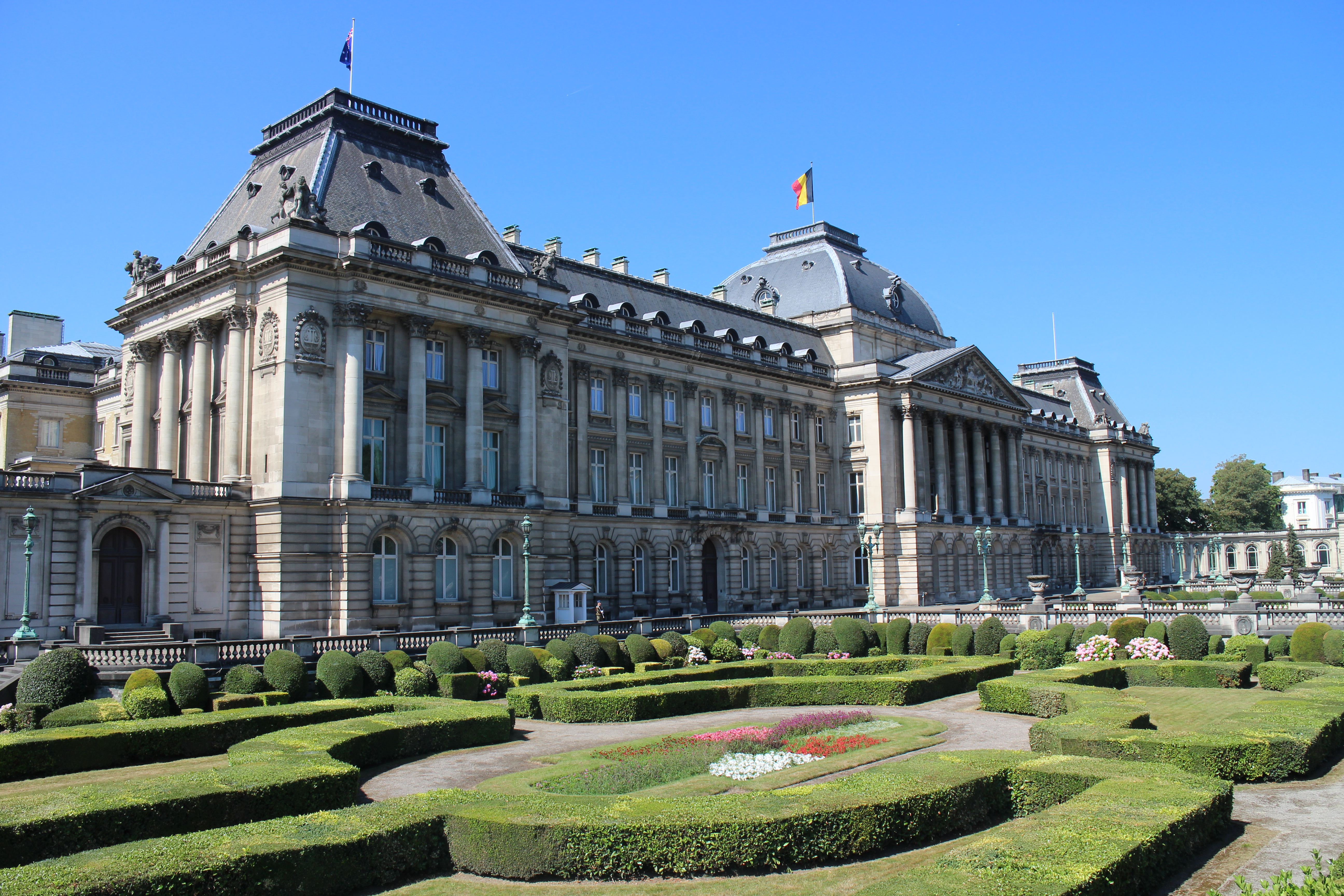
    El Palacio Real de Bruselas es el lugar de trabajo oficial del rey de Bélgica, un palacio neoclásico frente al parque más antiguo de la ciudad. Quien visita el Palacio Real de Bruselas encuentra salones de Estado, un techo cubierto de escarabajos joya y la historia de la colina de Coudenberg. El palacio no es la residencia de la familia real, que vive en el castillo de Laeken, al norte de Bruselas, y no abre al público. El Palacio Real de Bruselas es el escenario de las recepciones de Estado, las audiencias y las ceremonias, y solo abre sus puertas unas semanas cada verano, con entrada gratuita y reserva previa.

    El palacio se levanta en el barrio Real, una de las zonas más solemnes de Bruselas, con el parque de Bruselas enfrente y el Museo Real de Bellas Artes al lado. Desde la plaza del Palacio se ve la fachada larga del palacio, con sus columnas y sus esculturas, y detrás queda la colina de Coudenberg, donde estuvo el palacio medieval de los duques de Brabante. El Palacio Real de Bruselas resume tres siglos de historia belga, del incendio de 1731 a la fachada de Leopoldo II, y su visita es una de las citas del verano bruselense.

    La visita al Palacio Real de Bruselas exige planificar con tiempo, porque las fechas de apertura se publican cada año en la página oficial de la monarquía, monarchie.be, y las plazas se agotan. El palacio cerró en 2025 por obras de renovación, y la reapertura al público está prevista para el verano de 2026. Quien no pueda entrar en verano puede ver la fachada, el parque y el barrio Real, que se recorren en una mañana a pie desde la Gran Plaza.

    Ficha rápida del Palacio Real de Bruselas

    Dato Información
    Nombre Palacio Real de Bruselas, en francés Palais Royal de Bruxelles
    Ubicación Barrio Real, en la colina de Coudenberg, centro de Bruselas, Bélgica
    Función Lugar de trabajo oficial del rey de Bélgica, recepciones y ceremonias
    Residencia real Castillo de Laeken, al norte de Bruselas, sin acceso público
    Estilo Neoclásico, con la fachada actual terminada a principios del siglo veinte
    Construcción Empezada en 1820, bajo el rey Guillermo I, con fases durante el siglo diecinueve
    Salas famosas Salón del Trono, Salón de los Espejos, Salón del Imperio, Gran Galería
    Apertura al público Solo unas semanas en verano, con entrada gratuita y reserva previa
    Cierre reciente Cerrado en 2025 por renovación, con reapertura prevista en el verano de 2026
    UNESCO Sin inscripción propia; la Gran Plaza queda a unos 900 metros
    Coordenadas 50,8417° norte, 4,3622° este
    Wikidata Q635307

    Geografía del Palacio Real de Bruselas

    El Palacio Real de Bruselas está en la colina de Coudenberg, una elevación baja en el centro de la ciudad, donde estuvo el palacio medieval de los duques de Brabante. La colina es el punto alto del centro, con vistas a la ciudad vieja que queda abajo, y desde hace siglos es el lugar del poder político de la región. Alrededor del palacio se extiende el barrio Real, trazado a finales del siglo dieciocho con calles rectas, plazas amplias y edificios neoclásicos, una zona solemne y ordenada, muy distinta de los callejones sinuosos de la ciudad vieja. El Palacio Real de Bruselas domina ese barrio desde su fachada larga, y su plaza, la plaza del Palacio, es el espacio abierto que ordena todo el conjunto.

    El parque de Bruselas, justo enfrente del palacio, es el parque más antiguo de la ciudad, con avenidas rectas de árboles, fuentes y esculturas. El parque fue el coto de caza del palacio de Coudenberg, y hoy es el lugar donde los bruselenses pasean, corren y hacen picnic en verano. Desde el parque se ve de frente la fachada del palacio, una imagen que se ha convertido en una de las postales de la capital de Bélgica. El parque y el palacio forman un conjunto, y la visita a uno invita a la visita del otro.

    El Palacio Real de Bruselas queda a unos 800 metros al este de la Gran Plaza, a un kilómetro al norte de la catedral de San Miguel y Santa Gúdula, y a unos dos kilómetros al oeste del barrio Europeo. Esa posición central hace que el palacio se visite a pie, dentro de un recorrido por el centro que empieza en la Gran Plaza, sube por la calle de la Madeleine y llega al barrio Real. El Museo Real de Bellas Artes, junto al palacio, y el museo subterráneo de Coudenberg, bajo la colina, completan la visita sin salir del barrio.

    El clima de Bruselas es oceánico templado, con veranos frescos e inviernos fríos y húmedos, y el palacio solo abre en verano, así que el tiempo suele ser agradable para la visita. Las temperaturas de verano en Bruselas oscilan entre 20 y 25 grados, con chaparrones repentinos, así que conviene llevar un impermeable ligero para la cola de entrada. El verano es también la época de festivales y eventos al aire libre en Bruselas, con las plazas y los parques llenos de visitantes. El Palacio Real de Bruselas se visita mejor por la mañana, cuando las colas son más cortas y la luz entra por las ventanas de los salones.

    Llegar al Palacio Real de Bruselas es sencillo en transporte público. La estación de metro de Parc queda junto al parque de Bruselas, y varias líneas de autobús paran en el centro. Quien llega a Bruselas en tren puede bajar en la estación de Bruselas Central, a unos diez minutos a pie del palacio.

    El barrio Real se recorre a pie, sin coche, y las calles peatonales de la ciudad vieja enlazan con la plaza del Palacio por escaleras y calles en cuesta. El Palacio Real de Bruselas no tiene aparcamiento propio, y el tráfico del centro se evita mejor en metro.

    El barrio Real que rodea el Palacio Real de Bruselas es un conjunto neoclásico único en la ciudad. La plaza Real, con la iglesia de Santiago de Coudenberg, el palacio de la Nación y los museos, forma una plaza cerrada y simétrica, trazada a finales del siglo dieciocho. Las fachadas de piedra clara, las columnas y las cornisas se repiten en todo el barrio, y el contraste con la Gran Plaza, gótica y dorada, muestra las dos Bruselas: la medieval de los gremios y la neoclásica de la corte. Un paseo por el barrio Real después de visitar el palacio explica por qué una capital de Europa se construyó en dos tiempos.

    Vista histórica del Palacio Real de Bruselas

    Vista histórica del Palacio Real de Bruselas — Public domain

    Historia del Palacio Real de Bruselas

    La historia del Palacio Real de Bruselas empieza en el palacio de Coudenberg, residencia de los duques de Brabante desde el siglo once, sobre la misma colina. El palacio de Coudenberg fue el centro del poder de los Países Bajos durante siglos, donde los duques recibían embajadores y gobernaban Brabante. En 1731, un gran incendio destruyó el palacio de Coudenberg, y sus ruinas quedaron abandonadas durante décadas.

    Hoy se pueden visitar los restos arqueológicos de Coudenberg bajo tierra, cerca del palacio actual, con los cimientos y las bodegas del palacio medieval. El incendio marcó el fin del palacio viejo y abrió el camino a un barrio real completamente nuevo sobre la colina.

    Tras el incendio, la zona de Coudenberg se trazó de nuevo a finales del siglo dieciocho, bajo Carlos de Lorena, representante de la casa de Austria en Bruselas. Se construyó un palacio nuevo para Carlos de Lorena, y una de sus salas, el Salón del Imperio, aún existe hoy y se considera la sala más antigua del Palacio Real de Bruselas actual. El Salón del Imperio fue el salón de baile del representante austriaco, con muebles y decoración del siglo dieciocho. El barrio Real que rodea el palacio también se construyó en esa época, con la plaza Real, la iglesia de Santiago de Coudenberg y el parque de Bruselas, formando un conjunto neoclásico unido.

    La construcción del Palacio Real de Bruselas actual empezó en 1820, bajo el rey Guillermo I, y continuó por fases durante todo el siglo diecinueve. Cada rey añadió salas y fachadas, y la fachada actual, larga y simétrica, se terminó a principios del siglo veinte bajo el rey Leopoldo II. El palacio creció por dentro y por fuera, con el Salón del Trono, el Salón de los Espejos y la Gran Galería, y se convirtió en el lugar de trabajo del rey y en el escenario de las recepciones de Estado. El Palacio Real de Bruselas nunca fue una residencia permanente, y esa función de palacio de trabajo explica su carácter solemne y sus salas de ceremonia.

    El Salón de los Espejos es la sala más famosa del Palacio Real de Bruselas, por su techo cubierto de élitros de escarabajos joya, una obra del artista Jan Fabre instalada en 2002. El techo, con más de un millón de alas de escarabajo, brilla en verde y azul según la luz, y contrasta con la decoración clásica de la sala. La obra divide opiniones, pero se ha convertido en la imagen más conocida del palacio y en la parada obligada de la visita de verano. El Salón del Trono, con el trono bajo un dosel y los retratos de los reyes, es la sala de las audiencias y las ceremonias oficiales.

    En el siglo veinte, el Palacio Real de Bruselas siguió siendo el centro de la monarquía belga, con las recepciones de Estado, las credenciales de los embajadores y las fiestas nacionales. El palacio abre al público unas semanas cada verano, por tradición, y esa apertura es una de las citas del verano bruselense. El cierre de 2025 por renovación, con reapertura prevista en el verano de 2026, recuerda que el palacio es un edificio en uso, que se mantiene y se adapta. El Palacio Real de Bruselas sigue siendo, en el siglo veintiuno, el lugar donde Bélgica recibe a sus invitados.

    Vista del palacio de Palacio Real de Bruselas

    Vista del palacio de Palacio Real de Bruselas — CC BY-SA 4

    Turismo en el Palacio Real de Bruselas

    El Palacio Real de Bruselas solo abre unas semanas cada verano, y esa apertura es la visita más buscada del barrio Real. La entrada es gratuita por tradición, pero hay que reservar plaza en la página oficial de la monarquía, monarchie.be, y las reservas se agotan rápido. La visita recorre los salones de Estado, con el Salón del Trono, el Salón de los Espejos y la Gran Galería, y dura entre una y dos horas, según las colas.

    El palacio cerró en 2025 por obras de renovación, y la reapertura al público está prevista para el verano de 2026, así que conviene comprobar las fechas en la página oficial antes de viajar.

    La visita al Palacio Real de Bruselas se combina con el barrio Real y con el parque de Bruselas, que quedan enfrente. El Museo Real de Bellas Artes, junto al palacio, guarda pintura flamenca y moderna, y el museo subterráneo de Coudenberg muestra los cimientos del palacio medieval destruido en 1731. La Gran Plaza, a unos 800 metros, es el otro extremo del recorrido por el centro, y la catedral de San Miguel y Santa Gúdula queda a un kilómetro al norte. Un día en el centro de Bruselas puede empezar en la Gran Plaza, subir al barrio Real y terminar en el parque, con el palacio como punto central.

    El verano es la única época para entrar en el Palacio Real de Bruselas, y también la época con más visitantes en la ciudad. Las temperaturas de Bruselas en verano oscilan entre 20 y 25 grados, con chaparrones repentinos, y la cola de entrada se hace al aire libre, así que conviene llevar un impermeable ligero y llegar temprano. El palacio no admite mochilas grandes ni fotografía con flash en algunas salas, y la visita se hace a pie, con escaleras y pasillos largos. Quien viaja con niños debe saber que el recorrido es solemne y sin actividades infantiles, y que el parque de enfrente es el mejor descanso después de la visita, aunque también se puede completar el día en Mini-Europe, junto al Atomium, con maquetas de los monumentos de Europa.

    La mejor época para conocer Bruselas es de mayo a septiembre, con los festivales y las terrazas, y el palacio abre en ese periodo. Fuera del verano, el Palacio Real de Bruselas se ve solo por fuera, con su fachada larga y la plaza del Palacio, y el barrio Real se recorre igual, con sus museos y sus plazas. La Navidad, con el mercado de la Gran Plaza, es la otra gran época de la ciudad, aunque el palacio permanezca cerrado. Un viaje a Bruselas en invierno no incluye el interior del palacio, pero sí su fachada, su parque y su barrio.

    Lugares destacados del Palacio Real de Bruselas

    Salón del Trono. El Salón del Trono del Palacio Real de Bruselas es la sala de las audiencias y las ceremonias oficiales, con el trono bajo un dosel y los retratos de los reyes. La sala, amplia y solemne, muestra el carácter de palacio de trabajo del edificio, y es la primera parada de la visita de verano. El trono no se usa a diario, sino en las recepciones de Estado y las fiestas nacionales.

    Salón de los Espejos. El Salón de los Espejos del Palacio Real de Bruselas es famoso por su techo cubierto de élitros de escarabajos joya, obra del artista Jan Fabre instalada en 2002. Más de un millón de alas de escarabajo brillan en verde y azul según la luz, y contrastan con la decoración clásica de la sala. Es la imagen más conocida del palacio y la parada obligada de la visita.

    Salón del Imperio. El Salón del Imperio es la sala más antigua del Palacio Real de Bruselas, resto del palacio de Carlos de Lorena del siglo dieciocho. Fue el salón de baile del representante austriaco, con muebles y decoración de la época, y hoy se conserva como testimonio del palacio anterior al actual. Su techo y sus paredes muestran el estilo de la corte de Bruselas en el siglo dieciocho.

    Gran Galería. La Gran Galería del Palacio Real de Bruselas es el pasillo de gala que une los salones, con retratos, espejos y lámparas, y se usa para las recepciones de Estado. La galería, larga y luminosa, es el espacio más fotografiado de la visita, después del Salón de los Espejos. Desde sus ventanas se ve el parque de Bruselas y la plaza del Palacio.

    Parque de Bruselas. El parque de Bruselas, enfrente del Palacio Real de Bruselas, es el parque más antiguo de la ciudad, con avenidas rectas, fuentes y esculturas. Fue el coto de caza del palacio de Coudenberg, y hoy es el lugar de paseo de los bruselenses. Desde el parque se ve de frente la fachada del palacio, y su sombra es el mejor descanso después de la visita.

    Coudenberg subterráneo. El museo de Coudenberg, bajo la colina, muestra los cimientos y las bodegas del palacio medieval de los duques de Brabante, destruido por el incendio de 1731. El recorrido subterráneo pasa por las calles y las bodegas del palacio viejo, y explica por qué el barrio Real se construyó sobre la colina. Coudenberg es la raíz medieval del Palacio Real de Bruselas.

    Preguntas frecuentes sobre el Palacio Real de Bruselas

    ¿Dónde está el Palacio Real de Bruselas?

    El Palacio Real de Bruselas está en el barrio Real, en la colina de Coudenberg, en el centro de Bruselas, con el parque de Bruselas enfrente y el Museo Real de Bellas Artes al lado. El palacio queda a unos 800 metros al este de la Gran Plaza y a unos diez minutos a pie de la estación de Bruselas Central. La estación de metro de Parc queda junto al parque, y varias líneas de autobús paran en el centro.

    ¿Cuál es el bien de la UNESCO más cercano al Palacio Real de Bruselas?

    El bien de la UNESCO más cercano al Palacio Real de Bruselas es la Gran Plaza de Bruselas, con la referencia 857, inscrita en 2000, a unos 900 metros en línea recta hacia el oeste. La Gran Plaza, con su ayuntamiento gótico y sus casas gremiales, es el centro histórico de la ciudad y se visita a pie desde el palacio en diez minutos. Bélgica tiene 16 bienes en total, y la Gran Plaza es el único bien de la UNESCO dentro de Bruselas.

    ¿Cuándo abre el Palacio Real de Bruselas?

    El Palacio Real de Bruselas abre solo unas semanas cada verano, con entrada gratuita y reserva previa en la página oficial de la monarquía, monarchie.be. El palacio cerró en 2025 por obras de renovación, y la reapertura al público está prevista para el verano de 2026. Fuera del verano, el palacio se ve solo por fuera, con su fachada, su plaza y su parque.

    ¿Vive el rey en el Palacio Real de Bruselas?

    El rey no vive en el Palacio Real de Bruselas, sino en el castillo de Laeken, al norte de la ciudad, que no abre al público. El Palacio Real de Bruselas es el lugar de trabajo oficial del rey, con las audiencias, las recepciones de Estado y las ceremonias, y su Salón del Trono es la sala de las fiestas nacionales. La confusión es común, porque el palacio se llama real, pero su función es de trabajo, no de residencia.

    ¿Qué se ve en el Salón de los Espejos?

    En el Salón de los Espejos del Palacio Real de Bruselas se ve un techo cubierto de élitros de escarabajos joya, obra del artista Jan Fabre instalada en 2002. Más de un millón de alas de escarabajo brillan en verde y azul según la luz, y contrastan con la decoración clásica de la sala. Es la imagen más conocida del palacio y la parada obligada de la visita de verano.

    ¿Cuánto dura la visita al Palacio Real de Bruselas?

    La visita al Palacio Real de Bruselas dura entre una y dos horas, según las colas, y recorre los salones de Estado, con el Salón del Trono, el Salón de los Espejos y la Gran Galería. La entrada es gratuita, pero hay que reservar plaza con antelación, porque las reservas se agotan rápido. La visita se combina con el barrio Real, el parque de Bruselas y el museo de Coudenberg, que quedan en la misma colina.

    Verificado

    Los datos del Palacio Real de Bruselas se contrastaron con el artículo vietnamita y con la página oficial de la monarquía, y la historia de Coudenberg se revisó sala por sala. La construcción empezada en 1820 bajo el rey Guillermo I, la fachada terminada a principios del siglo veinte bajo Leopoldo II, el incendio de Coudenberg en 1731 y el Salón del Imperio como resto del palacio de Carlos de Lorena son datos de referencia del artículo vietnamita. El código Q635307 de Wikidata identifica el palacio como residencia real, con las coordenadas 50,8417° N, 4,3622° E, y su página oficial es monarchie.be.

    La cercanía de la Gran Plaza se midió en línea recta desde las coordenadas del palacio hasta la plaza, y da unos 900 metros, con un paseo a pie de diez minutos por la calle de la Madeleine. La Gran Plaza, con la referencia 857, fue inscrita por la UNESCO en 2000, y es el único bien del Patrimonio Mundial dentro de Bruselas, aunque Bélgica tiene 16 bienes en total. El cierre del palacio en 2025 por renovación, con reapertura prevista en el verano de 2026, se recoge del artículo vietnamita y de la información de Visit Brussels.

    Fuentes y fecha de verificación (23/11/2026)

    Illustrations

    • Hero: Vista de Palacio Real de Bruselas. Free image: https://upload.wikimedia.org/wikipedia/commons/e/e0/Royal_Palace_in_Brussels.JPG — CC BY-SA 3.0.
    • In body, palacio: Vista del palacio de Palacio Real de Bruselas. Free image: https://upload.wikimedia.org/wikipedia/commons/c/c2/Exterior_of_the_Royal_Palace%2C_Brussels_20180629.jpg — CC BY-SA 4.
    • In body, palacio: Vista histórica del Palacio Real de Bruselas. Free image: https://upload.wikimedia.org/wikipedia/commons/6/61/Palais_Royal_Brussels_1911.jpg — Public domain.
  • Brussels Hotels — A Guide to Choosing Where to Stay in Brussels

    Brussels Hotels — A Guide to Choosing Where to Stay in Brussels

    Brussels hotels sit in very different quarters, from the Grand-Place to the European Quarter. Picking the right quarter matters more than picking a room.

    Quick Facts

    Item Detail
    City Brussels, Brussels-Capital Region, Belgium
    Coordinates 50.8467° N, 4.3517° E
    Capital region population About 1.2 million people
    City of Brussels population About 190,000 people
    Grand-Place UNESCO 1998, reference 857
    River Senne, flowing underground beneath the centre
    European Quarter European Commission, European Parliament
    Main stations Gare du Midi, Gare Centrale, Gare du Nord
    Airport Brussels Airport, about 12 km from the centre
    Main stay areas Grand-Place, Sablon, Ixelles, Saint-Gilles, European Quarter
    Languages French and Dutch
    Currency Euro
    Search term brussels hotels (synthetic focus; the two measured keywords name a specific hotel and are not used)

    Geography of Brussels Hotels

    Brussels lies at the centre of Belgium, a position that a visitor choosing among brussels hotels should understand before booking, because the city is one of the places in Europe where high-speed trains from many capitals meet. Trains reach Paris in about 1 hour 20 minutes, London in about 2 hours and Amsterdam in about 1 hour 50 minutes, and the coordinates of the city, 50.8467 degrees north and 4.3517 degrees east, place it where the rail lines of the continent cross. From Brussels, a visitor can take the train to Bruges in about 1 hour, to Ghent in about 30 minutes and to Antwerp in about 45 minutes, so the city works as a base for day trips across Belgium as well as a destination in itself.

    The Senne river runs through Brussels, and the history of the city is tied to it, because Brussels began as a settlement beside the Senne, where the trade roads from the Rhine to the Scheldt met. Today the river flows underground beneath the centre, with streets and squares built over its old bed, a feature that most visitors never notice, since the water cannot be seen in the centre of the city, yet it still runs below the streets they walk every day. The brussels hotels of the historic centre therefore stand above a hidden river, and the old town owes its shape to a waterway that has disappeared from view.

    The stay areas of Brussels differ sharply from one another, and a visitor looking at brussels hotels should learn them before booking, because each area gives a different stay. The Grand-Place area, in the historic centre, is the choice of the first-time tourist, with old streets, squares and buildings within a few minutes on foot, and the hotels here often sit in old buildings, with rooms that look onto the old streets from the window. A visitor who steps out of a hotel here is at once in the middle of the historic centre, which is why travellers on a first visit usually prefer this quarter above all others.

    The Sablon area, south of the Grand-Place, suits a visitor who wants a quieter place, with squares, antique shops and cafes that can fill an afternoon, and the people of Brussels count it among the most beautiful areas of the city. Sablon holds two squares, the Grand Sablon and the Petit Sablon, with gardens, statues and restaurants, and it stands near the Palace of Justice, one of the largest buildings in Brussels, with views over the city from its steps. The brussels hotels of Sablon give a calm stay close to the centre without the noise of the Grand-Place, and the area suits travellers who want to avoid the crowds yet stay within walking distance of the sights.

    Ixelles and Saint-Gilles, south of the centre, are the areas a visitor should choose for local life, with cafes, shops and streets where the people of Brussels live, and the Art Nouveau buildings that the city is known for stand thickly here. The architect Victor Horta designed his most famous houses in these quarters at the end of the nineteenth century, with curved lines, stained glass and wrought iron, and four of his town houses were inscribed by UNESCO in 2000. The brussels hotels of Ixelles and Saint-Gilles give a stay among the daily life of the city, and they suit travellers who love architecture and want to see Brussels as a place where people live and work rather than only as a place to visit.

    The European Quarter, east of the centre, is the area that business travellers usually choose, with the buildings of the European Commission, the European Parliament and other European institutions, wide boulevards, parks and green areas. A visitor who works in the quarter can walk to meetings and offices within a few minutes, and the hotels here are usually modern, with meeting rooms, restaurants and the facilities that business travellers need. Tourists should think carefully before choosing the European Quarter, because the area grows quiet at weekends and in the evenings, with many restaurants closed and less life than the historic centre. The brussels hotels of this quarter therefore serve a different purpose from the hotels of the old town, and the choice between them is a choice between two different cities.

    Brussels has an oceanic climate, and a visitor choosing among brussels hotels should pack for rain in any month of the year. July, the warmest month, averages about 18 degrees, with sunny days that can reach about 25 degrees, yet an afternoon shower can still arrive without warning, and a light raincoat belongs in the bag on every walk through the squares. January, the coldest month, averages about 3 degrees, with days that can fall to minus 5 degrees when an east wind blows in from the continent, and the city grows quiet, with Christmas markets and warm beer cafes to retreat to after the Grand-Place. When the rain comes, the Galeries Royales, the covered arcades near the square, give hours of dry walking among shops and cafes, a refuge that visitors in winter use often.

    The Brussels-Capital Region is one of the three regions of Belgium, and it counts nineteen municipalities, each with its own character, from the old quarters of the City of Brussels to the quiet residential communes of Uccle and Woluwe-Saint-Pierre. The City of Brussels, with about 190,000 people, is only one of those nineteen, and it holds the Grand-Place, the museums and the government offices that most visitors come to see. Travellers who stay for a week or longer sometimes choose the residential communes instead, where the streets are greener and the pace is slower, though the trade is a longer ride to the sights. The brussels hotels of the centre therefore suit short stays, while the outer communes suit visitors who want to live in the city rather than only to visit it.

    The Sablon, Brussels

    The Sablon, Brussels — Flocci Nivis, CC BY 4

    The Berlaymont building in the European Quarter, Brussels

    The Berlaymont building in the European Quarter, Brussels — Trougnouf (Benoit Brummer), CC BY 4

    Matonge in Ixelles, Brussels

    Matonge in Ixelles, Brussels — BiiJii, CC BY-SA 4

    History of Brussels Hotels

    The history of Brussels begins with a small settlement beside the Senne in the tenth century, where merchants and farmers settled at the meeting of the trade roads from the Rhine to the Scheldt, and the place grew into an important commercial centre of the region. The Grand-Place, the main square of Brussels, began as a market, with merchants selling goods from across Europe, and it slowly became the centre of the city, with the buildings of the guilds that visitors still see today. The houses around the square, with their richly decorated facades and gilded statues, are among the finest examples of Baroque architecture in Europe, and the brussels hotels of the centre still stand among streets that were laid out for that medieval market.

    In 1695, during the War of the League of Augsburg, French troops bombarded Brussels and destroyed much of the Grand-Place and the buildings around it, an event that the history of the city records as one of its greatest disasters. After the bombardment, the guilds of Brussels rebuilt the square within a few years, with the buildings that visitors see today, a rebuilding that the people of Brussels take pride in, because they turned a destroyed square into one of the most beautiful squares in Europe. The Grand-Place was inscribed by UNESCO in 1998 under reference 857, and it has been the centre of the city for more than a thousand years. The brussels hotels near the square therefore stand beside a monument that was rebuilt by the citizens themselves, and the square is the reason the centre of the city looks the way it does.

    The Town Hall of Brussels, with its tower of 96 metres, is one of the buildings a visitor to the Grand-Place should study, because it is one of the finest town halls in Europe, built in the Gothic style over several centuries. The guild houses around the square, with names such as the House of the King, the House of the Tailors and the House of the Bakers, each carry a story of the guild they represent, and each is a reason why the square was inscribed. The square is a rare example of a public space without a church or any other place of worship, which underlines its mercantile and administrative character. The brussels hotels of the old town stand within a few minutes of this square, and the history of the guilds is the history of the streets around them.

    The nineteenth century turned Brussels into the capital of an independent Belgium, with boulevards, parks and buildings that King Leopold the Second ordered, changing the city from a medieval town into a modern European capital. Victor Horta created the Art Nouveau style in Brussels, designing buildings at the end of the nineteenth century that visitors still see when they walk through Ixelles and Saint-Gilles. The Horta Museum, housed in the home that Horta designed for himself, shows the style in every detail, from the stair rails to the stained-glass windows, and the brussels hotels of those quarters sit among the streets where the style was born. Four of Horta’s town houses were inscribed by UNESCO in 2000, a recognition that the architecture of these residential streets matters as much as the monuments of the centre.

    The four inscribed houses show how scattered the style is across the stay areas, and an architecture walk crosses three quarters in a single morning. The Hôtel Tassel stands in Saint-Gilles, the Hôtel Solvay stands in Ixelles, the Hôtel van Eetvelde stands near the centre, and the Horta Museum stands in the house that Horta built for himself in Saint-Gilles. Each one shows a different side of the style, from the iron staircases to the stained glass, and together they explain why the residential streets of Ixelles and Saint-Gilles matter as heritage. The brussels hotels of those quarters therefore sit inside the architecture itself, and a visitor who stays there walks past inscribed buildings on the way to breakfast.

    After the Second World War, Brussels became the centre of Europe, with the institutions of the European Community, the forerunner of the European Union, placing their headquarters here, a decision that changed the city more than any other in its history. The European Quarter, east of the centre, was built to hold the buildings of the European Commission, the European Parliament and the other European bodies, with wide boulevards, parks and green areas, a quarter that business travellers now choose for its hotels. The European Parliament building can be visited on guided tours, and the area around it holds the parks, cafes and streets where the people who work for the European Union spend their days. The brussels hotels of the European Quarter belong to this modern layer of the city, which stands beside the medieval square and the nineteenth-century boulevards.

    Brussels was occupied by German troops in the First World War, from August 1914 to November 1918, a time when the city became the administrative centre of the occupying government. The nurse Edith Cavell, an Englishwoman working in Brussels, was executed by the Germans in 1915 for helping Allied soldiers to escape, an event that the history of the city records as one of its stories of courage and sacrifice. In the Second World War, Brussels was occupied again, from May 1940 to September 1944, a time when resistance movements worked in the city and the people of Brussels helped Allied airmen to escape and Jewish families to hide.

    Brussels was liberated on 3 September 1944 by British troops, a day the city still marks each year. The brussels hotels of the centre stand in streets that lived through both occupations, and the history of those years is part of why the city feels older than its modern institutions suggest.

    The Hotel Astoria is a five-star hotel in Brussels, Belgium, built in 1909, by architect Henri Van Dievoet

    The Hotel Astoria is a five-star hotel in Brussels, Belgium, built in 1909, by architect Henri Van Dievoet — CC BY-SA 4

    Brussels Town Hall on the Grand-Place

    Brussels Town Hall on the Grand-Place — Diego Delso, CC BY-SA 4

    Travel to Brussels Hotels

    Choosing the stay area is the most important decision when a visitor looks at brussels hotels, because each area of the city gives a different stay, and the visitor should choose the area by the purpose of the trip. First-time tourists should choose the Grand-Place area, because they can walk to the main sights of the city within a few minutes, with squares, museums and restaurants that can be reached without public transport, an advantage that first-time visitors usually value highly. The hotels of this area often sit in old buildings, with smaller rooms, narrow stairs and corridors that a visitor should know about before booking, a feature that surprises first-time visitors, because the hotels here do not look like modern hotels in other cities.

    When choosing among brussels hotels, a visitor should decide which station matters most: Gare Centrale suits those who want to walk to the Grand-Place and the museums, while Gare du Midi suits those with an early train to Paris, London or Amsterdam. The European Quarter, with the buildings of the European Union, is another choice for those who come to Brussels for work, with modern hotels and restaurants that can be used after working hours. Whatever area is chosen, the visitor should read the reviews about noise carefully, because hotels near the stations can be loud in the evening, a fact worth knowing before booking. The brussels hotels near the stations trade quiet for convenience, and the balance is different for every traveller.

    Brussels holds many types of lodging, from hotels in old buildings around the Grand-Place to modern hotels in the European Quarter, rented apartments in Ixelles and Saint-Gilles, and hostels for travellers who want to save money. Visitors who stay for many days should consider rented apartments, because they give more space and a kitchen for cooking, a choice that travellers staying a week or longer usually prefer. The brussels hotels of the Grand-Place area usually have smaller rooms, because they sit in old buildings with narrow stairs, while the hotels of the European Quarter are usually more modern, with meeting rooms and restaurants. No prices are given in this guide, because room rates in Brussels change with the season, the area and the type of lodging, and the visitor should check the official rate board of the hotel or a trusted booking site before reserving, reading the cancellation policy and the hidden charges carefully.

    The timing of the booking matters a great deal for brussels hotels, because the hotels of the Grand-Place area often fill up in the high season, from May to September and in December, a time when the visitor should book weeks or even months ahead to get a good room. December is a second high season, with Christmas markets and festivals that draw visitors to the city, and the hotels of the centre fill up then as well. Visitors who come in the low months, from January to March and from October to November, will find more rooms free and the sights less crowded, a time when the Grand-Place and the museums can be visited without queues. April and May bring flowers to the parks of Brussels, with tulips and cherry trees in the Bois de la Cambre, while September and October bring golden afternoons and quieter gardens.

    Moving around Brussels is easy, with a system of metro, tram and bus that a visitor can use to cross the city, and a hotel near a metro station is far more convenient than one far from it. The Brussels metro has four lines, with stations that carry a visitor from the Grand-Place to the European Quarter, from Gare du Midi to Gare du Nord, and from the centre to the suburbs. The trams run through quarters that the metro does not reach, and they show the visitor a side of the city that the metro cannot, with streets, gardens and buildings to watch from the window. Walking is one of the best ways to see the centre of Brussels, with old streets, squares and quarters that can be covered in a single afternoon, and the visitor should carry good walking shoes, because the old streets are paved with stones that turn slippery in the rain.

    Day trips from Brussels are one of the reasons a visitor should choose a hotel near a station, because from Brussels the train reaches Bruges in about 1 hour, Ghent in about 30 minutes and Antwerp in about 45 minutes, and a visitor can also reach Cologne in about 2 hours and Strasbourg in about 3 hours 30 minutes. Bruges, with its canals, medieval buildings and squares inscribed by UNESCO, is one of the most beautiful cities of Belgium, and Ghent, with its castles, churches and canals, shows a Belgium less visited than Bruges. Antwerp, with its museums, quarters and diamond shops, shows a more modern Belgium. The brussels hotels near Gare Centrale or Gare du Midi therefore serve as a base for Belgium itself, and the city repays a stay of at least two or three days.

    Belgique - Bruxelles - Brussels Hilton (The Hotel) - architecte Henri Montois (1967)

    Belgique – Bruxelles – Brussels Hilton (The Hotel) – architecte Henri Montois (1967) — CC BY-SA 4

    Brussels-Central station

    Brussels-Central station — Steven Lek, CC BY-SA 4

    Notable Places in Brussels Hotels

    The Grand-Place is the most notable place in Brussels, a square inscribed by UNESCO in 1998 under reference 857, and a visitor to the city should not miss it, because it has been the centre of Brussels for more than a thousand years. The square holds the buildings of the guilds, the Town Hall and the cafes where a visitor can sit for an afternoon, and its facades, decorated and gilded, make it one of the most beautiful squares in Europe. A visitor should spend at least an hour on the Grand-Place, walking around the square, looking at the buildings and sitting in a cafe to watch the life of the city. The brussels hotels nearest the square put that view outside the window, and the square is the reason those hotels fill first in the high season.

    The Grand-Place also hosts events and festivals, with concerts, flower markets and celebrations that a summer visitor should attend, and the most famous of them is the flower carpet, held every two years with a huge carpet made from hundreds of thousands of flowers, a sight that a visitor in August of an event year should try to see. The streets around the square hold chocolate shops, restaurants and quarters that can be explored in an afternoon, a walk that fits into the same day as the museums and the other quarters of Brussels. The brussels hotels of the centre are therefore also a base for the festivals of the square, and the calendar of the city matters as much as the map when choosing dates.

    Manneken Pis, the statue of a small boy urinating, is one of the most famous symbols of Brussels, a small statue that visitors to the city usually look for, and the people of Brussels count it among the symbols of the city, dressing it in costumes for festivals and special events. The statue stands in a small street near the Grand-Place, and a visitor can miss it without a map, because it is smaller than most people expect. The brussels hotels of the old town put the statue within a few minutes on foot, and the walk to it passes through the old streets that give the centre its character.

    The Atomium, built for the World Exhibition of 1958, is one of the modern symbols of Brussels, a structure in the shape of an iron atom that a visitor can climb to see the whole city, and it is one of the most unusual buildings in Europe. The spheres can be crossed by lift and stairs, and a visitor should allow at least two hours for the climb, the views and the exhibitions inside. From the Atomium, the whole of Brussels can be seen, with its buildings, parks and quarters spread below, a view worth photographing. The brussels hotels of the centre leave the Atomium a metro ride away, and the trip to the Heysel area is a useful half-day from any of the stay areas.

    The Magritte Museum, in the Mont des Arts area near the Grand-Place, is one of the museums that a visitor who loves art should see in Brussels, with a collection of the works of René Magritte, one of the most famous surrealist painters of Belgium. A visitor should allow at least two hours for the galleries and the stories of the life and art of Magritte, an experience that an art lover should not miss in Brussels. The brussels hotels of the Grand-Place and Sablon areas put the museum within walking distance, and the Mont des Arts itself, with its gardens and museums, is one of the most pleasant quarters to walk through in the city.

    The flower carpet on the Grand-Place, Brussels

    The flower carpet on the Grand-Place, Brussels — Trougnouf (Benoit Brummer), CC BY 4

    Manneken Pis, Brussels

    Manneken Pis, Brussels — Trougnouf (Benoit Brummer), CC BY 4

    The Atomium, Brussels

    The Atomium, Brussels — Diego Delso, CC BY-SA 4

    The Magritte Museum, Brussels

    The Magritte Museum, Brussels — Neoclassicism Enthusiast, CC BY-SA 4

    Frequently Asked Questions

    What does the brussels hotels search mean, and which area should I stay in?

    The brussels hotels search is the phrase English-speaking visitors type when they look for a place to stay in Brussels, and the best area depends on the purpose of the trip. First-time tourists should stay near the Grand-Place, business travellers should stay in the European Quarter, and visitors who want quiet should stay in Sablon, Ixelles or Saint-Gilles.

    Is staying near the Grand-Place convenient?

    Yes, staying near the Grand-Place is very convenient for tourists, because the main sights of Brussels lie within a few minutes on foot, with squares, museums and restaurants that can be reached without public transport. Visitors should know that hotels in this area often sit in old buildings with smaller rooms and narrow stairs, a feature worth weighing before booking.

    What types of lodging do brussels hotels cover?

    Brussels hotels cover many types of lodging, from hotels in old buildings around the Grand-Place to modern hotels in the European Quarter, rented apartments in Ixelles and Saint-Gilles, and hostels for travellers who want to save money. Visitors who stay for many days should consider rented apartments, because they give more space and a kitchen.

    How do I get from Brussels Airport to the city centre?

    Brussels Airport lies about 12 kilometres from the city centre, with trains and buses carrying visitors to the centre in about 20 to 30 minutes. Travellers should take the train from the airport to Gare Centrale, a ride of about 20 minutes, with trains running often through the day.

    When should I book brussels hotels?

    Visitors should book brussels hotels weeks or even months ahead for the high season from May to September and for December, when the hotels of the Grand-Place area often fill up. Travellers who come in the low months from January to March and from October to November will find more rooms free and the sights less crowded.

    Is Brussels a good base for day trips?

    Yes, Brussels is a strong base for day trips, because trains reach Bruges in about 1 hour, Ghent in about 30 minutes and Antwerp in about 45 minutes. A hotel near Gare Centrale or Gare du Midi makes those trips easy, and the city repays a stay of at least two or three days.

    Verified

    The Grand-Place gives the first verified fact of this guide, because the square is the anchor of every stay in the centre of Brussels. The Grand-Place was inscribed by UNESCO in 1998 under reference 857, with criteria two and four, and the earliest written reference to the square dates to the twelfth century. French troops under Louis the Fourteenth bombarded the square in 1695 and destroyed much of it in three days, and the guilds rebuilt it within a few years under the supervision of the City Magistrate.

    The Town Hall, built in the early fifteenth century, partly escaped the bombardment, and the King’s House opposite it was rebuilt in the historicist style. The brussels hotels of the centre stand beside a square that the citizens rebuilt themselves, and the UNESCO listing records that rebuilding as the reason for the inscription.

    The registry record for this guide carries a mismatch that must be stated plainly, because the primary keyword recorded for the entity is a brand form. The registry lists the primary keyword as a specific hotel name followed by Brussels, and the second measured keyword adds the word Belgium to the same hotel name. Neither keyword names the city or the stay areas, and both name one hotel only, so neither can serve as the focus of a guide that names no hotel at all.

    The brussels hotels focus used here is therefore a synthetic bare-name focus, the two brand keywords are named nowhere in this article, and the mismatch is recorded in fix queue entry 349 for a later registry decision. The entity itself is a fifth-level hotel guide under the city of Brussels, it takes no Wikidata identifier by design, and its flag for UNESCO is false at the entity level, which is correct, since the guide is not itself an inscribed property.

    The city facts that anchor the guide are drawn from the verified record of Brussels and its quarters. The capital region holds about 1.2 million people, the City of Brussels holds about 190,000, and the region counts nineteen municipalities, each with its own character. The Senne river, on which the city began as a settlement in the tenth century, now flows underground beneath the centre.

    The European Quarter holds the European Commission and the European Parliament, and the quarter grew after the Second World War, when Brussels became the administrative centre of the European Community. The brussels hotels of the European Quarter therefore belong to the newest layer of the city, while the hotels of the Grand-Place belong to the oldest.

    Four town houses of Victor Horta were inscribed by UNESCO in 2000, and that date is the anchor for the Art Nouveau quarter of the guide. Horta created the Art Nouveau style in Brussels at the end of the nineteenth century, and his houses stand thickly in Ixelles and Saint-Gilles, where the hotels of those quarters sit among them. The Horta Museum stands in the house that Horta designed for himself, and it shows the style in every detail, from the stair rails to the stained-glass windows. The brussels hotels of Ixelles and Saint-Gilles therefore give a stay inside the architecture that the city is known for, and the inscription of 2000 confirms that those residential streets matter as heritage.

    The war history of the city is fixed by its dates, and the guide states them without softening. Brussels was occupied in the First World War from August 1914 to November 1918, and the nurse Edith Cavell was executed in 1915 for helping Allied soldiers to escape. The city was occupied again in the Second World War from May 1940 to September 1944, and it was liberated on 3 September 1944 by British troops. The brussels hotels of the centre stand in streets that lived through both occupations, and the dates are the reason the old town feels older than the modern institutions that now fill it.

    Sources

    • UNESCO World Heritage Centre, La Grand-Place, Brussels, reference 857: https://whc.unesco.org/en/list/857/
    • UNESCO World Heritage Centre, Belgium country page, tentative list: https://whc.unesco.org/en/statesparties/be
    • Wikipedia, Brussels: https://en.wikipedia.org/wiki/Brussels
    • VisitBrussels, official visitor guide: https://www.visit.brussels/
    • Wikidata, Brussels hotels entity, no identifier by design (fifth-level hotel guide)
    • Check date: 23 November 2026

    Unverified

    • Room rates for brussels hotels are not stated anywhere in this guide, because rates change with the season, the area and the type of lodging, and the visitor should check the official rate board of the hotel before reserving.
    • The exact number of rooms in the hotels of each quarter is not published in the sources consulted, so no figure is given here.
    • The flower carpet on the Grand-Place is held every two years, but the exact dates of the next edition were not confirmed at the time of writing, so visitors should check the city calendar before planning a trip around it.

    Illustrations

    • Hero: Brussels Hotels. Free image: https://upload.wikimedia.org/wikipedia/commons/6/6c/Hotel_Astoria_by_Henri_Van_Dievoet_-_Brussels.jpg — CC BY-SA 4.0.
    • In body, Brussels Hotels: Belgique – Bruxelles – Brussels Hilton (The Hotel) – architecte Henri Montois (1967). Free image: https://upload.wikimedia.org/wikipedia/commons/9/9a/Belgique_-Bruxelles–Brussels_Hilton%28The_Hotel%29_-_01.jpg — CC BY-SA 4.
    • In body, Brussels Hotels: The Hotel Astoria is a five-star hotel in Brussels, Belgium, built in 1909, by architect Henri Van Dievoet. Free image: https://upload.wikimedia.org/wikipedia/commons/a/ae/Hotel_Astoria_by_Henri_Van_Dievoet%2C_Brussels.jpg — CC BY-SA 4.
    • In body, The Grand-Place: The flower carpet on the Grand-Place, Brussels. Free image: https://upload.wikimedia.org/wikipedia/commons/9/96/2018_flower_carpet_at_Grand_Place%2C_Brussels_%28DSCF6849%29.jpg — CC BY 4.
    • In body, Brussels Town Hall: Brussels Town Hall on the Grand-Place. Free image: https://upload.wikimedia.org/wikipedia/commons/b/b9/Ayuntamiento%2C_Grand-Place%2C_Bruselas%2C_B%C3%A9lgica%2C_2021-12-15%2C_DD_10-11_HDR.jpg — CC BY-SA 4.
    • In body, Manneken Pis: Manneken Pis, Brussels. Free image: https://upload.wikimedia.org/wikipedia/commons/b/bc/Manneken-Pis_%22Les_Compagnons_du_Beaujolais%22_costume_%28DSCF1961%29.jpg — CC BY 4.
    • In body, The Atomium: The Atomium, Brussels. Free image: https://upload.wikimedia.org/wikipedia/commons/8/8e/Atomium%2C_Bruselas%2C_B%C3%A9lgica%2C_2021-12-15%2C_DD_145-147_HDR.jpg — CC BY-SA 4.
    • In body, The Sablon: The Sablon, Brussels. Free image: https://upload.wikimedia.org/wikipedia/commons/6/6b/20180907_Grand_Sablon_Square.jpg — CC BY 4.
    • In body, The European Quarter: The Berlaymont building in the European Quarter, Brussels. Free image: https://upload.wikimedia.org/wikipedia/commons/1/1e/Berlaymont_building_%28DSCF7542-DSCF7548%29.jpg — CC BY 4.
    • In body, Brussels-Central station: Brussels-Central station. Free image: https://upload.wikimedia.org/wikipedia/commons/c/c7/Brussels_Central_station.jpg — CC BY-SA 4.
    • In body, The Magritte Museum: The Magritte Museum, Brussels. Free image: https://upload.wikimedia.org/wikipedia/commons/b/bd/Art_Nouveau_interior_of_the_Magritte_Museum.jpg — CC BY-SA 4.
    • In body, Ixelles: Matonge in Ixelles, Brussels. Free image: https://upload.wikimedia.org/wikipedia/commons/4/40/Ixelles_Matonge.jpg — CC BY-SA 4.
  • Ilot Sacre: The Oldest Quarter of Brussels

    Ilot Sacre: The Oldest Quarter of Brussels

    Ilot Sacre is the oldest surviving quarter of Brussels, just north of the Grand-Place. Its restaurants and medieval lanes still draw every visitor.

    Ilot Sacre is a small old quarter that stands just north of the Grand-Place, and it is regarded as the oldest surviving part of the Belgian capital. The French name is Îlot Sacré, meaning the sacred island, and this guide uses the unaccented form Ilot Sacre in the body so it matches the way visitors search for the place. The quarter is famous for its narrow stone streets, its restaurants packed along the Rue des Bouchers, and the Galeries Royales Saint-Hubert, one of the first covered shopping arcades in Europe.

    The street names of Ilot Sacre tell the history of the area: the Rue des Bouchers was the street of the butchers, the Rue du Marché aux Herbes was the street of the herb market, and the small lanes around them once held slaughterhouses and craft workshops. While the streets around it were torn down to open great boulevards in the 1800s, these streets kept their winding medieval pattern, with small houses pressed together and family restaurants at street level. A walk through Ilot Sacre is like reading an old map that has survived whole, only a few steps from the Grand-Place.

    Quick Facts

    Item Detail
    Name Îlot Sacré (Sacred Island)
    Location North of the Grand-Place, Brussels, Belgium
    Coordinates 50.8481° N, 4.3542° E
    Type Old quarter (Wikidata: Q3593599)
    Main streets Rue des Bouchers, Petite Rue des Bouchers, Rue du Marché aux Herbes
    Highlight Galeries Royales Saint-Hubert, Saint-Nicolas church, Grand-Place
    History Medieval quarter, survived the 19th-century rebuilding of Brussels
    Heritage nearby Grand-Place, UNESCO 1998, reference 857
    Transport Brussels Central station, metro De Brouckère and Bourse
    Entry Free, public streets open at all hours
    Belgium Galeries Royales Saint-Hubert on the Tentative List since 2008

    Geography of Ilot Sacre

    Ilot Sacre beside the Grand-Place: narrow streets in the old town

    Ilot Sacre lies in the historic centre of Brussels, in a small area bounded by the Grand-Place to the south, the Rue du Marché aux Herbes to the east, and the shopping streets to the north and west. The quarter covers only a few hectares, with narrow streets that fit pedestrians only and small houses pressed close together, a city space entirely unlike the wide boulevards of modern Brussels. The ground is fairly flat, lying in the valley of the Senne, the river that once ran through central Brussels before it was covered in the 1800s. The street pattern of Ilot Sacre follows the natural shape of a rise of ground beside the river, and the winding lanes have kept a medieval network that later town planning could never straighten out.

    The Rue des Bouchers is the main street of Ilot Sacre, a narrow lane with restaurants pressed along both sides, famous for its seafood displays outside and its handwritten menus in many languages. The street is one of the best-known food streets in Europe, drawing visitors from across the world, yet it also draws criticism for high prices and for waiters who call out to passers-by. Beside the Rue des Bouchers, smaller streets such as the Petite Rue des Bouchers and the Rue des Dominicains are quieter, with small cafés and traditional shops. The contrast between the busy main street and the calm side lanes is part of the character of Ilot Sacre, and visitors who step off the main street find the quarter at its most likeable.

    The Galeries Royales Saint-Hubert and the covered arcades

    The Galeries Royales Saint-Hubert is the most important building of Ilot Sacre, a glass and steel covered gallery that joins the Rue du Marché aux Herbes to the Rue de l’Écuyer. The gallery was built in 1847 to the design of the architect Jean-Pierre Cluysenaar, with a glass vault more than 200 metres long, elegant shops on both sides and historic cafés. It was one of the first covered shopping arcades in Europe, and it still works today with chocolate shops, bookshops and a theatre.

    The gallery is also on the Tentative List of Belgium for the World Heritage List, under the name of the Brussels passages, since 2008, a sign of how early and how influential its design was. Walking through the Galeries Royales Saint-Hubert is the grandest single experience in Ilot Sacre, because the light falls through the glass roof onto the marble floor and the shopfronts in a way that no modern mall can match.

    Inside the Galeries Royales Saint-Hubert, the old bookshops and chocolate shops keep the character of the 1800s, and the café where the writer Victor Hugo sat during his exile in Brussels still serves coffee today. The gallery divides naturally into three parts, each with its own vault and its own shops, and the whole length takes only a few minutes to walk. The shops are expensive, yet the gallery itself is free to enter, and many visitors come only to look at the architecture. The Galeries Royales Saint-Hubert also helped to protect the quarter around it, because the commercial value of the area rose and the city no longer wanted to demolish it.

    The river Senne and the making of the old quarter

    The river Senne, which ran through central Brussels in the Middle Ages, is the most important geographical fact in the making of Ilot Sacre. The quarter stands on a rise of ground beside the river, where the first merchants and craftsmen of Brussels settled in the 900s and 1000s. The narrow streets of the old quarter follow the natural shape of the rise and the bank, making a winding network of lanes that later planning could never fully change.

    In the 1800s the Senne was covered over and great boulevards were built on top of it, including the Boulevard Anspach that runs through central Brussels. Ilot Sacre was one of the few areas to escape the demolition of that project, because its streets lay off the line of the new roads, and the quarter survived by a piece of historical luck rather than by a deliberate plan of conservation.

    The covering of the Senne changed the whole city, yet Ilot Sacre kept its old ground level and its old lanes, so walking here still follows the medieval city rather than the 1800s city. The boulevards run straight and wide a few minutes away, while the lanes of Ilot Sacre bend and narrow, and the difference is the clearest lesson in Brussels history that a visitor can walk through. The name of the quarter, the sacred island, reflects that luck, because the area survived as an island of the old city inside the new one.

    Getting to Ilot Sacre

    Transport to Ilot Sacre is easy by metro and tram, with the De Brouckère and Bourse stations only a few minutes on foot from the quarter. Brussels Central station also lies within a short walk, and from the station visitors can walk through the Grand-Place to Ilot Sacre in about ten minutes. The quarter is part of the largest pedestrian area in central Brussels, with streets closed to cars and squares given over to walkers.

    The climate of Brussels is mild and maritime, with cool summers and damp winters and rain through the year. Ilot Sacre is at its best in summer, when the restaurants on the Rue des Bouchers put tables outside and the area fills with visitors, while in winter the narrow streets with yellow light from the restaurants make a warm scene, especially at Christmas when the market on the Grand-Place nearby draws crowds.

    History of Ilot Sacre

    From the butchers market to the food quarter

    The story of Ilot Sacre begins in the Middle Ages, when the area held the slaughterhouses and butcher shops of the city, with the Rue des Bouchers, meaning the street of the butchers, at the centre of the trade. The butchers were one of the oldest organised trades in Brussels, with their own guild and strict rules about the quality of meat. The area also held the church of Saint-Nicolas, the oldest church in Brussels, first mentioned in 1125, where merchants and craftsmen came to pray before starting the working day. For many centuries Ilot Sacre was a busy quarter of meat markets, fish markets and craft workshops, standing beside the Grand-Place, the commercial and political centre of the city.

    The houses of Ilot Sacre were built close together, with a shop on the ground floor and living space above, a typical urban pattern of medieval Brussels. The quarter also housed many rich merchant families, who built houses with decorated facades that still survive in places today. The church of Saint-Nicolas stood at the heart of this working quarter, small and modest beside the great churches of the city, yet central to the daily life of the traders. The street names still carry that history, and a visitor who reads them can reconstruct the old trades of the quarter without any guidebook.

    The 1800s: rebuilding the city and the miraculous survival

    The 1800s were a time of great change for Brussels, when the city decided to cover the Senne and build great boulevards to solve the problems of hygiene and traffic. The project, started by mayor Jules Anspach, tore down thousands of houses in the old town, and many historic areas of Brussels vanished entirely. Ilot Sacre was one of the few areas to escape the demolition, because its streets lay off the main line of the project, and the quarter gradually came to be called the sacred island by the people of Brussels, a name that reflects its luck and its holiness in the heart of the modern city.

    In 1847 the Galeries Royales Saint-Hubert was built on the eastern edge of Ilot Sacre, bringing a modern and elegant building to the area, with high-end shops and historic cafés. The gallery quickly became one of the best-known places to shop and meet in Brussels, drawing the aristocracy and the merchants to the quarter. Its presence also helped to protect the old quarter around it, because the commercial value of the area rose and the city administration no longer wished to demolish it. The survival of Ilot Sacre was therefore the result of two accidents: its streets lay off the line of the boulevards, and its gallery made it too valuable to destroy.

    The 1900s and 2000s: tourism and the arguments

    In the 1900s Ilot Sacre slowly changed from a quarter of butchers and craftsmen into a food quarter for visitors, with restaurants opening along the Rue des Bouchers. The change sped up after the Second World War, when international tourism grew and Brussels became the centre of the European Community. The restaurants of the area began to serve the traditional Belgian dishes of mussels cooked in beer, chips and chocolate, and the Rue des Bouchers became one of the best-known food streets in Europe. The Grand-Place, just south of the quarter, was inscribed on the World Heritage List in 1998 under reference 857, and the buffer zone of that property, which UNESCO itself calls the sacred island, takes in the streets of Ilot Sacre and the Galeries Royales Saint-Hubert.

    The tourist growth of Ilot Sacre also brought arguments, as the restaurants of the area were criticised for high prices, poor value and waiters who called out to visitors too forcefully. The Brussels administration intervened more than once to control the practice, with rules on price boards and on the way customers are approached. Despite the arguments, the quarter remains one of the most visited places in Brussels, and the old family restaurants in the quieter side streets keep their quality and their reputation. The story of Ilot Sacre is therefore a story of survival twice over: first from the demolitions of the 1800s, and then from the pressures of mass tourism.

    Travel to Ilot Sacre

    An afternoon and evening in the old quarter

    The afternoon and evening are the liveliest times in Ilot Sacre, when the restaurants on the Rue des Bouchers open and the yellow light falls onto the narrow streets. Visitors should walk slowly, look at the old houses and step into the Galeries Royales Saint-Hubert to see the chocolate shops and the historic bookshop. When eating, the small restaurants in the quiet side lanes, where local people go, are usually more trustworthy than the restaurants with waiters calling out on the main street. The quarter is free to enter at all hours, and money is spent only on food and shopping inside the Galeries Royales Saint-Hubert.

    One of the most rewarding experiences in Ilot Sacre is a visit to the church of Saint-Nicolas, the oldest church in Brussels, hidden behind the Stock Exchange building. The church is small and modest beside the great churches of the city, yet its Romanesque and Gothic architecture, with works of art inside, makes it a stop worth making. Nearby stands Manneken Pis, the famous little statue of Brussels, only a few minutes on foot, and visitors often join the two sights in the same walk. The Grand-Place lies just south of the quarter, and from that square, inscribed by UNESCO in 1998, visitors can walk on to the Royal Palace, the Magritte Museum and the Brussels park.

    Eating on the Rue des Bouchers: what to watch for

    The Rue des Bouchers is famous for seafood, with mussels, oysters and fish displayed outside the restaurants, and the menus are written by hand in many languages. The prices on the main street are high, and visitors should read the price board before sitting down, because the city has set rules on clear pricing after years of complaints. The quieter lanes hold the better value: small family restaurants where the menu is short, the mussels are fresh, and the waiters do not call out to the street. Belgian chips, sold from small shops with many sauces, are the cheapest and most honest meal in the quarter, and the chocolate shops inside the Galeries Royales Saint-Hubert sell handmade pralines that are among the finest in the country.

    A good plan is to eat lightly on the Rue des Bouchers and save the serious meal for a restaurant in a side street, then finish with chocolate from the Galeries Royales Saint-Hubert. The cafés inside the gallery are more expensive, yet the one where Victor Hugo sat during his exile is worth a coffee for the history alone. Visitors who want to compare the food quarters of Europe can look at Paris and Amsterdam, two cities with old quarters of a similar kind in the region.

    The Ilot Sacre quarter in Brussels shows its narrow streets and restaurants

    The Ilot Sacre quarter in Brussels shows its narrow streets and restaurants — CC BY-SA 4

    Notable Places in Ilot Sacre

    The Galeries Royales Saint-Hubert

    The Galeries Royales Saint-Hubert is the finest sight in Ilot Sacre, with a glass vault more than 200 metres long and elegant shops on both sides. The gallery was built in 1847 and keeps its original architecture, with decorated steel frames and coloured glass panels. Inside the gallery stand old bookshops, famous chocolate shops and the café where the writer Victor Hugo sat during his exile in Brussels.

    The gallery is free to enter, and the walk through it takes only a few minutes, yet the light and the architecture repay a slow pace. The gallery is also on the Tentative List of Belgium for the World Heritage List since 2008, under the name of the Brussels passages.

    The church of Saint-Nicolas

    The church of Saint-Nicolas is the second stop not to miss in Ilot Sacre, with a history from 1125 and an architecture that mixes Romanesque and Gothic styles. The church is much smaller than the great churches of Brussels, yet its position, hidden among the shopping streets, makes it a quiet island inside the busy area. Inside the church are religious works of art from many centuries, and chamber music concerts are often held here at weekends. The church has served the merchants and craftsmen of the quarter for nine centuries, and its survival matches the survival of the quarter around it.

    The Grand-Place and the guild houses

    Walking south from Ilot Sacre, visitors reach the Grand-Place, one of the most beautiful squares in Europe, with the Town Hall of Brussels built from 1402 to 1455 and the guild houses with facades decorated in gold. The square was inscribed on the World Heritage List in 1998 under reference 857, after the city rebuilt it following the bombardment of 1695 by the troops of Louis XIV. In summer, light shows and a giant flower carpet draw thousands of visitors. An afternoon that joins Ilot Sacre and the Grand-Place is one of the most complete walks in Brussels, because the two places tell the same story: a merchant city that rebuilt itself in splendour after disaster.

    Manneken Pis and the streets around the quarter

    Manneken Pis, the famous little statue of Brussels, stands a few minutes on foot from Ilot Sacre, and visitors often join the two sights in the same walk. The statue is small, yet it is one of the best-known symbols of the city, and it is dressed in different costumes through the year. The streets around Ilot Sacre hold more of the old town: the Rue du Marché aux Herbes with its shops, the Bourse building with its classical facade, and the squares that open suddenly between the narrow lanes. The whole area is best explored on foot, without a plan, because the lanes reward wandering more than any fixed route.

    The Hotel des Galeries in Brussels stands by the Galeries Royales near the Ilot Sacre

    The Hotel des Galeries in Brussels stands by the Galeries Royales near the Ilot Sacre — CC BY-SA 4

    Frequently Asked Questions

    Where is Ilot Sacre in Brussels?

    Ilot Sacre stands just north of the Grand-Place, in the area around the Rue des Bouchers and the Rue du Marché aux Herbes, in the historic centre of the Belgian capital. De Brouckère metro station is only a few minutes on foot from the quarter.

    Why is the quarter called Ilot Sacre?

    The name Ilot Sacre, meaning sacred island, comes from the survival of the quarter through the large-scale demolition of Brussels in the 1800s, when most of the old town around it was torn down to build great boulevards. The quarter kept its winding medieval street network, a rare thing in the heart of the modern city.

    What is the Rue des Bouchers in Ilot Sacre famous for?

    The Rue des Bouchers in Ilot Sacre is the best-known food street in Brussels, with restaurants pressed along both sides and famous for its seafood displays outside. The street once held the slaughterhouses and butcher shops of the city from the Middle Ages.

    When were the Galeries Royales Saint-Hubert in Ilot Sacre built?

    The Galeries Royales Saint-Hubert in Ilot Sacre were built in 1847 to the design of the architect Jean-Pierre Cluysenaar, as one of the first covered shopping arcades in Europe, with a glass vault more than 200 metres long.

    Do visitors need a ticket to visit Ilot Sacre?

    The quarter is open freely at all hours, and visitors can walk through the narrow streets of Ilot Sacre without a ticket. Money is spent only on food in the restaurants or on shopping in the Galeries Royales Saint-Hubert.

    How long should a visit to Ilot Sacre take?

    One to two hours is enough for Ilot Sacre: a walk through the narrow streets, the Galeries Royales Saint-Hubert and the church of Saint-Nicolas. The Grand-Place stands just south of the quarter to continue the visit.

    Verified

    • A lookup of reference Q3593599 on 23 November 2026 returned Îlot Sacré as a neighbourhood in Brussels, Belgium, at 50.8481° N, 4.3542° E.
    • The church of Saint-Nicolas is the oldest church in Brussels, first mentioned in 1125. The source is the English Wikipedia article on Îlot Sacré, checked 23 November 2026.
    • The Galeries Royales Saint-Hubert were completed in 1847 to the design of Jean-Pierre Cluysenaar, as one of the first covered shopping arcades in Europe. The source is the English Wikipedia article on Îlot Sacré, checked 23 November 2026.
    • The Senne was covered in the 1800s and great boulevards were built on top of it, including the Boulevard Anspach. The source is the English Wikipedia article on Îlot Sacré, checked 23 November 2026.
    • The Grand-Place was inscribed on the World Heritage List in 1998 under reference 857, with criteria (ii) and (iv). The buffer zone of the property is called the sacred island and takes in the Galeries Royales Saint-Hubert. The sources are the UNESCO listing page for reference 857 and the UNESCO country page for Belgium, checked 23 November 2026.
    • The Galeries Royales Saint-Hubert have stood on the Tentative List of Belgium since 2008, under the name of the Brussels passages. The source is the UNESCO country page for Belgium, checked 23 November 2026.
    • The Town Hall of Brussels was built from 1402 to 1455, and the Grand-Place was rebuilt after the bombardment of 1695 by the troops of Louis XIV. The source is the UNESCO listing page for reference 857, checked 23 November 2026.

    Sources

    • https://en.wikipedia.org/wiki/%C3%8Elot_Sacr%C3%A9
    • https://www.wikidata.org/wiki/Q3593599
    • https://www.visit.brussels/en/visitors/venue-details/Ilot-Sacre
    • https://whc.unesco.org/en/list/857/
    • https://whc.unesco.org/en/statesparties/be

    All sources checked on 23 November 2026.

    Unverified

    • The exact area of the Ilot Sacre quarter is not matched against an administrative map, so this guide gives no exact figure.
    • The exact year the quarter first received the name Ilot Sacre is not confirmed, so this guide gives no year for the name.
    • The menus and prices of the restaurants on the Rue des Bouchers change over time, and recent reviews help visitors choose the right place.
    • The claim that the Galeries Royales Saint-Hubert are the very first covered arcade in Europe is not made in this guide, because several arcades from the same period compete for the title, and the guide calls them one of the first.
    • The keyword “ilot sacre” is the only measured English keyword for this entity, and the guide uses the unaccented form Ilot Sacre in the body to match the way visitors search, with the French spelling Îlot Sacré noted at the start.

    Illustrations

    • Hero: A view of Ilot Sacre. Free image: https://upload.wikimedia.org/wikipedia/commons/6/6d/Ilot_Sacr%C3%A9%2C_1000_Bruxelles%2C_Belgium_-_panoramio.jpg — CC BY-SA 3.0.
    • In body, quarter: The Ilot Sacre quarter in Brussels shows its narrow streets and restaurants Free image: https://upload.wikimedia.org/wikipedia/commons/4/4d/Ilot_sacr%C3%A9.jpg — CC BY-SA 4.
    • In body, hotel: The Hotel des Galeries in Brussels stands by the Galeries Royales near the Ilot Sacre Free image: https://upload.wikimedia.org/wikipedia/commons/9/9b/H%C3%B4tel_des_Galeries%2C_Brussels.jpg — CC BY-SA 4.
  • Saint-Gilles — The Art Nouveau Heart of Brussels

    Saint-Gilles — The Art Nouveau Heart of Brussels

    Saint Gilles Brussels rewards walkers who look up at curling iron and coloured glass. Its streets hold the finest Art Nouveau in Belgium.

    Saint Gilles Brussels is one of the nineteen municipalities that form the Brussels-Capital Region, and it sits directly south of the historic centre. Its streets climb from the railway yards of Brussels-Midi to the quiet avenues of the upper town, and the climb carries a visitor from workshops and warehouses to some of the finest Art Nouveau houses in Europe. The municipality covers only two and a half square kilometres, and almost fifty thousand people live inside that small area, which makes Saint Gilles Brussels one of the densest districts in Belgium.

    Visitors come here for the Horta Museum and for the walk itself, because the upper streets hold iron balconies, stained glass and sgraffito on nearly every corner. The Parvis de Saint-Gilles adds the daily life of the district, with its market, its cafés and its Portuguese restaurants, and the mix of architecture and street life gives Saint Gilles Brussels a character unlike any other part of the capital. This guide follows the municipality from its village origins to its Art Nouveau fame, and it names the sources behind every checked fact.

    Quick Facts

    • Name: Saint-Gilles, French Saint-Gilles, Dutch Sint-Gillis, a municipality of the Brussels-Capital Region.
    • Status: One of the nineteen municipalities of the Brussels-Capital Region, in Belgium.
    • Area: 2.53 square kilometres.
    • Population: 48,827 residents in January 2025.
    • Coordinates: 50.8267° N, 4.3456° E.
    • Wikidata: Q237674, instance of municipality of Belgium.
    • Neighbours: The City of Brussels to the north, Anderlecht to the west, Forest to the south and Ixelles to the east.
    • Railway: Brussels-Midi station at the northern edge, with high speed trains to Paris, London, Amsterdam and Cologne.
    • Landmark: The Horta Museum, the home and studio of Victor Horta on Rue Américaine.
    • UNESCO: Saint Gilles Brussels holds no World Heritage inscription of its own, and two of the four Major Town Houses of Victor Horta stand inside its streets, inscribed in 2000 as reference 1005.

    Geography of Saint-Gilles

    Saint Gilles Brussels sits directly south of the historic centre of Brussels, inside the Brussels-Capital Region, and it shares borders with four neighbours. The City of Brussels lies to the north, Anderlecht to the west, Forest to the south and Ixelles to the east, so the municipality forms a compact wedge between the centre and the southern suburbs. Its land covers only two and a half square kilometres, which makes Saint Gilles Brussels one of the most densely settled municipalities in Belgium.

    The ground rises gently from north to south, and that slope shapes the whole character of Saint Gilles Brussels. The low northern streets around Brussels-Midi station hold workshops, warehouses and busy roads, while the high southern streets hold quiet avenues, gardens and rows of Art Nouveau houses. Around Altitude Cent, the southern heights give wide views over the rooftops of the city, and the climb from the station to the upper town takes a walker through two different centuries of building.

    No river crosses Saint Gilles Brussels, and the water that once fed its farms now runs out of sight. Small streams that watered the cabbage fields of the old village were covered over or led into the sewers as the streets grew, so the municipality today shows its water only in fountains and in the planting of its squares. The vanished streams still explain the old field pattern, because the lanes that once led to wells and market gardens became the streets of the nineteenth century town.

    Saint Gilles Brussels shares the oceanic climate of the Belgian lowlands, with mild summers, damp winters and rain spread through the year. July averages close to eighteen degrees Celsius, January close to three degrees, and the yearly mean sits near ten degrees, so no month is very hot and no month is very cold. Rain falls on close to two hundred days a year in Brussels, which means a visitor to Saint Gilles Brussels should carry a light waterproof layer in every season.

    The street plan of Saint Gilles Brussels dates mostly from the eighteen sixties, when the planner Victor Besme redrew the municipality with broad avenues and open squares. His grid gave the upper town its long straight streets and its planted squares, and the Parvis de Saint-Gilles became the civic heart of the new plan, set before the parish church that gave the municipality its name. Avenue Louise runs along the eastern edge of Saint Gilles Brussels, linking the upper town with the centre, and its trees and grand houses mark the boundary with Ixelles.

    Brussels-Midi station stands at the northern edge of Saint Gilles Brussels, and it is one of the largest railway stations in Belgium, with high speed trains to Paris, London, Amsterdam and Cologne. Metro, tram and bus lines cross the municipality from the station to the upper town, and the ride from the station to the Parvis takes only a few minutes. Walkers can reach the Grand-Place in central Brussels in about half an hour on foot, while the green edge of Forest Park lies just beyond the southern border of Saint Gilles Brussels.

    History of Saint-Gilles

    The story of Saint Gilles Brussels begins in the village of Obbrussel, a name that means Upper Brussels in the old Dutch speech of the region. The first houses of Obbrussel stood on the high ground from the seventh century onwards, and the settlement grew slowly as a farming village of fields, orchards and market gardens. Cabbages were its famous crop, and for centuries the growers of Obbrussel supplied the markets of Brussels from the slopes above the city.

    The parish church, dedicated to Saint Giles, stood at the centre of the village, and the village gradually took the name of its patron saint. For hundreds of years Saint Gilles Brussels remained a rural place, with a church, a few lanes and fields that stretched down towards the city walls. The change came from outside, because the growth of Brussels as a capital pulled the village into the orbit of the city long before its streets were rebuilt.

    French rule redrew the map in 1795, when the village was joined with its neighbours to form the municipality of Uccle on the thirty-first of August of that year. Four years later, in 1799, Saint Gilles Brussels won back its independence, with its own mayor and its own council, and that date marks the beginning of the modern municipality. The new council governed a small farming community, but the century that followed would change Saint Gilles Brussels beyond recognition.

    Belgian independence in 1830 made Brussels a national capital, and Saint Gilles Brussels felt the pressure of that growth at once. About two thousand five hundred people lived here in 1800, more than thirty-three thousand by 1880, and the population reached about sixty thousand at its peak around 1910. New streets filled with houses for workers, clerks and shopkeepers, and the village of cabbage fields became one of the most crowded districts of the capital.

    The planner Victor Besme gave that growth its shape in the eighteen sixties, laying out the avenues and squares that still define Saint Gilles Brussels. His plan opened the upper town to building, and architects filled the new streets with houses that showed off the wealth and taste of the new capital. The Parvis de Saint-Gilles, the town hall square and the long avenues of the upper town all date from this burst of planning, and they still carry the civic pride of the young Belgian state.

    Art Nouveau arrived in the eighteen nineties, and Saint Gilles Brussels became its showcase, because Victor Horta and Paul Hankar built many of their finest houses on its high streets. Horta designed his own house and studio on Rue Américaine, and the Hôtel Tassel on Rue Paul-Émile Janson, and both houses now belong to the World Heritage listing of the Major Town Houses of Victor Horta. The town hall, built between 1900 and 1904 in the manner of a French château, crowned the civic ambition of the municipality, and today Saint Gilles Brussels is a dense and multicultural district where close to half of the residents hold a nationality other than Belgian.

    Travel to Saint-Gilles

    A visit to Saint Gilles Brussels works best as a half day on foot, starting at Brussels-Midi station and climbing slowly towards the upper town. The walk from the station to the Parvis takes a visitor past the workshops of the lower town and up into the quiet streets where the Art Nouveau houses stand. Comfortable shoes matter more than a map, because the pleasure of Saint Gilles Brussels lies in looking up at ironwork, stained glass and curved stone on streets that reward slow walking.

    The Horta Museum is the one sight in Saint Gilles Brussels that needs planning, because the house admits only a small number of visitors at a time. Book a timed ticket through the museum website before the visit, and arrive on time, since the narrow stair and the small rooms cannot absorb a crowd. Inside, the iron stair, the stained glass skylight and the furniture designed by Horta himself show why his house became a model for Art Nouveau across Europe.

    The Parvis de Saint-Gilles is the social heart of Saint Gilles Brussels, with cafés, market stalls and restaurants spilling across the square in front of the parish church. Portuguese restaurants cluster around the square, a reminder that the largest Portuguese community in Brussels lives here, and French, Moroccan and Belgian kitchens stand side by side on the same streets. A morning coffee on the Parvis, a walk through the market and a long lunch give a truer picture of Saint Gilles Brussels than any single monument.

    From Saint Gilles Brussels, the rest of the capital lies close at hand, and the municipality makes a good base for a wider day in Brussels. The Grand-Place is a short metro ride or a half hour walk to the north, and the shops and cafés of Ixelles begin just across the eastern border. Visitors who love museums can pair the Horta Museum with the MIM musical instruments museum in the centre, and the two together show the range of Brussels from Art Nouveau craft to musical history.

    Notable Places in Saint-Gilles

    The Horta Museum fills the house and studio that Victor Horta built for himself on Rue Américaine between 1898 and 1901, and it is the most visited address in Saint Gilles Brussels. The iron staircase curls up through the house under a stained glass skylight, and every room keeps the furniture, mosaics and wall paintings that Horta designed as one work. UNESCO inscribed the house in 2000 as one of the four Major Town Houses of Victor Horta, under reference 1005, and the museum is the only one of the four that welcomes the public inside as a museum.

    The Hôtel Tassel stands on Rue Paul-Émile Janson in Saint Gilles Brussels, and it is often called the first true Art Nouveau house in the world. Victor Horta built it for the scientist Émile Tassel in 1892 and 1893, wrapping an open stair in iron and glass and filling the interior with light. The house is a private office today and cannot be visited inside, but its façade and its place in the UNESCO listing of reference 1005 make it a stop on every architecture walk through Saint Gilles Brussels.

    The Parvis de Saint-Gilles is the square in front of the parish church, and it has been the meeting place of Saint Gilles Brussels since the village grew into a town. Market stalls, cafés and community events fill the square through the week, and the parish church, a nineteenth century building, watches over the tables and the crowds. The square shows the daily life of Saint Gilles Brussels better than any guidebook, because the people who live here shop, meet and linger on the Parvis in every season.

    The town hall of Saint Gilles Brussels rises on the Place Maurice Van Meenen, built between 1900 and 1904 in the manner of a French château with Venetian touches. Its towers, steep roofs and carved stone make it one of the most admired town halls in Brussels, and it still houses the administration of the municipality. The building sums up the civic pride of Saint Gilles Brussels at the height of its growth, when a crowded industrial suburb wanted a palace for its council.

    The upper streets of Saint Gilles Brussels hold the densest cluster of Art Nouveau façades in the city, and a walk along Rue Américaine, Avenue Louise and the streets between them is the best free pleasure in the municipality. Iron balconies curl into whiplash lines, sgraffito panels colour the walls, and stained glass glows behind bay windows that bend out over the pavement. The houses belong to private owners and cannot be entered, but their fronts turn an ordinary walk through Saint Gilles Brussels into an open air museum of the eighteen nineties.

    Frequently Asked Questions

    Where is Saint Gilles Brussels?

    Saint Gilles Brussels is a municipality directly south of the centre of Brussels, in the Brussels-Capital Region of Belgium. It borders the City of Brussels to the north, Anderlecht to the west, Forest to the south and Ixelles to the east. Its coordinates are 50,83 degrees north and 4,35 degrees east.

    Is Saint Gilles Brussels a UNESCO World Heritage site?

    Saint Gilles Brussels holds no World Heritage inscription of its own, and no single building in the municipality carries a listing alone. Two of the four Major Town Houses of Victor Horta stand inside its streets, and UNESCO inscribed the group in 2000 under reference 1005. The Grand-Place of Brussels, inscribed in 1998 under reference 857, lies a short ride to the north of Saint Gilles Brussels.

    How do I get to Saint Gilles Brussels?

    Brussels-Midi station stands at the northern edge of Saint Gilles Brussels, with high speed trains from Paris, London, Amsterdam and Cologne. Metro, tram and bus lines run from the station into the upper town, and the ride to the Parvis takes only a few minutes. Walkers can reach the Grand-Place in central Brussels in about half an hour on foot.

    What is the Horta Museum?

    The Horta Museum is the house and studio that Victor Horta built for himself on Rue Américaine in Saint Gilles Brussels between 1898 and 1901. Its iron staircase, stained glass skylight and original furniture make it the finest surviving example of Horta’s Art Nouveau. Book a timed ticket in advance, because the house admits only a small number of visitors at a time.

    When is the best time to visit Saint Gilles Brussels?

    May to September gives the warmest weather for walking the upper streets of Saint Gilles Brussels and sitting outside on the Parvis. Spring brings blossom to the avenues, and autumn turns the trees of the squares gold. Rain falls through the year in Brussels, so a light waterproof layer belongs in the bag in every season.

    What food should I try in Saint Gilles Brussels?

    Portuguese restaurants around the Parvis de Saint-Gilles serve the kitchens of the largest Portuguese community in Brussels. French, Moroccan and Belgian restaurants stand on the same streets, so one square offers several cuisines within a few steps. A coffee on the Parvis in the morning and a long lunch in Saint Gilles Brussels show the district at its most relaxed.

    Verified

    Brussels keeps its own count of municipalities, and Saint Gilles Brussels appears on that list as one of the nineteen that form the Brussels-Capital Region. Starting from that civic fact, the details in this guide were checked one by one against the municipality record, the UNESCO listings and the museum, and the bullets below name the source behind each checked claim. All checks were made on 22 November 2026.

    • Saint Gilles Brussels is a municipality of Belgium in the Brussels-Capital Region, at 50,83 degrees north and 4,35 degrees east. Source: Wikidata API, Q237674, instance of municipality of Belgium, country Belgium, located in the Arrondissement of Brussels-Capital. Checked 22 November 2026.
    • The municipality covers 2,53 square kilometres and counted 48,827 residents in January 2025. Source: Wikipedia, Saint-Gilles, Belgium, area and population figures. Checked 22 November 2026.
    • The village of Obbrussel became part of Uccle on 31 August 1795 and regained its independence in 1799 with its own mayor and council. Source: Wikipedia, Saint-Gilles, Belgium, history section. Checked 22 November 2026.
    • Victor Besme replanned the streets of Saint Gilles Brussels in the eighteen sixties, and the Parvis de Saint-Gilles became the civic heart of his plan. Source: Wikipedia, Saint-Gilles, Belgium. Checked 22 November 2026.
    • The Horta Museum stands in the house and studio that Victor Horta built on Rue Américaine between 1898 and 1901, and the Hôtel Tassel dates from 1892 and 1893. Source: Horta Museum and the UNESCO listing for reference 1005. Checked 22 November 2026.
    • UNESCO inscribed the Major Town Houses of Victor Horta in 2000 under reference 1005 and criteria (i), (ii) and (iv), and the Grand-Place of Brussels in 1998 under reference 857 and criteria (ii) and (iv). Source: whc.unesco.org, records for reference 1005 and reference 857, read 22 November 2026.
    • Belgium counts sixteen inscribed properties. Source: whc.unesco.org, Belgium country page, read 22 November 2026.

    Unverified

    • The exact year the first church of Saint Giles was built on the Parvis: sources agree on medieval origins, and no founding year has been checked against parish records, so this guide states none.
    • The exact share of residents who hold a nationality other than Belgian: the figure sits close to one half, and it has not been checked against the latest population register, so this guide gives no percentage.
    • The claim that Altitude Cent is the highest point of the Brussels region: the heights of Saint Gilles Brussels are real, and the superlative has not been checked against a survey, so this guide calls them among the highest ground.
    • The yearly number of visitors to the Horta Museum: figures circulate, and none has been checked against the museum accounts, so this guide gives no visitor total. Check admission and opening hours on the official museum site before a visit, because times and ticket rules change.

    Sources

    • Wikidata API — Q237674 (Saint-Gilles): instance of municipality of Belgium, country, location, coordinates. Checked 22 November 2026.
    • whc.unesco.org — La Grand-Place, Brussels, reference 857, 1998, criteria (ii) and (iv), read 22 November 2026.
    • whc.unesco.org — Major Town Houses of the Architect Victor Horta (Brussels), reference 1005, 2000, criteria (i), (ii) and (iv), read 22 November 2026.
    • Wikipedia — Saint-Gilles, Belgium — area, population, Obbrussel, 1795 and 1799, Besme plan, town hall. Checked 22 November 2026.
    • Horta Museum — the house and studio of Victor Horta, Rue Américaine. Checked 22 November 2026.
    • visit.brussels — Brussels tourism, Saint-Gilles and the Art Nouveau walk. Checked 22 November 2026.
    • TheTerraAtlas registry — TA-L4-saint-gilles, focus keyword “saint gilles brussels”. Checked 22 November 2026.

    Illustrations

    • Hero: View of Saint-Gilles. Free image: https://upload.wikimedia.org/wikipedia/commons/5/5d/Iglesia_de_Saint-Gilles%2C_Bruselas%2C_B%C3%A9lgica%2C_2021-12-15%2C_DD_103-105_HDR.jpg — CC BY-SA 4.0.
  • MIM Brussels — The Musical Instruments Museum in the Old England Building

    MIM Brussels — The Musical Instruments Museum in the Old England Building

    The Old England building rises in glass and steel above Mont des Arts. Inside, the Musical Instruments Museum keeps more than 8,000 instruments. MIM Brussels pairs that Art Nouveau shell with one of the largest instrument collections in the world, and its infrared headphones let visitors hear each instrument as they approach it. A morning here moves from 18th-century harpsichords to the first saxophones ever built, and ends with a rooftop view over the old city.

    The museum belongs to the Royal Museums of Art and History of Belgium, and it stands at 2, rue Montagne de la Cour, on the slope between the Royal Quarter and the Grand Place. People who search for mim brussels usually want three things: where the museum is, what makes its collection special, and why its building draws architects from around the world. The sections below answer those questions in order, starting with the hill it stands on and the two centuries of collecting behind its doors.

    Quick Facts

    Fact Detail
    Full name Musical Instruments Museum (Musée des instruments de musique; Muziekinstrumentenmuseum)
    Short name MIM Brussels
    Type Musical instrument museum, part of the Royal Museums of Art and History of Belgium
    Address 2, rue Montagne de la Cour, 1000 Brussels, Belgium
    Coordinates 50.84278° N, 4.35889° E
    Founded Collection founded February 1877; moved to the Old England building in June 2000
    Building Old England, built 1899, designed by Paul Saintenoy, Art Nouveau
    Collection More than 8,000 instruments; about 1,200 on display
    First curator Victor-Charles Mahillon, curator from 1879 to 1924
    Nearest UNESCO site Grand Place, inscribed 1998, reference 857, criteria (ii) and (iv)
    Wikidata Q1131318

    Geography of MIM Brussels

    The Hill and the Royal Quarter

    MIM Brussels stands at 2, rue Montagne de la Cour, on the Mont des Arts hill in the centre of Brussels, at 50.84278° N and 4.35889° E. That address puts the museum at the heart of the Royal Quarter, the historic and cultural core of the Belgian capital, where palaces, museums and libraries cluster on the high ground above the old commercial city. From the museum, the Royal Square lies just behind the building, while the Grand Place and the medieval streets sit below the hill to the north-west. The museum therefore works as a natural hinge between the two halves of central Brussels: the formal royal district above and the busy old town below.

    The Royal Quarter grew up around the palace of the Dukes of Brabant and later the Habsburg governors, and its streets still follow the geometry of an 18th-century planned district. Wide avenues, sober neoclassical facades and open squares give the quarter a calm, official air that contrasts with the narrow lanes of the lower town. MIM Brussels sits at the eastern end of that quarter, where the ground begins to fall away towards the Grand Place. Its glass facade catches the eye from several streets away, and the building has become one of the landmarks by which visitors orient themselves on the hill.

    Mont des Arts and Its Gardens

    Mont des Arts, the hill on which MIM Brussels stands, was replanned in the early 20th century as a cultural axis for the capital. Terraced gardens, fountains and monumental stairways run down the slope between the Royal Square at the top and the Grand Place at the bottom, and the great cultural institutions of Brussels line the route. MIM Brussels occupies the eastern end of the gardens, next to the Magritte Museum and the Royal Library of Belgium, so a visitor standing outside the museum is already inside the densest museum quarter in the country. The gardens themselves are a public space, open through the day, and they fill with office workers at lunchtime and with visitors in the summer months.

    The slope matters to the building in a practical way. The Old England structure rises several storeys on its downhill side, and its tall glass front was designed to pull daylight deep into the interior while opening the upper floors to views across the lower town. From the rooftop café of MIM Brussels, the eye travels over the roofs of the old city to the tower of the Town Hall on the Grand Place and the dome of the Palace of Justice. On a clear day, the view explains the geography of Brussels in a single glance: the royal hill behind, the medieval centre below, and the modern city spreading beyond it.

    The Slope, the Streets and the View

    The ground around MIM Brussels falls by roughly 20 metres between the Royal Square and the Grand Place, and the rue Montagne de la Cour follows the slope between the two squares, passing directly in front of the museum doors. That steep street is part of the experience of arriving: visitors climb from the Grand Place through the gardens of Mont des Arts, and the museum appears at the top of the climb with its glass front glowing in the afternoon sun. Walking down is easier, and many visitors plan their day so that the museum comes first, with the descent towards the Grand Place afterwards. The climb is short, about ten minutes on foot from the Grand Place, but it is steep enough that the rooftop view feels earned.

    The streets around the museum carry little through traffic, and the quarter is best explored on foot. The Royal Square behind the museum holds the church of Saint Jacques-sur-Coudenberg and the BELvue Museum, while the Coudenberg archaeological site preserves the remains of the old palace below ground level. Together these places form a walkable circuit that can fill a full day, and MIM Brussels is its most visited stop. The concentration of museums here is unusual even by European standards, and it is one reason the museum draws visitors who had not planned to see a collection of instruments at all.

    Getting to MIM Brussels

    MIM Brussels is one of the easiest museums in the city to reach by public transport. Parc metro station and Gare Centrale, the central railway station, both lie about ten minutes away on foot, and several tram and bus lines stop at the Royal Square just behind the building. From Brussels Airport, the train to Gare Centrale takes about twenty minutes, followed by the short walk up Mont des Arts.

    Visitors arriving from the Grand Place simply walk uphill through the gardens, a climb of about ten minutes with views that repay the effort. The museum has no car park of its own, and driving into the Royal Quarter is discouraged, so public transport or walking is the sensible choice.

    Climate and the Indoor Visit

    Brussels has a mild maritime climate, with cool winters and warm summers, which makes MIM Brussels a good visit in every season. In winter the museum is a warm refuge, with quiet galleries and a rooftop café looking out over a city softened by mist. In summer, daylight pours through the glass front of the Old England building and lights the instruments on display, while the rooftop terrace becomes one of the most popular viewpoints in Brussels.

    Rain is common through the year, and the weather can change within an hour, so the museum is an ideal stop on a wet day, when visitors want culture without walking the streets in the rain. Because the collection is entirely indoors, a visit here needs no weather planning at all.

    The Old England building housing the Musical Instruments Museum in Brussels

    The Old England building housing the Musical Instruments Museum in Brussels — CC BY 4

    History of MIM Brussels

    The Founding in 1877

    The history of MIM Brussels began in February 1877, when an instrument collection was founded and attached to the Royal Conservatory of Brussels. Its first purpose was practical: to give conservatory students old instruments to study, so that they could understand how sound and construction had changed across the centuries. The first seeds of the collection were about a hundred Indian instruments given by Raja Sourindro Mohun Tagore to King Leopold II of Belgium, together with the collection of the musicologist François-Joseph Fétis, which the Belgian government had bought in 1872. From those two groups of instruments grew a collection that would eventually hold more than 8,000 pieces from every inhabited continent.

    The choice of Brussels as the home of such a collection was no accident. Belgium in the 1870s was an industrial power with a strong musical life, and the Royal Conservatory was one of the leading music schools in Europe. The conservatory needed teaching material that no textbook could replace, and the young collection supplied it.

    Students could hold a Baroque violin, examine a Renaissance lute and compare the bore of an early clarinet with a modern one, all within the same building. That teaching purpose shaped the collection from the start, and it still shapes the way the museum presents its instruments today.

    Victor-Charles Mahillon and the Great Catalogue

    The most important figure in the early history of MIM Brussels was Victor-Charles Mahillon, appointed as the first curator of the collection in 1879. Mahillon came from a family of instrument makers, and he spent his life collecting, describing and classifying instruments from around the world. He held the post until his death in 1924, and by then the collection numbered 3,666 items, of which 3,177 were original instruments rather than copies or models. His achievement was not only the size of the collection but the order he imposed on it, and the museum still works in his shadow.

    Mahillon’s greatest work was a catalogue in five volumes, published between 1880 and 1922, in which he described each instrument and set out a system for classifying instruments by the way they produce sound. That system became the foundation of the Hornbostel-Sachs classification, which musicologists still use today to sort instruments into families. A visitor who walks through the galleries of MIM Brussels is therefore walking through Mahillon’s thinking: the instruments are grouped by how they sound and how they are played, not only by where they come from. His catalogue turned a teaching collection into a research collection, and scholars from around the world still consult it.

    The Restoration Workshop

    In 1877, the same year the collection was founded, Mahillon set up a restoration workshop at the museum, where old instruments were repaired and restored so that they could be played again. The workshop served more than the museum’s own collection: it made copies of unique instruments for museums in other countries, and its craftsmen became known across Europe for their knowledge of historical construction. That tradition continues today, with the museum’s specialists studying the structure and the sound of old instruments with modern scientific methods. The workshop is one of the reasons the collection is trusted by researchers, because the instruments it holds have been studied from the inside as well as admired from the outside.

    A Museum Without a Home

    Through the 20th century, the collection of MIM Brussels kept growing, but the museum lacked a headquarters worthy of it. The instruments were stored and shown in a series of different places, including the Royal Conservatory and temporary buildings, and the public found the collection hard to reach. Many fine instruments had to stay in storage because there was no room to display them, and the museum could not offer the listening experience that its curators wanted. From the 1970s onwards, the need for a new home, modern and large enough, became urgent, and the search for a building began in earnest.

    The Old England Purchase

    The turning point came in 1978, when the Belgian government bought two buildings that had belonged to the Old England department store, to serve as the new home of MIM Brussels. One of the two was an 18th-century neoclassical building on the Royal Square, designed by the architect Barnabé Guimard. The other was the famous Old England building itself, built in 1899 to a design by Paul Saintenoy, with a steel frame and a glass facade in the Art Nouveau style.

    The department store had closed in 1972, and the building had stood empty and decaying before it was chosen for the museum. The pairing of the two buildings gave the museum both a grand neoclassical front on the square and a luminous Art Nouveau front on the slope.

    Twenty Years of Conversion

    Turning the two buildings into a museum took more than twenty years, and it drew on the work of leading Belgian architects, engineers and conservation specialists. The hardest problem was turning a department store into a display space for old instruments, with sound, light and climate control suited to fragile wood, gut strings and ivory keys. The architects kept the Art Nouveau glass facade of the Old England building intact, and built modern galleries behind it, with an infrared headphone system that lets visitors hear each instrument as they approach it.

    The system solved an old problem for instrument museums: how to let people hear the sound without filling the galleries with noise. Each visitor carries headphones that switch automatically to the instrument in front of them, so the galleries stay quiet while the music plays in each person’s ears.

    The Opening in 2000 and the Museum Today

    MIM Brussels in its present form opened in June 2000, more than a century after the collection was founded. The opening returned one of the largest instrument collections in the world to the public, in a building worthy of its value, and the museum quickly became one of the best loved in Brussels. Since then it has drawn visitors, musicians and researchers from around the world, and it has become a model for how a museum can preserve the past while staying alive in the present.

    Today, MIM Brussels is more than a display of instruments. It is a centre for research, concerts and music education, with a concert hall where artists play historical instruments from the collection. Its education programmes bring schoolchildren to discover instruments from every continent, while researchers come to study the history of instrument making. The museum has become a symbol of a particular idea: that a collection founded to teach students in 1877 can still teach anyone who walks through its doors, provided the instruments are allowed to speak.

    Antique instrument (serpent) on display at the Musical Instrument Museum in Brussels, Belgium

    Antique instrument (serpent) on display at the Musical Instrument Museum in Brussels, Belgium — CC BY-SA 3

    Travel to MIM Brussels

    The best way to reach MIM Brussels is by metro to Parc or Gare Centrale, followed by a walk of about ten minutes up Mont des Arts. Trams stop at the Royal Square behind the museum, and the walk from the Grand Place takes about ten minutes uphill through the gardens. Visitors should allow at least two hours inside, and music lovers may want half a day to listen properly to the instruments and see any special exhibition.

    The defining experience of MIM Brussels is the infrared headphone system handed to every visitor at the entrance. As a visitor approaches a displayed instrument, the headphones play its sound automatically, so a walk through the galleries becomes a journey through the sound of music history. Visitors can hear an 18th-century harpsichord, the first saxophones built by Adolphe Sax, and traditional drums from Africa, all without touching a single instrument. The system rewards a slow pace, and visitors who rush through the rooms miss the point of the museum entirely.

    The collection is displayed in four main themes: traditional instruments of Belgium and Europe, Western classical instruments, non-European instruments, and the history of instrument making. The Adolphe Sax gallery is a highlight, with early saxophones built by Sax himself in Brussels in the 1840s. Sax was born in Dinant, in southern Belgium, and he invented the saxophone and the saxhorn while working in Brussels. The museum holds several original instruments made by his own hands, together with documents about his life and work, and the headphones let visitors hear the sound of the earliest saxophones in history.

    The Old England building is a sight in its own right, even for visitors with no interest in instruments. Its steel and glass facade, with flowing Art Nouveau curves and fine wrought-iron detail, is one of the finest Art Nouveau works in Brussels. Inside, a spiral staircase and a light well carry daylight down through the display floors. Visitors should spend a few minutes looking at the building from the street, especially in the afternoon, when sunlight through the glass front creates fine effects of light and shadow.

    The rooftop café of MIM Brussels is one of the best viewpoints in the city. From its terrace, visitors see the tower of the Town Hall on the Grand Place, the dome of the Palace of Justice and the red roofs of the old town. The café serves drinks and light lunches, and it is a good place to rest after the galleries. On sunny days the terrace fills quickly, and it has become a favourite meeting place for Brussels residents as well as visitors.

    The museum also has its own concert hall, where performances use historical instruments from the collection. The concert programme changes with the seasons, so visitors should check the official museum site before travelling. The gift shop sells books about instruments, recordings and music-themed souvenirs. Ticket prices and opening hours change with the season and with special exhibitions, so check the official price list on the museum site before visiting, and do not rely on prices quoted in older guides.

    Notable Places in MIM Brussels

    The Old England Building

    The Old England building is the architectural soul of MIM Brussels, built in 1899 to a design by Paul Saintenoy. Its steel frame and glass facade follow the Art Nouveau style, with soft curves and fine wrought-iron detail, and it ranks among the finest Art Nouveau works in Brussels. Many visitors come to MIM Brussels for the building alone, even when instruments hold little interest for them. The adjoining 18th-century building, in the neoclassical style and designed by Barnabé Guimard, sets up a striking contrast between two centuries of architecture on a single site.

    The Adolphe Sax gallery is one of the highlights of MIM Brussels, devoted to the Belgian inventor who created the saxophone. Sax was born in Dinant and worked in Brussels in the 1840s, where he invented the saxophone and the saxhorn. The museum holds several original instruments built by Sax himself, together with documents about his life and his workshop. With the headphone system, visitors can hear the sound of the first saxophones ever made, which makes this small gallery one of the most memorable rooms in the museum.

    The Rooftop Café

    The rooftop café of MIM Brussels offers one of the finest panoramic views in Brussels, across the old city to the tower of the Town Hall on the Grand Place. From the terrace, visitors can pick out the dome of the Palace of Justice and the roofs of the old town stretching away below the hill. The café serves drinks and light lunches, and it is an ideal place to rest after the galleries. On fine days, the terrace becomes one of the most popular places in Brussels to watch the sunset.

    The Grand Place

    The Grand Place lies about ten minutes on foot downhill from MIM Brussels, through the gardens of Mont des Arts. The square was inscribed on the UNESCO World Heritage List in 1998 under reference 857 and criteria (ii) and (iv), and it holds the Gothic Town Hall from the 15th century and the splendid 17th-century guild houses. The Grand Place is the historic heart of Brussels and the natural second stop after MIM Brussels. A sensible plan is a morning in the museum followed by an afternoon walking the square and the old streets around it.

    Frequently Asked Questions

    Where is MIM Brussels?

    MIM Brussels stands at 2, rue Montagne de la Cour, on the Mont des Arts hill in the centre of Brussels, next to the Magritte Museum and the Royal Square. Parc metro station and Gare Centrale are both about ten minutes away on foot.

    What makes MIM Brussels special?

    MIM Brussels holds more than 8,000 instruments from around the world, with about 1,200 on display. Its infrared headphones play the sound of each instrument as visitors approach it, and the museum stands in the Old England building, an Art Nouveau work built in 1899.

    When was the Old England building built?

    The Old England building was built in 1899 to a design by the architect Paul Saintenoy, with a steel frame and a glass facade in the Art Nouveau style. The building served as a department store until 1972, and it became the home of MIM Brussels in 2000.

    When was MIM Brussels founded?

    The collection of MIM Brussels was founded in 1877 and attached to the Royal Conservatory of Brussels. Victor-Charles Mahillon became its first curator in 1879 and built the collection to 3,666 items by the time of his death in 1924.

    How long should I allow for a visit to MIM Brussels?

    Allow at least two hours for a visit to MIM Brussels, including the galleries with the headphones and the view from the rooftop café. Music lovers may want half a day to listen to the instruments in detail and see any special exhibition.

    Is MIM Brussels itself a UNESCO World Heritage site?

    The museum carries no UNESCO listing of its own, so the World Heritage story here belongs to its neighbourhood rather than to the building. Walk ten minutes downhill and you reach the Grand Place, inscribed in 1998 under reference 857 and criteria (ii) and (iv), and the Horta town houses in Ixelles hold reference 1005.

    Verified

    Every date and figure in this article was checked against the museum’s own site, the English Wikipedia article on the museum and the Wikidata record before it was written. The Wikidata entry Q1131318 was checked through the Wikidata API on 22 November 2026, and it matches the registry on every point tested. Its instance-of value is musical instrument museum, its country is Belgium, its location is Brussels, and its coordinates of 50.84278° N, 4.35889° E match the registry exactly.

    The founding of the collection in February 1877, the Indian instruments given by Raja Sourindro Mohun Tagore, the Fétis collection bought in 1872, Mahillon’s curatorship from 1879 to 1924, the 3,666 items at his death, the five-volume catalogue of 1880 to 1922, the Old England building of 1899 by Paul Saintenoy, the purchase of the two buildings in 1978, and the opening in June 2000 all come from the English Wikipedia article on the museum, checked on 22 November 2026. The collection of more than 8,000 instruments and about 1,200 on display is stated by the museum and by the same article.

    UNESCO’s own listing shows the Grand Place inscribed in 1998 under reference 857 and criteria (ii) and (iv), and the Major Town Houses of the Architect Victor Horta inscribed under reference 1005. The sources below were last checked on 22 November 2026, and any price or opening time that may have changed since then is listed under Unverified rather than stated as fact.

    Sources

    • Wikidata, Q1131318, Musical Instruments Museum: instance of musical instrument museum, coordinates 50.84278° N, 4.35889° E — https://www.wikidata.org/wiki/Q1131318
    • Wikipedia, Musical Instrument Museum (Brussels): founded 1877, Mahillon 1879–1924, 3,666 items, Old England building 1899, opening June 2000 — https://en.wikipedia.org/wiki/Musical_Instrument_Museum_(Brussels)
    • MIM, official site, for opening hours, ticket prices and the concert programme — https://www.mim.be/en
    • UNESCO World Heritage Centre, Grand Place, Brussels, inscribed 1998, reference 857, criteria (ii) and (iv) — https://whc.unesco.org/en/list/857/
    • TheTerraAtlas registry: MIM, parent Brussels, canonical URL /en/europe/belgium/brussels/mim/

    Unverified

    • Current ticket prices and opening hours for MIM Brussels — check the official price list on the museum site before travelling, as both change with the season and with special exhibitions.
    • The exact number of instruments on display at present, given here as about 1,200 — confirm it with the museum before quoting it.
    • The current concert and special exhibition programme — check the official museum site before travelling.

    Illustrations

    • Hero: The Museum of Musical Instruments in Brussels. Free image: https://upload.wikimedia.org/wikipedia/commons/2/22/The_Museum_of_Musical_Instruments%2C_Brussels.jpg — CC BY-SA 4.
    • In body, MIM Brussels: Antique instrument (serpent) on display at the Musical Instrument Museum in Brussels, Belgium. Free image: https://upload.wikimedia.org/wikipedia/commons/d/d8/Antique_instrument_on_display_at_the_Musical_Instrument_Museum_in_Brussels.jpg — CC BY-SA 3.
    • In body, MIM Brussels: The Old England building housing the Musical Instruments Museum in Brussels. Free image: https://upload.wikimedia.org/wikipedia/commons/5/57/Old_England_facade%2C_Brussels_%28DSCF7544%29.jpg — CC BY 4.