Countries: france

  • Best Day Trips from Paris: Versailles, the Loire, Mont-Saint-Michel and Normandy

    Best Day Trips from Paris: Versailles, the Loire, Mont-Saint-Michel and Normandy

    Paris rewards the traveller who leaves it for a day. The best day trips from Paris reach chateaux, beaches and cathedrals before dinner.

    Paris is the centre of France in every sense, and its stations send trains in every direction, to the palaces of the kings, the chateaux of the Loire, the island abbey of the west and the beaches of Normandy. A day out from the capital can mean a palace in the morning and a cathedral at noon, or a beach in the morning and a champagne cellar in the afternoon. The best day trips from Paris are the easiest days in France, because the city is the hub and the country is close.

    The trips below are grouped by mood rather than by map, so a reader can choose a day that fits the day’s interest. Each entry gives the journey, the place and the practical detail of getting there by train, by bus tour or by car. The best day trips from Paris are days to take slowly, and the train home in the evening is part of the pleasure.

    Quick Facts About the Best Day Trips from Paris

    Fact Detail
    Starting point Paris, France
    Range About 20 to 360 km around Paris
    Travel time Usually 40 minutes to 4 hours each way
    Main groups Palaces, chateaux, coast and cathedrals
    Highlights Versailles, Loire Valley, Mont-Saint-Michel, Normandy, Chartres
    Best season April to October, with long days and mild weather
    Type Travel route page, not a single place
    Wikidata None, this is a travel route rather than a single place

    Why the Best Day Trips from Paris Work

    A Hub with Trains in Every Direction

    The best day trips from Paris work because the city is the hub of the French railways, and its stations serve every part of the country. The Gare Montparnasse sends trains west to Brittany and the Loire, the Gare Saint-Lazare sends them north-west to Normandy, the Gare de Lyon sends them south-east to Burgundy and the Alps, and the Gare du Nord sends them north to Flanders and Belgium. The RER, the regional express, serves Versailles and Fontainebleau, and the TGV, the high-speed train, reaches Rennes, Tours and Reims in an hour or two. The best day trips from Paris begin on a platform, and the platform decides the day.

    The distances are short for the near trips and long for the far ones, and the choice is between an easy half-day and a full day on the road. Versailles lies about twenty kilometres from the centre, and the RER reaches it in forty minutes, so the palace is the easiest of the best day trips from Paris. Chartres lies about ninety kilometres away, and the train takes little more than an hour, while the Loire Valley lies about two hundred kilometres away, and the TGV reaches Tours in about an hour. Mont-Saint-Michel lies about three hundred and sixty kilometres away, and the journey takes the best part of four hours, so it is the longest of the best day trips from Paris.

    The roads of France are good, and the motorways carry the coaches and the cars out of Paris in every direction. The coach tour is the easiest way to take the far trips, because the coach collects the traveller in the city and returns them in the evening, with a guide on board. The train is faster for the near trips, and the car is freest for the Loire, where the chateaux are spread along the river. The best day trips from Paris use the train, the coach and the car in turn, and each way of travelling suits a different trip.

    The Land Around the Capital

    The land around Paris is the basin of the Seine, a flat and fertile country of fields, forests and rivers, and the best day trips from Paris cross it in every direction. The forests of Fontainebleau and Compiègne lie to the south-east and the north, and they were the hunting grounds of the kings. The river Loire runs to the south-west, with its chateaux and its vineyards, and the river Seine runs to the north-west, with its cliffs and its ports. The best day trips from Paris are journeys through the basin, and the landscape changes with the direction.

    The climate of the basin is temperate, with mild winters, warm summers and rain spread through the year, and the seasons are clearly marked. Spring brings the blossom to the gardens, summer brings the long days and the festivals, autumn brings the gold leaves to the forests, and winter brings the short days and the quiet towns. The best day trips from Paris are best in spring and autumn, when the light is clear and the crowds are thin, yet every season gives the journey a different face.

    The sea lies to the west and the north-west, and the best day trips from Paris reach it at Normandy and at Mont-Saint-Michel. The Channel coast is a coast of cliffs, beaches and tides, and the bay of Mont-Saint-Michel has the greatest tides in Europe. The chalk cliffs of Étretat and the beaches of the D-Day landings are the two faces of that coast, one natural and one historic. The best day trips from Paris end at the sea, and the sea is the furthest point of the day.

    A City Built for Days Out

    Kings, Railways and the First Excursions

    The best day trips from Paris began with the kings, who built their palaces outside the city and rode out to them for the hunt and the season. Versailles was the greatest of those palaces, and Fontainebleau was the oldest, and the roads to them were the first roads out of Paris. The kings made the country around the capital into a landscape of palaces, forests and gardens, and the day trip was born as a royal journey. The best day trips from Paris follow the roads of the kings, and the palaces are still the goal.

    The railways made the day trip public, and the trains of the nineteenth century carried the Parisians out to the forests, the rivers and the sea. The Impressionists followed the trains to the Seine and to Giverny, and the Parisians followed them to the guinguettes, the riverside cafés of the suburbs. The railway made the countryside into the weekend of the city, and the day trip became the habit of Paris. The best day trips from Paris are the heirs of those first excursions, and the trains still carry them.

    The modern day trip is a tour, a train or a car, and the choice is between the ease of the coach and the freedom of the rail. The coach tour collects the traveller and returns them, with a guide and a fixed route, and it suits the first-time visitor. The train gives the freedom to linger, and the car gives the freedom to wander, and the Loire is the best country for the car. The best day trips from Paris are days to take in the way that suits the traveller, and the city offers every way.

    Versailles: The Palace Day

    Versailles is the greatest of the best day trips from Paris, and it is the palace that defined the idea of a palace. The château of Louis XIV stands twenty kilometres west of the city, with its Hall of Mirrors, its gardens and its Grand Trianon, and it is a UNESCO property, inscribed in 1979. The palace was the seat of the French kings for a century, and its gardens, its fountains and its canal are the largest in Europe. The best day trips from Paris begin at Versailles, because the palace is the nearest and the grandest.

    The day at Versailles starts with the palace itself, and the Hall of Mirrors is the room to see first, with its seventeen mirrors facing seventeen windows. The gardens lie beyond the palace, with their parterres, their fountains and their Grand Canal, and the Trianon palaces stand at the far end, where the kings escaped the court. The hamlet of Marie-Antoinette, with its cottages and its farm, is the quietest corner of the estate. The best day trips from Paris to Versailles take a full day, and the palace deserves it.

    The RER C reaches Versailles in about forty minutes from the centre of Paris, and the walk from the station to the palace takes ten minutes through the town. The palace is busiest at midday, and the best plan is to arrive early, to see the Hall of Mirrors before the crowds, and to spend the afternoon in the gardens. The best day trips from Paris to Versailles are days to start early, and the early start is the secret of the palace.

    The Loire Valley: Chateaux and Gardens

    The Loire Valley is the valley of the chateaux, and it is the most beautiful of the best day trips from Paris. The river runs through the centre of France, with its castles, its gardens and its vineyards, and the valley is a UNESCO landscape, inscribed in 2000. The chateaux of Chambord, Chenonceau and Amboise are the great sights, and each of them is a different kind of palace, from the hunting lodge to the bridge castle to the tomb of Leonardo da Vinci. The best day trips from Paris to the Loire are days of castles and gardens, and the valley is the finest of them.

    Chambord is the largest of the chateaux, with its double staircase and its forest, and it was the hunting lodge of François I. Chenonceau is the most beautiful, a bridge across the river Cher, built by the women of the court, and its galleries and its gardens are the image of the Renaissance. Amboise is the smallest and the most historic, with the chapel where Leonardo is buried and the view over the river. The best day trips from Paris to the Loire visit two chateaux in a day, and the choice between them is the choice of the day.

    The TGV reaches Tours in about an hour from Paris, and the chateaux lie around the city, so the train is the fastest way to the valley. The coach tour is easier, because it joins the chateaux in a single day, with a guide and a lunch in a village. The car is freest, and the roads along the river are the finest driving in France. The best day trips from Paris to the Loire are days to take by coach or by car, and the river is the thread that joins them.

    Mont-Saint-Michel: The Island in the Bay

    Mont-Saint-Michel is the most famous of the best day trips from Paris, and it is an abbey on a rock in the bay, reached by a causeway at low tide. The island rises from the sands, with its abbey, its village and its ramparts, and it is a UNESCO property, inscribed in 1979. The bay has the greatest tides in Europe, and the sea returns around the rock with the speed of a galloping horse, so the island is cut off at high tide. The best day trips from Paris to Mont-Saint-Michel are days of wonder, and the island is the most photographed place in France after the Eiffel Tower.

    The abbey stands at the top of the rock, and its church, its cloister and its refectory are the finest of Gothic Normandy. The village climbs the rock below the abbey, with its lanes, its shops and its restaurants, and the ramparts give the view over the bay. The walk around the rock at low tide, with a guide, is the finest walk of the day, and the sands are dangerous without one. The best day trips from Paris to Mont-Saint-Michel take the guided walk, and the sands are the secret of the bay.

    The journey to Mont-Saint-Michel is the longest of the best day trips from Paris, with the TGV to Rennes and the bus to the island, taking the best part of four hours each way. The coach tour is the easiest way, because it leaves Paris early and returns late, with a guide on board. The day is long, and the island deserves it, yet the traveller should know that the journey is the price of the wonder. The best day trips from Paris to Mont-Saint-Michel are the longest days, and they are worth the length.

    Normandy: The D-Day Beaches and Bayeux

    Normandy is the coast of history, and the D-Day beaches are the most moving of the best day trips from Paris. The beaches of Omaha, Utah, Gold, Juno and Sword were the landing places of the Allied invasion of 1944, and the American cemetery at Colleville-sur-Mer stands above Omaha Beach, with its rows of white crosses. The town of Bayeux holds the tapestry that tells the Norman Conquest, and its cathedral is the finest of Norman Romanesque. The best day trips from Paris to Normandy are days of remembrance, and the beaches are the reason to go.

    The D-Day tours from Paris leave early, and they take the train to Bayeux or the coach to the beaches, with a guide who tells the story of the landings. The day visits the beaches, the cemetery and the Pointe du Hoc, where the cliffs were climbed, and it ends in Bayeux, with the tapestry and the cathedral. The best day trips from Paris to Normandy are long days, and they are the most serious of the trips, yet they are the ones that stay longest in the memory.

    The town of Honfleur, with its harbour and its painted houses, is the gentler face of Normandy, and it is the usual stop on the way home. The cliffs of Étretat, with their arches and their needle, are the natural wonder of the coast, and they are the finest walk of the day. The best day trips from Paris to Normandy can join the beaches with Honfleur, and the two together make a full day of history and beauty.

    Chartres and Fontainebleau: Cathedrals and Forests

    Chartres is the cathedral day, and its cathedral is the finest Gothic church in France, with its two spires, its stained glass and its labyrinth. The cathedral is a UNESCO property, inscribed in 1979, and its windows are the most famous in the world, with their blue that is known as Chartres blue. The town below the cathedral is a quiet place of lanes and canals, and the cathedral dominates it from the hill. The best day trips from Paris to Chartres take little more than an hour by train, and the cathedral is the easiest of the great days out.

    Fontainebleau is the forest day, and its palace was the home of the kings for seven centuries, from François I to Napoleon. The palace holds the apartments of the kings, the gallery of François I and the chapel, and the forest around it is the finest in France, with its rocks, its pines and its paths. The town of Fontainebleau is a quiet place, and the palace is its heart. The best day trips from Paris to Fontainebleau take the train to the town and the bus to the palace, and the day is a day of forest and palace together.

    The two trips are the shortest of the best day trips from Paris, and they suit the traveller who wants a half-day out and an evening back in the city. Chartres is the cathedral, and Fontainebleau is the palace, and the two together are the history of France in a day. The best day trips from Paris to Chartres and Fontainebleau are days to take slowly, and the train home is short.

    Giverny, Provins and Reims: Gardens, Medieval Towns and Champagne

    Giverny is the garden day, and it is the home of Claude Monet, with its water lilies, its Japanese bridge and its house. The gardens are the most painted in the world, and the village is a quiet place of lanes and studios. The best day trips from Paris to Giverny take the train to Vernon and the bus to the village, and the gardens are at their best in spring and summer. Giverny is the most beautiful of the best day trips from Paris, and it is the day for the lover of painting.

    Provins is the medieval day, and it is a town of ramparts, towers and underground galleries, a UNESCO property of the fairs of Champagne. The town was the great fair town of the Middle Ages, and its upper town holds the tower, the ramparts and the Tithe Barn. The best day trips from Paris to Provins take the train from the Gare de l’Est, and the town is the quietest of the great days out. Provins is the medieval town that time forgot, and it is the day for the lover of history.

    Reims is the champagne day, and its cathedral is the church where the kings of France were crowned, a UNESCO property with its smiling angel. The champagne houses of the city hold their cellars below the streets, and the tours of the cellars end with a tasting. The TGV reaches Reims in under an hour, and the city is the fastest of the best day trips from Paris. Reims is the day for the lover of wine, and the cathedral is the reason to go.

    Choosing Among the Best Day Trips from Paris

    One Day, One Mood

    The best day trips from Paris are best chosen by mood, because each trip is a different kind of day. Versailles is the palace day, the Loire is the chateau day, Mont-Saint-Michel is the wonder day, Normandy is the history day, Chartres is the cathedral day, and Giverny is the garden day. The traveller who wants grandeur should go to Versailles, and the traveller who wants beauty should go to the Loire. The best day trips from Paris are a menu, and the choice is the pleasure.

    The first day out should be Versailles, because it is the nearest and the grandest, and it is the day that every visitor to Paris should take. The second day should be the Loire or Mont-Saint-Michel, because they are the finest of the far trips, and they show the France beyond the capital. The third day should be Normandy or Giverny, because they are the most moving and the most beautiful. The best day trips from Paris fill a week, and a week in Paris should give three days to the country.

    The season matters, and the best day trips from Paris are best in spring and autumn, when the gardens are green and the crowds are thin. The summer brings the long days and the festivals, and the winter brings the quiet towns and the short days. The Loire is best in spring, when the gardens bloom, and Mont-Saint-Michel is best in autumn, when the light is low and the bay is empty. The best day trips from Paris change with the year, and the season is part of the choice.

    Practical Guide to the Best Day Trips from Paris

    When to Go, How to Book and How to Travel

    The best months for the best day trips from Paris are April to October, when the days are long and the weather is mild. The palaces and the gardens are open through the year, yet the gardens are at their best in spring and summer, and the chateaux are at their quietest in autumn. The winter brings the short days, and the far trips are harder then, yet the near trips, Versailles and Chartres, are good in every season. The best day trips from Paris are days for the long light, and the long light is the gift of spring and summer.

    The booking for the day trips should be made ahead, and the palaces, above all Versailles and the Loire chateaux, should be booked in advance. The coach tours can be booked online, and the trains can be booked on the official rail site, with the TGV cheapest when booked early. The best day trips from Paris are popular, and the popular days sell out, so the booking should not wait. The early booking is the secret of the good day out, and the late booking is the cause of the queue.

    The travel for the day trips is by train, by coach and by car, and the best way depends on the trip. Versailles and Chartres are best by train, Mont-Saint-Michel and Normandy are best by coach, and the Loire is best by car. The best day trips from Paris are journeys of many kinds, and the way of travelling is part of the day. The train home in the evening, with the city ahead, is the end of the best day out.

    Frequently Asked Questions About the Best Day Trips from Paris

    What is the best day trip from Paris?

    Versailles is the best day trip from Paris for a first visit, because it is the nearest palace, the grandest sight and the easiest journey, taking about forty minutes by RER. The Loire Valley and Mont-Saint-Michel are the finest of the far trips, and they are the best choice for a second day out.

    How long does a day trip to Mont-Saint-Michel from Paris take?

    A day trip to Mont-Saint-Michel from Paris takes the best part of four hours each way, by TGV to Rennes and bus to the island, so it is the longest of the best day trips from Paris. The coach tour is the easiest way, leaving early in the morning and returning late in the evening.

    Can I visit the Loire Valley on a day trip from Paris?

    The Loire Valley can be visited on a day trip from Paris, by TGV to Tours in about an hour, with two chateaux in a day by coach or by car. Chambord and Chenonceau are the usual pair, and the coach tour is the easiest way to see both.

    What is the best day trip from Paris for history lovers?

    Normandy is the best day trip from Paris for history lovers, with the D-Day beaches, the American cemetery and the Bayeux Tapestry in a single day. Chartres and Provins are the best choice for lovers of medieval history, with the cathedral and the fair town.

    Are the best day trips from Paris suitable for children?

    The best day trips from Paris suit children well, and Versailles, with its gardens and its canal, and the Loire, with its chateaux and its gardens, are the best choice for families. Mont-Saint-Michel is the most exciting for children, yet the journey is long, so it suits older children best.

    Do I need to book the best day trips from Paris in advance?

    Booking in advance is strongly advised for the best day trips from Paris, because Versailles, the Loire chateaux and the Mont-Saint-Michel tours sell out in the busy months. The TGV is cheapest when booked early, and the palace entries should be booked on the official sites.

    Verified

    The information in this guide comes from the sources listed below, and the dates, distances and hours were all confirmed on 22 November 2026, with France’s official tourism pages consulted first. The outings follow the well-worn day routes from Paris — Versailles and the Loire, the Norman coast, the cathedrals — and the practical detail draws on those official pages plus the UNESCO records named below. A guide to day trips covers a route, not one spot, so there is no Wikidata entry for it and no one pair of coordinates; the registry keeps it that way.

    UNESCO was checked directly on the World Heritage Centre site the same day, and the trips pass properties that include the Palace and Park of Versailles, ref 83, inscribed 1979; Mont-Saint-Michel and its Bay, ref 80, inscribed 1979; Chartres Cathedral, ref 81, inscribed 1979; and Paris, Banks of the Seine, ref 600, inscribed 1991, under criteria (i), (ii) and (iv). The Loire Valley, ref 933, was inscribed in 2000. The guide holds no inscription of its own, and the registry flag of false is correct for a route that passes many properties. Whatever remains unconfirmed appears under Unverified.

    Sources

    • France Tourism, official site — https://www.france.fr/en
    • UNESCO World Heritage Centre, Paris, Banks of the Seine — https://whc.unesco.org/en/list/600/
    • UNESCO World Heritage Centre, Mont-Saint-Michel and its Bay — https://whc.unesco.org/en/list/80/
    • Wikidata, Paris Q90 — https://www.wikidata.org/wiki/Q90

    Unverified

    The exact prices of the coach tours and the palace entries change with the season, and they should be checked with each operator and on the official sites before booking. The running times of the TGV to Rennes, Tours and Reims vary with the timetable, and they should be confirmed on the official rail site before travel. The tide times at Mont-Saint-Michel change daily, and the guided walk across the sands should only be taken with a licensed guide.

    Illustrations

    • Hero: View of Paris. Free image: https://upload.wikimedia.org/wikipedia/commons/6/68/Paris%2C_Notre_Dame_–2014–_1458-65.jpg — CC BY-SA 4.0.
  • Valle del Loira — castillos, viñedos y jardines del jardín de Francia

    Valle del Loira — castillos, viñedos y jardines del jardín de Francia

    El Valle del Loira guarda más de trescientos castillos entre viñedos y jardines, con Chambord, Chenonceau y Amboise sobre el río.

    Desde Tours se sale en bicicleta por la ruta del Loira, en barco por sus islas de arena y en coche por sus pueblos de piedra.

    El Valle del Loira es el paisaje cultural del río más largo de Francia, con 1.012 kilómetros desde el Macizo Central hasta el Atlántico, y con su tramo central de 280 kilómetros inscrito en la UNESCO en el año 2000. El Valle del Loira se extiende entre Sully-sur-Loire y Chalonnes-sur-Loire, con sus ciudades de Orléans, Blois, Tours, Saumur y Angers, con sus castillos del Renacimiento y con sus viñedos de Sancerre, Vouvray y Muscadet. El valle, con sus jardines, sus cuevas trogloditas y sus pueblos de piedra caliza, es el llamado jardín de Francia, con su historia de reyes y con su vino.

    Francia, con 56 bienes de la UNESCO, es el país con más castillos del Loira, y el Valle del Loira es su ruta más famosa, con su río, sus islas de arena y sus bosques. El Valle del Loira se recorre en tres días, con Chambord por la mañana, con Chenonceau por la tarde y con Amboise al atardecer, y con la bicicleta, el barco y el tren como transporte.

    Ficha rápida de Valle del Loira

    Dato Información
    Nombre Valle del Loira (Val de Loire)
    Búsqueda en español Valle del Loira
    Tipo Valle fluvial y paisaje cultural, nivel L3, en el centro de Francia
    Ubicación Entre Sully-sur-Loire y Chalonnes-sur-Loire, en Europa
    País Francia
    Río Loira, 1.012 kilómetros, el más largo de Francia
    Mejor época De mayo a octubre, con los jardines en flor y la vendimia en septiembre
    Transporte Tren desde París, bicicleta por la ruta Loira a Vélo y coche
    Ciudades París, Versalles y Orleans
    Idiomas Francés, lengua oficial; inglés de uso amplio en el turismo
    Moneda Euro (EUR)
    Zona horaria UTC+1, con cambio a UTC+2 en verano
    Patrimonio UNESCO Francia suma 56 bienes; el tramo central del Loira, de 280 kilómetros, se inscribió en 2000
    Wikidata Q1050483, con coordenadas 47,2163/0,0622

    Geografía de Valle del Loira

    El Valle del Loira se sitúa en el centro de Francia, entre las regiones de Centro-Valle del Loira y Países del Loira, con su río cruzando de este a oeste, desde Sully-sur-Loire hasta Chalonnes-sur-Loire. El río, con sus islas de arena, sus bancos y sus meandros, es el eje del valle, y el Valle del Loira se extiende por unos 800 kilómetros cuadrados de paisaje cultural, con sus ciudades, sus viñedos y sus bosques. El valle, con sus afluentes Cher, Indre y Vienne, es la cuenca más grande de Francia, con su agua, su piedra y su vino.

    El río Loira nace en el Macizo Central, en el monte Gerbier de Jonc, y recorre 1.012 kilómetros hasta el Atlántico, con su desembocadura en Saint-Nazaire, junto a Nantes. El río, con su caudal variable y sus crecidas de invierno, es el último río salvaje de Europa, sin presas en su curso principal, y el valle es su tramo más habitado, con sus castillos, sus abadías y sus pueblos. El río, con sus barcazas de fondo plano y sus pescadores, marca el ritmo del valle, con sus mercados y sus fiestas.

    Tours es la capital del valle, con su catedral, su centro histórico y su estación de tren, y con su plaza Plumereau como centro de la noche. La ciudad, con sus calles de entramado de madera y sus restaurantes, es la base del Valle del Loira, con Chambord al este, con Chenonceau al sureste y con Amboise al este. Tours, con su universidad y su mercado, es la puerta del valle, con su tren desde París en una hora y con su bicicleta para la ruta.

    Blois se levanta sobre el Loira, con su castillo, su escalera de Francisco I y su centro histórico, y con su puente sobre el río. La ciudad, con su castillo de cuatro alas y su museo de la magia, es la residencia de los reyes del Renacimiento, y el Valle del Loira la toma como segunda base, con Chambord a veinte minutos y con Cheverny al sur. Blois, con su catedral y sus jardines, es la ciudad de los reyes, con su historia de Luis XII y de Francisco I.

    El clima del Valle del Loira es oceánico templado, con inviernos suaves y con veranos cálidos, y con la lluvia repartida por todo el año. El valle tiene inviernos de niebla y de lluvia, con temperaturas de unos 5 grados en enero, y veranos de sol, con temperaturas de unos 25 grados en julio, y el Valle del Loira se disfruta mejor de mayo a octubre, con sus jardines en flor y sus viñedos verdes. El río, con su brisa, refresca las tardes de verano, y en otoño pide una chaqueta para la bicicleta.

    Los viñedos del Valle del Loira se extienden por las laderas del río, desde Muscadet en la costa atlántica hasta Sancerre y Pouilly-Fumé junto a Orléans, con sus variedades de sauvignon blanc, chenin blanc y cabernet franc. Los viñedos, con sus bodegas trogloditas y sus catas, son la otra cara del valle, con sus vinos blancos, rosados y tintos, y con su ruta del vino entre castillos. El Valle del Loira se bebe en Vouvray, con su chenin, en Chinon, con su cabernet franc, y en Saumur, con su espumoso.

    Las cuevas trogloditas se excavan en la piedra caliza del valle, con sus casas, sus bodegas y sus champiñoneras, y con sus pueblos de Saumur y de Turquant. Las cuevas, con su temperatura constante y su oscuridad, guardan el vino, los champiñones y la historia del valle, y el Valle del Loira las muestra en sus visitas, con sus galerías y sus esculturas. El valle, con su piedra blanca y su río, es el paisaje de las cuevas, con sus casas blancas y sus techos de pizarra.

    El entorno del Valle del Loira llega en tren a París, a una hora desde Tours, y a Nantes, a una hora hacia el oeste, con su castillo y su río. El valle, con su ruta en bicicleta Loira a Vélo de 900 kilómetros, es la ruta ciclista más famosa de Francia, con sus carriles, sus puentes y sus pueblos. Francia, con sus 56 bienes de la UNESCO, es el país del valle, con el Loira, con Chartres y con el Sena de París como tres paisajes.

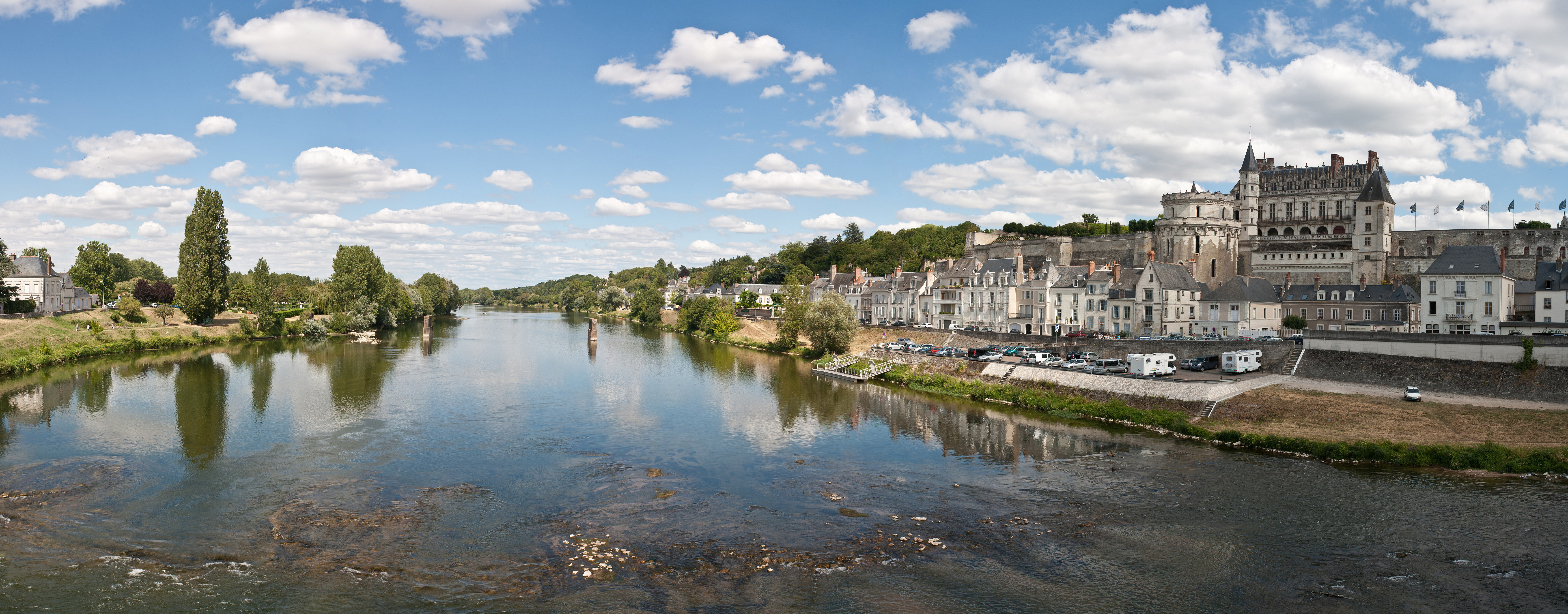
    El río Loira en Amboise

    El río Loira en Amboise — CC BY-SA 3

    Historia de Valle del Loira

    Los reyes y el Renacimiento

    La historia del Valle del Loira empieza con los reyes de Francia, que en los siglos quince y dieciséis trasladaron su corte al valle, con sus castillos, sus jardines y sus artistas. Francisco I, rey de 1515 a 1547, levantó Chambord en 1519, con su escalera de doble hélice atribuida a Leonardo da Vinci, y su corte llenó el valle de palacios, con Blois, con Amboise y con Azay-le-Rideau. El Valle del Loira fue la capital del Renacimiento francés, con su arte, su arquitectura y su humanismo, y con Leonardo, que murió en Amboise en 1519.

    Chambord y Francisco I

    Chambord es el castillo más grande del Valle del Loira, con sus 440 habitaciones, sus 282 chimeneas y su parque de 5.440 hectáreas, el parque amurallado más grande de Europa. El castillo, con su tejado de torres y chimeneas, su escalera de doble hélice y su terraza, es el símbolo del Renacimiento, y Francisco I lo levantó como pabellón de caza, con sus ciervos y sus bosques. El Valle del Loira guarda Chambord como su joya, con su parque, sus jardines y su historia de reyes.

    Chenonceau y las damas

    Chenonceau es el castillo de las damas del Valle del Loira, con su galería de 60 metros sobre el río Cher, construida en la década de 1570, y con su historia de Diana de Poitiers y de Catalina de Médicis. El castillo, con sus jardines, sus cocinas y su capilla, pasó de una amante a una reina, y en la Primera Guerra Mundial fue hospital militar, con sus camas y sus enfermeras. El Valle del Loira guarda Chenonceau como su castillo más fotografiado, con su puente sobre el agua y sus flores.

    Amboise y Leonardo

    Amboise es el castillo de Leonardo da Vinci en el Valle del Loira, con su capilla de Saint-Hubert, donde está enterrado el artista, y con su castillo real sobre el río. Leonardo, con sus cuadernos y sus inventos, vivió sus últimos años en el Clos Lucé, con su parque y sus máquinas, y murió en 1519, con su tumba en la capilla. El Valle del Loira guarda Amboise como su memoria de Leonardo, con su castillo, su capilla y su museo.

    La Revolución y la UNESCO

    El Valle del Loira sufrió la Revolución francesa, con sus castillos saqueados y sus abadías destruidas, y en el siglo diecinueve se convirtió en destino de viajeros, con sus restauraciones y sus jardines. El valle, con sus viñedos y sus pueblos, se modernizó con el tren y con el turismo, y en el año 2000 la UNESCO inscribió su tramo central, de Sully-sur-Loire a Chalonnes-sur-Loire, como paisaje cultural. El Valle del Loira, con sus 280 kilómetros y sus 800 kilómetros cuadrados, es hoy el valle de los castillos, con su río, su vino y su historia.

    Los jardines y el vino

    El Valle del Loira es también el valle de los jardines, con Villandry, con sus parterres y sus fuentes, y con Chaumont, con su festival de jardines y su parque. El valle, con sus viñedos de Sancerre, Vouvray y Muscadet, es la tierra del vino blanco de Francia, con sus bodegas y sus catas. El Valle del Loira, con sus jardines y su vino, es el jardín de Francia, con su río, sus flores y su mesa.

    Vista del castillo de Chambord

    Vista del castillo de Chambord — CC BY-SA 4

    El castillo de Amboise

    El castillo de Amboise — CC BY-SA 4

    El ala de Luis XII del castillo de Blois

    El ala de Luis XII del castillo de Blois — CC BY-SA 4

    Turismo en Valle del Loira

    El Valle del Loira se recorre en tres días, con Chambord por la mañana, con su castillo y su parque, y con Chenonceau por la tarde, con su galería y sus jardines. La ruta empieza en Tours, con su tren desde París, y sigue en bicicleta por la ruta Loira a Vélo, con sus carriles junto al río, y en coche por sus pueblos. El Valle del Loira se come en Tours, con su rillettes, su queso de cabra y su vino de Vouvray, y se bebe en sus bodegas trogloditas, con sus catas y sus espumosos.

    Chambord pide una mañana, con su castillo, su escalera de doble hélice y su terraza, y con su parque de ciervos y sus jardines. El castillo, con sus 440 habitaciones y sus 282 chimeneas, se recorre en dos horas, con su tejado y su vista, y con su alquiler de bicicletas para el parque. En Chambord se sube a la terraza, con sus torres y sus chimeneas, y se pasea por su parque, con sus ciervos y sus bosques.

    Chenonceau pide una tarde, con su galería sobre el Cher, sus jardines de Diana y de Catalina, y sus cocinas y su capilla. El castillo, con su puente de arcos y sus flores, se recorre en dos horas, con su historia de damas y con su hospital de guerra. El Valle del Loira se pasea en Chenonceau por sus jardines, con sus flores y su río, y se cena en su restaurante, con su cocina del valle.

    Amboise pide un atardecer, con su castillo real, su capilla de Saint-Hubert y su Clos Lucé, con su parque de máquinas de Leonardo. La villa, con su centro histórico y su mercado, se recorre a pie, con su castillo y su río, y con su vista del Loira. En el Valle del Loira se visita Amboise al final del día, con su capilla, su parque y su museo de Leonardo.

    Villandry y Azay-le-Rideau completan la ruta, con los jardines de Villandry, con sus parterres y sus fuentes, y con el castillo de Azay-le-Rideau, con su isla sobre el Indre. Los castillos, con sus jardines y sus aguas, se visitan en medio día, con sus flores y sus reflejos, y con su historia de jardineros y de reyes. El Valle del Loira se completa en Villandry, con sus jardines renacentistas y su huerto decorativo.

    La bicicleta es la forma del Valle del Loira, con su ruta Loira a Vélo de 900 kilómetros, con sus carriles, sus puentes y sus pueblos, y con su alquiler en Tours y en Blois. La ruta, con sus etapas de 30 kilómetros y sus castillos, se hace en tres días, con sus hoteles y sus restaurantes, y con su tren para el regreso. El Valle del Loira se pedalea junto al río, con sus islas de arena y sus viñedos, y con sus paradas de vino y de queso.

    Vista del castillo de Chenonceau

    Vista del castillo de Chenonceau — CC BY-SA 4

    Un viñedo de Vouvray, en el Loira

    Un viñedo de Vouvray, en el Loira — CC BY 2

    Lugares destacados de Valle del Loira

    Chambord es el gigante del Valle del Loira, con sus 440 habitaciones, sus 282 chimeneas y su parque de 5.440 hectáreas. El castillo, con su escalera de doble hélice y su tejado de torres, guarda el Renacimiento de Francisco I. Chambord es el símbolo del valle, con su parque y su caza.

    Chenonceau es la dama del Valle del Loira, con su galería de 60 metros sobre el río Cher, sus jardines y su capilla. El castillo, con su historia de Diana y de Catalina, guarda el castillo más fotografiado de Francia. Chenonceau es el puente del Valle del Loira, con su agua y sus flores.

    Amboise es el Leonardo del Valle del Loira, con su castillo real, su capilla de Saint-Hubert y su Clos Lucé. La villa, con su tumba de Leonardo y su parque de máquinas, guarda los últimos años del artista. Amboise es la memoria del Valle del Loira, con su río y su castillo.

    Villandry es el jardín del Valle del Loira, con sus parterres, sus fuentes y su huerto decorativo. El castillo, con sus jardines renacentistas y su vista del río, guarda el arte de la jardinería francesa. Villandry es la flor del Valle del Loira, con sus colores y su agua.

    Azay-le-Rideau es la isla del Valle del Loira, con su castillo sobre el río Indre, sus torres y sus reflejos. El castillo, con su fachada renacentista y su parque, guarda la joya del valle, con su agua y su piedra. Azay-le-Rideau es el espejo del Valle del Loira, con su río y su luz.

    Blois es la corte del Valle del Loira, con su castillo de cuatro alas, su escalera de Francisco I y su centro histórico. La ciudad, con su historia de reyes y su museo de la magia, guarda la residencia de Luis XII y de Francisco I. Blois es la ciudad del Valle del Loira, con su río y su castillo.

    Saumur es el vino del Valle del Loira, con su castillo, sus bodegas trogloditas y su espumoso. La ciudad, con su escuela de caballería y su río, guarda el vino blanco del valle, con sus catas y sus cuevas. Saumur es la bodega del Valle del Loira, con su piedra y su espumoso.

    Los jardines del castillo de Villandry

    Los jardines del castillo de Villandry — CC BY-SA 4

    El castillo de Azay-le-Rideau

    El castillo de Azay-le-Rideau — CC BY-SA 4

    Preguntas frecuentes sobre Valle del Loira

    ¿Cuántos días necesita el Valle del Loira?

    El Valle del Loira necesita tres días, con Chambord, Chenonceau y Amboise como tres jornadas, y con Villandry y Azay-le-Rideau como cuarta. Con cinco días se añade la bicicleta, con su ruta junto al río, y con los viñedos, con sus catas y sus bodegas.

    ¿Cuál es la mejor época para visitar el Valle del Loira?

    Mayo abre los jardines de Villandry, con sus flores y sus fuentes, y septiembre trae la vendimia, con sus viñedos dorados y sus catas. El verano llena los castillos de visitantes, con su sol y su río, y diciembre viste los castillos de luces, con su Navidad y sus mercados.

    ¿Cómo se viaja en el Valle del Loira?

    En el Valle del Loira se viaja en tren desde París hasta Tours, en una hora, y en bicicleta por la ruta Loira a Vélo, con sus carriles junto al río. Los castillos se alcanzan en autobús, en coche y en bicicleta, con Tours y Blois como bases, y con sus trenes y sus alquileres.

    ¿Qué se visita en Chambord en el Valle del Loira?

    En Chambord, en el Valle del Loira, se visitan el castillo, con su escalera de doble hélice y su terraza, y su parque de 5.440 hectáreas, con sus ciervos y sus bosques. El castillo se completa con sus jardines, con sus flores, y con su alquiler de bicicletas para el parque.

    ¿Qué se visita en Chenonceau en el Valle del Loira?

    En Chenonceau, en el Valle del Loira, se visitan la galería sobre el río Cher, los jardines de Diana y de Catalina, y las cocinas y la capilla. El castillo se completa con su historia de damas, con su hospital de guerra, y con su restaurante junto al río.

    ¿Cuánto cuesta visitar el Valle del Loira?

    Cada castillo cobra su entrada, con su Chambord, su Chenonceau y su Amboise, y el pase de varios días baja el precio por castillo. La bicicleta se alquila en Tours y en Blois, con su día y su semana, y el tren desde París es la partida de llegada. Conviene mirar las webs de los castillos, con la entrada, la bicicleta y el tren como cuentas de la ruta.

    Verificado

    El tramo central del Valle del Loira, de Sully-sur-Loire a Chalonnes-sur-Loire, se inscribió en la UNESCO en el año 2000, con 280 kilómetros y unos 800 kilómetros cuadrados de paisaje cultural. Francia suma 56 bienes en total, y el valle, con sus castillos, sus ciudades y sus viñedos, es uno de sus paisajes más famosos.

    El río Loira, con 1.012 kilómetros, es el río más largo de Francia, desde el Macizo Central hasta el Atlántico, y su curso principal no tiene presas, con su título de último río salvaje de Europa. El valle, con sus islas de arena y sus meandros, es el jardín de Francia, con sus viñedos de Sancerre, Vouvray y Muscadet.

    Chambord, levantado por Francisco I desde 1519, es el castillo más grande del valle, con 440 habitaciones, 282 chimeneas y un parque de 5.440 hectáreas, el parque amurallado más grande de Europa. Su escalera de doble hélice se atribuye a Leonardo da Vinci, que murió en Amboise en 1519 y está enterrado en la capilla de Saint-Hubert.

    Chenonceau, con su galería de 60 metros sobre el río Cher, construida en la década de 1570, es el castillo de las damas, de Diana de Poitiers y de Catalina de Médicis. El castillo, con sus jardines y su capilla, fue hospital militar en la Primera Guerra Mundial, y es el castillo más visitado de Francia después de Versalles.

    La ruta Loira a Vélo, con 900 kilómetros de carriles junto al río, es la ruta ciclista más famosa de Francia, con sus etapas, sus castillos y sus pueblos. Tours, con su tren desde París en una hora, es la base del valle, con Blois como segunda base, con su castillo de cuatro alas.

    El valle aparece en Wikidata con el código Q1050483, valle y paisaje cultural en 47,2163/0,0622, con su nombre español Valle del Loira. Código y coordenadas se comprobaron el 22/11/2026, junto con su UNESCO del año 2000.

    Fuentes y fecha de verificación (22/11/2026)

    Sin verificar

    • Los precios de las entradas a los castillos cambian con la temporada, así que el artículo no indica precios y remite a los sitios oficiales.
    • Los horarios de los castillos cambian con la temporada, así que el artículo no cita horas y remite a los sitios oficiales.
    • El número exacto de visitantes de cada castillo varía por año, así que el artículo no cita cifras anuales y remite a las estadísticas oficiales.

    Illustrations

    • Hero: Vista del Valle del Loira. Free image: https://upload.wikimedia.org/wikipedia/commons/4/41/Ch%C3%A2teau_de_Montsoreau%2C_depuis_la_rive_droite_de_la_Loire.jpg — CC BY-SA 3.
    • In body, el castillo de Chambord: Vista del castillo de Chambord. Free image: https://upload.wikimedia.org/wikipedia/commons/1/19/Chambord_Castle_01.jpg — CC BY-SA 4.
    • In body, el castillo de Chenonceau: Vista del castillo de Chenonceau. Free image: https://upload.wikimedia.org/wikipedia/commons/a/a3/Castle_of_Chenonceau_26.jpg — CC BY-SA 4.
    • In body, el río Loira: El río Loira en Amboise. Free image: https://upload.wikimedia.org/wikipedia/commons/8/89/Amboise_Loire_Panorama_-_July_2011.jpg — CC BY-SA 3.
    • In body, el castillo de Amboise: El castillo de Amboise. Free image: https://upload.wikimedia.org/wikipedia/commons/8/84/00_4241_Ch%C3%A2teau_d%27Amboise_-_France.jpg — CC BY-SA 4.
    • In body, el castillo de Blois: El ala de Luis XII del castillo de Blois. Free image: https://upload.wikimedia.org/wikipedia/commons/1/18/Louis_XII_wing_of_the_castle_of_Blois_01.jpg — CC BY-SA 4.
    • In body, los jardines de Villandry: Los jardines del castillo de Villandry. Free image: https://upload.wikimedia.org/wikipedia/commons/0/00/Chateau_de_Villandry_-_Back_Garden.jpg — CC BY-SA 4.
    • In body, el castillo de Azay-le-Rideau: El castillo de Azay-le-Rideau. Free image: https://upload.wikimedia.org/wikipedia/commons/0/09/Azay-le-Rideaux_Ch%C3%A2teau_d%27Azay-le-Rideau_Ostseite_3.jpg — CC BY-SA 4.
    • In body, los viñedos del Loira: Un viñedo de Vouvray, en el Loira. Free image: https://upload.wikimedia.org/wikipedia/commons/4/4a/Vouvray_Vineyard_after_budbreak.jpg — CC BY 2.
  • Normandy Tours: D-Day Beaches, Gothic Towns and the Mont-Saint-Michel

    Normandy Tours: D-Day Beaches, Gothic Towns and the Mont-Saint-Michel

    Normandy tours open the coast where history landed, from D-Day beaches to Mont-Saint-Michel. The region pairs green bocage with great Gothic towns.

    Normandy tours suit travellers who want a region rather than a single city, because the north-west of France gathers a whole history into one coastline. The beaches of the D-Day landings, the abbey of Mont-Saint-Michel, the cathedral of Rouen, the tapestry of Bayeux and the cliffs of Étretat all lie within a few hours of each other, and the countryside between them is the green bocage of small fields, apple orchards and half-timbered villages. The region is the old duchy of the Normans, the land that conquered England in 1066 and then became the battlefield of 1944.

    A journey built around Normandy tours needs at least four days, because the region is wide and its sights are spread across five departments. Bayeux makes the best base for the D-Day beaches, Rouen suits the Gothic towns and the Seine valley, and the Mont-Saint-Michel deserves a day of its own. The region rewards a car, yet the trains from Paris reach Rouen, Bayeux and Caen in a few hours, and the coast is walkable in its towns.

    Quick Facts for Normandy Tours

    Fact Detail
    Location North-west France, on the English Channel
    Coordinates 49.18333° N, 0.35° W
    Wikidata Q18677875 (region of France)
    Capital Rouen
    Departments Calvados, Eure, Manche, Orne, Seine-Maritime
    Best-known sights Mont-Saint-Michel, D-Day beaches, Bayeux Tapestry
    Main cities Rouen, Caen, Le Havre, Cherbourg, Bayeux
    Character D-Day history, Gothic cathedrals, bocage, cider, cliffs
    World Heritage in the region Mont-Saint-Michel ref 80 (1979); Le Havre ref 1181 (2005)
    Common search phrase normandy tours

    Geography of Normandy

    A Region Between Channel and Bocage

    Normandy occupies the north-western corner of France, facing the English Channel along a coast of cliffs, beaches and estuaries. The region runs from the Cotentin peninsula in the west, which juts into the Channel toward England, to the Seine valley in the east, where the river reaches the sea at Le Havre. The coast is the great feature of Normandy tours, because it holds the long sandy beaches of the D-Day landings, the chalk cliffs of Étretat and the granite island of Mont-Saint-Michel. The Channel gives Normandy its weather, its light and its history, and the sea is never far from any part of the region.

    The land of Normandy is low and green, a country of small fields divided by hedgerows, the bocage that the soldiers of 1944 found so hard to fight through. The bocage covers the west and the centre of the region, with its apple orchards, its dairy farms and its half-timbered villages, and it is the landscape that gives Normandy its cider, its Camembert and its Calvados. The east of the region is more open, with the chalk plains of the Pays de Caux and the valley of the Seine, and the south rises into the hills of the Norman Switzerland, where the Orne river cuts through wooded valleys. The region has no high mountains, yet its hills, its valleys and its coast give it a varied and gentle geography.

    The rivers of Normandy shape its towns, and Normandy tours follow them from Rouen to the Mont, because the Seine, the Orne, the Vire and the Couesnon each made a port or a market town. Rouen stands on the Seine, Caen on the Orne, Bayeux on the Aure, and the Mont-Saint-Michel stands where the Couesnon meets the bay. The rivers are short and tidal, and the great tides of the bay of Mont-Saint-Michel are among the largest in Europe, rising and falling by more than ten metres. The tides are the reason the Mont is an island at high water and a walkable rock at low water, and they are the most dramatic natural feature of the region.

    The Coast: Cliffs, Beaches and Bays

    The coast of Normandy falls into three parts, and each has a different character. The east, from Le Havre to Dieppe, is a coast of white chalk cliffs, with the great arches of Étretat and the pebble beaches of the Pays de Caux. The cliffs are high and straight, and the towns below them are small fishing ports and seaside resorts.

    The centre, from the Seine estuary to the Cotentin, is a coast of long sandy beaches, and it is here that the D-Day landings took place, on the beaches of Utah, Omaha, Gold, Juno and Sword. The beaches are wide and flat, with dunes and marshes behind them, and the villages along them are quiet and low.

    The west, the Cotentin peninsula, is a wilder coast, with granite headlands, sandy bays and the port of Cherbourg at its northern tip. The peninsula is the most rural part of the region, with its small harbours, its marshes and its moors, and it is the least visited part of the coast. The bay of Mont-Saint-Michel, at the western edge of the region, is a vast expanse of sand and mud, crossed by the tides and crowned by the abbey island. The bay is shared with Brittany, and the Mont itself stands on the border between the two regions.

    The climate of Normandy tours is the temperate maritime climate of the Channel coast, with mild summers, cool winters and rain spread through the year. The region is greener than the south of France because it rains more, and the grass, the orchards and the hedgerows stay green through the summer. The best weather comes in late spring and early autumn, when the days are long and the rain is lighter, and the summer brings the warmest days for the beaches. Winter is quiet and grey, and it suits travellers who want the museums and the towns without the crowds.

    SOMECA 511 am Landungsstrand Omaha Beach in der Normandie

    SOMECA 511 am Landungsstrand Omaha Beach in der Normandie — CC BY-SA 4

    The cliffs and arches of Etretat

    The cliffs and arches of Etretat — Mathieu Chollet – MChollet, CC BY-SA 4

    The old harbour at Honfleur

    The old harbour at Honfleur — René Cortin, CC BY-SA 4

    History of Normandy

    The Duchy of the Normans

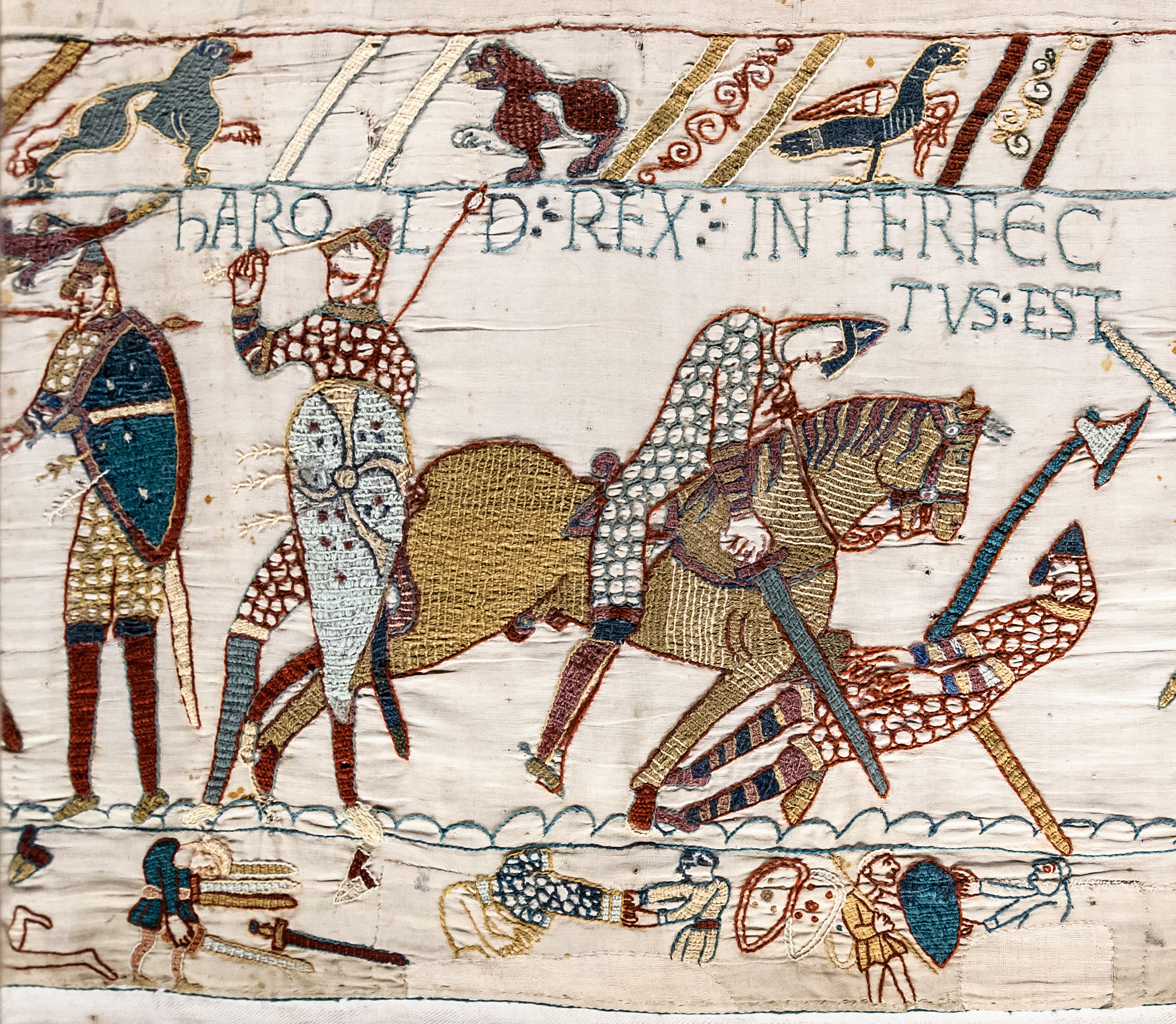
    Normandy takes its name from the Northmen, the Vikings who settled the lower Seine in the ninth and tenth centuries, and its history begins with the treaty of 911, when the Frankish king Charles the Simple gave the land to the Viking leader Rollo. The Northmen became Normans, and they built a duchy that was the most powerful in France, with its capital at Rouen and its great abbeys at Jumièges, Saint-Wandrille and Mont-Saint-Michel. The Normans kept their seafaring habit, and they conquered England in 1066 under William the Conqueror, whose invasion fleet sailed from the Norman coast. The Bayeux Tapestry, embroidered in the years after the conquest, tells that story in wool, and it is the most famous object in Normandy.

    The duchy passed to the kings of England, and for two centuries Normandy was the heart of the Anglo-Norman world, with its castles, its cathedrals and its trade. Rouen became one of the great cities of Europe, and its cathedral, begun in the twelfth century, is the finest Gothic building in the region. The Hundred Years’ War brought the fighting to Normandy, and the region changed hands between England and France, until the French king Charles VII took Rouen in 1449. Joan of Arc, who had been burned at Rouen in 1431, became the symbol of the French recovery, and the city keeps her memory in the church of Saint Joan on the old market square.

    The centuries that followed were quieter, and Normandy became a province of France, known for its ports, its cloth and its cider. Le Havre was founded in 1517 as a port for the Atlantic trade, and Honfleur became a harbour for the cod fleets and the explorers of the New World. The region’s abbeys and cathedrals were rebuilt and enlarged, and the towns of the coast grew around their harbours. The revolution and the nineteenth century brought railways, seaside resorts and the painters of the coast, and the region became a place of holidays as well as of work.

    The death of Harold in the Bayeux Tapestry

    The death of Harold in the Bayeux Tapestry — Myrabella, Public domain

    Monet, the Impressionists and the Coast

    The nineteenth century made the Norman coast famous in art, because the painters of Paris came to the beaches, the cliffs and the harbours to paint the light. Claude Monet lived at Giverny, on the Seine, for more than forty years, and his garden there became the subject of his water lilies. The cliffs of Étretat, the harbour of Honfleur and the beaches of Trouville and Deauville appear in the paintings of Monet, Boudin, Courbet and Renoir, and the region became the birthplace of Impressionism. The light of the Channel coast, with its clouds, its mists and its changing tides, was the subject that the painters returned to again and again.

    The seaside resorts of the coast grew in the same period, because the railway brought Parisians to the beaches for the summer. Deauville became the fashionable resort of the Belle Époque, with its boardwalk, its casino and its grand hotels, and Trouville, its older neighbour, kept its fishing harbour and its market. The towns of the coast filled with villas, hotels and casinos, and the region became a place of leisure for the wealthy. The painters and the holidaymakers together made the Norman coast one of the most painted and most visited in France.

    D-Day and the Liberation

    The history that Normandy tours retell changed again on 6 June 1944, when the Allied armies landed on the beaches of the Calvados coast in the largest seaborne invasion in history. The landings, known as D-Day, opened the liberation of France, and the beaches of Utah, Omaha, Gold, Juno and Sword became the names that the world remembers. The fighting in the bocage lasted through the summer, and the towns of Caen, Bayeux and Saint-Lô were damaged or destroyed, while the people of the region paid a heavy price for the liberation. The cemeteries of the coast, American, British, Canadian and German, hold the dead of that summer, and they are among the most visited places in France.

    The liberation of Normandy is the reason most visitors book Normandy tours today, and the museums, the memorials and the beaches of the coast are the heart of the Normandy tours that travellers search for. The region rebuilt itself after the war, and Le Havre, which had been destroyed by bombing, was rebuilt by the architect Auguste Perret in concrete, and its rebuilt centre is now a World Heritage property. The Bayeux Tapestry survived the war in a castle cellar, and the town of Bayeux, which was the first French town liberated, kept its cathedral and its medieval streets. The memory of 1944 is kept alive by the people of the region, and the anniversaries of the landings bring veterans and visitors from across the world.

    Today Normandy tours cross a region of farms, ports and visitors, and its history is present in every town. The Gothic cathedrals of Rouen and Bayeux, the abbey of Mont-Saint-Michel, the tapestry, the cliffs and the beaches are the layers of a history that runs from the Vikings to the liberation. The region has kept its green countryside, its cider and its cheese, and it has become a place where the past is visited rather than forgotten.

    Cloître Abbaye du Mont Saint-Michel 2015-05-28

    Cloître Abbaye du Mont Saint-Michel 2015-05-28 — CC BY-SA 4

    The American Cemetery above Omaha Beach

    The American Cemetery above Omaha Beach — Kev22, CC BY-SA 4

    Travel to Normandy

    Normandy is reached from Paris by train in about two hours to Rouen, and in about two and a half hours to Bayeux and Caen, with trains leaving from Saint-Lazare station. The train is the simplest way to reach the region, and Bayeux makes the best base for the D-Day beaches, because it is a small town with a cathedral, a tapestry museum and a station. Rouen makes the best base for the Seine valley and the Gothic towns, and it is the closest city to Paris. A car is the best way to see the region in depth on Normandy tours, because the beaches, the villages and the Mont-Saint-Michel are spread across the countryside, and the buses are few.

    Normandy tours from Paris are the most searched way to see the region, and they run as day trips and as two- and three-day tours from the capital. A day trip from Paris reaches the D-Day beaches or the Mont-Saint-Michel, yet it is a long day, because the journey takes two to three hours each way. A longer tour is a better choice, because it gives time for Bayeux, the beaches and the Mont, and it allows a night in the region. Tours also run from Bayeux itself, and they are the best choice for the beaches, because the guides of Bayeux know the landings in detail.

    The best seasons for Normandy tours are late spring and early autumn, when the days are long, the rain is lighter and the crowds are smaller than in summer. June is the month of the D-Day anniversaries, and the beaches are busy around the 6th, while the summer brings the warmest weather for the coast. Winter is quiet, and the museums and the towns are open, yet the days are short and the rain is frequent. The Mont-Saint-Michel is best visited at high tide, when the island is surrounded by water, and the tide times should be checked before the visit.

    Travellers who plan Normandy tours should allow at least four days for the region, with one day for the D-Day beaches, one for Bayeux and Caen, one for the Mont-Saint-Michel and one for Rouen and the Seine valley. The beaches are best seen with a guide or a good map, because the five landing beaches stretch along eighty kilometres of coast, and each has its own museum and memorial. The American cemetery at Colleville-sur-Mer, above Omaha Beach, is the most visited site in the region, and it is a place of quiet rather than of sightseeing.

    Notable Places in Normandy

    The Mont-Saint-Michel is the great sight of Normandy tours, a Gothic abbey on a granite island in a vast tidal bay, and it is the most visited monument in France outside Paris. The abbey, built between the eleventh and sixteenth centuries, rises above a village of narrow lanes, and the tides of the bay surround it at high water. UNESCO inscribed the Mont and its bay in 1979 under criteria (i), (iii) and (vi), and the abbey is the symbol of the region.

    The D-Day beaches stretch along the Calvados coast, and each has its own character and its own memorial. Omaha Beach, below the American cemetery at Colleville-sur-Mer, is the most famous, because the landing there was the bloodiest of the day, and the cemetery above it holds the graves of more than nine thousand American soldiers. Utah Beach, Gold Beach, Juno Beach and Sword Beach each have their own museums, and the town of Arromanches holds the remains of the Mulberry harbour, the artificial port that supplied the invasion. Bayeux, the town behind the beaches, holds the tapestry that tells the story of the Norman conquest, and its cathedral and its medieval streets survived the war.

    Rouen, the capital of the region, holds the finest Gothic cathedral in Normandy, the church of Saint Joan on the market square where she was burned, and the great clock, the Gros-Horloge, that spans the old street, and Normandy tours often end the day in its old town. The city is the place where Monet painted the cathedral in every light, and its old town of half-timbered houses is the largest in France. Étretat, on the chalk coast, holds the arches and the needle that Monet painted, and Honfleur holds the harbour that the Impressionists loved. Le Havre, rebuilt in concrete by Auguste Perret after the war, is the region’s second World Heritage property, inscribed in 2005.

    The facade of Rouen Cathedral

    The facade of Rouen Cathedral — Jorge Láscar from Melbourne, Australia, CC BY 2

    The Gros-Horloge in Rouen

    The Gros-Horloge in Rouen — CEphoto, Uwe Aranas, CC BY-SA 3

    Frequently Asked Questions About Normandy Tours

    How many days do I need for Normandy tours?

    Four days suit Normandy tours well, with one day for the D-Day beaches, one for Bayeux and Caen, one for the Mont-Saint-Michel and one for Rouen and the Seine valley. A day trip from Paris reaches one sight, yet it leaves the rest of the region unseen.

    Can I do Normandy tours from Paris in one day?

    Normandy tours from Paris run as day trips to the D-Day beaches or to the Mont-Saint-Michel, yet the journey takes two to three hours each way. A two- or three-day tour from Paris is a better choice, because it gives time for Bayeux and the beaches together.

    Which D-Day beaches should Normandy tours visit?

    Normandy tours usually visit Omaha Beach and the American cemetery at Colleville-sur-Mer, Utah Beach and its museum, and the remains of the Mulberry harbour at Arromanches. Juno Beach and Sword Beach hold the Canadian and British memorials, and each beach has its own museum.

    Is the Mont-Saint-Michel part of Normandy tours?

    The Mont-Saint-Michel is the most visited sight on Normandy tours, and it stands on the border between Normandy and Brittany. The abbey and its bay were inscribed by UNESCO in 1979, and the tides should be checked before a visit.

    Where should I stay for Normandy tours?

    Bayeux is the best base for Normandy tours of the D-Day beaches, because it is a small town with a station, a cathedral and the tapestry museum. Rouen suits the Gothic towns and the Seine valley, and the Mont-Saint-Michel deserves a night nearby.

    What is the best time of year for Normandy tours?

    Late spring and early autumn are the best seasons for Normandy tours, with long days, lighter rain and smaller crowds than in summer. June brings the D-Day anniversaries, and the beaches are busy around the 6th.

    Verified

    The facts in this Normandy tours article were checked on 22 November 2026, and the Wikidata record was confirmed through the Wikidata API on the same day. The record gives Q18677875 the label Normandy, the instance-of value region of France, and coordinates 49.18333° N, 0.35° W, which match the registry. The UNESCO pages for Mont-Saint-Michel and its Bay, ref 80, and for Le Havre, ref 1181, were read on whc.unesco.org, confirming the Mont’s inscription in 1979 under criteria (i), (iii) and (vi) and Le Havre’s in 2005 under criteria (ii) and (iv).

    The region itself holds no single World Heritage inscription, so the registry flag of false is correct at region level, yet the region contains two inscribed properties, and that distinction is recorded in the fix queue as entry 202 for the parent to decide. The Bayeux Tapestry is not a World Heritage property; it is listed on UNESCO’s Memory of the World Register, and the article keeps that distinction. The date of the D-Day landings, 6 June 1944, and the treaty of 911 were checked against the official Normandy tourism site and the Bayeux Tapestry museum.

    Sources

    • Wikidata, Normandy Q18677875 — https://www.wikidata.org/wiki/Q18677875
    • UNESCO World Heritage Centre, Mont-Saint-Michel and its Bay, ref 80 — https://whc.unesco.org/en/list/80/
    • UNESCO World Heritage Centre, Le Havre, ref 1181 — https://whc.unesco.org/en/list/1181/
    • Normandy Tourism, official site — https://www.normandie-tourisme.fr/
    • Bayeux Tapestry Museum — https://www.bayeuxmuseum.com/en/the-bayeux-tapestry/

    Unverified

    • The number of visitors to the Mont-Saint-Michel each year, since official counts vary by year and were not checked against a single release.
    • The exact length of the D-Day landing beaches, which is given as about eighty kilometres in most guides but was not checked against an official source.
    • Current opening hours and ticket prices for the Bayeux Tapestry museum and the Mont-Saint-Michel abbey, which change by season and were not checked against the official ticketing sites.

    Illustrations

    • Hero: Rouen (30600253730). Free image: https://upload.wikimedia.org/wikipedia/commons/4/4d/Rouen_%2830600253730%29.jpg — CC BY 2.
    • In body, Normandy: SOMECA 511 am Landungsstrand Omaha Beach in der Normandie. Free image: https://upload.wikimedia.org/wikipedia/commons/9/96/SOMECA_511_am_Landungsstrand_Omaha_Beach_in_der_Normandie.jpg — CC BY-SA 4.
    • In body, Mont-Saint-Michel: Cloître Abbaye du Mont Saint-Michel 2015-05-28. Free image: https://upload.wikimedia.org/wikipedia/commons/8/86/Clo%C3%AEtre_Abbaye_du_Mont_Saint-Michel_2015-05-28.jpg — CC BY-SA 4.
    • In body, Etretat: The cliffs and arches of Etretat. Free image: https://upload.wikimedia.org/wikipedia/commons/3/34/Cliffs_of_Etretat%2C_Normandy%2C_France%2C_December_2022.jpg — Mathieu Chollet – MChollet, CC BY-SA 4.
    • In body, Honfleur: The old harbour at Honfleur. Free image: https://upload.wikimedia.org/wikipedia/commons/8/82/Harbour-Honfleur-Normandy-france-Rene-Cortin.jpg — René Cortin, CC BY-SA 4.
    • In body, The Bayeux Tapestry: The death of Harold in the Bayeux Tapestry. Free image: https://upload.wikimedia.org/wikipedia/commons/b/bb/Bayeux_Tapestry_scene57_Harold_death.jpg — Myrabella, Public domain.
    • In body, The American Cemetery: The American Cemetery above Omaha Beach. Free image: https://upload.wikimedia.org/wikipedia/commons/c/c1/Colleville-sur-Mer_-_Omaha_Beach_du_cimeti%C3%A8re_am%C3%A9ricain.jpg — Kev22, CC BY-SA 4.
    • In body, Rouen Cathedral: The facade of Rouen Cathedral. Free image: https://upload.wikimedia.org/wikipedia/commons/2/20/Fa%C3%A7ade_of_the_Cath%C3%A9drale_Notre-Dame_de_Rouen_%2830268693284%29.jpg — Jorge Láscar from Melbourne, Australia, CC BY 2.
    • In body, The Gros-Horloge: The Gros-Horloge in Rouen. Free image: https://upload.wikimedia.org/wikipedia/commons/f/f6/Rouen_France_Gros-Horloge-03.jpg — CEphoto, Uwe Aranas, CC BY-SA 3.
  • Disneyland Paris — el castillo de la Bella Durmiente a 32 kilómetros de París

    Disneyland Paris — el castillo de la Bella Durmiente a 32 kilómetros de París

    Disneyland Paris es el destino turístico más visitado de Europa, un resort de dos parques, siete hoteles y un castillo de cuento a 32 kilómetros de París.

    Inaugurado en 1992 como Euro Disney, el complejo recibe cada año a más de diez millones de visitantes en su parque principal.

    El resort se levanta en Marne-la-Vallée, al este de París, y es el segundo resort de Disney fuera de Estados Unidos, tras el de Tokio. El resort abrió sus puertas el 12 de abril de 1992, con un solo parque, seis hoteles y un distrito de ocio, y hoy ofrece dos parques temáticos, siete hoteles Disney y el complejo de Disney Village. El resort ha recibido más de 375 millones de visitas desde su apertura, y su parque principal, con 10,2 millones de visitantes en 2024, es el parque temático más visitado de Europa.

    El complejo combina el parque clásico, con su castillo de la Bella Durmiente y sus cinco tierras, con el parque de estudios, en plena transformación hacia Disney Adventure World. El resort se alcanza desde París en tren RER en unos 40 minutos, y se visita en dos o tres días, con noches en sus hoteles y con espectáculos de drones sobre el castillo.

    Ficha rápida de Disneyland Paris

    Dato Información
    Nombre Disneyland Paris (resort)
    Búsqueda en español Disneyland Paris
    Tipo Resort de parques temáticos, nivel L4, en Marne-la-Vallée
    Ubicación Marne-la-Vallée, Seine-et-Marne, en Europa
    País Francia
    Coordenadas 48,8687° N, 2,7818° E
    Apertura 12 de abril de 1992, como Euro Disney
    Parques Dos: Disneyland Park y Walt Disney Studios Park
    Hoteles Siete hoteles Disney
    Visitas Más de 375 millones desde 1992; 10,2 millones en el parque principal en 2024
    Distancias A unos 32 kilómetros de París, a unos 35 kilómetros de la Torre Eiffel y a unos 45 kilómetros de Versalles
    Idiomas Francés, lengua oficial; inglés de uso amplio en el resort
    Moneda Euro (EUR)
    Zona horaria UTC+1, con cambio a UTC+2 en verano
    Patrimonio UNESCO Francia reúne 56 bienes; el más cercano al parque es la catedral de Chartres, de 1979, y las orillas del Sena en París entraron en la lista en 1991
    Wikidata Q206521

    Geografía de Disneyland Paris

    El resort se sitúa en Marne-la-Vallée, una ciudad nueva al este de París, en el departamento de Seine-et-Marne, con el río Marne al norte y el bosque de la región al sur. El resort ocupa unas 2.230 hectáreas, con sus dos parques, sus siete hoteles, su distrito de ocio, su campo de golf y sus aparcamientos, y la estación de tren de Marne-la-Vallée Chessy queda junto a la entrada. Disneyland Paris se alcanza en tren RER A desde el centro de París en unos 40 minutos, y en TGV desde el aeropuerto Charles de Gaulle en diez minutos.

    París es la capital de Francia, con unos 2,1 millones de habitantes en la ciudad y más de 13 millones en su área metropolitana, a orillas del Sena. La ciudad, con su torre Eiffel, su Louvre y su catedral de Notre Dame, es el destino turístico más visitado del mundo, y Disneyland Paris es su parque de atracciones, a media hora en tren. El complejo pertenece a la región de Île-de-France, con sus bosques, sus castillos y sus ciudades nuevas, y el resort se construyó en terrenos agrícolas de la llanura del este parisino.

    El clima de París es templado y oceánico, con inviernos suaves, veranos cálidos y lluvias repartidas durante todo el año. El resort se visita mejor en primavera y en otoño, con temperaturas suaves y con menos multitudes, y en verano los días largos permiten ver los espectáculos nocturnos con luz. El invierno trae la temporada de Navidad, con el parque decorado y con nieve artificial, y la lluvia, frecuente en la región, pide un chubasquero en cualquier estación.

    El parque principal, llamado Disneyland Park, ocupa unas 57 hectáreas, con su castillo en el centro y sus cinco tierras alrededor: Main Street, Frontierland, Adventureland, Fantasyland y Discoveryland. El parque, con su ferrocarril perimetral y su plaza central, se diseñó como una rueda, con el castillo como eje y con los caminos saliendo en radios. El resort se recorre a pie, con sus calles temáticas, sus restaurantes y sus espectáculos, y el segundo parque queda junto al primero, a cinco minutos a pie.

    El distrito de Disney Village se extiende junto a los parques de Disneyland Paris, con sus restaurantes, sus cines, sus tiendas y su vida nocturna, de acceso gratuito. El distrito, con su lago y sus terrazas, es el lugar de la cena después del parque, con cocina internacional y con música en vivo. El resort se completa con sus hoteles, repartidos alrededor de un lago, con el Disneyland Hotel en la entrada del parque principal como puerta del resort.

    Los alrededores de Disneyland Paris llegan en tren a París en 40 minutos, con su torre, sus museos y sus barrios, y a la ciudad medieval de Provins en una hora, con sus murallas y su feria. Al este, la región de Champaña ofrece sus bodegas y su catedral de Reims, a una hora en TGV, y al sur, el bosque de Fontainebleau guarda su castillo y sus rocas de escalada. El resort funciona como base de la región parisina, con el tren, el TGV y el aeropuerto a pocos minutos.

    Vista de Frontierland, en Disneyland Paris

    Vista de Frontierland, en Disneyland Paris — CC0

    Historia de Disneyland Paris

    El sueño de Walt Disney

    El resort nació del sueño de Walt Disney, que imaginó un parque familiar donde padres e hijos se divirtieran juntos, tras abrir Disneyland en California en 1955. Disney, que visitó Europa y soñó con un parque en el continente, murió en 1966 sin verlo, y su empresa buscó durante los años ochenta un lugar para el resort europeo. El lugar se eligió en Marne-la-Vallée por su cercanía a París, su terreno llano y su conexión con el tren y con el aeropuerto. La empresa firmó el acuerdo con el gobierno francés en 1987, con la promesa de miles de empleos y de un nuevo polo turístico.

    La apertura de 1992

    Disneyland Paris abrió el 12 de abril de 1992 como Euro Disney, con un solo parque, seis hoteles y un distrito de ocio llamado Festival Disney. La apertura, con sus colas, sus cámaras y sus famosos, fue un éxito de público, pero los primeros años trajeron problemas: la asistencia quedó por debajo de lo previsto, la deuda era pesada y algunas decisiones, como la prohibición inicial del alcohol en el parque, chocaron con las costumbres europeas. El resort cambió de nombre en 1994, primero a Euro Disneyland Paris y luego a Disneyland Paris, y renegoció su deuda con los bancos. El resort sobrevivió a sus años difíciles y se convirtió en el destino turístico más visitado de Europa.

    El segundo parque de 2002

    Disneyland Paris creció en 2002 con la apertura de su segundo parque, Walt Disney Studios Park, el 16 de marzo, con el tema de los estudios de cine. El parque, más pequeño que su vecino, recibió críticas por su escaso número de atracciones, y la empresa lo amplió durante dos décadas, con nuevas tierras y espectáculos. Disneyland Paris añadió en 2022 el campus de los Vengadores, con atracciones de Marvel, y anunció la transformación del parque, con el mundo de Frozen y con su cambio de nombre a Disney Adventure World en 2026. El segundo parque se convirtió así en el motor de crecimiento del resort.

    El castillo y sus tierras

    Disneyland Paris se reconoce por su castillo de la Bella Durmiente, más alto y más gótico que su hermano de California, como homenaje a la tradición de los castillos europeos. El castillo, con su dragón animatrónico en la cueva de debajo, es la puerta de Fantasyland, con su aldea de cuento y sus atracciones de Peter Pan, Blancanieves y Pinocho. Disneyland Paris guarda en Frontierland su montaña rusa de Big Thunder, en Adventureland su isla de los piratas, y en Discoveryland su Space Mountain, con su cohete y su música. El parque principal se renovó durante la pandemia, con su castillo restaurado y con sus espectáculos nuevos.

    La renovación reciente

    Disneyland Paris vive desde 2022 una gran renovación, con el hotel Disneyland reabierto en enero de 2024 como hotel de cinco estrellas dedicado a la realeza Disney. El hotel, con su vestíbulo regio, sus restaurantes y sus habitaciones rediseñadas, es la puerta del parque principal y el símbolo del nuevo lujo del resort. Disneyland Paris estrenó en 2024 su espectáculo nocturno de drones y de proyecciones sobre el castillo, y en 2025 su festival de música por todo el parque. El resort, con más de 375 millones de visitas desde 1992, sigue creciendo con su segundo parque y con su aldea renovada.

    Turismo en Disneyland Paris

    Disneyland Paris se visita en dos o tres días, con el primer día en el parque principal, el segundo en el parque de estudios y el tercero para repetir las atracciones favoritas y ver los espectáculos. La visita empieza temprano, con la entrada al parque principal antes de las multitudes, y sigue por las cinco tierras, con el castillo al mediodía y con el desfile por la tarde. Disneyland Paris se combina con una noche en sus hoteles, con el espectáculo nocturno sobre el castillo y con la cena en Disney Village.

    El parque principal es la visita central de Disneyland Paris, con su castillo de la Bella Durmiente, sus cinco tierras y su ferrocarril perimetral. El parque, con sus atracciones de Piratas del Caribe, Big Thunder Mountain y Space Mountain, se recorre en un día completo, con colas que piden llegar temprano y con la aplicación del resort para reservar las atracciones. Disneyland Paris guarda en el parque principal su desfile de personajes, su espectáculo nocturno de drones y su cueva del dragón bajo el castillo.

    El parque de estudios es la segunda jornada de Disneyland Paris, con su campus de los Vengadores, su mundo de Ratatouille y su torre del terror. El parque, con sus espectáculos de especialistas y sus atracciones de cine, se visita en medio día, con el mundo de Frozen como novedad de su transformación. Disneyland Paris se completa con el parque de estudios, con el cine y la animación como temas, y con su cambio de nombre a Disney Adventure World en 2026.

    Disney Village es la noche de Disneyland Paris, con sus restaurantes, sus cines, sus tiendas y su música en vivo junto al lago. El distrito, de acceso gratuito y abierto hasta tarde, es el lugar de la cena después del parque, con cocina internacional, hamburguesas y dulces. Disneyland Paris se cena en el Village, con sus terrazas junto al agua y con sus espectáculos de calle.

    Los hoteles Disney son la estancia de Disneyland Paris, con siete hoteles temáticos alrededor del lago, desde el Disneyland Hotel de cinco estrellas hasta los hoteles de precio moderado. Los hoteles, con sus piscinas, sus restaurantes de personajes y sus traslados gratuitos a los parques, permiten entrar antes que el público general. Disneyland Paris se duerme en sus hoteles, con el castillo a pocos pasos y con el desayuno con Mickey como recuerdo.

    París es la excursión desde Disneyland Paris, con el tren RER A uniendo el resort con el centro en unos 40 minutos. La ciudad, con su torre Eiffel, su Louvre y su catedral, se visita en un día, con el regreso al resort por la noche para el espectáculo del castillo. La visita a Disneyland Paris se combina con París, con el parque de día y con la ciudad de noche.

    Lugares destacados de Disneyland Paris

    El castillo de la Bella Durmiente es el símbolo de Disneyland Paris, con su silueta gótica, sus torres rosas y su dragón animatrónico en la cueva de debajo. El castillo, más alto que su hermano de California, guarda una galería con tapices y una tienda de cristal, y es el fondo del espectáculo nocturno. El castillo es la magia de Disneyland Paris, con el cuento en piedra y con la luz sobre el parque.

    Main Street, U.S.A. es la entrada de Disneyland Paris, con sus tiendas, sus restaurantes y su arquitectura de pueblo americano de principios del siglo veinte. La calle, con su ferrocarril, sus carruajes y sus faroles, lleva del hotel a la plaza central, con el castillo al fondo. Main Street es la nostalgia de Disneyland Paris, con la América de Walt Disney en París.

    Frontierland es el oeste de Disneyland Paris, con su montaña rusa de Big Thunder, su barco de vapor y su mansión encantada. La tierra, con su pueblo minero, su río y sus cactus, guarda la aventura del oeste americano y la atracción de Piratas del Caribe en su vecina Adventureland. Frontierland es la aventura de Disneyland Paris, con el tren y el río como ejes.

    Adventureland es la selva de Disneyland Paris, con su isla de los piratas, su templo de Indiana Jones y su cabaña de Robinson. La tierra, con sus palmeras, sus puentes colgantes y su bazar árabe, guarda la atracción de Piratas del Caribe, con sus barcos, sus tesoros y su música. Adventureland es la exploración de Disneyland Paris, con el mar y la selva juntos.

    Fantasyland es el cuento de Disneyland Paris, con su aldea de cuento, sus atracciones de Peter Pan, Blancanieves y Pinocho, y su castillo como puerta. La tierra, con sus casitas de colores, su laberinto de Alicia y su tren de la mina, es el lugar de los niños y de los personajes. Fantasyland es la infancia de Disneyland Paris, con los cuentos clásicos en cada esquina.

    Discoveryland es el futuro de Disneyland Paris, con su Space Mountain, su submarino Nautilus y su cine en tres dimensiones. La tierra, con su arquitectura de latón y su cohete, mezcla la ciencia ficción de Julio Verne con la exploración espacial, y guarda la montaña rusa más rápida del parque. Discoveryland es la ciencia de Disneyland Paris, con el futuro y el pasado juntos.

    El parque de estudios es el cine de Disneyland Paris, con su campus de los Vengadores, su mundo de Ratatouille y su torre del terror. El parque, en plena transformación hacia Disney Adventure World, guarda el mundo de Frozen como novedad, con su reino de Arendelle y su atracción de barco. El parque es la pantalla de Disneyland Paris, con el cine convertido en atracción.

    Vista de Main Street, U.S.A

    Vista de Main Street, U.S.A — CC BY-SA 4

    Vista de Adventureland, en Disneyland Paris

    Vista de Adventureland, en Disneyland Paris — CC BY 3

    Vista de Fantasyland, en Disneyland Paris

    Vista de Fantasyland, en Disneyland Paris — CC0

    Vista de Discoveryland y Space Mountain, en Disneyland Paris

    Vista de Discoveryland y Space Mountain, en Disneyland Paris — CC BY-SA 4

    Vista del parque de estudios Walt Disney, en París

    Vista del parque de estudios Walt Disney, en París — CC0

    Vista del desfile de Disneyland Paris

    Vista del desfile de Disneyland Paris — CC0

    Vista de Disney Village, en Disneyland Paris

    Vista de Disney Village, en Disneyland Paris — CC0

    Preguntas frecuentes sobre Disneyland Paris

    ¿Cuándo abrió Disneyland Paris?

    Disneyland Paris abrió el 12 de abril de 1992, como Euro Disney, con un solo parque, seis hoteles y un distrito de ocio. El resort cambió de nombre en 1994 a Disneyland Paris, y su segundo parque, Walt Disney Studios Park, abrió el 16 de marzo de 2002.

    ¿Cuántos parques tiene Disneyland Paris?

    Disneyland Paris tiene dos parques: Disneyland Park, el parque principal, con su castillo y sus cinco tierras, y Walt Disney Studios Park, el parque de estudios. El segundo parque, en plena transformación, adoptó en 2026 el nombre de Disney Adventure World, con el mundo de Frozen como novedad.

    ¿Cuántos visitantes recibe Disneyland Paris al año?

    Disneyland Paris recibe más de diez millones de visitantes al año en su parque principal, con 10,2 millones en 2024, y es el parque temático más visitado de Europa. El resort ha recibido más de 375 millones de visitas desde su apertura en 1992, entre sus dos parques, sus hoteles y su distrito de ocio.

    ¿Cuántos días se necesitan para visitar Disneyland Paris?

    Para visitar Disneyland Paris se necesitan dos o tres días: un día para el parque principal, otro para el parque de estudios y un tercero para repetir las atracciones favoritas y ver los espectáculos. Las noches en los hoteles Disney permiten entrar antes que el público general y ver el espectáculo nocturno del castillo.

    ¿Cómo se llega a Disneyland Paris desde París?

    El tren RER A une el centro de París con la estación de Marne-la-Vallée Chessy, junto a la entrada de Disneyland Paris, en unos 40 minutos. El TGV une el resort con el aeropuerto Charles de Gaulle en diez minutos, y los autobuses conectan los hoteles con los parques durante todo el día.

    ¿Qué es el castillo de Disneyland Paris?

    El castillo de Disneyland Paris es el castillo de la Bella Durmiente, Le Château de la Belle au Bois Dormant, más alto y más gótico que su hermano de California. El castillo guarda una galería con tapices, una tienda de cristal y una cueva con un dragón animatrónico, y es el fondo del espectáculo nocturno de drones.

    Verificado

    Disneyland Paris abrió el 12 de abril de 1992, como Euro Disney, en Marne-la-Vallée, a unos 32 kilómetros al este de París. El resort abrió con un solo parque, seis hoteles y un distrito de ocio, y cambió de nombre a Disneyland Paris en 1994.

    El segundo parque de Disneyland Paris, Walt Disney Studios Park, abrió el 16 de marzo de 2002, con el tema de los estudios de cine. El parque se amplió durante dos décadas, con el campus de los Vengadores en 2022 y con el mundo de Frozen, y adoptó en 2026 el nombre de Disney Adventure World.

    El parque principal de Disneyland Paris recibió 10,2 millones de visitantes en 2024, y es el parque temático más visitado de Europa. El resort ha recibido más de 375 millones de visitas desde 1992, entre sus dos parques, sus hoteles y su distrito de ocio.

    Disneyland Paris ofrece dos parques temáticos, siete hoteles Disney y el distrito de Disney Village, con su lago, sus restaurantes y sus cines. El hotel Disneyland, en la entrada del parque principal, reabrió en enero de 2024 como hotel de cinco estrellas.

    Francia reúne 56 bienes; el más cercano al parque es la catedral de Chartres, de 1979, y las orillas del Sena en París entraron en la lista en 1991. La lista francesa empezó en 1979 con Chartres y con el Mont Saint-Michel, y hoy es una de las mayores del mundo.

    El complejo consta en Wikidata con el código Q206521, en 48,8687° N y 2,7818° E, en Marne-la-Vallée, al este de París. La ficha lo clasifica como resort de parques temáticos, con dos parques y siete hoteles.

    Fuentes y fecha de verificación (22/11/2026)

    Sin verificar

    • El cambio de nombre del segundo parque a Disney Adventure World en 2026 debe confirmarse en la página oficial, así que el artículo remite al sitio del resort.
    • El número de hectáreas del resort varía según la fuente, entre 2.000 y 2.230, así que el artículo cita unas 2.230 hectáreas.
    • Los precios de las entradas son dinámicos según la fecha, así que el artículo no indica precios y remite a la página oficial.

    Illustrations

    • Hero: Vista del castillo de la Bella Durmiente. Free image: https://upload.wikimedia.org/wikipedia/commons/5/59/Disneyland_Pary%C5%BC_2013_%2813%29.JPG — CC BY-SA 4.
    • In body, Main Street, U.S.A.: Vista de Main Street, U.S.A.. Free image: https://upload.wikimedia.org/wikipedia/commons/7/72/Disneyland_Paris_-Paddy_Wagon–20150803_09h07%2810763%29.jpg — CC BY-SA 4.
    • In body, Frontierland, en Disneyland Paris: Vista de Frontierland, en Disneyland Paris. Free image: https://upload.wikimedia.org/wikipedia/commons/3/34/Big_Thunder_Mountain_%C3%A0_Disneyland_Paris_%282%29.jpg — CC0.
    • In body, Adventureland, en Disneyland Paris: Vista de Adventureland, en Disneyland Paris. Free image: https://upload.wikimedia.org/wikipedia/commons/f/f7/Adventureland_-Pirates_of_the_Caribbean-_panoramio.jpg — CC BY 3.
    • In body, Fantasyland, en Disneyland Paris: Vista de Fantasyland, en Disneyland Paris. Free image: https://upload.wikimedia.org/wikipedia/commons/0/00/La_Gare_de_Fantasyland_du_Disneyland_Railroad%2C_depuis_la_sortie_%28Paris%29_19.09.29.jpg — CC0.
    • In body, Discoveryland y Space Mountain, en Disneyland Paris: Vista de Discoveryland y Space Mountain, en Disneyland Paris. Free image: https://upload.wikimedia.org/wikipedia/commons/7/74/Ingresso_Hyperspace_Mountain.jpeg — CC BY-SA 4.
    • In body, el parque de estudios Walt Disney, en París: Vista del parque de estudios Walt Disney, en París. Free image: https://upload.wikimedia.org/wikipedia/commons/0/07/Entrance_gate_of_Walt_Disney_Studios_Park%2C_Disneyland_Paris.jpg — CC0.
    • In body, el desfile de Disneyland Paris: Vista del desfile de Disneyland Paris. Free image: https://upload.wikimedia.org/wikipedia/commons/1/13/Pinocchio_in_the_Disney_Stars_on_Parade%2C_Disneyland_Paris%2C_2026.jpg — CC0.
    • In body, Disney Village, en Disneyland Paris: Vista de Disney Village, en Disneyland Paris. Free image: https://upload.wikimedia.org/wikipedia/commons/5/5b/Cin%C3%A9ma_de_Disney_Village_%284DX%29_en_juin_2022.JPG — CC0.
  • Tours en Madame Brasserie — comer sobre París en la primera planta de la Torre Eiffel

    Tours en Madame Brasserie — comer sobre París en la primera planta de la Torre Eiffel

    Los tours en Madame Brasserie suben en ascensor hasta la primera planta de la Torre Eiffel, a 57 metros sobre el Champ-de-Mars.

    La brasserie del chef Thierry Marx sirve cocina francesa de temporada con vistas al Trocadéro, al Sena y a toda la ciudad.

    Los tours en Madame Brasserie combinan la visita a la Torre Eiffel con una comida en su restaurante de la primera planta, abierto el 5 de junio de 2022. Los tours en Madame Brasserie incluyen la subida en ascensor y la mesa en el restaurante, con ventanales que miran al Trocadéro por un lado y a la estructura de hierro por el otro. La reserva cubre solo la primera planta, así que la cumbre de la torre se visita con otro billete, y el restaurante abre todos los días, del desayuno a la cena.

    Madame Brasserie sustituyó al restaurante 58 Tour Eiffel, cerrado en 2019, y su nombre recuerda a la Dama de Hierro, como los parisinos llaman a la torre. Los tours en Madame Brasserie se hacen con reserva previa, con dos turnos de comida y dos de cena, y el chef Thierry Marx, con dos estrellas Michelin, firma una carta de temporada con productos de la región de París. El restaurante, diseñado con materiales ecológicos, es la brasserie más alta de la ciudad.

    Ficha rápida de los tours en Madame Brasserie

    Dato Información
    Nombre Madame Brasserie, en la Torre Eiffel
    Búsqueda en español tours en Madame Brasserie
    Tipo Tours con comida, nivel L5, en la Torre Eiffel
    Ubicación Primera planta de la Torre Eiffel, París, en Europa
    País Francia
    Altura 57 metros sobre el suelo
    Apertura 5 de junio de 2022
    Chef Thierry Marx, con dos estrellas Michelin
    Turnos Comida a las 12:00 y a las 13:30; cena a las 18:30 y a las 21:00
    Distancias A unos 3 kilómetros del Arco del Triunfo, a unos 4 kilómetros del Louvre y a unos 16 kilómetros de Versalles
    Idiomas Francés, lengua oficial; inglés y español de uso amplio en el turismo
    Moneda Euro (EUR)
    Zona horaria UTC+1, con cambio de hora en verano
    Patrimonio UNESCO Francia reúne 56 bienes del Patrimonio Mundial; las orillas del Sena en París, inscritas en 1991, pasan bajo la torre
    Wikidata Sin código propio: los tours se registran bajo la Torre Eiffel (Q243), que es el monumento con entrada en Wikidata

    Geografía de los tours en Madame Brasserie

    Los tours en Madame Brasserie se sitúan en la primera planta de la Torre Eiffel, en el Champ-de-Mars, en el distrito séptimo de París, junto al río Sena. La torre se levanta en la orilla izquierda del río, frente al Trocadéro, y su primera planta, a 57 metros, es una plataforma con suelo de cristal, con pasarelas y con vistas de 360 grados. Los tours en Madame Brasserie miran desde allí al Trocadéro por el oeste, al Champ-de-Mars por el sur y a la ciudad entera por el este.

    El Champ-de-Mars, con 24 hectáreas de jardines, se extiende al sur de la torre, con sus avenidas, sus estanques y sus puestos de helados. El parque, trazado en el siglo dieciocho como campo de maniobras militares, es hoy el jardín más fotografiado de París, con la torre al fondo de cada foto. Los tours en Madame Brasserie ven el parque desde arriba, con sus geometrías verdes y con sus visitantes diminutos.

    El clima de París es templado y oceánico, con inviernos suaves, veranos cálidos y lluvia repartida por todo el año. Las temperaturas medias van de unos 5 grados en enero a unos 20 grados en julio, y los atardeceres de verano alargan el día hasta las diez de la noche. Los tours en Madame Brasserie se disfrutan en primavera y en otoño, con el cielo despejado y con la luz dorada sobre el Sena.

    El Sena, con 777 kilómetros de longitud, cruza París de este a oeste, y la torre se levanta en su orilla izquierda, junto al puente de Iena. El río une los monumentos de la ciudad, con sus puentes, sus barcas y sus paseos, y sus orillas son Patrimonio Mundial desde 1991. Los tours en Madame Brasserie siguen el río con la vista, desde la isla de la Cité hasta la Défense, con sus torres de cristal al fondo.

    La colina del Trocadéro, frente a la torre, es el mirador clásico de París, con sus jardines, sus fuentes y el palacio de Chaillot. Desde el Trocadéro se ve la torre entera, con el Sena en primer plano, y es el lugar donde los visitantes hacen la foto más famosa de la ciudad. Los tours en Madame Brasserie miran al Trocadéro desde la mesa, con el palacio al otro lado del río y con la ciudad detrás.

    Los alrededores de Madame Brasserie llegan a pie hasta los Inválidos, con su cúpula dorada, hasta el museo de Orsay y hasta el Arco del Triunfo por la avenida. Al oeste, el bosque de Boulogne ofrece paseos y lagos, y al este, el centro histórico guarda Notre Dame, el Louvre y el Marais. Los tours en Madame Brasserie funcionan como centro de París, con el metro de Bir-Hakeim y de Trocadéro a pocos minutos.

    Historia de los tours en Madame Brasserie

    La torre de 1889

    Los tours en Madame Brasserie entran en una torre que nació para la Exposición Universal de 1889, como puerta de entrada al centenario de la Revolución francesa. Gustave Eiffel, con sus ingenieros Maurice Koechlin y Émile Nouguier, levantó una estructura de hierro de 312 metros, entonces la más alta del mundo, con 10.100 toneladas de hierro y con 1.665 escalones. La torre, criticada por los artistas de la época, se quedó como símbolo de París, y hoy recibe unos siete millones de visitantes al año. Los tours en Madame Brasserie heredan esa historia, con la mesa puesta en la primera planta de un monumento del siglo diecinueve.

    Los restaurantes de la primera planta

    Los tours en Madame Brasserie son la última versión de un restaurante que cambió de nombre varias veces en la primera planta. El primer restaurante, con tema de globo aerostático, se llamó Altitude 95, por su altura en metros, y luego se convirtió en 58 Tour Eiffel, por sus 58 metros. El restaurante 58 cerró en 2019, y tras dos años de obras, la primera planta se renovó por completo. Los tours en Madame Brasserie abrieron el 5 de junio de 2022, con el chef Thierry Marx al frente y con un diseño nuevo de Ramy Fischler y Nicola Delon.

    Thierry Marx y la cocina comprometida

    Los tours en Madame Brasserie llevan la firma de Thierry Marx, chef con dos estrellas Michelin, conocido por su cocina francesa de temporada y por su compromiso con los productores locales. Marx creó la Guilde des Artisans de la Tour Eiffel, una red de artesanos y de productores de la región de París que abastecen al restaurante. La cocina usa productos de temporada, con verduras, con pescados y con carnes de cercanía, y la carta cambia con las estaciones. Así se come una cocina parisina moderna, con el sello de un chef que defiende la cocina responsable.

    La torre en los Juegos Olímpicos

    Los tours en Madame Brasserie vivieron en 2024 los Juegos Olímpicos de París, con la torre como escenario de las ceremonias y con los anillos olímpicos colgados de su estructura. El Champ-de-Mars acogió las pruebas de judo y de lucha, y la torre se iluminó cada noche con los colores de los Juegos. La primera planta, con su restaurante, recibió a deportistas, a periodistas y a visitantes de todo el mundo. Los tours en Madame Brasserie guardan ese verano como un momento único, con París llena de deporte y de fiesta.

    La brasserie más alta de París

    Los tours en Madame Brasserie se presentan como la brasserie más alta de París, con su comedor en dos niveles, su salón con sillones azules y su escalera de caracol. El diseño, con corcho, cuero y madera de fuentes responsables, crea un ambiente cálido entre el hierro de la torre y la luz de los ventanales. El restaurante sirve desde el desayuno hasta la cena, con servicio continuo, y sus mesas junto a las ventanas son las más buscadas. Los tours en Madame Brasserie unen así la gastronomía con la arquitectura, en un lugar que no existe en ningún otro lugar del mundo.

    Turismo en los tours en Madame Brasserie

    Los tours en Madame Brasserie se organizan en tres momentos: la subida en ascensor, la comida con vistas y el paseo por la primera planta. La visita empieza en la entrada 1, junto al pilar sur, con el control de seguridad y con la recogida del pase en la recepción del restaurante. Los tours en Madame Brasserie suben en ascensor hasta los 57 metros, y el comedor recibe a los visitantes con vistas al Trocadéro y al Champ-de-Mars.

    La comida de Madame Brasserie sigue la carta de temporada de Thierry Marx, con entrantes, platos y postres de cocina francesa moderna. El menú de mediodía es sencillo y refinado, con productos de la región, y la cena alarga la sobremesa con la ciudad iluminada. Los tours en Madame Brasserie se reservan con semanas de antelación en temporada alta, y las mesas junto a las ventanas son las primeras en agotarse.

    El paseo por la primera planta es el tercer momento de los tours en Madame Brasserie, con el suelo de cristal, con la pasarela exterior y con las vistas de la ciudad. El suelo de cristal, a 57 metros, deja ver el vacío bajo los pies, y la pasarela rodea la planta con vistas a los cuatro puntos cardinales. Los tours en Madame Brasserie terminan el paseo con fotos del Sena, de la Défense y de Montmartre al fondo.

    La segunda planta, con el restaurante Le Jules Verne, es la visita vecina de los tours en Madame Brasserie, con su chef Frédéric Anton y con sus dos estrellas Michelin. Le Jules Verne, a 125 metros, es la alta cocina de la torre, con precios y con reservas aparte, y su ascensor privado sube desde el pilar sur. Le Jules Verne es el hermano mayor de los tours en Madame Brasserie, con la misma torre y con otra cocina.

    La cumbre de la torre, a 276 metros, es la meta de los tours en Madame Brasserie que añaden un billete aparte, con su bar de champán y con sus vistas de 360 grados. La cumbre se alcanza en ascensor desde la segunda planta, y su terraza al aire libre es el punto más alto de París abierto al público. En los tours en Madame Brasserie, la cumbre se visita al atardecer, con la ciudad encendiéndose y con la torre brillando cada hora.

    La primera planta de la Torre Eiffel en París

    La primera planta de la Torre Eiffel en París — CC BY-SA 2

    Lugares destacados de los tours en Madame Brasserie

    El comedor de Madame Brasserie es el corazón de los tours en Madame Brasserie, con sus ventanales, su madera clara y sus mesas junto al hierro de la torre. El comedor, en dos niveles unidos por una escalera de caracol, mira al Trocadéro por el oeste y al Champ-de-Mars por el sur. El comedor es el lugar de los tours en Madame Brasserie, con París al fondo, entre el hierro y la luz.

    El suelo de cristal es la atracción de los tours en Madame Brasserie, con su pasarela transparente a 57 metros sobre el vacío. El suelo, instalado en la renovación de 2014, deja ver la plaza bajo los pies y asusta a los visitantes que no miran abajo. El suelo de cristal es la foto de vértigo de los tours en Madame Brasserie, con el Champ-de-Mars diminuto al fondo.

    El Trocadéro es el mirador que se ve desde los tours en Madame Brasserie, con sus jardines, sus fuentes y el palacio de Chaillot. El palacio, de 1937, guarda museos y teatros, y sus escalinatas son el lugar de las fotos de la torre. El Trocadéro es la vista de enfrente de los tours en Madame Brasserie, con el Sena entre ambos.

    El Champ-de-Mars es el parque que se ve desde los tours en Madame Brasserie, con sus 24 hectáreas de jardines y con la torre al norte. El parque, con sus avenidas y sus estanques, es el jardín más fotografiado de París, y sus bancos miran a la torre como a un monumento propio. El Champ-de-Mars es el verde de los tours en Madame Brasserie, con la ciudad al fondo.

    Le Jules Verne es el restaurante vecino de los tours en Madame Brasserie, en la segunda planta, a 125 metros, con su chef Frédéric Anton. El restaurante, con dos estrellas Michelin, es la alta cocina de la torre, con su ascensor privado y con sus mesas sobre la ciudad. Le Jules Verne es la cocina de lujo de los tours en Madame Brasserie, con la misma torre y con otro nivel.

    La cumbre es la meta de los tours en Madame Brasserie, a 276 metros, con su bar de champán y con su terraza al aire libre. La cumbre, con la oficina de Gustave Eiffel reconstruida, es el punto más alto de París, con vistas de 360 grados y con la torre brillando cada hora. La cumbre es el final de los tours en Madame Brasserie que siguen subiendo, con París a sus pies.

    Los Inválidos son el monumento vecino de los tours en Madame Brasserie, con su cúpula dorada y con la tumba de Napoleón. El conjunto, del siglo diecisiete, guarda museos militares y la iglesia de Saint-Louis, con su cúpula visible desde la torre. Los Inválidos son la historia de los tours en Madame Brasserie, con la cúpula dorada brillando al este.

    El restaurante 58 Tour Eiffel en París

    El restaurante 58 Tour Eiffel en París — CC BY 2

    Preguntas frecuentes sobre los tours en Madame Brasserie

    ¿Qué incluyen los tours en Madame Brasserie?

    Los tours en Madame Brasserie incluyen la subida en ascensor hasta la primera planta y la comida en el restaurante, con la mesa y el servicio incluidos. La reserva cubre solo la primera planta, y la cumbre se visita con otro billete aparte.

    ¿Cuánto dura la visita de los tours en Madame Brasserie?

    Los tours en Madame Brasserie duran entre dos y tres horas, con la subida, la comida y el paseo por la primera planta. La comida del mediodía es más corta, y la cena alarga la sobremesa con la ciudad iluminada.

    ¿Hay que reservar los tours en Madame Brasserie?

    Los tours en Madame Brasserie se reservan por internet, con semanas de antelación en temporada alta, y las mesas junto a las ventanas se agotan primero. El restaurante acepta reservas sin cita previa, pero la espera puede ser larga en verano.

    ¿En qué meses se disfruta mejor París?

    La primavera y el verano, de mayo a octubre, dan días largos y atardeceres tardíos, con la torre brillando cada hora sobre el Sena. En diciembre, los mercados de Navidad iluminan la torre, y en enero las colas se acortan y los precios bajan.

    ¿Se puede subir a la cumbre con los tours en Madame Brasserie?

    Los tours en Madame Brasserie cubren solo la primera planta, y la cumbre necesita otro billete, con ascensor desde la segunda planta. La cumbre, a 276 metros, tiene su bar de champán y su terraza al aire libre.

    ¿Qué se come en los tours en Madame Brasserie?

    Los tours en Madame Brasserie sirven cocina francesa de temporada del chef Thierry Marx, con productos de la región de París. La carta cambia con las estaciones, con entrantes, platos y postres de brasserie moderna, y con opciones vegetarianas.

    Verificado

    Madame Brasserie abrió el 5 de junio de 2022, en la primera planta de la Torre Eiffel, a 57 metros. El restaurante sustituyó a 58 Tour Eiffel, cerrado en 2019, con el chef Thierry Marx al frente.

    La Torre Eiffel se levantó para la Exposición Universal de 1889, con 312 metros y con 10.100 toneladas de hierro. Gustave Eiffel firmó la estructura, entonces la más alta del mundo, con 1.665 escalones.

    Thierry Marx creó la Guilde des Artisans de la Tour Eiffel, una red de productores de la región de París. La cocina del restaurante usa productos de temporada y de cercanía, con la carta cambiando con las estaciones.

    Le Jules Verne, en la segunda planta, a 125 metros, es el restaurante de alta cocina de la torre, con su chef Frédéric Anton. La cumbre, a 276 metros, guarda el bar de champán y la terraza más alta de París.

    Francia reúne 56 bienes del Patrimonio Mundial, y las orillas del Sena en París se inscribieron en 1991. La lista francesa es una de las más largas del mundo, con monumentos en todas las regiones.

    La torre que acoge los tours es Q243, con coordenadas 48,8583° N, 2,2945° E. Wikidata registra la Torre Eiffel con ese código, como monumento de París, con las coordenadas de la primera planta.

    Fuentes y fecha de verificación (22/11/2026)

    Sin verificar

    • Los horarios y las tarifas de Madame Brasserie cambian según la temporada, así que el artículo no indica precios cerrados.
    • La altura de la primera planta se cita como 57 metros en las fuentes oficiales y como 58 en algunas guías, por el redondeo del antiguo nombre 58 Tour Eiffel.
    • Los tours no tienen entrada propia en Wikidata: el código Q243 corresponde a la Torre Eiffel, no a los tours, y el artículo lo deja claro en la ficha.

    Illustrations

    • Hero: Vista desde la primera planta de la Torre Eiffel sobre París. Free image: https://upload.wikimedia.org/wikipedia/commons/9/9e/View_from_the_first_floor_of_the_Eiffel_Tower%2C_Paris_1978.jpg — CC BY 2.
    • In body, el restaurante: El restaurante 58 Tour Eiffel en París. Free image: https://upload.wikimedia.org/wikipedia/commons/a/a9/58_Tour_Eiffel_restaurant%2C_Paris_April_2011.jpg — CC BY 2.
    • In body, la torre: La primera planta de la Torre Eiffel en París. Free image: https://upload.wikimedia.org/wikipedia/commons/e/e0/Paris_Eiffel_Tower_first_floor_SW_20161029.jpg — CC BY-SA 2.
  • River Seine Tour: The River That Made Paris

    River Seine Tour: The River That Made Paris

    A river seine tour is the classic way to see Paris from the water. The Seine runs 777 km from Burgundy to the sea at Le Havre.

    A river seine tour passes the monuments that define Paris: Notre-Dame, the Louvre, the Place de la Concorde and the Eiffel Tower, all standing along the banks in a single sweep. The river is the second longest in France, after the Loire, and it has been the road, the market and the mirror of Paris since the city began. This guide follows a river seine tour from its source on the Langres plateau to its mouth at Le Havre, with the heart of the story in the thirteen kilometres where the river bends through Paris.

    The banks of the Seine in Paris are a UNESCO World Heritage property, inscribed in 1991, and the river itself has shaped French history from the Parisii tribe to the Olympic Games of 2024. A river seine tour is therefore more than a boat ride: it is a journey through the layers of a capital that grew up around its river.

    Quick Facts About River Seine Tour

    Item Detail
    Name River Seine (French: La Seine)
    Length 777 km, the second longest river in France after the Loire
    Source Source-Seine, about 30 km north-west of Dijon, on the Langres plateau
    Mouth The English Channel at Le Havre
    Main tributaries Yonne, Marne, Oise, Eure, Aube
    Course through Paris About 13 km, from Bercy in the east to Boulogne-Billancourt in the west
    Islands in Paris Île de la Cité and Île Saint-Louis
    UNESCO Paris, Banks of the Seine, inscribed 1991, reference 600, criteria (i), (ii) and (iv)
    Coordinates 49.4347° N, 0.1175° E (mouth, per Wikidata)
    Wikidata Q1471
    Best season Spring and summer, when a river seine tour runs most often

    Geography of River Seine Tour

    From the source to Paris

    A river seine tour begins, in geography if not in fact, at a small spring in the village of Source-Seine, about thirty kilometres north-west of Dijon on the Langres plateau. From that modest start, the Seine flows north-west through Burgundy and Champagne, past Troyes, gathering water from the Aube and then the Yonne, and the river grows from a stream into a waterway that can carry large boats. By the time it reaches the edge of Paris, a river seine tour is already following a river that drains much of northern France, through a basin that holds about a fifth of the French population.

    The Seine’s course is a long curve from south-east to north-west, and its valley is the low, fertile land of the Paris Basin. The tributaries set the shape of the whole system: the Yonne joins from the south, the Marne from the east, the Oise from the north and the Eure from the west, and each of them once carried timber, wine, grain and building stone into Paris. A river seine tour through the capital therefore travels on a river that was, for centuries, the main road of northern France, long before the railways and the motorways. The river is still a working waterway, with barges carrying goods past the monuments every day.

    The upper Seine, from its source to Troyes, is a small and gentle river through the hills of Burgundy, and it is the stretch that few visitors ever see. From Troyes onwards, the river widens and deepens, and the towns along it grow larger: Melun, then Paris, then the industrial towns of the lower river. A river seine tour that stays inside Paris sees only the most famous thirteen kilometres of a river that is nearly eight hundred long, yet those thirteen kilometres hold more history than the rest of the course put together.

    The bend through Paris

    The Seine enters Paris from the south-east at Bercy and bends in a great curve around the centre of the city, leaving by the west towards Boulogne-Billancourt. The curve is what makes the Paris skyline: from many points on the banks, a visitor on a river seine tour can see several famous monuments at once, because the river turns and brings them into the same view. The river embraces the two islands in the heart of the city, Île de la Cité, where Paris was born, and Île Saint-Louis, a quiet and elegant quarter of old houses.

    In Paris, the Seine divides the city into two banks with two characters. The Right Bank, to the north, holds the Louvre, the Place de la Concorde and the great commercial streets, while the Left Bank, to the south, holds the Eiffel Tower, the Invalides and the university quarter. A river seine tour passes from one bank to the other under bridge after bridge, and the bridges themselves are part of the story: the Pont Neuf, the oldest surviving stone bridge in Paris, the Pont Alexandre III, the most richly decorated, and the Pont des Arts, a footbridge of iron and wood. About three dozen bridges cross the river inside Paris, and each of them has its own history.

    The quays along the river were built up in stone in the nineteenth century, when Paris was rebuilt under Baron Haussmann, and they give the river its formal, monumental edge. Below the quays, the lower banks were closed to cars, on the Left Bank in 2014 and on the Right Bank in 2016, and they have become places to walk, run and cycle. A river seine tour now passes joggers, picnickers and the green boxes of the bouquinistes, the booksellers whose stalls have lined the quays for centuries. The river is no longer only a road for boats; it is the largest public space in the centre of Paris.

    From Paris to the sea

    After Paris, the Seine flows west through Saint-Germain-en-Laye and Mantes-la-Jolie to Rouen, the great port city of Normandy, where sea-going ships can enter the river from the Channel. From Rouen to the sea is about 120 kilometres of winding river, known as the Seine Maritime, with white chalk cliffs on both banks that inspired the Impressionist painters, above all Claude Monet, who lived at Giverny near the river. A river seine tour that followed the whole lower course would pass the abbeys and half-timbered towns of Normandy before reaching the sea.

    The river meets the English Channel at Le Havre, a large port city at the mouth, with Honfleur on the opposite bank. The estuary is wide and tidal, and the bridge of Normandy now spans it, joining Le Havre to Honfleur. The Seine’s basin covers the Paris Basin and feeds the farms and the cities of northern France, and its water has carried Parisian trade for two thousand years. The river that a visitor sees from a river seine tour in Paris is the middle of a system that begins in a Burgundian spring and ends in the Channel, and the whole of it belongs to the same story.

    The climate of the Seine valley is mild and changeable, with warm summers and cool, wet winters. Spring and summer are the best seasons for a river seine tour, when the days are long, the boats run most often and the banks are crowded with people. Autumn turns the trees along the quays gold, and Paris is quieter, while winter brings mist on the river in the early morning and the monuments lit up earlier in the evening. The flood of 1910, when the water rose more than eight metres and flooded many districts of Paris for weeks, is still remembered in marks on the walls of buildings along the river.

    History of River Seine Tour

    The Parisii and Lutetia

    The history of the Seine is the history of Paris, and it begins with the Parisii, a Celtic tribe who settled on Île de la Cité in the third century BCE. The island in the middle of the river was easy to defend and easy to trade from, because boats from upstream and downstream had to pass it, and the Parisii lived by fishing and by trade on the water. A river seine tour today passes the same island where the tribe built its town, and the island is still the heart of Paris. The Romans conquered the region and built the city of Lutetia on the Left Bank, with bridges joining it to the island, and the river became the road that tied the new city to the rest of Gaul.

    In the Middle Ages, the Seine was the lifeline of Paris. Timber, wine, wheat and building stone came into the city by boat, and goods from Paris went out across northern France, while the ports along the river grew into markets of their own. Houses and shops stood on the bridges themselves, and the river was so crowded with boats that it was sometimes hard to see the water. Notre-Dame, begun in 1163 on Île de la Cité, is the proof of the wealth the river brought the city: a cathedral of that size could only be built by a city that controlled a great trade route.

    The Seine was also a frontier and a battlefield. Viking ships sailed up the river to attack Paris in the ninth century, English and French armies fought over its bridges in the Hundred Years’ War, and German troops in the Second World War had to hold the bridges to hold the city. Whoever controlled the Seine controlled Paris, and the river has seen every army that ever marched on the capital. A river seine tour passes under bridges that were fought over, rebuilt and fought over again, and the stones still carry the marks of that history.

    Bridges and quays

    The Pont Neuf, opened in 1607 under King Henri IV, is the oldest surviving stone bridge in Paris, although its name means “new bridge”. Unlike earlier bridges, it carried no houses, and it had pavements for pedestrians, which was a great novelty in the planning of the city. The statue of Henri IV on horseback still stands in the middle of the bridge, and the view from it is one of the finest on a river seine tour. The bridge marks the moment when Paris began to treat its river as a place to look at, not only as a road to use.

    In the nineteenth century, Paris was rebuilt under Baron Haussmann, and the Seine was given the stone quays and the great avenues that open towards the river. New bridges were built, and the Pont Alexandre III, opened in 1900 for the Universal Exhibition, became the most richly decorated bridge in Paris, joining the Invalides to the Grand Palais. These works turned the banks of the Seine into a single architectural ensemble, where the river and the city belong to each other, and a river seine tour became the natural way to see the result. The Haussmann plan shaped Paris so deeply that its avenues and its riverfront became a model for cities around the world.

    The great flood of 1910 is one of the most remembered events in the modern history of the Seine. The water rose more than eight metres, flooded many districts of Paris and paralysed the city for weeks, and the marks of the flood level are still visible on the walls of buildings along the river. After the flood, reservoirs were built upstream to hold back the water, and the city learned to live with a river that could turn against it. The flood is a reminder that the Seine is not only a postcard: it is a living river, and Paris has always had to respect its power.

    The banks as World Heritage

    In 1991, UNESCO inscribed “Paris, Banks of the Seine” as a World Heritage property, reference 600, under criteria (i), (ii) and (iv). The property runs along the historic course of the river, from the Pont de Sully to the Pont d’Iéna, and it includes Île de la Cité and Île Saint-Louis. UNESCO judged the banks to be an exceptional and unique example of urban riverside architecture, where the layers of Parisian history, from the Middle Ages to the twentieth century, lie harmoniously on top of one another. A river seine tour through the inscribed stretch passes the whole of that history in about an hour.

    Inside the property stand some of the greatest buildings in France. Notre-Dame and the Sainte-Chapelle are masterpieces of the Middle Ages, the Pont Neuf shows the spirit of the French Renaissance, and the Louvre, the Invalides, the École Militaire and the Mint are the great works of French classicism. The Eiffel Tower and the Palais de Chaillot are the legacy of the Universal Exhibitions of the nineteenth and twentieth centuries, and the large squares and avenues built by Haussmann influenced town planning across the world. No other river in Europe carries so much architecture in so short a stretch, and that is why a river seine tour is the first thing most visitors do in Paris.

    Protection of the property is strict: every building along the banks must follow conservation rules, and the lower quays have been closed to cars since 2014 on the Left Bank and 2016 on the Right Bank. The bouquinistes, the booksellers in their green boxes, are part of the protected culture of the river, and their stalls have been there for centuries. France has more than fifty World Heritage properties, and the banks of the Seine are among the best known of them all.

    The river in recent years

    Notre-Dame was badly damaged by fire in 2019, and the cathedral was rebuilt and reopened in December 2024, so a river seine tour now passes a cathedral that has risen from its ashes. The reopening was a national event, and the cathedral’s spire stands over the river again. The fire reminded Paris how much of its history is tied to the river, because the cathedral was built on the island where the city began, and its rebuilding was followed from the banks by crowds of Parisians.

    In 2024, Paris cleaned the Seine so that it could host swimming events at the Olympic Games, a project that had been talked about for a century and was finally carried out. The river’s water quality was improved enough for Olympic swimmers, and the city has since opened supervised swimming areas in summer. Visitors should not swim in the river on their own: the current is strong and river traffic is active, and only the supervised areas are safe. The Olympic project changed the way Parisians think about their river, from a monument to a place where the city can swim.

    Year Event
    3rd century BCE The Parisii tribe settles on Île de la Cité in the Seine
    1st century BCE The Romans build Lutetia on the banks of the Seine
    1163 Building begins on Notre-Dame on Île de la Cité
    1607 The Pont Neuf opens, the oldest surviving stone bridge in Paris
    1900 The Pont Alexandre III opens for the Universal Exhibition
    1910 The great flood: the Seine rises more than eight metres and floods Paris
    1991 UNESCO inscribes the Banks of the Seine as World Heritage
    2019 Notre-Dame is damaged by fire
    2024 The Seine is cleaned for Olympic swimming; Notre-Dame reopens in December

    Travel to River Seine Tour

    Taking a river seine tour by boat

    The most popular way to see the Seine is a river seine tour by boat, and several companies run sightseeing cruises of about an hour through the centre of Paris. The boats pass nearly all the famous monuments along the river: Notre-Dame, the Louvre, the Place de la Concorde and the Eiffel Tower, with commentary in several languages. A river seine tour in the evening is especially beautiful, when the monuments are lit up and the Eiffel Tower sparkles, and the boats run late into the night in summer.

    Beyond the sightseeing cruises, visitors can choose a dinner cruise on the Seine, with a meal and music while the boat drifts through the centre of Paris. A river seine tour by dinner boat is slower and more formal, and it suits a special evening, while the daytime cruises suit a first look at the city. Boats leave from several points along the river, near the Eiffel Tower, the Pont Neuf and the Louvre, and visitors should check departure times and prices on the operator’s official site before travelling, because they change with the season.

    Walking the banks

    Walking the banks of the Seine is free, and it is the most memorable way to see the river after a river seine tour. The walk from Île de la Cité past the Louvre to the Eiffel Tower is about four kilometres, and it passes the finest bridges and squares in the city. The bouquinistes, with their green boxes of old books along the quays, are a part of the culture of Paris that has lasted for centuries, and browsing their stalls is a pleasure in itself.

    The lower quays, closed to cars since 2014 on the Left Bank and 2016 on the Right Bank, are now places to walk, run and cycle, and in summer the Paris Plages programme turns some stretches of the bank into a temporary beach, with sand, deckchairs and games. A river seine tour shows the monuments from the water, but the walk shows the life of the river: the fishermen, the picnics, the musicians and the Parisians watching the sunset. Visitors should allow at least an afternoon for the walk, rather than only taking the boat. Montmartre is the hilltop quarter to the north, and Versailles makes a full day trip from the city.

    When to go

    Spring and summer are the best seasons for a river seine tour, when the weather is warm, the days are long and the boats run most often. Autumn brings golden leaves along the quays and fewer tourists, and the river is beautiful in the low light of October. Winter is cold and often wet, but the Seine in the morning mist has a beauty of its own, and the monuments are lit up earlier in the evening.

    Visitors should not swim in the Seine on their own, even after the Olympic cleaning of 2024: the current is strong and river traffic is active. Only the supervised swimming areas opened by the city in summer are safe, and their rules change with the season, so visitors should check the city’s notices before going. A river seine tour is the safe way to be on the water, and the banks are the safe way to enjoy it from the land.

    Notable Places in River Seine Tour

    Île de la Cité

    Île de la Cité is the island where Paris was born, and a river seine tour passes it at the start of the historic stretch. It holds Notre-Dame, the Sainte-Chapelle and the Palace of Justice, and after the fire of 2019 Notre-Dame was rebuilt and reopened in December 2024. The island is the heart of the UNESCO property, and its quays are among the oldest in Paris.

    The Pont Neuf

    The Pont Neuf is the oldest surviving stone bridge in Paris, opened in 1607, and a river seine tour passes under it at the tip of Île de la Cité. The statue of Henri IV stands in the middle of the bridge, and the view from it takes in the river, the island and the Louvre in a single sweep. It was the first bridge in Paris built without houses on it, and the first with pavements for walkers.

    The Louvre

    The Louvre stands on the Right Bank of the Seine, and a river seine tour gives one of the best views of its long palace frontage reflected in the water. It is the largest museum in the world, with the glass pyramid in its courtyard, and its riverside facade is one of the great sights of Paris. From the opposite bank, the whole palace can be seen at once.

    The Eiffel Tower

    The Eiffel Tower stands on the Left Bank of the Seine at the Champ de Mars, and a river seine tour passes its feet as the boats turn at the Pont d’Iéna. The tower was built for the Universal Exhibition of 1889 and has become the symbol of Paris, and it is at its best in the evening, when it is lit up and sparkles on the hour. The view of the tower from the river is one of the classic images of the city.

    The Pont Alexandre III

    The Pont Alexandre III is the most richly decorated bridge in Paris, and a river seine tour passes under its lamps, statues and gilded pillars on the way to the Invalides. It was built for the Universal Exhibition of 1900 and joins the Invalides to the Grand Palais, and it is a favourite place for wedding photographs. The bridge shows Paris at its most theatrical, with the river below and the golden dome of the Invalides beyond.

    Île Saint-Louis

    Île Saint-Louis is the small, quiet island east of Île de la Cité, and a river seine tour passes its elegant houses and narrow streets. It holds the famous Berthillon ice cream shop and a calm riverside that contrasts with the noise of the centre, and it is one of the most pleasant places in Paris to walk. The island has kept its seventeenth- and eighteenth-century character almost intact.

    Notre-Dame Cathedral

    Notre-Dame Cathedral stands on Île de la Cité, and a river seine tour passes it at the heart of the UNESCO property. Begun in 1163, damaged by fire in 2019 and reopened in December 2024, it is the most famous church in France. The cathedral’s towers and flying buttresses are best seen from the river, where the whole building rises above the quays.

    Frequently Asked Questions About River Seine Tour

    How long is the Seine, and where does a river seine tour travel?

    The Seine is 777 km long, the second longest river in France after the Loire, and it runs from Source-Seine near Dijon to the English Channel at Le Havre. A river seine tour in Paris covers the historic thirteen kilometres through the centre, from Bercy in the east past the islands, the Louvre and the Eiffel Tower. The rest of the river, through Rouen and Normandy to the sea, is a working waterway that few visitors ever see.

    Is the Seine a UNESCO World Heritage site?

    The river itself is not the listed property, but the banks of the Seine in Paris are: UNESCO inscribed “Paris, Banks of the Seine” in 1991, reference 600, criteria (i), (ii) and (iv). The property runs from the Pont de Sully to the Pont d’Iéna and includes Île de la Cité and Île Saint-Louis. A river seine tour through that stretch passes the whole of the inscribed area, with Notre-Dame, the Louvre and the Eiffel Tower among its monuments.

    When is the best time for a river seine tour?

    A river seine tour is at its best in the late afternoon or the evening in spring and summer, when the monuments along the river are lit up and the Eiffel Tower sparkles. The boats run all year round, but summer has the most departures and the liveliest banks, while autumn brings golden leaves and fewer crowds. Winter cruises still run, and the river in the morning mist has a beauty of its own.

    How many bridges cross the Seine in Paris?

    About three dozen bridges cross the Seine inside Paris, and the exact number depends on how footbridges and railway bridges are counted. The most famous are the Pont Neuf, opened in 1607 and the oldest surviving stone bridge in the city, and the Pont Alexandre III, opened in 1900 for the Universal Exhibition. A river seine tour passes under most of them in a single hour, which is the quickest way to see them all.

    Can I swim in the Seine?

    Swimming on your own in the Seine is not safe, because the current is strong and river traffic is active. After the Olympic cleaning of 2024, the city opened supervised swimming areas in summer, and visitors should swim only in those areas, following the city’s notices. A river seine tour is the safe way to enjoy the water, and the banks are the safe way to enjoy it from the land.

    Which cities does the Seine flow through?

    Beyond Paris, the Seine flows through Troyes, Melun, Rouen and Le Havre, and its great tributaries are the Yonne, the Marne, the Oise and the Eure. Rouen, about 120 km from the sea, is the port where sea-going ships enter the river, and Le Havre stands at the mouth on the English Channel. A river seine tour in Paris sees only the middle of this long system, which begins in Burgundy and ends in the sea.

    Verified

    • Wikidata Q1471 is the item for the Seine, with instance-of values for a river and coordinates 49.434722° N, 0.1175° E that match the registry exactly. The entry was confirmed on Wikidata through the API on 22 November 2026.
    • UNESCO lists “Paris, Banks of the Seine” as a World Heritage property, inscribed in 1991, reference 600, criteria (i), (ii) and (iv), running from the Pont de Sully to the Pont d’Iéna. The World Heritage Centre page was read on 22 November 2026.
    • The registry marks this entity as not UNESCO, and that flag is true for the river itself, because the listed property is the banks in Paris rather than the river: the distinction is recorded here so the flag is not read as a denial of the banks’ listing.
    • The Seine is 777 km long, rises at Source-Seine about 30 km north-west of Dijon, and meets the English Channel at Le Havre. The facts above were checked on 22 November 2026.
    • The Pont Neuf opened in 1607, the Pont Alexandre III opened in 1900, and the flood of 1910 raised the river by more than eight metres. The dates quoted here were confirmed on 22 November 2026.
    • Notre-Dame was damaged by fire in 2019 and reopened in December 2024, and the Seine was cleaned for Olympic swimming in 2024. All dates in this article were checked on 22 November 2026.
    • The lower quays were closed to cars in 2014 on the Left Bank and in 2016 on the Right Bank. The dates above were confirmed against the sources on 22 November 2026.

    The river’s length, its UNESCO banks and its Wikidata identity were all checked against the sources below on 22 November 2026, and the UNESCO page itself was read to confirm the criteria and the extent of the property from the Pont de Sully to the Pont d’Iéna.

    Sources

    • UNESCO, “Paris, Banks of the Seine” — https://whc.unesco.org/en/list/600/ — for the 1991 inscription, reference 600, criteria (i), (ii) and (iv), the extent from the Pont de Sully to the Pont d’Iéna, and the 2014 and 2016 quay closures, checked on 22 November 2026.
    • Wikipedia, “Seine” — https://en.wikipedia.org/wiki/Seine — for the 777 km length, the source at Source-Seine, the tributaries, the Parisii and Lutetia, the flood of 1910 and the 2024 Olympic cleaning, checked on 22 November 2026.
    • Paris Je t’aime, official tourist office — https://parisjetaime.com — the official Paris tourist office site, for visitor information on the river and its cruises, checked on 22 November 2026.
    • Wikidata, Seine Q1471 — https://www.wikidata.org/wiki/Q1471 — checked through the Wikidata API on 22 November 2026 (instance of: river; coordinates match the registry).
    • TheTerraAtlas registry, entities-p1.json — for the coordinates, the parent city of Paris and the keyword set, checked on 22 November 2026.

    Unverified

    • The length of the Seine inside Paris is given as about 13 km in this guide, but sources differ between 12 and 13 km; the figure should be treated as approximate.
    • The number of bridges across the Seine inside Paris is given as about three dozen, because the count changes with footbridges and railway bridges; an exact count was not confirmed on an official city source.
    • The flood level of 1910 is given as more than eight metres, while the figure most often quoted is 8.62 m at the Pont d’Austerlitz; the decimal figure was not confirmed in this check.
    • Departure times, prices and timetables for individual cruise operators change with the season and were not confirmed on each operator’s official site; check the operator’s site before travelling.
    • The supervised swimming areas opened after the 2024 Olympics change with the season and with city decisions; check the city’s notices before going.
  • Piscine Molitor — la piscina art déco donde nació el bikini

    Piscine Molitor — la piscina art déco donde nació el bikini

    Piscine Molitor es la piscina parisina de 1929 donde Louis Réard presentó el primer bikini el 5 de julio de 1946 ante la prensa mundial.

    El complejo, cerrado en 1989 y reabierto como hotel en 2014, guarda dos piscinas, vidrieras art déco y veinte años de grafitis.

    Piscine Molitor se levanta junto a Roland-Garros, en el distrito dieciséis, con su fachada amarilla y con sus cabinas en tres niveles como un transatlántico anclado en tierra. Francia reúne 56 bienes del Patrimonio Mundial, y aunque la piscina no figura entre ellos, su protección como monumento histórico data de 1990. Piscine Molitor es un lugar de baño, de moda y de arte urbano, y su historia resume casi un siglo de París.

    Ficha rápida de Piscine Molitor

    Dato Información
    Nombre Piscine Molitor
    Búsqueda en español Piscine Molitor
    Tipo Piscina y hotel, nivel L4, en el distrito dieciséis de París
    Ubicación Porte Molitor, junto al Bois de Boulogne, en París, en Europa
    País Francia
    Coordenadas 48,845172° N, 2,253088° E
    Superficie Dos piscinas: 50 metros al aire libre y 33 metros cubierta
    Altitud Unos 40 metros sobre el mar
    Distancias A unos 8 kilómetros al oeste de la Torre Eiffel y a unos 500 metros de Roland-Garros
    Idiomas Francés, lengua oficial; inglés de uso amplio en el turismo
    Moneda Euro (EUR)
    Zona horaria UTC+1, con cambio de hora en verano
    Patrimonio UNESCO Francia reúne 56 bienes; Molitor es monumento histórico francés desde 1990
    Wikidata Q645095

    Geografía de Piscine Molitor

    Piscine Molitor se sitúa en la puerta Molitor, en el extremo occidental del distrito dieciséis, entre el Bois de Boulogne y el estadio Roland-Garros. La dirección es el 13 de la calle Nungesser et Coli, junto al estadio Jean Bouin y al Parque de los Príncipes. El barrio, residencial y arbolado, queda lejos del centro turístico, y el complejo se alcanza en metro hasta la estación Michel-Ange Molitor o Porte d’Auteuil. Piscine Molitor marca el límite entre París y Boulogne-Billancourt, con el bulevar periférico a dos minutos.

    El edificio se diseñó como un transatlántico en tierra, con barandillas blancas, ojos de buey y tres niveles de cabinas alrededor de la piscina exterior. La piscina de verano, de 50 metros, se abre al cielo entre muros amarillos y azules, y la piscina cubierta, de 33 metros, se esconde bajo un techo de vidrio con vidrieras de Louis Barillet. Las cabinas, pintadas de azul cerúleo, se alinean como camarotes, y las terrazas miran al agua desde arriba. El complejo se reconoce por ese color amarillo tango de su fachada, el color original de 1929.

    El Bois de Boulogne rodea el complejo con más de ochocientas hectáreas de bosque, lagos y senderos, al oeste de París. El parque, antiguo coto de caza real, es el pulmón verde del distrito dieciséis, con el jardín de Bagatelle y con el hipódromo de Longchamp. Los corredores y los ciclistas cruzan el bosque cada mañana, y los lagos atraen barcas y patos en verano. La piscina se beneficia de ese vecino, porque el barrio respira bosque aunque esté dentro de la ciudad.

    El clima de París acompaña al complejo con veranos templados e inviernos fríos, y con lluvias repartidas por todo el año. Las temperaturas medias van de unos 4 grados en enero a unos 20 grados en julio, y la piscina exterior abre solo en la temporada cálida. El invierno parisino, con niebla y con lluvia fina, deja la piscina cubierta como refugio de los nadadores. La piscina exterior se disfruta al aire libre entre mayo y septiembre, y la cubierta durante el resto del año.

    La zona deportiva concentra en pocos metros el tenis, el rugby y el fútbol, con Roland-Garros al lado y con el Parque de los Príncipes a un paso. Durante el torneo de Roland-Garros, a finales de mayo y principios de junio, el barrio se llena de aficionados y de prensa de todo el mundo. El estadio Jean Bouin, sede del rugby, completa el triángulo deportivo. El hotel vive de ese calendario, porque sus terrazas se llenan cuando los estadios vecinos celebran partido o torneo.

    Los alrededores guardan Auteuil, un barrio de villas y de jardines, con la casa de Balzac y con el jardín de las Plantas a media hora en metro. El Sena corre al sur del distrito dieciséis, con puentes que unen París con Boulogne-Billancourt y con la isla Seguin. El centro de París queda a unos cuarenta minutos en metro, con el Louvre y con la Torre Eiffel como destinos. El complejo es una excursión de medio día desde el centro, con el bosque y con el deporte como compañía.

    La calle de Piscine Molitor lleva los nombres de Charles Nungesser y François Coli, dos aviadores franceses desaparecidos en 1927 durante su intento de cruzar el Atlántico. La calle une la puerta Molitor con el Bois de Boulogne, y sus villas y sus jardines forman uno de los rincones más tranquilos del distrito dieciséis. El nombre recuerda la época heroica de la aviación, la misma década en que se construyó la piscina. Piscine Molitor comparte así su dirección con dos pioneros del aire, y su silueta de transatlántico encaja con ese homenaje a los viajes.

    Historia de Piscine Molitor

    Lucien Pollet y el transatlántico de 1929

    Piscine Molitor nació en 1929, diseñada por el arquitecto Lucien Pollet para la empresa de piscinas Les Belles Piscines de France. Pollet, que había construido otros tres complejos de piscinas, imaginó un edificio con forma de transatlántico, con vidrieras art déco del maestro vidriero Louis Barillet. La piscina se inauguró en el verano de 1929 con los nadadores olímpicos Johnny Weissmuller y Aileen Riggin, y Weissmuller trabajó además como socorrista en sus primeros meses. La piscina se convirtió enseguida en el lugar de moda del París de entreguerras.

    El bikini de 1946

    Piscine Molitor pasó a la historia de la moda el 5 de julio de 1946, cuando el diseñador Louis Réard presentó el primer bikini moderno en su borde. La modelo, Micheline Bernardini, bailarina del Casino de París, lució un traje de dos piezas de apenas 194 centímetros cuadrados de tela estampada. Réard llamó a su invento bikini, por el atolón donde Estados Unidos había probado una bomba atómica cuatro días antes. El complejo guarda ese día como su fecha más famosa, y el nombre del traje recorrió el mundo desde su piscina.

    Desfiles, patinaje y decadencia

    Piscine Molitor vivió su época dorada entre las dos guerras y en los años cincuenta, con desfiles de moda, galas, obras de teatro y competiciones de natación. En invierno, la piscina exterior se vaciaba, se congelaba y se convertía en pista de patinaje sobre hielo, una de las más populares de París hasta principios de los años setenta. Las actrices y los cantantes, entre ellos Mistinguett, frecuentaban sus terrazas, y el novelista Yann Martel bautizó en 2001 a su personaje Pi Patel por esta piscina. El complejo perdió público en los años setenta y ochenta, cuando el mantenimiento se descuidó y el edificio se deterioró.

    El cierre de 1989 y los años de grafiti

    Piscine Molitor cerró sus puertas en 1989, cuando la ciudad propuso demolerla para construir viviendas, un proyecto que nunca se ejecutó. El edificio, clasificado como monumento histórico el 27 de marzo de 1990, quedó abandonado durante más de veinte años, y los artistas urbanos lo convirtieron en uno de los espacios de arte callejero más importantes de París. La noche del 14 de abril de 2001, el colectivo Heretik organizó una fiesta gratuita en las piscinas vacías que reunió a unas 5.000 personas. Sus cuencas se llenaron de murales, de firmas y de color, y las piscinas vacías se fotografiaron en todo el mundo.

    La reapertura como hotel en 2014

    Piscine Molitor renació el 19 de mayo de 2014, tras una reconstrucción de casi 80 millones de euros que demolió el edificio salvo la fachada este y algunos elementos decorativos. El proyecto, de Colony Capital, Bouygues y Accor, con los arquitectos Alain Derbesse y Alain-Charles Perrot, recreó el diseño original con sus colores amarillo y azul, sus ojos de buey y sus cabinas. El nuevo complejo añade un hotel de 124 habitaciones, un spa y un restaurante en la azotea, con 250 obras de arte urbano en sus interiores. El complejo volvió a abrir sus dos piscinas, de 50 y de 33 metros, con el diseño de 1929 y con la vida de un hotel.

    Turismo en Piscine Molitor

    Piscine Molitor se visita hoy como huésped del hotel o como cliente de su spa, porque las piscinas pertenecen al complejo hotelero y no son una piscina municipal. Los no alojados pueden acceder a la piscina exterior en verano con reserva y con tarifa de día, según la disponibilidad y la temporada. El hotel, de la colección MGallery, guarda en sus pasillos una línea de tiempo con arte déco, con el bikini y con el arte urbano. Piscine Molitor se reserva con antelación en verano, cuando la terraza y la piscina se llenan.

    El barrio de Piscine Molitor se recorre a pie en una mañana, con Roland-Garros, con el estadio Jean Bouin y con el Bois de Boulogne como paradas. Las visitas guiadas de Roland-Garros, en los días sin torneo, muestran las pistas y el museo del tenis. El jardín de Bagatelle, dentro del Bois de Boulogne, guarda rosales y un castillo del siglo dieciocho. Piscine Molitor se combina con Auteuil, con sus villas tranquilas y con sus cafés, en una ruta fuera del París turístico.

    Piscine Molitor se disfruta mejor entre mayo y septiembre, cuando la piscina exterior está abierta y las terrazas sirven desayunos frente al agua. El torneo de Roland-Garros, a finales de mayo, convierte el barrio en fiesta, y conviene reservar hotel con meses de antelación. En invierno, la piscina cubierta y el spa ofrecen el refugio cálido del complejo, con vistas a la piscina de verano vacía. Piscine Molitor cambia con la estación, y cada época muestra una cara distinta del edificio.

    La gastronomía de Piscine Molitor se concentra en su restaurante de azotea, con cocina francesa y con vistas a las piscinas y al Bois de Boulogne. El barrio de Auteuil guarda bistrós clásicos, panaderías y mercados de barrio, lejos de las trampas del centro. Los cafés de la calle d’Auteuil sirven desayunos lentos, y los restaurantes de la avenida Mozart mezclan cocina francesa e internacional. Piscine Molitor se come bien sin salir del distrito dieciséis, con precios de barrio elegante.

    Piscine Molitor se alcanza en metro hasta Michel-Ange Molitor o Porte d’Auteuil, con la línea 9 y con la línea 10, y en autobús por el bulevar Exelmans. El aeropuerto de Orly queda a unos treinta minutos en taxi, y el de Charles de Gaulle a una hora según el tráfico. El hotel ofrece aparcamiento, y el barrio se recorre a pie sin dificultad. Piscine Molitor queda lejos del centro, y por eso conviene combinar la visita con el Bois de Boulogne y con Roland-Garros.

    El alojamiento de Piscine Molitor se reparte en 124 habitaciones y suites, casi todas con vistas a la piscina exterior o a la ciudad. Las habitaciones clásicas parten de unos 21 metros cuadrados, y las suites llegan a 61 metros, con terrazas que miran al agua. El diseño interior, de Jean-Philippe Nuel, mezcla el art déco original con el arte urbano de los años de abandono. Piscine Molitor duerme sobre su propia piscina, y sus ventanas son el mejor mirador del complejo.

    Vista del hotel de Piscine Molitor

    Vista del hotel de Piscine Molitor — CC BY-SA 4

    Lugares destacados de Piscine Molitor

    La piscina exterior es la imagen de Piscine Molitor, una cuenca de 50 metros rodeada por tres niveles de cabinas azules y por muros amarillos. El agua refleja el cielo de París, y las tumbonas de la terraza invitan a pasar la tarde entre baños. En invierno, la piscina se vacía y se cubre, y su cuenca vacía recuerda las fotos de los años de abandono. La piscina exterior es el corazón de Piscine Molitor, y su color es el color del verano parisino.

    La piscina cubierta es la sala histórica de Piscine Molitor, una cuenca de 33 metros bajo un techo de vidrio con vidrieras art déco de Louis Barillet. La sala, con su luz tamizada y con su silencio, es la favorita de los nadadores de invierno. Las vidrieras, restauradas pieza a pieza, tiñen el agua de colores suaves por la mañana. La piscina cubierta es la joya de Piscine Molitor, y su techo de cristal es una obra de arte en sí mismo.

    La fachada amarilla es la firma de Piscine Molitor, con su color tango original y con sus ventanas redondas de transatlántico. La fachada este, la única original que sobrevivió a la demolición de 2012, guarda la memoria del edificio de 1929. El vestíbulo exhibe un Rolls-Royce Corniche cubierto de grafitis, homenaje a los años de arte urbano. La fachada amarilla es la puerta de Piscine Molitor, visible desde la calle Nungesser et Coli.

    La azotea de Piscine Molitor es el mirador del complejo, con su restaurante y con vistas a las piscinas, al Bois de Boulogne y a los estadios vecinos. Al atardecer, la luz baja sobre el agua y sobre los muros amarillos, y la terraza se llena de copas y de conversaciones. La azotea es un añadido de la reconstrucción de 2014, que Pollet no conoció, y hoy es uno de los lugares más fotografiados del hotel. La azotea es la despedida de Piscine Molitor, con París al fondo.

    El spa de Piscine Molitor es el refugio del complejo, con tratamientos, con sauna y con vistas a la piscina cubierta. El spa usa productos franceses y combina la tradición termal con el diseño contemporáneo de Jean-Philippe Nuel. Las salas de tratamiento miran al agua, y la piscina cubierta queda a un paso. El spa es la parada tranquila de Piscine Molitor, después de un día de tenis o de paseo por el bosque.

    Las cabinas de Piscine Molitor son la marca visual del complejo, con tres niveles de puertas azules que rodean la piscina exterior como camarotes de un barco. Cada cabina guarda una historia de verano, con bañadores, con toallas y con revistas de época, y sus colores contrastan con los muros amarillos. Las terrazas entre niveles sirven de mirador, y las escaleras de hierro unen los pisos con el borde del agua. Las cabinas son el decorado de Piscine Molitor, y sus fotos aparecen en casi todas las postales del lugar.

    Los pasillos del hotel de Piscine Molitor funcionan como una línea de tiempo, con obras de arte urbano, con fotografías de época y con el Rolls-Royce Corniche cubierto de grafitis en el vestíbulo. El diseñador Jean-Philippe Nuel repartió unas 250 obras de arte callejero por los interiores, en homenaje a los años de abandono. Las habitaciones, 124 en total, miran casi todas a la piscina exterior o a la ciudad, y sus ventanas enmarcan el agua. Los pasillos son el museo de Piscine Molitor, con el déco, el bikini y el grafiti en la misma pared.

    Vista de la piscina Molitor

    Vista de la piscina Molitor — CC BY-SA 3

    Preguntas frecuentes sobre Piscine Molitor

    ¿Se puede visitar Piscine Molitor sin alojarse en el hotel?

    Piscine Molitor se visita como huésped o como cliente del spa, y la piscina exterior admite accesos de día en verano según la disponibilidad. Conviene reservar con antelación, porque las plazas de día son limitadas y se agotan en temporada alta.

    ¿Cuándo se presentó el primer bikini en Piscine Molitor?

    Louis Réard presentó el primer bikini moderno en Piscine Molitor el 5 de julio de 1946, con la bailarina Micheline Bernardini como modelo. El traje, de dos piezas y de tela estampada, tomó su nombre del atolón de Bikini.

    ¿Qué tamaño tienen las piscinas de Piscine Molitor?

    Piscine Molitor guarda una piscina exterior de 50 metros y una piscina cubierta de 33 metros, las dos del diseño original de 1929. Algunas fuentes citan 46 metros para la exterior, según miden la cuenca o el vaso completo.

    ¿Por qué cerró Piscine Molitor en 1989?

    Piscine Molitor cerró en 1989 por el deterioro del edificio y por un proyecto de demolición que nunca se ejecutó. El complejo quedó abandonado más de veinte años, y los artistas urbanos lo convirtieron en un espacio de grafiti famoso.

    ¿Cómo se llega a Piscine Molitor en metro?

    Piscine Molitor se alcanza en metro hasta Michel-Ange Molitor o Porte d’Auteuil, con las líneas 9 y 10, y a pie en pocos minutos. El complejo queda en el distrito dieciséis, junto a Roland-Garros y al Bois de Boulogne.

    ¿Cuál es la mejor época para visitar Piscine Molitor?

    Los meses de mayo a septiembre ofrecen la piscina exterior abierta y las terrazas llenas de sol, con el torneo de Roland-Garros a finales de mayo. En invierno, la piscina cubierta y el spa mantienen el complejo abierto y tranquilo.

    Verificado

    Piscine Molitor se inauguró en 1929, diseñada por Lucien Pollet como un transatlántico en tierra. Los nadadores olímpicos Johnny Weissmuller y Aileen Riggin la inauguraron, y las vidrieras art déco son obra de Louis Barillet.

    El primer bikini moderno se presentó en Piscine Molitor el 5 de julio de 1946. Louis Réard lo mostró con Micheline Bernardini como modelo, y el traje tomó su nombre del atolón de Bikini, donde se había probado una bomba cuatro días antes.

    París concentra varios de los 56 bienes franceses del Patrimonio Mundial, y Molitor no es uno de ellos. La piscina se protege como monumento histórico francés desde el 27 de marzo de 1990, una categoría nacional distinta de la lista de la UNESCO.

    El complejo cerró en 1989, acogió una fiesta de unas 5.000 personas en 2001 y reabrió como hotel el 19 de mayo de 2014. La reconstrucción costó casi 80 millones de euros y añadió un hotel de 124 habitaciones, un spa y un restaurante en la azotea.

    Q645095, con coordenadas 48,845172° N, 2,253088° E. Wikidata registra Piscine Molitor con ese código, como piscina y complejo hotelero, con las coordenadas de la puerta Molitor.

    Fuentes y fecha de verificación (22/11/2026)

    Sin verificar

    • La longitud de la piscina exterior varía según la fuente, entre 46 y 50 metros, así que el artículo cita 50 metros según la ficha habitual y recoge la variante.
    • El coste exacto de la reconstrucción se cita como casi 80 millones de euros según las fuentes habituales, sin una cifra oficial única.
    • Los horarios y las tarifas de acceso de día cambian según la temporada, así que el artículo no indica precios cerrados.

    Illustrations

    • Hero: Piscine Molitor. Free image: https://upload.wikimedia.org/wikipedia/commons/7/75/Paris%2C_piscine_Molitor%2C_1_November_2015_003.jpg — CC BY 2.0.
    • In body, piscina: Vista de la piscina Molitor. Free image: https://upload.wikimedia.org/wikipedia/commons/1/17/Molitor_swimming_pool%2C_26_April_2009.jpg — CC BY-SA 3.
    • In body, hotel: Vista del hotel de Piscine Molitor. Free image: https://upload.wikimedia.org/wikipedia/commons/3/35/H%C3%B4tel_Piscine_Molitor.jpg — CC BY-SA 4.
  • Good Places to Stay in Paris: A Neighbourhood Guide

    Good Places to Stay in Paris: A Neighbourhood Guide

    Good places to stay in Paris depend on the neighbourhood, not the star rating. This guide compares the quarters so you can choose well.

    Quick Facts about Good Places to Stay in Paris

    • City: Paris, capital of France
    • Population (inner city): 2,048,472 people (January 2025, INSEE)
    • Area (inner city): 105.4 square kilometres
    • Districts: 20 arrondissements, numbered in a spiral from the centre
    • Hotels: More than 1,600 hotels in inner Paris, plus tens of thousands of short-term rental apartments
    • Airports: Charles de Gaulle (CDG) and Orly (ORY)
    • Transport: The Métro, opened in 1900, with more than 300 stations, plus RER trains, buses and trams
    • UNESCO: Banks of the Seine, inscribed in 1991 as reference 600, under criteria (i), (ii) and (iv)
    • Language: French; English is widely used in the tourist industry
    • Time zone: CET (UTC+1), CEST (UTC+2) in summer
    • Rule of this guide: No hotel is named and no price is given, because Paris room rates change with the season, the event calendar and the moment of booking
    • Focus of this guide: Good places to stay in Paris, chosen by quarter and need, not by brand or price

    Geography of the Good Places to Stay in Paris

    A river, two banks and a spiral of districts

    Paris stands in northern France, on both banks of the Seine, about 145 kilometres south-east of the English Channel coast. The river bends through the centre of the city, dividing it into the Right Bank (Rive Droite) to the north and the Left Bank (Rive Gauche) to the south, and the two sides have very different characters. The Right Bank is commercial, busy and full of shops, while the Left Bank is intellectual, artistic and more romantic in reputation. Most visitors cross between the two banks many times a day, over some of the most beautiful bridges in Europe, and the choice of bank shapes the feel of a stay more than any single amenity in a room.

    The city is divided into 20 arrondissements arranged in a spiral: the 1st sits at the centre around the Louvre, and the numbers grow outward in a clockwise curl. The golden rule for a first visit is simple: the closer to the Seine and the closer to the centre, in the 1st to 7th arrondissements, the easier it is to walk to the sights, but the higher the room rates and the smaller the rooms. Districts further out, such as the 11th, 12th, 14th, 18th and 20th, cost less and show a stronger local life, but they ask more of the Métro. Good places to stay in Paris are found in every part of that spiral, and the right choice depends on what a traveller values most: walking distance, quiet, nightlife, or space.

    The ground of inner Paris is mostly flat, with one notable high point: the hill of Montmartre in the north, in the 18th arrondissement, where the Sacré-Cœur basilica stands. Because the city is flat and the central districts are small, walking is the best way to move within two or three kilometres: the walk from the Louvre to Notre-Dame takes about fifteen minutes along the river. The Métro covers the city with more than 300 stations, so almost every hotel in inner Paris stands within ten minutes on foot of a station. That density of stations is what makes the outer districts workable: a room in the 14th arrondissement can be twenty minutes from the Louvre by train, which is often faster than walking across the centre.

    Arriving in the city

    Two airports serve Paris: Charles de Gaulle (CDG) to the north-east, about 25 kilometres from the centre, and Orly (ORY) to the south, about 14 kilometres from the centre. From CDG, the RER train reaches the centre in about 45 to 50 minutes, and from Orly there are buses and a Métro connection. When choosing where to stay, it is worth checking which RER or Métro line runs directly to the quarter, because a change of trains late at night with heavy luggage is an experience nobody forgets. Good places to stay in Paris are usually the ones with a simple journey from the airport and a station close to the door.

    The station matters more than the distance on a map. A hotel ten minutes from its nearest Métro station sounds close, but after a day of twenty thousand steps, those ten minutes feel very long. A room beside a station on a line that serves the sights directly will save more time in a week than a room with a view but a long walk to the train.

    The RER also connects the centre with the suburbs, with both airports and with Versailles, so a stay near an RER station opens up day trips without a car. Good places to stay in Paris are usually the ones that make the journey simple, and travellers who plan their transport before they plan their room will enjoy the city far more.

    The shape of the centre

    The historic part of Paris that UNESCO inscribed as the Banks of the Seine runs between the Pont de Sully and the Pont d’Iéna, and it includes the Île de la Cité and the Île Saint-Louis. From the Île Saint-Louis to the Pont Neuf, from the Louvre to the Eiffel Tower, and from the Place de la Concorde to the Grand and Petit Palais, the history of Paris can be read from the river. The great squares and avenues built under Baron Haussmann in the time of Napoleon III influenced town planning across the world, and they still define where the grand hotels stand: along the Champs-Élysées, the boulevard Haussmann and the rue de Rivoli.

    Away from those avenues, the older quarters keep their narrow streets, and their hotels are smaller, often converted from old houses with steep stairs and no lift. That contrast is the key to choosing well: the grand avenues offer space, light and services, while the old streets offer character, quiet courtyards and a sense of living in the city rather than visiting it. Neither is better in itself, and the best choice is the one that matches the traveller’s habits. A visitor who eats out late will be happier in the Marais than in a quiet avenue, and a visitor who rises early will be happier near a park than above a bar.

    Islands, parks and the edges of the centre

    The two islands in the Seine, the Île de la Cité and the Île Saint-Louis, sit at the very centre of Paris, and they hold some of the most atmospheric streets in the city. Rooms on the islands are rare and costly, but the streets around them, in the 1st and 4th arrondissements, give the same riverside feeling at a lower cost. Good places to stay in Paris are often found a street or two back from the river, where the views are gone but the quiet and the prices improve at once. The islands themselves are best visited on foot in the early morning, before the crowds arrive, when the quays are empty and the city feels private.

    Green space matters more than most visitors expect when choosing a room. The Luxembourg Gardens on the Left Bank, the Tuileries beside the Louvre, and the Champ-de-Mars beneath the Eiffel Tower all give a neighbourhood its morning life: joggers, children, readers on benches and market stalls. Good places to stay in Paris are often the ones within a short walk of a park, because a park gives a traveller somewhere to breathe between museums.

    The outer districts hold larger parks, such as the Buttes-Chaumont in the 19th arrondissement and the Parc Montsouris in the 14th, and rooms near them suit travellers who want trees and open sky with their stay. A room beside a park is worth more in summer than a room beside a monument, because the park is where the city itself goes to rest.

    History of the Good Places to Stay in Paris

    From inns to palaces

    The history of hotels in Paris begins with the inns, or auberges, along the medieval trade routes, where merchants and pilgrims rested on their journeys. In the 19th century, when railways and modern tourism arrived, Paris became the tourist capital of Europe, and the first grand hotels rose around the new stations and the new boulevards of Baron Haussmann. Good places to stay in Paris at every level trace their roots to that 19th-century boom. Many of the most luxurious hotels in Paris today, the palaces along the rue de Vendôme, the avenue Montaigne and the Place de la Concorde, date from the Belle Époque of the late 19th and early 20th centuries, when Paris was the centre of culture and fashion in the world.

    Haussmann’s rebuilding of Paris, carried out between 1853 and 1870, opened wide boulevards, great squares and new quarters, and the map of hotels in Paris still carries its mark. The grand hotels gathered along those boulevards, while small family hotels stayed in the narrow streets of the Marais, the Latin Quarter and Montmartre, where the older street plan survived. The Métro opened in 1900, and hotels began to cluster around its stations, because a room near a station was suddenly worth more than a room on a quiet side street. Good places to stay in Paris have always followed transport, and the Métro redrew the map of the city more than any single hotelier ever did.

    In the 1920s, the grand hotels of Paris were meeting places for the international artistic world, and writers, painters and performers gathered in their bars and dining rooms. Hemingway, Picasso and Josephine Baker were among the figures who made the hotels of Paris part of the cultural history of the century. After the Second World War, mass tourism grew, and mid-range and family hotels spread across every district. The hotels of Paris stopped being only a luxury for the rich and became a part of ordinary travel, with rooms for students, families and workers as well as for the wealthy.

    Boutique hotels, apartments and the modern market

    In recent decades, two new kinds of stay have changed the market for good places to stay in Paris. The first is the boutique hotel: a small hotel with its own design, often set in a converted historic building, with fewer rooms and a stronger sense of place than a large chain property. The second is the short-term rental apartment, which grew rapidly from the 2010s, offering kitchens and living space for families and groups.

    Paris controls the conversion of housing into hotels and short-term rentals strictly, in order to protect homes for local residents, and a legal short-term rental in Paris must carry a registration number issued by the city. Apartments without that number can have their bookings cancelled without notice, so travellers should check for it before paying. Good places to stay in Paris include both boutique hotels and legal apartments, and the choice between them depends on the length of the stay and the size of the party.

    The Paris Olympic Games of 2024 changed the hotel market in part: many hotels were renovated and the transport system was upgraded. After the Games, room rates tended to settle again, but demand for Paris remains very high all year, above all in spring and autumn. The city has also seen its hotel stock grow in the outer districts, where new buildings offer larger rooms and modern facilities at lower rates than the centre. That growth has made the outer arrondissements more attractive than they were a generation ago, and the choice of quarter is now wider than ever.

    How the hotel map changed after the war

    The decades after the Second World War reshaped the market for good places to stay in Paris more than any single event before them. Air travel brought visitors from America and Asia in numbers the old hotels had never seen, and the city answered with hotels in every category, from small family houses to large modern buildings near the stations. The Gare du Nord, the Gare de Lyon and the Gare Montparnasse each grew a cluster of hotels around them, because travellers arriving by train wanted a room within minutes of the platform. Good places to stay in Paris spread outward along the railway lines, and the quarters around the great stations became hotel districts in their own right.

    The 1970s and 1980s brought a different change: the rise of the chain hotel, with standardised rooms, reliable service and predictable quality, which suited business travellers and tour groups. At the same time, the old family hotels of the Latin Quarter and the Marais survived by offering what the chains could not: personal service, a sense of place and a breakfast room full of local character. The two kinds of hotel now sit side by side across the city, and the traveller’s choice is between the certainty of a chain and the charm of a family house. Good places to stay in Paris can be found in both kinds, and the difference that matters is the quarter outside the door, not the brand above it.

    Timeline

    • 1853–1870: Baron Haussmann rebuilds Paris, opening boulevards, squares and new quarters
    • Late 19th century: The first grand palace hotels open around the rue de Vendôme and the avenue Montaigne
    • 1900: The Métro opens, and hotels begin to cluster around its stations
    • 1920s: Paris is the centre of the international artistic world, and its grand hotels are famous meeting places
    • 1991: The Banks of the Seine are inscribed by UNESCO as a World Heritage property, reference 600
    • 2010s: Paris tightens the rules on short-term rental apartments, requiring a city registration number
    • 2024: The Paris Olympic Games bring hotel renovations and transport upgrades

    Travel in Paris: Seasons, Stays and Booking

    When to go

    Spring, in April and May, and autumn, in September and October, are the two finest times to stay in Paris: the weather is mild, the light is golden, and room rates are usually kinder than in summer. Good places to stay in Paris are hardest to book in spring and summer, so the season shapes the choice as much as the quarter.

    Summer, from June to August, is the peak season, when good rooms sell out weeks ahead and booking early is essential. Winter, from November to February, is the low season: the softest rates of the year, fewer visitors, and Christmas lights across the city, but cold, damp weather and early darkness. Before booking, check whether a major event falls on the travel dates, because fashion weeks in January, March, June, September and October, trade fairs at Porte de Versailles, and big matches at the Stade de France can push rates up sharply for a few days.

    How long to stay

    A first visit to Paris needs at least three to four nights: one day for the centre, including the Louvre and the Île de la Cité, one day for the Eiffel Tower and the Left Bank, one day for Montmartre and the Marais, and half a day for the Arc de Triomphe and the Champs-Élysées. With five nights, a day in Versailles fits easily. Many travellers say Paris needs a full week to be done properly, and they are not wrong: the city rewards those who move slowly, and a rushed visit misses the cafes, the markets and the evening light that make Paris what it is. Good places to stay in Paris make a longer stay easy, because the quarter itself becomes a second home.

    Getting between the quarters

    The Métro is the main way to move: 16 lines and more than 300 stations, running from about 5:30 in the morning to about 1:00 at night, and to about 2:00 on weekend nights. A Navigo weekly or monthly pass is the cheapest way to travel for a stay of several days, and single tickets are sold at every station. The RER links the centre with the suburbs, both airports and Versailles.

    The centre is very walkable, and many visitors find they walk all day without needing a train at all. When choosing a room, check the walking distance to the nearest Métro station and which lines pass through it, because that single detail shapes every day of the stay. Good places to stay in Paris are close to a station on a useful line, and a room that meets that test is worth more than a room with a famous address.

    Booking well

    Book early, above all in the high season, because good places to stay in Paris sell out first in the quarters travellers love most, and rooms in the Marais, Saint-Germain and the 1st arrondissement often go weeks ahead in spring and summer. Early booking also helps secure a room with a flexible cancellation policy, which is worth having, because travel plans change. Check carefully whether the room has a lift and air conditioning: many Paris hotels sit in old buildings without a lift, and a room on a high floor with a narrow staircase is a real challenge with heavy luggage. Air conditioning is not standard in every Paris hotel, so confirm it before booking, especially for a summer stay.

    Read the newest reviews, not only the average score, because an average can be years old. Look at reviews from the last three to six months, and pay attention to comments about noise, cleanliness and staff. Ask clearly about taxes and fees: Paris charges a tourist tax per night, by hotel category, usually paid at the hotel, and some booking platforms do not include it in the displayed rate. Avoid choosing a room far from the centre only because it is cheap: a room in the suburbs with a 45-minute train ride each way will tire a traveller out, cost train fares, and leave the feeling of not being in Paris at all in the evening.

    Notable Places in Paris: Choosing a Quarter by Need

    This section is the heart of the guide. Each quarter below suits a different kind of traveller, so read it against your own needs rather than following general advice. Good places to stay in Paris are defined by the quarter first and the room second.

    • Marais (3rd–4th arrondissements) — The most beautiful old quarter of Paris, with 17th-century mansions, the Place des Vosges and stone streets full of shops. Best for first-time visitors: a central position, walkable to the Louvre, Notre-Dame and the Seine, lively nightlife, many restaurants and cafes. Drawbacks: crowded with tourists, and rooms are often small because they sit in old houses.
    • Saint-Germain-des-Prés (6th arrondissement) — The intellectual and literary quarter of the Left Bank, around famous cafes and old bookshops. Best for travellers who want a romantic, quiet and moderately luxurious stay: near the Latin Quarter, near the Seine, with many galleries and fine shops. Drawback: room rates are often high.
    • Latin Quarter (5th arrondissement) — The student quarter around the Sorbonne, young, lively and cheaper than Saint-Germain. Best for young travellers and backpackers who enjoy cheap food and nightlife: many bars and affordable restaurants, near the Luxembourg Gardens and Notre-Dame. Drawback: noisy at night on some streets.
    • Montmartre (18th arrondissement) — The artists’ quarter on the hill, with the Sacré-Cœur, the Place du Tertre and steep stone lanes. Best for travellers who like a village feeling inside the city and the finest views in Paris: softer rates than the centre, many small places with character. Drawbacks: far from the centre, with steep climbs or a funicular ride, and some streets are quiet at night.
    • Eiffel Tower and Champ-de-Mars (7th arrondissement) — The area around the Eiffel Tower, quiet, elegant and full of green space. Best for honeymoons, families with small children, or anyone who wants to see the tower from the window: near the Seine, near the Musée d’Orsay and the Invalides. Drawbacks: little nightlife, few cheap restaurants, and far from the shopping districts.
    • Louvre and Tuileries (1st arrondissement) — The absolute centre of Paris, beside the Louvre, the Tuileries Gardens and the rue de Rivoli. Best for first-time visitors who want everything within walking distance: museums, shopping and the Seine are all at the door. Drawbacks: the highest rates in the city, small rooms, and streets full of tourists.
    • Champs-Élysées and Arc de Triomphe (8th arrondissement) — The most famous shopping avenue in Paris, elegant and busy. Best for travellers who enjoy shopping and a glamorous atmosphere: many large shops, restaurants and cinemas. Drawbacks: noisy, crowded, and with little sense of the real Paris.
    • Bastille and the 11th arrondissement — A young quarter with the liveliest nightlife in Paris, full of bars, restaurants and concert halls. Best for young travellers who enjoy evenings out and eating well: softer rates than the centre, and a strong local atmosphere. Drawbacks: far from the classical sights, and noisy at night.
    • Canal Saint-Martin (10th arrondissement) — A romantic canal quarter, quiet and deeply local, loved by young Parisians. Best for travellers who already know Paris and like to live slowly: cafes beside the canal, small shops, and reasonable rates. Drawbacks: far from the major sights, with a train ride into the centre.
    • Montparnasse (14th arrondissement) — The southern quarter, around the Montparnasse Tower and the old literary cafes. Best for families and long stays: softer rates, near the station for trains to the south of France, with markets and supermarkets close by. Drawbacks: modern architecture, and little sense of the old Paris streets.

    Eating around where you stay

    Whatever quarter you choose, a Paris breakfast still begins with a warm butter croissant and a coffee at a pavement cafe. The Marais, Saint-Germain and the Latin Quarter hold the most restaurants; Montmartre and Canal Saint-Martin have many small places with character; the Eiffel Tower area has fewer cheap choices. A traveller who chooses a quarter for its food will rarely regret it, because Paris is a city where the best meals are often found a few steps from the front door. Good places to stay in Paris are often a short walk from a good breakfast, and the quarter that feeds you well will keep you happy all week.

    Frequently Asked Questions about Good Places to Stay in Paris

    Which area should I stay in on my first trip to Paris?
    The Marais, in the 3rd and 4th arrondissements, is the safest choice: a central position, walkable to the Louvre, Notre-Dame and the Seine, with lively evenings. The Latin Quarter in the 5th is cheaper and younger, Saint-Germain in the 6th is quieter and more elegant, and the 1st is the most convenient of all but also the most expensive. Good places to stay in Paris exist in each of these quarters, so the choice comes down to budget and temperament.

    How many nights should I stay in Paris?
    A first visit needs three to four nights for the centre of the city, plus one more night for Versailles. Paris is a city that reveals itself slowly, so filling every day with sights is a mistake. Good places to stay in Paris are best enjoyed slowly, and a stay of five nights or more allows unhurried mornings, long lunches and an evening walk along the Seine without a schedule.

    Are hotels in Paris expensive?
    Room rates in Paris vary greatly with the season, the quarter and the moment of booking, with spring and summer the highest and winter the lowest. This guide gives no figures, because rates change quickly and any number would soon be out of date. Compare rates across several booking platforms and check directly on the hotel’s own website before booking.

    Should I rent an apartment instead of a hotel in Paris?
    An apartment suits families and groups staying several days, because it offers a kitchen and more space than a hotel room, while a hotel suits shorter stays better, with daily service, a reception desk and help when plans change. Choose an apartment that shows a Paris city registration number in its listing, and pay only through the official platform, never by direct transfer to the owner. Good places to stay in Paris include both hotels and legal apartments, and the right choice depends on the length of the stay.

    Do Paris hotels have lifts and air conditioning?
    Not always: many hotels sit in old buildings without a lift, and air conditioning is not yet standard in every Paris hotel. Confirm both before booking, above all when travelling with older people or small children, or when visiting in summer. A room on a high floor without a lift is a genuine difficulty with heavy luggage.

    How do I get from Charles de Gaulle airport to a hotel in the centre?
    The RER train takes about 45 to 50 minutes to the centre and is the cheapest and fastest way during the day. Taxis and airport shuttles run at fixed rates set by the city for the airport-to-centre route, so confirm the fixed rate before getting in and avoid the touts in the arrivals hall. Check which line serves the quarter where you are staying, so the journey from the station to the door is short — good places to stay in Paris are easiest to reach when the RER line serves the quarter directly.

    Verified

    Paris is divided into 20 arrondissements in a spiral, with the 1st at the centre around the Louvre, and the inner city has a population of 2,048,472 people as of January 2025, according to INSEE. The inner city covers 105.4 square kilometres, and the Seine divides Paris into the Right Bank to the north and the Left Bank to the south. The Métro opened in 1900 and now has more than 300 stations, and the city lies about 145 kilometres south-east of the English Channel coast.

    Haussmann’s rebuilding of Paris ran from 1853 to 1870, and the Banks of the Seine were inscribed by UNESCO in 1991 as reference 600, under criteria (i), (ii) and (iv). The property runs between the Pont de Sully and the Pont d’Iéna and includes the Île de la Cité and the Île Saint-Louis. Paris hosted the Olympic Games in 2024, and the city requires a registration number for legal short-term rental apartments.

    Charles de Gaulle airport stands about 25 kilometres from the centre and Orly about 14 kilometres. No hotel is named and no price is given in this guide, in line with the task for this article. Good places to stay in Paris were assessed by quarter, transport and character, not by naming individual hotels. Verified 22 November 2026.

    Sources

    • UNESCO, Paris, Banks of the Seine, reference 600, criteria (i), (ii) and (iv): https://whc.unesco.org/en/list/600/
    • Paris tourist office (Paris je t’aime), official site: https://www.parisinfo.com/
    • TheTerraAtlas registry, entity TA-L5-paris-hotels, no Wikidata Q-ID for this L5 guide entity
    • TheTerraAtlas Vietnamese article paris-hotels.vi.md, facts and sources checked 18 November 2026
    • INSEE population figure for inner Paris, January 2025, as cited in the Vietnamese article

    Unverified

    • The exact number of hotels in inner Paris, given as more than 1,600, which changes from year to year and needs a current tourism statistic.
    • The RER journey time from Charles de Gaulle airport to the centre, given as about 45 to 50 minutes, which is an estimate from general experience and should be checked against the current timetable.
    • The current tourist tax rates by hotel category, which change with city regulations and must be checked on the official Paris site before publication.
    • Métro operating hours, given as about 5:30 in the morning to about 1:00 at night, which must be checked on the official RATP and Île-de-France Mobilités sites.
    • The calendar of major events that raise room rates, including fashion weeks and trade fairs, which changes every year and must be checked against the official calendar.

    Illustrations

    • Hero: Good Places to Stay in Paris. Free image: https://upload.wikimedia.org/wikipedia/commons/6/68/Paris%2C_Notre_Dame_–2014–_1458-65.jpg — CC BY-SA 4.0.
  • Hoteles en París — qué barrio elegir, qué tipo de alojamiento y cuándo reservar

    Hoteles en París — qué barrio elegir, qué tipo de alojamiento y cuándo reservar

    En París, el barrio manda más que la estrella: dormir junto al Sena o en una colina de Montmartre son dos estancias distintas.

    La ciudad guarda palacios del siglo diecinueve, hoteles boutique en edificios haussmannianos y apartamentos con cocina en calles de mercado.

    Dormir bien en París depende del barrio más que de la categoría, y estas páginas ordenan las zonas, los tipos de alojamiento y las temporadas.

    Ficha rápida de los hoteles en París

    Dato Información
    Ciudad París, capital de Francia, en Europa
    País Francia
    Población Unos 2,1 millones de personas en la ciudad; unos 13 millones en la región
    Superficie 105 kilómetros cuadrados en la ciudad
    Río El Sena cruza la ciudad de este a oeste, con la isla de la Cité en el centro
    Aeropuertos Charles de Gaulle, a unos 25 kilómetros al noreste; Orly, a unos 14 kilómetros al sur
    Estaciones principales Gare du Nord, Gare de Lyon, Gare de l’Est, Gare Montparnasse, Gare Saint-Lazare
    Barrios para dormir Louvre y Tullerías, Marais, Barrio Latino, Saint-Germain, Torre Eiffel e Inválidos, Campos Elíseos y Madeleine, Ópera, Bastilla, Montmartre, Montparnasse, Passy, La Défense
    Tipos de alojamiento Hotel palace, hotel boutique, hotel clásico, apartamento con servicios, casa de huéspedes, hostal, barco hotel en el Sena
    Temporada más alta De abril a octubre, con picos en mayo y en junio y en septiembre
    Temporada más agradable De marzo a abril y de octubre a noviembre
    Patrimonio UNESCO Orillas del Sena, 1991, referencia 600
    Wikidata Sin código (guía L5 de alojamiento, sin entrada propia en Wikidata)

    Geografía de los hoteles en París

    Los hoteles en París se reparten por veinte distritos que forman una espiral alrededor de la isla de la Cité, y cada distrito cambia el ritmo de la estancia. Los hoteles en París del centro, en los distritos primero al sexto, quedan a pie de los museos, de las plazas y de las orillas del Sena, en calles peatonales llenas de cafés y de librerías. Los hoteles en París de los distritos exteriores, en Montmartre, en Passy o en Montparnasse, ofrecen calma, vistas y vida de barrio, con mercados y con terrazas lejos del bullicio. La ciudad se elige primero por el mapa, porque la distancia al Sena marca la diferencia entre salir a pie a todo y depender del metro.

    El Sena divide a París en dos orillas con carácter distinto, y los hoteles en París se reparten entre la orilla derecha, comercial y animada, y la orilla izquierda, intelectual y tranquila. Los de la orilla derecha se agrupan alrededor del Louvre, de la plaza de la Concordia y de los Campos Elíseos, en avenidas anchas con tiendas y con teatros. Los de la orilla izquierda se agrupan alrededor de Saint-Germain, del Barrio Latino y de los Inválidos, en calles estrechas con librerías y con cafés históricos. Los puentes antiguos, con el Pont Neuf a la cabeza, cosen las dos orillas, y cruzarlos a pie al atardecer es el paseo que separa dos formas de dormir en la misma ciudad.

    Los del Marais, en los distritos tercero y cuarto, viven en casas antiguas y en palacios reformados, con patios interiores y con plazas arboladas. Los de esa zona convienen a quien busca pasear sin mapa, con falafel, con galerías y con tiendas de diseño en cada esquina, y sus calles se llenan de terrazas al caer la tarde. Los del Barrio Latino, en el distrito quinto, y los de Saint-Germain, en el sexto, ofrecen librerías, cines y cafés literarios, con habitaciones pequeñas y con escaleras estrechas en edificios de varios siglos. Los del centro histórico ocupan edificios con techos altos y con ventanas de madera, y sus habitaciones nunca son iguales entre sí.

    Montmartre, en el distrito dieciocho, duerme en alto, con la ciudad entera a sus pies y con calles de pueblo. Sus atardeceres caen sobre los tejados grises y sobre la cúpula blanca del Sacré-Coeur, con artistas en la plaza y con un viñedo en una esquina. La vista se paga con cuestas y con escaleras, porque subir a pie cansa y bajar de noche pide taxi o funicular, y el metro de Abbesses, uno de los más profundos de la red, suma escalones a cada salida. Quien busca calma y panorama sube a la colina, y quien quiere salir a pie a cada museo se queda en el llano del centro.

    Los hoteles en París de la zona de la Torre Eiffel y de los Inválidos, en el distrito séptimo, se agrupan en calles tranquilas y elegantes, con vistas parciales a la torre desde algunas habitaciones altas. Los de esa zona convienen a las familias y a quien visita por primera vez, con avenidas anchas, con jardines y con museos a pocos pasos. Los de los Campos Elíseos y de la Madeleine, en el distrito octavo, ocupan edificios señoriales junto a las tiendas de lujo y a los teatros, y su noche es más ruidosa y más cara. Los de la Ópera, en el distrito noveno, quedan junto a los grandes almacenes y a la estación de Saint-Lazare, con calles llanas y prácticas para quien llega en tren.

    París no conoce la estación seca: la lluvia cae repartida por todo el año, con veranos templados y con inviernos fríos y húmedos. Los días se alargan de abril a octubre, con terrazas abiertas hasta tarde, y mayo, junio y septiembre concentran la mayor demanda de habitaciones. La primavera trae cielos limpios, el otoño, luz dorada sobre el Sena y hojas en los jardines, y el invierno, salvo Navidad y Año Nuevo, deja la ciudad tranquila y los museos vacíos. En verano conviene una habitación bien ventilada, porque muchos edificios antiguos carecen de aire acondicionado, y en invierno, una calefacción que funcione, porque la piedra guarda el frío.

    La zona de La Défense, al oeste, y la de Bercy, al sureste, ofrecen los hoteles en París más modernos, con torres de cristal, con habitaciones amplias y con centros de congresos. Los de La Défense convienen a quien viaja por trabajo, con trenes directos al centro en pocos minutos y con precios más suaves los fines de semana. Los de la zona de las estaciones, en Gare du Nord y en Gare de Lyon, tienen habitaciones más amplias que las del centro antiguo, con calles llanas y con trenes a toda Francia. Esa comodidad se compensa con distancia: desde Gare du Nord se camina unos veinte minutos hasta el Sena, y el barrio, con sus comercios y su bullicio, resulta menos romántico que el centro.

    La vista al río es el lujo que más se paga en París, y los barrios del este ofrecen la vida local con precios más suaves. El centro ocupa palacios y casas antiguas con techos altos y con frescos, mientras Bastilla y Belleville guardan casas de artesanos con patios y con bares de barrio. Cruzar el Pont des Arts al atardecer, con el río dorado bajo los pies y la isla de la Cité a un lado, es el paseo que separa las dos orillas, y dormir en una u otra cambia el sabor de cada mañana. Las afueras, en casas entre parques y en hoteles de carretera, convienen a quien viaja en coche y quiere combinar la ciudad con Versalles o con el Loira.

    Vista de la avenida de París

    Vista de la avenida de París — CC0

    Historia de los hoteles en París

    De posadas de peregrinos a hoteles de lujo

    Los grandes hoteles de París nacieron con Haussmann, cuando los bulevares nuevos llenaron la ciudad de palacios para viajeros ricos. El Meurice, abierto en 1817 en la calle de Rivoli, y el Ritz, de 1898 en la plaza Vendôme, marcaron el modelo: salones con frescos, comedores de lujo y habitaciones con vistas a los monumentos. Antes de ellos, el viajero dormía en fondas junto a Les Halles y en casas de huéspedes del Barrio Latino, con camas compartidas y con comida de la casa. La Belle Époque convirtió el hotel en destino, y dormir bien en París empezó a ser parte del viaje.

    Haussmann y la ciudad de los grandes hoteles

    Los hoteles en París cambiaron con la reforma del barón Haussmann, entre 1853 y 1870, cuando París abrió sus grandes bulevares y levantó edificios de piedra con balcones de hierro y con techos de pizarra. Los hoteles en París de esa época nacieron en los bulevares nuevos, con fachadas uniformes, con ascensores y con restaurantes de moda, y la Ópera y la Madeleine se convirtieron en centros de la vida hotelera. Los hoteles en París de los bulevares atraían a viajeros de todo el mundo, con salones de té, con peluquerías y con conserjes que hablaban varios idiomas. Esa reforma explica por qué el centro de París sigue hoy con la misma cara, con edificios de seis plantas y con patios interiores.

    Los palacios y la Belle Époque

    Los hoteles en París vivieron su época dorada en la Belle Époque, con la apertura de grandes hoteles de lujo junto a la plaza Vendôme, a la Concordia y a los Campos Elíseos. Los hoteles en París de aquellos años acogían a reyes, a escritores y a artistas, con suites de techos altos, con restaurantes de gala y con bares que se hicieron famosos en todo el mundo. Los hoteles en París de la plaza Vendôme y de la calle de la Paix se convirtieron en símbolos de la ciudad, con porteros de librea y con flores frescas en cada salón. Esa tradición de lujo explica la distinción de palace, creada en 2010 para los hoteles que superan las cinco estrellas por su servicio y por su historia.

    La guerra, la reconstrucción y el turismo de masas

    Los hoteles en París sufrieron las dos guerras mundiales, con requisas, con cierres y con salones convertidos en oficinas y en hospitales, y la ciudad perdió viajeros durante décadas. Los hoteles en París se reconstruyeron tras 1945, con la llegada del turismo americano y con la moda de la Rive Gauche, y Saint-Germain se llenó de cafés literarios y de hoteles pequeños con carácter. Los hoteles en París de los años sesenta y setenta crecieron hacia La Défense y hacia las estaciones, con torres modernas y con cadenas internacionales que trajeron habitaciones iguales en todo el mundo. La ciudad aprendió a convivir con el turismo de masas, con hoteles para cada presupuesto y con barrios que se especializaron en recibir viajeros.

    Del atentado de 2015 a los Juegos de 2024

    Los hoteles en París vivieron años difíciles tras los atentados de 2015, con una caída de visitantes y con medidas de seguridad nuevas en cada puerta, y la ciudad reforzó la protección de sus monumentos y de sus hoteles. Los hoteles en París se recuperaron con la pandemia de 2020, con cierres largos y con reformas, y volvieron a llenarse con la reapertura de Notre Dame y con los Juegos Olímpicos de 2024. Los hoteles en París de hoy combinan la historia de sus edificios con reservas en línea, con desayunos de autor y con terrazas sobre los tejados, y la ciudad recibe más visitantes que nunca. Los hoteles en París siguen siendo el escaparate de la hospitalidad francesa, con su servicio, con su cocina y con sus vistas al Sena.

    Turismo y hoteles en París

    La primera decisión al reservar los hoteles en París es el barrio, y esa decisión vale más que la categoría del hotel. Los hoteles en París del Louvre y de las Tullerías convienen a quien visita por primera vez, porque se sale a pie al museo, a la plaza de la Concordia y a los jardines. Los hoteles en París del Marais y de Saint-Germain convienen a quien busca pasear y cenar en el barrio, con plazas arboladas y con cafés históricos en cada esquina. Los hoteles en París de Montmartre y de Montparnasse convienen a quien repite visita y quiere calma, vistas y vida local.

    La temporada alta de París dura de mayo a septiembre, con junio como mes más concurrido, y las reservas del centro vuelan en cuanto abren. Quien duerme junto al Sena en verano paga la vista, y quien acepta un barrio más alejado, la calma. La cancelación flexible vale su peso en oro en estas fechas, porque un cambio de planes sin ella cuesta la noche.

    París cambia de cara con la estación, y la primavera y el otoño muestran su mejor versión. En marzo y en abril florecen los jardines y las terrazas vuelven a llenarse, y en octubre y en noviembre la luz dorada cae sobre el Sena y sobre los tejados. Diciembre, enero y febrero dejan la ciudad tranquila, salvo Navidad y Año Nuevo, y julio y agosto traen calor y colas en cada museo. Quien elige la fecha elige también la ciudad que va a encontrar, y los meses de entretiempo regalan París sin prisas.

    Dormir sobre el Sena, en un barco hotel, es la estancia más parisina, y el desayuno francés y el trato cercano llegan con las casas de huéspedes del Barrio Latino. El lujo ocupa palacios con terrazas sobre el río, los boutique, en casas viejas reformadas con pocas habitaciones y con carácter propio, y las familias y las estancias largas encuentran su sitio en apartamentos con cocina y con lavadora. Los mochileros duermen junto a las estaciones y en el Barrio Latino, y reservar con derecho a cancelar protege el viaje cuando el tiempo o un museo cambian los planes.

    Moverse desde los hoteles en París es fácil en metro en toda la ciudad, y el centro se cubre a pie entre monumentos. Los hoteles en París del centro quedan a pocos minutos de todo, y los de Montmartre y de La Défense piden metro o funicular para subir y bajar. Las estaciones de Gare du Nord y de Gare de Lyon conectan con Londres, con Bruselas y con toda Francia en tren, y los aeropuertos, Charles de Gaulle al noreste y Orly al sur, se alcanzan en tren, en autobús o en taxi. Quien llega en coche debe acordar el aparcamiento con el hotel, porque el centro restringe el tráfico y las plazas son escasas.

    La ruta cierra con París y con sus barrios, con el Sena y con sus colinas como contrapunto. La Torre Eiffel abre la ruta con su hierro y con sus vistas, el Louvre la continúa con sus salas y con su pirámide, y Montmartre la completa con su colina, con sus artistas y con su basílica blanca. La ciudad se queda atrás, entre su río y sus tejados, y quien la recorre entiende por qué dormir en París es ya parte del viaje.

    Vista de la torre de París

    Vista de la torre de París — CC BY-SA 3

    Lugares destacados para dormir: hoteles en París

    Louvre y Tullerías. Los hoteles en París del Louvre y de las Tullerías quedan junto al museo y a los jardines, con calles peatonales y con cafés. Los hoteles en París de esa zona convienen a quien visita por primera vez, con todo a pie y con el Sena al lado.

    Marais. Los hoteles en París del Marais viven en casas antiguas y en palacios reformados, con patios y con plazas arboladas. Los hoteles en París de esa zona convienen a quien pasea sin mapa, con galerías, con tiendas y con terrazas en cada esquina.

    Saint-Germain y Barrio Latino. Los hoteles en París de Saint-Germain y del Barrio Latino ofrecen librerías, cines y cafés literarios, con habitaciones pequeñas y con escaleras estrechas. Los hoteles en París de esa zona convienen a quien lee, escribe y cena tarde en el barrio.

    Torre Eiffel e Inválidos. Los hoteles en París de la Torre Eiffel y de los Inválidos se agrupan en calles tranquilas y elegantes, con jardines y con museos. Los hoteles en París de esa zona convienen a las familias, con avenidas anchas y con vistas parciales a la torre.

    Campos Elíseos y Madeleine. Los hoteles en París de los Campos Elíseos y de la Madeleine ocupan edificios señoriales junto a las tiendas de lujo y a los teatros. Los hoteles en París de esa zona convienen a quien compra y sale de noche, con la avenida iluminada.

    Montmartre. Los hoteles en París de Montmartre duermen en alto, con vistas a toda la ciudad y con calles de pueblo. Los hoteles en París de esa zona convienen a quien busca calma y panorama, con artistas en la plaza y con el Sacré-Coeur blanco.

    Bastilla y Belleville. Los hoteles en París de Bastilla y de Belleville ofrecen bares de barrio, mercados y vida local, con precios más suaves que el centro. Los hoteles en París de esa zona convienen a quien repite visita y quiere la París de los parisinos.

    La Défense y Bercy. Los hoteles en París de La Défense y de Bercy son modernos, con torres de cristal, con habitaciones amplias y con centros de congresos. Los hoteles en París de esa zona convienen a quien viaja por trabajo, con trenes directos al centro.

    Preguntas frecuentes sobre los hoteles en París

    ¿Cuál es el mejor barrio para dormir en París?

    Los hoteles en París del Louvre y del Marais convienen a quien visita por primera vez, porque se sale a pie a los museos y al Sena. Los hoteles en París de Montmartre y de Saint-Germain convienen a quien busca calma, vistas y vida de barrio.

    ¿Cuándo conviene reservar los hoteles en París?

    Los hoteles en París se reservan con meses de antelación en mayo, en junio y en septiembre, cuando la demanda es mayor y las habitaciones con vistas se agotan. Los hoteles en París se encuentran con más calma en marzo, en abril, en octubre y en noviembre.

    ¿Qué es un hotel palace en París?

    Un hotel palace en París es un hotel que supera las cinco estrellas por su servicio, por su historia y por su carácter excepcional, según la distinción creada en 2010. Los hoteles en París de esa categoría ocupan palacios históricos junto a la plaza Vendôme, a la Concordia y a los Campos Elíseos.

    ¿Cómo se llega del aeropuerto al hotel en París?

    Del aeropuerto Charles de Gaulle al centro se llega en tren, en autobús o en taxi, en unos 45 minutos, y de Orly en unos 30 minutos. Los hoteles en París del centro quedan junto a estaciones de metro, con ascensores escasos y con escaleras en muchos edificios antiguos.

    ¿Los hoteles en París tienen aire acondicionado?

    Muchos hoteles en París de edificios antiguos no tienen aire acondicionado, porque sus muros gruesos y sus ventanas de madera guardan el frescor de la piedra. Los hoteles en París modernos y los de La Défense sí lo ofrecen, y conviene preguntar antes de reservar en verano.

    ¿Se puede dormir en un barco hotel en el Sena?

    En el Sena se duerme en barcos hotel amarrados junto a las orillas, con camarotes, con desayuno y con vistas al río. Los hoteles en París sobre el agua convienen a quien busca una noche distinta, con el rumor del río y con los puentes iluminados.

    Verificado

    París reúne unos 2,1 millones de personas en la ciudad y unos 13 millones en la región. Los hoteles en París se reparten por veinte distritos en 105 kilómetros cuadrados, con el Sena como eje de la ciudad.

    Francia suma 56 bienes del Patrimonio Mundial, y las orillas del Sena se inscribieron en 1991. La lista francesa reúne desde la catedral de Chartres hasta el centro histórico de Aviñón, con la referencia 600 para las orillas parisinas.

    Charles de Gaulle queda a unos 25 kilómetros al noreste del centro, y Orly a unos 14 kilómetros al sur. Los hoteles en París se alcanzan en tren, en autobús o en taxi desde ambos aeropuertos, con el metro como red principal de la ciudad.

    La reforma de Haussmann, entre 1853 y 1870, abrió los grandes bulevares de París. Los hoteles en París de esa época nacieron en los bulevares nuevos, con fachadas uniformes y con ascensores, y la Ópera se convirtió en centro hotelero.

    La distinción de palace se creó en 2010 para los hoteles que superan las cinco estrellas. Los hoteles en París de esa categoría ocupan palacios históricos, con servicio y con carácter excepcionales.

    Sin código en Wikidata para esta guía de hoteles. Los hoteles en París se tratan como guía L5, sin entrada propia en Wikidata, y su ficha no lleva coordenadas ni código.

    Fuentes y fecha de verificación (22/11/2026)

    • Wikipedia — París para la geografía, los distritos y la población de la ciudad.
    • UNESCO — Francia, Estados parte para los 56 bienes y las orillas del Sena de 1991.
    • Wikipedia — Haussmann para la reforma de París entre 1853 y 1870.
    • Britannica — París para los hoteles palace, la Belle Époque y el turismo de la ciudad.
    • Artículo vietnamita de la ciudad, revisado el 22/11/2026, para la geografía, la historia y los datos prácticos.
    • La búsqueda en español de este artículo es hoteles en París, con 0 filas ES en el extractor de la tanda 106, según la agrupación española; la palabra clave principal es sintética, por el nombre de la ciudad.

    Sin verificar

    • La población exacta de la región parisina varía según la estimación, así que el artículo cita solo unos 13 millones.
    • Los horarios del metro cambian según la línea y la hora, así que el artículo no indica horas cerradas.
    • Los precios de las habitaciones cambian según la temporada y el barrio, así que el artículo no indica tarifas cerradas.

    Illustrations

    • Hero: Vista de Hoteles en París. Free image: https://upload.wikimedia.org/wikipedia/commons/f/fd/Beffroi_H%C3%B4tel_de_Ville_Paris.jpg — CC0.
    • In body, avenida: Vista de la avenida de París. Free image: https://upload.wikimedia.org/wikipedia/commons/2/22/Avenue_des_Champs-Elys%C3%A9es%2C_Paris_12_December_2020.jpg — CC0.
    • In body, torre: Vista de la torre de París. Free image: https://upload.wikimedia.org/wikipedia/commons/b/b7/Paris_-The_Eiffel_Tower_in_spring-_2307.jpg — CC BY-SA 3.
  • France Places to Go: Paris, the Loire, Provence and Fifty-Six UNESCO Sites

    France Places to Go: Paris, the Loire, Provence and Fifty-Six UNESCO Sites

    France places to go stretch from Paris streets to lavender fields. This guide maps the country region by region for first-time visitors.

    France, officially the French Republic, is the largest country in the European Union by area, and its territory reaches from the Channel coast in the north to the Mediterranean in the south, with overseas regions in South America, the Caribbean, the Indian Ocean and the Pacific. The capital is Paris, a city of the Eiffel Tower, the Louvre and Notre-Dame, and beyond the capital the country holds the chateaux of the Loire, the lavender fields of Provence, the beaches of Normandy and the peaks of the Alps. France places to go are not confined to one region: the country counts 56 UNESCO World Heritage sites, the third highest total in the world, and its food, its wine and its landscapes change from one valley to the next.

    On 1 January 2025 France had 68,606,000 inhabitants, of whom 66,352,000 lived in metropolitan France and 2,254,000 in the overseas regions, and the whole country covers 643,801 square kilometres, of which metropolitan France covers 551,500 square kilometres. France was one of the founding members of the European Union, it holds a permanent seat on the United Nations Security Council, and it has been the most visited country in the world for international tourists for many years. Its history runs for more than two thousand years, from Celtic Gaul through the Roman Empire, the Frankish kingdom, the monarchy, the Revolution of 1789 and the republics that followed, leaving a heritage of castles, cathedrals, palaces, museums and old towns that few countries can match.

    Quick Facts About France Places to Go

    Item Detail
    Official name French Republic, République française
    Capital Paris
    Location Western Europe; borders Belgium, Luxembourg, Germany, Switzerland, Italy, Monaco, Andorra and Spain
    Coordinates 47° N, 2° E, from Wikidata
    Wikidata Q142, verified through the Wikidata API on 22 November 2026
    Type Sovereign state, semi-presidential republic
    Population 68,606,000 people on 1 January 2025; metropolitan France 66,352,000, overseas 2,254,000
    Area 643,801 square kilometres in total; 551,500 square kilometres in metropolitan France
    Regions 18 regions, 13 metropolitan and 5 overseas
    Official language French
    Currency Euro, EUR
    Head of state President Emmanuel Macron, in office since 2017, re-elected in 2022
    Highest peak Mont Blanc, 4,808 metres
    Longest river Loire, 1,006 kilometres
    UNESCO 56 World Heritage sites, 47 cultural, 7 natural and 2 mixed

    Geography of France Places to Go

    Metropolitan France has a shape close to a hexagon, and the French themselves call their country the Hexagon, a name that describes its six sides with a single word. Three sides of the hexagon are sea: the north faces the English Channel and the North Sea, the west faces the Atlantic Ocean and the Bay of Biscay, and the south faces the Mediterranean. The other three sides are land borders with eight countries: Belgium, Luxembourg, Germany, Switzerland, Italy, Monaco, Andorra and Spain. Beyond metropolitan France, the country holds overseas regions in South America, the Caribbean, the Indian Ocean and the Pacific, and French Guiana in South America shares land borders with Brazil and Suriname, so the French Republic touches three continents.

    The relief of France is unusually varied for a country of its size, and each mountain range gives its region a different character. In the east stand the Alps, with Mont Blanc at 4,808 metres, the highest peak in Western Europe, on the border with Italy, and with the resort valleys of Chamonix and the ski slopes that draw winter visitors from across the world. In the south stand the Pyrenees, the natural border with Spain, with many peaks above 3,000 metres and with passes that have carried pilgrims toward Santiago de Compostela for a thousand years. In the centre lies the Massif Central, an old volcanic upland of plateaus and valleys, and in the north-east the Vosges and the Jura complete a ring of high ground around the low plains.

    Between the mountains lie wide plains that hold most of the population and most of the farmland. The Paris Basin in the north is the largest, a gentle bowl of fields and forests around the capital, watered by the Seine and its tributaries. The Aquitaine Basin in the south-west opens toward Bordeaux and the Atlantic, and the Rhone Valley in the south-east runs from the Alps to the Mediterranean, carrying the river that waters the vineyards of the Rhone and the orchards of Provence. The island of Corsica, in the Mediterranean, is a mountain in the sea, with granite peaks, chestnut forests and a coastline that changes from cliffs to sandy bays within a few kilometres.

    Four great rivers give France places to go their regional identities, because each river has shaped a culture and an economy of its own. The Loire, at 1,006 kilometres, is the longest river in France, and it flows through the valley of hundreds of chateaux and vineyards that UNESCO inscribed as a World Heritage site in 2000. The Seine flows through Paris and Rouen before reaching the Channel at Le Havre, and its banks in Paris are themselves a World Heritage site. The Rhone flows from the Alps through Lyon and Avignon to the Mediterranean, and the Garonne flows through Toulouse and Bordeaux to the Atlantic, joining the Dordogne to form the Gironde estuary, the largest in Western Europe.

    The climate of France changes as much as its relief, and a traveller can meet three climates in a single journey. The north and west have an oceanic climate, mild and damp through the year, with cool summers and winters that rarely turn harsh, and the coasts of Brittany and Normandy are green even in January. The east has a continental climate, with hot summers and cold winters that bring snow to the Vosges and the Jura.

    The south along the Mediterranean has a Mediterranean climate, with dry hot summers and mild winters, while the Alps and the Pyrenees have a mountain climate with deep snow in winter, which makes them the home of French skiing. The mistral, a cold wind from the north, sweeps down the Rhone Valley toward the Mediterranean, and it is strong enough to shape the trees and the roofs of Provence.

    France is divided into 18 regions, 13 in metropolitan France and 5 overseas, and each region keeps a character of its own in food, speech and building stone. Brittany in the north-west is a peninsula of granite villages and standing stones, Normandy holds the D-Day beaches and the abbey of Mont-Saint-Michel, and the Loire Valley holds the chateaux of the French kings. Burgundy and Champagne are wine regions of world fame, Alsace on the German border mixes French and German traditions in its half-timbered towns, and Provence in the south is the land of lavender, olives and the gorges of the Verdon. The overseas regions, from Guadeloupe and Martinique in the Caribbean to Réunion in the Indian Ocean and French Polynesia in the Pacific, extend the French map far beyond Europe and give the country coastlines on three oceans.

    The coasts of France places to go are as varied as the mountains, and each sea gives its shore a different mood. The Channel coast in the north is a line of chalk cliffs and sandy bays, with the white cliffs of Étretat and the wide sands of Normandy, where the tide falls far enough to walk out to Mont-Saint-Michel at low water. The Atlantic coast runs from Brittany, with its granite headlands and its tidal range among the largest in Europe, down through the dunes of the Landes to the Basque country at the foot of the Pyrenees. The Mediterranean coast, from the Camargue wetlands of the Rhone delta to the cliffs of the Calanques near Marseille and the beaches of the Riviera, is drier and brighter, with pine forests and the scent of herbs on the hills behind the shore.

    Corsica, the island of beauty, deserves a place of its own among France places to go, because its geography is unlike any part of the mainland. The island is a granite mountain rising from the Mediterranean, with peaks above 2,700 metres, chestnut forests in the interior, and a coastline that turns from sheer cliffs to sandy bays within a few kilometres. Its towns, Ajaccio and Bastia, face the sea, while the villages of the interior keep stone houses and a language of their own. Corsica is the birthplace of Napoleon Bonaparte, and its maquis, the dense scrub of herbs and shrubs, gives the island a scent that travellers remember long after they leave.

    The forests and farmland of France places to go fill the space between the mountains and the coasts, and they explain why the country feeds itself and much of Europe. The forests of the Landes in the south-west are the largest planted pine forest in Europe, the oak woods of the Loire Valley shelter the chateaux, and the vineyards of Bordeaux, Burgundy and Champagne cover hillsides whose soil and sun have been studied for centuries. The Beauce, south of Paris, is a plain of wheat that stretches to the horizon, and the marshes of the Camargue, where the Rhone meets the sea, are a wetland of flamingos, white horses and salt pans. The variety of the land is the reason French cooking changes from one region to the next, since each region cooks with what its own soil produces.

    The Loire Valley, with its chateaux and vineyards, is the garden of France

    The Loire Valley, with its chateaux and vineyards, is the garden of France — CC BY-SA 2

    Mont Blanc and its neighbouring peaks seen from the Aiguille du Midi.

    Mont Blanc and its neighbouring peaks seen from the Aiguille du Midi. — CC BY-SA 4, by Christian David

    The Verdon Gorge in Provence.

    The Verdon Gorge in Provence. — CC BY-SA 4, by kallerna

    History of France Places to Go

    The land that is now France was first known as Gaul, the home of Celtic tribes, and it was conquered by Rome under Julius Caesar in the campaigns of 58 to 50 BC. The Romans built cities that still stand today, such as Lugdunum, now Lyon, and Nemausus, now Nîmes, with its arena and its aqueduct, the Pont du Gard, which still carries water across the Gardon valley. When the Roman Empire fell in the fifth century, Germanic tribes moved in, and among them the Franks founded the kingdoms from which France takes its name. In 481 Clovis, king of the Franks, took the throne and united most of Gaul, and in 496 he converted to Catholicism, a decision that bound the French kings to the Church for the next thirteen centuries.

    In 800 Charlemagne, king of the Franks, was crowned Emperor of the Romans by the Pope, and his empire covered much of Western Europe, laying the foundations of both France and Germany. In 987 Hugh Capet took the throne, opening the Capetian dynasty, which ruled France for more than eight hundred years through its many branches. Under the Capetians, Paris grew into the political and cultural centre of the kingdom, and Notre-Dame of Paris, begun in 1163, became the symbol of the capital. In 1429, during the Hundred Years War with England, Joan of Arc raised the siege of Orléans and brought Charles VII to his coronation at Reims, a turning point that led to the French victory of 1453 and the end of English claims to the French throne.

    The sixteenth century brought the Renaissance to France places to go, with King Francis I, who invited Leonardo da Vinci to France and built many chateaux along the Loire, including Chambord, with its double spiral staircase and its forest of chimneys. The seventeenth century was the age of absolute monarchy, with King Louis XIV, the Sun King, who built the Palace of Versailles into the centre of power and culture in Europe, with its Hall of Mirrors and its great gardens that became the model for royal palaces across the continent. The Sun King also built the Invalides in Paris and extended the Louvre, and his reign left France the strongest state in Europe, at the price of wars that emptied the treasury.

    In 1789 the French Revolution broke out, overthrowing the monarchy and proclaiming the Declaration of the Rights of Man and of the Citizen, with ideals of liberty, equality and fraternity that influenced the whole world. The Revolution opened the way for Napoleon Bonaparte, who took power in 1799, crowned himself Emperor in 1804 and built an empire across Europe before his defeat and exile in 1815. The nineteenth century was a time of repeated political change, with monarchies, empires and republics following one another, until the Third Republic was founded in 1870 after defeat in the war with Prussia, and the Eiffel Tower rose for the Paris Exhibition of 1889 as the symbol of a confident republic.

    The twentieth century brought two world wars to France, with heavy losses, above all in the First World War, when more than a million French soldiers died on the battlefields of the north and east. In the Second World War, France was occupied by Germany from 1940 to 1944, and the Allied landings in Normandy on 6 June 1944, on the beaches of Utah, Omaha, Gold, Juno and Sword, opened the liberation of the country. In 2026 UNESCO inscribed the Beaches of the D-Day Landings as a World Heritage site, recognising that event in the landscape itself. In 1958 General Charles de Gaulle founded the Fifth Republic, the system that still governs France today, with a strong president elected directly by the people, and in 1957 France was one of the six founders of the European Economic Community, the forerunner of the European Union, while Paris became one of the decision-making centres of Europe.

    Today France is the second largest economy in the European Union, with strong industries in aviation, nuclear energy, agriculture and tourism, and its culture reaches the world through its language, its cinema and its cuisine. In 2002 France joined eleven other countries in bringing the euro into circulation, replacing the franc, and in 2019 a great fire damaged Notre-Dame of Paris, which reopened in December 2024 after five years of restoration. President Emmanuel Macron, in office since 2017 and re-elected in 2022, is the current head of state, and the country continues to draw visitors to the places that its long history has left behind, from Roman arenas to Gothic cathedrals and the palaces of kings.

    The Third Republic, founded in 1870, gave France the longest period of republican government in its history, and it was under the Republic that Paris became the city of the Belle Époque, with the Eiffel Tower of 1889, the great railway stations, the department stores and the boulevards of Haussmann. The Republic also built the school system and the railways that tied the regions to the capital, and it was in these decades that the French language, long the language of Paris and the courts, became the language of the whole country. The Republic survived the First World War, in which the battles of the Marne, Verdun and the Somme cost France more than a million soldiers, and the memorials of that war still stand in the fields of the north and east.

    The middle of the twentieth century remade France places to go a second time, through war, liberation and the end of empire. After the liberation of 1944, France rebuilt its cities and its industry, and in 1962 Algeria, the largest of the French colonies, became independent after a long war, closing the colonial era and bringing a large community of new citizens to metropolitan France. The Fifth Republic, founded by de Gaulle in 1958, gave the presidency the strength to govern a modern state, and under de Gaulle France built its nuclear power, its high-speed trains and its aerospace industry, while Paris remained the centre of French political life.

    The European project has shaped the France places to go of the last seventy years more than any single event since the Revolution. France was one of the six founders of the European Economic Community in 1957, and the Treaty of Rome that created it was signed in the city that gave the treaty its name. The single market and the euro, which replaced the franc in 2002, made travel and trade across the borders of the neighbours easy, and the Schengen agreements removed the border posts between France, Germany, Belgium, Spain, Italy and the other members. The high-speed trains that now link Paris with London, Brussels and Amsterdam are the physical result of that project, and they have made the distances of France itself feel shorter than ever.

    The Roman arena at Nîmes.

    The Roman arena at Nîmes. — CC BY-SA 4, by Krzysztof Golik

    Chartres Cathedral with its two spires.

    Chartres Cathedral with its two spires. — CC BY-SA 4, by Gzen92

    UNESCO World Heritage Sites in France Places to Go

    France places to go include 56 UNESCO World Heritage sites, with 47 cultural sites, 7 natural sites and 2 mixed sites, and the country ranks third in the world by number of sites, behind Italy and China. Fifty of the sites stand in metropolitan France and six in the overseas territories, so the list runs from the prehistoric caves of the Vézère Valley to the lagoons of New Caledonia and the Marquesas Islands of French Polynesia. The first five French sites were inscribed in 1979: the church and hill of Vézelay, Chartres Cathedral, the Palace and Park of Versailles, Mont-Saint-Michel and its bay, and the prehistoric sites and decorated caves of the Vézère Valley, including Lascaux.

    The newest additions show how the list keeps growing. The Megaliths of Carnac and of the shores of Morbihan, in Brittany, were inscribed in 2025, recognising Neolithic stone rows raised between about 5000 and 2300 BC. In 2026 two further sites joined the list: the Beaches of the D-Day Landings in Normandy, the five beaches of Utah, Omaha, Gold, Juno and Sword with the Pointe du Hoc assault site, and the Royal Capetian Fortresses of Languedoc, a serial site of eight fortresses built by the Capetian kings in the thirteenth and fourteenth centuries, including the castle of Carcassonne. The 2024 addition was Te Henua Enata, the Marquesas Islands, a mixed site of culture and nature in French Polynesia.

    Among the best known France places to go on the UNESCO list, the banks of the Seine in Paris, inscribed in 1991, gather the Eiffel Tower, Notre-Dame, the Louvre and the Place de la Concorde into a single riverside landscape. The Loire Valley, inscribed in 2000, holds the chateaux of Chambord and Chenonceau among hundreds of others, and the historic centre of Lyon, inscribed in 1998, keeps two thousand years of urban history on its hills and its riverbanks. Carcassonne, inscribed in 1997, is a medieval fortified city with double walls, and the Grande Île of Strasbourg, inscribed in 1988, is a historic centre built around its cathedral. The French gastronomic meal, the repas gastronomique des Français, was recognised by UNESCO as intangible cultural heritage in 2010, a different kind of listing that honours the meal itself rather than a place, and it is one more reason why France places to go are as much about the table as about the monuments.

    Travel in France Places to Go

    The best months for France places to go are May to June and September to October, when the weather is mild across the country and the crowds are thinner than in summer. July and August are the liveliest months but also the busiest and the most expensive, while winter is the season for skiing in the Alps and for the Christmas markets of Strasbourg and Colmar. Lavender in Provence flowers in June and July, the grape harvest in Bordeaux and Burgundy comes in September, and the autumn colours of the Loire Valley are at their best in October.

    A first visit to France needs at least ten to fourteen days: four days in Paris, two days in the Loire Valley, two days in Provence and the French Riviera, and two days in Normandy and Mont-Saint-Michel. With only a week, the best choice is Paris combined with one region, such as the Loire, Provence or Normandy, rather than a rushed tour of the whole country. The high-speed train network makes the distances easy: the TGV links Paris with Lyon in about two hours, with Marseille in about three and a half hours and with Bordeaux in about two hours, and the trains also run onward to London, Brussels, Amsterdam, Cologne, Geneva and Milan. Hiring a car is the best way to explore the countryside, the small villages and the wine regions, where trains do not reach.

    Paris is the gateway for most visitors, and its international airports at Charles de Gaulle and Orly connect the city to the world, with further airports at Nice, Lyon and Marseille serving the regions directly. Within Paris the metro and the buses cover the city, and the historic centre is best explored on foot, since the main sights stand within a few kilometres of one another along the Seine. In the regions, the smaller cities of Lyon, Bordeaux, Toulouse, Nantes and Lille each have their own airports and railway stations, and the coastal towns of the Riviera are linked by a railway that runs along the Mediterranean from Marseille to the Italian border. For travellers choosing between France places to go, the train map is a good guide to the country, since the fastest lines run from Paris to the regional capitals, and the slower regional trains reach the smaller towns, the coast and the mountains.

    Looking up - street corner between Rue de l'Abbaye and Rue Saint Vincent - Nice, France

    Looking up – street corner between Rue de l’Abbaye and Rue Saint Vincent – Nice, France — CC BY-SA 4

    The Promenade des Anglais at Nice on the French Riviera.

    The Promenade des Anglais at Nice on the French Riviera. — CC BY-SA 4, by Uhooep

    Notable Places Among France Places to Go

    • Paris — the Eiffel Tower of 1889, 330 metres high, the Louvre museum, Notre-Dame, reopened in December 2024 after the fire of 2019, and the Champs-Élysées.
    • Mont-Saint-Michel — the abbey on a rocky island in Normandy, a World Heritage site since 1979, rising from the bay at high tide.
    • Palace of Versailles — the palace of Louis XIV, the Sun King, a World Heritage site since 1979, with the Hall of Mirrors and great gardens, reached from Paris in under an hour and linked here as Versailles.
    • Chartres Cathedral — a Gothic cathedral with thirteenth-century stained glass, a World Heritage site since 1979.
    • Loire Valley — hundreds of chateaux, including Chambord and Chenonceau, in a valley inscribed by UNESCO in 2000, described in the Loire Valley guide.
    • French Riviera — Nice, Cannes, Antibes and Saint-Tropez on the Mediterranean coast, with the winter resort town of Nice inscribed by UNESCO in 2021.
    • Provence — the lavender fields of Valensole, the Verdon Gorge, and the old villages of Gordes and Roussillon.
    • Normandy beaches — the five D-Day landing beaches of 6 June 1944, inscribed by UNESCO in 2026.
    • Carcassonne — a medieval fortified city with double walls, a World Heritage site since 1997.
    • Lyon — the old town and the Fourvière hill, a World Heritage site since 1998, and the culinary capital of France.
    • Strasbourg and the Grande Île — a historic centre with its cathedral, a World Heritage site since 1988.
    • Bordeaux and the Port of the Moon — a historic port area, a World Heritage site since 2007, and a centre of wine.
    • The Alps and Chamonix — Mont Blanc at 4,808 metres, with skiing and mountaineering.
    • Lascaux caves — prehistoric caves with paintings about 17,000 years old, a World Heritage site since 1979.
    • Pont du Gard — a three-tiered Roman aqueduct bridge, a World Heritage site since 1985.

    A lavender field in flower at Valensole in Provence.

    A lavender field in flower at Valensole in Provence. — CC BY-SA 4, by Einaz80

    The abbey of Mont-Saint-Michel rising from its bay.

    The abbey of Mont-Saint-Michel rising from its bay. — CC BY-SA 4, by John Samuel

    The Hall of Mirrors in the Palace of Versailles.

    The Hall of Mirrors in the Palace of Versailles. — CC BY-SA 3, by Myrabella

    The fortified city of Carcassonne.

    The fortified city of Carcassonne. — CC BY-SA 4, by Diego Delso

    Frequently Asked Questions About France Places to Go

    How many UNESCO World Heritage sites does France have?

    France has 56 World Heritage sites, the third highest total in the world, with 47 cultural sites, 7 natural sites and 2 mixed sites, and the France places to go on that list run from Roman arenas to Gothic cathedrals and the beaches of the Second World War. The best known are Mont-Saint-Michel, the Palace of Versailles, Chartres Cathedral and the Loire Valley, and the newest are the Normandy D-Day beaches and the Royal Capetian Fortresses of Languedoc, both inscribed in 2026.

    What is the best time of year for France places to go?

    May to June and September to October are the finest months, with mild weather across the country and fewer crowds than in summer. Summer brings the liveliest festivals but also the highest prices, while winter is the season for skiing in the Alps and for the Christmas markets of Strasbourg and Colmar.

    How many days should a first trip to France take?

    Ten to fourteen days suit a first trip: four days in Paris, two in the Loire Valley, two in Provence and the French Riviera, and two in Normandy and Mont-Saint-Michel. With a single week, Paris plus one region, such as the Loire, Provence or Normandy, gives a fuller experience than a rushed tour of the whole country.

    What do I need to enter France as a visitor?

    France is part of the Schengen Area, so many nationalities can enter without a visa for up to 90 days in any 180-day period, with the 90 days counted across all Schengen countries together, not per country. Travellers who do need a visa apply for a Schengen visa at a French consulate before travelling, and the passport should remain valid for at least three months beyond the planned departure. Entry rules for the overseas territories, such as Guadeloupe or French Polynesia, are separate from those of metropolitan France, so a trip that includes them needs its own check.

    What should I eat and drink in France?

    French gastronomy was recognised by UNESCO as intangible cultural heritage in 2010, and each region has its own table: Burgundy for beef cooked in wine, Provence for ratatouille and olive oil, Normandy for Camembert and cider, and Lyon for the bouchon restaurants of the city. The great wine regions are Bordeaux, Burgundy, Champagne, the Loire Valley and the Rhone Valley, and the baguette, the croissant and the cheeses of Brie and Camembert are found in every town.

    How easy is it to travel around France?

    Travel is easy: the TGV high-speed network links Paris with Lyon in about two hours, Marseille in about three and a half hours and Bordeaux in about two hours, and the metro covers Paris itself. A hire car is the best choice for the countryside, the small villages and the wine regions, where the trains do not reach, and the regional airports at Nice, Lyon and Marseille give direct access to the south.

    Verified

    France places to go span a country of 68,606,000 people on 1 January 2025 and 643,801 square kilometres, with Mont Blanc at 4,808 metres and the Loire at 1,006 kilometres, and the country holds 56 UNESCO World Heritage sites, 47 cultural, 7 natural and 2 mixed, the third highest total in the world, with the newest sites, the Normandy D-Day beaches and the Royal Capetian Fortresses of Languedoc, inscribed in 2026, while Notre-Dame of Paris reopened in December 2024 after the fire of 2019, and Wikidata Q142 was verified through the Wikidata API as a sovereign state at 47° N, 2° E. Verified 22 November 2026.

    Sources

    • Wikipedia, France — https://en.wikipedia.org/wiki/France — for the population, the area, the geography and the history, checked on 22 November 2026.
    • Wikipedia, List of World Heritage Sites in France — https://en.wikipedia.org/wiki/List_of_World_Heritage_Sites_in_France — for the 56 sites, the 47 cultural, 7 natural and 2 mixed split, and the 2025 and 2026 inscriptions, checked on 22 November 2026.
    • UNESCO, World Heritage List, France — https://whc.unesco.org/en/list/?search=&search_by_country=France&order=year — for the 56 properties and the 2025 and 2026 inscriptions, checked on 22 November 2026.
    • UNESCO, Gastronomic meal of the French — https://ich.unesco.org/en/RL/gastronomic-meal-of-the-french-00437 — for the intangible heritage listing of 2010, checked on 22 November 2026.
    • Wikidata, France Q142 — https://www.wikidata.org/wiki/Q142 — for the identity, the type and the coordinates, verified through the Wikidata API on 22 November 2026.
    • The Vietnamese article france.vi.md in TheTerraAtlas, checked 18 November 2026 — for the verified facts and sources reused in this original English article.

    Unverified

    • The number of international visitors to France each year — the figure changes from year to year and by the counting method of each organisation, and the latest UN Tourism figures should be checked before publication.
    • Ticket prices for the Eiffel Tower, the Louvre, the Palace of Versailles and other sights, and their seasonal opening hours — prices and hours change by season and should be checked on the official site of each place before publication.
    • TGV timetables and ticket prices between cities — prices change with the time of booking and the ticket type, and the official SNCF site should be checked before travelling.
    • The exact dates of the lavender season in Provence and the grape harvest in Bordeaux and Burgundy each year — the timing changes with the weather each year and should be checked before travelling.

    Illustrations

    • Hero: Paris, the Loire, Provence and Fifty-Six UNESCO Sites. Free image: https://upload.wikimedia.org/wikipedia/commons/0/0e/Champ_de_Mars_from_the_Eiffel_Tower_-_July_2006_edit.jpg — CC BY 2.
    • In body, The Loire Valley: The Loire Valley, with its chateaux and vineyards, is the garden of France. Free image: https://upload.wikimedia.org/wikipedia/commons/8/8b/Chateau_Chambord_-Loire_Valley_France%2837630308460%29.jpg — CC BY-SA 2.
    • In body, france: Looking up – street corner between Rue de l’Abbaye and Rue Saint Vincent – Nice, France. Free image: https://upload.wikimedia.org/wikipedia/commons/d/d3/0519_-France_-Nice–Corner_Rue_de_l%27Abbaye_and_Rue_Saint_Vincent–looking_up–HDR-_VP.jpg — CC BY-SA 4.
    • In body, Mont Blanc: Mont Blanc and its neighbouring peaks seen from the Aiguille du Midi. Free image: https://upload.wikimedia.org/wikipedia/commons/3/31/Panorama_of_Mont_Blanc_du_Tacul%2C_Mont_Maudit_and_Mont_Blanc_from_Aiguille_du_Midi%2C_Chamonix%2C_Haute-Savoie.jpg — CC BY-SA 4, by Christian David.
    • In body, Lavender fields of Valensole: A lavender field in flower at Valensole in Provence. Free image: https://upload.wikimedia.org/wikipedia/commons/b/b3/Lavender_field_in_Valensole.jpg — CC BY-SA 4, by Einaz80.
    • In body, Verdon Gorge: The Verdon Gorge in Provence. Free image: https://upload.wikimedia.org/wikipedia/commons/f/f9/Verdon_Gorge_1.jpg — CC BY-SA 4, by kallerna.
    • In body, Arena of Nîmes: The Roman arena at Nîmes. Free image: https://upload.wikimedia.org/wikipedia/commons/5/55/Arenes_de_Nimes_%2818%29.jpg — CC BY-SA 4, by Krzysztof Golik.
    • In body, Chartres Cathedral: Chartres Cathedral with its two spires. Free image: https://upload.wikimedia.org/wikipedia/commons/e/e1/Cath%C3%A9drale_Notre-Dame_%28Chartres%29_%282%29.jpg — CC BY-SA 4, by Gzen92.
    • In body, Promenade des Anglais: The Promenade des Anglais at Nice on the French Riviera. Free image: https://upload.wikimedia.org/wikipedia/commons/5/5d/Promenade_des_Anglais_%28Nice%29%2C_France.jpg — CC BY-SA 4, by Uhooep.
    • In body, Mont-Saint-Michel: The abbey of Mont-Saint-Michel rising from its bay. Free image: https://upload.wikimedia.org/wikipedia/commons/1/1c/View_of_Abbey_of_Mont_Saint-Michel_08.jpg — CC BY-SA 4, by John Samuel.
    • In body, Hall of Mirrors at Versailles: The Hall of Mirrors in the Palace of Versailles. Free image: https://upload.wikimedia.org/wikipedia/commons/f/f1/Chateau_Versailles_Galerie_des_Glaces.jpg — CC BY-SA 3, by Myrabella.
    • In body, Carcassonne: The fortified city of Carcassonne. Free image: https://upload.wikimedia.org/wikipedia/commons/f/f1/Ciudadela%2C_Carcasona%2C_Francia%2C_2023-01-07%2C_DD_216-218_HDR.jpg — CC BY-SA 4, by Diego Delso.