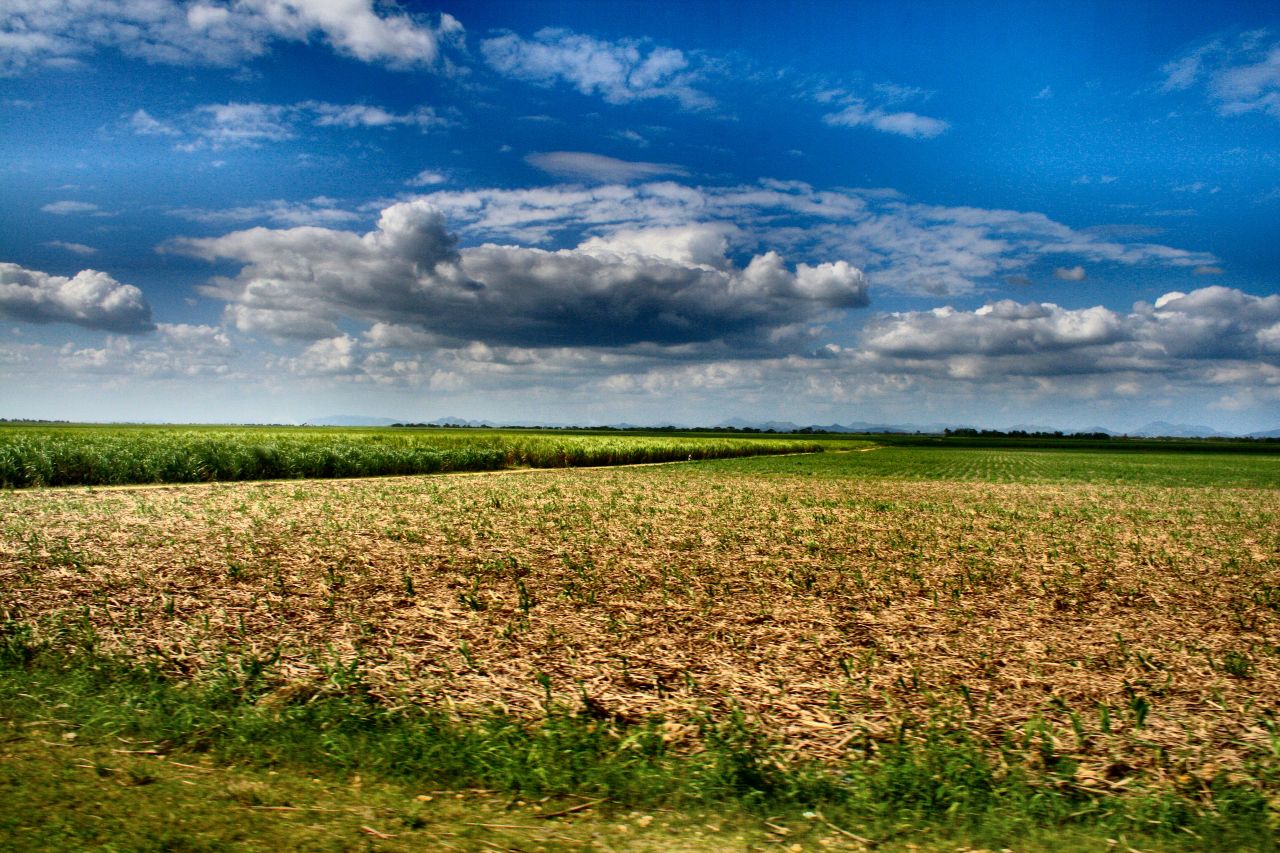
New York — Five Boroughs Around One of the Great Harbours of the World
New York is five boroughs around one of the great harbours of the world. Manhattan dazzles, yet Brooklyn, Queens, the Bronx and Staten Island complete it.
New York is the most populous city in the United States, a city of five boroughs on one of the great natural harbours of the world, known for the Statue of Liberty, Central Park, Times Square, Broadway and the skyline of Manhattan. The city lies at the mouth of the Hudson River, on the Atlantic coast, at the southern tip of New York State, and it has been the largest city in the United States since seventeen ninety. New York is the cultural, financial and media capital of the world, and it is also a city of neighbourhoods, with more than eight hundred languages spoken across its boroughs. This guide treats New York as a city to be walked borough by borough, with Manhattan as the start and the other boroughs as the reward.
The scale of New York is the first thing a traveller must learn. The city covers about eight hundred square kilometres of land, with more than eight million people in the city and more than twenty million in the metropolitan area. Manhattan is the smallest borough, yet it holds many of the most famous places, while Brooklyn is the most populous borough, Queens is the most diverse, the Bronx holds the zoo and the botanical garden, and Staten Island is reached by a free ferry that passes the Statue of Liberty. A traveller who stays only in Manhattan will see the skyline and miss the city, while a traveller who crosses the bridges and rides the subway to the outer boroughs will find the New York that New Yorkers live in.
Quick Facts
- Name: New York, the most populous city in the United States, at the mouth of the Hudson River on the Atlantic coast.
- Position: At the southern tip of New York State, where the Hudson River meets the Atlantic Ocean.
- Boroughs: Five boroughs, Manhattan, Brooklyn, Queens, the Bronx and Staten Island, consolidated into a single city in eighteen ninety-eight.
- Founded: Dutch colonists founded a trading post in sixteen twenty-four, called New Amsterdam, and the English renamed it New York in sixteen sixty-four.
- Population: About eight million eight hundred thousand people by the census of two thousand and twenty, with more than twenty million in the metropolitan area.
- Statue of Liberty: Dedicated in eighteen eighty-six, a gift from the people of France, and a World Heritage Site since nineteen eighty-four.
- Nearest World Heritage: The Statue of Liberty, inscribed in nineteen eighty-four, about four kilometres southwest of Lower Manhattan in a straight line.
- Main gateways: The airports of the city, with flights from around the world, and the railway stations of Manhattan.
- Tour style: A city base for the boroughs, with museums, parks, neighbourhoods and harbour days from a single base.
Geography of New York
New York lies at the mouth of the Hudson River, on the Atlantic coast, at the southern tip of New York State, and its geography is the geography of a harbour. The city is built around the water, with the Hudson River to the west, the East River to the east, and the harbour to the south, where the rivers meet the sea.
Manhattan and Staten Island are islands, Brooklyn and Queens occupy the western end of Long Island, and only the Bronx is on the mainland. The city covers about eight hundred square kilometres of land and more than twelve hundred square kilometres including water, with a waterfront of more than nine hundred kilometres. The water is the reason the city exists, and the bridges, the tunnels and the ferries are the ways the city crosses its own water.
Manhattan is the heart of New York, a long narrow island that runs north from the harbour, with the grid of streets and avenues that is the most famous street plan in the world. The island is about twenty-one kilometres long and only a few kilometres wide, yet it holds more than one and a half million people, the densest population in North America.
Central Park, in the middle of Manhattan, is a rectangle of green that is larger than many towns, with lakes, meadows, woods and paths. The park was designed in the nineteenth century as a lung for the city, and it is the place where New Yorkers go to walk, to run, to row and to escape the streets. A traveller who walks the length of Manhattan, from the Battery in the south to the Cloisters in the north, will see the whole history of the city in a single day.
Brooklyn is the most populous borough of New York, a borough of brownstone neighbourhoods, parks and a waterfront that faces Manhattan across the East River. The Brooklyn Bridge, opened in eighteen eighty-three, was the first bridge to join the two boroughs, and it is still the most famous bridge in the city, with a walkway that offers the best view of the Manhattan skyline.
Prospect Park, in the heart of Brooklyn, is the sister park to Central Park, designed by the same landscape architects, with a lake, a forest and a meadow. Coney Island, at the southern edge of Brooklyn, is the old seaside resort of the city, with a boardwalk, a beach and an amusement park. Brooklyn is the borough where New York feels most like a collection of villages, each with its own main street and its own character.
Queens is the most diverse borough of New York, a borough of neighbourhoods where more than a hundred languages are spoken and where the food of the world is served on a single street. The borough holds the airports of the city, the tennis centre of Flushing Meadows, and the museums and parks of the World’s Fair grounds. The neighbourhoods of Queens, from Astoria to Jackson Heights to Flushing, are the places where immigrants have settled for generations, and the markets and restaurants of the borough are the most rewarding in the city for a traveller who loves food. Queens is the borough that proves the claim that New York is the most linguistically diverse city in the world, and a day in Queens is a journey around the world without leaving the subway.
The Bronx is the only borough of New York on the mainland, a borough of parks, a great zoo and a botanical garden, with a history that runs from the Dutch farms of the seventeenth century to the hip hop of the twentieth. The Bronx Zoo, opened in eighteen ninety-nine, is one of the largest zoos in the United States, with animals from around the world in naturalistic habitats. The New York Botanical Garden, beside the zoo, holds a great conservatory and a forest that is the last remnant of the woodland that once covered the city. The Bronx is the borough where the city meets the mainland, with the Hudson River to the west and the Long Island Sound to the east, and a traveller who visits it will see a New York that is greener and quieter than Manhattan.
Staten Island is the most suburban borough of New York, an island of houses, parks and a waterfront that faces the harbour and the Statue of Liberty. The Staten Island Ferry, which runs from Manhattan to the island, is free, and it passes close to the Statue of Liberty, offering one of the best views in the city for no fare at all. The island holds the Greenbelt, a network of parks and forests, and the historic village of Richmond Town, with houses from the colonial period. Staten Island is the borough that New Yorkers forget, yet it is the borough that offers the best ferry ride in the city, and a traveller who rides it at sunset will see the skyline in its finest light.
The climate of New York is humid and continental, with cold winters and hot summers, and the four seasons are distinct. The winters are cold, with snow and wind from the north, and the summers are hot and humid, with thunderstorms in the afternoon.
The spring and the autumn are the best times to visit, with mild temperatures and clear skies, and the parks are at their finest then, with blossom in spring and colour in autumn. The city is at its most beautiful in the autumn, when the leaves of Central Park turn and the light is low, and at its most festive in the winter, when the ice rinks open and the lights go up. A traveller who can choose should choose the spring or the autumn, and a traveller who comes in summer should plan for the heat.
The harbour of New York is one of the great natural harbours of the world, a drowned river valley that offers sheltered water for ships from the Atlantic. The harbour was the reason the Dutch chose the site, and it was the reason the city became the great port of the United States.
The Statue of Liberty stands on Liberty Island at the entrance to the harbour, and Ellis Island, beside it, was the gateway for more than twelve million immigrants between eighteen ninety-two and nineteen fifty-four. The harbour is still a working port, with container ships and ferries, and the waterfront of the city is being remade as parks and promenades. A traveller who takes a harbour cruise will see the city from the water, as the immigrants first saw it, with the skyline rising above the harbour.

Central Park in autumn, with the lake and the Manhattan skyline — — Public domain

The Empire State Building rising above the Manhattan skyline — CC BY-SA 4
History of New York
The history of New York begins with the Lenape people, who lived in the region for thousands of years before the arrival of Europeans, fishing, farming and trading along the rivers and the harbour. The Italian navigator Giovanni da Verrazzano entered the harbour in fifteen twenty-four, and the Dutch colonists settled in sixteen twenty-four, naming their town on the tip of Manhattan New Amsterdam. The Dutch bought the island of Manhattan from the Lenape, and the town grew as a trading post for furs, with a fort, a church and a market. The English took the town in sixteen sixty-four and renamed it New York, after the Duke of York, and the city has been called New York ever since, except for a brief return to Dutch rule in the sixteen seventies.
New York was the capital of the United States from seventeen eighty-five to seventeen ninety, and it has been the largest city in the United States since seventeen ninety. The opening of the Erie Canal in eighteen twenty-five linked the port with the Great Lakes and made New York the leading city of the country, with goods flowing from the interior to the harbour and on to the world. The nineteenth century brought millions of immigrants, who arrived by ship and passed the Statue of Liberty on their way to Castle Garden and Ellis Island. The city grew fast, with tenements, factories and skyscrapers, and by the end of the century it was one of the great cities of the world.
The five boroughs were consolidated into a single city in eighteen ninety-eight, joining Manhattan, Brooklyn, Queens, the Bronx and Staten Island into Greater New York. The subway opened in nineteen oh four, and the skyscrapers transformed Manhattan in the following decades, with the Empire State Building, opened in nineteen thirty-one, becoming the tallest building in the world for many years. The city became the centre of finance, media, art and theatre, with Wall Street, Broadway and the museums of Manhattan. The twentieth century brought the Depression, the Second World War, and the post-war boom, with the city as the capital of the world in all but name.
Ellis Island was the gateway for more than twelve million immigrants between eighteen ninety-two and nineteen fifty-four, and the Statue of Liberty, dedicated in eighteen eighty-six, was the first sight of America for many of them. The statue was a gift from the people of France to the United States, designed by the French sculptor Frederic Auguste Bartholdi, and it represents the Roman goddess Libertas, holding a torch in one hand and a tablet in the other. The statue was inscribed on the World Heritage List in nineteen eighty-four, under criteria (i) and (vi), as a masterpiece of the human spirit and a symbol of freedom. The statue and Ellis Island are the most visited places in the harbour, and a traveller who visits them will understand the history of immigration that made New York.
The history of New York in the twentieth century is the history of immigration, reinvention and resilience. The city welcomed waves of immigrants from Ireland, Italy, Eastern Europe, the Caribbean, Latin America and Asia, including from Jamaica and the wider Caribbean, and each wave changed the city and was changed by it.
The Harlem Renaissance of the nineteen twenties made the city the centre of African American culture, and the hip hop of the Bronx in the nineteen seventies made it the centre of a new music. The city has faced fires, strikes, blackouts and the attacks of the eleventh of September, two thousand and one, which destroyed the World Trade Center and killed thousands of people. The city rebuilt, and the memorial and the museum at the site are the most solemn places in New York today.
The modern history of New York is the history of a city that never stops changing, with new neighbourhoods, new towers and new cultures arriving every year. The High Line, a park built on an old elevated railway on the west side of Manhattan, opened in two thousand and nine, and it has become one of the most loved places in the city.
The Hudson Yards, beside it, is the newest district of Manhattan, with towers, a cultural centre and a public square. The city is still the financial capital of the world, with Wall Street, and the media capital, with the newspapers, the television and the publishing houses. New York is a city that reinvents itself every generation, and a traveller who visits it will see a city that is always becoming something new.
Central Park was built in the middle of the nineteenth century, when the city set aside more than three hundred hectares of rocky land in the centre of Manhattan for a public park. The designers, Frederick Law Olmsted and Calvert Vaux, won the competition to design it in eighteen fifty-eight, and the park was built over the following fifteen years, with lakes dug, hills shaped and thousands of trees planted. The park was the first great public park in the United States, and it set the pattern for the parks of cities across the country, with its meadows, its woods and its paths designed for walking rather than for driving.

the Statue of Liberty on Liberty Island, seen from the harbour — — CC BY 4
Travel to New York
Travellers reach New York by air through the airports of the city, and most visits begin there, with a flight from around the world, including from Toronto and Montreal in Canada. The airports are among the busiest in the United States, and the transfer into Manhattan is by train, by bus or by taxi. A first evening in New York is best spent on a walk, with a view of the skyline from the waterfront, a meal in a neighbourhood restaurant, and a look at Times Square at night, when the lights are at their brightest. The city is the gateway to itself, and a night in Manhattan sets the scale of New York before the boroughs take over.
A week in New York is the natural length for a first visit, with three or four days in Manhattan and the rest in the outer boroughs and the harbour. The city is large, and a traveller who tries to see everything in three days will be exhausted, while a traveller who stays a week will have time for the museums, the parks, the neighbourhoods and a day on the water. The subway is the working unit of a visit, and a traveller who learns the subway will learn the city, because the subway map is the map of New York. A week with a day for Manhattan, a day for Brooklyn, a day for Queens, a day for the Bronx and Staten Island, and a day for the harbour will show the city in full.
Day trips are the working unit of a visit to New York, and each borough offers several. From Manhattan, the Statue of Liberty and Ellis Island are the essential harbour day, with a ferry from the Battery and a morning on the islands. From Brooklyn, the walk across the Brooklyn Bridge is the essential day, with the skyline behind and the borough ahead.
From Queens, the food tour of Jackson Heights and Flushing is the essential day, with the markets and the restaurants of the world. From the Bronx, the zoo and the botanical garden are the essential day, with the animals and the conservatory. A visit that plans its days around the boroughs will never be short of things to do.
The best time to visit New York is the spring or the autumn, when the temperatures are mild, the skies are clear and the parks are at their finest. The summer is hot and humid, with thunderstorms in the afternoon, yet it is the time of the festivals, the outdoor concerts and the beaches of the city.
The winter is cold, with snow and wind, yet it is the time of the ice rinks, the lights and the holiday markets. The city is at its most beautiful in the autumn, when the leaves of Central Park turn, and at its most festive in the winter, when the Rockefeller Center tree is lit. A traveller who can choose should choose the spring or the autumn, and a traveller who comes in summer should plan for the heat.
Travellers in New York should prepare for walking, weather and crowds, the three forces that shape a day here. The city is a walking city, and a traveller should wear comfortable shoes, because the distances are long and the subway stairs are many.
The weather changes fast, with a cold morning and a warm afternoon, and a layer is worth carrying even in summer. The crowds are part of the city, and a traveller should visit the most famous places early in the morning, before the crowds arrive, and save the neighbourhoods for the afternoon. A traveller who walks, who dresses for the weather and who rises early will enjoy New York far more than one who does not.
Getting around New York is a matter of the subway, the buses and the ferries, and the subway is the heart of it. The subway runs day and night, with lines that reach every borough, and a traveller who buys a weekly pass will have the city at their feet.
The buses are slower and offer a view of the streets, and the ferries cross the harbour and the East River, with the Staten Island Ferry free and the East River ferries a pleasure in themselves. The taxis are easy to hail, and the ride-hailing cars are everywhere, yet the subway is faster in the rush hour. With a little planning, the transport of a visit is easy, and the subway map is the key to the city.
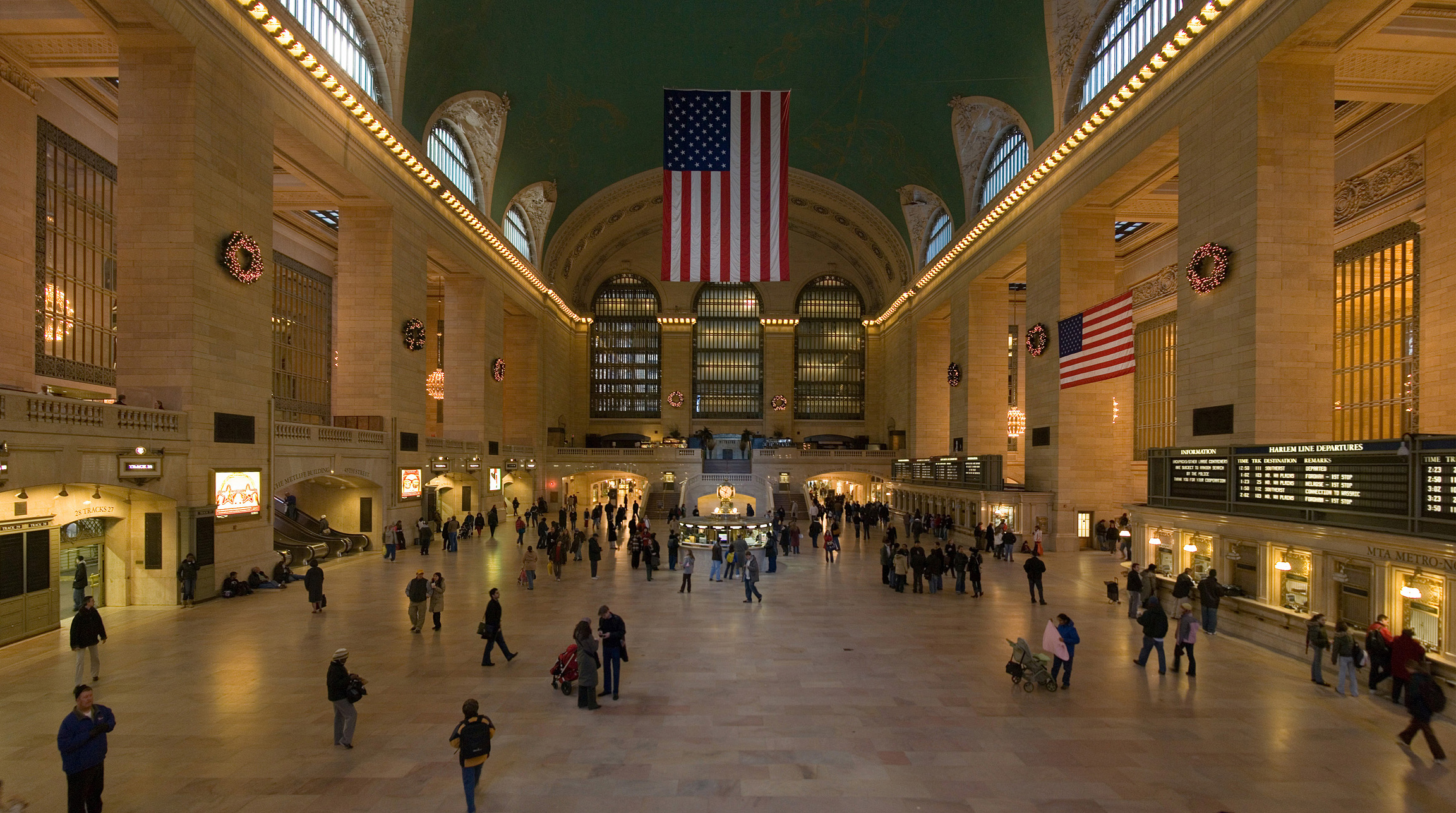
The main concourse of Grand Central Terminal, with its vaulted ceiling and clock — CC BY 2.5
Notable Places in New York
Central Park — The Green Heart of Manhattan
Central Park is the green heart of Manhattan, a rectangle of parkland that is larger than many towns, with lakes, meadows, woods and paths. The park was designed in the nineteenth century by Frederick Law Olmsted and Calvert Vaux, as a lung for the city, and it is the place where New Yorkers go to walk, to run, to row and to escape the streets. The park holds a zoo, a reservoir, a castle and a great lawn, and it is the most visited urban park in the United States. Come in the morning, walk from the south end to the reservoir, and spend the afternoon in the Ramble, with the woods and the birds around you.
The Statue of Liberty and Ellis Island — The Harbour Icons
The Statue of Liberty stands on Liberty Island at the entrance to the harbour, a gift from the people of France, dedicated in eighteen eighty-six, and a World Heritage Site since nineteen eighty-four. Ellis Island, beside it, was the gateway for more than twelve million immigrants between eighteen ninety-two and nineteen fifty-four, and it now holds a museum of immigration. The two islands are reached by ferry from the Battery in Manhattan, and a morning on them is the essential harbour day of any visit. Come early, take the first ferry, and allow a full morning for the statue, the museum and the view back toward Manhattan.

Ellis Island in the harbour, with Jersey City behind it — CC BY 4
Times Square and Broadway — The Lights and the Stage
Times Square is the crossroads of Manhattan, a square of lights, screens and crowds that is the most visited place in the city. Broadway, the diagonal street that runs through the square, is the home of the theatre district, with plays and musicals that draw audiences from around the world. The square is at its best at night, when the lights are brightest and the crowds are thickest, and the theatres are the heart of the city’s cultural life. Come at dusk, walk from the square north along Broadway, and take a show in the evening, because the theatre is the New York that the world knows best.

Times Square and Duffy Square, with the billboards and the crowds — CC BY-SA 4

The Broadway Theatre on West 53rd Street, in the theatre district — CC BY-SA 4
Brooklyn Bridge and Brooklyn — The Bridge and the Borough
The Brooklyn Bridge, opened in eighteen eighty-three, was the first bridge to join Manhattan and Brooklyn, and it is still the most famous bridge in the city, with a walkway that offers the best view of the Manhattan skyline. Brooklyn, across the river, is the most populous borough, with brownstone neighbourhoods, Prospect Park and the boardwalk of Coney Island. The walk across the bridge, from Manhattan to Brooklyn, is the classic journey of the city, with the skyline behind and the borough ahead. Come in the morning, walk the bridge, and spend the afternoon in Brooklyn Heights and Prospect Park, with the borough at its best.

The Brooklyn Bridge across the East River, with its stone towers and cables — CC BY-SA 4

The Museums of Manhattan — The Metropolitan and the Modern
The Metropolitan Museum of Art, on the east side of Central Park, is the largest museum in the United States, with collections that span the whole history of art, from Egypt to the present. The Museum of Modern Art, in midtown Manhattan, holds the modern masters, with paintings, sculpture and design that shaped the twentieth century. The two museums are the anchors of the museum mile and the midtown, and a day in each is the essential museum day of any visit. Come early, allow a full day for the Metropolitan, and a morning for the Modern, because the collections are too large for a single hour.

The inner courtyard of the Museum of Modern Art — CC BY-SA 2

The entrance to the Metropolitan Museum of Art on Fifth Avenue — CC BY-SA 4
Verified
- New York is Wikidata item Q60, the most populous city in the United States, at forty degrees forty-two minutes north and seventy-four degrees zero minutes west, checked 26/11/2026.
- The city of New York had eight million eight hundred and four thousand one hundred and ninety people by the census of two thousand and twenty, checked 26/11/2026.
- Dutch colonists founded a trading post in sixteen twenty-four, called New Amsterdam, and the English renamed it New York in sixteen sixty-four, checked 26/11/2026.
- The five boroughs were consolidated into a single city in eighteen ninety-eight, checked 26/11/2026.
- The Brooklyn Bridge opened in eighteen eighty-three, checked 26/11/2026.
- The Statue of Liberty was dedicated on the twenty-eighth of October, eighteen eighty-six, checked 26/11/2026.
- The Statue of Liberty, ref 307, was inscribed on the World Heritage List in nineteen eighty-four, under criteria (i) and (vi), checked 26/11/2026.
- The Statue of Liberty lies about four kilometres southwest of Lower Manhattan in a straight line, by haversine from live coordinates, checked 26/11/2026.
- More than twelve million immigrants arrived through Ellis Island between eighteen ninety-two and nineteen fifty-four, checked 26/11/2026.
- The subway of New York opened in nineteen oh four, checked 26/11/2026.
Sources
- New York City — Wikipedia — population, history, boroughs; checked 26/11/2026.
- Wikidata API — Q60 — New York City, coordinates, population; checked 26/11/2026.
- Statue of Liberty — UNESCO — ref 307, inscribed 1984; checked 26/11/2026.
- Statue of Liberty — Wikipedia — dedicated 1886, gift of France; checked 26/11/2026.
- Ellis Island — Wikipedia — immigrants 1892 to 1954; checked 26/11/2026.
- Central Park — Wikipedia — designed by Olmsted and Vaux; checked 26/11/2026.
Unverified
- The current number of languages spoken in New York is given as more than eight hundred, following the usual published figure, and the count varies with the definition of a language.
- The opening hours of the Metropolitan Museum of Art and the Museum of Modern Art change with the season and have not been checked against a current official source.
- The current fare of the subway and the ferries changes with the city budget and has not been checked against a current official source, so the article gives no fixed fare.
- The exact area of Central Park is not given, following the article’s practice of avoiding precise figures that vary between sources.
Illustrations
- Hero: Lower Manhattan seen from across the harbour, with the skyline and the river — https://upload.wikimedia.org/wikipedia/commons/4/41/Lower_Manhattan_from_Jersey_City_November_2014_panorama_2.jpg — CC BY-SA 3
- In-body: the Statue of Liberty on Liberty Island, seen from the harbour — https://upload.wikimedia.org/wikipedia/commons/6/6b/Liberty_Island_photo_Don_Ramey_Logan.jpg — CC BY 4
- In-body: Central Park in autumn, with the lake and the Manhattan skyline — https://upload.wikimedia.org/wikipedia/commons/0/0a/Central_Park_New_York_City_New_York_23_cropped.jpg — Public domain
- In body, Times Square: Times Square and Duffy Square, with the billboards and the crowds. Free image: https://upload.wikimedia.org/wikipedia/commons/6/69/New_York_City_%28New_York%2C_USA%29%2C_Times_Square-Duffy_Square_–2012–_6380.jpg — Dietmar Rabich, CC BY-SA 4.
- In body, Brooklyn Bridge: The Brooklyn Bridge across the East River, with its stone towers and cables. Free image: https://upload.wikimedia.org/wikipedia/commons/7/7c/Brooklyn_Bridge_August_2017.jpg — Arild Vågen, CC BY-SA 4.
- In body, Empire State Building: The Empire State Building rising above the Manhattan skyline. Free image: https://upload.wikimedia.org/wikipedia/commons/4/45/Empire_State_Building_pano.jpg — Daniel Schwen, CC BY-SA 4.
- In body, Ellis Island: Ellis Island in the harbour, with Jersey City behind it. Free image: https://upload.wikimedia.org/wikipedia/commons/8/8f/Ellis_Island_with_Jersey_City_in_the_background%2C_20231003_1610_2006.jpg — Jakub Hałun, CC BY 4.
- In body, Grand Central Terminal: The main concourse of Grand Central Terminal, with its vaulted ceiling and clock. Free image: https://upload.wikimedia.org/wikipedia/commons/7/73/Grand_Central_Station_Main_Concourse_Jan_2006.jpg — Diliff, CC BY 2.5.
- In body, Broadway Theatre: The Broadway Theatre on West 53rd Street, in the theatre district. Free image: https://upload.wikimedia.org/wikipedia/commons/a/af/Broadway_Theatre_W_53_St_May_2025_07.jpg — Epicgenius, CC BY-SA 4.
- In body, Museum of Modern Art: The inner courtyard of the Museum of Modern Art. Free image: https://upload.wikimedia.org/wikipedia/commons/9/92/Museum_of_Modern_Art_MOMA_inner_courtyard_%28New_York%29_%2844518083184%29.jpg — VillageHero from Ulm, Germany, CC BY-SA 2.
- In body, The Metropolitan Museum of Art: The entrance to the Metropolitan Museum of Art on Fifth Avenue. Free image: https://upload.wikimedia.org/wikipedia/commons/c/c4/Entrance_to_The_Met_Fifth_Avenue_%282022%29.jpg — PerpetualTraveler, CC BY-SA 4.
- In body, Prospect Park: The Lake in Prospect Park, Brooklyn, in autumn. Free image: https://upload.wikimedia.org/wikipedia/commons/3/3a/Prospect_Park_New_York_October_2015_003.jpg — CC BY-SA 4, by King of Hearts.